
Inactive· since May 4, 2026
- 2
- days it ran
- 0
- relaunches
Ad copy
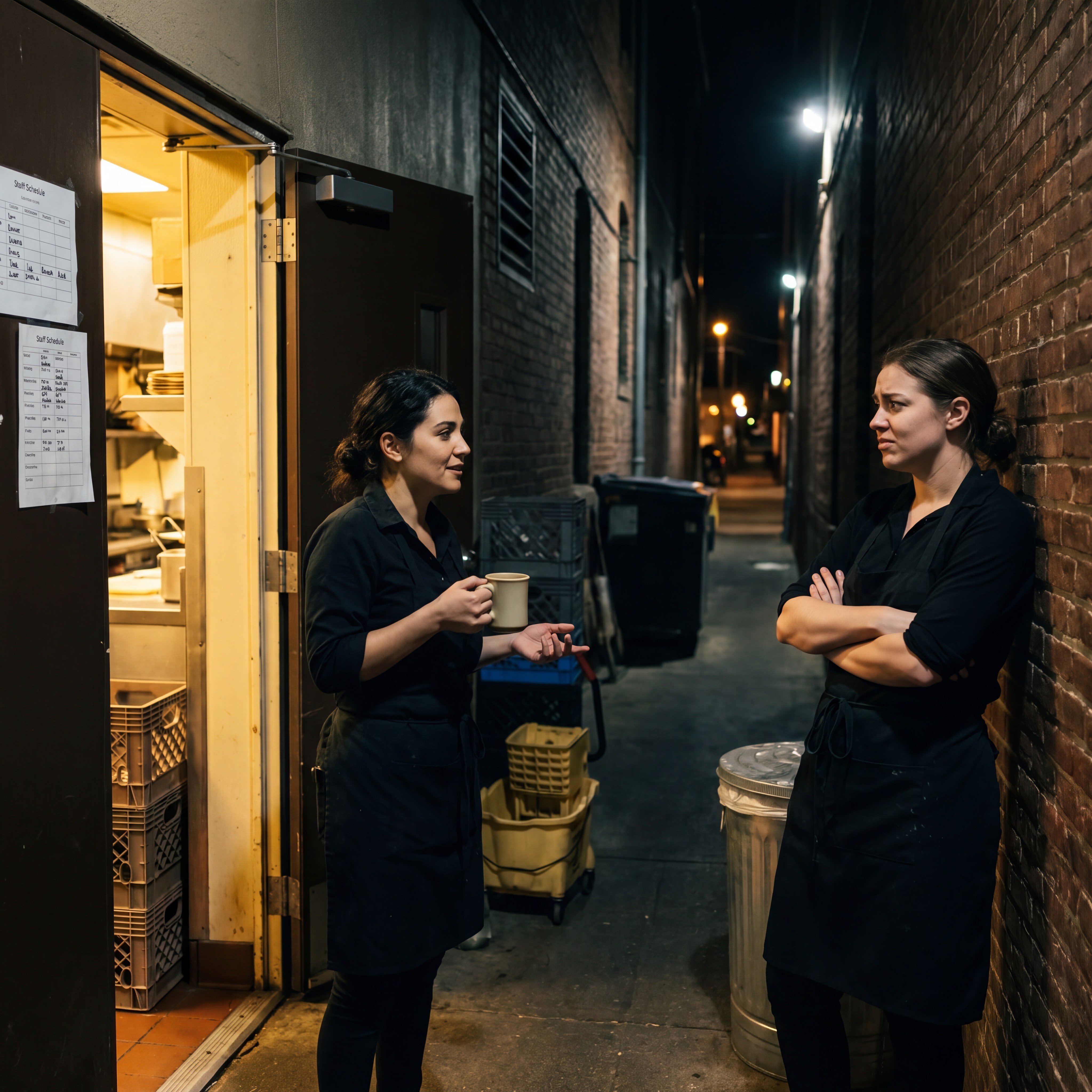
I'm a Nurse Who Bartends on Weekends for the Cash. My Last Lab Came Back Showing Liver Disease. I Refused to Quit the Bar. Here's What Happened. I've been a nurse for 9 years and in the industry since I was 21, and the quiet liver disease showing up in young women working hospitality is one of the hardest things I see women struggle with. The hard upper belly that won't go down even on the days she eats nothing. The 4pm wall that hits before she's even clocked in for the Saturday double. The brain fog so thick she's restating the special to a four-top and forgets the third dish halfway through. Servers and bartenders telling me they wake up at 11am bloated, thirsty, with their face still puffy from the night before, knowing they have to be on the floor in five hours. The thirst that nothing fixes. The little ache under their right rib they keep pressing on while they're polishing glassware. Day and night, it never stops. About six months ago, it happened to me. It was 12:47 on a Saturday night. We were closing. Last guest had walked out at 12:30, the busser was breaking down the patio, my GM was running tip-out at the host stand. I was behind the stick testing the last cocktail for the menu rollout we were launching Monday. The kitchen had sent up a basket of fries that had been sitting on the service station for fifteen minutes getting cold under the heat lamp. I leaned against the back bar, picked at the fries, took a small sip of the cocktail, made a note about the bitters ratio. My head bartender Mike came around with the Fernet bottle and two shot glasses for the industry handshake. We did the shot. He poured himself a Tito's soda. I poured myself the menu cocktail again to keep tasting the rebalance. I had been on the floor for nine hours. My feet were on fire. My uniform shirt was tight at the waist. I had unbuttoned the bottom button of my black work shirt three hours ago and not buttoned it back. Walking out with $612 cash that night. Not bad for a Saturday. In my locker, my phone had a MyChart notification I'd been ignoring for three days. I drove home at 1:30. Hit the Taco Bell drive-thru on Highway 60 at 1:48 because I hadn't eaten since family meal at 4. Three crunchy tacos and a Baja Blast Freeze. In bed by 3:15. Up at 11:15 the next morning bloated, thirsty, with my face puffy in a way that doesn't show up in a picture but that I see every time I open Instagram before a shift. When I finally opened MyChart that Sunday afternoon over coffee: ALT 84. AST 67. Trigs 220. Note from the NP at the urgent care where I'd done my marketplace-insurance labs: "Jessica, please come in to discuss. We need to talk about alcohol intake and lifestyle factors. I'd also like to schedule a liver ultrasound." I closed the app. Got dressed for my Sunday shift at the restaurant. Walked back in at 4pm. I'm 33. And until that Sunday afternoon I thought I was managing. I work three 12s a week as a med-surg nurse. Friday and Saturday nights I bartend at a popular cocktail restaurant in town for the tips. The restaurant clears me $1,000 to $1,400 cash a weekend on a normal week. On a holiday weekend I've cleared $2,200. There is no version of my life that pencils out without that cash. It paid for my last year of nursing school. It pays for my car. It is the difference between the apartment I have and the one I'd have to move to. I've been in the industry since I was 21. Started serving in college, moved up to bartender at 23, took my certified mixology cert at 25, met my ex-fiancé in this industry, came back to bartending on weekends after we broke up because I needed the money and because the floor was the only place that didn't remind me of him. The shift drink at the end of every shift. The Fernet handshake when a regular bought us a round. The espresso martini at industry night Mondays when the whole town's bartenders and servers descend on whichever bar is hosting. The Tito's soda I poured myself after a rough seven-top didn't tip. A glass of the house red at family meal three nights a week. A bottle of natural wine on the patio with my coworkers after close on Saturdays sometimes. I never thought of myself as a drinker. I was a girl in the industry. We all live like this. Until I added it up that Sunday afternoon and realized it was 18 to 24 drinks a week. Sometimes 30 during summer patio season. The CDC says the limit for women is seven. Except somewhere around 30, things started changing. That was the year I picked up the second weekend at the bar after my engagement ended. The income doubled. The drinking doubled. The hours on my feet doubled. At first it was just the belly. The bloated middle that showed up by the end of every shift and never really went away on my off days. I stopped wearing the fitted black button-down I used to wear behind the bar. Started buying the slightly looser one a size up. Tagged myself out of every Instagram story my coworkers posted from the Christmas party. I blamed the schedule. Blamed turning 30. Blamed the food at family meal. Then came the 4pm wall. The sudden curtain of fog that would hit me right when I clocked in for the Friday night dinner shift. I am a bartender. I have to read the room. I have to remember what the four-top in window two ordered. I started pre-gaming with a Celsius before every shift, then two by 9pm. Then the sleep. I'd get home at 2 and lie there wired from the espresso martini and the adrenaline. I'd finally fall asleep around 3:30. Wake up at 7 needing to pee, my heart already racing. Sleep till 11. Drag through Sunday on coffee and a breakfast burrito. Then the skin. Random itching that woke me up scratching my arms. Redness on my palms I'd never had before. Looking puffy in every selfie my younger sister sent back from college. The Instagram filter I used on every story so my face would look right under the bar lighting. I'd skip my Pilates class on Sunday mornings I had off. Cancel my best friend's brunch the third weekend in a row. Show up to my godson's first birthday on a Tuesday off and fall asleep on the couch at 4pm in front of all my cousins. I blamed the schedule. My bartender friends and I joked about it on our GroupMe. We called them our "industry bellies" and laughed. Now I was the one staring at red lab values in MyChart. And let me tell you, every patient I'd ever discharged from my med-surg unit with elevated liver enzymes was right. It's a living hell. When I went into the urgent care that next Tuesday on my off day, the NP didn't sugarcoat it. "Jessica, you're 33 with the labs of a 50-year-old who has been drinking heavily for 20 years. You're a nurse. You know what these numbers mean. We need to talk about cutting alcohol significantly, possibly eliminating it. And we need to talk about whether bartending two nights a week is sustainable for you long term." I sat there in the chair. I knew exactly what she was about to say. "I am 33. I am nine years into nursing. I bartend on the weekends for the money. The money is what is keeping me out of debt and in this apartment. If I quit the bar, I am back to making $74,000 instead of $108,000. I lose the cushion. I lose the cash flow. I cannot do that right now." She got it. Her brother had been in the industry. She'd seen this exact story before. She gave me the obvious advice anyway. Cut alcohol significantly. No more shift drinks. No more handshakes. No more industry Mondays. Pack real food. Sleep more. Repeat labs in three months. If they don't move, hepatology referral. I smiled politely and said I'd think about it. But I wasn't going to quit the bar. I have watched too many of my industry friends try. The ones who quit the floor entirely take the income hit, white-knuckle every grocery bill for a year, end up bartending again at a worse spot for less money. The ones who try to "sober up" entirely while still working in alcohol last about four months before they're back on the Fernet shots after close. The ones who switch to "support roles" in the industry — events, marketing, brand reps — still end up at the bars three nights a week for the networking that's where the actual business gets done. And for what? An income hit while my labs might creep up anyway. I wasn't going to lose the cash flow that built my whole adult life over a maybe. But I also wasn't ignoring the labs. I had spent nine years discharging patients with these exact numbers. I knew where 84 and 67 went if I sat on it. So I made the changes I could actually keep. I cut the shift drink. Cut the espresso martini at industry Mondays. Cut family meal wine. Switched to soda water with lime behind the bar. Started doing the Fernet handshake half the time and faking the rest. Stopped the Taco Bell run on the way home four nights out of five. Packed real meals for my hospital shifts. The labs moved a little. Three months later, ALT 76 from 84. AST 60 from 67. After three months of being the most disciplined girl in the industry. Still hadn't moved enough. Liver detox supplements from the CVS by my apartment. Two different brands. Generic formulas with a dozen ingredients at trace doses. Nothing shifted. Then I tried milk thistle. The big bottle from the supplement aisle at the same CVS. "1,000mg Milk Thistle" right on the label. I took it twice a day for three months. ALT moved from 76 to 71. AST barely moved. I figured milk thistle just wasn't strong enough for what was already happening in my liver after twelve years in the industry. Nothing was really working at the speed I needed. But what else was I supposed to do. Then about ten weeks ago, my coworker Rachel came in for her Friday shift looking different. Rachel has been a server at our restaurant for sixteen years. She is 38. She had been carrying liver labs as bad as mine for three years. We had talked about it once, briefly, on a smoke break out back two summers ago. The way industry girls talk about anything personal — quietly, between cigarettes, with the assumption it doesn't leave that alley. She walked in for the Friday night pre-shift meeting and she looked lighter. Her color was back. The puffiness around her face from a year ago was gone. Her jeans fit her the way they used to in her old Instagram pictures from 2021. I asked her in the back hallway between the second seating and the third what she had been doing. She said something I didn't expect. She said her last labs had actually normalized. ALT 32. AST 27. Trigs 138. Her urgent care NP had taken hepatology off the radar. Her ultrasound came back clean. Still working four shifts a week at our restaurant. Still walking out with $700 to $1,100 a night. Still doing the occasional handshake when a regular comped a round, just not every shift like before. She had found a liver formula. One capsule a day. Had been taking it every morning before her shifts for ten weeks. I'll be honest, I was skeptical. After 9 years in nursing and 12 in the industry I have heard every supplement story there is. I have triaged every TikTok cleanse and every hangover-cure pill that came across my emergency department. I know how this usually ends. But Rachel wasn't selling. She was a tired industry veteran who had been carrying scary labs for three years and had finally set them down. Relieved. She told me on a smoke break out back like she always does, with the assumption it didn't leave that alley. That same night, I got home at 2:30. Lay in the dark with my heart racing for an hour and a half. Woke up at 9am bloated. I kept thinking about what Rachel said. So I looked it up. And that's when I realized why everything I'd tried before had failed. Including the milk thistle. Here's what nobody explains, not the urgent care NP, not the corporate compliance training the bar makes us take every six months, not even the books I read in nursing school. Your liver doesn't have ONE problem. It has THREE problems happening at the same time. And most supplements, including the ones I'd been taking, only address one of them. For a girl in the industry, this matters more than for almost anyone else. Because what your body is dealing with after twelve years of late nights, after-shift drinks, broken sleep, family meal at 4pm, Taco Bell at 1am, and a body clock that runs on bar time isn't one problem. It's three. All happening at the same time. Think of your liver like the kitchen at your restaurant. The kitchen has been doing service every single night for years. Two seatings. Three seatings on a Friday. Two more on Saturdays. Family meal in the afternoon. Late-night line cooks heating things up at 1am. Every single thing has gone through this kitchen — every glass of wine, every espresso martini, every shift drink, every Fernet handshake, every ibuprofen at 4am, every Adderall the line cook gave you when the rush was insane. And nobody has deep-cleaned it. PROBLEM ONE: The appliances are wearing down. The cells inside the liver where the work happens have been processing under stress for years. Every drink, every Tylenol after the double, every greasy late-night burrito, every plastic-bottled water the bar sells — all of it passes through these cells. Over the years, the cell walls weaken. Their internal defenses drop. They make less glutathione, the molecule the liver uses to neutralize everything bad that comes through. This is the problem most supplements try to address. Repair the cells. Boost glutathione. Real science. But here's why it wasn't enough on its own. PROBLEM TWO: The drain is clogged. The liver makes bile, a cleaning fluid that carries the processed waste out of the organ. Used hormones. Drug stuff. Inflamed junk. Alcohol byproducts. All of it leaves through bile. When bile flow gets sluggish, which happens in basically every body that runs on a service-industry schedule, the waste doesn't leave. It sits in the liver. It accumulates. It hardens. The kitchen appliances might be working, but the drain is backed up and the gunk has nowhere to go. This is the problem nobody addresses. Not the supplements at CVS. Not the "detox water" the wellness girls on TikTok push every January. Not even the high-quality single-ingredient pills from the vitamin store. Because there is no popular supplement category called "bile flow support." Most industry girls have never even heard the word cholagogue. PROBLEM THREE: The grease is caked on. Fat physically packed inside the liver cells themselves. For young women in hospitality, this is the part that has been creeping up since you started serving. Studies on bartenders specifically have found that 39 percent of us are already in the harmful or hazardous drinking range by clinical scoring, and most of us won't know there's damage until something forces a lab. Twelve years of late-night calories metabolized at the wrong time of day, alcohol byproducts that run on a slower clock in a female body, sustained cortisol from running a section of nine tables, broken sleep night after night — all of it dials up fat storage in the liver cells. This is fat physically packed between and inside the liver cells. It physically reduces what the organ can do. Like a kitchen where every surface is coated in a layer of grease that no amount of polishing the appliances will fix. Three problems. Happening at the same time. Dialed up in our bodies specifically by a schedule and an environment built around alcohol. Every supplement I'd been taking was working on the first problem. None of them was cleaning the kitchen. That's why the milk thistle barely moved my numbers. Not because milk thistle doesn't work. Because the milk thistle I was taking from CVS was a generic 1,000mg capsule with maybe 10 to 15 percent actual Silymarin inside. That's the active compound. The part that does the work. Most of that capsule was filler. I was getting a fraction of the dose the research says you need. And even at the right dose, milk thistle alone only addresses problem one. Cell repair and glutathione. Real science. Critical foundation. But if the bile isn't flowing and the fat isn't clearing, you're polishing appliances in a kitchen where the drain is still clogged and the grease is still caking on the stove every Friday night at 11pm during the second seating. The waste has nowhere to go. The fat keeps suffocating the cells. The numbers barely move. That's what I'd been doing for six months. Polishing appliances in a kitchen that needed a complete deep clean. While being more disciplined than I'd been in years and watching my labs barely budge. Rachel's formula wasn't a single ingredient. It was a complete protocol. Every layer addressed. It was called Uvora. When I looked at the formulation, I understood right away why it worked when everything else hadn't. Milk Thistle Extract, 300mg, standardized to 80% Silymarin. That's 240mg of the active stuff per dose. Not the 100 to 150mg of Silymarin buried inside a "1,000mg" CVS capsule. This is the dose the research actually points to. The World Health Organization recognizes Milk Thistle as a real herbal medicine for liver support. Over 4,500 published studies on Silymarin. This is the foundation. It rebuilds cells. It raises glutathione. It strengthens cell walls. Problem one. Wormwood Extract. The main bile-mover in the European herbal pharmacopoeia. Forces bile to flow. When bile has been sluggish for years from late-night eating and broken sleep, the ducts need direct stimulation to reopen. This is what starts the drain moving. Turmeric Extract, 95% Curcuminoids. Not the turmeric on your bar's spice rack. Clinical-grade extract. Loosens old bile and stimulates fresh bile production. Release and replace at the same time. Problem two. Clove Extract. Clears the inflamed bile acids that have been trapped in slow ducts. In a body that's been running on industry hours for years, the bile itself becomes loaded with inflamed compounds. Clove clears the ducts so the waste can actually exit. Inositol, 200mg. Addresses the fat layer directly. Research shows Inositol supports a reduction of fat buildup in the liver. It works on the metabolic signals that decide whether your liver holds onto fat or processes it out. For girls in hospitality, where the fat-clearing pathway has been working backwards for years, this layer matters more than for almost any other group. This is what strips the grease. Pueraria Extract. Used in traditional medicine for centuries specifically for alcohol-related liver support. Deep cleanup work that runs alongside the Silymarin. L-Methionine. A key amino acid for the second phase of liver detox. It packages the waste, including alcohol byproducts, for exit through bile. It makes sure that what the liver neutralizes actually gets shipped out, not just left sitting in the tissue. Vitamin C. Antioxidant partner that works alongside glutathione. Keeps the defense system running. Seven layers. One capsule. Once a day. With your morning coffee, or before clock-in. That's the whole routine. Nothing complicated. After 9 years in nursing and 12 in the industry, I had never seen a formula that addressed all three problems at the same time. Every supplement I'd tried before picked one layer and ignored the other two. Here's what made me actually try it. The 90-day money-back guarantee. If my labs didn't move, I got my money back. Every dollar. I'd already wasted close to $200 on supplements that hadn't worked. Uvora was the first one that said: if this doesn't work for you, send it back, refund, no questions. I want to be clear about something, because I owe my own people the truth. I did NOT add Uvora as a way to keep drinking the way I had been at 27. By the time I ordered, I had already been cutting back hard for four months. One drink behind the bar instead of three. Soda water with lime. Half the handshakes. No more Taco Bell on the way home most nights. What Uvora gave me was the kitchen-cleaning layer that the cutbacks alone couldn't reach. The damage already in my liver from twelve years of industry life that wasn't going away just because I'd switched to soda water. I ordered it that Sunday from my couch, in my robe, before my Sunday shift. When it arrived I could tell the formulation was serious. The Silymarin concentration alone told me this wasn't another CVS-shelf filler capsule. I started it the next morning. One capsule with my coffee before my Monday hospital shift. After about a week, I noticed the 4pm wall wasn't happening. Not fading, not happening. I made it through a Friday-Saturday double at the restaurant without the second Celsius. That night after Saturday close, I got home at 2:30. Skipped the Taco Bell. Went straight to bed. Fell asleep within twenty minutes. I had not fallen asleep within twenty minutes after a Saturday close in three years. I slept until 9:30. Six and a half straight hours. The first six-plus-hour sleep on a Saturday-to-Sunday I could remember. By the end of the second week, I asked the urgent care to repeat my labs early. The NP gave me a look but ordered them. ALT: 53. Down from 71. AST: 44. Down from 60. I had her run them twice. The hard upper belly I'd been hiding under the looser button-down started softening by week three. The pressure right under my ribs by 11pm. Easing. By close on Saturday I didn't have to unbutton the bottom button anymore. The fog lifting. I could read the room again. I could remember what the four-top in window two ordered without looking at my notes. The puffiness in my face that I'd been hiding under the Instagram filter is gone. The dark circles. The grey under-eye color I'd been blaming on bar lighting. It's been ten weeks now. I sleep on my off nights. Six to seven hours straight. Even after a Saturday double. The 4pm wall is gone. The skin is clearing. The ache under my right rib that I'd been pressing on while polishing glassware went quiet in week three. My last labs from the urgent care came back two weeks ago: ALT: 38. AST: 29. Trigs: 138. The NP wrote in my chart: "Significant improvement. Continue current routine. Repeat labs in 6 months." I am still bartending Friday and Saturday nights. I am still walking out with $600 to $1,200 a weekend. I am still doing the occasional handshake when a regular buys us a round, because saying no every single time would mean walking away from my own people and I'm not doing that. I'm just not having three a night anymore. I'm having one if any. I just finally cleaned the kitchen. I saw Rachel on a smoke break out back last Friday and told her my numbers. She just smiled and said, "Welcome back." After 9 years as a nurse and 12 in the industry, I thought I knew every option available to young women working hospitality with elevated labs. Turns out, the server who's been at my restaurant longer than I have knew something I didn't. Look, I know how supplement stories sound. I am the nurse who triages the people who took something off TikTok and ended up in my emergency department. I have been the skeptical girl on the other side of this conversation more times than I can count. But I also know what my labs show. And I know what it feels like to clock in for a Friday double in the fitted button-down I had given up on. Not all liver supplements are created equal. Especially not for girls in an industry built around late nights and after-shift drinks. I wasted six months and over $200 on products that barely moved my numbers. Generic formulas that addressed one layer while two others kept getting worse every Saturday at midnight. The formula has to be complete. Real Silymarin to rebuild the cells, not the CVS capsules that are mostly filler. Bile movers to actually push the drain so the gunk can exit. Inositol to clear the fat that the schedule has been packing in for years. And L-Methionine to keep the exit pathway open. If Rachel hadn't come back from her week off looking lighter that Friday, I'd still be at the Taco Bell drive-thru at 1:48am ignoring the MyChart notification. I've quietly told twelve girls about Uvora since then. Three of my coworkers at the restaurant. The bartender at the cocktail spot two doors down. Two of my old serving friends from college. The line cook's girlfriend who manages the events at the hotel down the street. My sister-in-law who runs the front of the house at a steakhouse downtown. The hostess on her way to nursing school. The girl I do Pilates with who works events for a catering company. My cousin who tends bar at the country club. The girl from my industry GroupMe who just started managing the rooftop. All of them are still in the industry. All of them are also cutting back. None of them are quitting. And every one of them has come back and said something is finally moving. The hostess just got her first ALT under 40 in two years. She texted me a screenshot at 4am on a Sunday after her own bar shift with the line: "still in the industry. still alive. thank you." I'm sharing this because I have spent 12 years watching girls like us, the ones who pour the drinks and run the floors and close the bars America actually goes out to, develop quiet liver problems in our late 20s and 30s and being told the only answer is to leave the only job we know. And because if there's a chance this helps one more girl on the floor the way it helped me, while she's also doing the actual work of cutting back, it's worth saying out loud. If you're a girl in the industry between 26 and 40, working bar shifts, server shifts, event shifts, restaurant management, anything that involves closing a bar after midnight and waking up bloated before another shift, this is what I wish someone had told me a year ago. And if you're already trying to cut back and the bloat and the wall and the puffiness still aren't moving, please understand that's only working on one of three problems. Cutting back alone won't unclog the drain or strip the fat that twelve years of industry life has been packing in. One path: keep cutting back. Keep adding generic supplements. Watch the bloat barely shift. Hope you're one of the lucky industry girls whose body lets you ride out the next decade. Another path: keep your shifts, keep your tip nights, keep cutting back the drinks you've already cut, AND finally add the missing layer that addresses all three liver problems at once. One capsule a day. With your morning coffee, or before clock-in. Track your numbers. See what happens. I chose the second path. It gave me my labs back. My sleep on off nights back. My fitted button-down back. My Saturday doubles without crashing on Sunday. While my drinking stayed cut to a fraction of what it used to be, because the labs were the wakeup call I needed and I was never going back to where I was at 27. Uvora. Milk Thistle Extract at 80% Silymarin. Wormwood. Turmeric at 95% Curcuminoids. Clove. Inositol. Pueraria Extract. L-Methionine. Vitamin C. Cell repair. Bile flow. Fat clearance. Exit pathway support. The complete liver protocol in one capsule. Once a day. That's it. 90-day money-back guarantee. If you don't see your numbers move, every dollar back. You literally can't lose money on this. 👉 https://getuvora.com/products/milk-thistle — Jessica M., RN P.S. I felt the difference by week one. Saw my labs move by week two. Still improving at ten weeks. Still bartending Friday and Saturday at the restaurant. Still walking out with $600 to $1,200 a weekend. Still in the industry. Just finally giving my liver the support it had been running without while twelve years of late nights and after-shift drinks had been quietly catching up. P.P.S. The bartender at the cocktail spot two doors down from us, also a girl in the industry since 22, also still working the bar, asked me on industry Monday last month why I seemed different on the floor. I told her everything. She started Uvora four days later. She texted me last Sunday morning at 11am after her Saturday close: "Jess. I slept through the night for the first time in eighteen months. ALT 41. Still bartending. Keep going." After 12 years in the industry I finally have something real to hand the girls who are quietly carrying the same labs I was carrying six months ago. P.P.P.S. One more thing I want to be honest about. Uvora is a small company. They are the only ones I've found who put all seven of these ingredients together at these strengths in a single capsule, and I looked HARD because I'm the nurse who triages the people who take bad supplements at 3am on a Saturday. Every other formula I researched was either Silymarin without the bile movers, or "hangover detox" with caffeine and B vitamins and zero real Inositol for the fat layer, or 24-hour cleanses that don't touch the actual liver chemistry of a girl who's been in the industry for a decade. And Uvora is unbelievably strict about quality. They reject and return any batch that doesn't meet their standard, which is why their inventory comes in waves instead of sitting on shelves all year. They get tens of thousands of orders every month and they regularly run out for weeks at a time before the next approved batch is ready. I'm telling you this because Rachel almost missed her chance. The week she found out about it, the website said "low stock." She ordered immediately and her bottle was the second-to-last one before they sold out for six weeks. She told me later if she'd waited even one day, her labs would still be where they were and she'd still be the tired server I shared smoke breaks with two summers ago. If you go to the link and you see it's available right now, my honest advice as a nurse and as a girl who's still behind the stick on Friday and Saturday nights is don't wait until your next paycheck to think about it. Secure your supply while it's there. The 90-day money-back guarantee means if you change your mind, every dollar comes back. The thing you can't get back is the six weeks you'd spend waiting for the next approved batch while your labs keep climbing and you keep ignoring the MyChart notifications on your way home from another close. 👉 https://getuvora.com/products/milk-thistle
Why generic liver supplements may not be enough
Milk thistle is a plant-based supplement known for its active compound silymarin, which supports liver detox, reduced fatigue, and many other health benefits.
LEARN MORELike this ad? Make it yours.
Crush rebuilds this exact creative around your product — your brand, your colors, your offer — in about a minute.