Job Hunt Hacks
Job Hunt Hacks Facebook ad: “From Ghosted to Hired”

Ran for 48 days, from March 31 to May 18, 2026, the last day Crush saw it.
Run by Job Hunt Hacks on Facebook. Crush is not the advertiser and does not verify its claims. See this ad in Meta's Ad Library(opens in a new tab)
Want an ad like this for your product?
Crush makes new ad images for your product from this ad: your logo, your product photo, your offer.
Trials from $19.95 USD, then $79.95 USD a month. Cancel anytime.
About this ad
- Meta Ad Library ID
- 1503376327787757
- Platforms
- Facebook, Instagram, Audience Network, Messenger and Threads
- Relaunches
- 2
Ad text
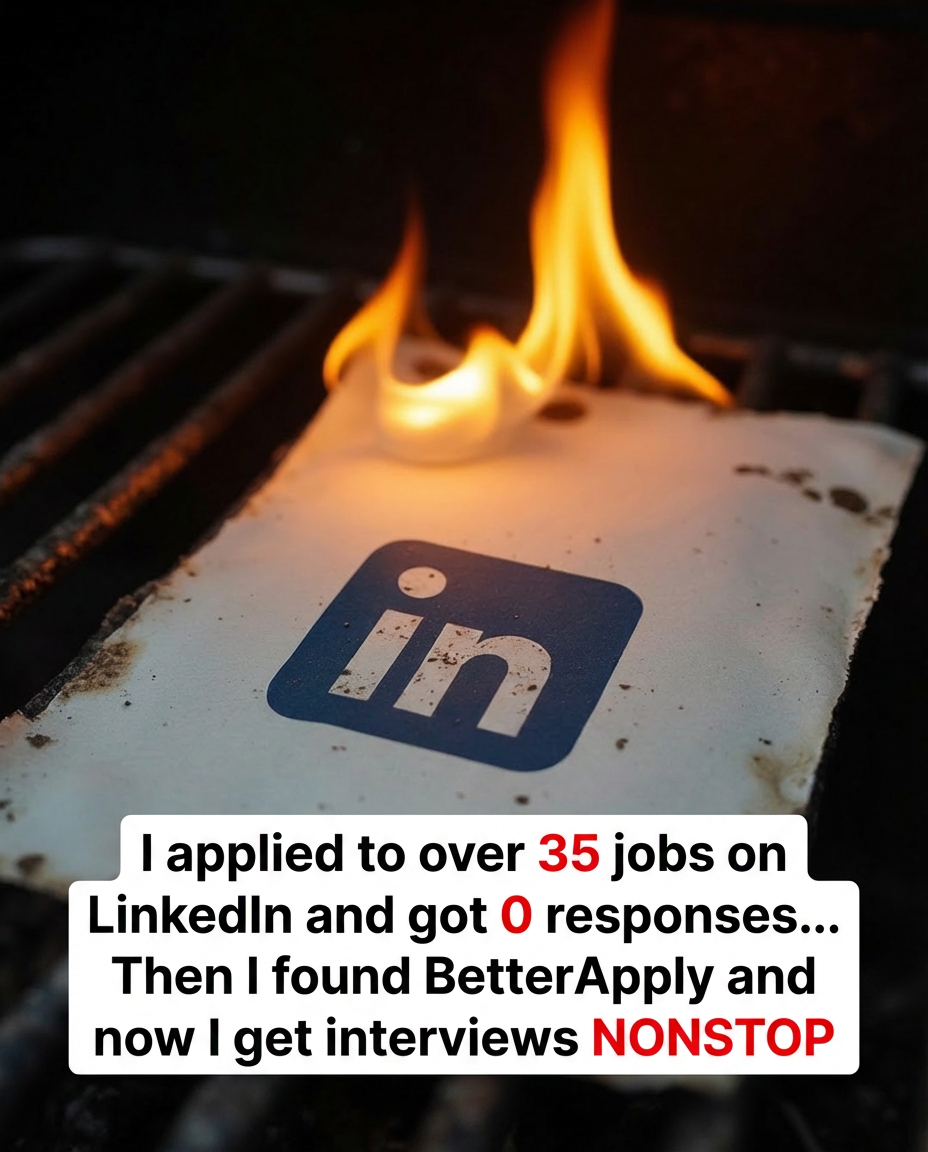
WARNING: The reason you're not getting hired isn't because of your resume - it's because you're applying the wrong way. I figured this out at 2:47 AM on a Tuesday, staring at my laptop screen with that familiar knot in my stomach. I had 47 tabs open. Job boards. ATS optimization guides. "How to write the perfect cover letter" articles. Resume templates I'd downloaded but never used. My coffee had gone cold three hours ago. Here's what nobody tells you when you're drowning in job search hell: you don't have a qualification problem. You have a system problem. And I only discovered this because I clicked on one random article out of sheer desperation that completely shattered everything I thought I knew about getting hired. Let me back up. Six months earlier, I'd been convinced something was fundamentally wrong with me. I had a degree. I had work experience. I could point to actual accomplishments on my resume. But every application I sent disappeared into a void. You know that feeling? When you hit "submit" and your chest gets tight? When you check your email three times a day hoping for a response but also dreading rejection? I thought I was doing something wrong. My resume wasn't good enough. My cover letter wasn't compelling. I wasn't networking hard enough. My dad certainly thought so. "You just need to follow up more," he said over dinner one night. "When I was job searching, I called companies every week until they hired me." But I'd watched my friends get hired in two weeks flat, and they weren't even tailoring their resumes. They weren't writing hour-long cover letters. They had something I didn't. I wanted that so badly it physically hurt. So I did what everyone does. I tried to fix my "application strategy." I took courses on LinkedIn optimization. I rewrote my resume seventeen times. I color-coded a spreadsheet tracking every application with follow-up dates and company research notes. I'd finish each application thinking, "Okay, THIS one is perfect. This is the one that'll get a response." But all I felt was more exhausted. More defeated. Like I was screaming into a void that wasn't even listening. The worst part? Each rejection made me trust myself less. I started second-guessing everything. Was I applying to the wrong jobs? Should I apply to fewer but "better quality" applications? Was I following up too much or not enough? That's when the real panic set in. I was four months into unemployment. I'd sent 180 applications. And I'd gotten three interviews - none of which went anywhere. The Sunday scaries got so bad I'd start feeling sick on Saturday afternoons. Then came that Tuesday night. I'd just closed another useless "10 Tips to Get Past ATS" article when I saw a link at the bottom of the page. Something about why manual job applications don't work anymore. I almost didn't click it. What was one more article going to tell me? But it was 2:51 AM and I had nothing left to lose. The article started with a line that made me sit up straighter: "You're not failing at getting hired. You're using the wrong system." It explained something I'd never heard anyone talk about before. Every job search strategy, every resume template, every piece of advice operates on the same broken assumption: that if you just make YOUR application perfect enough, someone will notice you. But that's not how hiring works in 2026. Companies are using AI to screen applications. They're getting 500+ resumes per posting. They're filtering out 75% before a human ever looks. And you're sitting there crafting the perfect cover letter for three hours while the system rejects you in 0.3 seconds because you didn't have the exact keyword in the exact right place. The article said most people fail at job searching because they're optimizing for the wrong thing. They're trying to make ONE application perfect. But the game isn't about perfection anymore. It's about volume + optimization. What matters isn't how perfect your one resume is. It's how many resumes you can get in front of actual humans. How many ATS systems you can pass. How many applications you can submit before you run out of savings. I read that paragraph three times. It was like someone had finally put words to something I'd felt but couldn't explain. I'd been treating job searching like it was 2010. Like if I just followed up enough, networked enough, optimized my LinkedIn profile enough, someone would give me a chance. But the article was saying that's backwards. Companies changed the rules. They automated rejection. They built systems designed to filter you out, not let you in. And while I was spending three hours perfecting ONE application, other people were sending 50 applications in the same time. It's not that you're not qualified. It's not that you're not trying hard enough. You're just playing by rules that don't exist anymore. I sat there in my dark kitchen, the microwave clock now reading 3:04 AM, and felt something I hadn't felt in months. Validation. This wasn't my fault. I wasn't unemployable or unqualified or bad at job searching. I'd just been using a manual process in an automated world. Instead of "How do I make my resume perfect?" I needed to ask "How do I get past 500 other applicants before the position closes?" The article ended with a single recommendation. Stop applying manually. Use AI that applies for you - at scale, with custom resumes for each job, optimized to pass ATS. It mentioned tool called BetterApply. I almost didn't click. Another "job search tool"? I'd tried dozens. They'd all given me templates, tips, and more work to do myself. They'd promised to "help me apply better" without actually applying for me. But this felt different. The article had explained the exact reason I'd been failing. If this tool understood that same principle, maybe it would actually work. At 3:18 AM, I clicked through. The setup was different from the start. It didn't give me another resume template to customize. It didn't tell me to "optimize my LinkedIn." It asked me what kind of roles I wanted, what my experience was, and what my deal-breakers were. Then it said: "We'll handle the rest." Ten minutes later, I was staring at a dashboard that made my hands shake. It was applying to jobs. Real jobs. While I watched. Custom resumes for each position. ATS-optimized. Submitted automatically. I watched it send 12 applications in the time it used to take me to write ONE cover letter. Something in my chest loosened. This was what I'd been missing. But here's what really got me: it didn't just spam my resume to random companies. It analyzed which jobs actually matched my experience. It filtered out the ones I was under-qualified for. It found openings I'd never seen on LinkedIn or Indeed. It closed the gap between "I'm trying so hard" and "I'm actually getting in front of hiring managers." And then, this part still amazes me, it kept going. While I slept. While I ate breakfast. While I finally took a walk outside for the first time in three days. By the time I woke up the next morning: 47 applications submitted overnight. Forty-seven. I'd spent four months manually sending 180 applications. This thing sent 47 in eight hours. And they weren't garbage applications. Each one had a custom resume. Each one passed ATS. Each one went to a company that was actually hiring. Three weeks after I started using BetterApply, I got my first interview request. Then another. Then three more in the same week. Not because my resume got better. Because I stopped competing with one hand tied behind my back. I started playing by the new rules. By week five, I had 11 interview requests. I went from "nobody will even look at me" to "I have to start turning down interviews because I can't schedule them all." I accepted an offer seven weeks after I clicked that link at 2:47 AM. But here's what still gets me: it's not just that I got hired. It's that I stopped feeling like a failure. I wasn't unemployable. I wasn't doing anything wrong. I was just using a manual process in a world that had moved to automation. My friend noticed the change before I did. "You seem lighter," he said one evening. "Like you've been drowning and finally came up for air." He was right. I'd been so focused on perfecting my resume that I never stopped to ask if that even mattered anymore. The ten minutes I spent setting up BetterApply saved me from months of more rejection. More spreadsheets. More wondering if something was fundamentally wrong with me. If you're reading this at 2 AM with seventeen tabs open, sending application after application with no response, I need you to know something. You're not unemployable. You're not unqualified. You're just applying wrong. There are jobs out there looking for exactly your experience. But you can't reach them when 500 other people are applying to the same posting and an algorithm rejects you in 0.3 seconds. You need to stop competing manually against people who figured out automation. You need something that applies for you - at scale, with custom resumes, optimized to pass the filters that have been rejecting you for months. BetterApply did that for me in ten minutes. Ten minutes that gave me back my mental health. Try BetterApply. Not another template. Not another "optimize your LinkedIn" course. A real system that applies to hundreds of jobs for you while you sleep. That writes custom resumes for each position. That gets you past ATS and in front of actual humans. Because somewhere out there, there's a hiring manager who needs exactly what you offer. But they'll never see you if you keep applying the way you've been applying. You deserve a system that actually works in 2026. Get started with BetterApply. 60% off today. Let it show you what I wish I'd found four months ago.
Where the ad sends people
betterapply.co
From Ghosted to Hired 👉
BetterApply helps you find perfect-fit jobs, tailor your resume in seconds, and apply instantly. Less effort, better jobs, faster results.
Learn more: betterapply.co(opens in a new tab)