Diana Moore
Diana Moore Facebook ad: “Clinically Dosed Astaxanthin, No Fillers, Just Results”
Ran for 5 days, from May 16 to May 21, 2026, the last day Crush saw it.
Run by Diana Moore on Facebook. Crush is not the advertiser and does not verify its claims. See this ad in Meta's Ad Library(opens in a new tab)
Want an ad like this for your product?
Crush makes new ad images for your product from this ad: your logo, your product photo, your offer.
Trials from $19.95 USD, then $79.95 USD a month. Cancel anytime.
About this ad
- Meta Ad Library ID
- 1504881024753816
- Platforms
- Facebook, Instagram, Audience Network, Messenger and Threads
- Relaunches
- 0
Ad text
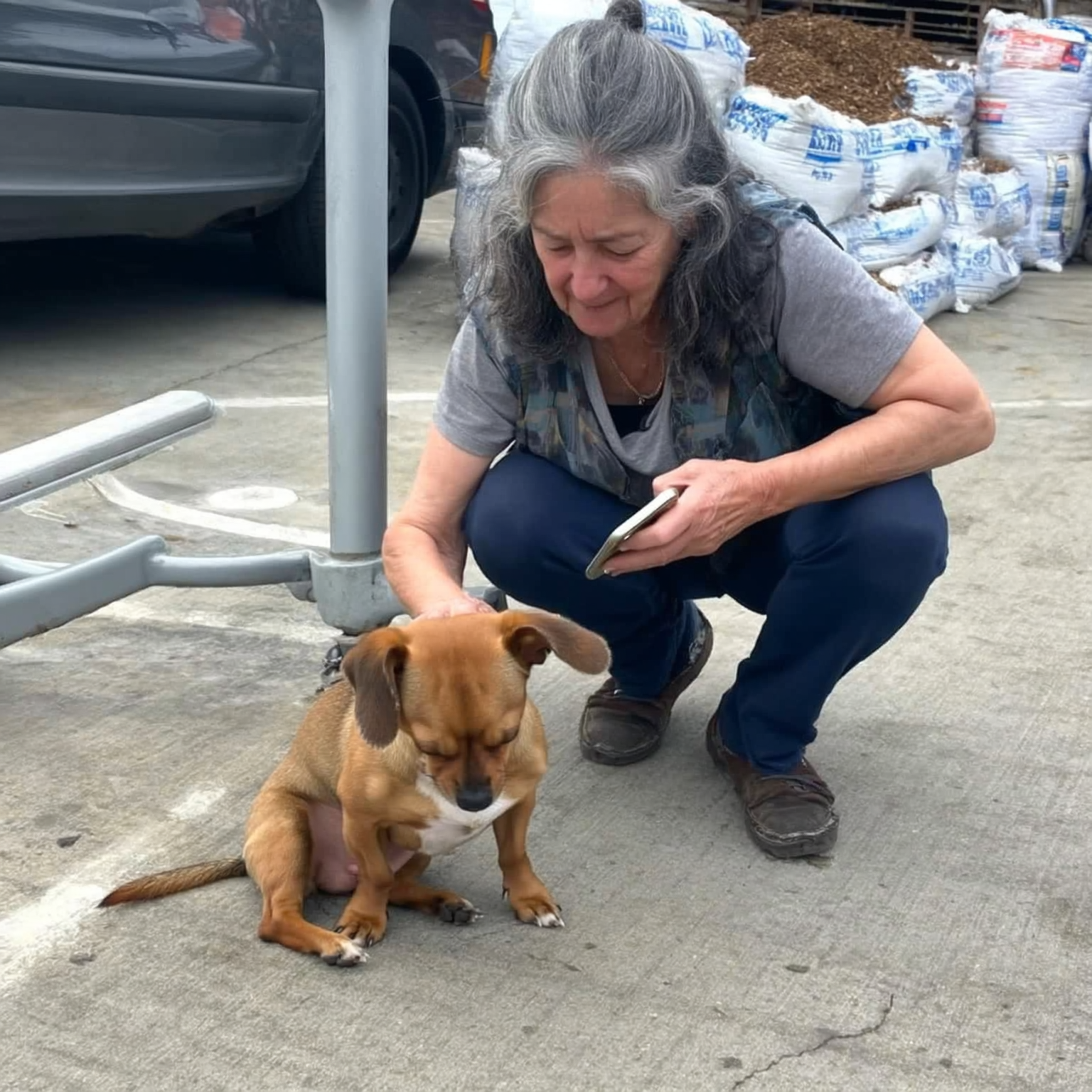
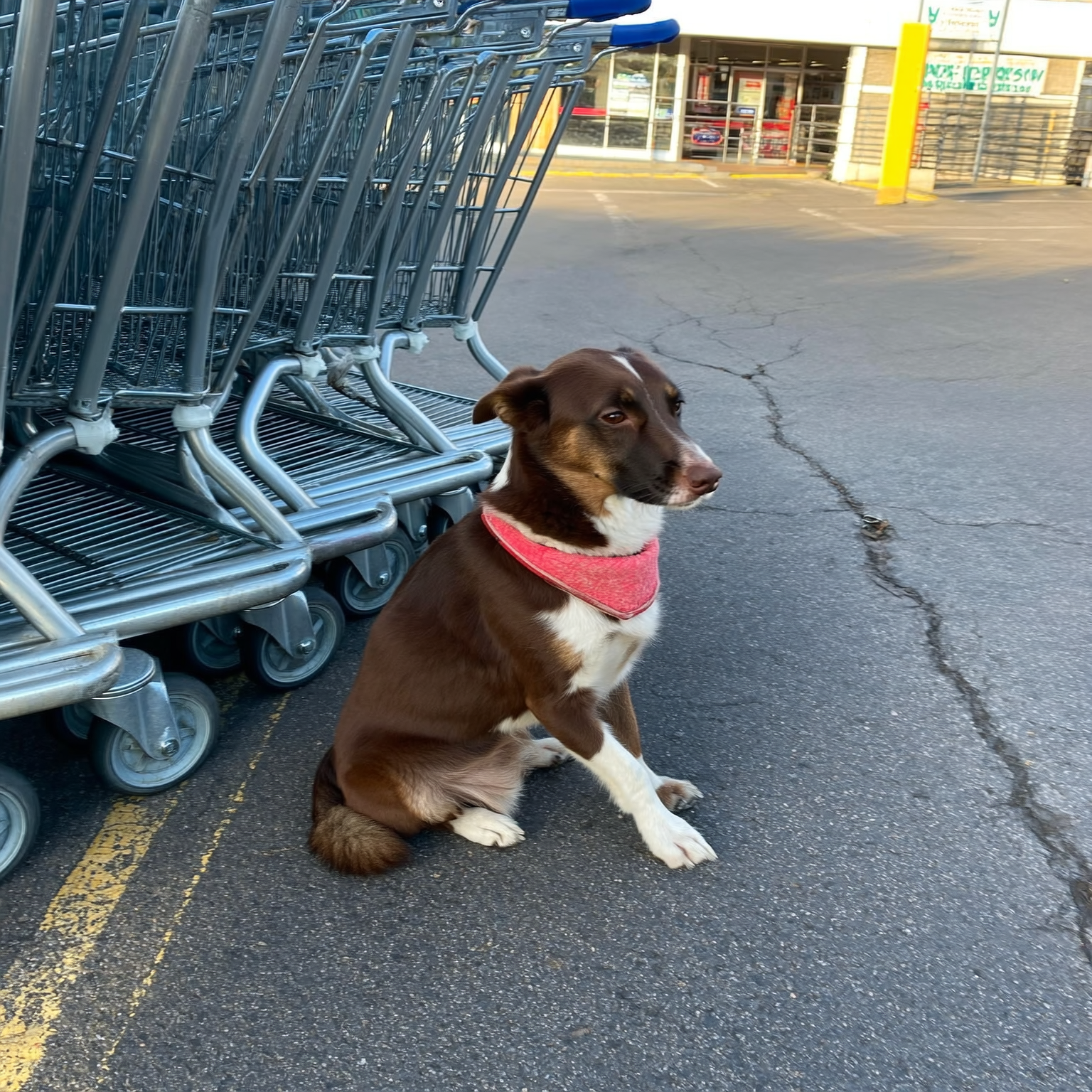
I found a dog in the parking lot of the hardware store last Tuesday. Small thing. Brown and white. Sitting next to the cart return like it was waiting for someone who wasn't coming back. I almost walked past it. I was loading two bags of mulch into the back of my car - Tuesday is my errand day, and I'd been at it since nine - and I caught it out of the corner of my eye. Just sitting there. Not barking. Not running around. Watching every car that pulled in like it was checking to see if this one was the right one. My husband Tom says I can't drive past anything that needs help. A stray cat. A kid who dropped his ice cream. A woman struggling with her grocery cart. He says it like it's a problem. I say somebody has to care. I walked over. The dog didn't run. He looked up at me with these big brown eyes - the kind of eyes that are too tired to be scared anymore. Just exhausted. Like he'd been waiting a long time and was starting to give up. He had a collar. Faded red. Worn soft at the edges. There was a tag - not one of those engraved silver ones, but a handwritten one. Someone had taken a blank metal tag and written on it in permanent marker. A name: Buddy. And an address. No phone number. Just an address. The handwriting was shaky - the kind of handwriting that belongs to someone whose hands don't work like they used to. I pulled the address up on my phone. Twenty-six minutes away. I stood there in the hardware store parking lot looking at this dog and I had a little argument with myself I'm not proud of. Twenty-six minutes is a long drive. I could take him to a shelter. They'd scan for a chip. They'd probably find the owner. Probably. But he was old. You could see it in his face - the gray around his muzzle, the slow careful way he stood up, the cloudy edges of his eyes. An old dog at a shelter is a terrified dog. The noise. The concrete. The cages. And if the owner came looking for him and he wasn't there yet - if she drove to the shelter and they hadn't logged him, or she didn't know which one to call - she'd spend the whole day believing he was gone. I know what not-knowing does to a person. Not the dog part - the part where you lose something you love and the hours before you find out chew through you. I wouldn't want someone to put me through that if they could help it. Plus I had nowhere else to be. It was Tuesday. Mulch was already in the car. Tom wasn't expecting me home until dinner. I opened the back door. Buddy looked at me, looked at the seat, and climbed in like he'd been waiting for a ride all morning. He curled up on the back seat and put his chin on his paws. Like he knew we were going home. I got in the car and drove. The GPS took me off the main road after fifteen minutes onto a two-lane stretch that got narrower the farther I went. Past a feed store. Past a Methodist church with a gravel parking lot. Past a farm stand that was closed for the season with a hand-lettered sign still leaning against the table. The house was small. White. Set back behind a row of pine trees that had grown taller than anyone had planned for. There was a chain-link fence around the yard and a garden bed along the front of the house with stakes in it but nothing growing in it. A birdbath that was dry. A truck in the driveway that hadn't moved in a while - you could tell because the leaves had settled around the tires and nobody had swept them. I noticed the fence right away. The gate on the side was broken. One hinge had snapped and the gate hung open at an angle. That's how Buddy had gotten out. It was obvious. A small fix. Half an hour with a screwdriver and a new hinge. The kind of thing a husband would have taken care of on a Saturday morning. Nobody had fixed it. I sat in the car for a minute. Looked at the house. Looked at Buddy in the back seat. He was sitting up now. Alert. His tail moving - not a full wag, just a slow sweep back and forth. He recognized this place. I opened the back door and walked up to the porch with Buddy at my heels. I knocked. It took a while. I heard movement inside - slow, careful steps. A chain lock sliding. The door opened about four inches and a face appeared in the gap. Small. White hair pulled back. A cardigan buttoned wrong. "Can I help you?" "Ma'am, my name is Janet. I think this is your -" I didn't get to finish. Buddy pushed past my legs and through the gap in the door. The woman took a step back and then she saw him and her whole body changed. Her hands went to her mouth. She lowered herself to her knees right there in the doorway - slowly, carefully, the way a person kneels when their body doesn't move like it used to - and Buddy was in her arms before she hit the floor. She was shaking. Holding him against her chest with both hands. Her face buried in his fur. Saying his name over and over. "Buddy. Oh Lord. Buddy. Buddy." He was crying too. That high whine dogs make when the person they love comes home. His whole back end was moving. His face was pressed into her neck. He was home. I stood on the porch and watched a woman hold a dog like he was the last thing in the world she couldn't afford to lose. She looked up at me. Her eyes were wet. "The fence," she said. "The gate's been broken three months. I keep meaning to call someone to fix it but I -" She stopped. Pressed her face into Buddy's fur again. "Frank would have fixed it in half an hour. He would have fixed it the day it broke." "Frank?" "My husband." She said it the way you say a word that means more than what it means. "He's been gone seven months. He brought Buddy home for me three years ago. Said he didn't want me alone in this house when he wasn't here." She held Buddy tighter. "He still sits by Frank's chair every morning. Every morning. Seven months and he still waits for him. He's the only one in this house who still knows Frank's name." Her voice broke. "I can't lose him too. He's all I have left of him." She looked at me. A stranger on her porch who'd driven twenty-six minutes to bring back a brown and white dog she could have dropped at a shelter. And she said: "Please. Come in. Let me make you coffee." Buddy was already inside. I couldn't leave. Not after that. So I said yes. Her name was Margaret. She was seventy-six. The kitchen was small and clean the way a kitchen is clean when only one person uses it. One mug on the drying rack. One plate. One set of silverware. The table had two chairs but only one had been sat in recently - the other had a stack of mail on it. Bills mostly. A lot of medical envelopes. Buddy walked straight to the other chair and lay down beside it. Put his chin on the floor and looked up at it. Waiting. She made coffee in a percolator on the stove. Not a drip machine. A percolator. The kind that takes ten minutes and fills the whole house with the smell. While it brewed she talked. She didn't start with the sad part. She started with the good part. That's how you know someone really loved somebody - they don't begin with the loss. They begin with what was there before the loss. "Frank was a carpenter. Forty-three years. The kind of carpenter people drove an hour to find because nobody built stairs the way Frank built stairs. He used to say a stair tread is a promise. Every step has to land exactly where the foot expects it. If it doesn't, you've lied to somebody's body." She poured the coffee. Set a mug in front of me. Sat down across the table. "He was strong. That's what I always noticed about him, even when we were young. He had wide palms - could hold a framing square in one hand while he marked a line with the other. I used to watch him work and think: my husband could build a house with his bare hands." She said "build" the way you say a word that means more than what it means. "We were married fifty-one years. Fifty-one. People say that like it's a number. It's not a number. It's every single Sunday morning for fifty-one years where he made coffee before I woke up. Every one. It's a man who put air in my tires the first Monday of every month without being asked. It's someone who knew exactly how I took my coffee. Cream, no sugar. Every time. For fifty-one years." She looked at the chair across from her. The one with the mail. The one Buddy was lying beside. "That was his chair." I didn't say anything. You don't say anything in that moment. You just let someone sit with it. "The doctor put him on Atorvastatin when he was sixty-three. Cholesterol was high. Frank wrote the number down on the back of an envelope and stuck it on the refrigerator. He did that with everything. Numbers. Appointments. Reminders. The fridge was covered in his handwriting." She smiled. The smile hurt to look at. "The doctor said take this pill every night, come back in three months. Frank took it every night. He was like that - if a doctor told him to do something, he did it. Didn't argue. Didn't ask about side effects. Trusted the man in the white coat the same way he trusted his framing square." "Three months later his number was down. The doctor smiled. Frank smiled. I smiled. We thought we'd taken care of it." "He was on it for eleven years." She said it slowly. Eleven years. The way you say a number you've counted every day. "And every time he went in, the doctor would look at his chart and say the same thing. 'Numbers look great, Frank. Keep doing what you're doing.'" "And for eleven years, Frank kept doing what he was doing." She set the mug down. "But he wasn't great. And I didn't see it happening because it happened so slowly." "The first thing was the mornings. By year three he wasn't a 5 AM man anymore. He'd lie there until 6. Then 6:30. He'd swing his legs over the side of the bed and just sit there. Flexing his hands. Open and close. Open and close. Like he was negotiating with them." "I asked him about it once. He said his hands were stiff in the mornings. Just stiff. He said it like it was nothing." "Then his work started to change. Frank used to cut dovetail joints by hand - the kind of joinery that has to be exactly right or it doesn't work at all. By year five he stopped taking jobs that needed handwork. He told customers he was simplifying. He wasn't simplifying. His hands were slow. The fine motor work he'd done for forty years got harder and harder until he just stopped doing it." "He came in from the shop one afternoon and sat at this table and put his hands flat on the wood. He stared at them. He said: 'Margaret, I don't know what's wrong with my hands.'" "I told him to talk to the doctor." "He did. You know what the doctor said?" I knew. But I let her say it. "'Your numbers look great, Frank. Some stiffness is normal at your age.'" She said it like she'd replayed it a thousand times. "Frank's numbers were great. Frank couldn't hold a chisel anymore." "By year seven he was sleeping in the chair after lunch. A man who used to work fourteen hour days couldn't make it from lunch to dinner without lying down. The doctor said: 'Some fatigue is normal at your age.'" "By year eight he was forgetting things. He'd be telling me a story and lose the thread. Just stop. Look at me like he was trying to find where he'd been. He'd ask me what we did yesterday and I'd remind him and he'd nod and say 'right, right' but I could tell he didn't actually remember. He was just filling in the blank." "I asked him to talk to the doctor about it. He did. The doctor said: 'Some memory changes are normal at your age.'" She looked at me across the table. "Everything was normal at his age. Stiff hands. Tired afternoons. Memory loss. All normal. All expected. My husband was disappearing one piece at a time and a man with a clipboard kept telling him this is what disappearing is supposed to look like." "His last year was the worst. He stopped going to the shop. He'd talk about it - he'd say tomorrow he was going to finish the chest. Tomorrow he was going to plane the boards for the new kitchen shelves. Tomorrow he was going to clean up the bench." "He never went. Not once that whole last year." "The chest he started for me - the one you saw - he started that in October. Two months before he died. He told me to expect it Christmas morning. He was so proud of the dovetails. He said: 'You watch, Margaret. These are going to be perfect.'" "He never finished one side." She looked at the empty chair across the table. The one Frank used to sit in. The mail had been there an hour ago. Now it was on the counter and the chair was just empty. "February 4th. A Friday. I was at the grocery store. I was gone forty-five minutes. Came home and the back door was open. Just a few inches. Like he'd gone out to the shop and didn't quite close it." "He wasn't in the shop. He was in the hallway between the kitchen and the bedroom. On the floor. His hand was on the wall. Like he'd reached out to steady himself." "I knew before I knelt down. You don't live with a man for fifty-one years and not know." "Heart attack. They told me at the hospital. A big one. The kind that doesn't give you time to call anyone." She was very still. "The cardiologist asked me about his medications. I told him. Eleven years on Atorvastatin. Every dose. Every appointment. Every bloodwork. Every number good. The cardiologist nodded like he was hearing something familiar." "He said: 'Mrs. Holloway, controlling the number doesn't always mean controlling the disease.'" "That was it. That was the explanation I got. Eleven years of pills. Eleven years of pats on the back. Eleven years of watching my husband forget how to hold a chisel. And the man explaining it to me - the one in the white coat at the hospital - was saying, in fancy words, that we'd been measuring the wrong thing the whole time." She looked at me. Her eyes were wet but she wasn't crying. Just sitting with it. "They watched the number. The number stayed good. The man attached to the number disappeared. And then one morning his heart stopped in the hallway while I was buying eggs." She traced the rim of her mug with one finger. "I keep thinking about the chest. The dovetails. He was so sure he'd finish it. He kept saying give him another weekend." She looked at me. "There was no other weekend." I drove home with the sewing machine in the back seat. I didn't turn the radio on. I drove the back roads the long way. Past the farms and the church with the gravel parking lot and the dollar store at the four-way stop. I drove slow because I wasn't ready to be home yet. Frank's number was good. Frank is dead. Frank's doctor said "everything looks great" while Frank's hands stopped working. Frank's doctor said "normal at your age" while Frank forgot the thread of his own stories. Frank's doctor watched a number on a chart for eleven years and called it medicine, and Frank's hand was on the wall in the hallway and his wife was buying eggs and his wedding gift to her was a half-finished chest in a shop she couldn't bring herself to open. I pulled into our driveway a little after noon. The kitchen light was on. Through the window I could see my husband, Tom, sitting at the table. He had his reading glasses on the end of his nose. He was watching something on his tablet. There was a glass of water next to him that he'd probably been nursing for an hour because that's what he does - he pours one and forgets about it. He looked tired. He always looks tired lately. Tom is sixty-three. He's been on Atorvastatin for six years. His doctor put him on it when his cholesterol came back high after a routine physical. The pill brought his number down. His doctor is happy. Tom is - what's the word - compliant. Not relieved. Not better. Compliant. I sat in the driveway for a long time looking at him through the window. Tom used to coach our nephew's little league team. Used to spend Saturdays in the yard with a chainsaw and a pile of fallen branches. Used to build raised garden beds for me every spring - he'd disappear into the garage on a Saturday morning and come out at dinner covered in sawdust with a new bed for the tomatoes. He hasn't built a garden bed in four years. The garage has wood in it from the last one he started. It's still in there. He's tired. That's the thing. Not sick-tired. Not flu-tired. Dimmed. Like someone turned his light down to sixty percent and walked away. He gets home from work and sits. He wakes up on Saturday and sits. The man who used to lift the rototiller into the truck by himself now asks me to help him carry the laundry basket up the stairs. His hands. I've watched his hands. The grip he used to have - the one that could open any jar in the house - it's not there anymore. He uses both hands now. He thinks I don't notice. I notice everything. The mornings. He sits on the edge of the bed at 5:30 and flexes his fingers. Open and close. Open and close. He thinks I'm asleep. I'm not. I've watched him do that for two years. The reading. He reads the same paragraph of the morning news two or three times because his eyes slide off the page. I've seen him scroll back up. I've seen him read the same sentence three times and then put the tablet down like he'd forgotten what he was looking for. He's sixty-three. He's not old. He's not sick. He's on a pill his doctor says is keeping him safe. And he's disappearing. I sat in the driveway and I saw Frank. The hands that couldn't hold a chisel. The naps after lunch. The thread he kept losing. The chest he kept promising to finish. The man on the floor in the hallway with his hand on the wall. And I saw Tom. Sitting at our kitchen table. Looking tired. Looking like Frank looked in year seven. I went inside. He looked up. "Where've you been?" "I'll tell you over dinner." I kissed the top of his head the way I always do and went upstairs and stood in our bedroom for a long time. His Atorvastatin was on the nightstand. The same bottle that had been there for six years. Same pill. Same dose. Same nightly ritual. For the first time, I picked it up. I told Tom about Margaret over dinner. About Frank. About the eleven years. About the chest with the dovetails that never got finished. About the hand on the wall. He listened. When I was done he looked at me for a long time. Then he said: "That's a sad story. But my numbers are good. My doctor said so last visit." He said it the way he always says it. Not like a man who believes it. Like a man who needs it to be true. I didn't argue. I cleared the dishes. We watched a show. He fell asleep on the couch at 8:30 like he does every night now. I sat next to him and looked at the side of his face - the face I'd known for thirty-six years - and thought about Margaret sitting alone in her kitchen with a stack of medical bills and a shop she couldn't open. I went to bed at ten. I couldn't sleep. Every time I closed my eyes I saw the chest. The dovetails on one side, the pencil marks on the other. The chisel lying on the bench where Frank set it down. And then the image would change. Same shop, same bench, same half-finished work. But it wasn't Frank's shop anymore. It was Tom's garage. The raised garden bed he'd started four years ago and never finished, still leaning against the wall. I got out of bed. Went downstairs. Opened my laptop. The first night was useless. I typed "why do people on statins still have heart attacks" and the internet shouted at me from every direction. One website said statins are the most important cardiovascular drug ever invented. The next said statins are slow poison. A wellness site sold me a forty-dollar supplement that supposedly reversed all statin damage. A medical journal said that supplement had no clinical effect. Every site contradicted the one before it. Every site was selling something. The doctors were selling confidence. The supplement companies were selling pills. The bloggers were selling fear. The truth was somewhere under all of it and I had no shovel. I closed the laptop at one in the morning. I didn't know anything I didn't know at ten. I felt stupid for thinking I could figure out in one night what Tom's doctor hadn't figured out in six years. But I couldn't sleep. Every time I started to drift off I heard Margaret's voice. "They watched the number. The man attached to the number disappeared." I saw the chest. The chisel. The hand on the wall. And then I'd hear Tom. Breathing slow next to me. Alive. Still here. Maybe still fixable, if someone figured out what was happening before he was Frank. Margaret didn't have someone at a laptop for her. Margaret trusted the doctor and the doctor trusted the number and Frank trusted both of them and now there's a half-finished chest in a shop nobody opens. I wasn't going to be Margaret. I went back to the laptop the next night. But I searched differently. The first night I'd been looking for someone to tell me what to think. The second night I stopped looking for opinions and started looking for an explanation of what I'd already seen with my own eyes. Because I'd seen it. I'd sat across from a woman for two hours and listened to her describe - year by year, hand by hand, sentence by sentence - exactly what eleven years of Atorvastatin did to a man whose numbers stayed perfect. So I stopped searching "are statins bad" and started searching what the cardiologist said to Margaret at the hospital. "Controlling the number doesn't always mean controlling the disease." That's when something clicked. I learned this on the second night. The number doctors check - the LDL number - isn't actually the thing that causes heart attacks. LDL by itself is just a particle. It carries cholesterol around the body. It does work. It's not the villain. What causes the kind of plaque that ruptures and stops a heart in a hallway is oxidized LDL. LDL that's been damaged by oxidative stress before it ever reaches the artery wall. Healthy LDL particles pass through the body without building plaque. Damaged ones - oxidized ones - get stuck. They get absorbed by the artery wall. They become the foundation of the plaque that eventually breaks open and stops the heart. The number on the bloodwork tells you how many LDL particles you have. It doesn't tell you how many of them are damaged. I read that three times. A statin reduces the number of LDL particles in your blood. Across the board. It doesn't do anything about which kind you have. If most of your LDL is oxidized, the statin lowers the count but the ratio of damaged to undamaged stays exactly the same. Your number looks great. Your arteries keep building plaque. The statin is treating the wrong half of the problem. I sat at the kitchen table and looked at the pill bottle on the counter. Six years. Six years of treating the wrong half of the problem. For eleven years Frank's Atorvastatin lowered his count and the damage kept happening anyway. His number went down. His arteries went down with it. His doctor watched a number that wasn't measuring what was killing him. I went to bed at midnight. Something had shifted. For the first time in six years the thing I'd been watching in Tom had a shape. It wasn't aging. It wasn't normal. There was a reason his hands didn't work. There was a reason Frank's brain went blank. And it was sitting in a pill bottle on my counter that no one had ever told either of us was treating the wrong half of the problem. The third night I went looking for what was oxidizing the LDL. If the damage was the real cause - and the damage was what the statin wasn't addressing - what was doing the damage? What was the fire that had been burning inside Frank for eleven years while the smoke alarm was unplugged? Oxidative stress. Free radicals. Every cell in your body produces them as a byproduct of normal function. Your body neutralizes them with antioxidants. When there are more free radicals than antioxidants, oxidation accelerates. LDL particles in your bloodstream get damaged. They become the kind that builds plaque. This isn't fringe science. It's standard biochemistry. It's been in medical textbooks for thirty years. The problem is that conventional antioxidants - vitamin C, vitamin E, the kind in your daily multivitamin - don't reach where the LDL damage happens. Vitamin C is water-soluble. It floats in your blood plasma. LDL particles are fat-based. They float in the lipid layer. The vitamin and the particle are in different neighborhoods. You can take a thousand milligrams of vitamin C every day for forty years and your LDL particles can keep oxidizing because vitamin C doesn't go where they are. Most antioxidants are like that. They work somewhere in the body. They just don't work there. I found this on the third night and I had to get up and walk around the kitchen. Six years. Tom had been taking a multivitamin every day for six years. The bottle was right next to the Atorvastatin. Both of them were doing exactly what they said they did. Neither of them was going where the actual damage was. I went back to the laptop. I typed: "what antioxidant reaches the LDL particle." That was the fourth night. That was the one that mattered. There's one. A carotenoid. Naturally occurring. It's what gives salmon and shrimp and flamingos their pink color - they get it from the microalgae they eat. It's fat-soluble, which is the part that matters. It crosses into the lipid layer. It reaches the LDL particle. It neutralizes free radicals exactly where the oxidation is happening. It's called astaxanthin. I'd never heard of it. I read about it for three hours. Studies in Japan, the Netherlands, Finland. Small studies - forty people, sixty people, ninety people. Real journals, not supplement websites. Astaxanthin supplementation reducing markers of LDL oxidation. Astaxanthin supplementation improving the ratio of healthy LDL to damaged LDL. Astaxanthin supplementation in people with cardiovascular risk factors showing measurable changes in the things that actually matter - the oxidation status, not just the count. The studies were small. Every one of them. I tried to find a big one - the kind of trial that would put astaxanthin on a doctor's prescription pad - and there wasn't one. I spent an hour trying to understand why. And then I did. You can't make a billion-dollar drug out of a carotenoid that grows in microalgae. The funding for big clinical trials comes from companies that need to recoup their investment. A natural compound that anyone can grow doesn't have an investor behind it. The studies that exist are small because they're funded by university labs and independent researchers. They don't reach Tom's doctor's office because nobody sends a sales rep with a free lunch and a pamphlet. It's not a conspiracy. It's just how the system is built. The treatments that get talked about are the ones with marketing budgets. The ones without budgets stay in the journals. Margaret's doctor didn't know. For eleven years. Tom's doctor doesn't know. After six. Nobody was going to find this for us. I kept reading. By 3 AM I had a pile of notes. Astaxanthin reaches the LDL particle. Astaxanthin neutralizes the oxidation that builds plaque. Astaxanthin addresses the half of the problem the statin doesn't touch. The studies were small but consistent. The dose used in the studies that showed changes was 12 milligrams a day. That number stuck with me. I'd find out why a week later. I ordered astaxanthin from Amazon the next morning. I picked the first two brands that came up. I didn't know what I was looking for. Both bottles arrived on Wednesday. I didn't tell Tom what they were for. I just put one capsule next to his vitamins on Thursday morning. He looked at it. "What's this?" "Something new. Just try it." "What is it?" "Tom. Just try it. For me." He looked at me, looked at the capsule, picked it up, swallowed it with his coffee. Went back to his tablet. I gave him one every morning after that. Something shifted. Not dramatic. By week two his mornings were a little different. He still sat on the edge of the bed and flexed his hands - but for less time. By week three he stayed awake past nine watching television one night instead of falling asleep at eight-thirty. Small things. I noticed because I notice everything. So at three weeks I asked him to do something I never asked. I asked him to use the home blood pressure cuff we'd bought during the pandemic and never used. I told him I'd been reading about how blood pressure fluctuates and I wanted to track his for a month. He thought it was silly but he did it. His numbers were not where I hoped. They were better than where they started - slightly. But not where the studies said they should be. It was working. Something in those capsules was reaching something. But not enough. I almost gave up. I almost said okay, I tried, it didn't work the way I hoped, this is just aging after all. But I could see it working in his face. In his mornings. In the way he carried the laundry basket up the stairs one Saturday without asking me to take half of it. The needle had moved. Just not enough. That night I went back to the laptop. I typed: "why does astaxanthin work for some people and not others." What I found made me angry. Most of what's sold as astaxanthin in this country is the wrong kind, the wrong dose, or wrapped in the wrong delivery. Astaxanthin comes in two forms. Synthetic - made in a lab from petrochemicals, used mostly in industrial fish farming to color farmed salmon. And natural - extracted from a specific microalgae called Haematococcus pluvialis grown under controlled conditions. The synthetic version has a different molecular structure than the natural one. Studies done on natural astaxanthin don't transfer to synthetic. Most cheap supplements don't tell you which one you're getting. If you have to ask, it's the wrong one. The natural version has to be grown in pure water under intense sunlight. The cleanest, most-studied source in the world is Hawaii - the Kona coast specifically, where the microalgae is grown in closed systems using deep ocean water and natural sunlight. It's the source nearly every major astaxanthin study uses. Most other sources cut corners on water purity or growing conditions. Then there's the dose. The studies that showed cardiovascular benefit used 12 milligrams a day. Most supplements sell 4 milligrams. Some sell 6. To match the dose used in the research, you'd have to take three capsules of most brands. The labels don't mention this. The math just doesn't work out unless you check. And then there's the part that turned my stomach. Astaxanthin is fat-soluble. It only absorbs in the presence of dietary fat. Capsules that are just powder - pressed into a hard capsule shell with no oil carrier - have absorption rates a fraction of what they should be. The studies showing benefit used oil-based softgels, where the astaxanthin is dissolved in a carrier oil. The body absorbs it the way it absorbs the carotenoids in salmon. The two brands I bought from Amazon? I went and checked them. One was 4 milligrams, hard capsule, no oil carrier. The other was 6 milligrams, hard capsule, source not specified. Both were probably contributing something. Neither was anywhere close to what the studies actually tested. I'd been giving Tom the equivalent of a starving man's cracker and wondering why he wasn't gaining weight. I went looking for one that matched what the research actually used. Twelve milligrams. Natural Hawaiian source. Oil-based softgel. All three, in one product. I found it. A company called ClarityMD. Their Hawaiian Astaxanthin is exactly 12 mg per softgel. Sourced from the Kona coast. Oil-based delivery. No filler, no synthetic version, no math required. It arrived three days later. I switched Tom over the next morning. By week two on the new bottle the change was different. Not subtle this time. He got up at six without sitting on the edge of the bed. Just swung his legs over and stood up. I watched him. He didn't notice. By week three he stayed up past ten one night watching a baseball game with me. He hasn't watched a full game since 2021. He commented on the plays. He yelled at a call. He was present in a way I hadn't seen in years. By week four he went out to the garage on a Saturday morning. I was washing dishes and I heard the door open. I walked to the window. He was standing at his bench. Touching things. Not building. Just looking at the project he'd left there four years ago. He came in an hour later and said the garage needed organizing. The garage did need organizing. It had needed organizing for four years. The blood pressure cuff numbers kept dropping. By week six they were in a range his doctor would call healthy without rounding. We ran a full lipid panel at ten weeks. Tom had tapered off the Atorvastatin with his doctor's reluctant agreement after I sat him down and told him everything I'd read. The number was - and I'm telling you what the printout said, not what I want to be true - slightly higher than it had been on the statin. Three points higher. Still within the range his doctor considers healthy. Not the dramatic drop you'd expect if I were making this up to sell you something. But the HDL was up. Meaningfully up. The triglycerides were lower. And the markers his doctor doesn't normally check - the ones I asked for specifically because I'd been reading about them - the inflammation markers, the oxidation markers - those had moved more than any of the others. The damage that the statin hadn't been touching was moving. His doctor looked at the panel for a long time. He said: "Whatever you're doing, your inflammation is in better shape than it was last year. I'd want to look at this more carefully before recommending you stop the statin permanently, but the picture is healthier overall. Keep doing what you're doing." First time in six years. I went back to Margaret's three weeks later. Brought her a coffee cake. Brought her the receipt for the sewing machine because I'd insisted on paying her sixty dollars for it even though she'd marked it at ten. She was sitting at the kitchen table when I knocked. She got up to let me in. The kitchen looked different. The mail was gone from the second chair. The chair was just an empty chair. I told her everything. The four nights at the laptop. What I'd read about LDL oxidation. About antioxidants and where they go. About astaxanthin reaching the lipid layer where the damage happens. About Hawaiian sourcing and oil-based delivery and the 12 milligram dose. About Tom's bloodwork. About the garage door opening for the first time in four years. She listened without interrupting. When I was done she was quiet for a long time. Then she said: "I always thought the number was the whole story." She looked at the empty chair. "He might have finished the chest." I reached across the table and held her hand. I can't bring Frank back. I can't open his shop for Margaret. I can't finish the dovetails on a chest he started for the wife he was going to give it to. But I can tell you what I learned. And I can tell you that the woman who's reading this - because I know it's almost always a woman reading this, watching a husband or a father slowly fade and being told everything's fine - doesn't have to be Margaret. If your husband is on a statin and his hands are getting weaker, his mornings are getting harder, his energy is dimming, and his doctor keeps saying "your numbers look great," the number isn't the whole story. It wasn't Frank's. It wasn't Tom's. If you've been watching someone you love slow down and accept it as "just getting older" - maybe it's not. Maybe it's the damage the statin isn't touching. Maybe it's the oxidation that conventional antioxidants don't reach. If you're on a statin yourself and something inside you knows this isn't right - the aches shouldn't be this bad, the fog shouldn't be this thick - trust that. I sat across from a woman who watched a man she loved trust the system for eleven years. The system watched his number. The system missed his heart. ClarityMD Hawaiian Astaxanthin. 12 milligrams. Oil-based softgel. Kona-sourced. One capsule a day. It's the dose and the form the research actually used. It addresses the oxidation the statin can't reach. Margaret didn't have this option. Nobody told them. Nobody explained that there were two halves to the problem and the pill was only working on one. Nobody gave them an alternative. I can't go back and put a softgel on Frank's kitchen table. I can put one on yours. 👉 https://try.claritymd.co/astx-circ P.S. I want to be honest about something. If you'd told me a year ago I'd be writing this - me, a woman who's never bought a supplement off the internet in her life - I'd have laughed at you. I was skeptical the entire time I was reading. I'm still skeptical of half the things I read on the internet about health. The reason I kept going wasn't that the articles were convincing. It was that what I was reading explained what I was watching with my own eyes in my own house. If you're skeptical, good. Read what I read. The research on astaxanthin and LDL oxidation is in regular medical journals - not wellness blogs. Look it up. Don't take my word for it. Take the journals' word for it. P.P.S. I keep thinking about the chest. The dovetails. Frank told Margaret to expect it Christmas morning and he meant it. He wasn't lying. He genuinely thought he had another weekend. He had another weekend. And another one. And another one. Until he didn't. The reason I'm telling you this is that the people I know who lost husbands didn't lose them all at once. They lost them in pieces, over years, while a doctor watched a number that wasn't measuring what was disappearing. If your husband is sixty-three or sixty-five or seventy and he's been on a statin for years and you've been telling yourself the slowness is just age - please. Don't wait for the hallway. Don't wait for the chest to stay unfinished. P.P.P.S. ClarityMD is running a discount on their Hawaiian Astaxanthin right now for first-time customers, and they have a 90-day guarantee - if you don't see anything change, every penny back. They're a smaller company so they sell out periodically. I keep two bottles in the house now because after what I read I started taking it too. I'm not waiting to be Margaret. 👉 https://try.claritymd.co/astx-circ
Where the ad sends people
try.claritymd.co
Clinically Dosed Astaxanthin — No Fillers, Just Results
I've been diabetic for 12 years and my BP was always high. Since starting ClarityMD, my readings are stable, my energy lasts all day, and I'm not crashing after meals anymore. Even my A1C improved. Best part? My confidence in the bedroom came back. I finally feel in control again.
Learn more: try.claritymd.co(opens in a new tab)