Herbal Findings
Herbal Findings Facebook ad: “Same Age. Same Diagnosis. He Looked 10 Years Younger Than Me”
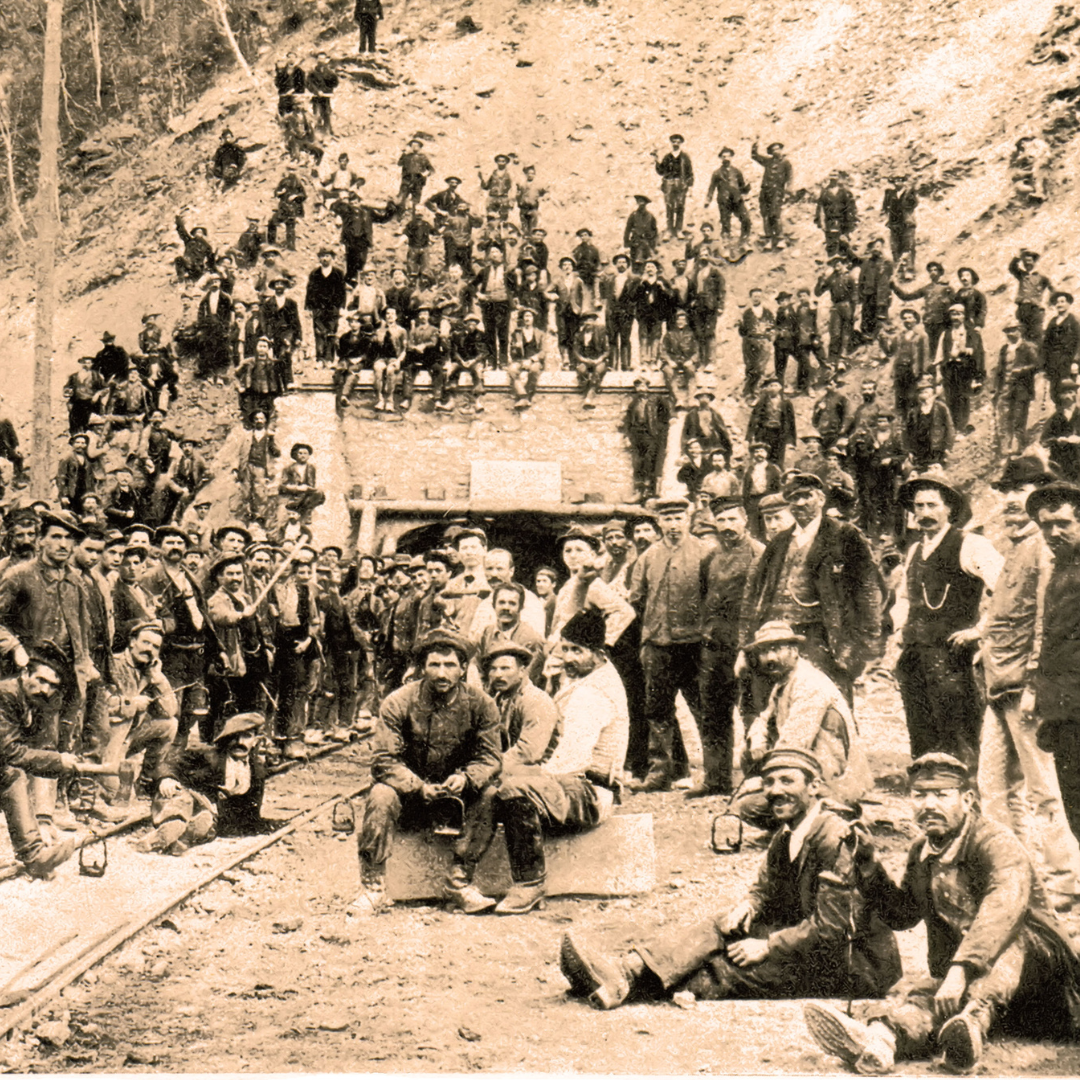
Ran for 105 days, from May 20 to September 2, 2026, the last day Crush saw it.
Run by Herbal Findings on Facebook. Crush is not the advertiser and does not verify its claims. See this ad in Meta's Ad Library(opens in a new tab)
Want an ad like this for your product?
Crush makes new ad images for your product from this ad: your logo, your product photo, your offer.
Trials from $19.95 USD, then $79.95 USD a month. Cancel anytime.
About this ad
- Meta Ad Library ID
- 1506608731103310
- Platforms
- Facebook, Instagram, Audience Network, Messenger and Threads
- Relaunches
- 0
Ad text
Swiss alpine miners drilled the Gotthard and Simplon railway tunnels through solid granite for decades — breathing silica dust thick enough to kill Welsh and Appalachian miners in their forties, smoking unfiltered tobacco daily, working twelve-hour shifts in air that European inspectors called "unfit for human lungs" — and had significantly lower rates of progressive lung disease than miners anywhere else in Europe. Researchers have been arguing about why for nearly a century. They blamed the cold mountain air, then the Swiss diet, then the genetics, then "they just got better workers' compensation and recovered faster." Here's what they missed. I'd heard about the Swiss alpine mining puzzle before. The basic idea is that men working some of the worst tunnel conditions in industrial history somehow aged better than their Welsh and Belgian counterparts doing the same work. Occupational health researchers have been arguing about why for decades. But I never thought much about it until I went to Lugano. My old university mate Tom moved out there 12 years ago for a finance job in the Italian-speaking canton. Married a Swiss woman named Sofia, stayed, built a life. We'd kept in touch but I hadn't seen him in person since 2018. Last spring I flew out for a long weekend. We're both 54. Both quit smoking around the same time. Both got the same COPD diagnosis within a year of each other. Stage 2 the both of us. Same starting line. When Tom picked me up at the airport, I almost didn't recognize him. Not because he looked different in some dramatic way — he just looked like a version of himself the disease hadn't touched. Lean face, good color, stood up straight, no throat-clearing every thirty seconds, no reaching for an inhaler when he loaded my bag into the boot of his car. I caught my reflection in the side mirror on the drive into town and the contrast hit me hard. I looked ten years older than him, easy. Puffy in the face, gray under the eyes, shoulders slumped from the chest weight I'd been carrying for years. The same paunch from sleeping propped up on three pillows every night because lying flat triggered the choking. We're the same age. Same diagnosis. Now we looked like different generations. That first night, Tom and Sofia took me up to a restaurant in a village above the lake. What they ordered would've sent me into a coughing fit at home. Raclette — the entire wheel of cheese melted at the table, smoke from the warmer drifting over the dishes. Charcuterie from a local farm. A bottle of red from the Valais. A wood fire crackling in the corner of the restaurant, sending the occasional curl of smoke through the room. Open windows with the cold alpine air coming in, exactly the kind of cold air that would've locked my chest up for an hour back in Atlanta. I sat there with my rescue inhaler in my pocket and watched Tom handle all of it without a single cough. Because for him, this was just a Tuesday. "You don't cough at all anymore?" I asked. Sofia laughed. "Tom? Tom hikes the Monte Brè trail twice a week. He hasn't touched his Spiriva in almost three years. My grandfather worked the Simplon Tunnel for nineteen years and lived to ninety-one. He never used an inhaler in his life." I looked around the restaurant. A man at the next table, easily in his seventies, sat by the fire eating slowly, breathing through his nose with no audible effort. A woman across the room, probably mid-sixties, was laughing with friends over coffee — no wheeze, no throat-clear, no pause for breath mid-sentence. Nobody in there sounded like me. I'd spent the last four years on Spiriva and Symbicort because my pulmonologist told me my FEV1 was dropping. Swapped to a low-irritant diet. Took mullein and NAC every morning. Walked three miles a day in clean suburban air. My numbers had been dropping a point a year and they wouldn't budge. Honestly, I felt worse than when I'd been doing nothing. More chest weight, more 2 AM wake-ups, brain fog so thick by 2 PM that I'd reread the same email four times. These Swiss people were sitting next to wood fires and breathing cold alpine air that I'd been told to avoid, and looking 15 years younger doing it. Something wasn't adding up. The next morning I brought it up with Tom over coffee on the balcony. "How is everyone here so healthy?" I asked. "Seriously. Sofia's grandfather worked the Simplon Tunnel for nineteen years and outlived almost everyone I know. The man at the next table last night was seventy and breathed like someone in his forties." He shrugged. "I asked the same thing when I first moved here. Took me a few years to figure it out." "And?" "It's not about the air," he said. "That's what we always got wrong back home. We spend all our time worrying about how much goes in. Cut the smoke, cut the dust, cut the exposure. But that's only half of it." "What's the other half?" "Whether your lungs can actually clear what goes in." He was quiet for a second. "Think about it like a chimney with years of soot buildup. You can put the cleanest fire in the world into a chimney, but if the inside walls are caked with creosote, the whole thing backs up. Smoke that should be going out the top settles back down. Doesn't matter how clean you burn if the part that's supposed to carry the smoke out is coated shut." "Okay." "The Swiss don't have cleaner lungs. The men who drilled the Gotthard and Simplon breathed worse silica dust than your American granddads ever touched. They just have cleaner inside walls. Their bronchial tubes still clear what they take in because the cilia — those tiny sweeper hairs that line your airways — still work the way they're supposed to." He tapped his mug. "Every breath you've ever taken goes across those walls. When the cilia work, your lungs handle smoke and dust no problem. When they're paralyzed from years of smoking, the mucus they were supposed to sweep starts hardening and cementing onto the bronchial walls. Layer on layer. Year on year. The smoke from twenty years ago was never the problem. The wall coating is." I didn't say anything for a minute. I was thinking about four years on inhalers. Walking three miles a day. NAC every morning. The FEV1 sitting there, refusing to move. What if cutting back was never going to fix this? What if my bronchial walls had been coated the whole time, and no amount of clean air could fix what was sitting on the inside? I sat with that for a while. "So what's different here? Why are their bronchial walls in better shape than ours?" "Bunch of reasons. But the big one is the herbal vapor tradition. The mountain herbalists in Valais and Ticino had been using four alpine plants for chest complaints going back to the 1500s — old monastery medicine, written down in herbalist books that are still in the local archives. When the Gotthard and Simplon tunnel projects started in the 1870s and the camps went up, the village women brought the tradition into the barracks. Every camp had a copper pot steaming the four plants over the stove after shift. The men leaned over with a wool cloth and breathed the vapor for twenty minutes before they hit the bunks. Every night. For three generations of tunnel men." He took another sip. "Then in the 1900s the Davos sanatoriums became the place every wealthy lung patient in Europe went to recover. Same four plants. Same vapor practice. The Davos doctors documented the active compounds in their research journals. Modern peer-reviewed pulmonology research keeps citing those papers." "Sofia's grandfather did the vapor every night until he died at ninety-one. Sofia's mother still keeps the copper pot. It sits on a shelf in her kitchen." "Back home we have Mucinex," Tom said. "That's about the extent of it." Then he said the line I kept replaying for the rest of the trip. "In America you treat your lungs like they're a one-way pipe. You smoke for thirty years, quit, take some Mucinex, and act surprised when nothing clears. The Swiss tunnel anomaly isn't an anomaly. They cleaned their bronchial walls every night for a hundred and fifty years. We don't." I couldn't stop thinking about that conversation. I'd spent four years on inhalers and my FEV1 hadn't moved. I was coughing into the sink every single morning, ten minutes of dragging unproductive hack before I could face anyone. A weight in my chest no inhaler had ever loosened in four years of trying. Waking up between 2 and 4 AM with a wet rattle in my throat, three or four nights a week, having to sit up for twenty minutes before I could lie back down. Brain fog every afternoon. A puffy, oxygen-starved look in the mirror that my wife had started gently asking about. I'd been treating these as separate problems for years — more Spiriva for the FEV1, more Mucinex for the cough, a wedge pillow for the rattle, more coffee for the fog. None of it worked. But if Tom was right, all of it traced back to one place. The bronchial wall coating. So when I got home, I went deep on the research. I started with the question that was actually bothering me. If I'd quit smoking fourteen years ago, why was my FEV1 still dropping a point a year? The answer turned out to be the most important thing I'd learned about my own lungs in a decade. Your bronchial walls don't just sit there. They're lined with millions of tiny hair-like sweepers called cilia, and those cilia are what clears every dust particle, exhaust molecule, pollen grain, and breath of cigarette smoke that's ever entered your airways. Cilia paralyze when you smoke. They stop firing. The mucus they were supposed to sweep starts sitting on the wall surface instead of moving out. And here's the part that floored me. The mucus that gets left behind doesn't just sit there politely. It hardens. It cements to the bronchial wall. It forms a second layer underneath the fresh mucus your lungs still produce every night. By the time most former smokers are in their 50s and 60s, they're running on bronchial walls coated with decades of cemented mucus that nothing they swallow ever reaches. That's why cutting smoke didn't fix me. The smoke was never the only thing the walls were dealing with — it was just one input. I'd quit the smoking and left every coated decade of cemented mucus untouched. The wall coating kept getting thicker even after the cigarettes stopped. And once I understood that, every symptom I'd been treating as separate started lining up with the same root cause. The morning cough. The chest weight. The 2 AM rattle. The afternoon brain fog. The FEV1 that kept dropping. They were all the same problem — bronchial walls coated with cemented mucus the inhalers and expectorants couldn't reach. Five problems. One coating. And the Swiss tunnel miners weren't winning a genetic lottery. Their cultural habit — the four alpine plants boiled in the copper pot, the twenty minutes under a wool cloth every night after shift — happened to be the exact intervention that dissolves cemented mucus and revives paralyzed cilia. They'd been doing it for centuries without knowing the biochemistry. The mountain herbalists who taught them just knew it worked. We don't do any of that. We thin the surface mucus with Mucinex and wonder why our lungs are still failing at 60. Now I had the problem figured out, but I still needed to know what to actually do about it. I wasn't going to set up a copper pot in my Atlanta kitchen. I wasn't going to lean over a steaming pot every night with a wool cloth over my head. I needed something I could actually do at home. I started reading about the four compounds the Swiss herbalists had been using and the modern Davos research that documented them. The same compound names kept appearing in modern peer-reviewed respiratory studies — sometimes the exact alpine herb, sometimes a Mediterranean cousin with the same active molecule. Eucalyptus. Calendula. Licorice root. Peppermint. What got my attention was how the research describes what each one does. Eucalyptus penetrates the lipid bonds that hold cemented mucus to bronchial walls — reaching depths no swallowed expectorant can replicate. Calendula breaks down the hardened coating itself and helps dormant cilia underneath start firing again. Licorice root dissolves the deep inflammation in the bronchial tissue, letting the walls release the coating that's been adhering for decades. Peppermint activates the cough reflex from below the cemented layer instead of above it — pushing the dissolved coating up and out instead of leaving it to settle back down. They don't just thin the surface. They dissolve the wall coating. Tom's bronchial walls had been clearing properly for 12 years in Switzerland, surrounded by a culture where chest tinctures and herbal vapors are still sold at every village pharmacy and people will still tell you their grandmother's recipe. Mine had been getting coated for thirty years on a standard American lifestyle. The difference wasn't genetics or willpower. His walls cleared. Mine didn't. So I went to my local supplement shop and grabbed eucalyptus oil capsules and a bottle of mullein. Took them for three weeks. Felt nothing. Went back to the research and found what I'd missed. The studies that showed real changes in bronchial wall coating and FEV1 all used direct airway delivery. Not capsules. Not teas. Not tinctures. Spray. Steam. Vapor. Inhalation. The way the Davos sanatoriums delivered them. The way the tunnel miners had delivered them. Not the way American supplement companies sell them. The capsule on my counter? "Eucalyptus essential oil, 500mg." No bioavailability information anywhere on the label. I looked it up — when you swallow these compounds in a pill, your stomach acid destroys 40 to 60 percent of the active molecules within minutes. Your liver filters out another 30 to 50 percent. Less than 1 percent of what's in the capsule ever reaches lung tissue. Less than 1 percent. I searched Amazon. Same story everywhere. Every eucalyptus capsule, mullein extract, lung-cleanse tea on the market was an oral delivery method delivering a hundredth of what the studies actually used. Which is why most people try them, feel nothing, and give up. They were taking a dose too weak to do anything. Turns out it's a delivery thing. Direct airway delivery achieves 60 to 80 percent bioavailability to lung tissue. That's why hospitals use nebulizers and inhalers for serious breathing emergencies. Never pills. The lungs are not the stomach. I found a company called Naturva that built a direct airway spray with the same four botanicals — pharmaceutical-grade extraction, exact concentrations on the label, delivered as a fine mist that goes straight to the bronchial wall instead of through digestion. Two sprays under the tongue, twice a day, thirty seconds total. The same four-plant principle the Swiss tunnel men used in the copper pot. Same delivery direction — straight to the airway, never through the stomach. I had a feeling this was what I'd been looking for. They had a 60-day money-back guarantee. So I figured why not. I'd spent more on Mucinex and NAC and mullein capsules that did nothing than a three-month supply of this was going to cost. I ordered it the same evening. Two sprays every morning and two before bed. Same inhalers, same diet, same lifestyle, no other changes. The first week I noticed a wet cough that surfaced more than usual, and the mucus coming up was darker than what I'd been spitting into the sink for years. Not green. Not yellow. Dark brown, almost black around the edges. It freaked me out at first, then I remembered reading that this was a sign the cemented layer was finally releasing — years of buildup my body had been sitting on, now coming out. Around day 11, I went hiking with my brother — something I'd been quietly avoiding for two years because the chest weight made the inclines miserable. Made it up the trail without stopping to catch my breath. An hour later I realized I hadn't reached for my rescue inhaler once. My body just handled the climb the way it was supposed to. A couple weeks in, the 2 AM rattle started lightening. I slept through the night three times in a row for the first time in six years. My wife said I seemed more present in the evenings — less wheezy, less distracted, less exhausted by 7 PM. The puffiness around my eyes started fading. About a month in, I had pulmonary function testing at my annual follow-up. I almost didn't open the patient portal when the results came back. I'd been opening that same report for ten years and seeing the same line in red — FEV1 dropping a percentage point a year, every year, no exceptions. This time it wasn't. My FEV1 had jumped almost three points. After a decade of steady decline, it had reversed in three weeks. I sat at my desk and read the line three times before I believed it. Ten years of watching that number drop. Ten years of "let's just monitor it." And the number had finally moved — not because I'd cut anything new, but because I'd given the bronchial walls something that could finally reach them. Around the same time my wife said I looked "less gray." A coworker asked if I'd been on vacation. I hadn't. I just didn't look puffy and oxygen-starved anymore. There's a real difference between lungs whose walls are finally releasing and lungs running on fourteen years of cemented buildup, and you feel it in everything — sleep, energy, the morning cough, the way your chest feels when you draw a full breath for the first time in a decade. I called Tom a few weeks ago and told him. He laughed. "I told you. It's the wall coating." "You could've been more specific." "I'm not a doctor, man. I just live here. I breathe what they breathe and apparently it works. You had to do the homework yourself." If your FEV1 has been dropping a point a year for years and nothing your pulmonologist prescribes will stop it… If you've been on Mucinex for a decade and still cough into the sink every morning… If you've cut every irritant you can think of and your chest still feels heavy… If your inhalers used to do something and now they barely do anything… If you wake up at 2 AM with a wet rattle you can't sleep through… If your face looks puffier and grayer than it did five years ago and you can't figure out why… I'm not saying you have permanent damage. But I spent four years cutting everything I could think of while the real problem sat there untouched. The thing my lungs needed wasn't a stronger inhaler or a cleaner diet. It was something that could actually reach the cemented coating that had been sitting on the bronchial walls since the cigarettes stopped fourteen years ago. The Swiss tunnel anomaly was never an anomaly. Their culture has been clearing the wall coating for a hundred and fifty years. Ours has been ignoring it. The good news is you don't have to move to Lugano or set up a copper pot in your kitchen. You just have to give the bronchial walls something that can finally reach them. Have a look at the link below. 60 days to see if you feel different. If not, you get your money back. I'm betting you'll see what I saw. https://naturvahealth.com/products/naturva%E2%84%A2-lung-cleansing-spray
Where the ad sends people
naturvahealth.com
Same Age. Same Diagnosis. He Looked 10 Years Younger Than Me 😮
He hikes twice a week. Hasn't touched his Spiriva in three years. Sits beside a wood fire eating melted cheese without coughing once. We have the identical diagnosis — and I'm the one on three pillows every night. What he told me about the "wall coating" changed everything.
Learn more: naturvahealth.com(opens in a new tab)