
Inactive· since Apr 14, 2026
- 4
- days it ran
- 0
- relaunches
- 98
- EU reach
Ad copy
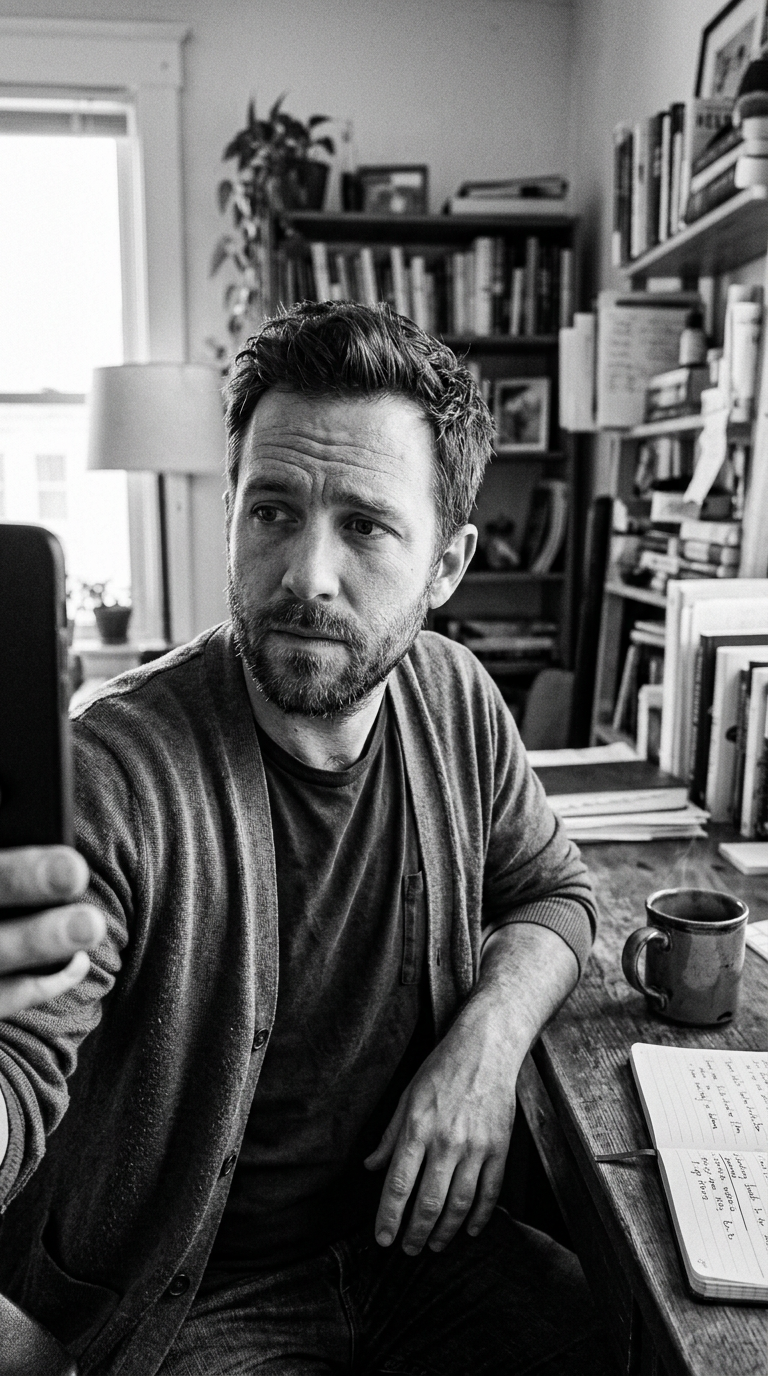
I can handle everything alone. I've been proving it for three years. No calls. No help. No complaints. Groceries, bills, laundry, the car, the apartment, the job, the weekends, the silence — all handled. By me. Alone. Efficiently. Last month my body gave me a list of everything it's been carrying while I pretended I was fine. The insomnia came first. Then the weight. Then the headaches that lasted days. Then the thing where I'd sit in my car after work for forty minutes because going inside meant being alone again and I couldn't make myself open the door. I'm 44. Divorced three years ago. Two kids I see every other weekend. The divorce wasn't the hard part. We'd already been done for a while. The hard part was the silence that came after. Here's how connection disappears. Not overnight. Not in a fight. Just slowly. The married friends stopped calling — I wasn't part of a couple anymore and couples socialize with couples. The single friends stopped calling — 44-year-old divorced dad isn't exactly Friday night material. Work friends stayed at work. Family called on birthdays. And in between — nothing. Not hostile nothing. Just quiet. Weeks passing without a single conversation that goes deeper than "how's it going" and "good, you?" Nobody stopped calling on purpose. The calls just thinned out until they stopped. And by the time I noticed, reaching out felt forced. Like texting someone after two years of silence and pretending it's normal. So I didn't reach out. And they didn't reach out. And the gap got wider. And nobody notices. Because nobody's close enough to notice. I didn't think it was a problem. I thought it was just my life now. I could handle it. I'd always been the guy who handled things. Self-sufficient. Low-maintenance. Didn't need much. That was the story. And I believed it. Because I was functioning. Job was fine. Kids were fed on my weekends. Apartment was clean enough. Bills were paid. But functioning isn't living. And my body knew the difference even when I didn't. The sleep went first. Not dramatic insomnia. Just waking at 3 AM. Brain running. Not about anything specific — just a hum. A low, constant hum of something wrong I couldn't name. Then the energy. Not tired from work. Tired from everything. Grocery store exhausting. Cooking exhausting. The idea of going anywhere on a Saturday — exhausting. I started eating every meal standing at the counter. Phone in one hand. Fork in the other. Not tasting anything. I started spending whole weekends without speaking. Friday night to Monday morning. Sixty hours of silence broken only by a podcast I wasn't really listening to. My daughter said one Sunday: "Dad, you're quiet today." I was quiet every day. She just only saw me two days a month. The thing I didn't understand — the thing nobody tells you — is that being alone isn't just a feeling. It's a signal. Found it at 2 AM. Not looking for it. Scrolling because the alternative was staring at the ceiling. A guy on a forum wrote: "I've been on my own for three years. Not depressed. Not antisocial. Just alone. And my body started falling apart. Not from illness. From the absence of connection. Turns out being alone for too long puts your nervous system in the same state as being under constant threat." He wasn't describing loneliness. He was describing biology. Your nervous system doesn't just monitor physical danger. It monitors whether you're connected. Whether someone in your world actually knows how you're doing. Whether you're seen. When the answer is no — for weeks, months, years — your system escalates. Same stress response as if you were in danger. Because to your nervous system, unconnected IS unprotected. That's why the insomnia. The weight. The flatness. Not because I was sad about being alone. Because my body was treating alone as a threat. Running survival mode in an empty apartment. Every night. For three years. And the more I proved I could handle it, the more my body carried in silence. He mentioned a quiz. Three minutes. Not about relationships. About the nervous system underneath. It asked about feeling wired but exhausted. About rest that doesn't restore. About carrying everything yourself and not understanding why your body is giving out when the load hasn't changed. I said yes to everything. Not because things were terrible. Because I'd been so good at handling it alone that I never questioned what "alone" was costing me. Five minutes a day. Not a social strategy. Not a "put yourself out there" plan. Something that tells my nervous system the threat level can come down. Even alone. Even in the quiet apartment. Week one. I noticed how tight I was. Sitting on my couch. Nobody around. Nothing happening. And my body was braced. Shoulders up. Jaw locked. Like it was waiting for an impact that was never coming. Three years of readiness. In an empty room. Week three. Slept past 3 AM. Woke up at 5:30 and didn't immediately start the hum. Just lay there. The apartment was quiet. And for the first time the quiet felt like quiet. Not like absence. Week five. My daughter was over for the weekend. We were watching a movie. She leaned into me without asking. Old me would've been there but not there. This time I felt her weight against my side. The warmth of it. I put my arm around her. She said: "This is nice, Dad." It was. And I actually felt it. Week eight. I called my brother. First time in over a year. We talked for forty minutes about nothing. Old stories. Dumb jokes. The kind of call that has no purpose except connection. When I hung up I sat there for a while. Not empty. Not full. Just... present. A person in a room who'd just talked to another person. Something my body had been starving for while I kept telling it I was fine. It's been four months. I still live alone. I'm still divorced. The apartment is still quiet on weekdays. But the quiet is different now. It's not the kind my body treats as a threat. It's just quiet. I sleep most nights. The 3 AM hum is rare. When it comes, it passes. I called my brother again last week. He said: "Two calls in a month? Who are you?" Fair question. I'm not suddenly social. I haven't joined a group or found a crew or rebuilt my contact list. But the wall between me and the world got thinner. Thin enough that a phone call doesn't feel like a performance. Thin enough that my daughter leaning into me on a couch actually registers. Turns out I was never bad at connection. My nervous system was so locked in survival mode that connection couldn't reach me. The signals were coming — my daughter, my brother, the world — and my body was blocking them to stay safe. Safe. Alone. And slowly falling apart. If you've been carrying everything alone and your body is starting to give out... If you're not lonely — just alone — and you can't explain why you're exhausted... If you can handle anything except the quiet that comes when there's nobody to handle it with... It's not weakness. It's a nervous system that's been treating isolation as a threat for years. And it won't stand down just because you keep proving you can take it. Liven has a quiz. Three minutes. Not about your social life. About the nervous system that's been running survival mode in an empty room. Five minutes a day. Not to stop being alone. To stop your body from breaking because of it. Link's below.
I can handle everything alone. Apparently my body can't.
LEARN MORELike this ad? Make it yours.
Crush rebuilds this exact creative around your product — your brand, your colors, your offer — in about a minute.