Michelle Foster
Michelle Foster Facebook ad: “A stranger at dinner tilted her head and asked me one…”

Ran for 45 days, from July 16 to August 30, 2026, the last day Crush saw it.
Run by Michelle Foster on Facebook. Crush is not the advertiser and does not verify its claims. See this ad in Meta's Ad Library(opens in a new tab)
Want an ad like this for your product?
Crush makes new ad images for your product from this ad: your logo, your product photo, your offer.
Trials from $19.95 USD, then $79.95 USD a month. Cancel anytime.
About this ad
- Meta Ad Library ID
- 1508109147255684
- Platforms
- Relaunches
- 0
Ad text
I was diagnosed with anxiety at 46. I am 54 now. Eight years of Lexapro, eight years of the little blue melatonin bottle on my nightstand, eight years of a meditation app my daughter downloaded on my phone that I opened maybe eleven times total. Eight years of my husband Rob asking me at 2:47 in the morning, "Michelle, are you awake again?" and me pretending I wasn't so he could get back to sleep. Turns out I did not have anxiety at all. I need to tell you what a woman named Diane said to me at a dinner party in September, because it is the only reason I am sitting here writing this at a normal hour of the morning with a cup of coffee in my hand instead of lying awake counting the ceiling tiles above my bed. Let me back up. I was 46 the first time a doctor used the word anxiety about me. It was a Tuesday. I remember because I had come from the grocery store and there was a bag of frozen peas melting in the car while I sat in his office trying to explain what was happening to me. The racing thoughts. The 2 AM wake-ups where my heart would start pounding before my eyes were even open. The tension in my shoulders that never let go, that made my neck ache all the way up into my jaw. The feeling that something was wrong even when nothing was wrong. Standing at the sink washing dishes and feeling my chest get tight for no reason at all. He listened. He was kind. He was the kind of doctor who nodded a lot and made real eye contact and I appreciated that. Then he wrote me a prescription for Lexapro and told me that this was very common in women my age. Perimenopause. Stress. The changes. He said the word "changes" like it was in italics. I filled the prescription that afternoon. I took the first pill in the parking lot at CVS with a bottle of water and I cried a little bit and I told myself that this was going to help. For eight years I "managed" a condition I did not actually have. Let me tell you what those eight years looked like, because if you are reading this and any of it sounds familiar, I want you to keep reading. I really do. The Lexapro helped in the way Lexapro helps. It took the edge off. It flattened the very top of the feeling. But the racing thoughts never actually stopped, they just got quieter and further away, like a radio playing in the next room. The 2 AM wake-ups kept happening. The tension in my shoulders never let go. My jaw still ached every morning. My dentist told me at my 47-year-old cleaning that I was grinding my teeth in my sleep and asked if I was under a lot of stress. I told him no more than usual. He fitted me for a night guard. I have worn one every night since. I added melatonin. 3 milligrams. Then 5. Then the 10 milligram ones from Costco in the giant bottle that Rob teased me about. He called it my "horse pill jar." I added magnesium. Little pink capsules from the drugstore. I do not remember which form because I did not know at the time that form mattered. I just knew the bottle said magnesium and my sister-in-law had said it helped her sleep, so I bought it. I added ashwagandha. I added valerian root. I added a lavender oil roller I would put on my temples before bed. I added a weighted blanket that cost $89 and that Rob said felt like being buried alive but I loved. None of it fixed the actual thing. The actual thing was that my nervous system never shut off. Not really. It just got a little slower. It hummed at a lower frequency. But it was always humming. At 48 the doctor upped the Lexapro. At 49 he added trazodone for sleep. At 50 my new gynecologist put me on a low-dose HRT patch because "your symptoms are perimenopausal." At 51 my regular doctor asked if I wanted to try Buspar because sometimes SSRIs plus Buspar work better for "anxiety with a somatic component." I said yes to everything. I did what they asked. I want you to understand that. I was not one of those people who does not follow doctor's orders. I was the model patient. I refilled every prescription on time. I took every pill. I went to every follow-up. I did the cognitive behavioral therapy the psychiatrist recommended, $175 a session, forty-five minutes on a leather couch talking about my childhood and my mother and my job and my marriage while a very kind woman with wire-rimmed glasses wrote things down on a yellow legal pad. I did it for eleven months. I got better at describing my symptoms. I did not get better. The thyroid panels came back normal. The hormone panels came back normal. The cortisol test they finally did on the fourth try came back "high normal," which the doctor told me was still technically normal so we did not need to do anything about it. The sleep study, which cost me a $600 copay and required me to sleep in a room in a hospital with electrodes glued to my scalp and a camera pointing at my face, came back inconclusive. The neurologist did an MRI of my head to rule out anything scary. It came back clean. Everything came back normal. Everything came back fine. Everything came back "we have ruled that out." And every single night I still lay in bed at 10:45 PM with my heart racing and my mind running through what I had to do the next day and my shoulders locked up somewhere around my ears. Every single night I still woke up at 2:47 AM and lay there in the dark, doing the math. If I fall asleep in the next twenty minutes I can still get four and a half hours. If I fall asleep in the next hour I can still get three and a half. If I fall asleep in the next hour and a half I can still get three. And if I still could not fall asleep, at some point around 4:15 AM I would give up and go downstairs and sit on the couch with my hands wrapped around a cup of decaf and wait for the sky to get lighter through the kitchen window. Rob would come down at 6:15 for his shower. He would look at me on the couch and his face would do the thing it did, that mix of worry and helplessness that made me feel like I was doing something to him. Like my sleeplessness was a thing I was doing on purpose. He would kiss the top of my head and say, "Bad night, babe?" and I would nod. He would make me a piece of toast. He would go to work. I stopped saying yes to things. I stopped meeting Karen for coffee on Saturday mornings because I was too tired. I stopped hosting Thanksgiving because I could not imagine having twelve people in my house when I had not slept properly in three weeks. I stopped going to the book club I had been in since 2011 because sitting through a two-hour discussion of a novel I had barely absorbed at 8 PM on a Thursday felt like being asked to run a marathon. My daughter Emma, who lives in Charlotte, would call me on Sundays and I could hear it in her voice. That careful voice. The voice you use with an elderly relative you are worried about. She was 26. I was 52. I should not have been the one she used the careful voice on. At 53 I started to accept that this was just my life now. That this was who I was. A woman with anxiety. A woman who did not sleep. A woman who took eight pills at bedtime and still lay awake. I had bought a very expensive silk eye mask off Instagram. I had a whole shelf in the linen closet dedicated to what Rob called my "sleep arsenal." I had accepted that some people just were like this. Some people just did not get to sleep through the night. It was fine. I was managing. And then in September of last year Rob's college friend Dennis had a 65th birthday dinner at a restaurant in the town over and Rob asked if we could go and I almost said no and then I said yes because Dennis is a good guy and it had been a while. There were maybe fourteen people at the table. I did not know most of them. I was seated next to Dennis's sister-in-law, a woman named Diane, who I had never met. She was in her mid-sixties. Silver hair cut into a bob. Very good posture. The kind of woman who has clearly figured something out that the rest of us have not. We got to talking. She asked what I did. I told her. I asked what she did. She said she had retired from teaching but that she was now doing "some kind of coaching work" that she found hard to explain at dinner parties. She laughed. She had a good laugh. At some point the conversation went where these conversations always go for women our age. Sleep. Or the lack of it. Someone at the other end of the table said something about how she had not slept through the night in three years and everyone laughed the way women laugh about that, the tired laugh, the "us too" laugh. I laughed too. I said something like, "Try eight years." And Diane, who was sitting next to me and who had been drinking a glass of sparkling water and eating her salad very slowly and listening more than she was talking, turned and looked at me. She tilted her head slightly. The way a bird does when it is trying to figure out what it is looking at. She said, "Can I ask you something?" I said sure. She said, "How long have you been managing this? And what have you been managing it as?" I told her. Eight years. Anxiety. Perimenopausal anxiety. The Lexapro, the trazodone, the Buspar, the melatonin, the magnesium, the whole shelf in the linen closet. She listened to the whole thing. She did not interrupt me. She let me get all the way through. Then she said, "I want to tell you something, and I do not want it to sound rude. But I do not think you have anxiety." I laughed. I actually laughed. I said, "I have been told I have anxiety by six different doctors." She said, "I know. I was too." She had been diagnosed with generalized anxiety disorder at 51. She had been on Zoloft for six years. She had done everything I had done. Then, she said, she had ended up at a functional medicine practice in the town where her sister lived because her sister basically dragged her there, and the functional medicine doctor had said something to her that no other doctor in six years had said. "Diane, has anyone ever actually looked at your intracellular magnesium status? Not serum magnesium. Not what shows up on a standard blood panel. But what is actually happening inside your cells." Diane said she had looked at him like he was speaking another language. She said she had said, "I take magnesium. It never did anything." And the doctor had said something to her that she said to me at that dinner table, and I am going to write it down here as close to word for word as I can remember it, because it is the sentence that undid eight years for me. He said, "It is not that magnesium does not work. It is that most magnesium supplements are the wrong form at the wrong dose, and the racing thoughts, the 2 AM wake-ups, the tension that never releases, the feeling that your nervous system will not turn off, those are not psychiatric symptoms. Those are what a nervous system does when it does not have enough magnesium to activate GABA. GABA is the neurotransmitter that tells your brain to power down. Without adequate magnesium, your brain cannot power down. Your cortisol stays elevated at night. Your body stays wired. You lie there in the dark exhausted and wired at the same time and you think you are anxious, but what you actually are is depleted." Diane said, "I sat there in his office and I cried. Because I had spent six years being told my brain was broken. And what he was telling me was that my brain was fine. My brain was just missing what it needed to shut off at night." I sat there at the dinner party with my fork halfway to my mouth. I did not put it down. I did not pick it up either. I just sat there. Diane said one more thing to me that night. She said, "The other thing he told me, the thing that finally made it work for me, is that the form matters more than anything. Most of what is on the drugstore shelf is magnesium oxide. Your body absorbs about 4 percent of magnesium oxide. The rest of it goes right through you. You can take magnesium oxide every day for ten years and never actually fix a deficiency. What your nervous system needs is magnesium in a form that can actually cross the blood-brain barrier and reach GABA receptors. Bisglycinate is one. Threonate is one. And they need to be at a full dose. Not the 100 milligrams that most bottles have. Somewhere in the 350 to 400 range, which is what your body actually uses in a day." I asked her what she took. She wrote it down on the back of a receipt she pulled out of her purse. She said, "I take this one. It has three forms of magnesium in it, including L-threonate, which is the one that actually reaches the brain. And it has taurine and glycine and B6, which are the cofactors your body uses to make magnesium do what it is supposed to do. I sleep now. Through the night. I have for two years." I put the receipt in my wallet. I finished my salad. I went home. I did not sleep that night either, but for a different reason. I sat up in bed with my phone and I read every single thing I could find about magnesium and cortisol and GABA and sleep. I read until 3 AM. I read until my eyes hurt. Everything Diane had said was there. Not on some fringe website. On PubMed. On the NIH. In peer-reviewed journals. Studies out of Germany and Japan and Italy showing that magnesium deficiency directly disrupts the cortisol curve. That cortisol is supposed to drop at night so you can sleep, and when magnesium is low, it does not drop, it stays elevated, and your body sits in a low-grade stress response all night long. That the symptoms of chronic magnesium insufficiency in older adults are indistinguishable from what a psychiatrist would call generalized anxiety disorder. Racing thoughts. Muscle tension. 2 AM wake-ups. Jaw clenching. That feeling of being wired and exhausted at the same time. And that most Americans over 50 are deficient, and most standard blood tests do not catch it, because 99 percent of your body's magnesium is inside your cells, not in your blood, and standard blood panels only measure the 1 percent in your blood. I sat there in bed at 3:15 AM feeling something I had not felt in a very long time. Which was hope. Actual hope. Not the wishful kind. The kind that has evidence behind it. I ordered what Diane had written down the next morning. It was called GLOV Magnesium Complex. Longevity Cortisol Support. It had magnesium bisglycinate, magnesium taurate, and magnesium L-threonate, which is the one that actually crosses into your brain. It had glycine, which is what your body uses to make GABA. It had taurine. It had B6, which is the cofactor magnesium needs to actually get metabolized. It was 400 milligrams of elemental magnesium per serving, which was the dose the research kept pointing to. Third-party tested. No fillers I could not pronounce. The dose was printed right on the label, not hidden in a proprietary blend. I took the first dose the night it arrived, four days later. Two capsules with a glass of water at 9:15 PM. Night one I fell asleep at 10:20. I woke up at 3:12 AM. I lay there in the dark and I thought, oh, of course, of course I woke up, this was silly of me to think it would work in one night, and I braced for the next hour and a half of doing the math and staring at the ceiling. And then I woke up at 6:35 AM. I had fallen back asleep. Within minutes. Without doing anything. I lay there in the sunlight coming through the blinds and I did not move. I was afraid to move. I was afraid if I moved I would break it. Rob rolled over. He looked at the clock. He looked at me. He said, "Michelle, did you just wake up now?" I said yes. He said, "You went back to sleep?" I said yes. He did not say anything else. He just reached over and held my hand under the covers for a minute. Then he got up to shower. Night two I slept from 10:35 to 6:20. Straight through. Night three I slept from 10:15 to 6:40. Night four I slept from 10:40 to 5:55, which is early, but I woke up rested. Not hungover. Not foggy. Rested. Like a person who had actually slept. By the end of the first week the racing thoughts at bedtime were quieter. Not gone. Quieter. Like the volume knob had been turned down maybe 60 percent. By the end of the second week I noticed I was not clenching my jaw anymore. I still wore the night guard because 14 years of habit does not vanish, but the guard came out in the morning without teeth marks pressed into it. My dentist noticed at my cleaning in December. He asked me what I had changed. By week three I was at a dinner at Karen's house for her husband's birthday and I stayed until 10:30 PM and I did not spend the last hour of it counting the minutes until I could leave. I sat there. I laughed. I had a second helping of pasta. I drove home. I fell asleep at 11 and slept until 6:40. Karen texted me the next day and said, "You seemed like yourself last night. I have not seen that Michelle in a long time." I sat in my car in the driveway and cried into my steering wheel for about ten minutes. At my next appointment my regular doctor pulled up my chart and said, "Your blood pressure is the best it has been in five years. What have you been doing?" I told her about the magnesium. The form. The dose. The cofactors. She listened. She did not roll her eyes. She actually wrote it down. Then she said, "You know, we do not routinely test intracellular magnesium. It is not standard. But the correlation between magnesium status and sleep architecture is well established. It is one of the things that does not get discussed enough." Then she said, "You have been on Lexapro since you were 46. Do you want to talk about whether you still need it?" I have been tapering, slowly and with her guidance, for four months. I am on the lowest dose now. We will see. I am not in a rush. I want to say something before I wrap this up, because I know how the internet is, and I know somebody is going to read this and say, "This woman is telling people to go off their medications and take magnesium instead." I am not saying that. I am not a doctor. I am a 54-year-old woman named Michelle who spent eight years being told her brain was broken when what was actually going on was that her body was depleted in a mineral that nobody thought to check for properly. If you are on medication that is helping you, please stay on it. If you want to make a change, please make it with a doctor. What I am saying is that if you have ever been handed a prescription for anxiety and left the office feeling like nobody actually looked at what was going on inside your body, please, please look at your magnesium. Look at the form. Look at the dose. Look at the cofactors. Because I sat at a dinner table in September with a woman named Diane who tilted her head and asked me one question, and eight years of my life reorganized themselves in the space of about six weeks. I still have Diane's receipt in my wallet. The little slip of paper where she wrote it down. I do not know why I have not thrown it out. Maybe the same reason I have not thrown out anything that meant something to me. Maybe because when I look at it I remember what it felt like to be that woman at that dinner, holding on to the edge of the table, thinking, please let this be real. Please let this actually be it. Please let me get some of my life back. I got some of my life back. If you are the woman I was at 46, or 48, or 52, sitting on the couch at 4:30 AM waiting for the sky to get lighter, please read this again. Please look at the bottle in your medicine cabinet. Please look at the form. If it says magnesium oxide, or if it does not say what form at all, or if the dose is 100 milligrams, or if it is a "sleep gummy" with 5 things in it and none of them at a real amount, that is why it is not working. That is why you are still awake. Here is what to look for. Magnesium bisglycinate for the nervous system. Magnesium taurate for cardiovascular and cortisol regulation. Magnesium L-threonate for the brain, because it is the only form that reliably crosses the blood-brain barrier. Glycine for GABA production. Taurine for calm. B6 as the cofactor that actually makes magnesium work in your cells. All at real doses. All in one formula. No hidden proprietary blends. The one Diane wrote down on the receipt is GLOV Magnesium Complex. I have been taking it for seven months now. It is Buy 2 Get 1 Free right now which basically means the third bottle is on the house. There is a 60-day money-back guarantee, which is real, I checked, because I do not recommend things with a wishy-washy guarantee. If it does not work for you, you send it back and you get every penny back. I am not a doctor. I am not a scientist. I do not work for GLOV and I do not make a single cent off of anything I am telling you. I am just a woman who slept for the first time in eight years and cannot keep quiet about it. Rob has started taking it too, actually. He does not have insomnia, he sleeps like a stone, but he had been having some afternoon energy crashes and his doctor said his cortisol curve was a little flat and told him magnesium would not hurt. He has been on it for two months and says he does not know if it is doing anything, which is exactly what Rob would say about anything, so I am taking that as a good sign. Eight years is a long time to spend inside a diagnosis that was not actually yours. Please do not let it be yours too. If you want to know what I take, here it is. 👉 https://glovbeauty.com/products/magnesium-complex-longevity-cortisol-support - Michelle Foster, age 54 P.S. The receipt from Diane is still in my wallet. It is faded now because it was one of those thermal receipts that fades no matter how careful you are with them. I can barely read what she wrote. But I know what it says. And every time I open my wallet to pay for something at the pharmacy or the grocery store I see it in there behind my library card and I think about that dinner and how close I came to saying no when Rob asked if we could go, and how a stranger tilted her head at me across a plate of salad and gave me my life back. Please. If any of this sounds like you. Please look at what form of magnesium is in your cabinet. Please. That is the whole thing. 👉 https://glovbeauty.com/products/magnesium-complex-longevity-cortisol-support
Where the ad sends people
glovbeauty.com
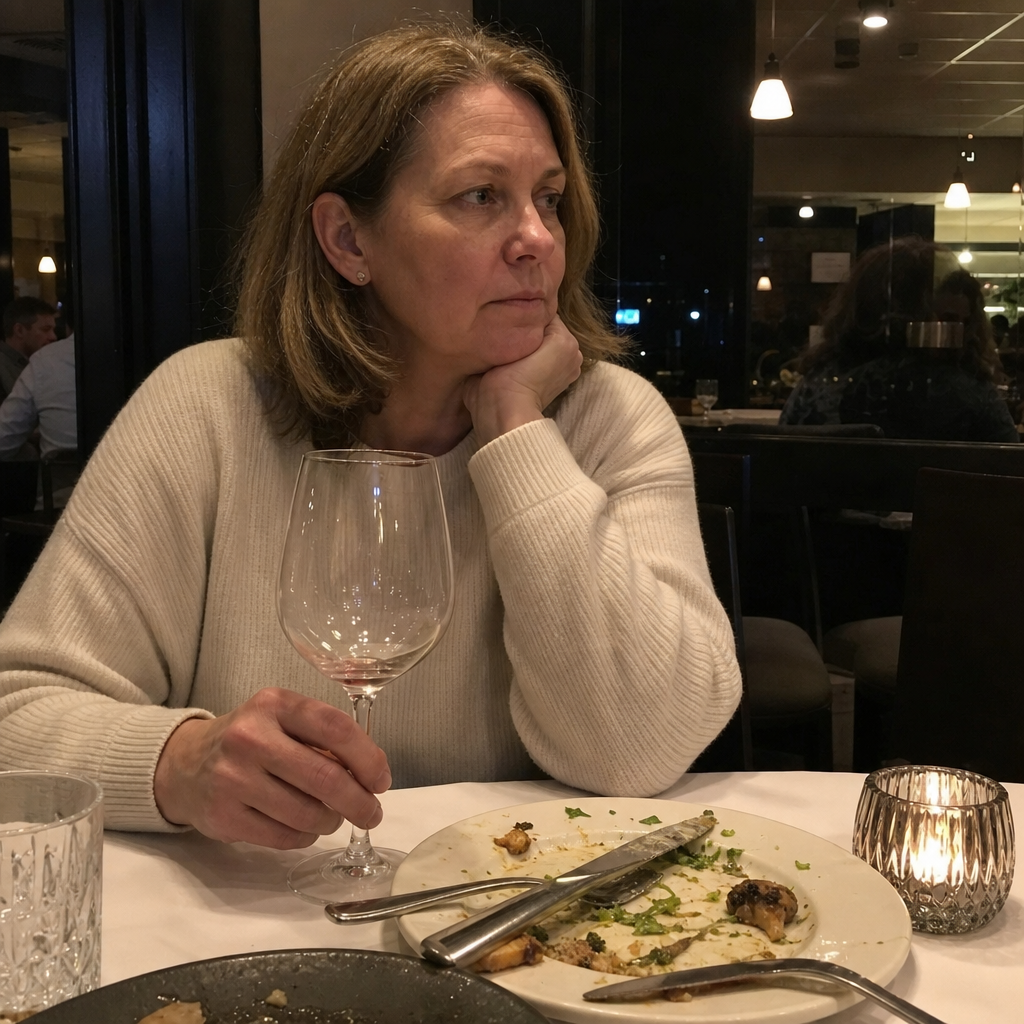
A stranger at dinner tilted her head and asked me one question
Magnesium Complex delivers a multi-form magnesium complex with 8 bioavailable forms including Glycinate, Taurate, Malate and Orotate, combined to lower cortisol, restore deep sleep, and flatten your belly from the inside out. Just 2 capsules a night is all it takes to support calmer stress levels, b...
Learn more: glovbeauty.com(opens in a new tab)