
Inactive· since Mar 25, 2026
- 68
- days it ran
- 8
- relaunches
Ad copy
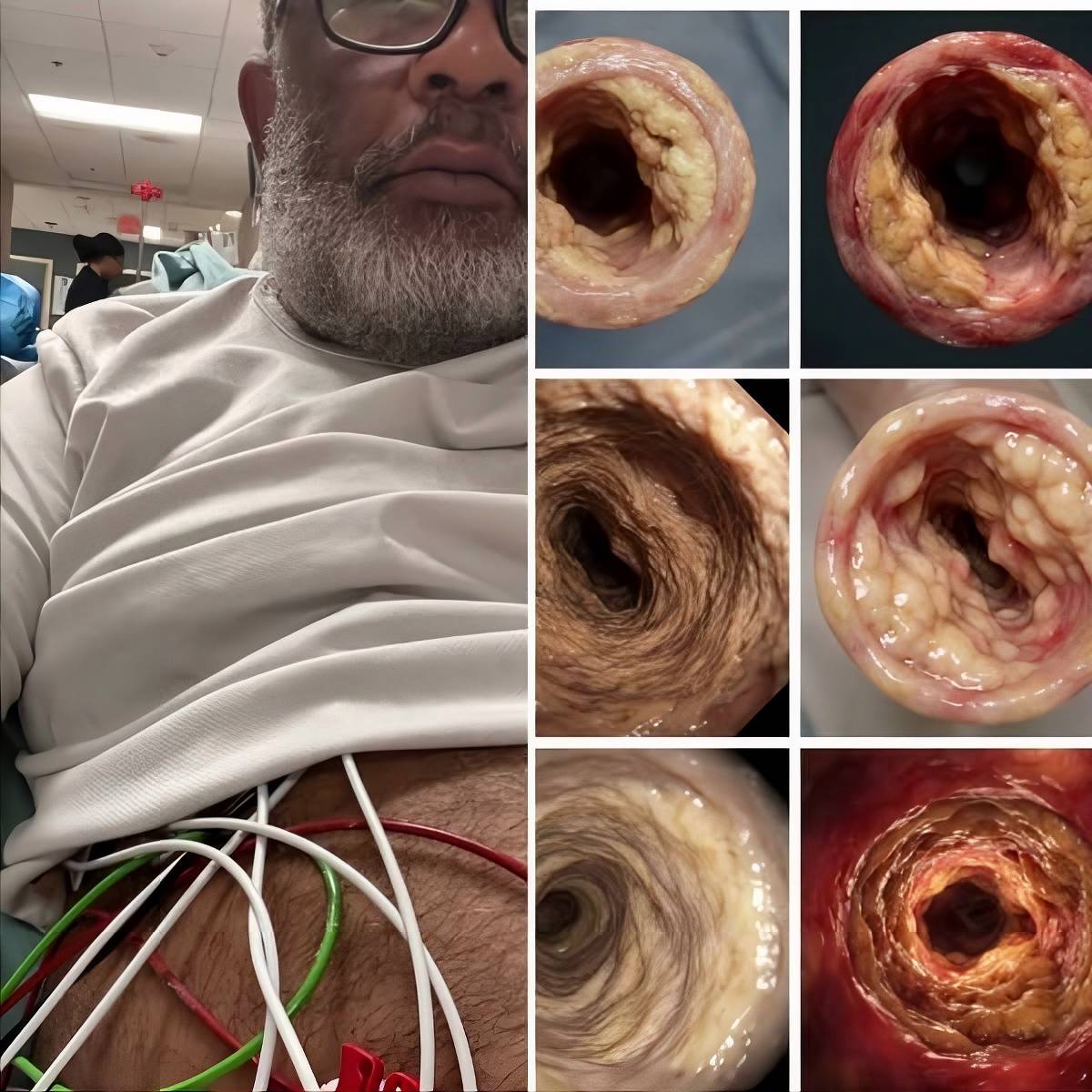
I've been on Atorvastatin for 9 years. I've been a barber for 37. A husband for 33. A grandfather for 7. The drug gave me perfect cholesterol. Then it destroyed my hands. I need to tell you what happened, because if your cholesterol is high and you're taking a statin or thinking about it or trying to fix it on your own with fish oil and oatmeal and garlic and every other thing the internet says works, you need to read this. All of it. My name is Roy. I'm 61 years old. I opened my barbershop when I was 24, saved every dollar from 5 years of sweeping floors in somebody else's shop and put a deposit on a storefront that smelled like cigarettes and carpet glue. Built it from nothing. Survived three recessions. Outlasted a strip mall demolition. Moved twice. Rebuilt twice. Never once closed. Not for COVID. Not for anything. I cut hair the way I was taught, straight razor fades, hot towel shaves, clean lines. My father was a barber. He gave me a leather strop when I opened my shop and said: "The day your hands can't hold the blade is the day you stop." I hung that strop on the wall and I've used it every working day for 37 years. Or I did. Until two years ago. My doctor put me on Atorvastatin when I was 52. Total cholesterol 258. He said 40 milligrams, take it at night, come back in 90 days. I didn't question it. Why would I? I was healthy. I was active. I was on my feet 10 hours a day cutting hair. But my numbers were high and he said the drug was the smart move. 90 days later my total cholesterol was 211. LDL dropped from 171 to 126. He was thrilled. I was thrilled. The drug was doing exactly what it was supposed to do. Some stiffness in the mornings. Nothing I thought twice about. I was 52. I'd been gripping shears and clippers since I was a teenager. Stiffness happens. By year three the stiffness had a name. Pain. My hands. Fingers first, then forearms. A deep, dull ache that settled in around noon every day and didn't let up until I went to bed. Mornings were the worst. I couldn't make a fist when I woke up. Had to run my hands under hot water for 10 minutes before I could grip the clippers. 10 minutes. Every morning. Standing over the sink at 5 AM flexing fingers that didn't want to cooperate, trying to get them ready for a day of work they used to do without thinking. I told my doctor. He ran bloodwork. Looked at the lipid panel. "Your cholesterol is 209. LDL is 123. These are excellent numbers, Roy. Whatever you're doing, keep doing it." I said: "I'm not asking about my cholesterol. I'm asking about my hands." He said muscle stiffness is a known side effect of statins. Affects some patients. For most people, the benefits significantly outweigh the risks. He'd keep an eye on it. Keep an eye on it. Easy to say when your hands aren't your whole life. By year five the straight razor was gone. Not all at once. I didn't wake up one morning and decide to stop. It happened in pieces. First I stopped offering straight razor shaves to new customers, told myself I was just being selective. Then I stopped doing them on Mondays because my hands were stiffest at the start of the week. Then Mondays became Monday through Wednesday. Then it was clippers only, all the time, for everyone. Men used to drive across town specifically for my straight razor fade. I could sculpt a hairline with a blade the way some people use a pencil, precise, fluid, instinctive. That wasn't a skill I learned in a year. That was 30 years of muscle memory built one stroke at a time. And I could feel it leaving. The tremor started around year five. My right hand, the blade hand. Not dramatic. Just a fine vibration, like a phone on silent. Barely visible to anyone who wasn't looking. But I was looking. Every day I was looking. Every time I picked up the clippers I was watching my own hand for the shake, hoping today would be the day it stopped. It didn't stop. It got worse. Customers started noticing. Nobody said anything. You don't tell your barber his hands are shaking the same way you don't tell a lion it's limping. But I saw them glance at each other in the mirror. I saw the regulars who used to close their eyes in the chair now watching my hands with both eyes open. I started going slower. A man who's cut 200,000 heads of hair doesn't suddenly need 10 extra minutes unless something is wrong. I was going slower because slower meant steadier. Slower meant I could hide the tremor. Slower meant nobody had to see that the hands they'd trusted for years were failing. The leather strop, my father's strop, started gathering dust. I went back to my doctor. Told him the tremor was worse. Showed him my hands. Told him I couldn't do straight razor work anymore, the thing that made my shop my shop, the thing men drove across town for, the thing my father taught me, gone. He looked at my chart. "Roy, your cholesterol is 207. LDL is 121. These are excellent numbers. I understand the muscle symptoms are frustrating, but the cardiovascular protection Atorvastatin provides at your age is significant. The benefits outweigh the risks. I'd strongly recommend you stay on it." The benefits outweigh the risks. He said it the way you'd compliment a child's report card. Like the number on the chart was the only thing that mattered. Like the man attached to the chart, the man whose hands were dying, whose livelihood was disappearing, whose father's strop was collecting dust, was irrelevant. I decided if the doctor wasn't going to fix the problem, I'd fix it myself. Maybe I could get my cholesterol down far enough naturally that I could lower the Atorvastatin dose. Maybe get off it entirely. Get my hands back. So I tried everything. And I mean everything. I started with oatmeal. Steel cut. Not the instant garbage, the real stuff. Every morning at 5 AM, standing over the stove stirring oats because somebody told me soluble fiber binds to cholesterol in your gut and pulls it out of your body. I did that for a year. A full year. 365 bowls of oatmeal. My cholesterol dropped 4 points. 4 points. My hands were still shaking. Fish oil. 4 grams a day. The big horse pills that make you burp salmon for 3 hours after every meal. 7 months. My triglycerides came down a little. LDL? Nothing. And the fish burps were so bad my first customer of the day could smell it. I was repelling the people I was trying to serve. Garlic. Raw garlic. I'd crush 2 cloves into a glass of water and drink it every morning before I opened the shop. Somebody at the health food store told me allicin, the active compound, lowers LDL and thins the blood. I did that for 3 months. My wife made me sleep in the guest room. My customers started sitting as far back in the chair as possible. I smelled like an Italian restaurant at closing time. Bloodwork came back basically unchanged. My doctor glanced at the results and said: "Your cholesterol looks great, Roy. Keep taking the Atorvastatin." I could have put my fist through the wall. Except my fist didn't fully close anymore. After that I tried everything else I could get my hands on. Red yeast rice. Citrus bergamot. Niacin. Apple cider vinegar. Plant sterols. Berberine. Turmeric capsules. CoQ10 supplements because I'd read statins deplete it. Psyllium husk. Flaxseed. Green tea extract. Metamucil every night. Some for months. Some for weeks. None of them moved the needle. My kitchen counter looked like a pharmacy. My wife counted the bottles one night and said: "You have more pills than the Atorvastatin was supposed to replace." She was right. And the worst part? Through all of it, my cholesterol barely moved. And my hands kept getting worse. I was doing everything you're supposed to do. Everything the blogs say. Everything the health food store recommends. Everything the guy at work swears by and everything the lady at church credits for her numbers dropping. None of it worked. And I couldn't figure out why. The day I almost closed my shop was a Saturday in November. I was lining up a regular, a guy I'd been cutting for 14 years. Simple job. Should have taken 20 minutes. I was holding the clippers against his temple and my hand seized. Not shook, SEIZED. The muscles in my forearm contracted and my fingers locked and the clippers dragged a line where no line was supposed to be. I pulled back. Looked at the damage. It was fixable, barely, but the customer saw it in the mirror. His eyes went wide for just a second. He didn't say anything. I didn't say anything. I fixed it. Finished the cut. He paid and left. He didn't rebook. I sat in my own chair after he left. The shop was empty. 2 PM on a Saturday, a time when 5 guys should have been waiting. I sat there looking at my hands, palms up, and I realized: these aren't my hands anymore. These are what's left of my hands after 9 years on a drug that was supposed to save my life. I looked at the photographs on the wall. The first dollar bill in a frame by the register. The leather strop. My father said the day your hands can't hold the blade is the day you stop. I called my wife and told her I was thinking about closing. She was quiet for a long time. Then she said: "Don't close yet. Don't make that decision yet. Just... don't decide today." I didn't close. But I went home that night knowing something had to change. The Atorvastatin was destroying me. The supplements weren't saving me. And my doctor was watching a number on a chart while my career died. I didn't start with the right question. I started where everyone starts: "Can Atorvastatin cause hand tremors." 200,000 results. "Atorvastatin muscle wasting." Millions. "Statin grip strength loss." Forums full of people describing exactly what I was living. Mechanics who couldn't hold wrenches. Guitarists who couldn't fret chords. Surgeons, SURGEONS, who had to stop operating. I wasn't alone. I wasn't crazy. And I wasn't "just getting old." But the search that changed everything was one I almost didn't click: "Why do people on statins still have heart attacks." That's where I fell down the rabbit hole. And I didn't come back up the same person. Here's what 9 years of doctor visits never explained to me, and what every supplement I'd tried completely ignored: Atorvastatin lowers cholesterol. All of it. It blocks an enzyme in your liver that shuts down cholesterol production across the board. The harmful kind. The useful kind. The kind your brain needs, and your brain is 60% cholesterol. Your numbers drop. Your doctor says "great." Chart looks clean. But the drug does nothing about DAMAGED cholesterol. And damaged cholesterol is the actual threat. Regular LDL cholesterol isn't inherently dangerous. It serves important functions, building cell membranes, transporting nutrients, repairing tissue. Your liver makes it every day and sends it out through your blood like a delivery route. Cholesterol goes out, drops off what your cells need, and moves on. Simple. But something goes wrong on the route. Your blood is full of unstable molecules called free radicals. They come from stress, processed food, pollution, sugar, just getting older. And they attack your cholesterol while it's traveling through your bloodstream. They damage it. Damaged cholesterol doesn't finish the route. It doesn't move on. It sticks to the walls of your arteries. And once it's stuck, it stays stuck. More damaged cholesterol comes along and sticks right next to it. Layer after layer. That's plaque. That's the blockage. That's the heart attack. Not cholesterol. DAMAGED cholesterol. For 9 years, Atorvastatin had been lowering my total number. It never once stopped the damage happening to the cholesterol still in my blood. My numbers were "excellent." The real threat was never tested for. Never mentioned. Never treated. My doctor was watching the smoke alarm. Nobody was checking for the fire. And here's where I saw my own hands in the research: Atorvastatin blocks the same pathway in your liver that makes CoQ10, the energy your muscles need to work. Your heart needs it to beat. Your brain needs it to think. Your HANDS need it to grip, to hold steady, to control a straight razor. I read that and I felt it in my forearms. I saw 9 years of mornings running hot water over fists that wouldn't close. I saw 37 years of muscle memory slowly losing the fuel it needed to fire. The tremor wasn't aging. It wasn't "just a side effect." It was my muscles running out of energy because the drug was draining it as part of how it works. That's not a side effect. That's the drug doing what it does. And nobody told me. 60% of people who quit statins do it because of muscle symptoms. 60%. That's not a rare complication. That's the majority. And doctors keep charting it as "common but manageable" while their patients can't hold wrenches and can't fret guitar strings and can't grip straight razors. And here's what finally explained why everything else I tried also failed: All that cholesterol stuck to your artery walls? Your body doesn't know it's stuck. It just knows it sent cholesterol out and it never came back. So it does what any good system does when a delivery doesn't arrive. It sends more. Your body keeps making replacement cholesterol to cover for what it's losing to the buildup. More gets damaged. More gets stuck. More gets replaced. A cycle that feeds itself. And the longer it runs, the higher your number climbs. Atorvastatin was pushing the number down while the root cause kept spinning. And the oatmeal? The fish oil? The garlic, the berberine, the turmeric, every supplement I could find? Every single one of them was working DOWNSTREAM. Oatmeal binds cholesterol in the gut. Fish oil nudges triglycerides in the bloodstream. Plant sterols block absorption in the intestine. None of them can stop your cholesterol from getting damaged while it's circulating. None of them reach the place where the damage is actually happening. I spent 2 years mopping the floor while the roof was leaking. That's why I could eat oatmeal at 5 AM every morning for a year and watch my cholesterol drop 4 points. That's why I could swallow fish oil until my breath repelled customers and still see my LDL unmoved. That's why I could fill my kitchen counter with bottles and spend $200 a month and still sit in my own barber chair on a Saturday afternoon wondering if I had to close my shop. Everything I'd tried, the drug AND the natural alternatives, was aimed at the amount. Nothing had stopped the damage driving the amount up. So I went back to the research. And I searched for the thing I should have been searching for from the beginning: "what stops cholesterol from getting damaged in the bloodstream." That's when I found something I'd never heard of. And by the end of that night, I understood why nothing else had worked. It's an ancient remedy. A fruit that's been used for over 5,000 years by Himalayan healers. They called it "the nurse." It was the one remedy they reserved for people whose bodies were breaking down at the cellular level. People aging faster than they should. They didn't understand why it worked back then. They just watched the results happen over thousands of years. It's called Amla. I'd never heard of it. You probably haven't either. That bothered me at first, if this worked, wouldn't I have seen it at the health food store next to the bergamot that didn't work and the niacin that set my skin on fire? But you can't patent a fruit. And there's no billion dollar industry built around something that grows on a tree. Then I looked at the research. And I stopped caring that I'd never heard of it. Because modern science now knows exactly why it worked. Amla contains specific compounds called emblicanins. Antioxidants found ONLY in this fruit. When scientists tested the antioxidant strength of over 3,000 foods, Amla ranked number one. Not blueberries. Not turmeric. Not green tea. Amla. And it wasn't close. Here's what emblicanins do. They stop your cholesterol from getting damaged. Emblicanins find the free radicals in your blood, the ones attacking your cholesterol and turning it into the sticky, artery clogging kind, and neutralize them before the damage happens. Not downstream in your gut like oatmeal. Not on the surface like fish oil. In your bloodstream, where the damage is actually happening. When your cholesterol stops getting damaged, it stops sticking. When it stops sticking, your body stops making extra to replace what it's been losing. The cycle breaks. Your number comes down on its own. Not because a drug forced your liver to stop working. Because your body doesn't need to keep replacing what's not getting lost anymore. Then I found the clinical trial that made me sit back in my chair. 500 milligrams of standardized Amla extract went head to head with Simvastatin, one of the most widely prescribed statins in the world, in 60 patients over 42 days. The Amla matched it. LDL dropped up to 40%. HDL, the good cholesterol, went up. Triglycerides came down. Blood pressure improved. Without draining CoQ10. Without muscle pain. Without brain fog. A fruit. Matching a pharmaceutical statin. In a published, peer reviewed clinical trial. And I'd never heard of it because you can't patent something that grows on a tree. I'll be honest. I almost didn't try it. I'd spent 2 years trying things that didn't work. I'd been burned by bergamot that made my numbers worse. By niacin that set my skin on fire. By red yeast rice that turned out to be gutted by the FDA. By apple cider vinegar that wrecked my stomach. Bottles on my counter and nothing to show for it except lighter pockets and the same shaking hands. But this was different. I could see it was different. Not because the marketing was better but because the mechanism was different. Everything else I'd tried was working downstream, in the gut, in the bloodstream, on the surface. This was working upstream, stopping the damage before it happened. Protecting my cholesterol from getting attacked in the first place. And it wasn't draining CoQ10. It wasn't blocking anything my body needed. It was letting my body do what it was supposed to do. I found a company called Alevia that makes a standardized Amla extract. Not cheap fruit powder, not ground up scraps with no consistency. A clinical strength extract, verified to contain the concentration of emblicanins that actually produces results. Organic. Third party tested for purity and potency. Made in the USA. I talked to my doctor about tapering the Atorvastatin with monthly bloodwork. He wasn't thrilled. But I told him my hands couldn't wait for him to be thrilled. We agreed to reduce the dose first and monitor bloodwork monthly. I ordered Alevia's Amla that night. The first thing that changed was the mornings. Day 4. I woke up, rolled out of bed, and made a fist. Not a strong fist. But a fist. No hot water. No 10 minutes standing over the sink flexing fingers that didn't want to cooperate. Just... closed my hand. The way you do without thinking. The way I used to do before the drug took it from me. I stood in my bathroom at 5 AM staring at my own closed fist. I'd forgotten what that looked like. By week 2, the deep ache in my forearms, the one that hit every afternoon and had me icing my hands between customers and popping 4 Advil before lunch for 2 straight years, was fading. Not gone. Fading. Like someone slowly turning down the volume on a sound I'd gotten so used to I'd forgotten it was there. The Advil bottle disappeared from the shelf behind my chair. I didn't make a ceremony of it. I just realized one day I hadn't reached for it. Week 3, a customer closed his eyes in the chair. First time in months someone had done that. He wasn't watching my hands. He just leaned back and closed his eyes the way you do when you trust the person holding the clippers. I almost had to stop cutting because the lump in my throat hit me out of nowhere. Week 4, the lineups were crisp again. The hesitation was gone. I wasn't going slower to hide the tremor because there was less tremor to hide. The speed came back. The rhythm came back. That thing, the flow, the instinct, the thing you can't fake and 37 years of muscle memory either gives you or it doesn't, it was coming back. Week 6, a new customer sat down and asked if I did straight razor fades. I said not right now. He said "that's too bad, I heard you were the best." I looked at my hands. They were steady. Not still, I'm 61, there's a difference between youth and recovery. But steady. I thought about it for the rest of the day. Last Saturday. One of my regulars, a guy I've been cutting for 17 years, sat down in the chair. Normal cut. Normal day. I finished the sides, blended the top, cleaned up the neck. Good cut. Solid. And then I stopped. I walked over to the wall. Took down the leather strop, my father's strop. The one that had been gathering dust for over a year. I ran my thumb across the leather. It was dry. Needed conditioning. I didn't care. I picked up the straight razor. Opened it. Ran it across the strop. Slowly. Deliberately. The sound of steel on leather filling the shop. The other barbers looked up. The guys waiting looked up. Nobody said a word. I turned to my customer. "Hold still." The blade touched his neck. One long, unbroken stroke. Clean. Precise. Steady. The way I used to do it. The way my father taught me. The way I'd done it 10,000 times before the drug took it away. My hand wasn't shaking. When I finished the lineup I held the razor up where he could see it in the mirror. He looked at it. Looked at me. He'd been watching my hands deteriorate for 2 years. He knew what this meant. "Welcome back, Roy." I didn't trust myself to speak. I just cleaned the razor, hung the strop back on the wall where it belongs, and moved on to the next customer. When my regular went to pay, I shook my head. "This one's on me, brother." He understood. I ran bloodwork at 3 months. Off Atorvastatin completely by then, tapered down over the first 6 weeks, fully off for the last 6 weeks. I was terrified. 9 years on a statin. Stopping it felt like jumping without a parachute. Every doctor I'd ever seen had told me I needed it. My cholesterol was 258 when I started. What if it shot right back up? The results: Total cholesterol: 203. On Atorvastatin it had been 211. OFF the drug entirely, my cholesterol was LOWER than it had been ON the drug. LDL: 117. On Atorvastatin it had been 126. Lower. HDL: 57. On Atorvastatin it had been 39. An 18 point increase in the protective cholesterol, the one that actually guards your arteries, the one that Atorvastatin never improved, the one that 9 years of statins and 2 years of supplements never moved a single point. 18 points in 3 months. Triglycerides: 134. Down from 212. The fish oil I'd taken for 7 months never got them this low. Let me say that again. My numbers were BETTER without the drug than they were ON it. Better without the oatmeal, the fish oil, the garlic, and every bottle on my kitchen counter. Better than all of it. I brought the results to my doctor. Set them on his desk. He studied them for a long time. "You stopped the Atorvastatin," he said. Not a question. "6 weeks ago." "What are you taking instead?" I told him. Amla. The emblicanins. The damaged cholesterol research. The clinical trial that matched Simvastatin. The 5,000 years of use. He listened. When I finished he said: "I'm going to be honest with you. I don't know enough about this yet. But your numbers don't lie. And you look like a different person than the man who was sitting in that chair 6 months ago." He was right. I was a different person. Because for 9 years a drug had been slowly erasing me, and in 3 months, I'd come back. He didn't tell me to go back on Atorvastatin. First time in 9 years he didn't say "keep taking it." I'm writing this for every man sitting in a chair somewhere, a barber chair, a desk chair, a truck seat, a workbench, whose hands aren't what they were. 37 years. I wasn't ready to stop. If you're on Atorvastatin, or Lipitor, or Crestor, or any statin, and your grip is weaker than it should be, your muscles ache in a way rest doesn't fix, your fingers are stiff in the morning, your forearms burn by the afternoon... If you've been trying to manage your cholesterol naturally, the oatmeal, the fish oil, the garlic, the supplements that cost you $200 a month, and your numbers won't budge... If your doctor keeps watching a number on a chart while your body falls apart... If you've been told "the benefits outweigh the risks" by someone who doesn't have to live with the risks... Maybe it's not aging. Maybe it's the drug. And maybe everything you've tried is working downstream while the problem is upstream. In your bloodstream. Where your cholesterol is getting damaged. Where nothing you've taken can stop it. I spent 9 years on a drug that lowered a number while the damage underneath kept building. Then I spent 2 years and thousands of dollars on supplements that were never going to reach the real problem. Alevia's Amla addressed it. The emblicanins stop your cholesterol from getting damaged, the one thing the statin never did and the supplements never could. No CoQ10 draining. No enzyme blocking. No muscle wasting. No trembling hands. Alevia uses a specialized extraction process that preserves the active compounds at clinical strength. Organic. Third party tested for purity and potency. Made in the USA. 2 capsules every morning. That's it. That's the difference between a supplement that sits in your system doing nothing and one that actually stops the damage driving your cholesterol up. Right now, they're running a promotion with significant savings. But Alevia is a small company. They make everything in small batches to preserve the active compounds. When they sell out, it's usually weeks before the next batch is ready. 90 days to try it. If nothing changes, full refund. No questions asked. But if it works? If you wake up on day 4 and make a fist without running hot water over your hands for 10 minutes? If by week 2 the ache in your forearms starts fading and you stop reaching for the Advil? If a month from now your customers are closing their eyes in the chair again because they trust the hands holding the clippers? If 3 months from now you're sitting in your doctor's office watching him stare at numbers he can't explain, and he says "whatever you're doing, keep doing it"? If your HDL moves for the first time in a decade and your LDL is lower without the drug than it ever was on it? If the straight razor comes off the wall and your father's strop goes back where it belongs? You'll wish you started 9 years ago. I know I do. 👉 https://getalevia.com/amla/17 You don't have to keep lowering a number while the damage underneath keeps building.
Like this ad? Make it yours.
Crush rebuilds this exact creative around your product — your brand, your colors, your offer — in about a minute.