The Reflux Notebook
The Reflux Notebook Facebook ad: “Read this if you have acid reflux”
Ran for 30 days, from June 3 to July 3, 2026, the last day Crush saw it.
Run by The Reflux Notebook on Facebook. Crush is not the advertiser and does not verify its claims. See this ad in Meta's Ad Library(opens in a new tab)
Want an ad like this for your product?
Crush makes new ad images for your product from this ad: your logo, your product photo, your offer.
Trials from $19.95 USD, then $79.95 USD a month. Cancel anytime.
About this ad
- Meta Ad Library ID
- 1514390536981997
- Platforms
- Facebook, Instagram, Audience Network, Messenger and Threads
- Relaunches
- 0
Ad text
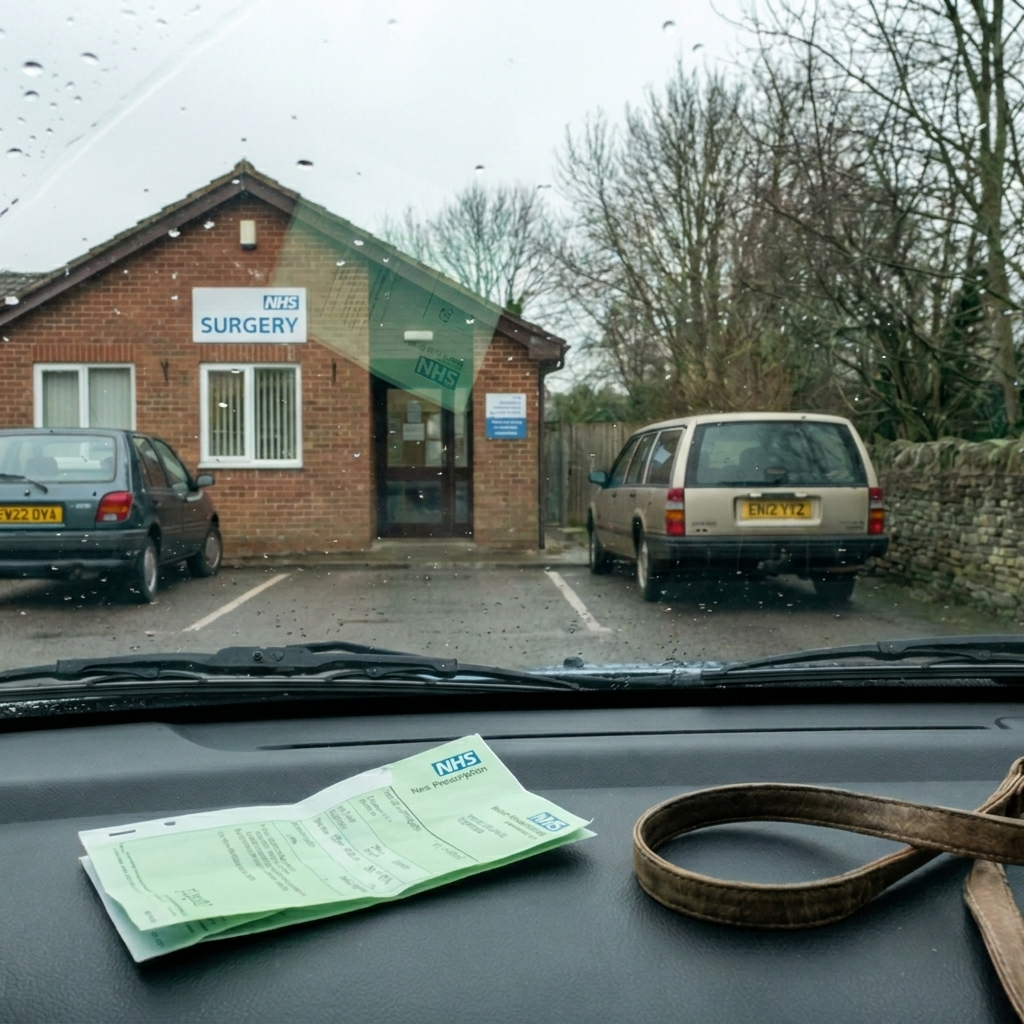
Prescribed Omeprazole 40mg today. The same tablet my mother took while her oesophagus quietly failed her for twelve years. Endoscopy shows Grade B oesophagitis with Barrett’s changes. Dr. Patel says that’s “significantly elevated inflammation with precancerous tissue.” She’s starting me on 40mg twice daily. For the rest of my life, probably. I took the prescription. Walked to my car. Sat there. Couldn’t drive. Couldn’t move. Just sat there holding this piece of paper. Omeprazole 40mg. My mother took this for twelve years. I don’t know what to do. 14th October Still haven’t filled it. My husband asked me why this morning. I couldn’t answer him properly. I made some excuse about the chemist being closed. The chemist isn’t closed. I drive past it every day. I keep thinking about Mum. The little plastic pill organiser she kept on the kitchen counter, next to the kettle. Sunday morning, 7am, one tablet. Never missed a single day in twelve years. She’d show me at every visit. “Look, my burning’s better this month. The tablet’s doing its job.” But it wasn’t doing its job. Year three, she stopped sleeping in their bed. Moved into the spare room. “I just keep choking, love. It happens even sitting upright now.” Dad would find her in the morning in the armchair, half sleeping, throat raw. Her GP told her “some reflux is just stubborn” and put her on 40mg twice daily. She wasn't stubborn. She was dying from the inside while everyone called it managed. 17th October The surgery rang. The receptionist sounded tight. “Mrs. Hartley, we’ve noticed you haven’t collected your prescription. Dr. Patel’s notes indicate your endoscopy showed Barrett’s changes. This is a progressive condition that needs...” I told her I needed more time. She wasn't pleased. “This isn’t something you should delay. Dr. Patel was very clear about the urgency.” I hung up before I said something I’d regret. Mum’s Barrett’s was “progressive” too. They monitored it for twelve years. They increased her dose, switched her brand, added Gaviscon, put her on a higher wedge. Every appointment ended the same way: “Just keep taking the tablet, Margaret. We’ll scope you again next year.” The thing they kept “managing” still killed her. What’s urgent is that I don’t end up the same way. 21st October I keep getting stuck on her voice. Mum’s voice changed in the third year on Omeprazole. Not all at once. Slowly. Raspier in the mornings. Then raspy all day. Then she was clearing her throat constantly, every few seconds, until you stopped noticing because she’d been doing it so long it became part of the sound of her in the room. “The acid’s reaching your larynx,” her GP said. “We’ll up the dose.” She did. The hoarseness got worse anyway. By year five she could barely talk above a whisper at the end of the day. She’d repeat herself three times at family dinners and finally just stop trying. “I’m taking the maximum,” she’d say quietly. “Why does my voice keep going?” Because her valve couldn’t seal shut properly. Because the lining of her throat was being damaged by acid that kept getting through despite the tablet. The Omeprazole was reducing how much acid her stomach made, but it wasn’t stopping the acid that did escape from burning her tissue. And it wasn’t healing the damage already there. Nobody told her that. I noticed something this morning. My voice is already going raspy. Just in the mornings, just for the first hour. I haven’t changed anything in my routine. It’s starting. 25th October I’ve been awake since 2am. The choking woke me again. Third night this week. Sitting bolt upright, coughing, throat on fire, scrabbling for the glass of water on the bedside table. Knocking it over. Stumbling to the bathroom to rinse the burning out of my mouth. I can’t talk to my husband about it tonight. He’s asleep and I don’t want to wake him with this. So I’m writing it down instead. This is what Mum used to do. Sit at her kitchen table at 2am because lying down meant choking. She had a notepad next to her chair. I found it when we cleared out the house. Just lists of food she could eat and food she couldn’t. The “couldn’t” list got longer every year. Year six for her, the choking started in earnest. Three or four nights a week. She moved into the spare room permanently and put a recliner in the corner. Slept upright in it for the rest of her life. Her GP told her to elevate her wedge pillow further. Eat earlier. Stop drinking water past 5pm. It wasn’t the pillow. It wasn’t the timing. It was her valve. The valve that’s supposed to seal between her stomach and her throat. By that point the lining was so damaged and the muscle so weakened that nothing was going to keep the acid down. Not the wedge, not the timing, not the dose increases, nothing. Mum was 52 when her nighttime choking started. I’m 47. 29th October 3am. I’m writing this from the kitchen table with my laptop open in front of me. My husband came down twenty minutes ago. Found me with eight tabs open and a mug of cold tea. “Helen. What are you doing?” “Research.” He sat down across from me. Looked at the screen. I’d typed: “does omeprazole stop barrett’s getting worse” First result. Medical journal. “PPIs reduce gastric acid production but have not been demonstrated to prevent progression of Barrett’s metaplasia in patients with established mucosal damage.” Have not been demonstrated to prevent progression. Second result. “PPIs do not address the underlying mucosal injury and lower oesophageal sphincter dysfunction that drive disease progression in chronic GORD.” Does not address the underlying injury. He didn’t say anything. Just sat there reading with me. Patient forum. Some woman in Leeds. “Been on Lansoprazole for nine years. Barrett’s is now showing dysplasia. My consultant says it’s bad luck. I’ve taken every tablet on time for nine years. How is this bad luck?” That could be Mum writing. That’s exactly what Mum used to say. Another. “Choking every night despite sleeping at a 45 degree angle and 40mg twice daily. GP says I must not be compliant. I’ve never missed a dose. The tablet just isn’t working.” Another. “My oesophagus is getting worse, not better, after eight years of treatment. Why does nobody have an answer for this?” He looked at me. “These people sound exactly like your mum.” “I know.” “So what’s actually happening?” “I don’t know yet. But I need to figure out what to add to the prescription before I start it.” 2nd November I think I’ve found it. I was searching “why does barrett’s keep getting worse on omeprazole” and I got pulled into a paper from a research centre in Manchester. Gastroenterology research, written for clinicians. The phrase that stopped me: “Acid suppression does not repair the damaged oesophageal lining nor restore lower oesophageal sphincter integrity. These structural deficits, once established, persist independently of acid production levels and continue to drive symptomatic and tissue progression.” Persist independently of acid production levels. I read it three times. It doesn’t matter how much acid you suppress. Once the lining is damaged and the valve has weakened, those things keep deteriorating on their own. The tablet manages how much acid is made. It does nothing for the broken parts that let it through. It’s like, and this is the analogy that finally clicked for me at 4am with cold tea... Imagine your house has a leaking roof. Water’s been getting in for years. The beams underneath have started to rot. The plaster’s blistering. The damp is spreading. A builder comes round and instead of fixing the broken roof, he climbs up and throws a tarp over it. The tarp works. The water stops getting in. From the outside, the roof looks fine. The leaks have stopped. But the beams underneath the tarp are still rotten. The damp is still spreading. The structural damage that started before the tarp went up is still there. And it’s getting worse, quietly, every month, hidden from view. One day you’ll go up to the loft and the floor will give way under your foot. That’s what Omeprazole did to Mum. The tarp went on at year one. It stopped the visible damage. Her burning reduced. The endoscopies looked “controlled.” Everyone agreed the treatment was working. But underneath the tarp, the lining was still breaking down. The valve was still weakening. The inflammation was still eating away at the structure of her oesophagus, year after year, while the tarp made it look manageable from outside. By the time the dysplasia showed up at year ten, the rot was a decade old. The tablet had been hiding the damage from view the whole time it was progressing. Oh my god. That’s exactly what happened to her for twelve years. 3rd November Couldn’t sleep again. Back at the laptop. If acid suppression isn’t the answer, and it can’t be, because Mum had perfect acid suppression and her oesophagus still failed, what actually heals the lining? What actually restores the valve? I went deep into the research. Real research, not Mumsnet, not Daily Mail. Clinical studies. Compounds with published trial data on oesophageal tissue. Three things kept coming up. Zinc L carnosine. Decades of clinical research showing it accelerates regeneration of damaged mucosal lining and forms a protective barrier against further acid contact. Used in Japan as a standard supplement for gastric and oesophageal lining repair. Not a drug. A nutrient combination. Cheap. Effective in trial after trial. Why does no GP in Britain mention this? Because it isn’t patentable. There’s no Pfizer rep visiting the surgery with samples. There’s no NHS protocol that includes it because there’s no manufacturer paying for the protocol to include it. Slippery elm. A botanical with a long evidence base for forming a protective film over inflamed oesophageal tissue while the muscle cells underneath regain function. Used clinically in functional medicine. Not used anywhere in NHS gastroenterology. Same reason: nothing to patent, nothing to fund the trial that gets it into guidelines. Anti inflammatory botanicals. Specific combinations that calm the chronic low grade inflammation hammering the oesophagus, without suppressing the stomach’s natural acid production, which is what the PPI does badly and creates rebound when you try to stop. Three pillars. Lining repair. Valve protection. Inflammatory balance. All three at once. Which is the part that took me the longest to understand: lining repair without valve restoration just delays the next round of damage. Valve restoration without lining repair leaves the existing damage to keep eroding. And neither works while the inflammatory cascade is still attacking everything underneath. The tablet does none of these. It just turns down the acid tap. That’s why Mum’s oesophagus failed despite twelve years of compliance. 5th November I went to see a private consultant gastroenterologist in London this week. I told my husband I needed someone who’d actually look at what was wrong, not just write a stronger prescription. We took the train down on Tuesday. £280 for the appointment. Best money I’ve spent in years. He spent an hour with me. Not eight minutes. He ran tests Dr. Patel had never ordered. High resolution oesophageal manometry, mucosal integrity testing, and a proper functional assessment of valve closure pressure. The kind of tests a private clinic does and the NHS pathway doesn’t fund unless you’re already heading for surgery. When he came back with the results, he wasn’t smiling. “Mrs. Hartley, your endoscopy says Grade B with early Barrett’s. That tells me one thing. The visible tissue damage. But these tests tell me something the scope can’t see.” He turned the screen toward me. Charts. Pressure readings. Cellular function data. “This is your lower oesophageal sphincter pressure. The strength of the valve that’s supposed to seal between your stomach and oesophagus. A healthy woman your age should be reading here.” He pointed at a range. Then at another, much lower. “You’re here. I see this level of valve weakness in patients who’ve had reflux for fifteen, twenty years. Yours has been diagnosed for four. The damage was building long before your symptoms became severe enough to investigate.” I asked him what the Omeprazole would do. He was direct. “Omeprazole will reduce your stomach’s acid output. The burning will improve. Your scopes will look less inflamed. Dr. Patel will tell you the medication is working. And it is, for the symptom.” He paused. “But it won’t repair the lining damage already there. It won’t restore valve closure pressure. It won’t calm the chronic inflammation. Those three things will continue underneath the prescription. And in five, eight, twelve years, depending on the rate, you’ll be where your mother was. Acid managed. Tissue still failing.” He looked at me properly then. “You should take it. It does its job. But if you want to address the underlying damage, you need a repair protocol that targets the lining and the valve directly, alongside the medication. There are nutrient and botanical approaches with reasonable evidence behind them. Most British GPs won’t recommend them because they’re not in NICE guidelines, and they’re not in NICE guidelines because nobody has paid for the trials that get them in.” I asked him what he’d suggest. He told me to look into zinc L carnosine for lining regeneration. Slippery elm for the protective film and valve support. Anti inflammatory botanicals for the cascade. DGL licorice for the protective mucus production. “All of them together,” he said. “Lining repair without valve restoration just delays the next round. Valve restoration without lining repair leaves the existing damage. And neither works while the inflammatory cascade is still running. Take the Omeprazole. Add the repair protocol alongside it.” “Three pillars,” I said. “Three pillars, on top of the medication. Every standalone supplement will be partial. You’d want to find a formulation that combines them properly.” I asked him if there was a UK supplement that did. He told me to look for a formulation that was third party tested, with full ingredient transparency, no proprietary blend hiding the doses, made by a real company with a real address. He said most of what I’d find online wouldn’t meet those criteria. I thanked him. Took the train home. I started filling the Omeprazole prescription that week. And I started searching for a repair protocol to take alongside it. A few days later I found RefluxCare. Every compound the consultant had named, at the doses he had named. Third party tested. Real address. I started it on the same day my Omeprazole began. Two capsules every morning with breakfast. The tablet for the acid. The protocol for the lining, the valve, and the inflammation. I told my husband at dinner. He didn’t argue. He said: “Your mum took the tablet for twelve years and it didn’t save her. You’re allowed to try something alongside it.” 6th December (one month in) The morning hoarseness has gone. I noticed it about two weeks in. Just woke up one morning and didn’t have to clear my throat ten times before I could speak. Then it happened the next morning. And the next. The 2am choking has eased. Still happens occasionally, maybe once a week now instead of three or four times. But the violence of it has reduced. I don’t wake up gasping. I wake up uncomfortable and turn over and go back to sleep. I had a coffee yesterday morning. A full one, not decaf, not half. No burning afterwards. I cried at the kitchen table. Not from pain. From hope. 21st January (three months in) I had my follow up scope this morning. Dr. Patel walked into the consulting room with my notes and an expression I couldn’t read. She asked if I’d been compliant with the Omeprazole. I said I’d been taking it daily, but I’d added a repair protocol alongside it. She said “Tell me what.” She turned the screen toward me. Two endoscopy images side by side. October. Today. The October image showed Grade B inflammation with early Barrett’s changes. The mucosa was angry, red, irregular. Today’s image showed visible improvement. Less inflammation. The lining looked calmer. The Barrett’s changes hadn’t progressed. She asked me what I’d been adding. I told her about the protocol. Zinc L carnosine. Slippery elm. DGL licorice. The anti inflammatory botanicals. Three months of consistent daily use, alongside the prescription. She wrote it all down. Carefully. She didn’t tell me to stop. She said the inflammation looked better than she’d expected, and that with the improvement she was seeing she was comfortable extending my next scope window to six months instead of the usual three. I walked back to the car. Sat in the same car park where I’d sat four months earlier. Cried again. If you’re reading this, you’re probably where I was on 11th October. Diagnosed. Prescribed. Confused. Watching someone you love already on the same path. Here’s what nobody told my mother, what nobody told me until I sat at the kitchen table at 3am with eight medical journal tabs open: The Omeprazole reduces stomach acid. It does not heal a damaged oesophageal lining. It does not restore a weakened valve. It does not calm the chronic inflammation that keeps the damage progressing. Those three things continue underneath the tablet, year after year, while the appointments keep saying “stable” until one day stable becomes dysplasia, dysplasia becomes worse, and the surgery conversation arrives. My mother followed the standard protocol perfectly for twelve years. The protocol was incomplete. I am not following her path. I am taking the tablet she took, and I am adding what she was never offered. The supplement I’m taking is RefluxCare. Third party tested with full ingredient transparency. No proprietary blend, no fake doctor on the bottle, no Hong Kong shell company. Just zinc L carnosine at the dose used in published lining repair studies, slippery elm for the protective film, DGL licorice for the mucus production, and the anti inflammatory botanical stack. It comes with a 60 day money back guarantee. If it doesn’t work for you, if your symptoms don’t reduce, if you don’t sleep better, if your throat doesn’t feel calmer, full refund, no questions, keep the bottle. It’s launching in the UK now. The first shipment ran out twice this autumn because Meta traffic moved faster than they expected. If the link below shows in stock, take it. If it doesn’t, check back in a few days. https://www.restorall.com/products/refluxcare Helen, 47, Buckinghamshire P.S. My voice came back at week two. The 2am choking eased at week three. The follow up scope at three months showed improvement Dr. Patel hadn’t expected on the medication alone. Most people I’ve spoken to since notice changes within the first fortnight. The hoarseness, the tight feeling, the constant throat clearing easing first. The deeper lining repair takes six to twelve weeks of consistent daily use to fully show up. But the way you feel changes much sooner than the way the scope looks. P.P.S. My mother spent twelve years on Omeprazole. Acid managed at every appointment. The lining kept breaking down. The valve kept weakening. She died at 67 from complications of a condition the tablet was supposed to be treating. I’m 47. I’m taking the tablet she took, and I am adding the repair protocol she was never offered. The decision took me four months of sitting at the kitchen table at 3am. Yours doesn’t have to. The 60 day guarantee means you find out in 60 days whether this is your answer or not, alongside whatever your GP has prescribed.
Where the ad sends people
restorall.com
Read this if you have acid reflux
Doctor-formulated blend of slippery elm, DGL, zinc-L-carnosine & 4 more to calm reflux and repair your gut lining. 60-day guarantee.
Shop now: restorall.com(opens in a new tab)