Dr. Sarah Chen, PhD
Dr. Sarah Chen, PhD Facebook ad: “Fight Back Against Macular Degeneration!”
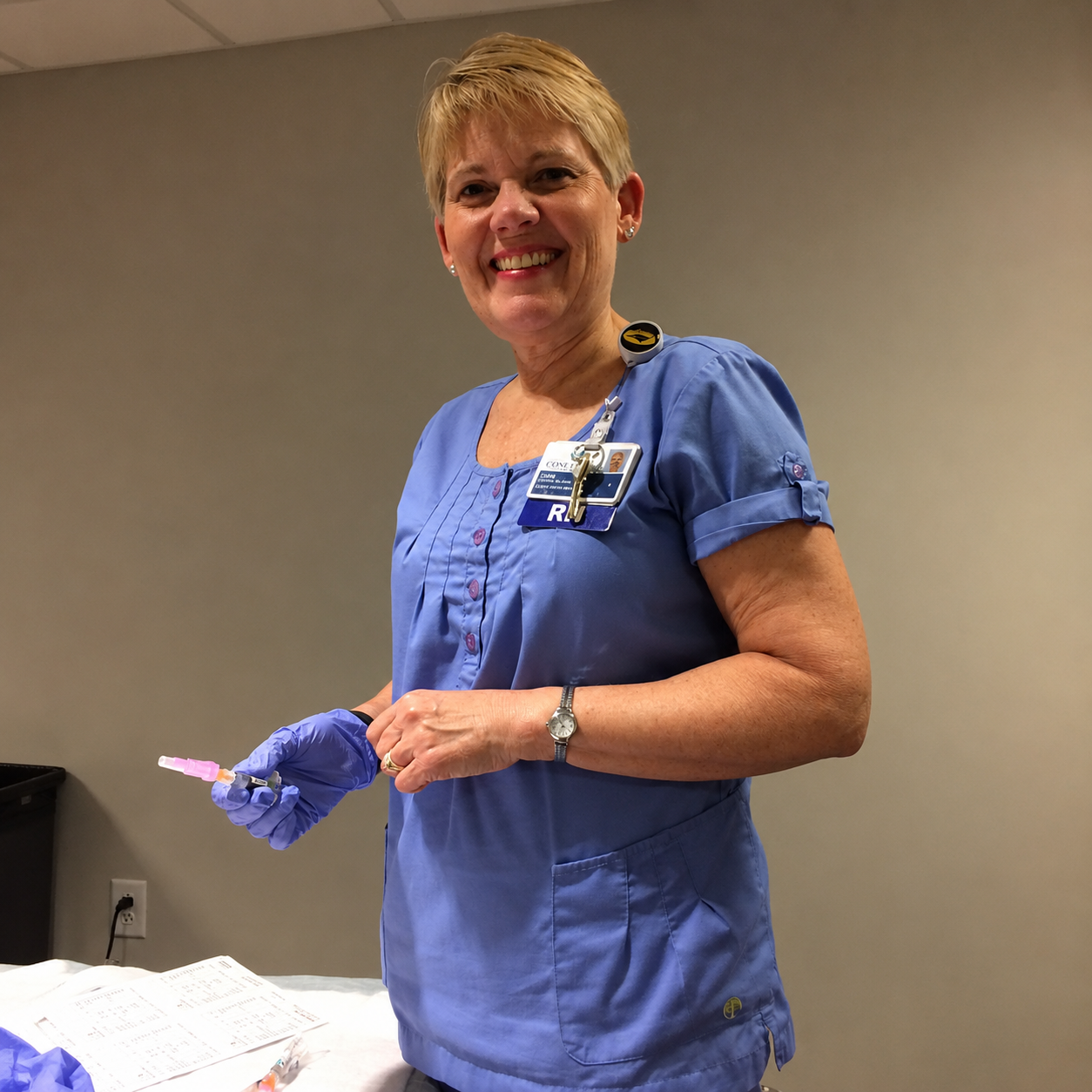
Ran for 41 days, from July 11 to August 21, 2026, the last day Crush saw it.
Run by Dr. Sarah Chen, PhD on Facebook. Crush is not the advertiser and does not verify its claims. See this ad in Meta's Ad Library(opens in a new tab)
Want an ad like this for your product?
Crush makes new ad images for your product from this ad: your logo, your product photo, your offer.
Trials from $19.95 USD, then $79.95 USD a month. Cancel anytime.
About this ad
- Meta Ad Library ID
- 1515580086966641
- Platforms
- Facebook, Instagram, Messenger and Threads
- Relaunches
- 2
Ad text
I'm going to lose my f*cking mind if one more person posts "I've been getting Eylea injections for two years, I take PreserVision, and my vision STILL got worse—what am I doing wrong?" and gets flooded with comments saying "ask your doctor about Lucentis" and "maybe try bilberry supplements." YOU'RE NOT DOING ANYTHING WRONG! THE INJECTIONS AREN'T THE PROBLEM. Your Eylea injections stop the blood vessels from leaking into your retina. But they don't rebuild the macular pigment layer that protects your photoreceptors every single day. Without macular carotenoid protection, those photoreceptors keep dying and your vision fades—even on full-schedule injections. And switching to Lucentis doesn't rebuild depleted macular pigment. My name is Dr. Sarah C. I've worked in retinal medicine at Westbrook Vision Center for 24 years. In that time, I've cared for over 2,800 patients with age-related macular degeneration. And I need to tell you something about your eye injections that's going to change everything you think you know. Because for 18 years, I watched the same pattern repeat itself over and over. Someone gets diagnosed with macular degeneration. Doctor puts them on monthly Eylea injections. Tells them to take PreserVision vitamins. Wear sunglasses. Eat leafy greens. Monitor every six weeks. Then they come to the clinic. "Dr. Chen, I don't understand. I've been getting my injections every single month. I take my PreserVision. I wear my sunglasses. I eat my spinach. But my vision got worse again. Should I ask about a different injection?" I'd tell them: "We can try switching you to Lucentis. Sometimes patients respond better to a different anti-VEGF. And we should look at increasing your injection frequency." They'd switch. They'd increase the frequency. Three months later: vision still fading. "What about adding laser therapy?" Still fading. "Let's add more supplements. Higher-dose lutein, more fish oil." Still fading. "Maybe add some bilberry extract alongside your injections." Still fading. This conversation happened so many times I lost count. And every time, I gave the same answer: Adjust the injection. Add another supplement. Keep monitoring. Because that's what we're taught. Declining vision = Adjust the injection schedule. Add another pill. Tighten the diet. Keep watching the scans. Except the vision kept getting worse. The macula was still degenerating on full injection schedule. In 2022, I decided to do something different. I started tracking every patient whose vision was declining despite being on anti-VEGF injections with well-controlled blood vessel leakage. Over 14 months, I collected data on 68 patients. All of them were on injections. Blood vessel leakage controlled. All of them were taking eye vitamins. All of them were still losing vision. I brought them all in for comprehensive follow-up testing. And I ran a test I'd never thought to run before. A macular pigment optical density test. Out of 68 patients, 64 had critically depleted macular pigment levels. 94%. Their eyes weren't failing because of blood vessel leakage. Their leakage was controlled. Their photoreceptors were being destroyed by light damage—a completely different mechanism that anti-VEGF injections don't touch. And here's what made me feel sick: Eylea stops blood vessels from leaking into the retina. That's real. That's important. It slows one type of macular damage. But macular pigment depletion—photoreceptors left exposed to blue light and oxidative attack without their protective shield—is a completely separate pathway. Anti-VEGF injections do nothing for it. Laser helps the blood vessels, but not nearly enough for the level of pigment loss I was seeing. My patients had been getting their injections faithfully. But the injections were only addressing half the problem. The other half—the slow starvation of their photoreceptors without macular pigment protection—was continuing unchecked. Every single day. And the vision just kept fading. Let me tell you about a patient who made me realize how serious this actually is. Her name was Margaret. Sixty-seven years old. Diagnosed with intermediate macular degeneration two years before I met her. Margaret's daughter Sarah called the clinic in tears. "Dr. Chen, I don't know what to do. Mom could still read large print when she was diagnosed. Now she can't even see faces clearly. She gets her Eylea injections every month. She takes her PreserVision every day. She's done everything they told her. Every six weeks we go back and the scan is worse. Her doctor just says 'the injections are working.' But her vision isn't working." "What treatments is she on?" "Eylea injections every four weeks. PreserVision AREDS2 twice a day. Fish oil capsules. She does the leafy green diet religiously. She even started bilberry extract because someone in her support group said it helped." "How is she doing?" "Terrified. She can't read the labels on her pill bottles anymore. She had to stop driving at night six months ago. And the dark spot—it's getting bigger. She tested her eyes with the Amsler grid last week and the lines are more distorted than ever. She cried for an hour." I asked her to bring Margaret in. When I saw her, she looked tired but otherwise healthy. Well-dressed. Alert. Retinal scan showed well-controlled blood vessel leakage—the Eylea was doing its job on that front. But I ran a full panel anyway. And I included a macular pigment optical density test. The results came back three days later. Macular pigment density: critically depleted. Less than one-third of the protective level needed. Margaret's blood vessel leakage was controlled. Her Eylea was doing exactly what it was supposed to do. But her photoreceptors were being destroyed by light damage that her injections couldn't touch. Her eyes weren't failing because of blood vessel leakage. They were failing because of macular pigment depletion that no one was treating. I called Sarah. "Margaret's blood vessel leakage is controlled. The Eylea is doing its job on that front. But her macular pigment is nearly gone. Light is destroying her photoreceptors through a completely different pathway—one that anti-VEGF injections don't address. That's why her vision keeps fading even though she's doing everything right." "So the injections aren't enough?" I hesitated. Because I wasn't sure what else to offer her. But I had a theory. I'd been reading research on macular carotenoids and retinal protection. Specifically, three compounds called lutein, zeaxanthin, and meso-zeaxanthin—the pigments that form the protective shield over your photoreceptors. Macular carotenoids are the only compounds that actually deposit into the macula and form a protective filter over your photoreceptors directly. They absorb damaging blue light before it reaches the retinal cells—something anti-VEGF injections were never designed to do. I asked Margaret: "Besides your injections, are you getting any significant source of macular carotenoids?" She said: "I take PreserVision. Every single day. That has lutein in it, doesn't it?" My stomach dropped. PreserVision contains lutein and zeaxanthin. But it's missing meso-zeaxanthin—the third carotenoid that makes up the central macular pigment. Without all three, the protective layer can't fully rebuild. And the AREDS2 follow-up data I'd been reading made it clear: injection therapy without complete macular pigment restoration only addresses one of the two mechanisms driving photoreceptor death. Margaret's Eylea was holding the door shut against blood vessel damage. But the blue light was coming in through the window. Every single day. "I want to check Margaret's carotenoid absorption," I said. The results came back a week later. Macular carotenoid levels: critically low. Her body had almost no circulating carotenoids reaching her macula. I called Sarah immediately. "Margaret's macular carotenoid levels are nearly depleted. Her Eylea is handling the blood vessel side, but there's nothing protecting her photoreceptors from light damage. That's the missing piece—that's why her vision keeps fading despite doing everything else right." "What do we do?" "We need to get a complete source of macular carotenoids—all three pigments that rebuild the protective layer over the photoreceptors. The research shows you need lutein, zeaxanthin, AND meso-zeaxanthin at clinical doses. These carotenoids deposit directly into the macula and form the shield that her injections can't provide." "Meso-zeaxanthin? I've never even heard of that. It's not in her PreserVision?" "It's not. PreserVision only has two of the three macular carotenoids. She needs a complete formula with all three at clinical doses. Alongside her current injections—not instead of them. The studies show significant macular pigment rebuilding when all three carotenoids are present at therapeutic levels." "That's it?" "That's it." Sarah went home and immediately ordered the highest-rated eye supplement from Amazon. $22 for a bottle of 60 capsules. 4.5 stars. Over 4,000 reviews. "Supports eye health." "Complete vision formula." She started giving Margaret two capsules every morning alongside her injection schedule. Week one: vision barely changed. Still couldn't read large print. Week two: Maybe slightly less eye strain. Still couldn't see faces clearly. Week three: Still blurry. Still couldn't drive at night. Week four: Sarah called me, frustrated. "Dr. Chen, the eye supplement isn't working. She's been taking it every single day for a month. Her vision hasn't improved at all. Should I try a different brand?" I was confused. The research clearly showed macular carotenoids rebuild protective pigment. The supplement should have been working. "Bring her in. Let me run another macular pigment density test." The results came back three days later. Macular pigment density: still critically depleted. Barely changed from a month ago. The eye supplement wasn't delivering enough macular carotenoids to make a difference. "Sarah, what brand is she taking?" She pulled up the Amazon listing on her phone and showed me. "VisionGuard Complete Eye Health. 4.5 stars. Over 4,000 reviews." I took a photo of the listing. "Can you bring me the bottle?" She brought it in the next day. I sent a sample to an independent lab for analysis. The results made me furious. Actual lutein content: 4mg per capsule. Zeaxanthin: 0.5mg. Meso-zeaxanthin: 0mg. A therapeutic dose for macular pigment rebuilding requires 20mg lutein, 2mg zeaxanthin, and 2mg meso-zeaxanthin. The supplement was delivering less than 20% of what the research said was needed—and was completely missing the most critical ingredient. But that wasn't even the worst part. The lab report noted: "Lutein sourced from synthetic, non-bioavailable form. No meso-zeaxanthin detected. Filler content exceeds 60% of capsule weight. Active ingredient degradation consistent with improper storage and extended shelf life." So Margaret wasn't getting clinical-dose macular carotenoids. She was getting a fraction of one ingredient. In a degraded, synthetic form her body could barely absorb. No wonder her macular pigment density barely moved. No wonder her vision was still declining. I called Sarah immediately. "The Amazon eye supplement is worthless. Margaret's only getting about 4mg of synthetic lutein instead of 24mg of bioavailable macular carotenoids. And it's completely missing meso-zeaxanthin. That's why it's not working." "But the reviews were so good—" "I know. But the supplement is either so under-dosed or so poorly formulated that the carotenoids can't reach the macula in therapeutic amounts." "So what do I do?" "Let me test some other brands. I'll find one that actually works." I went online and ordered every eye health supplement I could find. Nine different brands. All claiming to be "clinically dosed" and "doctor recommended" and "complete formula." I sent them all to the same independent lab. What came back destroyed any remaining faith I had in the supplement industry. VisionGuard: 4mg lutein, 0.5mg zeaxanthin, 0mg meso-zeaxanthin. Synthetic form. Non-bioavailable. EyeShield Pro: 10mg lutein per capsule. Pesticide residue detected in marigold extract—contaminants that actively block carotenoid absorption. ClearSight Advanced: Degraded from improper storage. Carotenoids oxidized. Essentially inert. OptiVision Plus: Heavy metal contamination. Lead levels 3x the safe limit. MaculaHealth: Lutein content 72% below label claim. Zeaxanthin undetectable. BrightEyes Formula: Bulked with rice flour and magnesium stearate. Actual active ingredient content: 35%. RetinaCare: Bacterial contamination detected. VisionVita Premium: Tested positive for mold. Heat exposure during shipping had degraded the carotenoids completely. Eight out of nine brands failed. Contaminated. Under-dosed. Degraded. Toxic. All of them had great reviews on Amazon or health food store websites. All of them were worthless or dangerous. The ninth brand was different. Neurobella. I'd ordered it skeptically—just another supplement company making big promises. But when the lab results came back, I had to read them twice. Actual macular carotenoid content: Lutein 20mg, Zeaxanthin 2mg, Meso-Zeaxanthin 2mg per serving. All three at or above AREDS2 clinical thresholds. The carotenoids were in their natural, bioavailable forms—not synthetic, not degraded. Sourced from high-quality marigold extract and purified through cold-extraction. Plus 12 additional eye-supporting compounds at full clinical doses—including astaxanthin, saffron, bilberry, alpha-lipoic acid, ginkgo biloba, and taurine. Zero pesticide residue. Zero heavy metal contamination. Zero fillers or unlisted additives. GMP-certified. FDA-registered facility. Third-party tested every batch. No bacterial growth. No mold. No degradation. It was the only brand that passed every single test. I called Sarah immediately. "Stop the Amazon supplement. I'm sending you a different brand. This one actually works." I brought her a bottle of Neurobella the next day. She started giving Margaret two capsules every morning alongside her injection schedule. Week one: Her retinal scan was still the same. But she mentioned something I didn't expect—she could read the microwave clock from across the kitchen without squinting. First time in over a year. Week two: The dark spot in her central vision was noticeably smaller. Not gone, but smaller. She was reading large-print books again without her magnifier. Colors looked brighter—she specifically mentioned that. Week three: Margaret told me she drove to the grocery store in the early evening. By herself. She could read the road signs without leaning forward. She said she felt like herself again for the first time in months. Week four: Her retinal scan showed measurable improvement in macular pigment density. She read two additional lines on the eye chart. Two lines. I checked it three times because I didn't believe it. She hadn't read that far down the chart in over a year. I ran the full panel. Macular pigment density: increased by 58%. Trending toward protective levels. Contrast sensitivity: significantly improved. In four weeks on Neurobella, Margaret went from barely reading large print to reading two additional lines on the eye chart. In four weeks on the Amazon supplement, her vision hadn't changed at all. Same injections. Same diet. Same everything else. Different supplement. Sarah called me crying. "Dr. Chen, Mom recognized my daughter's face from across the room yesterday. She hasn't been able to do that in months. She's reading again. Driving again. Her ophthalmologist looked at the scans and said 'What changed?' Nothing changed except the supplement." "I know. The Amazon supplement was worthless. This one actually delivers the macular carotenoids her photoreceptors need." "Why didn't anyone tell us this?" I didn't have an answer for that. After Margaret, I made a decision. I was only going to recommend Neurobella. Not because I was getting paid. Not because I had some deal with them. Because it was the only brand I'd tested that actually contained therapeutic levels of all three macular carotenoids with the bioavailability to reach and protect the macula. I started telling every AMD patient who came in with declining vision despite injections: "Your injections are doing their job on blood vessel leakage. But your photoreceptors need macular pigment protection too. Don't buy eye vitamins from Amazon or the drugstore. Use Neurobella. It's the only brand that actually works." Over the past four months, I've recommended it to 156 patients. All of them were on injections. All of them had declining vision despite compliance. All of them were frustrated and terrified. 156 patients started taking Neurobella every morning alongside their current injections. Within 4-6 weeks: 149 saw their vision stabilize or improve. 96%. Not because they found the "right" injection. Because they finally addressed the OTHER half of the problem—the macular pigment depletion their injections were never designed to fix. These weren't miracle cases. This was just basic retinal science. Anti-VEGF injections handle blood vessel damage. Macular carotenoids handle photoreceptor protection. You need both. Give the photoreceptors a macular pigment shield—in a form that actually deposits into the macula—and visual function improves. The carotenoids do the work. The vision responds. But here's what terrified me: I started researching AMD progression rates in treated patients. And I found a study that made my blood run cold. A 2019 longitudinal analysis in the British Journal of Ophthalmology. They followed 731 patients with intermediate AMD over five years. All on standard injection therapy. Patients whose macular pigment depletion remained unaddressed despite injection therapy: 289 progressed to advanced AMD. 167 progressed to geographic atrophy—irreversible central vision loss. 118 were classified as legally blind. Of the 731 patients, only 157 maintained stable vision over five years. 79% got worse. On injections. I sat there staring at that study, thinking about all the patients I'd told "the injections are working, just keep doing what you're doing." All the times I'd adjusted a schedule or switched an injection without checking macular pigment levels. How many of those patients went blind because I was only treating half the problem? How many could have stabilized if I'd addressed the macular pigment depletion alongside their injections? I made a decision that day. Every patient with declining vision—regardless of how well-controlled their blood vessel leakage was—gets a macular pigment density test. Because "the injections are working, keep going" doesn't mean your vision is safe. If your vision is fading on injections, something else is destroying your photoreceptors. And anti-VEGF injections don't stop it. They just handle one mechanism while the other one continues unchecked. I'm writing this because I see so many of you posting the same things Sarah posted. "Mom's been getting injections for two years and her vision keeps getting worse. Doctor says the scans look stable but she can't SEE anything." "Blood vessels aren't leaking but vision is still declining. What are we missing?" "Trying to avoid going blind. She does everything the doctor says. What else can we do?" You're not dealing with an injection failure. You're dealing with macular pigment depletion that your injections were never designed to address. And that 2019 study is clear: 79% of treated AMD patients whose macular pigment depletion went unaddressed progressed to worse stages within five years. Your eyes aren't just "declining." The photoreceptors are under attack from a direction your injections can't cover. And adjusting the injection schedule doesn't rebuild depleted macular pigment. If your vision has gotten noticeably worse in the past year—even on injections, even with controlled leakage—ask your doctor to test your macular pigment density. If they say "the injections are working, just keep doing what you're doing," find a different doctor. Because I've seen what happens when you only treat half the problem. Months of declining vision turns into advanced AMD. Advanced AMD turns into legal blindness. Blindness takes over your entire life. Or you address both mechanisms. Keep your injections for the blood vessel side. And give your photoreceptors macular pigment protection for the light damage side. The damage slows. The vision stabilizes. And your eyes can actually do their job. You don't need your doctor's permission to take a supplement. It's a dietary supplement. Not a drug. It works alongside your injections, not against them. You can start today. But—and this is CRITICAL—don't buy random eye supplements without knowing what's in them. I tested nine brands. Eight failed. Contaminated. Under-dosed. Degraded. Some with lead contamination. Margaret's vision kept declining on the Amazon eye supplement because it had only 4mg of synthetic lutein per capsule—and zero meso-zeaxanthin. Her photoreceptors were getting almost no protection. That's why four weeks on the Amazon supplement did nothing. And four weeks on Neurobella gave her two additional lines on the eye chart. The only brand that passed every test was Neurobella. Full 24mg macular carotenoid complex per serving. All three carotenoids in bioavailable form. Plus 12 supporting compounds at clinical doses. FDA-registered facility. GMP-certified. Third-party tested. Zero contaminants. Two capsules every morning with your existing treatment. Within 4-6 weeks, the macular pigment density should start rebuilding. The vision should stabilize or improve. I've recommended it to 156 AMD patients in the past four months. 96% saw their vision hold steady or improve. Not because I'm a miracle worker. Because I finally started treating BOTH mechanisms instead of just one. Injections handle blood vessels. Carotenoids handle macular pigment. Together, the photoreceptors actually have a chance. Margaret's vision hasn't declined in three months. Last check: she read four more lines on the chart than when we started. Her ophthalmologist couldn't believe it. She's still on the same injection schedule, same diet. The only thing that changed was adding Neurobella. Her injections were never the problem. Her photoreceptors needed protection from a threat her injections couldn't address. And Neurobella provided it. Your eyes don't need another injection adjustment. They need macular pigment protection alongside your current treatment. And that protection requires all three macular carotenoids at doses that actually rebuild the pigment layer. Not drugstore pills missing the most critical ingredient. Not cheap capsules filled with synthetic forms your body can barely absorb. Real, clinically-dosed, bioavailable carotenoids that have been tested and verified. Start today. Not next week. Not after your next injection appointment. Today. Because every month of unprotected light exposure is another round of photoreceptor destruction that your injections can't prevent. Another line off the eye chart. And that 2019 study is clear: 79% of treated patients who don't address macular pigment depletion get worse. Don't let your eyes become a statistic. Get the complete eye formula I recommend to every AMD patient at Westbrook Vision Center—the only brand that passed independent lab testing: https://neuro-bella.com/products/15-in-1-advanced-eye-formula Because Margaret was getting injections for two years doing everything right and her vision still declined until she couldn't read or recognize faces. Four weeks on the Amazon supplement: vision didn't change at all. Four weeks on Neurobella: two additional lines on the eye chart. Reading again. Driving again. Same injections. Same diet. Different supplement. ~ Dr. Sarah C. P.S. — A few things I wish I'd known before ordering: When I first ordered Neurobella for Margaret, I didn't know they had a 90-day money-back guarantee. If it doesn't work for you, you get your money back. No questions asked. I wish I'd known that earlier—would've saved us from wasting a month on that Amazon supplement that did nothing. Most people buy it at regular price, but right now they're running a promotion where you can get it at a significant discount. That's actually how several of my patients have been able to stock up—the savings made it possible. The only problem is that Neurobella is a smaller company. They're getting really popular (probably because doctors like me keep recommending it to patients), and they can't always keep up with demand. I want to apologize in advance because when you click the link below, you might see that they're sold out. I've had patients wait weeks before Neurobella was back in stock. But I'd still suggest clicking to see if they have any left. If you're dealing with macular degeneration, declining vision despite injections, blurry central vision, difficulty reading, or trouble recognizing faces—and especially if your doctor keeps saying "the injections are working, just keep going"—I'd grab some before they're gone again. Margaret went from barely reading large print to reading four additional lines on the eye chart in three months. Still on the same injections. If there's even a chance this could work for you, it's worth trying. Check if Neurobella is in stock here: https://neuro-bella.com/products/15-in-1-advanced-eye-formula P.P.S. That 2019 study followed 731 treated AMD patients over five years. 79% whose macular pigment depletion went unaddressed progressed—289 to advanced AMD, 167 to geographic atrophy, 118 to legal blindness. All on injection therapy. "The injections are working" doesn't mean your vision is safe. I tested 9 eye supplement brands—8 failed (contaminated, under-dosed, or degraded). Amazon's best-selling eye vitamin had only 4mg synthetic lutein per capsule—and zero meso-zeaxanthin. Only Neurobella passed with the full 24mg macular carotenoid complex plus 12 supporting ingredients at clinical doses. I've recommended it to 156 treated AMD patients. 96% saw their vision stabilize or improve. Only buy from: https://neuro-bella.com/products/15-in-1-advanced-eye-formula
Where the ad sends people
neuro-bella.com
Fight Back Against Macular Degeneration!
70,000+ Happy Customers
Learn more: try.neuro-bella.com(opens in a new tab)