
Inactive· since May 19, 2026
- 4
- days it ran
- 0
- relaunches
- 28
- EU reach
Ad copy
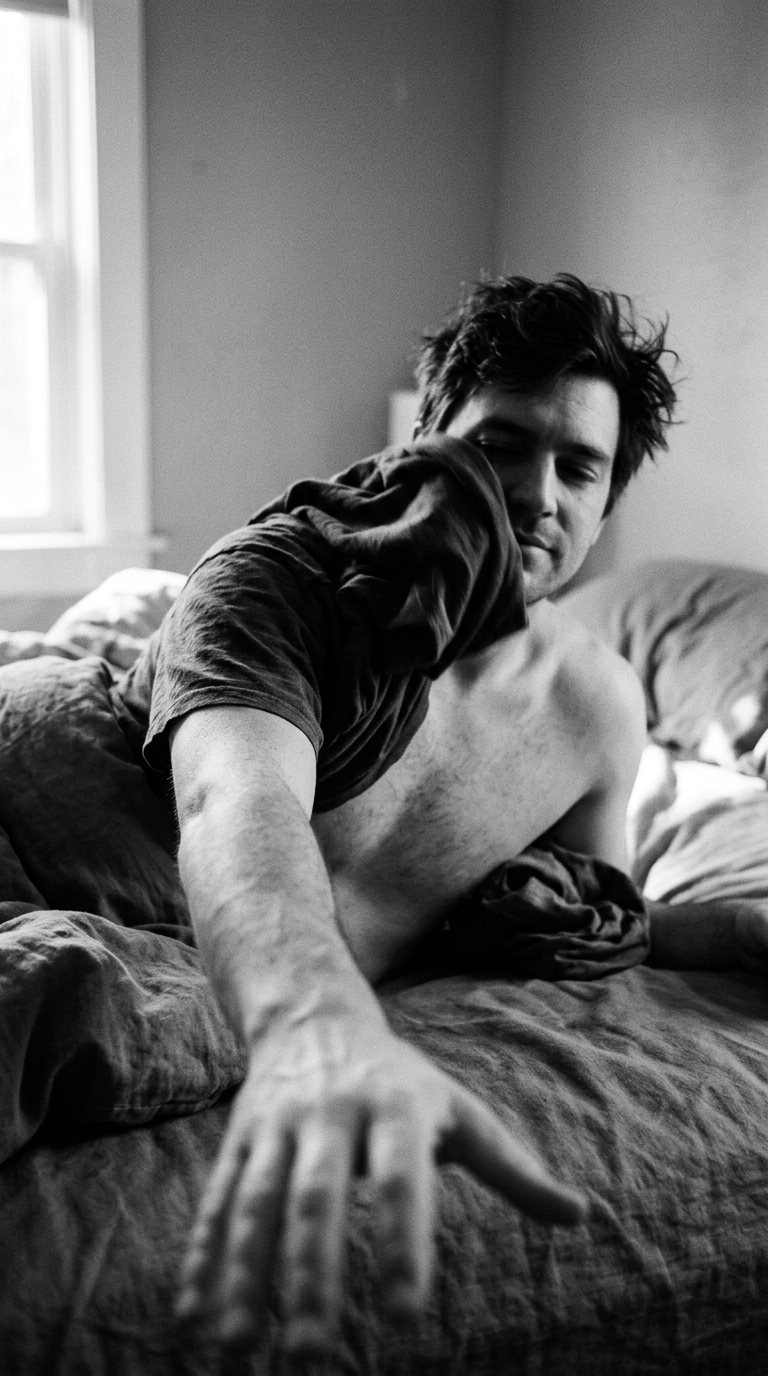
The testosterone gave my husband his drive back. I need to say that — it worked for that. Within six weeks of starting therapy, the wanting returned. The reaching in the dark. The initiating. The specific energy of a man whose body is asking for something it stopped asking for a year ago. The drive came back. The body it came back inside didn't. That's the thing nobody at the clinic warned us about. Nobody said: "The hormone will restore the desire but not the container the desire lives in. Your husband will want you again from inside a body he doesn't want to show you." Nobody mentioned that cruelty. The cruelty of wanting and hiding simultaneously. Of reaching for your wife and keeping your shirt on. Of initiating and then engineering the darkness because the drive says yes and the mirror says no. My husband was a 33 waist at 37. He's a 40 at 44. He started testosterone therapy at 41. The drive returned at week six. The body hasn't changed in two and a half years. At 41, before the prescription, the bedroom was quiet. Not hostile — absent. He didn't reach for me. Didn't initiate. The drive had drained the way everything drained — his energy, his confidence, his willingness to be in his body at all. The bedroom was the last room to go dark, but it went dark. I missed him. Not the sex exactly — the wanting. Being wanted by the man who used to want me reflexively, without deciding. The doctor said "low testosterone explains the low drive. The therapy will bring it back." The therapy brought it back. Quickly. Almost overnight compared to everything else the testosterone was supposed to fix. The drive was the one thing that responded fast and fully. My husband wanted me again within six weeks of the first injection. But here's what happened inside the wanting. He'd reach for me in the dark. Specifically the dark — the light went off first. Always. The reaching happened only after the room was completely dark. Because the reaching required being close and the closeness required contact and the contact required a body he didn't want me to feel in the light. His shirt stayed on. Before testosterone, when the drive was absent, the shirt was irrelevant — nothing was happening, so the shirt didn't matter. Now that things were happening, the shirt became a barrier he placed between his body and my hands. The shirt said: you can have the drive but not the body that carries it. He positioned. I don't know how else to say it — he positioned his body during intimacy to minimize what I could feel. Angles that kept my hands away from the midsection. Postures that hid the stomach. The engineering of a man whose desire is genuine and whose body shame is equally genuine and the two are operating simultaneously in the same bed. I noticed everything. The wife notices. The wife whose husband's hands are reaching with desire while his body is retreating with shame — she notices the contradiction. The hands coming forward and the body pulling back. The wanting and the hiding in the same motion. At 42, the pattern was established. Desire: present. Testosterone: optimized. Body: unchanged. Bedroom: dark, shirt on, positioned. The frequency increased — the testosterone did its hormonal job. The quality shifted — the man who used to want me in the light, in his body, unshirted, uninhibited, was now wanting me through a filter of shame. The wanting was real. The shame was real. Both real. Both simultaneous. Both in our bed. I want to say something honest. I missed the body. Not for the body's sake — for the confidence that came with it. The man who used to take his shirt off wasn't performing confidence. He just WAS confident. His body allowed it. The body at 37 was a body that could exist in a lit room with a woman's hands on it without engineering the angles. That body produced a different kind of intimacy — unfiltered. The testosterone brought back the drive but not the unfiltered. The drive was running through a filter of thirty extra pounds and a closet full of dark shirts and a mirror he couldn't face. His doctor at the one-year check: "How's the drive?" "Drive's great." "Everything working?" "Everything's working." The clinical conversation about desire that skips the body. The doctor checks the hormone. The hormone produces the drive. The checklist is complete. Nobody asks: does the man want to be seen by the woman he's reaching for? Because that question isn't on the blood panel. He tried to fix the body. I watched — from the closest seat. The gym on top of the testosterone. 5 AM. Five days. The drive was supposed to be motivation — now that he wanted me again, the body should follow. The body didn't follow. The gym produced soreness and the soreness went to bed next to the drive and both of them operated in the dark with the shirt on. The diet. Chicken and broccoli across from my pasta. The discipline plate. The jaw clenched. The restriction on top of the prescription on top of the gym. Three interventions. Zero change in the body. The drive unchanged — the testosterone held it steady. The shame unchanged — the mirror held it steady too. At 43, the reaching became less frequent. Not because the drive decreased — the testosterone held the drive at optimal. Because the shame accumulated. Each encounter was a negotiation between desire and disgust — wanting me, hating the body that was doing the wanting. The negotiation exhausted him. The drive was there but the energy to manage the shame around the drive was depleting. Easier to not reach than to reach and manage. The bedroom got quieter. Again. Not from absent drive — from exhausted shame. The testosterone gave back the wanting and the body took away the willingness. Two forces cancelling each other. The net result: a man who wants his wife and doesn't touch her. Not because the drive is gone. Because the body carrying the drive is something he can't bring to the touching. I lay in bed next to a man who wanted me — I could feel the wanting, the tension of it, the cortisol of suppressed desire — and who couldn't close the distance between wanting and doing because the distance was measured in body shame. Three feet of mattress and a lifetime of hiding. One night — 1 AM, he was asleep, I was awake with the specific insomnia of a woman whose husband wants her and won't touch her and the gap between the two is a body in crisis — I searched. Not for testosterone. Not for drive. For the body. For why the testosterone restored one thing and couldn't restore the other. For the gap between the drive and the container. The article was about cortisol overriding testosterone's effects on body composition. The hormone can restore drive — that's a direct hormonal pathway, fast, reliable. But body composition — the fat loss, the recomposition, the physical transformation — requires the body to NOT be in survival mode. Cortisol from survival blocks the recomposition while allowing the drive. The testosterone gives back the wanting. The cortisol keeps the body that does the wanting in a shape that produces shame. Two hormones. Two effects. One body. The clinic optimizes one and ignores the other. The article mentioned Liven. Micro-Cycle Method. Five minutes a day. For the cortisol. The survival state. The thing keeping the body in a shape that the drive can't overcome and the shame can't survive. I showed him on a Sunday morning. In bed. The place where the drive and the shame live together. "The testosterone gave you back the wanting. Something is keeping the body from matching the wanting. And this might be the something." He read it. In bed. Where the reading mattered most. He took the quiz. Started Liven. "I want to reach for you without engineering the room," he said. First time he'd admitted the engineering. The darkness. The shirt. The angles. He named them. In bed. On a Sunday. Week 1: sleep. The 3 AM wake-up eased. The cortisol dropping in the hours where the body is supposed to repair. Week 2: his face sharpened. The bloat easing. The first visible change. And that night — the light stayed on. Not bright. The lamp. But on. He reached for me in the lamp light. Shirt still on. But the light was on. The room was no longer fully dark. One variable changed. Week 3: the shirt. He pulled it off mid-reach. Not at the start — during. Like a man testing the water. The shirt came off and his hands pulled me closer and my hands found his chest and the chest was different — less between the muscle and the skin. Less padding. Less shame between my hand and his body. Week 4: "Nine pounds," he told me. In bed. After. In the lamp light. Without the shirt. Nine pounds and the body was moving in the direction the drive had been pointing for two years. Week 6: the light was on. The full light. Not the lamp — the overhead. He reached for me in a lit room. No shirt. No engineering. The angles were open. The body was turning. Not the 37 body — but a body where the drive and the container were starting to match. Where the wanting and the showing were approaching each other instead of contradicting. Week 8: a Saturday night. He initiated. Lights on. Shirt off. No positioning. No engineering. He reached for me and his body didn't retreat while his hands advanced. The two motions were the same motion — forward. Both of them. Together. For the first time in two and a half years, the wanting and the body moved in the same direction. "There I am," he said. After. In the light. In his body. Without the filter. It's been five months. The shirt comes off. The light stays on. The reaching doesn't require managing. The drive and the body are aligned — not perfectly, not like 37, but aligned enough that the bed is a place of wanting AND showing instead of wanting and hiding. He's still on testosterone. The drive is still there — the prescription holds it. But the body is matching it now. The cortisol dropped and the body responded to the testosterone's recomposition signal and the man who reaches for me in the light is a man whose body allows the reaching. It wasn't that testosterone didn't matter. The drive was real. The hormone was real. But the drive without the body was a cruelty nobody warned us about — the wanting inside a container the man can't show. Once the cortisol dropped — through the five minutes daily, combined with moderate training he returned to and normal eating — the container started changing. The testosterone was doing its recomposition work. The gym was building. The food was fueling. And the nervous system was no longer blocking any of it. The wanting and the showing started becoming the same thing. If your husband's drive returned on testosterone but the body didn't follow. If the bedroom is dark and the shirt stays on and the reaching has engineering behind it. If the wanting is there and the shame is there and both are in your bed. The drive isn't the problem. The body keeping up with the drive is the problem. And the body might be held by something the testosterone can't reach. Liven has a quiz. A few minutes. Doesn't cost anything. Show it to him. In bed. Tell him: "The wanting came back. I want the body to match it. And this might be why it hasn't." Link is below. 💙
THIS IS what you need to do
LEARN MORELike this ad? Make it yours.
Crush rebuilds this exact creative around your product — your brand, your colors, your offer — in about a minute.