Ashley Parker
 Facebook ad: “Every woman with aching legs needs to read this!”
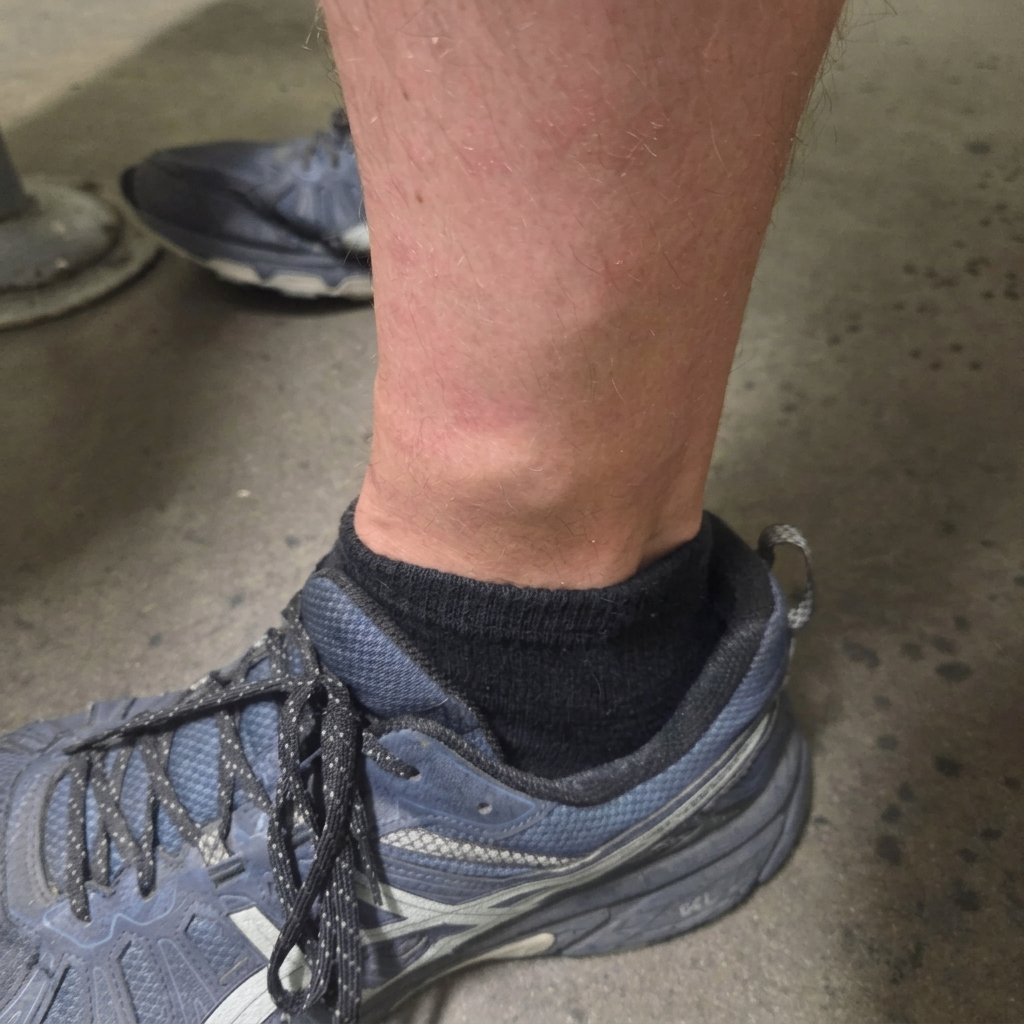
Ran for 1 day, from November 19 to November 20, 2026, the last day Crush saw it.
Run by Ashley Parker on Facebook. Crush is not the advertiser and does not verify its claims. See this ad in Meta's Ad Library(opens in a new tab)
Make your own version of this ad
Crush makes it, launches it in your own Meta ad account, scales the winners and pauses the losers.
About this ad
- Meta Ad Library ID
- 1521923727665171
- Platforms
- Facebook and Instagram
- Relaunches
- 0
Ad text
I don't give a f*ck if this upsets you. I am going to say something that nobody with heavy, aching legs after decades on her feet wants to hear. I examined my 2,347th vascular patient on September 11th, 2024. Nineteen days later, at 11:48 PM on September 30th, I was sitting on the edge of my bathtub with both calves throbbing so hard I could feel my own pulse behind my knees. I was 59 years old. I am a board-certified vascular nurse practitioner. Twenty-six years of practice. I sat in my own bathroom pressing my thumbs into the swelling around my own ankles the same way I had taught student nurses to assess pitting edema three years earlier. I cried into a towel for nine minutes. The vein consultations had generated $83,000 in specialist referrals over the years for my patients. My own duplex ultrasound was another $4,200. They will let me practice again. My clinical privileges are intact. But I will never tell another woman that her heavy legs are just part of getting older without remembering that I was sitting on that same bathtub edge, staring at my own swollen ankles, because everything I was trained to recommend had not saved my legs. I am writing this because I know exactly what my colleagues will say when they see it. I do not care. If you are over 50 and your legs ache after every shift, or someone you love comes home and collapses on the couch because her feet are screaming and her calves are on fire, please read the entire thing. I know it is long. I know you are scrolling. I know you have things to do. Fifteen months ago I would have given anything for someone with my credential to sit me down and tell me what I am about to tell you. Nobody did. I noticed the heaviness in my legs eight years ago at 51. A deep ache behind my calves that did not go away when I sat down. Ankles that looked fine at 6 AM and enormous by 6 PM. A closet full of dresses I could not wear anymore because the veins on my lower legs had turned into a road map I did not want anyone to see. The change surprised me and it did not. My mother had lived in compression stockings from age 55 until the day she passed at 74. She had been managed on knee-high 30-40 mmHg hose and two separate ablation procedures for nineteen years. Her legs still ached every night. My grandmother had worn support bandages through her last decade of standing behind a bakery counter. I had watched the pattern in my own family and I had built my entire practice on reassuring women who looked like my mother. I did what any vascular nurse practitioner would recommend. I started wearing medical-grade compression socks at the first swelling. My vein specialist, a colleague at my own hospital, scheduled the first ablation procedure the following year when the heaviness crept worse. She added a flavonoid supplement the year after that when my calves still throbbed at the end of every shift. Three treatments. Two of them treatments I had personally recommended to hundreds of my own patients. I walked three miles a day. I elevated my legs for thirty minutes every evening. I lost 14 pounds in the first year and kept it off. I ate the anti-inflammatory protocol I recommend to every patient with a vein complaint. Leafy greens. Wild-caught fish. Berries. Minimal sodium. I stopped crossing my legs at my desk. I ran a duplex ultrasound on myself the year it started. Valve reflux moderate in both saphenous veins. I checked every box on my own protocol. By last August, my swelling had eased. My compression socks were doing what compression socks do. Managed. That word again. I ran a second duplex on myself last August, eight years after the first one. I did it because a hunch would not leave me alone. The reflux was worse. Measurably. In the same veins the ablation had supposedly sealed three years earlier. For context, I have sat across from patients and used the sentence, we need to discuss your options today, not in three months, for legs in far better condition than mine. I asked a vascular surgeon colleague to review my imaging. She did. It was concerning. She recommended a third procedure to be safe. I scheduled it. And then I did not go. I want to tell you why. Because sitting in my office at 7 PM staring at my own ultrasound images on my own screen, I recognized something. I was doing exactly what my mother had done. She had been managed for nineteen years before the skin changes that left her wearing long pants in July. She had been in compression stockings every day. Her vein specialist had read her imaging as stable. Her numbers had been controlled. And she had spent the last six years of her life unable to walk to the mailbox without stopping twice, in the same town where I did my clinical residency. I did not go to my own procedure because I already knew what it would find. I did not want to see it in writing. I told myself I had time. Twenty-one days later I woke my sister at 1 AM. The throbbing started in my left calf at 12:47 AM. I remember the time because I looked at my bedside clock and thought, this is not just tired legs. It was not. It was the deep, radiating ache I had described to a thousand patients in follow-up appointments. Calves. Ankles. That heavy, dragging feeling that sits behind the knee and runs down into the foot. My sister, a physical therapist, sat up before I could finish the sentence. She is not a vein specialist but she has heard me describe this exact presentation at our kitchen table for twenty years. She came over. We drove to a competing clinic, not my own. Because I did not want the residents I had trained to see me in that chair. They saw me anyway. The vein technician on call was a woman I had trained through her clinical rotation in 2020. She walked into the room, saw me in the chair, and her face did the thing. She said my name. I need a full venous workup, I told her. Duplex. Inflammatory panel. Fibrin markers. D-dimer. Run it all. Yes, ma'am, she said. They walked me down the corridor I had walked down thousands of times going the other direction. I stared at the fluorescent lights and counted them because I did not want to look at the technician who was about to squeeze ultrasound gel onto my swollen calves. I broke down in that chair twenty seconds after they started. My tech later told me my reflux was worse than anything she had mapped that month. Swollen ankles. Heavy calves. Both in the same forty-minute assessment I had done for other women six hundred times. I was in denial for three days. Grieving for five. I came home on October 28th with my sister, a stack of imaging, two procedures that had failed me, and a bathroom cabinet full of compression socks I had personally recommended to hundreds of patients over twenty-six years. I did not want the full venous workup my colleagues were suggesting. I ran it on myself anyway. Because I knew that if I did not, in eighteen months I would be reading somebody else's vascular report from an outside institution and seeing my own name on it. The venous blood panel came back with a colleague I had trained with in my residency program. She pulled my last four sets of labs up on her screen. Fibrinogen had been climbing quietly for three years. My inflammatory markers were elevated and had been normal four years earlier. She used the phrase, early fibrin accumulation with chronic venous insufficiency. Nobody had flagged it because my swelling had read managed and a little heaviness does not trigger a workup in the standard-of-care algorithm I had signed off on for our clinic. The duplex ultrasound found progressive valve reflux in both legs. She used the phrase, worsening insufficiency despite prior intervention. I had been blaming tired legs on long shifts for nine months. I had blamed my age. The inflammation panel showed elevated CRP and IL-6. My achiness had been present for two years. My colleagues had said, keep wearing your compression. Nobody investigated what was making the walls worse from the inside. The fibrin analysis showed significant accumulation in the lower extremities. Blood was pooling, thickening, pressing against walls that were already stretched thin. I had been noticing indentations from my compression socks for seven months. I had blamed the wrong size. Every part of my legs was showing the pattern I had watched in hundreds of my own patients after a first procedure. Same problem. Same trapped loop. Stretched walls. Leaking fluid. Inflammation that never resolves. Pooled blood thickening with fibrin. And finally, the legs I could barely stand on by 4 PM. I sat in my office on November 14th with all five reports in front of me and I understood something I had never let myself understand before. Every treatment in my regimen had been treating from the outside. Compression was squeezing the vein from the surface. The ablation was sealing individual veins. The flavonoid supplement was barely reaching anything. Not one of them had touched what was doing this to the whole vascular environment from the inside. I am a vascular nurse practitioner. I am supposed to be the person who knows how to prevent this. I had recommended the exact three-part regimen I was on to a thousand women who looked like my mother. Every one of those recommendations had passed clinical guidelines. Every one had followed the protocol. Every one had been the correct standard of care. And it had failed me at 59. I sat at my desk that night at 11 PM after my sister had gone home and I did something I had not done since my clinical training. I opened PubMed and I searched for the actual mechanism. Not the management guidelines. Not the compression studies. The mechanism. I read for five hours. I found what my training had covered lightly and never in the depth it deserved. Fibrinogen accumulation in stagnant venous blood. Chronic inflammation driven by leaked proteins through weakened vein walls. OPC binding to collagen and elastin in the vessel wall. The fibrinolytic action of nattokinase on accumulated protein mesh. The mechanistic explanation for why the three treatments I had been recommending for twenty-six years managed the outside without addressing the stretched, leaking, inflamed environment inside the vein wall driving all of it. None of this was hidden. It sat in journals I had had access to for twenty-six years. The Journal of Vascular Surgery. Clinical papers on pine bark OPCs. The reviews on nattokinase fibrinolysis. The bromelain inflammation data. I had read those journals every month. I had read them for the compression studies. I had never read them for the mechanism papers because my training had told me the mechanism was managed and the treatment was to squeeze things from the outside. My training was wrong. I closed my laptop at 4 AM. I sat at my kitchen table. I could not sleep. I understood at that moment that I had recommended the exact protocol that failed me to hundreds of other women. And every one of them was walking around with the same trapped loop grinding through her veins, waiting for her September 30th to arrive. Two weeks later I saw a patient in follow-up who should not have had the legs she had. Her name was Margaret. Post-menopausal. Fourteen years past her first ablation. She had been my patient for four years after transferring to me following a swelling scare. Her reflux at intake four years earlier had been alarming. She had been in compression stockings and on a flavonoid supplement. I pulled her chart before she came in expecting to talk about her next procedure. Her swelling had reduced. Her late-day measurements had improved. Her achiness was down. She had stopped wearing compression on weekends six months earlier at her own insistence and her legs had not worsened. I looked at her across the exam room and asked her what she was doing. She was quiet for a moment. Then she said, My daughter-in-law Nadia runs a small women's health circle in central Pennsylvania. She has been telling all of us for years. I did not bring it up because I did not think you would take it seriously. I asked her what her daughter-in-law had told her. She wrote a name and an address on the back of my note pad. Nadia Okonkwo. A town I had never heard of in central Pennsylvania. A house with a garden of Japanese and Mediterranean medicinal plants she had transplanted from her grandmother's village in Nigeria and from a supplier in Kyoto. I drove there the following Saturday. I did not tell my sister where I was going. I did not tell my practice partner. I did not tell anyone in my institution that a board-certified vascular nurse practitioner was driving two hours to meet a 73-year-old grandmother because everything I had been taught in twenty-six years of practice had not saved my legs. I pulled into the driveway of a small brick house at 10:20 AM. The garden along the front walkway was unlike anything I had seen. Pine bark trees in pots. Grape vines along the fence. A turmeric patch by the front steps, gold-green and dense. Plants I recognized from the botanical section of pharmacology journals I had not thought about since school. She was on the porch sorting dried roots into a ceramic bowl. Small woman. Lean. Early seventies. Standing on her feet in sandals with exposed calves. No compression stockings. No visible swelling. Smooth, strong legs that looked nothing like mine. No heaviness in her stride. No bandages. No long pants in October. Just easy, steady work and better legs than a woman twenty years younger. I introduced myself. Not as a nurse practitioner. As Christine. She looked up with sharp clear eyes and asked me why I had come. I told her. I told her I was a vascular nurse practitioner. Twenty-six years in practice. That I had sat on the edge of my own bathtub five weeks earlier with calves that throbbed so hard I could feel my pulse. That my three treatments had not saved my legs. That the whole environment inside my veins was showing the pattern I had watched in hundreds of my own patients. That one of my patients had told me about her. She listened. She did not interrupt. When I finished she set the bowl down and said, Come inside, dear. Her kitchen smelled like turmeric and warm broth. She poured me tea without asking. She sat across from me and said, Your treatments are fighting the wrong battle. You know this. That is why you are sitting at my kitchen table. I did know it. She said, Every product you recommended for yourself. Every product you recommended for your patients. All of them work from the outside. That is all. The stretched, leaking vein wall underneath, the fibrin clogging the flow and the inflammation eating at the structure that is grinding at your veins every day, every shift, every year, none of them touch it. I said, I understand the mechanism. I read the papers last week. She smiled. Then you understand it clinically. You do not yet understand it in your own legs. She picked up a small container of dark granules from her shelf. Then a piece of pine bark. She set them on the table in front of me. This one is the sludge. This one is the wall. She tapped each one. Same trapped loop. Grinding through the whole system. Every compression sock you pulled on told you it was doing enough. It was not. But you have been trained for twenty-six years to squeeze from the outside and ignore what is falling apart on the inside. I nodded. I could not speak. She said, The compression squeezes the pooled blood up. The ablation seals one vein. The flavonoid supplement sits in your stomach. Three things on three different layers. Below all three, the fibrin and the inflammation have been grinding at your vein walls. Year after year. Every shift. Every night. She leaned forward. The socks you pulled on did not strengthen the wall the blood is leaking through. They squeezed a vein that is still stretched and porous on the inside. If the sludge and the inflammation are not addressed, you will be in that bathtub again within a year. This is not opinion. This is the mechanism you already understand. I said, I know. She said, Now here is what nobody taught you in clinical school. For over a thousand years the women in my grandmother's village have been using three things for this. My grandmother grew them. Her grandmother before her. I am seventy-three. My legs have never ached. My calves have never swelled. My daughters stand all day and their legs are fine. She stood. She walked to a shelf. She pulled down a dark glass jar. Inside were small amber capsules and dried bark shavings. The enzyme from natto, she said. And pine bark with grape seed. And bromelain with turmeric. Not what your patients are buying at the drugstore in a compression sleeve. What is sold as leg support at the pharmacy squeezes from the outside. A different approach entirely. Cheaper. It pushes blood up. It does nothing about the walls. She set the jar down. The natto enzyme has one compound your veins need. It is called nattokinase. This is what dissolves the fibrin your training tells you is just sluggish blood. It is a fibrinolytic, so it breaks down the sticky mesh that has been making your blood thicker and slower in the areas where it already pools. At ten thousand FU it reaches the buildup the socks never touch. She held up the pine bark. The bark and the grape seed have the second. They are called OPCs. The compounds that reinforce the wall. They bind to the collagen and elastin inside your vein walls, the two things that give a vein its strength and stretch. When they break down, the wall gets thin. It stretches. It leaks. OPCs support both from the inside. She looked at me. Three actions. From three sources. One clears the sludge. One strengthens what the stretching weakened. The third, the bromelain and the turmeric, calms the inflammation the leaking caused. That is why the women in my grandmother's village stand all day and their legs carry them into their nineties. I asked her if the form mattered. She nodded. The nattokinase has to be real fermented natto enzyme, at the clinical dose, in a capsule that survives digestion. The drugstore version at two thousand FU does nothing. Two thousand FU for a leg with decades of buildup is like using 15 mmHg compression when you need 40. The dose matters the same way the pressure in your socks matters. Without the clinical dose, most of what you swallow passes through and never reaches the mesh. In our village we take our remedies with the meal. Inside. My grandmother did not know the biochemistry. She knew that what goes in, not on, is what reaches the wall. That is why our women keep their legs into their nineties. She paused. There is a company my niece in Boston told me about. They source the real enzyme. Clinical-dose nattokinase at ten thousand FU. They pair it with pine bark extract and grape seed for the OPCs. They add bromelain and turmeric for the inflammation. CoQ10 for the cellular energy the walls need to repair. All in one capsule so it absorbs from the inside instead of squeezing from the outside. Third-party tested. Made in the USA. She wrote a name on the back of a receipt and slid it across the table. Rebloom. I ordered three bottles from her kitchen table before I left Pennsylvania. I drove two hours home. I did not tell my sister where I had been. The bottles arrived the following Thursday. I took 2 capsules with my dinner that night. Week one. The deep ache behind my calves quieted at the end of my shift. I had been coming home and collapsing on the couch with my legs elevated for an hour every night since the September scare. On day five, I came home and cooked dinner standing up. I stood at my counter for forty minutes and I recognized that my calves felt quiet for the first time in years. Week two. The late-day swelling began to ease. I had been leaving sock indentations so deep they took an hour to fade. That week I took my compression off at 7 PM and the indentations were half as deep and gone in twenty minutes. Week three. I looked at my ankles at 4 PM, the hour they usually looked the worst. They were not fine. But they were noticeably less swollen than the same time the week before. I had not changed a single thing about my shift. Week four. I ran my own duplex through our clinic's imaging. The reflux was not gone. But the late-day measurements had shifted. I ran it twice because I did not believe it. Both runs matched. Week six. I ran an inflammatory panel. My CRP was down. The fibrinogen levels that had been climbing for three years had plateaued. I scheduled a follow-up venous assessment two weeks later. Week eight. Late-day ankle circumference was measurably smaller than at intake. My legs felt lighter at the end of a full shift than they had in three years. Week twelve. Full venous workup plus duplex plus inflammatory panel. Inflammatory markers trending back toward normal range. Fibrinogen levels lower than they had been in two years. Late-day swelling down to a fraction of what it was at intake. Ankle measurements at 6 PM the best they had been since my first ablation. Compression socks feeling like they were doing more because the internal pressure they were working against had dropped. My calves quiet at 9 PM without elevation, for the first time in four years. I called my colleague back and asked her to repeat the inflammatory panel. She did. Same numbers. I sat in my office at 7 PM staring at my own imaging on my screen and I understood that I was looking at an improvement I had not seen in a venous chart in twenty-six years. I brought the imaging to my practice partner. Another vascular NP. Eighteen years of practice. Someone I had trained. I put the intake images next to the twelve-week images on her desk and I did not say anything. She read them. She looked at me. Christine. What did you do. I told her. The grandmother. The kitchen table. The three actions. The trapped loop. All of it. She listened for forty minutes without interrupting. When I finished she was quiet for a long time. Then she said, I have not been trained on this. But I want to see this in my own patients. Tell me the name of the product. I gave it to her. She has been running it with eleven of her post-menopausal patients for the last three months. She called me last week. Eight of them have reported less late-day swelling. Four have reduced their compression use on weekends at their own insistence. I am still wearing my compression on work days. I am still seeing my vein specialist. My flavonoid supplement was discontinued at week ten. I wore a dress to dinner with my sister last week for the first time in six years. No long pants. No boot-cut yoga pants to hide the socks. My ankles looked normal in the restaurant mirror at 8 PM. My last venous check two weeks ago showed continued improvement. I came within one bad night of giving up on my own legs at 59. I am writing this because I still have my practice. I still have my sister. And I have watched every part of my legs recover. I have watched a colleague I trained look at my imaging and say the word I had waited eleven months to hear. Improving. Not managed. Improving. I am also writing this because I know the truth about what my profession is doing. I did not sit at that grandmother's kitchen table because I wanted to. I sat there because everything my clinical school and my board certification and my twenty-six years of practice had taught me about how to treat this had failed me. I examined 2,347 vascular patients before I looked hard at my own legs. Every one of those women was walking the same trajectory I was walking. Every one of them left my office with the same three-part routine I was on. Every one of them was told they were managed. I do not know how many of them are already hiding their legs year-round. I do not know how many of them have already given up on summer. I know that the standard of care my hospital taught me was built on the assumption that squeezing from the outside and sealing individual veins was equivalent to addressing the stretched, leaking, inflamed environment the vein wall actually lives in. It is not. I have a pair of legs worth of imaging in my own files that prove it is not. And my mother's swollen ankles from twenty-two years ago prove it was not for her either. If your sister, your mother, your daughter, your best friend, or you are watching your legs get heavier and more painful year after year and you have been told it is just part of getting older while your veins quietly fall apart from the inside, please listen to what I am telling you. The trapped loop and the fibrin are what is worsening you. Not the number on the compression chart. Compression squeezes from the outside. It does not strengthen the wall. It does not clear the sludge. It does not reach the inflamed, leaking environment inside the vein that has already been stretching and thinning for decades. Procedures seal individual veins. They do not stop the loop. The loop runs in every vein they did not seal. And new ones develop. This is why you have had two, three, four procedures and your legs still ache at the end of every day. There is one thing I know of that clears the sludge, strengthens the wall, and calms the inflammation from the inside. The three compounds in clinical-dose nattokinase, pine bark OPCs, and bromelain with turmeric. Nattokinase dissolves the fibrin. OPCs reinforce the collagen and elastin in the wall. Bromelain and turmeric calm the inflammatory signals that have been eating at your vein walls for years. Together, at the right dose, in the right delivery form, they address what my three outside treatments did not touch. Rebloom. Nattokinase at 10,000 FU, the clinical dose. Paired with pine bark extract and grape seed for the OPCs. Bromelain and turmeric for the inflammation. CoQ10 for cellular support. All in one capsule. Third-party tested. Made in the USA. 2 capsules every day with a meal. That is the whole ritual. 90-day money-back guarantee. If your legs do not feel lighter, you pay nothing. The system that trained me did not give this to me when I needed it. It is reaching you now. P.S. My mother lived in compression stockings from age 55 until the day she passed at 74. Nineteen years managed on 30-40 mmHg knee-highs and two ablation procedures. My grandmother wore support bandages through her last decade behind a bakery counter. I built my entire practice on the assumption that I would prevent for my patients what I could not prevent for my mother. Instead I have watched myself walk the same trajectory in my own legs. The difference is that I caught the loop early enough to interrupt it. Please do not let your family's warning come too late. P.P.S. I do not work for Rebloom. I do not receive a penny from this. I am writing this at 10:40 PM on a Sunday, alone in my office, because a patient came in Friday whose late-day swelling had dropped measurably in five weeks and I recognized my own legs on her chart. She had found Rebloom on her own after reading a post from a woman named Diane about her friend Ruth. She told me the post had been circulating among the women in her walking group. I read it that night. It was the second time in four months I had recognized my own patient in a story written by a stranger. Please share this with anyone you love who is watching her legs get worse. Even a little. Even at the ankles. Even if she thinks it is just getting older. I promise you it is not. ~ Christine Valdez, MSN, NP-C, age 61, vascular medicine
Where the ad sends people
myrebloom.com
Every woman with aching legs needs to read this!
Rebloom
See details: myrebloom.com(opens in a new tab)