

Debbie O'Brien
Active· since May 31, 2026
- 115
- days running
- 0
- relaunches
Ad copy
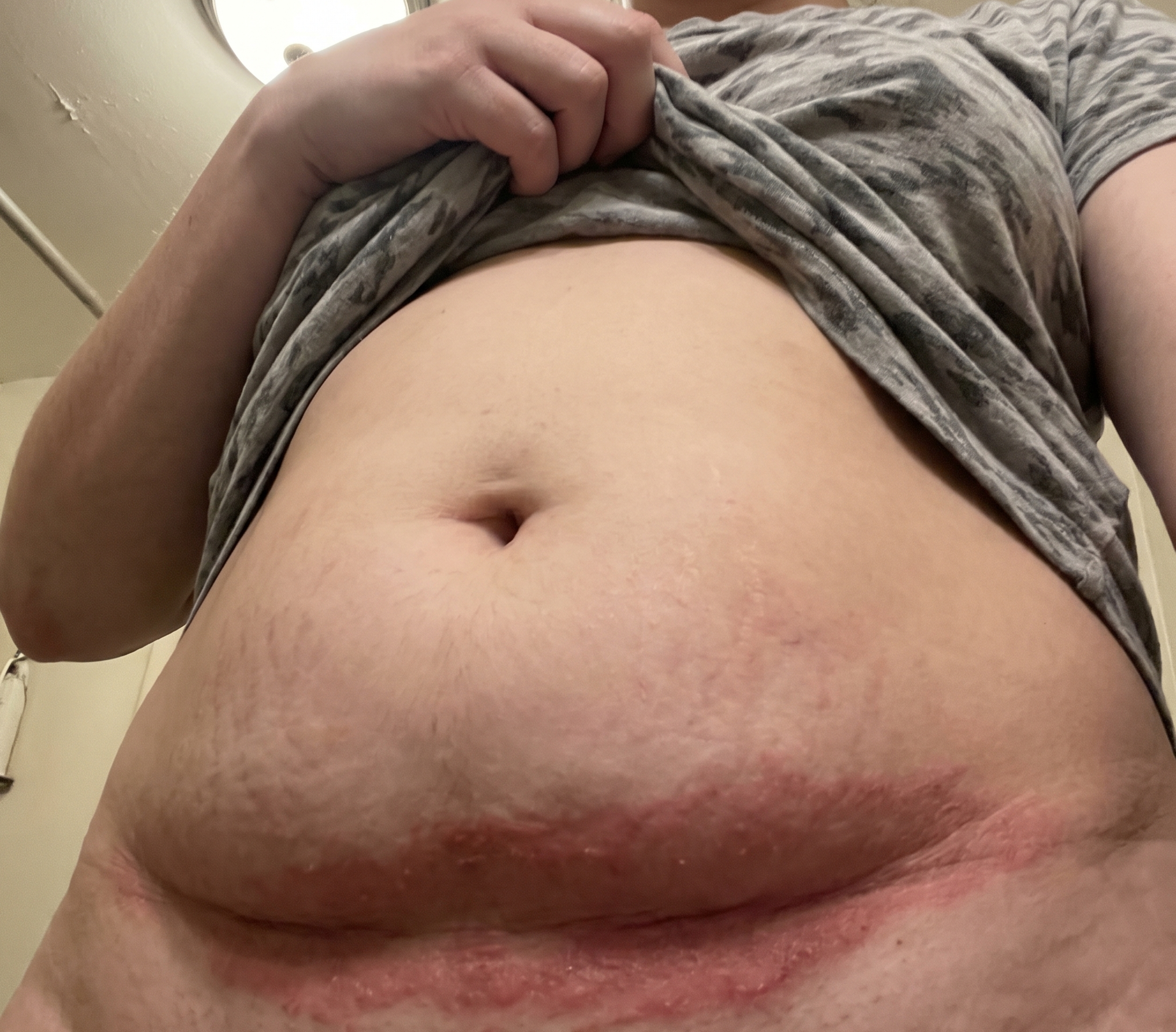
If you have a red burning rash under your breasts, in your belly fold, or between your thighs that keeps fading and coming back, and the only advice you've ever gotten from a doctor was "keep it dry and use an antifungal," I need you to read this. Because I'm a dermatologist, and that advice is wrong. I've been practicing for 16 years. And that advice I just quoted? I gave it to hundreds of patients. Maybe thousands. For over fifteen years. And it doesn't work. I KNOW it doesn't work. I've known for years. And I'm about to explain exactly why, what's actually happening inside your fold that nobody is telling you, and why the entire product category you've been buying from was never designed for your problem in the first place. By the end of this you're going to be angry. You should be. Because there are three things happening right now. One. The rash is an alarm. You've been silencing it with creams and powders. Nobody has fixed what's making it go off. Two. Every product on the pharmacy shelf, every cream your doctor prescribed, every powder you've been applying twice a day, was built to solve ONE problem. Your fold has THREE. So none of them ever close the loop. Three. There's an entire shelf at every drugstore in America full of products that work for five days, fade, and stop. Every time the rash comes back and you buy another tube, that's another sale. Your recurring rash is their recurring revenue. Let me tell you why I'm writing this. Because of a patient named Diane. My name is Dr. Reyes. Diane is 51. She's been coming to my practice for three years. She first came in with a red rash under both breasts and in her belly fold. Classic presentation. I looked at it for maybe thirty seconds and diagnosed intertrigo. Candidal. Fungal infection in the skin fold. I prescribed exactly what I was trained to prescribe. Clotrimazole cream. Twice a day. Keep the area dry. She came back six weeks later. "It went away for about a week and then came right back. Worse, actually." I switched her to ketoconazole. Stronger antifungal. Same instructions. Keep the area dry. She came back two months later. Same rash. Same locations. "It keeps coming back. I'm doing everything you said." I added a short course of hydrocortisone to calm the inflammation. Then a zinc oxide barrier cream layered on top. The rash cleared. For about three weeks. Then it was back. Over the next three years I saw Diane eight times for the same problem. I prescribed clotrimazole, ketoconazole, nystatin powder, hydrocortisone, zinc oxide barrier cream, and a course of oral fluconazole. Nothing worked permanently. Not one thing. The rash would fade. Sometimes it would fade significantly. And then it would come back. Every. Single. Time. And here's the part I'm ashamed of. For three years, every time Diane came back, I did what every dermatologist does. I prescribed a variation of the same approach. Different antifungal. Different strength. Maybe add a steroid. Maybe stack a powder on top. Not once did I stop and ask: WHY does this keep coming back? I treated the rash. Over and over. Without ever questioning why the rash kept returning despite treatment that was clearly killing the fungus. Because the treatment WAS killing the fungus. That's the thing. The antifungals work. Clotrimazole kills candida. Ketoconazole kills candida. Fluconazole kills candida. These are effective medications. The fungal organism dies. The rash fades. So why does it come back? That's the question I should have asked on visit number two. I asked it on visit number eight. And the answer made me furious. Not at Diane. At myself. At my training. At the entire dermatological approach to intertrigo that I had been following without questioning for sixteen years. Here's what's actually happening. And this is the part your dermatologist either doesn't know or doesn't explain. Intertrigo is not one problem. Let me say that again because it changes everything. Intertrigo is NOT one problem. It's three problems happening at the same time, in a sealed environment, where each one makes the others worse. And you have to solve all three at the same time or you'll be stuck in the same cycle Diane was stuck in for three years. Here's how it works. 1. The sweat gets trapped. When skin folds against skin, the fold becomes a sealed pocket. Under your breasts, in your belly fold, between your thighs. No airflow. No evaporation. Sweat sits there for hours. Like a sauna with no door. 2. The skin breaks down. That trapped sweat softens the skin. Wet skin is soft skin. Soft skin can't handle being rubbed against itself. So every time you walk, bend over, or roll in your sleep, the two soft surfaces grind against each other. The skin starts to crack open. 3. The yeast moves in. Once the skin cracks, the candida yeast that's already living on everyone's body finds warm, wet, broken skin to multiply in. That's where the burning comes from. That's where the smell comes from. That's why it itches. Now here's where it gets infuriating. When you apply an antifungal cream like Lotrimin or ketoconazole, the active ingredient kills the candida. Dead fungus. Rash fades. You feel relief for the first time in weeks. You think it's working. But the cream did not touch the sweat. Did not touch the friction. Did not touch the broken skin. The fold is still sealed. Still warm. Still wet. The skin is still cracking every time you move. So new yeast just keeps growing back, into the same fold, under the same cream you're actively applying. The antifungal killed one wave of yeast. But it did NOTHING about the environment that produced the yeast. Think of it like this. Imagine you have mold growing on a bathroom wall. You scrub the mold off with bleach. Wall looks clean. Mold is dead. But the bathroom is still humid. The vent doesn't work. The moisture is still sitting on the wall. What happens in two weeks? The mold is back. Same wall. Same spot. You didn't fix the bathroom. You just scrubbed the wall. That is EXACTLY what antifungal creams do in a skin fold. They scrub the wall. They don't fix the bathroom. Now think about the powders. Gold Bond. Baby powder. Cornstarch. These absorb moisture. Great. They handle ONE of the three problems. But they contain ZERO antifungal ingredients. Nothing in them kills candida. The yeast is alive and thriving under that powder the entire time. You're putting a dry layer on top of a living infection and wondering why it won't go away. And the cornstarch. God, the cornstarch. This one keeps me up at night. Because I recommended cornstarch to patients early in my career. Cornstarch FEEDS candida yeast. The fungal organism metabolizes it as a food source. You're literally feeding the infection while trying to fix it. And nobody tells patients this. So let me lay this out clearly because I want you to see what I saw when I finally understood it. Antifungal creams. Kill the yeast. Do not address sweat or friction. Yeast grows back from the same wet broken environment within days. Powders and barrier creams. Absorb surface moisture temporarily. Do not kill yeast. Do not stop friction. Yeast stays alive underneath. And cornstarch actively feeds it. Diaper creams like Desitin. Block the moisture. But trap everything underneath. The fold becomes a sealed wet chamber under a thick layer of paste. Worse, not better. And the prescription side? Steroid creams. Calm inflammation and burning. Do not kill yeast. Do not address moisture. And long-term use THINS the skin in your fold, making it crack open even faster. Oral antifungals. Kill the fungus systemically. Do not address the local sweat, friction, or broken skin. Yeast returns the moment the medication course ends. NONE of them do all three things at the same time. Not one product in the entire antifungal aisle of every pharmacy in America was built to handle the sweat, the friction, AND the yeast in one application. Do you understand how insane that is? I have an entire section of my treatment protocols dedicated to intertrigo. Sixteen years of prescribing. And not a SINGLE product in my rotation closes the loop. Now let me tell you why. Because every antifungal product on the market was designed for EXPOSED skin conditions. Athlete's foot. Ringworm. Jock itch. Surface fungal infections on skin that BREATHES. Skin that air dries naturally. Skin that doesn't fold over and trap moisture against itself. A skin fold is a completely different environment. It's sealed. It's wet. It rubs against itself every time you move. The rules that apply to exposed skin do not apply inside a fold. But nobody built a product for folds. They built products for feet and told women to use them under their breasts. And then when the rash kept coming back, the dermatologist said "keep using it" and the woman blamed herself. Diane blamed herself. For three years. She told me at her eighth visit that she thought her body was just "too far gone" to respond to treatment. She said she felt like she wasn't trying hard enough. She was APOLOGIZING to me for the fact that my treatments weren't working. She was doing everything right. The products were structurally incapable of solving her problem. And she was blaming herself. That is what made me start looking for something that actually addressed all three causes. I spent about a month reading research on skin fold environments, fungal recurrence patterns, friction biomechanics, and moisture barrier dynamics. Clinical literature that goes way deeper than what we cover in residency. I was specifically looking for a formulation that combined antifungal action with active moisture absorption AND a friction barrier, in a single application, designed for sealed fold environments. Most of what I found was the same one-sided approach. Another antifungal. Another zinc paste. Another powder. Same categories. Same structural limitations. Then I found a product called Sevorea. I almost dismissed it. I've been pitched "revolutionary" skincare products for sixteen years. Most of them are repackaged versions of what already exists. But I looked at the formulation. And it was different from anything in my current rotation. Undecylenic acid for the yeast. Same family of antifungal active I prescribe. Zinc oxide for the friction. Same barrier ingredient I'd been recommending, but at a usable concentration in a base that doesn't trap moisture. Silica and tapioca starch for the sweat. Tapioca instead of cornstarch, which matters because tapioca doesn't feed the yeast the way cornstarch does. Witch hazel pulls residual moisture out and tightens the skin surface. Tea tree oil clears the bacteria that worsen the smell. And the delivery system was what really got me. It goes on as a cream. Then dries down into a silky powder finish in about a minute. The cream phase carries the antifungal into the fold and onto the cracked skin without burning. The powder phase keeps the fold dry through the entire day. So the sweat can't sit. The friction stops. The yeast loses the wet environment it needs to grow back. Kill the yeast AND stop the sweat AND block the friction. In one formulation. Designed specifically for skin folds. All three causes. Same application. For the first time in my sixteen years of practice, I was looking at something that addressed the actual mechanism of intertrigo recurrence rather than just killing the current yeast colony and hoping the fold would somehow stay dry on its own. I gave it to Diane. She looked at the tube. "Dr. Reyes, I've tried so many things." "I know, Diane. And I owe you an apology for that. Because everything I prescribed you was only treating one third of the problem. This is the first thing I've seen that handles all three." She took it home. She called my office five days later. My nurse said Diane was on the line. I picked up expecting another "it came back." "Dr. Reyes, the smell is almost gone. The burning has calmed down. It's day five. I just need to tell someone because I don't think you understand how big that is for me." I did understand. The smell is the part most patients never mention in the exam room. It's the most devastating symptom of intertrigo and nobody talks about it because the shame is too heavy to say out loud in a medical setting. Three years of seeing Diane and she had never once mentioned the smell to me. By the end of the second week she came in for a check. The rash had faded more than it had at any point during three years of my treatment. Not the temporary fading I'd seen before where you can tell it's going to snap back. Genuinely pulling back. The skin underneath was calm. The small cracks she'd had under her left breast for months were closing. "This is different from the other times," she said. "I can feel it. It's not just hiding. It's actually going away." By week three the redness had settled. The skin was starting to look normal. By week four it was gone. I examined the area myself. Clear skin. No redness. No maceration. No satellite lesions. No smell. Normal, healthy skin where a treatment-resistant rash had lived for three years. Diane sat on the exam table and her eyes filled up. "Three years, Dr. Reyes. I thought it was just me. I thought I just had bad skin." "It was never you, Diane. It was the products. They weren't built for what was actually happening in your fold." That was four months ago. The rash has not returned. Not once. Not a flicker. Because the sweat isn't sitting. The friction isn't grinding. The yeast doesn't have the environment it needs to grow back. All three causes addressed. Cycle broken. I now recommend Sevorea to every intertrigo patient in my practice. I think about how many years I spent prescribing products designed for athlete's foot to women with a rash in a sealed wet fold and wondering why it didn't permanently resolve. I think about how many patients cycled through my office getting the same one-third treatment I gave Diane. How many of them blamed themselves. How many of them stopped coming back, not because they got better, but because they gave up. That's the thing that keeps me up at night. If you have a rash in a skin fold that keeps coming back, whether it's been months or years, I need you to understand this. You are not the problem. The products were not designed for your body. They were designed for exposed skin. Feet. Hands. Surfaces that breathe. Your skin fold is a sealed environment with three problems happening at once, and nothing in the pharmacy aisle was built for those rules. Sevorea was. It kills the yeast. It absorbs the sweat. It stops the friction. All three. At the same time. In one daily application. I've been a dermatologist for sixteen years. I've prescribed hundreds of antifungal treatments. Sevorea is the only thing I've seen that addresses all three drivers of intertrigo recurrence rather than just killing the current yeast and hoping the fold stays dry on its own. It won't stay dry on its own. That's the entire point. Folds trap moisture. That's what they do. You need something that works inside that reality instead of pretending it doesn't exist. The link is below. You can read about the ingredients and the mechanism yourself. I'm not going to tell you it will work for everyone. But I will tell you this. https://sevorea.com/products/sevorea%E2%84%A2-intertrigo-relief-cream Diane spent three years cycling through my prescriptions. Every antifungal I had. Every approach in my training. Nothing worked permanently because nothing addressed all three causes. Sevorea cleared her skin in four weeks. Four months later it hasn't come back. If your rash keeps fading and returning, now you know why. And now you know what to look for. Don't spend three more years doing what Diane did. She deserved better from me. You deserve better from whoever is treating you right now.
Like this ad? Make it yours.
Crush rebuilds this exact creative around your product — your brand, your colors, your offer — in about a minute.