Anna Rodriguez
 Facebook ad: “Up to 75% of Cats Have Parasites. Here's What No One Tells…”
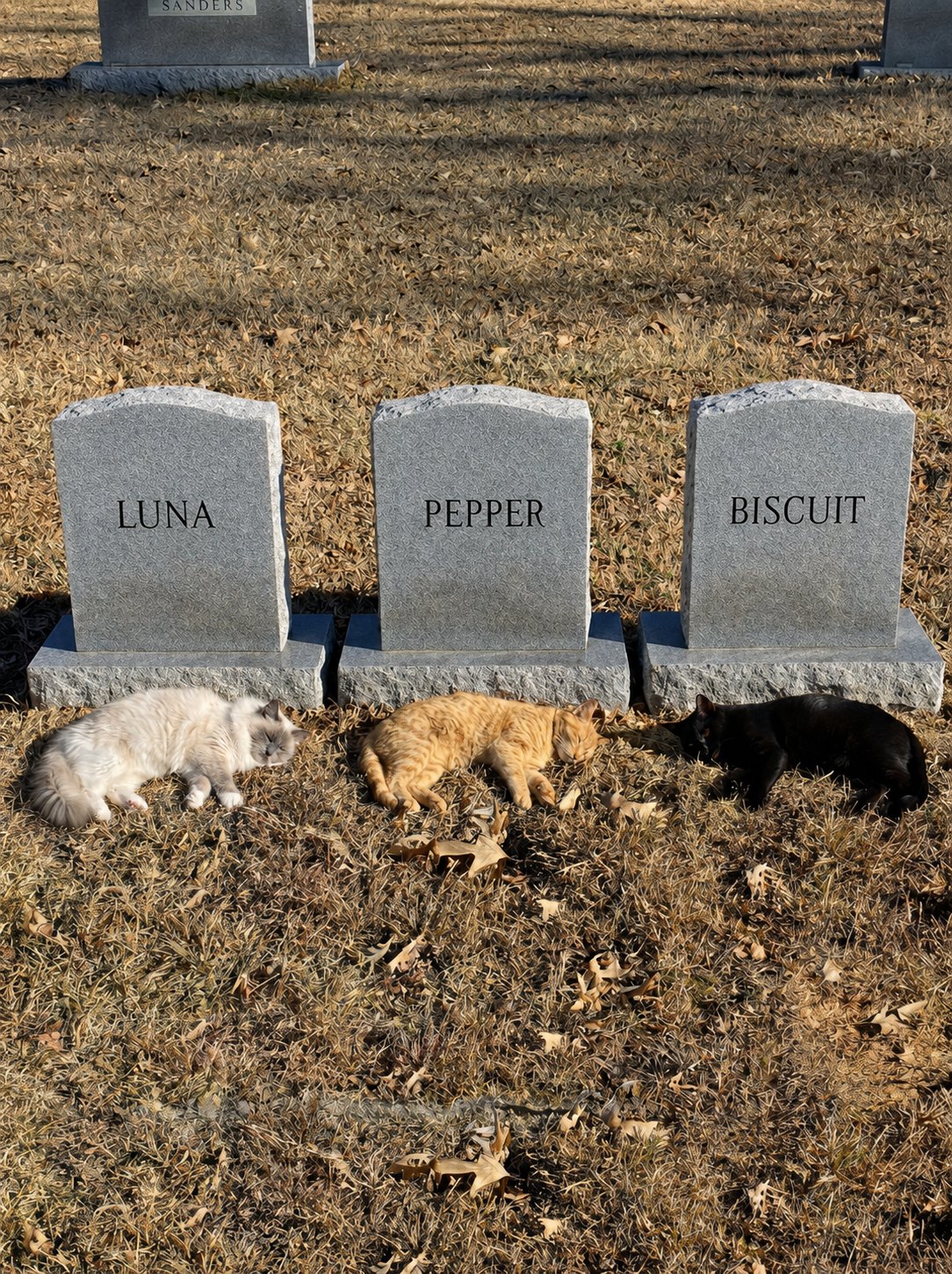
Ran for 113 days, from June 30 to October 20, 2026, the last day Crush saw it.
Run by Anna Rodriguez on Facebook. Crush is not the advertiser and does not verify its claims. See this ad in Meta's Ad Library(opens in a new tab)
Make your own version of this ad
Crush makes it, launches it in your own Meta ad account, scales the winners and pauses the losers.
About this ad
- Meta Ad Library ID
- 1527478522167897
- Platforms
- Facebook, Instagram, Audience Network, Messenger and Threads
- Relaunches
- 0
- Niche
- Food & Beverage
Ad text
Three of my indoor cats died from parasites they got inside my home. Not from going outside. Not from other animals. From the dust on my shoes. From the soil in my houseplants. From flies that slipped through the door when I carried groceries in. Roundworm eggs survive bleach. Lysol. Every cleaner in your cabinet. My cats were exposed every single day. And the premium food I was buying had been stripping away their only defense for years. By the time I understood what was happening — I had already buried three of them. My name is Anna Rodriguez. I live in Tampa, Florida. And in the past few years, I've buried three cats. Luna wasn't the first. Three years before her, I lost Pepper the same way — went from a sleek 11-pound tabby to a skin-and-bones ghost in four months. Before Pepper, my mother's cat Biscuit died at 6 from what the vet called "a mystery wasting." Every one of them indoor cats. Every one of them fed the most expensive food on the shelf. Every one of them dropping dead anyway. The morning Luna collapsed, I drove her to the emergency clinic doing 80 the whole way. The vet came out an hour later holding a paper. She said Luna's intestines were full of roundworms. She said Luna's liver was failing from the toxic load. She said the kindest thing I could do was let her go. I held Luna while they did it. She was 7 years old. She weighed 4 pounds. And the last thing the vet said to me before I left was, "I'm so sorry — I see this every week now. Indoor cats. Premium food. Nobody can figure out why." I drove home and I made a promise to Luna's little body in the carrier next to me. I promised her I would figure out why before it got the next one. I have two cats at home right now — Milo and Olive. I meant it. For eight months I read everything. Veterinary journals. Parasitology papers. Forums full of women just like me crying over cats that "did everything right." I stayed up until 3:00 in the morning every night, looking for the answer that would not come. And then one night, deep in a thread on a holistic pet forum, I saw a woman ask the question I'd been asking for eight months. "Why do indoor cats fed premium food get parasites?" The first three replies were the same useless advice I'd already tried. But the fourth reply stopped me cold. A woman wrote that her cats had been dying the same way mine had — until she met a retired parasitologist in upstate New York who told her it wasn't the parasites that were the real problem. It was the food. The expensive food. He'd told her something about it that no vet had ever mentioned — something about what high-heat processing destroys before the bag is even sealed. She didn't say much more. But she left a phone number at the bottom of the post. She said if anyone wanted to know more, to call the number — but to call early in the morning, because he was 78 years old and didn't keep late hours. I called him at 7 a.m. the next morning. He answered on the second ring. I told him about Luna, about Pepper, about Biscuit. He listened for almost twenty minutes without saying anything. Then he said, "If you can get to upstate New York, I'll explain it to you in person. I don't say this kind of thing on the phone." He gave me an address. I left that afternoon. Four hours later, I pulled into a small town outside of Ithaca. Dr. Halverson was waiting for me on his porch. He was 78 years old. He'd spent 40 years at Cornell studying intestinal parasites in cats before he retired. I sat across from him at his kitchen table — a small wooden one, scratched up by decades of cats — and I told him the whole story over again. About Luna. About Pepper. About Biscuit. I told him I had two cats at home and I could not bury another one. He listened for almost an hour without saying anything. Then he stood up, walked to a cabinet, and pulled out a small amber glass jar. He set it on the table between us. "Every cat I have ever owned has lived to be 19, 20, 21 years old. Every single one. People ask me what my secret is. This is it. One scoop in their food. Every morning. For as long as I can remember." I asked him what was in the jar. He didn't answer right away. He sat back down and looked me in the eye. "Before I tell you what's in the jar, you need to understand what's supposed to be happening inside your cat in the first place." "Your cat has a defense system most people have never heard of. Her liver produces a powerful bile acid. That acid is the only thing in her body strong enough to dissolve the armored shells of parasite eggs before they can hatch." "Every egg that comes into her body — from the litter box, from grooming, from the dust she breathes in off your shoes — is supposed to be destroyed in her stomach. By that acid. Before it ever gets a foothold." He paused. "But that bile acid doesn't get made out of thin air. It needs one specific amino acid to be produced. It's called taurine." "Cats can't make taurine on their own — not like dogs or humans. They have to get it from their food. Every single day." "No taurine, no bile acid. No bile acid, no defense." He nodded at the bag of premium food I'd brought a photo of. "Now here's what they don't tell you. That bag gets cooked at temperatures over 250 degrees during extrusion. That heat destroys most of the taurine — anywhere from 50% to 70% of it, gone before the bag is ever sealed." "And if it's grain-free, the peas and lentils they use as filler bind up most of what's left. By the time your cat eats it, there's almost nothing reaching her bloodstream." He let that sit. "That bag said 'complete and balanced.' That was true by the legal minimum the regulations require. It was not true by what your cat actually needed to survive." "The premium food didn't poison Luna. It just stripped away the one weapon her body had to defend itself." "And then the parasites — the ones already in your house, on your shoes, in your potting soil, on your dog's fur — walked right in and took her." I just sat there. "This isn't new science. Veterinary nutritionists have known about taurine deficiency in commercial cat food for almost 40 years. The pet food industry just adds back the legal minimum and calls it complete." "Meanwhile, women like you are burying cats at 7 years old and being told nobody knows why." Then he held up the amber jar. "Pure pharmaceutical-grade taurine. The exact form a cat's liver can convert directly into bile acid within hours." "Not the cheap synthetic kind. Not the kind buried inside a multivitamin chew with eight fillers. Single ingredient. Third-party tested. One scoop in her wet food in the morning, that's all." He paused. "Within 30 days, her liver starts producing bile acid at full strength again. Within 60 days, that acid is melting the protective shells off any parasite egg she swallows — from the litter box, from grooming, from the dust she breathes — before those eggs can ever hatch." "Her immune system can finally see what's hiding in there. And it kills them. The way her body was designed to." I asked him where I could buy it. He didn't answer right away. He got up and rummaged through a drawer for a long time. Then he came back with a piece of paper. Written on it was a website address and a single sentence underneath it: "Tell them I sent you." "There is one small American company doing it the way I would do it. Pharmaceutical-grade taurine. Single ingredient. Lab results published per batch. No subscription traps. No filler." "The brand is KittySupps." I drove the four hours home that night. I ordered it from the website on the paper before I even took my coat off. One scoop in the morning, mixed into Milo and Olive's wet food. 60 days straight. I did not miss a single day. The first thing I noticed at week 3 was the litter box. The smell that had been getting worse for a year — the smell I had been blaming on the brand of litter, on the brand of food, on anything I could think of — was gone. Just gone. Like someone had opened a window. By week 5, Milo's coat — which had been dry and patchy for months — was glossy again. He had the spring back in his step. He was waking me up at 5 a.m. wanting to play, the way he had as a kitten. Olive started coming for cuddles every night for the first time since I had brought her home. At day 60, I took both of them in for a full workup. Bloodwork. Fecal panel. The whole thing. The vet came back in holding the printout. She sat down. She looked at me for a long time. She said both cats were parasite-free. She said Milo's liver enzymes were the best she had seen in any indoor cat in a long time. And then she said, "These cats look five years younger than their charts." That was a year ago. Milo and Olive are still on the same scoop a day. Their coats are glossy. Their litter box doesn't smell. They greet me at the door every night and they sleep on my chest every morning. They are the cats they were always supposed to be — the cats Luna and Pepper and Biscuit never got to be. When I think about how close I came to burying a fourth one, it haunts me. The only difference between Luna's body in that carrier and Milo curled up on my chest right now is one scoop of pharmaceutical-grade taurine in his bowl. That's it. That's the whole thing. I promised Luna I would figure it out before it got the next one. If this stops one woman from carrying a 4-pound cat into a clinic the way I did, then what happened to Luna meant something. Tell the women in your life who have cats. Tell your sister. Tell your mother. Do not make them learn this the way I did. KittySupps is the brand Dr. Halverson sent me to. Pharmaceutical-grade taurine, single ingredient, third-party tested by lot number. Flavorless powder that disappears into wet food — even the pickiest cat won't notice it. One scoop in the morning. Made in the United States. Real 30-day empty-jar money-back guarantee. No subscriptions, no traps. If it doesn't work, they refund you. That simple. Here's the thing. KittySupps is made in small batches because the pharmaceutical-grade source can't be rushed. Every time they run a sale, they sell out within days. When the current batch is gone, the next one is weeks away. And I'll be honest with you — I'm not telling you this to pressure you. I'm telling you because I waited too long with Luna. I told myself I'd "figure it out next week." Next week turned into next month. Next month turned into the morning she collapsed on my kitchen floor. The parasites in your cat right now aren't waiting weeks. They're feeding today. They're laying eggs today. Every day you wait, they multiply. Every day you wait, the damage gets harder to undo. I'm not asking you to believe everything I wrote here. I'm asking you to do what I wish I'd done a year before Luna died. Click the link. Order one bottle. Try it for 30 days. If your cat isn't transformed by the end of it, you get every cent back. That's the deal. Don't be the woman writing this same letter a year from now. — Anna Rodriguez Tampa, FL https://kittysupps.com/products/taurine
Where the ad sends people
kittysupps.com
Up to 75% of Cats Have Parasites. Here's What No One Tells You.
I buried three indoor cats fed premium food. Luna died at 7 weighing 4 pounds. A 78-year-old Cornell parasitologist told me why at his kitchen table. One scoop would have saved all of them.
Shop now: kittysupps.com(opens in a new tab)