Support Mental Health Daily
Support Mental Health Daily Facebook ad: “Change Millions of Lives”
Ran for 32 days, from July 26 to August 27, 2026, the last day Crush saw it.
Run by Support Mental Health Daily on Facebook. Crush is not the advertiser and does not verify its claims. See this ad in Meta's Ad Library(opens in a new tab)
Want an ad like this for your product?
Crush makes new ad images for your product from this ad: your logo, your product photo, your offer.
Trials from $19.95 USD, then $79.95 USD a month. Cancel anytime.
About this ad
- Meta Ad Library ID
- 1531678948657731
- Platforms
- Facebook, Instagram, Messenger and Threads
- Relaunches
- 0
Ad text
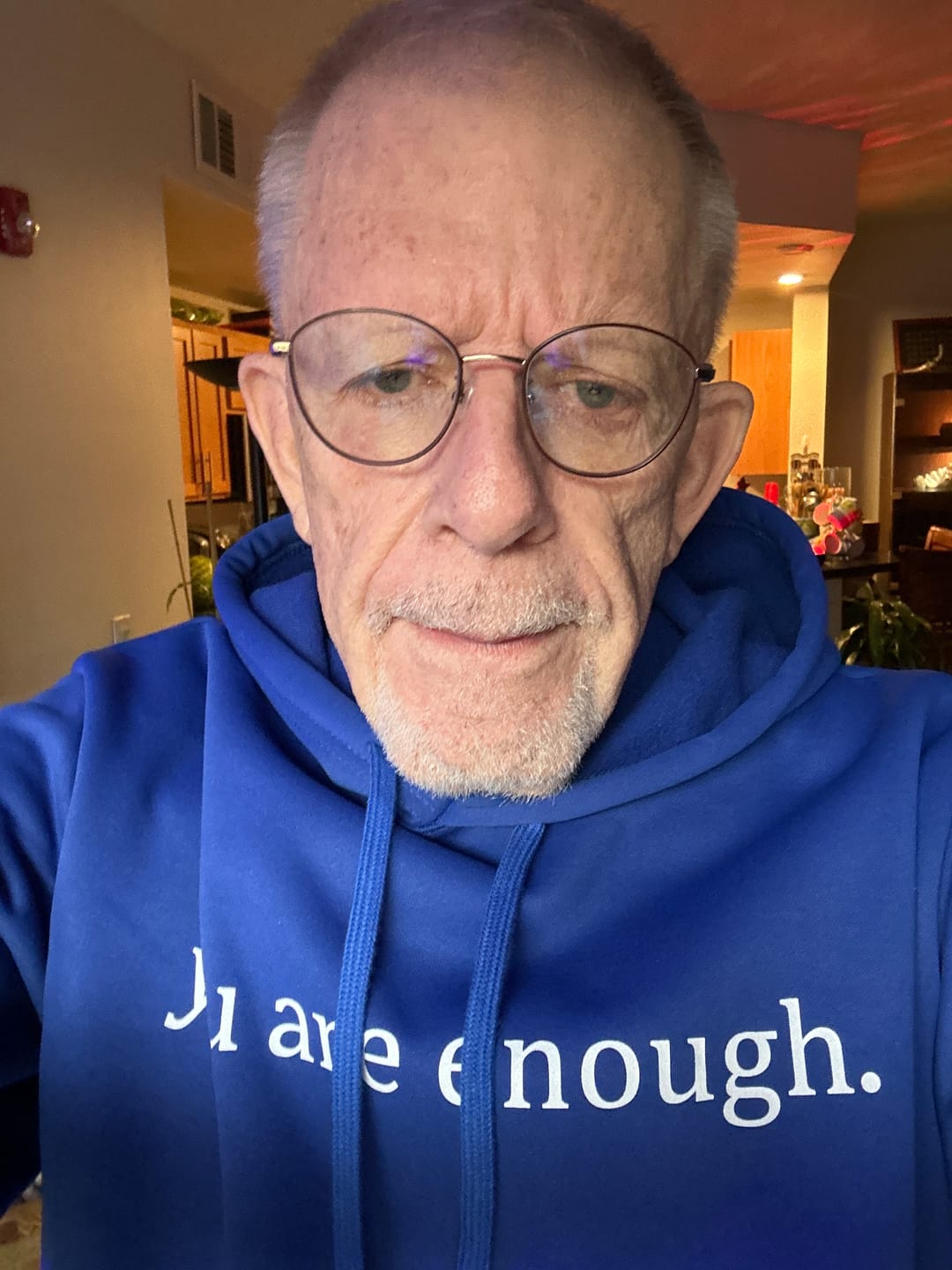
I was nine years old when a state trooper came to my elementary school to tell me my parents were gone. I want to start there because that is where everything I am about to tell you starts. Not with the money. The money is a footnote. It comes later and it does not do what you think it does. My parents died on a Tuesday afternoon in November on the interstate on my father's way home from work. A truck driver had fallen asleep. My mother was in the passenger seat. They were both gone by the time the ambulances arrived. I was in fourth grade. My teacher pulled me out of math class. My aunt was in the hallway. She had driven forty-five minutes from her house without brushing her hair. She sat me down on a bench in the hallway of my elementary school and she told me what had happened. I don't remember much of the next two years. I know we moved in with my aunt for a few months. I know she was a good person who was in over her head — thirty-one years old, unmarried, working two jobs, no children of her own, no plan for a nine-year-old boy with nothing but a duffel bag of clothes. I know she tried. I know she cried a lot when she didn't think I could hear her. I know the state got involved eventually because she could not make it work. I know she cried harder when they came to talk to her. I ended up in a series of foster placements starting when I was almost twelve. The placements did not go well. I was not an easy kid. I was angry. I was angry the way a boy is angry when he has been told his whole family died on a Tuesday because a truck driver fell asleep, and nobody around him seemed to understand that his life had ended too. I broke things. I ran away twice. I fought other kids in the placements. I got moved around a lot. Three families in two years. Then a group home. Then two more families. I was small for my age until I was fourteen and I got bullied at every school I was moved to. That is a separate letter I could write and I won't write it here. What I will say is that being the new kid, at three different schools in four years, who lived with foster families the other kids' parents whispered about, is a very specific kind of alone. Kids are cruel to what they don't understand. Poor kids from broken homes are what they don't understand. At fifteen I aged out of a placement in a way that isn't supposed to happen. There was a paperwork issue and a family conflict and a caseworker who was overworked and I fell through the cracks. I ended up in a youth shelter in the city near where I'd grown up. I stayed there for eight months. At sixteen I was living in a mixed-age shelter with adults. I want to skip past what that was like because it isn't relevant to what I'm writing. I'll just say — it was what it was. I made it through. Not everyone at that shelter did. At seventeen I got a job washing dishes at a diner near the shelter. Nine dollars an hour. Under the table for the first few months because I didn't have documents I could easily produce. The man who owned the diner was a Greek immigrant named Kostas. He knew where I was living. He never asked me about it directly. He fed me every shift I worked. He would put a plate of whatever the special was on the counter in the back and he would nod at me and walk away. He did that for two and a half years. I bring up Kostas because I want you to understand that not everybody I met in those years was bad. Kostas was maybe the single most important person in my life between eleven and twenty-two. He never sat me down and gave me advice. He never told me he cared about me. He just fed me for two and a half years and treated me like a person who had a job and not like a kid from a shelter. He died of a heart attack in his kitchen at fifty-nine. I was twenty. I went to his funeral. His wife hugged me and told me he had talked about me at home for years — he had told her I was a good kid who was going to make something of himself. She said he had said it a lot. I did not know that. I did not know he thought about me at home. I want to be efficient with the next fifteen years, because it's not what this letter is about. At twenty-two I finished a two-year business degree at a community college that I paid for by working two jobs. At twenty-four I got a sales job at a small industrial equipment company. At twenty-eight I was their top salesperson. At thirty-one I left to start my own business with a partner I'd met on the road. At thirty-four we sold to a larger company. At thirty-seven I started a second company. At forty-two — three years ago — I sold that one for enough money that I would not have to work again. I worked sixteen-hour days for twenty years to get there. Every single day. Weekends. Holidays. The whole time. Because I had understood something when I was nine years old and sitting on a bench in an elementary school hallway. I had understood that I had a hole in me — a physical one, a specific one, slightly to the left of my sternum — and that the hole had opened up the day my parents died and nobody was ever going to close it for me. I understood, even at nine, that I was going to have to close it myself. And by the time I was seventeen and living in a shelter with grown men who had lost more than I had, I had decided that the way I was going to close it was by winning. Winning meant money. That was the whole plan. Get to a certain number. The number would close the hole. I worked at that plan for twenty-five years without stopping. I want to tell you what happened when I got to the number. The hole did not close. It got bigger. I want to be plain about this because I think men in particular need to hear it plainly. I had spent twenty-five years assuming that once I crossed a specific financial line, the thing I had been carrying since I was nine would resolve. I had believed this so completely that I had never examined it. I had run at the number the way a marathoner runs at the finish line — I had not thought about what would happen after I crossed it. I had assumed the crossing itself would be the resolution. It wasn't. The crossing was the moment I fully understood that the hole had never been about money. That there had been no version of my life in which the number was going to do what I had spent twenty-five years thinking it would do. The first year after the exit I did not know what to do with myself. I had been working sixteen-hour days for twenty years and suddenly I did not need to work at all. I tried to enjoy it. I tried to sleep in. I tried to travel with my wife. I tried playing golf. I tried reading books. I tried buying things. I bought a car I had wanted since I was twenty-two and I drove it around for six months and I did not feel anything about it. What I felt instead was the hole. Not for a few minutes a day. Constantly. Because for the first time since I was nine years old, I did not have work to outrun it with. I got depressed. Not clinically, I don't think — I never went and got diagnosed. I got the kind of depressed a man of my generation gets, which is to say I stopped smiling, and I stopped sleeping well, and I started drinking more than I should have, and my wife noticed and asked me about it twice and I told her I was fine both times. I was not fine. I have never been fine, and I understood, at forty-three, that I had never actually been fine and I had just been very good at not stopping long enough to notice. That was two years ago. I want to tell you what changed. It wasn't dramatic. It happened slowly. The first thing was that I sat down with my wife on a Saturday afternoon and I told her the truth. I told her about the hole. I told her I had been aware of it since I was somewhere around eleven or twelve years old and I had never named it to anybody. I told her I had thought success would close it and success had not closed it and I was scared. I was forty-three years old and I was telling my wife of eleven years, for the first time, that I had been afraid every day since my parents died on a Tuesday in November. She did not fix it. There was nothing to fix. She sat next to me on the couch for an hour without saying much. Then she said — "I think you need to talk to somebody who isn't me." I started seeing a therapist that month. Man named Dr. Harris. Sixty-four years old, small office in a house-turned-office in an older part of town, three degrees on the wall behind him. I saw him twice a week for the first six months and once a week since. The second thing was that I stopped chasing the number and I started giving parts of it away. Not showy. Small. I found the youth shelter I had lived at when I was fifteen and I made an annual donation and asked to be kept anonymous. I found the community college I had gone to and I set up a small scholarship for adult students starting over. I bought a building in the neighborhood where my aunt had lived when she took me in, and I turned it into transitional housing for young people aging out of the foster system. I hired somebody to run it. I visit once a month. I do not put my name on anything. The third thing was the shirt. My daughter is seven. She's in second grade. About a year ago her school did a mental health awareness week and the counselor sent home a flyer that included a suggestion to wear supportive clothing. My daughter came home from school on the Monday of that week and told me she wanted a shirt. Not a green ribbon. A shirt. She had seen a girl in her class wearing a black t-shirt that said "you are enough" on the front and my daughter wanted one exactly like it. I looked it up that night. The shirt was from a small brand called DearPersonCo. Started by a woman who had lost her sister to suicide. A portion of every sale is donated to mental health and suicide prevention causes. I bought one for my daughter. I bought one for my wife. I bought one for myself. I ordered from their site — there are a lot of copies of the design floating around on cheaper shirts, and none of the money from those goes anywhere it should. They arrived four days later. My daughter wore hers to school the next Monday and came home and told me two more girls in her class had ordered them too. I did not wear mine for about three weeks. I want to tell you why I didn't wear it, because it matters. I did not wear it because I was a forty-three-year-old man who had spent thirty years building a version of himself that did not put words like "you are enough" on his chest. I had built myself into a person who did not need those words and did not display those words and did not, in any public way, admit to anyone that those words were words I had needed my whole life and never received from anybody who was supposed to give them to me. I did not wear the shirt because I was ashamed of how much I needed it. I want to say that plainly because I think it will be true for some of you reading this. If you are a certain kind of man — a man who built what you have, alone, by force of will, from something that started with pain — you might understand what I'm saying. Wearing a shirt with those words on the front feels like admitting something you have spent decades not admitting. Wearing that shirt feels like standing in front of the mirror and finally saying — I was a boy whose parents died and who nobody told those words to when it would have mattered, and I have carried that hole since I was nine. I did not want to say that. Not to myself. Not to my wife. Not to Dr. Harris. Not to a stranger in a grocery store. The first time I put it on was a Saturday morning about three weeks after it arrived. I had come downstairs to make coffee and my daughter was already up. She was at the kitchen table with a bowl of cereal. She was wearing her shirt. She wears it a lot. She saw me come in without mine on and she said — "Daddy. Where's yours?" I said it was upstairs. She said — "Can you wear it today? So we match." I went upstairs and I put it on and I came back down. She looked at me and she said — "That looks nice on you, Daddy." I want to tell you what my seven-year-old daughter did not know when she said that. She did not know that in forty-three years I had never in my life had somebody I loved look at me while I was wearing words that said I was enough and tell me it looked nice on me. She did not know that when she said that, something inside my chest — the specific place slightly to the left of my sternum that I described earlier — did something it had not done in thirty-plus years. She did not know that I turned around in the kitchen to pour my coffee so that she would not see me cry. She did not know because she is seven and she has always been enough and nobody has ever suggested to her otherwise. That is what my wife and I have built. That is what nine-year-old me was trying to build when he sat on the bench outside his fourth-grade math class and listened to his aunt say his parents were gone. That is the whole ballgame. I want to tell you what has happened since I started wearing the shirt. I don't want to give you a list of stranger encounters. There have been strangers. A man at the airport asked me about it. A woman at a coffee shop asked me about it. A guy at the gym asked me about it. Those are all fine and I told them where to get it and I've moved on from those specific interactions. What I want to tell you about is what has happened inside my house. My daughter and I have matching shirts. She wears hers roughly two days a week. I wear mine roughly the same. Neither of us plans it. Sometimes we both end up in them on the same day and she notices at breakfast and she smiles at me across the table and she says — "Twins." I have started saying the words to her out loud. Every day. Once, sometimes twice. I say it when she leaves for school. I say it before bed. Sometimes I say it out of nowhere in the car and she looks up from her book and she says — "I know, Daddy." She does know. She has always known. She has never had a day of her life when she did not know. That is what I want to be my daughter's inheritance from me. Not the money. The other thing. I have started saying it to my wife. Not every day. But sometimes. In small moments. She has cried the first three times I said it. She has known me since I was thirty-two and she has understood, in a way I never had the language for, that I did not grow up hearing those words. That I did not have anybody who would have said them to me when I was nine years old sitting on a bench in an elementary school hallway. She has waited patiently for a decade for me to be able to say them out loud, and now I can. I have started saying them to my aunt. She is sixty-five. I bought her a shirt six months ago. I called her last week on a Sunday afternoon and I told her — for the first time in thirty-plus years — thank you for what you did the year my parents died. Thank you for driving forty-five minutes to my school with your hair not brushed. Thank you for trying to take me in even though you were thirty-one and had no children of your own and no plan. Thank you for crying when the state came to talk to you, because it was the first time I understood somebody loved me enough to not want to give me up. I told her she was enough. That she had always been enough. That I had been an angry kid and she had not deserved any of what I put her through. She cried on the phone for a long time. She told me she loved me. I told her I loved her. We had not said that to each other, out loud, in about twenty years. Not because we did not love each other. Because I had not been able to say it out loud to anyone since I was nine. I can say it now. I say it now. I want to say something to whoever is reading this. If you are a person who built what you have from a beginning that was hard. If you have been running at something your whole life because you thought getting to it would close something inside you. If you have gotten there, or you are close, or you have already understood that it will not do what you thought it would do. The hole does not close from that side. I am telling you this from the other side of the finish line. Nothing you achieve, nothing you buy, nothing you earn, will close it. No award, no exit, no house, no car, no title, no acquisition, no recognition. I have tried enough of them to have real information here. The hole closes from a different direction entirely. It closes very slowly, over time, when the people around you know what you have been carrying and love you anyway. The shirt is not going to close the hole. I want to be very careful about this. The shirt is a t-shirt. It is a piece of clothing. It costs about the same as two lunches and it will not fix anything by itself. What the shirt does is create small openings. In your own house. At your own breakfast table. In your own marriage. In a phone call to an aunt you have not really talked to in twenty years. In a therapist's office where you are trying to explain, for the first time, what you have been running from. The openings are what let the hole start to close. The shirt is from DearPersonCo. Front says "you are enough." Back says "Dear person behind me, the world is a better place with you in it. Love, the person in front of you." A portion of every sale is donated to mental health and suicide prevention causes. Get it from their site — there are a lot of cheap copies of the design floating around and none of the money from those goes anywhere. Get one for yourself. Get one for your wife. Get one for your daughter, if you have one. Get one for your aunt, if she is still alive. Put it on this Saturday morning. Come downstairs to make coffee. See if your daughter says — "That looks nice on you, Daddy." I hope she does. I hope somebody says it to you. I hope you get to hear it before you turn forty-three the way I did. You have always been enough. Nothing you have built or will build was ever the point. Somebody in your life has been waiting to say that to you. Wear the shirt so they know they're allowed to.
Where the ad sends people
dearpersonco.store
Change Millions of Lives❤️
Be The Reason Someone Smiles Today! When wearing our signature awareness T-shirt, you're showing others they matter, just like you.
Shop now: dearpersonco.store(opens in a new tab)