
Inactive· since Jun 26, 2026
- 4
- days it ran
- 1
- relaunches
Ad copy
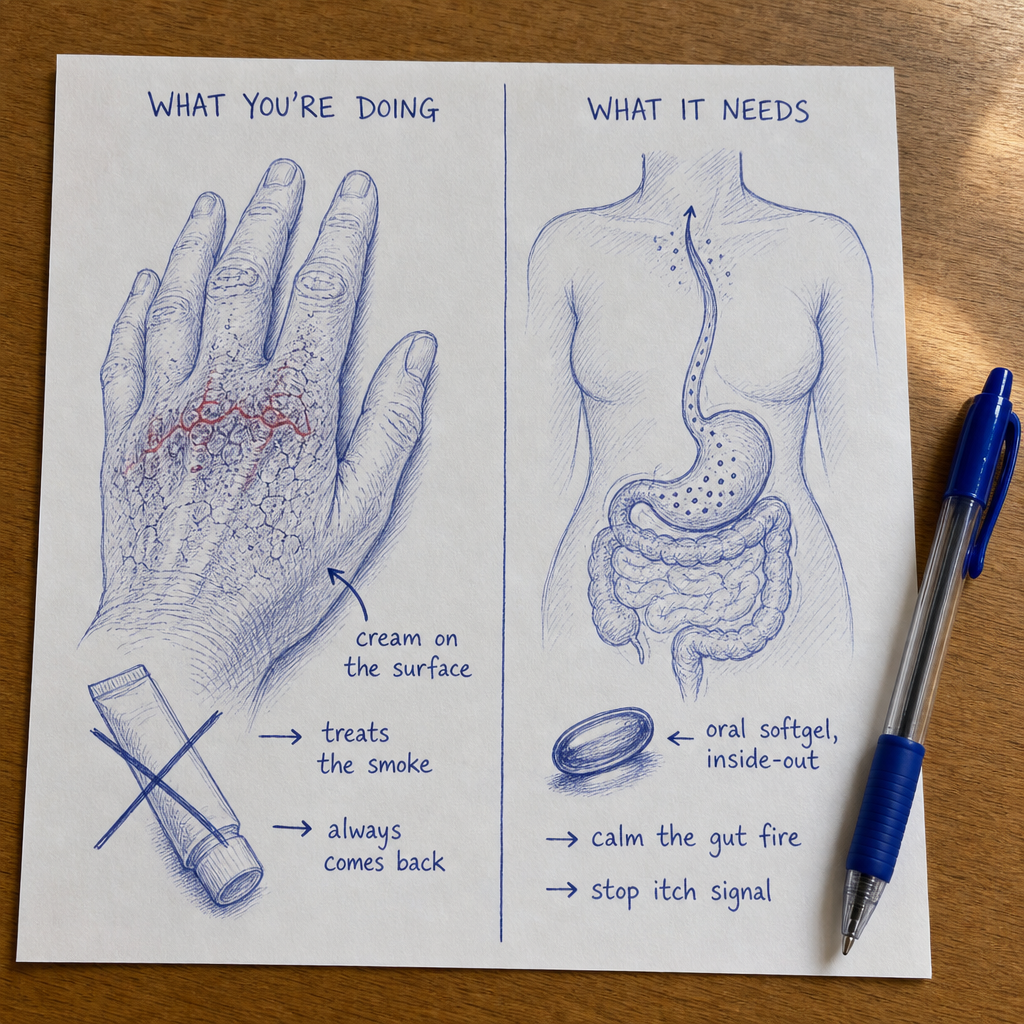
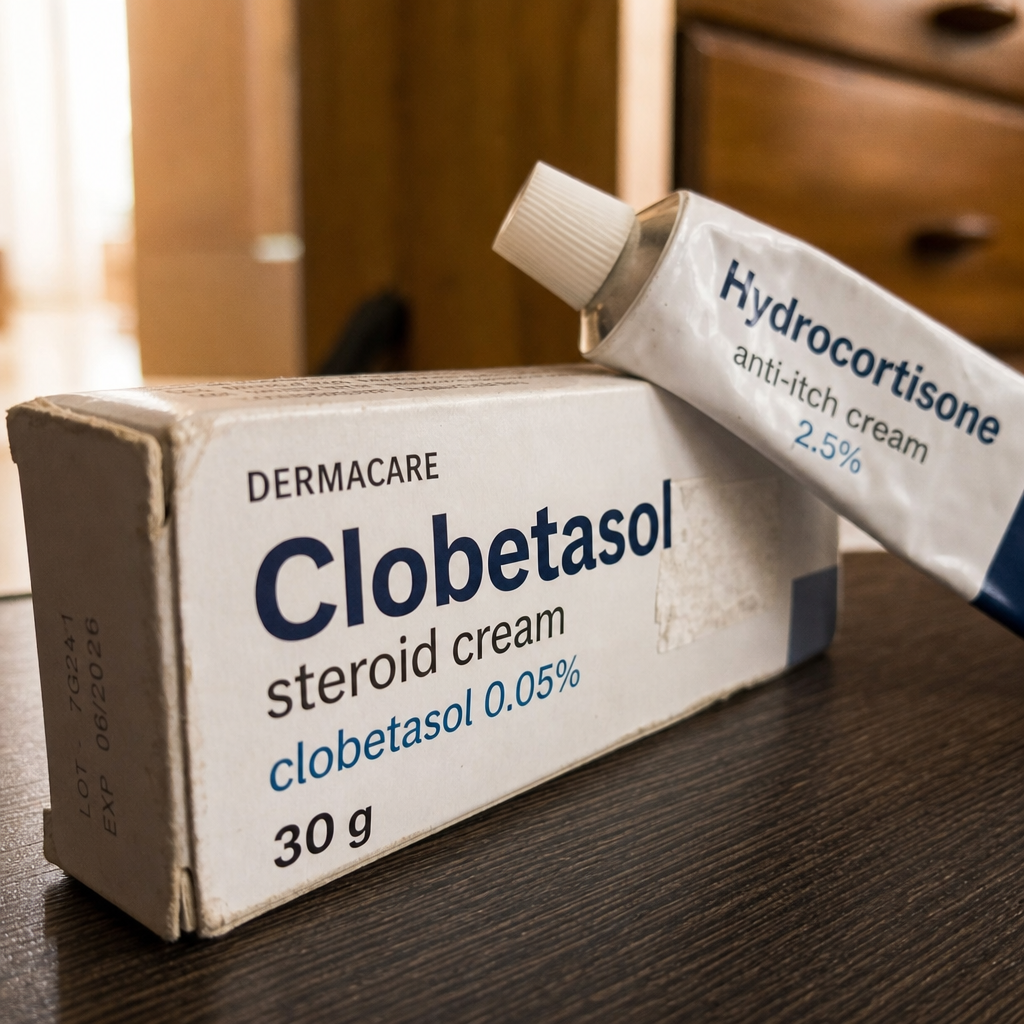
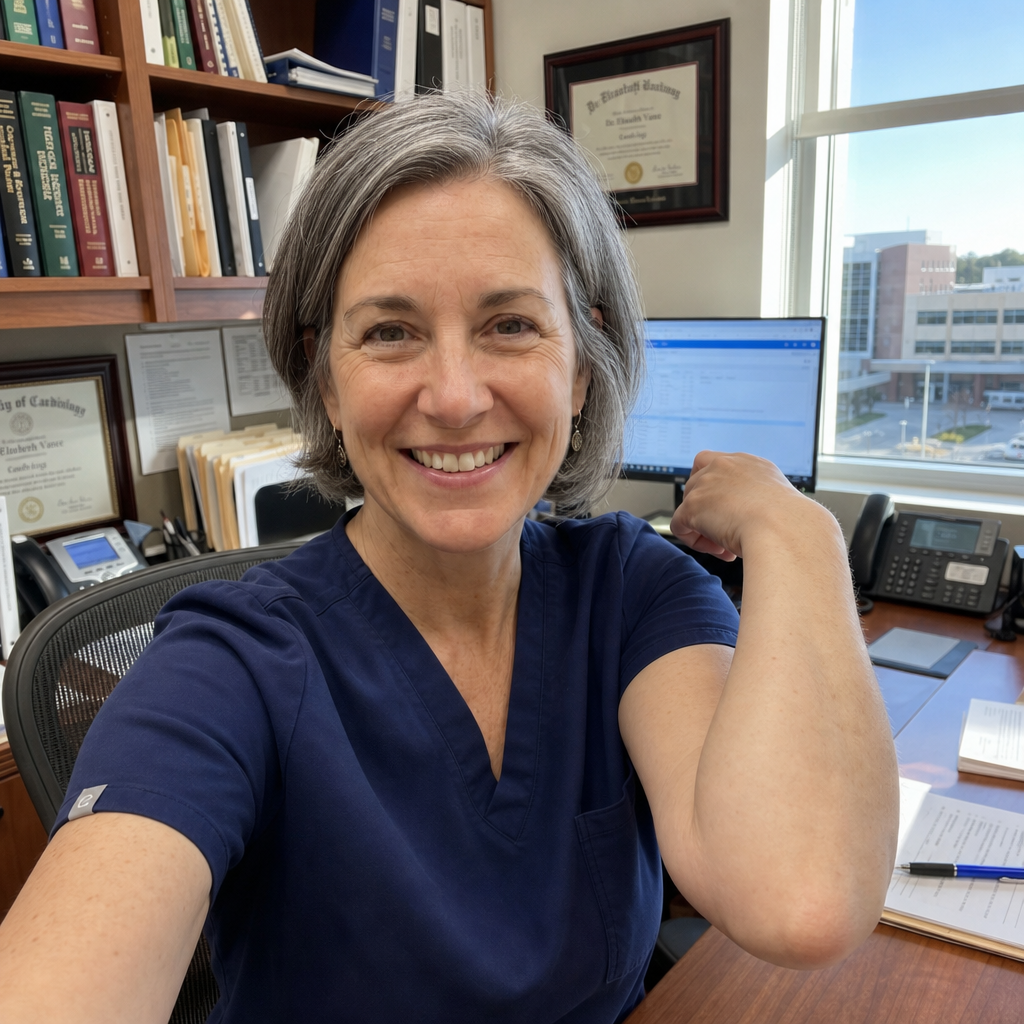
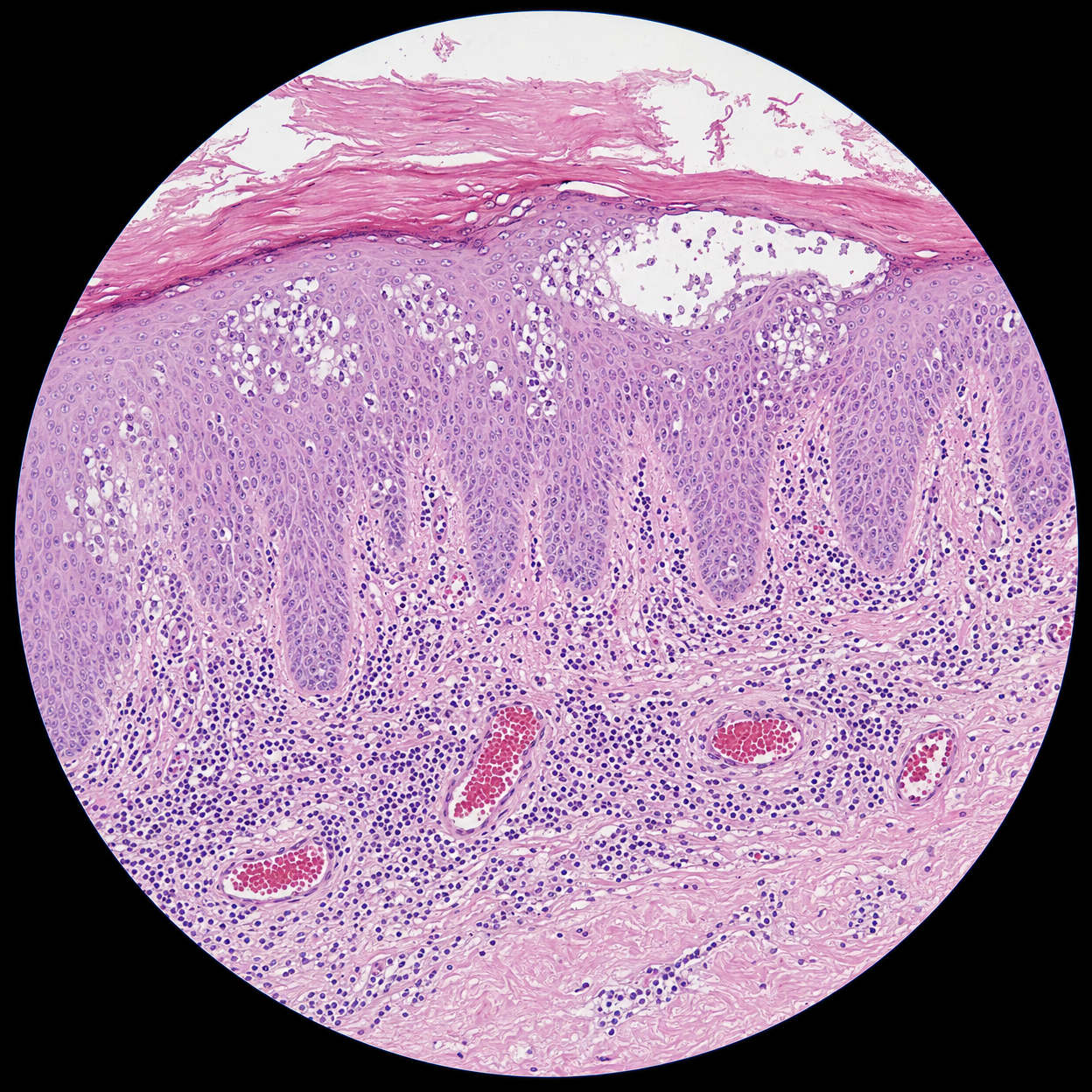
I had a skin flare on a Mediterranean cruise. The ship's doctor was from Austria. She asked me ONE question that made my American dermatologist look 15 years behind. I'm 56 years old. My husband and I saved for two years for this cruise. Two weeks through the Mediterranean. Greece, Italy, Spain. Day four, we're walking through Santorini. Cobblestone streets. Steep hills. Beautiful. But my long-sleeve shirt is killing me. The patches on my inner arms — red, cracked, weeping for five years — are rubbing against the fabric with every step. The skin is so inflamed that even loose cotton creates friction. By the time we get back to the ship, my arms are throbbing. The patch on my inner elbow has caught on the seam and split open at the edge. There's a smear of blood on my sleeve. My husband looks worried. "We need to get that looked at." I don't want anyone looking at my skin. I haven't let anyone see my arms in four years. Not an aesthetician. Not a doctor I didn't have to see. Not my husband in good lighting. But the burn is bad enough that I don't have a choice. The next morning, I go to the ship's concierge. "I need to see a doctor about my skin." She makes a call. Gets me an appointment that afternoon with the ship's physician. Her office is small. Clean. On Deck 3 near the medical center. Dr. Weber. Austrian accent. Maybe mid-50s. She examines my arm. Cleans the area where the skin split. Applies a dressing. "The immediate issue is the trauma from the friction," she says. "But this skin has severe atopic dermatitis. How long have you been treating it?" "About five years," I say. "My dermatologist back home has me on hydrocortisone. Every flare." "Has she discussed systemic gut-skin axis intervention for your eczema?" I stare at her. "What's that?" She looks at me for a moment. Then sets down her instruments. "Your skin is where the eczema ends," she says. "Not where it starts. Less than 3% of what's actually driving your flares is on your skin. The rest is two feet south, in your gut." "In chronic eczema, your gut wall has loosened. Bacterial fragments and inflammatory compounds slip into your bloodstream. They activate the exact cytokines — IL-4, IL-13, IL-31 — that flare your skin. Your skin is the smoke. The fire is in your gut. Every cream you've used has been swatting at the smoke detector while the kitchen burns." I'm listening. But I don't understand why my dermatologist never explained this. "My dermatologist never said anything about my gut." Dr. Weber nods slowly. "It's not commonly discussed in American dermatology practice," she says. "Most focus on topical steroid protocols and Dupixent as the escalation. But in European dermatology, the gut-skin axis has been understood for over a decade." "So what do I do?" I ask. "There's extensive research on systemic gut intervention," she says. "Lipid-soluble compounds — specifically carvacrol from oregano oil and thymoquinone from black seed oil — that dissolve the gut biofilm protecting the bacterial overgrowth, calm the inflammatory cytokines traveling to your skin, and let your gut rebuild itself. Bypassing the skin entirely. It's been showing significant results for chronic eczema — especially in patients who've failed topical protocols." "My dermatologist never mentioned anything like that." "It's well-established in European clinical practice," she says. "But not standard protocol yet in the US. If I were you, I'd look into it when you get home." She paused. Then added: "Five years of cream that addresses 3% of the cause is not treatment. It's monitoring the decline." I thank her and leave. But I can't stop thinking about it. For the rest of the cruise, it's in the back of my mind. Five years. My dermatologist had been prescribing creams. Checking my skin every few months. Watching the eczema spread from two patches to five. Telling me to keep moisturizing. But she never once mentioned that my gut was leaking inflammatory compounds into my bloodstream and the cream couldn't reach the source. Or that bacterial overgrowth in my small intestine had a biofilm shield making it 1,000 times more resistant. Or that there was research on dissolving the biofilm and shutting off the inflammation systemically. When we got home, I couldn't let it go. The night we unpacked, I opened my laptop. It was 11:45 PM. I started searching. "gut skin axis eczema inflammation" "systemic carvacrol atopic dermatitis" "European gut biofilm protocol eczema" At 1:30 AM, I found it. Peer-reviewed research. Published in clinical journals. Study after study confirming exactly what Dr. Weber had told me. Topical steroids address less than 3% of chronic eczema's actual driver. Gut biofilms in eczema patients increase bacterial resistance by up to 1,000x. Carvacrol from oregano oil demonstrates direct gut biofilm degradation — outperforming prescription rifaximin in a 2014 SIBO study at 46% efficacy versus 34%. Thymoquinone from black seed oil directly suppresses IL-2, IL-6, and IL-1β cytokines — the same signals traveling from gut to skin. In a clinical trial, hand eczema severity dropped from 40 to 10 on the HECSI index in four weeks. Both delivered systemically through oral softgels. The research was there. Published. Peer-reviewed. Some of it over a decade old. I read the studies three times. I felt something rising in my chest. Not anger. Something else. Disbelief, maybe. My dermatologist had been prescribing steroid creams since 2019. Five years. And there was published research — from before she even started treating me — showing that the inflammation is generated in the gut and that systemic intervention could address the actual source. Why hadn't she mentioned it? I kept reading. More studies. European research. Clinical data. All showing the same mechanism. Same results. At 2:50 AM, I started looking for products. Most oregano supplements were garbage. Generic powder at 20-30% carvacrol. Nowhere near the 70%+ standardization the research used. But I found one company making a pharmaceutical-grade formulation. Orgatics. Wild Oregano Oil standardized above 70% carvacrol. Cold-Pressed Black Seed Oil with standardized thymoquinone. Oil-based softgels for systemic delivery — surviving stomach acid to release in the small intestine where the overgrowth actually lives. I read the reviews. Women describing exactly what I was going through. Years of cream that never reached the source. Then patches resolving within weeks of switching to oral, systemic delivery. I ordered a bottle at 3:15 AM. When it arrived, I started immediately. Two capsules with breakfast. No more thick ointments. No more 45-minute bathroom rituals. No more wet wraps. Sixty seconds. Done. Week one: The afternoon bloating I'd carried for years — visibly reduced. Something was changing in my gut. I could feel it before I could see it on my skin. Week two: I looked closely at the patch on my inner elbow. At the edge — a band of skin that was a different texture. Not cracked. Smooth. Soft. Week four: The smooth band was wider. Visible without zooming in. Three patches showing the same pattern. Healthy skin pushing the redness inward. Week eight: I took a photo and compared it to one from two months earlier. The difference was visible. Over 80% reduction in patch surface area on my inner arms. The cracking had stopped. The thickness was normalizing. No new sites flaring. The spreading had stopped. At three months, I went back to my regular dermatologist. She examined my skin. Then she stopped. "Your eczema hasn't progressed," she said. "Actually, the patch resolution is significantly improved. That's unusual on topical protocol alone." "I stopped the steroid three months ago." Her head came up. "You stopped?" "I found something else. A softgel. Pharmaceutical-grade oregano oil and black seed oil. Oral, systemic delivery. Dissolves the gut biofilm and quiets the inflammatory cytokines that the cream couldn't reach." My dermatologist looked at my chart. "I'm not familiar with that approach," she said. "But the results speak for themselves. Keep doing whatever you're doing." I left her office feeling something I hadn't felt in years. Not angry. Not betrayed. Just aware. My dermatologist wasn't hiding anything from me. She just didn't know. The research existed. The studies were published. The results were documented. But it wasn't part of her training. It wasn't standard protocol in American dermatology. So she did what she was taught: prescribe steroid creams, monitor the flares, consider Dupixent or phototherapy if it gets severe. Meanwhile, in European dermatology clinics, they'd been using systemic gut-skin axis intervention as a treatment approach for over a decade. I'm 57 now. My skin is staying stable. And I think about that cruise ship doctor all the time. The one who took ten minutes to explain why my skin is the smoke detector and my gut is the kitchen. What the biofilm does. Why cream can't reach the source. Something my dermatologist had never mentioned in five years. If your dermatologist is prescribing steroid cream and telling you to "be patient" with no improvement after months or years, you need to know something. The research exists. Published dermatology and gastroenterology studies. Peer-reviewed clinical data. Showing that surface treatments address less than 3% of chronic eczema's actual cause and that systemic carvacrol and thymoquinone at pharmaceutical-grade concentration can dissolve the gut biofilm and shut off the inflammatory signal at the source. Your dermatologist probably hasn't seen it. Not because she's incompetent. But because American dermatology training focuses on topical steroid protocols and Dupixent escalation. Systemic gut-skin axis intervention with plant-derived compounds isn't standard protocol yet. So when your dermatologist says "keep applying the cream," she's telling you what she was trained to recommend. But she's not telling you about the research that could actually address why the eczema survives behind two barriers — a leaking gut wall and a biofilm-shielded overgrowth. The brand I use is Orgatics Oregano & Black Seed Oil. Pharmaceutical-grade. 70%+ standardized carvacrol. Cold-pressed thymoquinone. Two capsules with breakfast. I don't get anything from sharing this. I just know what it's like to apply steroid cream every flare for five years with no improvement. And I know what it's like to have a doctor on a cruise ship — someone I met by accident because my sleeve caught on my skin — explain in ten minutes what my dermatologist never mentioned in five years. If you're being told to "just keep applying," you deserve to know there's research your dermatologist might not have seen. Research that could shut off the inflammation without injectable biologics or full-body phototherapy. Research that's been understood in European dermatology for over a decade. You don't have to wait for your dermatologist to learn about it. You can look into it yourself. 👉 tryorgatics.com/pages/eczema 90-day money-back guarantee. If you don't see stable skin, full refund. — Christine Novak, 57 P.S. — My husband took a photo of me in Santorini. Long-sleeve shirt in 90-degree heat while everyone else wore tank tops. Last month, we went to dinner and I wore a sleeveless dress. He looked at my arms and said, "I haven't seen that dress in years." It had been in the closet since before the eczema started. It fit perfectly now that my skin is calm again.
Like this ad? Make it yours.
Crush rebuilds this exact creative around your product — your brand, your colors, your offer — in about a minute.