Denise Walker
Denise Walker Facebook ad: “Fix Yourself at the Cellular Level”
Ran for 25 days, from August 27 to September 21, 2026, the last day Crush saw it.
Run by Denise Walker on Facebook. Crush is not the advertiser and does not verify its claims. See this ad in Meta's Ad Library(opens in a new tab)
Make your own version of this ad
Crush makes it, launches it in your own Meta ad account, scales the winners and pauses the losers.
About this ad
- Meta Ad Library ID
- 1533035208595207
- Platforms
- Facebook, Instagram, Audience Network, Messenger and Threads
- Relaunches
- 0
- Niche
- Home & Garden
Ad text
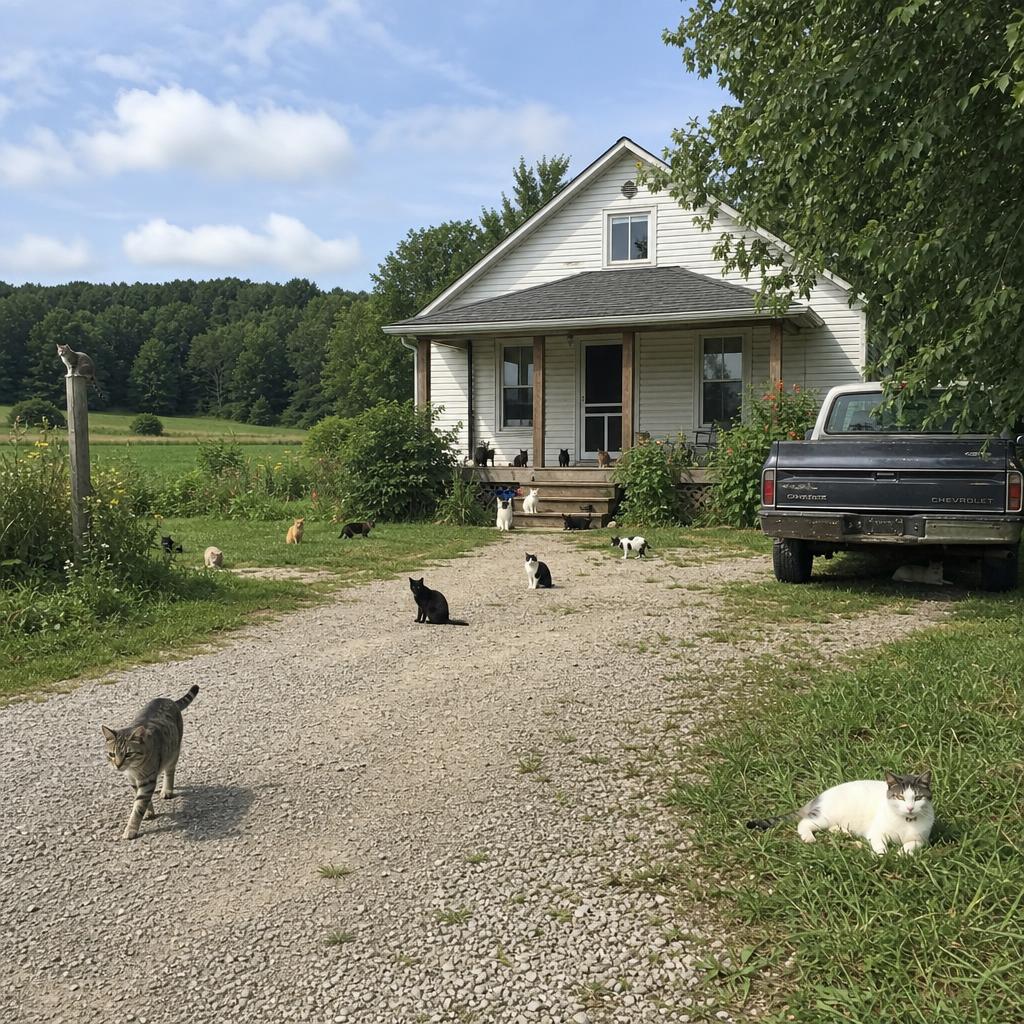
51 cats. One woman. A kitchen floor covered in blood she couldn't feel. That's what I found when I knocked on a stranger's door on a dead-end road in southern Ohio. Everyone else had driven past. But I'm getting ahead of myself. Let me go back to the morning it started. My name is Shelby. I'm 46. I live out in the country — eleven acres, three dogs, a husband named Kevin who comes home every night smelling like diesel and sawdust. The kind of place where you know every sound and you notice when something's wrong. It starts on a Wednesday in September when my oldest dog Biscuit doesn't come home. Biscuit is twelve. Gray muzzle. Bad knees. She doesn't wander — she hasn't had the energy to wander in two years. She goes to the tree line, does her business, and comes back to the porch to sleep. That's her whole day. By noon she still hadn't come back. I drove the property first. Then the roads around it. Windows down, calling her name, checking the ditches the way you do when you live out here and you know what can happen to an old dog on a back road. I turned onto Cedar Road about two miles from the house. It's a dead end I've driven maybe five times in eleven years — cuts through a patch of woods and opens into a small clearing with a few properties set back from the road. I saw them before I understood what I was seeing. Cats. Sitting in the road. On both sides of the road. On a collapsed fence post. On the hood of a car that hadn't moved in a long time. In the tall grass along the shoulder. I stopped the truck and counted. I stopped counting at twenty-six. They weren't fighting. They weren't running. They were just sitting there — the way animals sit when they've been somewhere long enough that the somewhere has become the only place they know. Some of them were thin enough that I could see their ribs from the truck. A few were clearly pregnant. One orange tabby sat in the exact center of the road and looked at me through the windshield without moving. I noted it and drove on. I was looking for my dog. I didn't find Biscuit that day. She came home on her own around 4 PM, limping slightly, burrs matted into her belly fur. I cleaned her up and let her sleep on the couch because she'd earned it. But I didn't stop thinking about the cats. Three days later I drove back to Cedar Road. Told myself I was just checking. They were still there. More of them this time. I counted thirty-one. A calico I hadn't seen before was nursing four kittens in the tall grass near the shoulder. The orange tabby was in the same spot — center of the road, watching. I sat in my truck for a full minute. Then I put it in reverse, drove to the Dollar General on Route 7, and bought the biggest bag of dry cat food they had, two twelve-packs of wet food, three plastic storage tubs, and two gallon jugs of water. I drove back. Most of the cats scattered when I got out of the truck. A few moved to the edge of the road and watched. I set the tubs down near the shoulder — two for food, one for water. Scooped the wet food in. Filled the third with water. Stepped back to the truck and waited. They came slowly. One at a time. The orange tabby first. Then a gray one missing half an ear. Then the calico, leaving her kittens in the grass, so thin her hip bones moved under her fur when she walked. Within five minutes there were fifteen cats eating from two plastic tubs on the side of Cedar Road while I stood next to my truck trying not to cry. None of them fought over the food. They just ate — heads down, silent, serious. The way things eat when they're genuinely hungry and have been for a while. I watched them until the tubs were empty. Then I refilled them and left. The following Tuesday I came back. Same tubs, same food. Thirty-seven cats. The number had jumped by six in less than a week. Three new kittens I hadn't seen before — tiny, maybe four weeks old — were hiding under a collapsed section of fence and only came out after the adults had finished eating. Two more pregnant females had appeared. The orange tabby was still in the center of the road. He walked toward my truck before I'd even turned the engine off. I went back Friday. Forty-one. Four new ones in three days. A black cat with a clouded left eye. A white one with a limp. Another nursing mother tucked under a rusted-out truck cap in the weeds. The following Tuesday. Forty-four. Two more litters born in the grass along the road. I could see the kittens from the truck — tiny shapes moving in the weeds near the fence line. Friday. Forty-eight. A dead kitten near the fence post — too small, too thin, born into a situation that couldn't hold it. I buried it in the soft dirt under the post with a flat stone on top and I didn't tell anyone about it. I sat in my truck after that and did the math I didn't want to do. Forty-eight cats. At least six pregnant females. Each litter averaging four to six kittens. By spring this would be seventy. By next fall, over a hundred. In two years — if nobody did anything — this dead-end road would have more cats than any one person could feed, house, or help. That was the week I knew feeding them wasn't enough. Kevin found four forty-pound bags of cat food in the truck bed and said, "Sounds like you found a project." He was right. But it was bigger than either of us knew. I started going every Tuesday and Friday. The woman at the feed store stopped asking how many cats I had after the third trip. She just rang it up. The orange tabby would appear from the tall grass the moment I turned onto Cedar Road and walk toward me like we had an appointment. I named him Tuesday. Because that's when I first saw him. By mid-October I knew their patterns. Tuesday always ate first. The gray one with the torn ear always waited until last. The kittens came in waves — one litter at a time, oldest first, youngest sneaking in after. The black cat with the clouded eye sat apart from the others and ate alone. The pregnant females ate quickly and disappeared back into the grass. These weren't feral. They weren't aggressive. They were domestic cats — or had been once — who'd been living outside long enough to become something in between. And they were multiplying faster than I could count them. They belonged to someone. Or they had. I was filling the water tub on a Friday in late October when a truck pulled up behind mine. An older man, maybe sixty-five, in a flannel shirt and a John Deere cap. He sat watching me for a moment before he rolled his window down. "You the one been feeding these cats?" "Yes sir." He turned off his engine. Got out. Stood next to his truck with his arms crossed and looked at the cats the way you look at something you've been watching get worse for a long time. "They belong to Margaret Hollis," he said. "She lives about a quarter mile down." He pointed past the tree line toward a property I couldn't see from the road. "She had three cats a few years back. Two weren't fixed. You can see where it went from there." "Is she okay?" He leaned against his truck. Took his cap off. Put it back on. "Her husband Earl died two years ago this past March. Heart attack. He was 73. Earl took care of everything on that property — the house, the garden, the cats, Margaret. He did it all." He paused. "Margaret's been on her own since then and it hasn't gone well. She's diabetic — Type 2. Been on Metformin for years. Same thing Earl was on. Earl was on it for over a decade, his numbers were always managed, and he still died of a heart attack. Now Margaret's on the same thing and she's getting worse every month. Her energy's gone. She can barely walk — her feet have been going numb. She told my wife she can't feel the porch steps some mornings. She used to walk two miles on the road before breakfast. Last time I saw her at the mailbox she had to stop halfway and hold onto the post." He shook his head. "I watched that woman go from someone who could do anything to someone who can barely open her own front door. And I haven't known what to do about it." He paused. "My wife Carol's been trying to bring food over for months. Margaret always says she's fine. She's proud. She doesn't want anyone to see how bad things have gotten." "I've been meaning to call animal control. But Margaret would never forgive me. Those cats are all she's got." He looked at me. "But she didn't call you to stop feeding them. And that's the first positive sign I've seen in two years." His name was Dale. He gave me his number and told me Margaret's mailbox was the green one at the end of the gravel drive past the second fence line. "Call me if you need anything," he said. "I mean it. Carol and I have been waiting for someone to break through to her." I sat in my truck after he left and watched the cats finish eating. Tuesday was sitting on the hood of Dale's truck when he drove away. He jumped off at the last second and walked back to the center of the road. Sat down. Looked at me. Then I drove down Cedar Road toward the second fence line. The property was set back about two hundred yards from the road. A small white farmhouse with green shutters and a porch that wrapped around one side. A garden along the south side — or what had been a garden. Raised beds overgrown with weeds taller than the fence posts. Tomato cages on their sides. A wheelbarrow upside down near the shed, rusted through the bottom. I could see cats on the porch. Under the porch. On the windowsill inside. Through the screen door, movement — more cats. I knocked. Slow footsteps. The kind of careful, deliberate walking that tells you someone is navigating pain or weakness or both. The door opened partway. The woman looking through the gap was small. Early seventies. White hair pinned back. Housedress and slippers. She had the look of someone who had once been capable of everything and was now capable of very little — and knew it, and hated it. What I noticed first were her feet. She was standing on the threshold in house slippers and she was gripping the doorframe with one hand to steady herself. Not because she was nervous. Because she couldn't feel the floor beneath her well enough to trust her balance. "Hi," I said. "My name is Shelby. I'm the one who's been feeding your cats out on Cedar Road." She looked at me for a long moment. Deciding something. "I know," she said. "I've seen your truck." "I hope that's okay." "It's more than okay." She looked past me at the yard. "I used to feed them twice a day. Morning and evening. I can't make it out there anymore. The walk is too much. My feet —" She stopped herself. "I can barely get to the mailbox." "Margaret," I said. "Is there anything else you need? Groceries, anything from town?" She looked at me the way people look at you when they've been alone long enough that a simple offer sounds like a foreign language. "You don't have to do that." "I know I don't." "I could use some milk," she said. "And bread. The store brand is fine." "I'll bring it Friday." "The orange one," she said. "The big orange tabby." "Tuesday?" She almost smiled. "You named him?" "He earned it." "His name is Butterscotch. Earl named him. He was one of the original three." She paused. "He's eight years old. He was Earl's cat. Slept on Earl's side of the bed every night until Earl died. Then he moved outside and never came back in." She looked at me. "I've tried everything. I've left the back door open. I've put his food bowl on the porch, then inside the doorway, then in the kitchen. He won't cross the threshold. He comes to the porch and he sits there and he looks inside and he won't come in." Her voice caught. "That cat broke my heart more than almost anything else. Because he's right there. Three feet from the door. And he won't come home." "Some things have to come back on their own time," I said. She stepped back from the door. "Would you like some coffee?" "I'd love some." Margaret's kitchen was clean but bare. The way a room looks when one person has been living alone in a house built for two and has slowly retreated to the smallest possible footprint. One mug on the counter. One plate in the drying rack. A stack of mail that had been sorted but not opened. On the counter, next to the coffee maker — a glucose monitor. The kind you prick your finger with every morning. A small notebook beside it with numbers written in shaky handwriting. I could see the last entry from where I stood. 148. Circled. No note. We sat at the kitchen table. Two chairs pulled out. The other two pushed in — one of them with a cat sleeping on the seat. Margaret told me about Earl. Forty-one years married. Machinist at the plant in Chillicothe until he retired at sixty-seven. Built the raised beds. Planted tomatoes, peppers, cucumbers, green beans. Maintained every inch of that property. Built the cat door so the cats could come and go. Built a shelf in the mudroom for their food bowls. "Earl did everything," she said. "I don't mean he wouldn't let me. I mean he wanted to. He liked taking care of things. The house. The garden. Me. The cats." She held her mug in both hands. The grip was unsteady — not a tremor exactly, more like the signals between her brain and her fingers weren't arriving at full strength. "We were both diagnosed the same year," she said. "2012. Type 2. Both of us. We used to check our numbers together every morning at this table. Earl would prick his finger, then I'd prick mine. He'd write his number in his notebook, I'd write mine in this one." She looked at the glucose monitor on the counter. "After he died I kept checking mine. I just stopped having anyone to read it to." "When he died I thought the hardest part would be the grief. And it was. For the first year, it was." She looked at the table. "But then the grief got quieter and everything else got louder. The things I couldn't reach. The things I couldn't lift. The things I couldn't do that Earl had just — done." "Tell me about the cats." "We had three. Butterscotch, Pepper, and Daisy. Earl and I got them from a litter our neighbor's barn cat had. We meant to get them fixed. Earl kept saying he'd schedule it. Then he got busy. Then Daisy had her first litter." She set her mug down. "Earl always found homes for the kittens — he'd bring them to the shelter, ask around at church, post a sign at the feed store. He kept it manageable. By the time he died there were fourteen. After that I couldn't keep up. The shelter. The vet. The food. They kept having babies. The babies had babies. I'd put food out on the porch until I couldn't carry the bags anymore." She looked at the window. "I haven't been able to feed them properly since last winter. That's almost a year now." "They're being fed now," I said. "I know." She looked at me. "You have no idea what that means to me." I came back Friday with milk, bread, a bag of apples, and a rotisserie chicken. Margaret met me at the door. She'd done her hair. She tried to give me twelve dollars. I told her to keep it. "At least let me make you lunch," she said. We ate rotisserie chicken at her kitchen table. She told me about the garden — how Earl had grown tomatoes so good the neighbors would trade eggs and honey for them. How she used to walk bags of them over to Dale and Carol's house every August. How she'd tried once after Earl died to get to the raised beds and her legs gave out and she sat in the grass for twenty minutes before she could stand. "I just sat there. Looking at his tomato cages. I couldn't get up and I couldn't look away." That was fourteen months ago. The following Friday I didn't just bring groceries. I brought ingredients. Margaret was sitting at the kitchen table when I came in with two bags — onions, garlic, chicken thighs, sweet potatoes, canned tomatoes, brown rice. She looked at the bags and then at me. "What's all this?" "I'm making you dinner," I said. "Something that'll last a few days." "You don't have to cook for me, Shelby." "I know. But I want to. And you're going to sit right there and tell me where everything is in this kitchen because I don't know where you keep your good pots." She smiled. A real one. Pointed to the cabinet next to the stove. I cooked a chicken and sweet potato stew in Margaret's kitchen that Friday afternoon while she sat at the table and talked. She told me about Earl's cooking — his Sunday chili every fall, his charcoal grill from 1989. How neither of them had been fancy cooks but they ate together at that table every night for forty-one years. "I haven't cooked a real meal since he died," she said. "I eat cereal. Toast. Whatever doesn't require standing for more than a few minutes." A woman who'd spent forty-one years eating dinner at this table with her husband, and for two years she'd been eating cereal standing at the counter because her body wouldn't let her do anything else. "I'm coming every Tuesday and Friday," I said. "Tuesdays I feed the cats. Fridays I feed you." She looked at me the way people look at you when something breaks open inside them and they're trying not to let it show. "Okay," she said. I started cooking at Margaret's every Friday. Made enough to fill containers for the days I wasn't there — soups, stews, casseroles. I labeled them with the day. Monday. Wednesday. Thursday. She told me I was being ridiculous. She ate every one. Every Friday when I pulled in I looked for Butterscotch. He was always there — sitting on the porch railing, three feet from the open back door. Just sitting there. Looking inside. Not moving. The second Friday I noticed him do something different. He walked from the railing to the top of the porch steps. Sat there. Closer to the door than I'd seen him. Margaret watched him through the kitchen window. "He's been doing that all week," she said. "Getting closer. But he still won't go in." The cats on Cedar Road were still growing. Every Tuesday there were more. Fifty-one the last time I counted. I told Margaret what she already knew. "Margaret. There are over fifty cats out there now. If we don't start getting them fixed, this doesn't stop." "I know," she said quietly. "Earl always handled that part. I can't drive there. I can't carry the crates. I can't do any of it." "You don't have to. I'll handle it. But I need you to say yes." "They're Earl's cats. He loved every one of them." "I know he did. And the best way to take care of them is to stop them from having more kittens than anyone can feed." She looked at the two kittens under the porch swing. "Okay," she said. "Do what you need to do." I called Dr. Hendricks — the large-animal vet from Route 7. Told him the whole story. "Bring me as many as you can catch," he said. "I'll do the spays and neuters at cost. My daughter Elena's home from vet school — she'll assist." Kevin built four trap boxes in the garage that weekend. Scrap wood and wire mesh. Didn't say much about it. Built them solid and right. I started trapping on a Tuesday. Caught three the first morning — two intact females and a young male. Elena examined each one. One of the females had a respiratory infection. The young male had ear mites so bad his ear canals were crusted shut. They cleaned him out and he shook his head for ten minutes straight like he was hearing the world for the first time. Over the next three weeks I trapped eighteen cats. Dr. Hendricks and Elena spayed or neutered every one. Vaccinated them, treated the sick ones, sent them back. Dr. Hendricks wouldn't take full price. "This isn't a business call," he said. "This is a community problem." Elena placed the kittens through the vet school's adoption network — photographed each one, wrote descriptions, posted them in three local Facebook groups. Within a month she'd placed twenty-one kittens and four younger adults. Two cats didn't get placed. The black one with the clouded left eye — nobody wanted the one-eyed cat. And an older tabby, maybe six, too bonded to people to go back to the colony but too old to attract adopters. "Shelby. I've got Patch and I've got Gracie. Nobody's biting. What do you want to do?" I looked at Biscuit, asleep on the porch. At the eleven acres where two more cats would barely register. "Bring them to me," I said. Kevin came home that evening to a one-eyed black cat sleeping on Biscuit's bed and a six-year-old tabby sitting on the kitchen counter like she owned it. He looked at the cats. He looked at me. "Project's growing," he said. Then he scratched Patch behind the ear and went to wash his hands for dinner. I set up a proper feeding station on Cedar Road — Kevin welded a frame out of angle iron and I mounted three covered feeding trays and a gravity water dispenser. Tuesday sat on top of the frame like he was supervising. At Margaret's house I set up litter stations on the porch and in the mudroom — proper boxes with low sides. Showed her how to scoop without bending over, using a long-handled scoop from the hardware store. "Earl would have thought of that," she said. "Earl would have welded one," I said. She laughed. First real laugh I'd heard from her. By mid-November the colony was stabilizing. No new litters. The number on Cedar Road had peaked at fifty-one and was dropping as the placed cats found homes. But Margaret was still declining. I could see it every Friday. The fog was worse — she'd lose her train of thought mid-sentence. She was sleeping in two-hour stretches, waking up at 3 AM drenched in sweat, checking her glucose — still 148, still circled — and lying there until morning. The numbness in her feet had spread past her toes. One Friday she stepped on a piece of broken ceramic near the back door and didn't feel it. I found the blood on the kitchen floor. I cleaned the cut and bandaged her foot while she sat in a kitchen chair looking embarrassed. "I didn't feel it," she said. "I should have felt that." "Margaret. When did the numbness start?" "Three years ago. Maybe four. It was just tingling at first. My doctor said it was common. Common for someone with my numbers." She looked at her feet. "The course has me stepping on broken ceramic in my own kitchen and not knowing until my friend finds the blood." It was during the community cleanup day that the rest of it came together. Dale had been waiting. I called him Monday night and he said, "Carol and I have been ready since October. Just tell us when." Saturday morning. Cold and bright. November in Ohio. Dale came with his son and a chainsaw — cleared the dead branches around Margaret's shed and the overgrowth along the south fence line. Carol came with cleaning supplies. Brenda from the feed store showed up with her teenage daughter and enough lumber to rebuild Margaret's back porch steps. Kevin came with his truck and hauled six loads of dead brush to the county dump before noon. The woman from my church who fosters cats came and took the last two kittens that needed placing. Elena drove out to check on the cats and set up a vaccination schedule for the rest. Nine people. On a Saturday morning. For a woman most of them had never met. Margaret stood on the porch and watched them arrive. She watched Dale's truck pull in, then Carol with her bucket of supplies, then Brenda's daughter carrying a two-by-four over her shoulder, then Kevin backing his truck up to the brush pile. "This is too much," she said. "This is too many people." "Margaret," I said. "We're already here." She looked at the group one more time. Then she stepped off the porch. "I'm helping," she said. She had her garden gloves on. We worked in the garden for three hours. Pulling weeds, clearing dead vines, righting the tomato cages. Margaret moved slowly but she moved steadily — though twice I watched her stumble on ground that should have been even, catching herself on the raised bed frame because she couldn't feel the earth beneath her feet well enough to trust it. Carol went inside to clean the kitchen. I followed her in to get water. That's when I saw them. Carol was wiping down the counter near the sink. She'd moved the glucose monitor and the notebook and the row of pill bottles to clean behind them. Three different prescriptions. Metformin. A blood pressure pill. A statin they'd added later. And the notebook full of 148s. I picked up the Metformin bottle. Turned it over. Margaret was in the doorway. She'd come inside for water and seen me holding it. Something changed in her face. Not surprise. Recognition. The look of someone who's been carrying something alone and someone just put a hand on it. "Eleven years," she said. "Since my doctor found my blood sugar was high." She walked to the table and sat down. The sounds of people working came through the open window — chainsaw, hammering, Carol's daughter laughing at something. "Earl was on Metformin for fourteen years before he died. His A1C was always managed. Every three months — managed. His doctor called him a success story." She folded her hands. "He died of a heart attack on a Tuesday morning in March while he was fixing the latch on the back gate." She looked at her hands. "I was standing right here in the kitchen. I heard him fall. By the time I got out there he was on the ground next to the gate with the screwdriver still in his hand." The kitchen was warm from all the people and the work and the coffee Carol had made. But where we were standing it was very quiet. "Earl's feet started going numb five years before he died," she said. "He stopped being able to feel the brake pedal the way he used to. He'd grip the steering wheel so hard his hands would cramp because he couldn't trust his feet to find the pedals. We thought it was just — what happens. His doctor said it was common." She said the word like it tasted wrong. "His kidneys started declining three years before he died. They added the blood pressure medication. Then the statin. More pills. More 'managed.' More appointments where the doctor looked at the chart and said everything was fine." She looked at the bottles. "Everything was fine. His A1C was 6.2 the morning he died fixing the gate. His number was the best it had ever been. And he was dead." She looked at me. "Now I'm on the same medication. Eleven years. My feet are going numb the same way his did. My energy is gone by 2 PM every day. I wake up at 3 AM soaking wet and check my glucose and it says 148 and I lie there until morning wondering if I'm next." She paused. "My A1C is 6.8. My doctor says I'm managed. Meanwhile I can't feel the ground I'm standing on." She looked at the bottles one more time. "Something is happening underneath these numbers that nobody is looking at. Earl's numbers were managed for fourteen years and it didn't save him. Mine have been managed for eleven years and I'm getting worse. The pills are doing something. But they're not doing enough. And whatever they're not doing is what's destroying me." I stood in Margaret's kitchen on a Saturday morning surrounded by nine people working, and I held a bottle of Metformin, and I didn't say anything for a moment because I needed a second to hold what she'd just told me. "Earl would have liked this," Margaret said quietly, looking out the window at everyone working. "He liked people who showed up," Dale said from across the yard. He was loading the last of the brush into Kevin's truck. "He told me that once. The ones who show up are the ones who matter." Margaret looked at Dale. Then at me. She held her mug in both hands. "He was right," she said. I drove home from the cleanup thinking about Margaret. Thinking about Earl. And then I thought about my mother. I thought about standing in my mother's kitchen six months ago, watching her try to open a jar of pasta sauce. She ran it under hot water. She used a rubber grip. She braced it against the counter and twisted with both hands. I watched her struggle for two full minutes. Then I walked over and opened it for her without saying anything. She said "thank you" without looking at me. And we both pretended it was normal. My mother Linda is 68. Diagnosed with Type 2 at sixty. Been on Metformin for eight years. Her doctor calls her a "model patient." Her A1C runs between 6.9 and 7.1 — managed, always managed. Three years ago she crashed by 2 PM on Thanksgiving Day and I found her sitting on the kitchen floor because her legs gave out and she couldn't make it to the chair. She asked me to take over. I said okay. Two years ago the numbness in her feet got bad enough that she couldn't trust herself on the mower. She hired a service. A year ago she stopped driving to my house — the numbness made her nervous on the pedals. Six months ago I started carrying her groceries. Neither of us said anything about it. I'd been watching her fade for five years and explaining every piece of it away. But standing in Margaret's kitchen holding that Metformin bottle, I saw all of it at once. One woman watching another woman describe exactly what was happening to her own mother. The following Tuesday I was at Dr. Hendricks' clinic picking up a cat after a spay — one of the last ones from Cedar Road. Elena was cleaning instruments in the back. We'd been working together for weeks at that point. She knew Margaret's name. She knew about the cats and the garden and the Friday cooking. I'd mentioned Margaret's health a few times in passing — the way you mention something that's been sitting on your chest — but I'd never gone into detail. That afternoon I did. I told her about the Metformin. About Earl being on it for fourteen years with perfect numbers and dying anyway. About Margaret's feet going numb. About the 3 AM sweats and the 148 that never moved. About the broken ceramic on the kitchen floor. Elena stopped what she was doing. She set down the instrument she was cleaning and turned around and looked at me. "Shelby. Say that last part again. About the numbers being managed while she's getting worse." I said it again. Elena was quiet for a moment. Then she pulled a stool over, sat down, and said something I wasn't expecting. "I've been studying this. Not in humans — in animals. But the mechanism is identical." She pulled out her phone and opened something — a diagram, a study, something from her coursework. "Metformin does one job," she said. "It tells the liver to release less glucose. That's all it's ever done. It moves the sugar. The number on the chart drops. But there are two jobs — and nobody is doing the second one." She looked at me to make sure I was following. "When blood sugar stays elevated — even within a 'managed' range — it generates something. Hydroxyl radicals. The most destructive free radical the body produces. The one radical the body has no dedicated enzyme to neutralize." She held up her phone. The diagram showed five organs. Five arrows. One source. "These radicals burn. That's not a metaphor. That's the chemistry. They attack the lining of blood vessels. They destroy nerve sheaths — that's the tingling, the numbness, the feet that can't feel the floor. They damage the filtering units in kidneys. They break down the tiny blood vessels in the retina. They shred the walls of arteries." She pointed to each organ on the diagram. "Five organs. Same burn. Same radical. Margaret's doctor is treating five different symptoms with five different pills. He's treating one problem. And her Metformin has never touched it." I stared at the diagram. Five organs. Five arrows. One source. "Earl," I said. Elena nodded. "Fourteen years on the same medication. His A1C was managed. The burn was never addressed. Not once. The number was perfect the morning his arterial wall gave out." "We see this in veterinary medicine," she said. "Diabetic cats. Diabetic dogs. The same oxidative damage to the same organs. Nerve degeneration in the paws. Kidney decline. Retinal damage. We've been studying it for years. The mechanism is identical in humans — same radical, same burn, same trajectory. The difference is that in vet school, they actually teach us about the oxidative component. In human medicine —" She paused. "In human medicine, they teach you to manage the number." She set her phone down. "There's a molecule that does the second job. The job the Metformin was never designed to do." "What is it?" "Hydrogen. H2. The simplest, smallest molecule in existence." She picked up a glass of water from the counter. "Molecular hydrogen is a selective antioxidant. That word — selective — is the whole difference. Traditional antioxidants — Vitamin C, Vitamin E, turmeric — are carpet bombs. They neutralize all free radicals, including the beneficial ones your immune system needs. Molecular hydrogen only targets the most destructive radical — the hydroxyl radical. The exact one creating the burn in all five organs. It finds it and converts it." "Into what?" "Water," she said. "The most destructive molecule the body produces becomes the most harmless substance on earth. The burn becomes water. The body flushes it out. The burning stops." She looked at me. "And hydrogen is so small it crosses every cell membrane. It penetrates every tissue, every organ. It crosses the blood-brain barrier. It reaches inside mitochondria — the places no medication, no supplement, no dietary change has ever been able to reach." I stood in Dr. Hendricks' clinic on a Tuesday afternoon holding a cat crate and listening to a vet student explain to me why Margaret was dying while her doctor called her managed. "The Japanese have been using this for decades," Elena said. "Hospitals. Standard protocol for metabolic patients. Over two thousand peer-reviewed studies. Not wellness blogs. Not influencer posts. Published clinical research." She paused. "We've been using hydrogen therapy in the clinic. On the diabetic cats. Dad started it six months ago after I brought the research home from school." She looked toward the recovery room where two of Margaret's cats were resting after their spays. "The oxidative markers drop. The nerve function stabilizes. Same mechanism. Same molecule." "Where do I get it?" "There are hydrogen water bottles on Amazon," she said. "But be careful. The molecule is so small it escapes through plastic and glass. By the time a bottle ships and sits on a shelf, most of the hydrogen is gone. The clinical studies use 8 to 12 parts per million. The bottles test at 2 to 3 by the time they reach you. Twenty-five dollars for water that's lost most of what you're paying for." "So the bottles don't work?" "They work a little. You'll feel something — a lift, a clarity. But not enough to stop the burn. Not at that concentration." "Then what works?" "An effervescent tablet. You drop it in water and drink it immediately while it dissolves. The hydrogen generates in the glass and absorbs before it can escape. That's the only delivery method that achieves clinical concentration." She opened a cabinet. On the shelf, next to the veterinary supplies, was a white bottle. "PrimeCell," she said. "Made by a company called Amala Health. 8 to 12 parts per million. That's the concentration the studies were conducted at. Plus 80 milligrams of bioavailable magnesium through the effervescent reaction." "Magnesium?" "Required for over 300 enzymatic processes. Including the specific enzymes that regulate glucose metabolism. Including the reactions that allow cells to respond to insulin. Without adequate magnesium, the cells can't hear the insulin signal. The key goes into the lock but the lock won't turn." She paused. "75% of Americans over 50 are deficient. Nobody checks." "Nobody checked Earl's in fourteen years," I said. "Nobody checked Margaret's in eleven. Nobody checked your mother's in eight." She looked at me with the patience of someone who has explained this to her own father first. "One tablet. Two mechanisms. The hydrogen stops the burn. The magnesium fixes the signal." I drove home with the cat in the back seat and Elena's words in my head. I sat at my kitchen table that night after Kevin went to bed — Biscuit on her bed, Patch curled up next to her, Gracie on the kitchen chair — and I pulled up every study Elena had mentioned. I'm not a doctor. I'm not a scientist. I'm a woman who lives on eleven acres and feeds stray cats. But I can read. And everything Elena had told me was right there in the research. Two thousand studies. Eighty clinical trials. The burn. The radical. The molecule that converts it to water. All of it — sitting in journals nobody had shown Margaret or Earl or my mother. I ordered three bottles of PrimeCell that night. One for my mother. One for Margaret. One for me. I drove to my mother's house the next morning. She was sitting at her kitchen table in her robe. Coffee in one hand. The other hand resting on a stack of unopened mail. I told her everything. Not the summarized version. The real version. Margaret and Earl and the cats. Elena at the clinic. The two jobs. The burn. The hydroxyl radicals eating through five organs while the chart said managed. When I finished she was quiet for a long time. "Your father was on Metformin for six years before the bypass," she said. "Nobody ever mentioned any of this." "I know." "Okay," she said. "I'll try it." She drank her first glass that morning. One tablet in water. Ninety seconds to dissolve. I drove to Margaret's that Friday with the second bottle and a pot of chicken soup. She answered the door in four seconds. I'd never seen her answer that fast. I sat at her kitchen table and told her everything. Elena. The two jobs. The burn underneath the managed number. Why Earl's perfect A1C hadn't saved him — because nobody was doing the second job. The molecule that converts the burn to water. PrimeCell. When I got to the part about the burn — the hydroxyl radicals attacking the nerve sheaths in her feet — she set her mug down and looked at the glucose monitor on the counter. At the notebook full of 148s. "Eleven years," she said quietly. "Eleven years I've been taking those pills and watching myself disappear. My doctor keeps telling me I'm managed." She looked at me. "Managed. While I can't feel my own feet." She picked up the PrimeCell bottle. Turned it in her hands the way she used to turn things over at the yard sales Earl took her to — with the careful eye of someone who knows what things are worth. "Earl was always trying to find the right thing," she said. "Vitamins. Supplements. He had subscriptions for everything. He was always researching." She paused. "He never found the right one." "He would have found this eventually. If he'd had more time." She looked at the bottle one more time. Then she unscrewed the cap. "Okay," she said. She dropped the tablet in a glass of water. We watched it dissolve together — fizzing, turning the water cloudy, then clear. Ninety seconds. She drank it at the kitchen table with two cats on the floor beneath her chair and Butterscotch sitting on the porch railing outside the window, watching through the glass. I bought a second glucose monitor that week. Started checking Margaret's fasting glucose with her every Friday morning before I cooked. I wrote the numbers in her notebook — my handwriting next to hers, steadier but less careful. Day two Margaret slept through the night. First time in months. No 3 AM sweat. No lying in the dark checking numbers. "I slept, Shelby. I slept until six." Day four I walked into my mother's kitchen and she was already dressed. Already up. Standing at the counter making her own coffee. The stack of mail was gone — opened, sorted, filed. She looked at me and said, "I got up at six and just started doing things." She said it like she was confused by her own body. I'm not diabetic. But by week one the afternoon fog I'd been blaming on middle age was gone. I was sleeping deeper. I had more patience with Kevin, which he noticed before I did. Week one the fog lifted for Margaret. She made it through a full day without the 2 PM crash for the first time in years. She was sitting at the kitchen table when I arrived Friday afternoon and she was reading — a book, open, in her hands. She hadn't been able to focus long enough to read a page in over a year. "I finished three chapters this morning," she said. Like she'd done something extraordinary. Maybe she had. Week two I checked Margaret's fasting glucose on Friday morning. 128. I wrote it in the notebook. She stared at the number. "That's not right," she said. "Check it again." I checked it again. 126. She looked at the monitor. At the notebook. At the row of 148s that had been staring back at her for years. "That hasn't happened in — I don't know how long." Week two my mother drove to my house for Sunday dinner. First time in four months. She brought a pie she'd baked that morning. Kevin looked at me across the kitchen while she was setting the table. He didn't say anything. He didn't have to. Week two Margaret called me on a Tuesday evening. "I fed Butterscotch on the porch this morning." "You carried the food out yourself?" "I carried it out and I set it down and I stood there and watched him eat. First time since last winter." She paused. "He let me pet him. He put his head against my hand and he stayed there." She was quiet. "He hasn't let me touch him since Earl died." Week three the tingling in Margaret's feet quieted. Not gone. Quieted. She'd been sleeping with her feet outside the covers for months. That week she pulled the sheet over them and slept through the night. "I could feel the sheet," she said. "I could feel the fabric on my toes. I haven't felt that in two years." Week three my mother carried her own groceries from the car. She didn't ask for help. She didn't mention it. She just did it — the way she used to — like it was nothing. I turned around in the kitchen so she wouldn't see my face. Week three Margaret walked to her mailbox and back without stopping. She called me like she'd crossed a finish line. "I could feel the gravel," she said. "Under my shoes. I could feel it." That same week she called her daughter Sarah in Colorado on a Wednesday. Not a Sunday. "Sarah answered and the first thing she said was 'Mom? Is everything okay?' Because I never call on a weekday." Margaret smiled. "I told her something was right. I told her I walked to the mailbox. I told her about the garden. She started crying." She looked at her hands. Steady on the mug. "She asked if I needed her to come. I said no. Not because I was being proud. Because for the first time in two years, I meant it." Week four Margaret's fasting glucose: 108. I wrote it in the notebook. Neither of us said anything. The number said it. Week four Margaret went to the garden. Called me that evening. "I pulled weeds for forty minutes, Shelby. My hands worked. My legs held me. I could feel the dirt under my knees. I stood up by myself when I was finished." She was crying. Not sad crying. The other kind. "Earl's tomato cages are still there," she said. "I'm going to set them back up in the spring." Then she told me the thing I wasn't expecting. "Butterscotch came inside last night." I didn't say anything. "I was sitting at the kitchen table after dinner — after the soup you made me, the one with the lentils. The back door was open. He's been coming to the porch to eat for weeks. Last week he stood in the doorway again. Put one paw on the floor. I didn't move. I didn't breathe. He stood there for a full minute. Then he backed up and left." She paused. "But last night he walked past the food bowl. He came through the door. He walked across the kitchen floor and he jumped up on Earl's chair." She was quiet for a long time. "He sat on Earl's chair and he looked at me. And he stayed." Another pause. "He slept on the bed last night. Earl's side. First time in two years." I pulled over on the side of the road because I couldn't see to drive. Week six Margaret's fasting glucose: 97. The first time in over a decade she'd seen a number under 100. She called me that morning before I'd finished my coffee. "Ninety-seven, Shelby. Ninety-seven." She said it the way you say a word you'd given up on ever hearing. That same week Margaret did something she hadn't done in two years. She walked onto the back porch barefoot. Not in slippers. Barefoot. She stood on the wooden boards Earl had built and she felt them under her feet. She told me about it on Friday. "I stood there for five minutes," she said. "I could feel the grain. The cold of the wood. The spot near the railing where the board dips a little — Earl always said he'd fix it." She looked at me. "I could feel the dip. I haven't felt anything under my feet in two years and I could feel the dip in the board." I drove Margaret to Dr. Patel's office at ten weeks. First time she'd been to the doctor since Earl died. I sat in the waiting room. She came out forty minutes later holding a piece of paper. A1C: 5.8. Down from 6.8. Fasting glucose: 94. Down from 148. She stood in the waiting room holding the paper the way she used to hold things she considered keeping — with the careful eye of someone who knows what things are worth. "Dr. Patel asked me what changed," she said. "I told him everything. The cats. The cooking. You. Elena. PrimeCell. He listened without interrupting. Then he said, 'Whatever you're doing, keep doing it.'" She looked at the paper one more time. "He's never said that to me before. In eleven years. He's always said 'stay the course.' Today he said keep doing it." My mother's bloodwork came back the following week. A1C: 5.9. Down from 7.1. Fasting glucose: 98. Down from 142. Her doctor studied the results for a long time. "These are the best numbers I've seen from you in eight years." "Come back in three months. Don't change anything." It was the first appointment in eight years where he didn't adjust the dosage upward. It's December now. The cats on Cedar Road are down to twenty-four — all fixed, all fed, all accounted for. The kittens are placed. The colony that had been doubling every few months is holding steady. The feeding station Kevin built still stands at the edge of the road. Tuesday still sits on top of it when my truck turns the corner. I still call him Tuesday. Margaret still calls him Butterscotch. He answers to both. Patch sleeps on Biscuit's bed every night. Biscuit tolerates it. Gracie owns the kitchen chair and nobody argues with her. Kevin calls them "the project cats." He feeds them every morning before work without being asked. Margaret's garden is cleared and covered for winter. The tomato cages are standing. She ordered seeds from the catalog — Early Girls and Cherokee Purples, same varieties Earl used to grow. Brenda's daughter said she'd come help plant in spring. Butterscotch sleeps on Earl's side of the bed every night now. He comes inside at dusk through the cat door Earl built and goes to the same spot. Margaret told me she wakes up some mornings and feels Earl's side of the bed warm and for a half second she forgets. Then she sees Butterscotch and she remembers. She said it's not the same thing. But it's not nothing either. My mother is hosting Thanksgiving this year. She told me not to argue about it. She stood in the kitchen for six hours straight and didn't crash once. I still cook at Margaret's every Friday. Last week I walked in and she was already at the stove. She'd made soup. By herself. The lentil recipe I'd been making for her — she'd written it down weeks ago in her glucose notebook, on the page after a fasting glucose of 94. "I made enough for both of us," she said. I sat at her kitchen table and ate soup that a woman who couldn't stand at her own counter two months ago had made with her own hands, in her own kitchen, on her own two feet. Last Tuesday I pulled up to Margaret's and she was already outside. Not on the porch. In the yard. She was kneeling next to the garden beds with a trowel, turning soil. Butterscotch was sitting three feet from her on the grass, watching. She looked up when I pulled in and she waved with the trowel still in her hand. She didn't get up right away. Not because she couldn't. Because she wasn't finished. She was in the middle of something. She was doing something that mattered. That's what I want you to understand. The pills didn't just take her energy. They didn't just numb her feet. They took her ability to be in the middle of something. To stand at a stove. To kneel in a garden. To feel the wooden boards of the porch her husband built under her bare feet. To be the person she was before the managed number started managing her into a smaller and smaller life. PrimeCell gave that back. Earl would have liked that very much. I'm telling you this because I think you might be where I was three months ago. Watching someone you love lose the ability to do the things that used to define them. Telling yourself it's managed. Telling yourself the doctor says it's fine. Carrying the heavy things without saying anything because it's easier than admitting something is wrong. If someone you love is on Metformin and their feet are going numb — if their energy is gone by 2 PM — if they've been quietly disappearing for years while their doctor points at an A1C and says "managed" — managed is not improving. Managed is not reversing. Managed is watching the number while the burn grinds through five organs underneath. It was Earl's story. Fourteen years managed. Dead at 73 fixing a gate latch. It was Margaret's story. Eleven years managed. Fifty-one cats she couldn't feed and a kitchen floor she couldn't feel. It was my mother's story. Eight years managed. Model patient who couldn't open a jar of pasta sauce with both hands. The Metformin does one job. It does that job. Keep taking it. But there are two jobs. And nobody is doing the second one — stopping the burn the glucose already created. The burn that is eating through the nerves in your feet, the vessels in your kidneys, the walls of your arteries. Right now. While the chart says managed. PrimeCell does the second job. One tablet. One glass of water. The hydrogen targets the hydroxyl radicals the Metformin can't touch — converts them to water. The magnesium fixes the insulin signal nobody's testing for. The burn stops. The Metformin keeps doing the first job. Both jobs covered. Both fronts addressed. Earl didn't have this option. Margaret didn't know about it. Nobody told them. I'm telling you. https://track.getamalahealth.com/5548c06d-d9c3-4785-b466-fec64a6fdb28 P.S. — If you've been watching someone you love slow down and telling yourself it's managed — it might not be enough. I watched my mother try to open a jar of pasta sauce with both hands while I stood three feet away and said nothing. I took over her Thanksgiving. I stopped expecting her to drive. I was accommodating a decline I should have been questioning. The doctor watches the chart. You watch the person. You're closer to the truth. P.P.S. — Drop one tablet in water. Wait 90 seconds. Drink it. Set a timer for twenty minutes. There's a shift — a clarity, a lift behind the eyes, like a window shade going up in a room you'd forgotten was dim. My mother felt it. Margaret felt it. I felt it. That's the smallest molecule in existence crossing your blood-brain barrier for the first time — something your Metformin has never done and never will because the Metformin molecule is too large to cross that barrier. If you've tried supplements before and felt nothing, it's because they never reached the cells where the damage is happening. This is different. You'll know it's different the first time you drink it. P.P.P.S. — Do not stop your Metformin. I mean that. Start PrimeCell alongside it — that is exactly how the largest clinical study on this was conducted. Over a thousand diabetic patients kept their conventional medication and added hydrogen. The combination worked better than either alone — twice the A1C improvement, twice the fasting glucose drop, four times the improvement in insulin resistance. And fewer side effects, not more. The molecule that was putting out the burn was also reducing the collateral damage from the medication. P.P.P.P.S. — PrimeCell has a 90-day money-back guarantee. If your numbers don't move, every penny back. Earl's Metformin didn't come with a money-back guarantee for the fourteen years it took from him while the burn kept going. The system doesn't do refunds. PrimeCell does. Run your labs. Let the numbers make the case. P.P.P.P.P.S. — PrimeCell is a small company. They sell out. I tried to reorder my mother's second bottle and had to wait nine days. I keep extra in the house now. They have a buy 3 get 3 free deal I used to stock up. If someone you love has an A1C test coming up in the next 30 to 60 days, check availability now. Every week on the medication alone without addressing the burn is another week the fire keeps eating through the same five organs. Margaret taught me that. P.P.P.P.P.P.S. — For the women reading this who have the diagnosis themselves: PrimeCell works the same way regardless of gender. Margaret was on the same medication as Earl and the burn was destroying them both identically. If your own feet are tingling, if your own energy is gone by mid-afternoon, if your own doctor has been watching the chart instead of watching you — this is for you too. The mechanism doesn't care about gender. The burn is the burn. P.P.P.P.P.P.P.S. — 90-day money-back guarantee. No risk. Every reason. https://track.getamalahealth.com/5548c06d-d9c3-4785-b466-fec64a6fdb28
Where the ad sends people
shop.getamalahealth.com
Fix Yourself at the Cellular Level
PrimeCell H2 is a next-generation molecular hydrogen tablet formulated to support your body's natural antioxidant defenses — helping you feel sharper, more energized, and more like yourself.
Learn more: track.getamalahealth.com(opens in a new tab)