
Inactive· since May 26, 2026
- 108
- days it ran
- 0
- relaunches
Ad copy
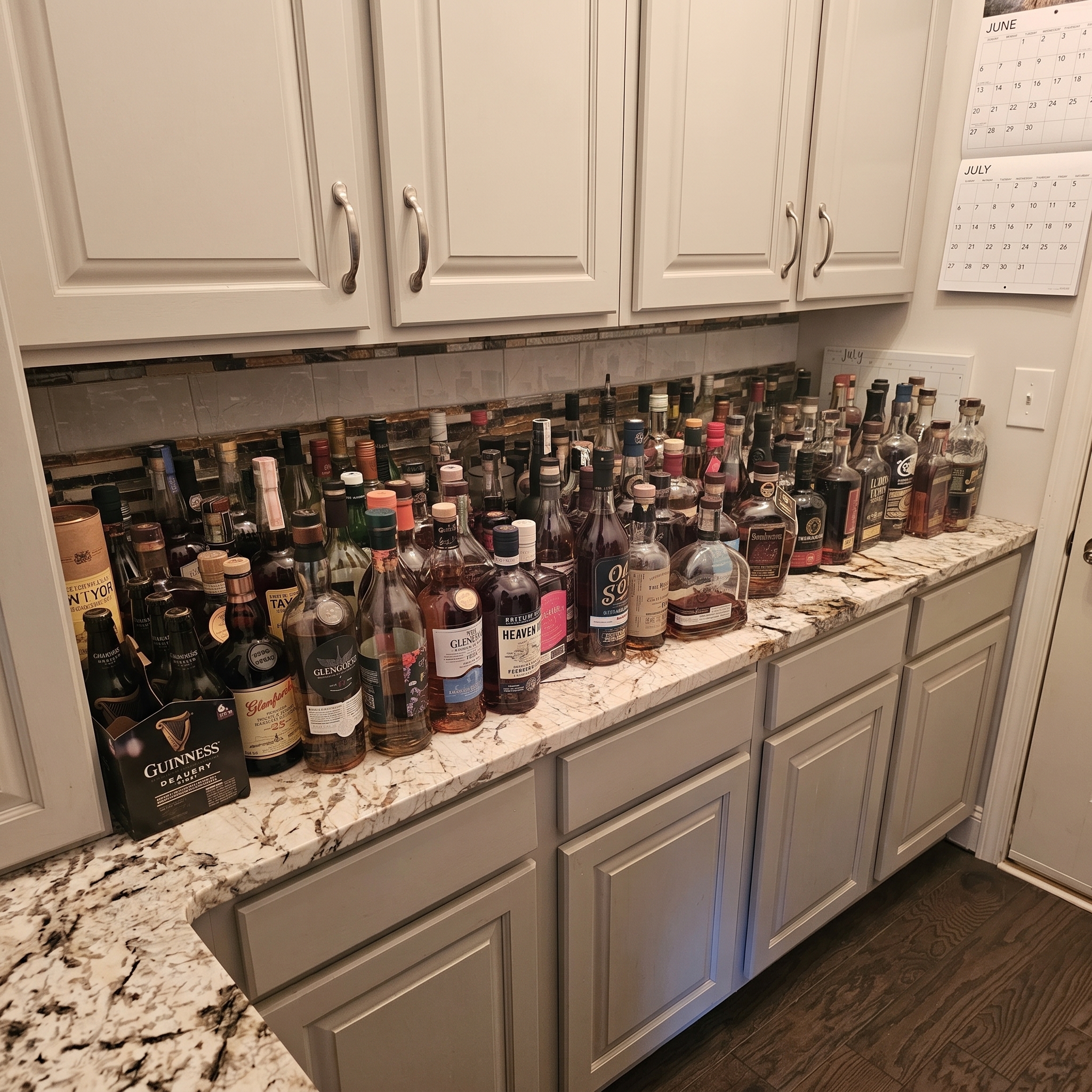
ALT 24. AST 22. Perfect Liver Numbers After 18 Months Of Total Abstinence. Except I Can't Remember The Last Time I Hosted A Dinner Party. Or Said Yes To A Girls' Trip. Or Felt Like Myself. I'm Margaret Ellison. I'm 52 years old. Eighteen months ago, my doctor told me my liver enzymes were elevated. ALT was 89. "Margaret, you have fatty liver. You need to stop drinking. Completely. Permanently." So I did. Month one: I cancelled the wine club subscription. Twelve years of monthly cases. Done. Month two: My ALT dropped to 71. My doctor was thrilled. I was proud. Month three: I cancelled my book club hosting rotation. "I just can't have the bottles in the house right now." The girls said they understood. Month four: ALT 58. Numbers moving the right direction. My doctor said keep going. Month five: I declined my first girls' trip in 14 years. Sonoma. The trip we'd planned for two years. Month six: ALT 41. Almost normal. My husband took me for dinner to celebrate. I had a sparkling water. Month seven: I stopped going to dinner parties altogether. Watching everyone else drink while I sipped club soda was worse than not going. Month eight: My oldest friend stopped inviting me. "I just figured it was easier on you, hon." Month nine: ALT 28. Officially normal range. Month ten: I sat at home on a Friday night and realized I hadn't laughed — really laughed — in three months. Month eleven: My husband stopped suggesting we go out. Month twelve: ALT 24. Perfect. I stared at that number on my chart and waited to feel something. Anything. I felt nothing. Month thirteen: I declined Thanksgiving hosting for the first time in 27 years. "Mom, are you sure?" my daughter asked. I said it was easier this way. She didn't push. That was worse. Month fourteen: I started going to bed at 8:30. There was no point staying up. Month fifteen: I couldn’t remember the last time my friends invited me out anywhere. I couldn’t even blame them. Month sixteen: The 2pm exhaustion still hit every afternoon. My doctor said it was probably just menopause. Month seventeen: I caught my reflection in the hallway mirror walking past. I didn't recognize her. The woman who used to host the long table with the candles down the middle was gone. In her place was someone gray and quiet who went to bed before the news. Month eighteen: ALT 24. AST 22. Perfect numbers. And I had nothing left. That night, I sat at my kitchen table. My husband was reading in the other room. The house was silent. I'd been "good" for 547 days. And every single thing that had ever made me feel like myself was gone. I went into the wine fridge and pulled out a bottle of rosé I knew my husband hid from me. I poured a glass. I sat on the back porch and drank it slowly. I cried. Not because I'd "fallen off the wagon." Because I felt like myself again. For the first time in 18 months. The next morning, I called my doctor's office and told the nurse I wanted to discuss whether abstinence was really necessary forever, or if there were any other solutions. The nurse sounded surprised. "Your numbers are excellent because you stopped drinking. I wouldn't recommend changing the protocol." "Can I at least talk to the doctor?" The appointment was scheduled for four weeks out. I couldn't wait four weeks. That weekend I hosted a small dinner party. Six people. Two bottles of red. I stayed up until 11. It felt like a part of me that died had come back to life. Week three: I had a glass of wine with dinner again. Nothing crazy. The same habit I'd had at 45 without any problems. Week four: I went on a girls' trip. The first in 18 months. I cried in the car on the way there because I'd forgotten what it felt like to be invited. But my enzyme numbers were climbing. ALT: 67. AST: 41. My doctor was not pleased. "Margaret. Your ALT was at 24. You've undone everything. We need to go back to complete abstinence immediately." "I can't go back to that. I lost myself for 18 months. I'm not doing it again." "Then I don't know what to tell you. The data is clear. Alcohol is the cause. Quitting worked for you.” “Worked? I’ve been miserable for a year and a half and I lost my entire social life. I wouldn’t call that working” "Then what do you want to do? You’re moving towards cirrhosis, you know that.” "I don't know." But I knew I wasn't going back to the woman I didn’t recognise. That night, I couldn’t sleep. I sat at my kitchen table at night. Laptop open. Searching. women fixed liver enzymes without quitting drinking Article after article. Forum after forum. Most of it was junk. Detox teas. Cleanses. The same milk thistle I'd already taken for a year with nothing to show for it. But buried in a forum thread, I found something different. A post about women whose enzymes had normalized while they kept drinking moderately. And in the comments, one name kept coming up. Sarah. Fifteen comments. Twenty. All pointing to the same person. Someone posted a city. A wine bar she went to regularly. I looked at the clock. 2:47 AM. By 6 AM, I was in my car. By 1 PM, I was in Nashville. I didn't have an address. Just a city and a wine bar name. Found the wine bar. Sat down. Asked the bartender if she knew a regular named Sarah. She pointed to a corner table. Woman about my age. Rosé in front of her. Easy posture. Grinning at something on her phone. Not tracking her intake. Not drinking sparkling water. Just drinking. I walked over. She looked up. "You drove here," she said. Not a question. "Six hours," I said. She nodded at the seat across from her. "Sit down." I told her about the 18 months of abstinence. About losing myself. About the climb back up the moment I started drinking again. She listened without saying a word. Then she pulled out her phone and laid it on the table in front of me. Her bloodwork. Six months of it. "Girls' trip to Napa. Wine all weekend." "ALT: 24." "Book club night. Three glasses." "AST: 22." "New Year's party. Open bar. Champagne, cocktails, all of it." She pointed to the follow-up labs a week later. "ALT: 27." I looked at the dates. The numbers. The pattern. "Her ALT was 91 six months ago," I said. "Higher than mine ever was." "Exactly," she said. I stared at her phone. Then I ordered a glass of rosé. "What are you taking?" I asked. She shook her head. "Not tonight. Have the wine. We'll talk in the morning." The next morning, over coffee, Sarah leaned across the table and said the sentence that changed everything. "The wine isn't killing your liver. The empty tank is. Fill the tank and the rosé stops being a death sentence." I said: "What does that mean?" She broke it down. "Your liver has one compound it uses to neutralize everything that passes through it. Alcohol. Tylenol. Processed food. Every toxin your body encounters." "It's called glutathione." "Here's what nobody tells you. Alcohol doesn't just create the problem. It depletes the only thing your liver uses to clean it up. Every drink drains the defense at the same time it creates the attack." "For years your body kept up. But after 40, glutathione production naturally declines. And the cumulative depletion from decades of normal drinking compounds on top of that." "You hit a point — quietly, with zero symptoms — where the tank runs dry before the damage stops coming in. And now your liver is trying to do its job with nothing to work with." She paused. "That's why stopping for 18 months 'fixed' your numbers. You stopped pouring damage in. But you also stopped living. The tank was still empty. The moment you started drinking again, the system had nothing to defend you with. And the numbers climbed right back up." She set down her coffee. "Cutting back doesn't refill an empty tank. Quitting doesn't refill an empty tank. It just slows how fast you drain what's already gone." She told me her hepatologist had mentioned it off the record. After her labs kept climbing and nothing conventional was moving the numbers. Most physicians know about the research. But there's no prescription version, no insurance code, no profit in it. So they point the patients who ask the right questions in the right direction and let the labs do the talking. Then she slid a bottle across the table. "It's called Purelia." She walked me through the formula. "NAC — the same compound emergency rooms use IV when someone is in acute liver crisis — forces your liver to rebuild glutathione from the inside out." "L-Glutathione replenishes the depleted stores directly at the cellular level." "Choline packages the fat that's been accumulating in your liver cells and exports it before it hardens into scar tissue." "Artichoke and dandelion force bile flow open so what gets neutralized actually leaves your body." "Liquid form. Because a congested liver can't absorb a capsule properly. This goes directly to your bloodstream." She looked at me. "This doesn't manage the problem. It fixes what ran out." She pointed to the empty rosé glass between us. "You don't have to drain the reservoir to save the system. You just need to refill the tanks." I ordered my first bottle that day. I took it every morning. I didn't track obsessively. I didn't change what I drank. I didn't white-knuckle through dinner parties. I just lived. Week one. The 2pm fog I'd been writing off as menopause — gone. Energy steady through the evening for the first time in years. Week three. The dull ache under my right ribs I'd been quietly terrified about — went quiet. I pressed on the spot out of habit. Nothing. Week six. Labs came back. ALT: 38. Down from 67. My doctor ran it twice. Said nothing for a moment. Then: “What are you doing differently?” Week ten. ALT: 24. AST: 21. Normal range. The same numbers I'd hit at 18 months sober. Except this time I'd hosted three dinner parties, drank at a wedding in Charleston, and reopened the wine club subscription. She closed the chart. Looked at me directly. "Whatever you're doing, keep doing it." That weekend I hosted Easter dinner. 16 people at the long table. The good wine. Candles down the middle. My daughter pulled me aside in the kitchen. "Mom. You're back." "I never left," I said. "I just got buried for a while." Sarah told me something before I left Nashville. She said: "I spent two years turning down every dinner invitation and lying about why I wasn't drinking. Watched my numbers stay 'good' while everything that made me me slowly disappeared. Turns out I didn't need to drain the reservoir to save the system. I just needed to refill the tanks." If you're reading this, you probably see yourself in my story. Your labs came back elevated and you couldn't understand why. You don't drink heavily. Not really. You exercise. You eat well. And yet. Your doctor told you to stop entirely. Maybe you have. Maybe your numbers are technically "fine" now. But you've also stopped being yourself. You've cancelled the dinner parties. You've stopped accepting the invitations. You've watched your friends slowly stop calling because it got too awkward. You've sat through the lecture. You've buried the bottle deep in the recycling. You've felt like the odd one out at every restaurant table for a year. And here's the truth nobody tells you: Quitting doesn't refill an empty tank. It just slows how fast you drain what's already gone. That's why women like my mother quit for seven years and watched their livers fail anyway. The numbers looked "fine" while the underlying system stayed empty. Purelia is different. NAC to rebuild glutathione from the inside out — the same compound emergency medicine reaches for in acute liver crisis. L-Glutathione to replenish what decades of normal living have depleted. Choline to export the accumulated fat before it hardens. Artichoke and dandelion to open the final drainage pathway. Liquid formula — because with a congested liver, capsules pass through the very organ that's already struggling. Try Purelia for 60 days. Track your labs. If you don't see improvement, full refund. No questions asked. You risk nothing. You're at a crossroads right now. One path: Keep doing what you're doing. Stay "compliant." Watch your numbers stay technically fine while every dinner party, every girls' trip, every part of yourself you used to recognize slowly disappears. Another path: Refill what actually ran out. Give your liver what it was starving for. Track your numbers. See what happens. I chose the second path. It gave me back my dinner parties. My girls' trips. My laugh. My self. Without giving up a single thing. — Margaret E. 👉 https://try.officialpurelia.com/liver-support-pdp1 P.S. — I felt the difference by week one. Saw measurable lab improvement by week six. Hit normal range by week ten. No restrictions. No quitting. No pretending club soda is fine. Just my actual life back. P.P.S. — My sister started taking Purelia two months ago. Her numbers dropped from 94 to 61. Still drinks. She calls me every week with updates. 👉 https://try.officialpurelia.com/liver-support-pdp1
I regret giving up drinking...
Try Purelia for 60 days. If you don't see real changes in your energy, mornings, or how you feel overall, we'll refund every cent. Just an email. That's it.
SHOP NOWLike this ad? Make it yours.
Crush rebuilds this exact creative around your product — your brand, your colors, your offer — in about a minute.