
Inactive· since Jun 6, 2026
- 37
- days it ran
- 0
- relaunches
Ad copy
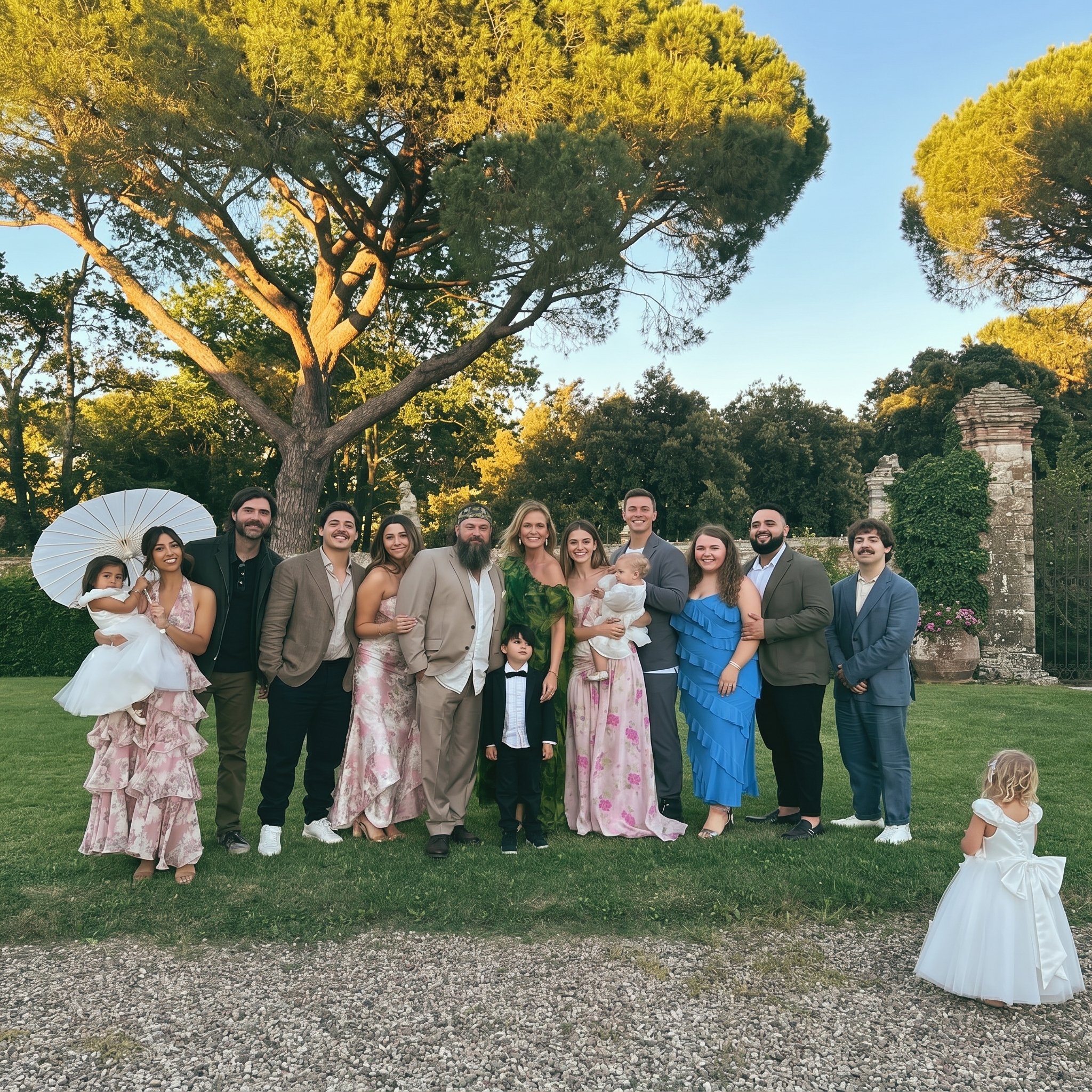
My hepatologist daughter married an Italian winemaker in Tuscany. At the reception, the groom's 84-year-old grandfather stood up during the toasts and looked at our side of the table, and said something nobody in my family has forgiven him for. My daughter Sarah married Marco Rossi on October 14th in the stone courtyard of his family's vineyard. But you will not understand the reception if you do not understand what led up to it. Sarah is a hepatologist. Was a hepatologist. Board-certified, top of her fellowship at Northwestern, the kind of doctor other doctors sent their parents to. She was supposed to join one of the best hepatology practices in Chicago. That was the plan. That had always been the plan. The plan changed because of a research project. Sarah was studying liver health in Mediterranean populations. The data had always puzzled researchers. Italians drink significantly more wine per capita than Americans do. By every measure, their ALT should be higher than ours. Their livers should be in worse shape. Neither is true. Their numbers stay healthy into their eighties. Sarah wanted to understand why. Her department approved a field study. She needed to spend time in Tuscany interviewing winemaking families, collecting health histories, observing dietary patterns. A colleague connected her with the Rossi family. She came home from her first visit talking about liver enzymes and a man named Marco who had walked her through three generations of family health history from memory. No charts. No electronic records. Just a man who knew that his grandfather's father lived to 92 and died in his sleep, and his grandmother's mother lived to 89 and was making fresh pasta the week before she passed. I did not think anything of it. My daughter has always been passionate about whatever she was studying. The second visit she mentioned Marco again. The third visit she did not mention him at all, which is when I knew. By Christmas she told us she was seeing him. By Easter she told us it was serious. By July she told us he had asked her to marry him and she had said yes. My husband Mike sat at our kitchen table and said nothing for a very long time. Then he said, "She went to medical school for eight years." That was his way of saying everything he could not say. That our daughter, who was board-certified in hepatology, who had $310,000 in student loans, who had a job offer from one of the best liver centers in the country, was going to live in a stone farmhouse in Tuscany. Was going to learn Italian for groceries. Was going to leave behind the career she had bled for. My sister Catherine is a nurse practitioner. She called me the night we told the family and said, "Linda, this is temporary insanity. She will come back." My brother-in-law Paul, who is a dentist, said, "She is throwing away a career most people would kill for." My mother said, "At least he is not in a cult." Which was her way of trying to be supportive. Nobody in my family understood it. I did not understand it either. But I watched Sarah's face when she talked about Marco and I saw something I recognized. The look I had when I met Mike at 22 years old and knew before I had any right to know. You cannot argue with that look. I tried. It did not work. We met the Rossis in August. Mike and I flew into Florence and drove south to Montalcino on a Saturday morning. He was tense the whole drive. Kept adjusting the mirror and changing the radio station, which is what he does when he is anxious and does not want to admit it. The estate was beautiful. Forty hectares of rolling vineyards. A stone farmhouse from the 1600s. Cypress trees along the driveway. Laundry on a line catching the wind. Marco met us in the courtyard. Tall. Broad shoulders. Olive skin. He shook Mike's hand and I watched my husband wince slightly. Not because Marco squeezed too hard. Because the handshake reminded Mike of something. His own grip used to be like that. It was not anymore. Marco introduced us to his parents. His father Giovanni, 61, ran the vineyard with him. His mother Sofia, 58, ran the kitchen and the books. Giovanni was built like the stone walls behind him. Square. Solid. Sofia was small, warm, direct. She took my hand in both of hers and said, "Your daughter is a gift. We love her already." Then Nonno Beppe came out of the cellar. Marco's grandfather. Eighty-four years old. He walked toward us across the courtyard and I want you to understand how he walked because it matters for everything that comes later. He did not shuffle. He did not hold onto anything. He walked the way men walk when their bodies are still listening to them. Straight back. Steady stride. He was carrying a wooden mallet in one hand. He had been hammering rings onto a new oak barrel in the cellar. At 84, at 11 on a Saturday morning, he was building something. He shook Mike's hand. His grip was firm. I could see Mike register it the same way he had registered Marco's. Two handshakes in five minutes that reminded my husband of what his own hands used to feel like. "You raised a fine daughter," Nonno said. His voice was clear. His eyes were clear. Everything about him was clear in a way that made you notice it because you were not used to seeing it in a man his age. We sat on the terrace under the wisteria. Sofia brought espresso and cantucci, almond biscuits to dip in small glasses of Vin Santo. Mike refused his glass. His doctor had told him not to drink. Sofia did not make a thing of it. She brought him sparkling water with a slice of lemon. I looked at Nonno's hands while he ate his biscotti. Eighty-four years old. He held the small biscuit steady, dipped it cleanly, brought it to his mouth without spilling a drop. No tremor. No stiffness. I looked at Mike's hands. He was holding his glass of sparkling water with both hands wrapped around it. Not because of the cold. Because one hand was not enough to keep it steady anymore. He had been doing that for two years. I had been pretending not to notice for two years. The wedding was in October. The ceremony was in the small chapel in Montalcino. The reception was at the family estate, in the stone courtyard surrounded by the vines. Long tables under strings of lights. Linen tablecloths. The smell of roasted pork and rosemary and bread baking in the outdoor oven. Sarah wore an ivory dress Sofia had helped commission from a seamstress in the village. No huge gown. No veil. She looked more beautiful than I had ever seen her. Stripped of everything extra, down to just herself. Marco stood across from her in a dark suit. They exchanged rings. They made promises in Italian and in English. I cried. Not because I was sad. Because my daughter had chosen a life I did not understand, and I could see, standing in that chapel, that she was exactly where she was supposed to be. That is a hard thing for a mother. And a beautiful thing. Both at the same time. The reception lasted until sundown and beyond. Antipasti spread across the tables. Pici with wild boar ragù. Roast pork from a pig Giovanni had raised himself. Wild greens from the garden, bitter and dark, dressed in olive oil and lemon. Bread torn from huge round loaves. And wine. The family's own Brunello, decanted in pitchers down every table. Mike drank sparkling water with a lemon slice. He was the only person at our table who was not drinking. The toasts came after dinner. People stood and spoke when they felt moved to. Giovanni spoke first, welcoming Sarah into the family. Then Sofia. Then my sister Catherine, who kept it short and polite and did not say any of the things I knew she was thinking. Then Mike stood up. My husband is not a public speaker. He is a quiet man who shows love through acts, not words. But he stood at that table and he gave a toast about Sarah. About the day she was born. About teaching her to ride a bike and watching her graduate from medical school and knowing, the way fathers know, that she was going to go somewhere he could not follow. His voice cracked twice. He held his water glass with both hands while he spoke because one hand alone would have shaken too much to hold it. He finished. People clapped. He sat down. Reached for my hand under the table and squeezed. His grip was weak. I squeezed back harder to make up the difference. Then Nonno Beppe stood up. The courtyard quieted the way a room quiets for someone who does not speak often. He looked at Sarah first. Smiled at her. Then he looked at our side of the table. Me. Mike. Catherine. Paul. My mother. He looked at us the way you look at people you are about to say something difficult to. Not with anger. With the kind of care that comes before hard words. "I want to welcome Sarah's family into ours," he said in slow, careful English. "You raised a daughter who chose us. That means something. It means she saw something here worth giving up her world for." He paused. "But I am 84 years old and I am not going to waste whatever time God gives me being polite when I should be honest. So I am going to say something to you because your daughter is my granddaughter now and your family is my family now and I do not let family walk around blind when I can see. And I am saying this with your daughter sitting right there, and she is a liver doctor, so she can tell me if I am wrong." The courtyard was completely still. "I have drunk three glasses of wine every day since I was twelve years old. So did my father. So did his father. I have never been sick. I have never seen a doctor for anything but two broken bones from working. My hands work. My mind works. I built this table in 1971. The chairs at this end, I built in 1979. This morning before any of you were awake I was in the cellar fitting rings onto a new oak barrel. My liver works." He looked at Mike. Not unkindly. But directly. "My son Giovanni is 61. He carried every chair at this reception from the cellar before noon today. He has drunk wine with his lunch and his dinner every day of his adult life. He has never taken a pill in his life. Neither have I. Neither has anyone on our side of this table." Then he said it. "I watched your husband give his toast. He held a glass of water with both hands because one was not enough. He is 61 years old. I am 84. I can hold a wine glass in one hand and pour another bottle with the other. He cannot hold the water he is not allowed to drink. Somebody did that to him. It was not God and it was not time." I heard Catherine inhale sharply beside me. Paul put his hand on her arm. "Your wife is looking at me right now the way a woman looks when she has heard the truth she has been carrying alone for years. I know that look. My own wife had it before she died. The look of a woman who has been watching and worrying and not saying anything because nobody told her she was allowed to see what she was seeing." He was looking at me. And he was right. I was looking at him exactly like that. "I do not know what your American doctor told your husband. I know what he is taking. Because my cousin Salvatore left this house in 1962. Went to America. Got a job at the steel mill in Chicago. Married a good American woman. The first years, he wrote to my mother for the recipes. She sent them. Her artichoke. Her bitter greens. Her digestivo of dandelion. He made them. He drank his wine with them like he did at home." Nonno's voice was steady. The way a man's voice is steady when he has told a story enough times that the grief has gone smooth. "Then he started buying American food. Maker's Mark instead of our wine. Six ounces every night, the same bottle the men at the steel mill drank. He stopped eating my mother's artichoke. He stopped drinking the bitters after meals. He saw an American doctor who told him his ALT was too high. The doctor told him to take milk thistle twice a day. The doctor told him to quit drinking. So Sal stopped the wine. He kept the Maker's Mark for one more year. Then he stopped that too. He kept the milk thistle. He kept the American food." I felt something cold settle in my stomach. Mike took milk thistle every morning. He had taken it for two years. "Two years on that milk thistle, Sal started dropping things. Coffee cups. Tools. His wife told me he could not button his shirt some mornings. His doctor said his numbers were coming down slowly. Give it more time." Mike's shirt buttons. I had been laying out button-downs with snaps for a year and telling myself it was because they were easier to iron. "Five years on it, his hands trembled when he ate. His doctor said the numbers were almost down to normal. Give it more time." "Eight years. Sal sat in a chair by the window of his apartment in Chicago and did not get up except to eat and use the bathroom. He was 63 years old. The strongest cousin I ever had could not walk to his own mailbox. His wife fed him. Dressed him. Carried him to bed." I could not breathe. "Sal died at 65. In a hospital bed in Chicago. His liver had failed. The doctors gave him a drug at the very end called NAC. The nurse told his wife it is the same compound they use for acetaminophen overdoses. It bought him eleven days. The biggest cousin I had, and his casket was light when I carried it. The milk thistle took everything from him except the slowly improving number on a chart." He paused. "I buried Sal. And tonight I watched your husband, the new father-in-law of my grandson, hold a water glass with both hands. Because one was not enough. So I am telling you what nobody told Sal's wife in time. The wine was never what was killing him. Sal stopped drinking, and he kept dying. Your husband stopped drinking, and he is dying anyway. The wine is not the thing. The thing is what we do not eat in America. The thing is the pill they gave you to make the number on the chart look better while everything underneath gets worse." He sat down. Nobody spoke. For a long time, nobody spoke. Sofia touched Nonno's arm gently. Sarah was looking at Mike with tears running down her face. Marco had his hand on her back. Catherine was staring at the table. Mike was staring at his hands. I was staring at my husband's hands too. The hands that used to build things. Used to grip a steering wheel with one hand on a mountain road. Used to hold mine so tight I would say "you are going to break my fingers" and he would laugh and squeeze harder. An 84-year-old man had just said out loud the thing I had been swallowing for two years. We flew home the next morning. The flight was nine hours. Mike did not speak for the first three. Then he said, "The old man was out of line." "Was he wrong?" Mike did not answer. That night I stood in our bathroom doorway and watched Mike get ready for bed. He picked up his milk thistle bottle from the nightstand the way he had every night for two years. Tapped two capsules into his palm. Swallowed them. Set the bottle back down. Picked up his multivitamin. Same routine. I looked at that bottle and I heard Nonno's voice. Somebody did that to him. It was not God and it was not time. For two years Mike had been doing what he was told. His doctor had told him to quit drinking. He quit. His doctor had told him to take milk thistle. He took it. His doctor had told him to walk three miles a day and eat the Mediterranean diet. He walked. He ate. He cut out sugar. He cut out fried food. He gave up the bread and the pasta. He took the multivitamin. He drank club soda with a lime at our anniversary dinner. He ate salads every day, the man who used to call them cow food. He lost 22 pounds. He did everything right. And for two years I had watched him keep doing what he was told while his body quietly stopped doing what it used to do. The hands. Every morning he sits on the edge of the bed flexing his fingers. Open. Close. Open. Close. Five minutes before he can make a fist. He runs them under hot water at the sink. He thinks I am still asleep. I have not been asleep during that ritual in eighteen months. I used to think it was stiffness. Now I thought about Sal dropping coffee cups. The garage. Mike built a deck on the back of our house in 2017. Built bookshelves for Sarah's apartment in residency. Built a garden bed for me in 2019. He has not built anything since. The table saw has dust on it. The drill bits are where he left them two years ago. I stopped asking because the answer was always the same. "One of these weekends, Lin. Just tired." Nonno built that table at 71. Those chairs at 79. He fits new oak rings at 84. The tiredness. He is in his recliner by 7:30 every night. He falls asleep with the remote in his hand and I take it and turn the volume down and cover him with a blanket and go to bed alone. We used to stay up until 11 talking. Now I cannot remember the last time we had a conversation after 8. The fog. He told me the same story about an old coworker three times in one week and did not realize it. He missed our exit on a drive we have taken a hundred times. He stood in the kitchen last month holding a coffee filter and staring at the machine like he had never seen one before. The yellow. I had been pretending not to see the yellow tinge in the whites of his eyes for six months. The first time I noticed it I told myself it was the bathroom light. The second time I told myself it was nothing. By the wedding I knew it was something. I had been calling all of it aging. His doctor had been calling it aging. Two years of "your numbers are coming down slowly, the milk thistle is working, give it more time" while the man attached to the numbers dimmed a little more every month. Sal. Eight years of slowly improving numbers. Dead at 65. Mike. Two years of slowly improving numbers. Could not hold a water glass. I saw it. Standing in that bathroom doorway watching my husband take his pill. I saw the parallel so clearly it made my chest ache. And I could not unsee it. For three weeks I carried it. I did not tell Mike. I did not tell Catherine. I did not tell anyone. I just watched. Watched him flex his fingers every morning. Watched him fall asleep at 7:30. Watched him move through our house like a man walking through fog. Then Sarah called. "Mom, I am flying in next Saturday. I need to talk to you about Dad." She came alone. Marco stayed in Italy. She sat at my kitchen table, the same table where Mike and I ate dinner in near-silence most nights now. "Mom. I need to talk to you about Dad." "I know." "You know?" "Nonno said it at the wedding. I have been seeing it since we got home. I have been seeing it for two years, Sarah. I just did not have a name for it." She nodded slowly. Then she opened her bag and pulled out a folder. Not a thin one. Thick. Papers, printouts, highlighted journal articles. Color-coded tabs. "Mom. I am a hepatologist. I spent three years in residency learning how to treat livers. I prescribed milk thistle. I told patients to quit drinking. I told them the same things Dad's doctor has been telling him for two years. And then I moved to Tuscany. And I watched Nonno drink wine every night and not be sick. And Giovanni work sixteen-hour days at 61. And I started asking myself a question I never asked in fellowship. Why is the 84-year-old who drinks wine every day healthier than my own father who quit two years ago?" She slid a printout across the table. "Mom. I prescribed milk thistle. I need you to understand what I am about to tell you, because it means I was wrong. Not just Dad's doctor. Me." Her voice caught. My daughter, my brilliant board-certified daughter, had tears in her eyes. "Dad's doctor has been watching the wrong thing for two years." She told me what she had found. The way a doctor tells you something when she has realized it contradicts everything she was trained to believe. "Quitting drinking only stops the damage. It does not repair what is already gone. What is already gone is glutathione." "Glutathione is the master antioxidant the liver uses to neutralize everything that passes through it. Every drink. Every medication. Every greasy meal. Every cell in the liver runs on it." "After 40, your body produces about 10 percent less glutathione every year. Modern American life burns through what is left even faster. By 55, most people have lost nearly half their production capacity without knowing it. By 60, most are running on a fraction." She pulled out another page. "Mom. This is the part that explains why his numbers will not move and why his hands tremble and why his eyes are yellow. Dad's liver was not damaged because he drank too much. It was damaged because he did not have enough glutathione left to handle the drinks he was having." "Read that again." "His liver was destroyed by the empty tank the bourbon was being processed through." "Quitting stopped the depletion. It did not refill the tank. His tank was already empty the day his doctor told him to quit. Eating clean, walking, juicing kale, all of it slows how fast you deplete what is left. None of it refills what is already gone." "That is why his ALT will not come down further." "The Italians do not have this problem because the wine is not what hurts anybody. They have been refilling the tank for centuries. Artichoke at every meal. Bitter greens. Dandelion in spring. Olive oil. The mother in every household has been feeding her family the exact compounds that rebuild glutathione, three meals a day, every day, for generations. Nonno's liver is not lucky. It is supplied." She paused. "And Mom, here is what I cannot say in front of Dad without crying. I prescribed milk thistle. I prescribed it for two years. I had a conversation with my own mother's husband across this kitchen table and I told him milk thistle. I was wrong. Milk thistle protects liver cells. But you cannot protect cells running on an empty tank. It sits on the surface. It doesn't refill what's already gone." She wiped her eyes with the back of her hand. I sat very still. "Then why didn't his doctor give him something that does refill it?" She was quiet for a long time. "Because we do not prescribe supplements. And the version that works is not a prescription." She pulled a small box out of her bag and set it on the kitchen table. "This." The box said Purelia. "Five things, all at the same time, in liquid form. Because a struggling liver cannot absorb a capsule properly. The capsule passes through the failing organ before the ingredients ever reach the blood. Liquid hits the bloodstream directly." "First. NAC. The same compound the ICU was putting into Sal's IV at the end. The actual building block the liver uses to rebuild glutathione from the inside out." "Second. L-Glutathione itself. To replenish what is already gone while the rebuild is happening. NAC restarts the factory. L-Glutathione restocks the shelves." "Third. Choline. To package and move the fat already backed up inside the liver cells. Without choline, the fat sits there no matter how much weight Dad loses or how many miles he walks." "Fourth and fifth. The bitters. Artichoke extract and dandelion root, the exact two compounds Nonno's mother put in the digestivo she sent Sal in 1962. Artichoke opens the bile production. Dandelion clears the final drainage pathway." "Five things. At the same time. In liquid form. NAC. L-Glutathione. Choline. Artichoke. Dandelion." She pushed the box across the table. "Made in the US. Two droppers in the morning. A 60-day money-back guarantee tied to his actual labs. If his numbers do not improve, every penny back. No questions." "Mom. Nonno is 84 and lifting oak barrels because nothing in his life ever stopped supplying his liver. Dad is 61 and cannot hold a water glass because the one thing he was told to take is sitting on the surface protecting cells with nothing inside to protect. You cannot move Dad to Tuscany. But you can give him this. The same compounds Sofia puts on Nonno's plate, condensed into a dropper." "Not protecting. Restoring." I picked up the box. "Does Marco know you are here?" "He drove me to the airport. He said this was between you and me." That night, after Mike fell asleep in his chair at 7:45, I read the bottle. Two droppers full each morning, hold under the tongue for 30 seconds, swallow. In the morning I set it next to his coffee mug. He came downstairs. Kissed the top of my head the way he always does. Sat down. Looked at the dropper. "What is this?" "Something new. Take two droppers under your tongue. Hold for 30 seconds. Then your coffee." "What is it?" "Mike. Just take it. Please. For me." He looked at me. We have been married 37 years. He knows when I am asking something that matters. He picked up the dropper and took it. Day five, a Thursday, Mike got out of bed without sitting on the edge first. I was already awake. He swung his legs over, stood up, walked to the bathroom. No pause. No flexing. No negotiation with his own hands. I stared at the ceiling and held my breath until I heard the faucet turn on. He was brushing his teeth. Standing. Without the ritual. Week two. The yellow in his eyes had faded. I had to look hard in the bathroom light to find it. By the end of that week I could not find it at all. Week three. A Saturday morning. I heard a sound from the garage I had not heard in two years. The drill. Mike was out there at 8 AM, the hour he usually was just waking up, measuring a board with a pencil. He was building a shelf for the mudroom. Nothing fancy. Just a shelf. Just his hands holding a drill and his body doing what it was made to do. He came inside at noon with sawdust on his shirt. "Shelf is done. Want to see it?" I went to the garage. Straight. Level. Clean joints. The kind of work his hands used to do without thinking. "Mike. It is beautiful." "It's a shelf, Lin." But he was smiling. The way a man smiles when his hands remember who he is. Week four. Mike mowed the lawn. Did not stop. Did not come inside for a break. Did not spend two days recovering. Just mowed it the way he used to mow it. Like a chore, not an expedition. Week six, I told him everything. The reception. What Nonno said. What I had been watching for two years. What Sarah found in the research. The empty tank. The glutathione. The artichoke that Sofia puts on Nonno's plate every day. He listened. Really listened. For the first time in two years he did not say "I am fine." He said, "I have not been fine for a long time, Linda. I just didn't know anything else was possible." He went back to his doctor for follow-up labs at twelve weeks. He had taken Purelia every morning. He had kept the diet. He had kept the walking. He had stopped the milk thistle because there was no longer any reason to take it. ALT: 47. Two years ago it had been 198, then 184, slowly creeping down to 167. AST: 52. Two years ago it had been 187. Triglycerides: 121, down from 191. Mike's doctor studied the results for a long time. "You stopped the milk thistle." "Ten weeks ago." "What are you taking instead?" Mike told him. NAC. L-Glutathione. The empty tank. He told him about Nonno, about an 84-year-old man who builds oak barrels and drinks three glasses of wine a day and has never seen a doctor. He told him about Sal. The doctor was quiet. "I am not familiar enough with this research to comment. But your numbers are better than they have been in years. And you look better than you have in years." He did not tell Mike to go back on the milk thistle. First time in two years. I told my brother Frank. He had been drinking the way Mike used to drink. His routine labs had come back with an ALT of 168. I sent him a bottle. Wrote a note that said, "If you don't take this every morning I will never speak to you again, Frank." He took it. He kept drinking. He would not quit, he is stubborn the way Mike is stubborn. But he took it every morning. Ten weeks later. ALT: 32. Down from 168. He had not stopped drinking. He had not changed his diet. The only thing he changed was the liquid in the morning. He called me crying. My 57-year-old brother, crying on the phone like a boy. He said, "Lin. I think if Sal had had this in 1962 he would still be alive." I had to hang up. My son Mark, our oldest, 44, two kids, "borderline fatty liver" at his last physical, the right rib ache his doctor had been calling probably nothing for two years. Started taking Purelia eight weeks ago. He says his afternoon energy is back and the dull ache under the right rib is gone. I take it now too. After what Sarah explained about glutathione depleting 10 percent a year after 40, I was not going to wait until I was 65 to find out my own tank was empty. We flew back to Italy six months after the wedding. Sarah and Marco met us at the train station in Montalcino. Marco shook Mike's hand. Mike gripped it. Really gripped it. Marco smiled. "Your hands are better." "Getting there." Nonno was in the cellar. He was planing a board for a new wine rack, the wood curling off in long ribbons. He looked up when we walked in. "You came back." "I came back." Nonno set the plane down. Walked over. Took Mike's hand in both of his and held it for a long time. Did not shake it. Just held it. "You listened," he said quietly. "Most people don't." Mike's eyes were wet. He did not try to hide it. "Your granddaughter saved my life," Mike said. "And you said the thing at the wedding that made it possible. The thing nobody else would say." Nonno looked at him. "I said it because your daughter is mine now. And she is a liver doctor who could not see what was happening to her own father until she came to live with us. That tells you something about American medicine, doesn't it." Sofia made lunch. We sat on the terrace, the same terrace where I had watched Nonno eat biscotti with steady hands eight months before. Sofia poured wine. Nonno raised his glass. "Will you drink a small one with me?" Mike looked at me. I nodded. He held the glass in one hand. Steady. He took a small sip. His first drink in two years and three months. He looked at me. "It tastes like the first time," he said. Nonno laughed and clapped him on the shoulder. Giovanni came in from the vineyard. 61 years old. Two years younger than Mike, but two men almost the same age sitting on the same terrace. One had been quietly drained for two years. One had been quietly fed for sixty. And both of them, finally, on the same side of the table. I am telling you this because I think you might be where I was the night of that wedding. Watching your husband hold a water glass with both hands. Watching him fall asleep in his chair at 7:30. Watching his hands betray him every morning. Watching the yellow you have been pretending is the bathroom light. Watching his doctor smile at a slowly improving number while the man behind the number disappears. If your husband is on milk thistle, and his energy is fading, his hands are stiff, his color is off, his brain is foggy, and his doctor keeps saying "give it time, the numbers are coming down" , the numbers might not be the whole story. They were not Mike's. They were not Sal's. If you have been watching someone you love slow down and sit more and do less and you have been calling it aging because that is what the doctor calls it, maybe it is not aging. Maybe his tank has been empty for years and nobody has been putting anything back in. An 84-year-old Italian man stood up at my daughter's wedding and told my husband the truth. His hands are steady. His mind is clear. He drinks three glasses of wine every day and has never been sick. And my husband, 23 years younger, could not hold a water glass. Somebody did that to Mike. It was not God. It was not time. It was not even the bourbon. It was two years of taking a pill that sits on the surface of cells running on empty. Purelia. Two droppers in the morning. NAC. L-Glutathione. Choline. Artichoke. Dandelion. The five things Sarah found, all at once, in the only form a struggling liver can use. The compounds Sofia puts on Nonno's plate every meal, condensed into a dropper. Not protecting. Restoring. That is the line that finally made it click for me. Read the page. Not for me. For whoever you would leave behind. 👉 https://try.officialpurelia.com/liver-support-pdp1 My daughter married an Italian winemaker. My family thought she was throwing her career away. A hepatologist who walked away from medicine to live on a vineyard. She saved her father's life instead. Linda Baker, age 59 P.S. If you are the wife reading this and your husband is on milk thistle and something in him has been dimming for two years, you are not imagining it. You are not being dramatic. You have been watching something real. The doctor has been watching the chart. You have been watching the man. You are closer to the truth than the chart is. I needed an 84-year-old man who has never seen a doctor to tell me what I already knew. I am telling you now so you do not need to wait for your own Nonno. P.P.S. Mike built a wine rack for Marco and Sarah last month. Loaded it into the truck himself. Forty cypress slats. Joints clean as glass. Nonno inspected every joint when it arrived in Tuscany. Ran his hand along the racks. Looked at Mike on FaceTime and said, "Good work. Your hands are back." Mike told me later that was the best compliment he ever got. Two men standing in a cellar, one Italian, one American, both holding steady. Both building things. P.P.P.S. Here is what I would tell you to do. Take two droppers under your husband's tongue tomorrow morning. Hold for 30 seconds. Then his coffee. Notice his first hour of the day for the rest of that week. Don't tell him to notice. Just watch. His grip on the mug. The clarity in his eyes. Whether he stops the morning finger ritual without realizing he stopped. The numbers take weeks to change. The first-week shift you see in him is the cells in his liver finally getting what they have been missing for years. P.P.P.P.S. Purelia has a 60-day money-back guarantee tied to his actual labs. If his numbers do not improve in 60 days, every penny back. No questions asked. In two years of milk thistle, nobody ever offered Mike a refund for the energy he lost or the projects he never finished or the months he sat in a chair at 7:30 while his doctor said "coming down slowly." The system does not do refunds. Purelia does. Think about what that tells you about who is confident in the product and who is just confident in the prescription pad. P.P.P.P.P.S. Purelia is a small company. They sell out. I keep two bottles in the cabinet now. One for Mike, one for me. Because after what Sarah explained about glutathione depleting 10 percent a year after 40, I started taking it too. If your husband's next bloodwork is in 30 or 60 days and you want him to walk into that appointment with real numbers instead of the same conversation he has been having while his body tells a different story, check availability now. Not next week. Now. Every day on milk thistle is another day his tank stays empty. Sal had eight years. Mike had two. Do not let your husband have another month. P.P.P.P.P.P.S. Do not forget about the 60-day money-back guarantee. 👉 https://try.officialpurelia.com/liver-support-pdp1
Natural Relief in Weeks
Try Purelia for 60 days. If you don't see real changes in your energy, mornings, or how you feel overall, we'll refund every cent. Just an email. That's it.
SHOP NOWLike this ad? Make it yours.
Crush rebuilds this exact creative around your product — your brand, your colors, your offer — in about a minute.