Stanley Scuba, Sailing & Adventures
Stanley Scuba, Sailing & Adventures Facebook ad: “What & Where It Is”
Ran for 159 days, from October 7, 2025 to March 15, 2026, the last day Crush saw it.
Run by Stanley Scuba, Sailing & Adventures on Facebook. Crush is not the advertiser and does not verify its claims. See this ad in Meta's Ad Library(opens in a new tab)
Want an ad like this for your product?
Crush makes new ad images for your product from this ad: your logo, your product photo, your offer.
Trials from $19.95 USD, then $79.95 USD a month. Cancel anytime.
About this ad
- Meta Ad Library ID
- 1539990997045608
- Platforms
- Facebook and Instagram
- Relaunches
- 0
- EU reach
- 3,057
Ad text
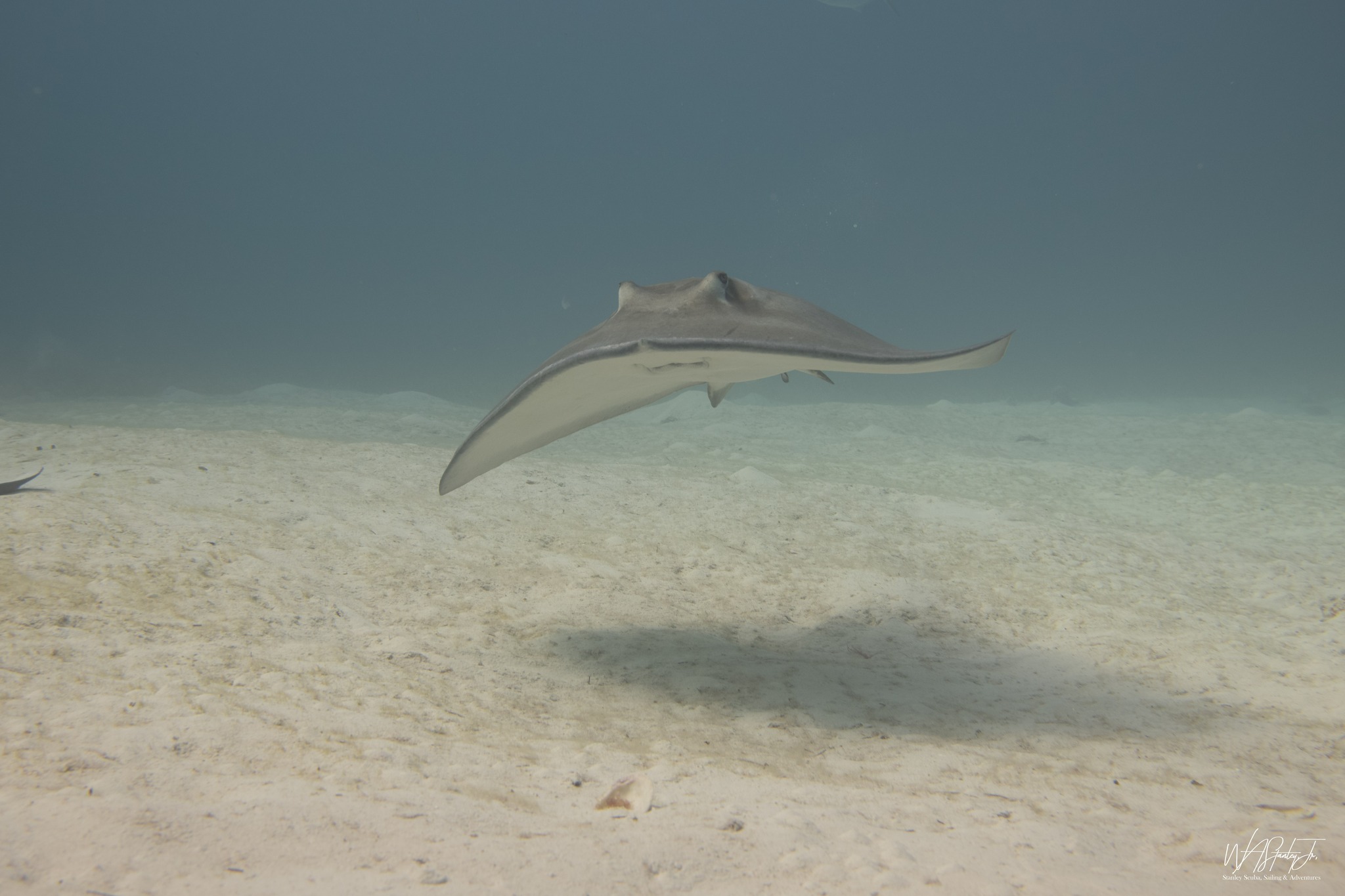
What & Where It Is The Southern Stingray (Hypanus americanus) is a flat, diamond-shaped fish that lives in tropical and subtropical parts of the Western Atlantic Ocean — from New Jersey all the way down to Brazil. It has a mud-brown, olive, or grey back, and a white underside. Key Features It has a flat body (disc) and wing-like fins for swimming along the ocean floor. On its tail is a long, thin spine with serrated edges. This spine is venomous, but it's not usually life-threatening to humans — though very painful if stepped on or provoked. Its eyes are on top, while its mouth and gills are underneath. It has spiracles (openings) that let it take in water while buried in sand or resting on the seabed. Behavior & Diet Southern stingrays hunt mostly at night. They dig in the sand or flap their fins to uncover hidden prey. Their diet includes small fish, worms, crustaceans (like crabs/shrimp), and shellfish. They mostly live alone or sometimes in pairs. In certain shallow areas (nursery zones for young ones), there can be many of them together. Reproduction & Growth Females give live birth. The babies grow inside the mother, first using a yolk sac, then something called “uterine milk” from the mother. Pregnancy lasts about 7 to 8 months. When born, the youngsters get no parental care — they’re on their own. Females reach sexual maturity around 5-6 years old, males a bit earlier at 3-4 years. Interaction with Humans & Ecosystem Role They’re considered Near Threatened, meaning they're somewhat at risk but not endangered yet. In places like the Caribbean, people feed them by hand (such as at “Stingray City”), where snorkelers and divers interact with them. This can change their behavior and may affect the ecosystem over time. They help shape the ocean floor environment — when they stir up sand or mud looking for food, it exposes other small creatures, which can then be eaten by fish and birds. So they’re an important part of the food chain. #bahamas #travelphotography #caribbean
Where the ad sends people
instagram.com
Stanley Scuba, Sailing & Adventures
View instagram profile: instagram.com(opens in a new tab)