Donna Miller
Donna Miller Facebook ad: “Offer Ends Tonight”
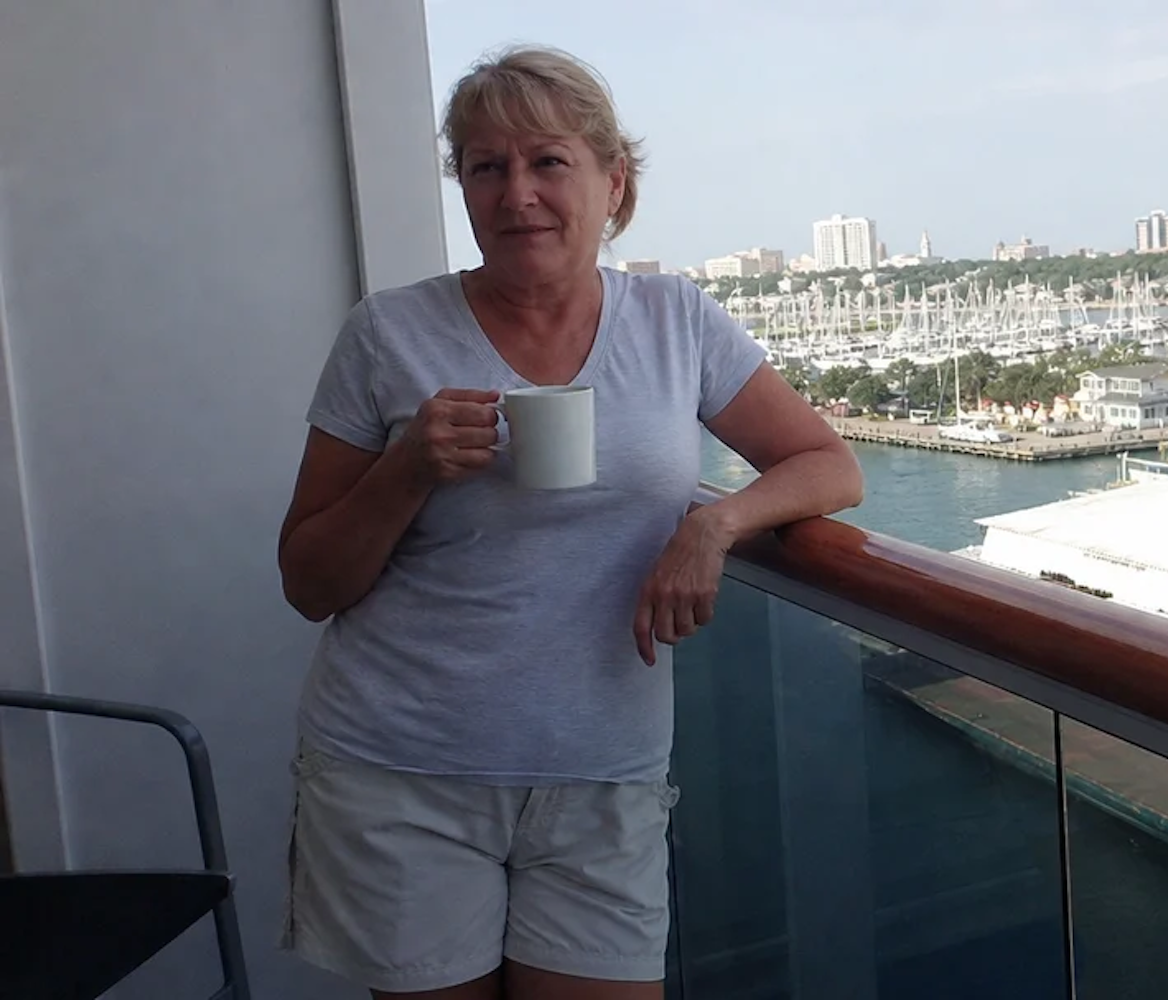
Ran for 7 days, from June 23 to June 29, 2026, the last day Crush saw it.
Run by Donna Miller on Facebook. Crush is not the advertiser and does not verify its claims. See this ad in Meta's Ad Library(opens in a new tab)
Want an ad like this for your product?
Crush makes new ad images for your product from this ad: your logo, your product photo, your offer.
Trials from $19.95 USD, then $79.95 USD a month. Cancel anytime.
About this ad
- Meta Ad Library ID
- 1541468760847380
- Platforms
- Facebook, Instagram, Messenger and Threads
- Relaunches
- 0
Ad text
Before my husband died, he made me promise one thing: that I wouldn't stop living. So when I booked the Mediterranean cruise he and I never got to take, his sister called me too fragile to sail alone. I went anyway. His scarf packed in my bag. David died on March 12th. Heart attack. He was 63. We'd been married 35 years. For the first month my phone wouldn't stop. Casseroles. Calls. People checking in. By month two it slowed. By month three it stopped. I'd see friends at the grocery store and they'd turn their carts around. Too sad to be near. My daughter Sophie called every Sunday. She'd ask if I was eating, sleeping, leaving the house. Like I was an invalid. One Sunday in July she said, "Mom, I really think you should move closer to us. You shouldn't be alone." "I'm fine, Sophie." "But what if something happens? What if you fall?" "I'm 58. I'm not falling." "Dad would want us to take care of you," she said quietly. What she meant was: Dad would want us to watch you, because you can't handle life alone. August. Five months after David died. I was cleaning out his desk and found a leather notebook in the bottom drawer. His handwriting. A list. *"Places to Go Before We're Too Old."* The Mediterranean was at the top. Underlined. Three times. *"The Amalfi Coast — C would love this." "Santorini at sunset." "Take the slow boats. Take our time."* We'd talked about it for years. *When I retire,* he'd say. *When we have time.* He was retiring that June. We'd already started looking at sailings. Then March 12th happened. And everyone assumed that was it. My traveling days, my adventure days, my life — over. I sat in his office holding that notebook and thought: he'd be so angry if I let them be right. August 10th, I booked the Mediterranean cruise. Seven nights. The ports he'd underlined. Sailing in September — six months and three days after he died. Then I called Sophie to tell her. She was quiet. "Mom, that's... Are you going alone?" "Yes." "Are you sure you're ready? You've never traveled internationally alone. Dad always handled all of that." "I can handle it." Two days later, David's sister Patricia called. Patricia had always been particular. Wealthy. Controlling. Married to a hedge fund manager, lived in Greenwich, carried designer bags and had opinions about everything. She'd never thought I was good enough for David. At his funeral she'd pulled me aside: *"You're going to need help, Catherine. David handled everything."* Now she was calling about the cruise. "Sophie told me about your trip." "Yes. I'm going." Long pause. "Catherine, I don't think that's wise. You've never traveled alone. David handled the logistics. The flights, the transfers, the embarkation. What if something goes wrong? What if you get lost in a port? What if there's an emergency at sea?" "Then I'll figure it out." "Catherine." Her voice firmed. "I've been thinking about this. I'm going to come with you. I'll book the same sailing. I'll supervise the trip. Make sure everything runs smoothly." "Patricia, I don't need—" "Of course you don't think you need help. But you DO. I promised David I'd look after you." "David never asked you to—" "He didn't have to. He's my brother. You're my responsibility now." She'd already decided. "I'm booking today. Don't worry about a thing. I'll handle the complicated parts." She hung up. I sat there furious. Five months alone — grieving, isolated, friends avoiding me, my children treating me like I might break. And now I was finally doing something for David, for myself, and Patricia was going to "supervise" me like I was incompetent. Three days later she emailed. Subject: *"Cruise Coordination."* She'd booked the same sailing. A suite, of course. *"I've arranged a porter at the terminal for our luggage. I know you're not used to managing this alone. I'll take care of everything."* At the bottom: *"P.S. — I'm bringing my Louis Vuitton set. You might want to invest in proper luggage for a cruise. Let me know if you need recommendations."* She was treating me like a child. Like David's death had erased 35 years of being a functional adult. That weekend there was a family dinner at Sophie's. Patricia was there, talking about "our cruise" all night. To Sophie: *"I'm so glad I'm going with her. She's not ready to travel alone yet."* To my son: *"Can you imagine Catherine navigating embarkation by herself?"* Talking about me like I wasn't there. Then she turned to me. "Catherine, what are you packing? Cruise lines have luggage limits, and the formal nights require real gowns." "I'll figure it out." "I'm bringing three bags. One for clothes, one for shoes and toiletries, one for my gowns and coats. You need to pack properly." I put down my fork. "I don't need three bags, Patricia." "Of course you do. Trust me." I didn't say anything else. After dinner Sophie pulled me aside. "Mom, I'm sorry about Aunt Patricia. She means well." "She thinks I'm helpless." "She's just worried." "She's treating me like a child." Sophie didn't argue. Because she knew it was true. Two weeks before the cruise, I went to my grief support group. Same community center I'd been going to every Thursday for four months. One of the women was named Margaret. 61. Lost her husband two years earlier. After the meeting we went for coffee. I told her everything. David. The cruise. The bucket list. Patricia inviting herself. Being treated like I couldn't handle a ship alone. Margaret listened. Then she said: "When did you lose yourself?" "What?" "When did you stop being Catherine and become 'David's widow who needs taking care of'?" I didn't know what to say. "Because that's what happens," she said. "Everyone treats you like you're made of glass. And if you're not careful, you start believing them. I took a trip by myself. To the place my husband always wanted to go. I came back alive again." "Margaret, I've never traveled alone. David handled everything." "You know how. You just haven't had to." Then her face hardened. "Is Patricia going with you?" "She's already booked the same sailing. A suite." "Don't let her take over your trip. This is your promise to David. Your journey. Not hers." "I don't know how to stop her." "You can't stop her from being on the ship. But you can control your experience. Don't wait for her. Don't accommodate her chaos. Move independently." She pulled out her phone. "This is going to sound small. But it matters. What are you packing?" "I don't know. A suitcase?" "How many?" "I hadn't thought about it." "Patricia's bringing three bags and a porter. You bring ONE. One bag you carry yourself. One bag that means you never have to wait for her, never coordinate with her, never depend on her." She showed me a photo. "This is a Luhxe. Convertible garment bag. I packed two weeks in this. Fits everything — formal nights, shore days, all of it. Goes straight to your cabin." "Why does that matter?" "Because when you walk up that gangway carrying one bag you manage yourself, you prove something. To her. To yourself. To everyone who's been treating you like you're fragile." She looked me in the eye. "Patricia thinks you're helpless. Your children think you need supervision. Prove them wrong. One bag. Walk onto that ship like you own it." I looked at the website that night. Margaret texted the next day. *"Did you order it?"* *"Not yet. Looking."* *"Order today. Limited runs. New batch just dropped. Once it sells out they pause until the fall. If you wait you'll miss it."* I looked again. Rose Pink. Charcoal Black. Snow White. I thought about Patricia's three Louis Vuitton bags. I chose Rose Pink. If I'm going to do this, I'm doing it in color. Margaret texted again. *"Good. Now — don't tell Patricia what you're packing. Pack smart and light. And when she asks where you got the bag after she sees how perfect it is, you can honestly say they're sold out. Paused until the fall."* I smiled at that. The bag arrived five days later. Rose Pink. Elegant. Smaller than Patricia's three-bag set, that's for sure. Seven nights. Mid-September. Two gowns for the formal nights. A wrap dress and a slip dress for the smart-casual evenings. A blazer. Linen and sundresses for the shore days. A light rain jacket. Walking shoes. Heeled sandals. Swimsuit. Toiletries. Medications. My journal. David's leather notebook with the list. And his scarf. The navy cashmere one. It still smelled like him. I held it for a long time. Then I folded it carefully and placed it in the inside zip pocket. Before anything else. Patricia's comment: *"You might want to invest in proper luggage."* THIS was proper luggage. The gowns into the garment compartment. Everything else compressed into the body of the bag. Shoes in the side pockets. When I zipped it closed I stood there looking at it. One bag. Everything I needed. No porter required. No three-bag chaos. No depending on anyone. David would have been so proud. September 15th. Morning of the sailing. Barcelona. Patricia texted at 6 AM: *"Porter's meeting me at the terminal. Do you need help with your bags?"* *"I'm fine. See you there."* I took a taxi to the cruise terminal. Saw Patricia immediately at the porter desk — three Louis Vuitton hard-shell cases, a porter beside her with a cart, and a problem already underway. "What do you mean two of them are over the cabin handling allowance?" "Ma'am, oversized cases incur a handling surcharge. One hundred and fifty dollars per bag." "That's absurd. I'm not leaving anything behind." She turned and saw me. "Catherine! Finally. This man is trying to charge me three hundred dollars for my own luggage." The porter looked at me. "Are you traveling together?" "No," I said. "Same sailing. I'm checking in separately." Patricia's mouth opened slightly. I walked to the gangway. "Just the one bag?" the crew member asked. "Just the one. Carry-on." Two minutes. "You're all set, Mrs. Harrison. Welcome aboard." I walked up the gangway. Behind me: *"Fine. Three hundred dollars. Fine."* I kept walking, David's notebook in my bag, his scarf folded beneath it. I was unpacked — gowns hanging in the garment compartment without a crease — and out on my balcony with a glass of cava before Patricia's cases ever reached her suite. She found me there an hour later. She'd come up to "check on me," she said. She stood in the doorway and looked at my cabin: the bag already empty and stowed, the gowns hanging, the balcony door open to the harbor. "You're already settled," she said. There was something off in her voice. Something she couldn't name yet. "I am." She looked at my one bag, collapsed flat in the wardrobe. "Where's the rest of your things?" "This is it." "Catherine. We're at sea for a week. There are two formal nights." "I know." She left without saying anything else. I heard her own door down the corridor, and then, muffled through the wall, the sound of three cases being unzipped and a long, frustrated exhale. I learned the next morning that Patricia's luggage had a problem. Two of her three cases had been pulled during the security screening of checked baggage — something about the lithium batteries in a travel steamer she'd packed, and a tangle over the surcharge tags. They'd been held. They would, she was told, be "delivered to the suite when cleared." Possibly that evening. Possibly not. By the first formal night, they hadn't come. I knew this because Patricia knocked on my door an hour before dinner, and for the first time since David died, she was asking me for something. "Do you have anything I could borrow? A wrap, a shawl, anything. My gowns are in the cases they're holding. I have nothing for tonight but what I traveled in." I looked at her. The woman who'd sent me a packing guide. Who'd offered to manage my luggage. Who'd told a dinner table I couldn't navigate embarkation alone. Standing in my doorway in her travel clothes, asking the fragile widow for something to wear. "I packed light, Patricia," I said. Not unkindly. "I don't have anything spare." "Of course you didn't." She said it sharply, then caught herself. "No. Of course. You couldn't have." She wore her travel slacks and a creased blouse to the first formal night. At a table full of gowns. I wore the black gown, straight from the garment compartment. Not a wrinkle in it. It looked pressed. The contrast was not subtle. And it was not lost on her. The woman seated beside me at dinner leaned over before the first course had cleared. Elegant, fortyish, the practiced eye of someone who looks at beautiful things for a living. "Forgive me," she said. "Is that a Luhxe? On your chair?" "It is." She set her fork down entirely. "I'm a travel editor — I write a column, about four hundred thousand people read it — and I have been trying to source one of these for the better part of a year. The waitlist is the stuff of legend." She looked at the bag the way you look at something you've only seen in photographs. "You sailed with just that? A week, two formal nights?" "Everything's in it. Both gowns. The lot." "How?" She laughed. "I packed two cases and I'm already missing things." I showed her — the garment compartment, the compression section, the way the second gown still hung flawless and ready. She actually put her hand to her chest. "May I photograph it? My readers will lose their minds. They ask about this bag every single week and I never have an answer for them." She took several. Posted one between courses. Within the hour her phone was lighting up on the table beside her. "Look at this," she said, turning it to me. "Two hundred comments. Everyone wants to know where you got it." She shook her head. "You have wonderful taste. Whoever told you about this did you the great favor of your life." Patricia was three seats down, in her travel blouse, smoothing a sleeve that didn't need smoothing. She watched the whole thing. The photograph. The phone lighting up. The editor leaning toward me, delighted. She didn't say a word for the rest of dinner. Patricia's cases were finally delivered to her suite on the third day. By then the damage was done — two days in borrowed and improvised clothes, a designer wardrobe arriving creased and crushed from being packed too long under their own weight and held in a hot storage room. Her gowns came out looking slept-in. She spent an hour each evening at the ship's laundry desk after that, and the laundry desk could only do so much. While she managed that, I followed David's notebook. In Naples, the group did the air-conditioned coach tour. I climbed alone to the viewpoint he'd starred above the bay, his navy scarf around my shoulders against the wind off the water. I took out his notebook and read his note in his own hand — *"the whole bay at once, C — we have to see this"* — and I saw it. For both of us. I came back to the ship that evening windblown and alive. Patricia was at the laundry desk. In Santorini, the group queued for the cable car, Patricia among them, complaining about the heat and the crowds. I took the old path down toward the water and back, in the walking shoes I'd chosen myself, and I found the spot where he'd written *"sunset here."* I stood in it as the light went down over the caldera, his scarf at my shoulders, his notebook open in my hands. I wasn't lonely. He was there. In the only way left, he was there. The Amalfi tender was the fourth day. Patricia stayed aboard. "All those steps," she said. "It's too much." The steps were the whole point — the cobblestones, the stairs cut into the cliff straight down to the water. I went. One crossbody bag, a sundress, my walking shoes. I was at the bottom with a limoncello before half the group had managed the first landing. Every evening I came back to my cabin salt-stained and steady, more myself than I'd been since the twelfth of March. And every evening Patricia looked at me a little longer, a little differently, as though she were revising something she'd believed her whole life and didn't have language for yet. The last evening aboard. I wore the second gown. Straight from the garment compartment, where it had hung untouched and uncreased for seven days. Not a mark on it. And around my shoulders, David's navy scarf — because it was the last night, and I wanted him at the table. Patricia wore a gown the ship's laundry had done its best with. The body had fallen out under the iron; the collar hadn't. She'd pinned a brooch to draw the eye away from it and it didn't quite work. I was at the bar before dinner when a man stopped beside me, looking at the bag at my feet. "I have to ask," he said. "That bag. I've cruised most of my life — I write about it, actually, have for years — and I have never seen one hold a formal wardrobe for a week and still look like that at the end of it. What is it?" "It's called Luhxe." "Luhxe." He repeated it slowly, committing it to memory. "Do you know how many women I watch board a ship with three cases and arrive at the first formal night having destroyed everything in transit? Every single sailing." He looked at the scarf at my shoulders, then back at the bag. "You've solved a problem I've been complaining about in print for a decade. Where on earth does a person get one?" The editor from the first night had drifted over by now, drawn by the conversation. "Don't bother," she told him, laughing. "I've been trying for a year. She's one of maybe a handful of people I've ever met who actually has one." A second woman, at the end of the bar, turned at that. "I'm sorry — are you talking about the bag in her chair? I saw your post," she said to the editor. "I've been on the waitlist since the spring." She looked at me almost pleadingly. "How did you get it? And how much did you pack? Be honest." "Seven nights," I said. "Both gowns. Everything I needed." "A week. In that." She shook her head. "I'm doing a whole post about this when I get home." And here is the image I carry from that night. I was standing at the center of it — the editor on one side, the writer beside me, a third woman leaning in, all of them turned toward me and the bag and the scarf at my shoulders, all of them asking the fragile widow how she did it. And at the edge of the group, in a creased gown the laundry couldn't save, with a brooch pinned over the worst of it, stood Patricia. The woman who'd sent me a packing guide. Who'd offered to manage my luggage. Who'd told a dinner table I couldn't navigate embarkation alone. She wasn't at the center of the room she'd appointed herself to run. She was at the edge of it, watching. And I wasn't trying to put her there. That was the thing. I wasn't performing for her at all. I was simply, finally, myself — and being myself had turned out to be enough to fill a room. She found me later at the rail, the dark water moving past below us. She had a glass of wine she didn't drink. We stood in silence for a while. "You really didn't need me on this trip," she said finally. "No," I said. "I didn't." "I thought you'd fall apart without David. Without someone to handle things for you." She turned the glass in her hands. "I've spent thirty-five years thinking he carried you. I think I had it backwards." I didn't say anything. The scarf moved a little in the wind off the water. She looked at it. "That's his, isn't it. The scarf." "It is." She was quiet for a moment. "He'd have loved this. The whole thing. He'd have been so—" Her voice caught, just slightly, and she stopped. "He starred Santorini," I said. "Sunset there. I saw it for him." She nodded slowly. She didn't trust herself to speak for a moment. Then, more quietly than I'd ever heard her: "Where did you get the bag, Catherine?" "Why?" "Because it clearly worked better than my system. Because I've paid three hundred dollars in surcharges and ruined two gowns and spent two days in borrowed clothes, and you walked aboard with one bag and you've looked like that all week." A pause. "Because I was wrong. About the bag. About the trip. About you." "It's called Luhxe," I said. "But they've paused production. That batch is gone. They restock in the fall — and the price goes up twenty-five percent when it comes back." "Of course it does," she said. And then, looking out at the water rather than at me: "David would be proud of you." That was the closest she would ever come. It was enough. We disembarked in Barcelona. Patricia's three cases were surcharged again — another three hundred dollars — and one had lost a wheel somewhere in the hold. She had it wrapped in plastic for the flight home and didn't say much about it. I walked off that ship the way I'd walked on. One bag. Over my shoulder. No porter. No help I hadn't asked for. David's scarf around my neck. Sophie met me at arrivals. "Mom. You look amazing." "I feel amazing." "Aunt Patricia texted me," Sophie said. "She said you 'had it more together than any of us expected.' That's the nicest thing she's said about anyone in twenty years." When I got home, Margaret called. "How was it?" "Perfect. Hard. Terrifying. Perfect." "And Patricia?" "Her cases got held for two days. She spent the first formal night in her travel clothes asking to borrow a wrap. She watched a travel editor photograph my bag for four hundred thousand readers. And on the last night, at the rail, she told me she'd had it backwards for thirty-five years." Margaret was quiet a moment. "And the scarf?" "At my shoulders the whole last night. At every port he starred. He saw all of it, Margaret. I made sure of it." "He did," she said softly. "I know he did." Here's what I learned. Patricia thought I needed supervision. That grief had made me fragile. That I couldn't manage a week at sea without David to handle the logistics. For five months after he died, everyone treated me the same way. Friends turned their carts around in the grocery store. My children asked if I'd fallen. The phone calls stopped. I stopped being Catherine and became "David's widow, who needs looking after." When I decided to keep the promise he made me make — that I wouldn't stop living — Patricia invited herself along to supervise. She arrived with three designer cases, a porter, and the certainty that she'd have to manage everything for me. Her cases got held for two days. Her gowns came out ruined. She spent the trip stage-managing chaos and standing at the edge of rooms. I followed my husband's list, port by port, his scarf around my shoulders, and I was at the center of every one of them without ever trying to be. The bag didn't give me courage. But it proved I had it. It proved I didn't need Patricia's supervision. It proved I didn't need David to handle the logistics. It proved I could navigate a foreign port, a formal night, a ship, and a grief the size of thirty-five years — entirely on my own. And Patricia watched the whole thing. She came aboard to supervise me. She walked off knowing she'd been wrong about me for as long as she'd known me. Margaret says her whole grief group is trying to order before Luhxe pauses for the season. Once this batch is gone, it's gone until the fall — and the price jumps twenty-five percent when it comes back. If someone in your life has decided you're fragile — If they've mistaken your grief for helplessness — If they think your life ended when his did, and they've appointed themselves to manage what's left — You need this bag. Not because it's beautiful. Though it is. But because walking up a gangway with one perfect bag, while the woman who pitied you drags three cases and pays surcharges at every port and stands at the edge of the room in a ruined gown — that proves a point without your ever having to say a word. It proves you're capable. It proves you never needed their help. It proves you were always so much more than the version of you they decided to believe in. David made me promise I wouldn't stop living. Keeping that promise meant proving — to Patricia, to my children, to myself — that I could live, and sail, and grieve, and arrive, entirely on my own terms. The Luhxe didn't make me independent. It let me prove I always had been. One bag. One cruise. One sister-in-law who came to supervise a fragile widow and met a woman who never needed supervising at all. Patricia asked where I got it. I told her they were sold out. She's waiting until the fall. I'm already planning the next one. His list isn't finished — and neither am I. Your move.
Where the ad sends people
luhxe.com
Offer Ends Tonight
Our Travel Bags are made out of super high-fiber PU leather. This is a form of vegan leather that is both sustainable and climate friendly.
Shop now: luhxe.com(opens in a new tab)