Sarah Mitchell
Sarah Mitchell Facebook ad: “I Spent 22 Years Building What Was Wre”
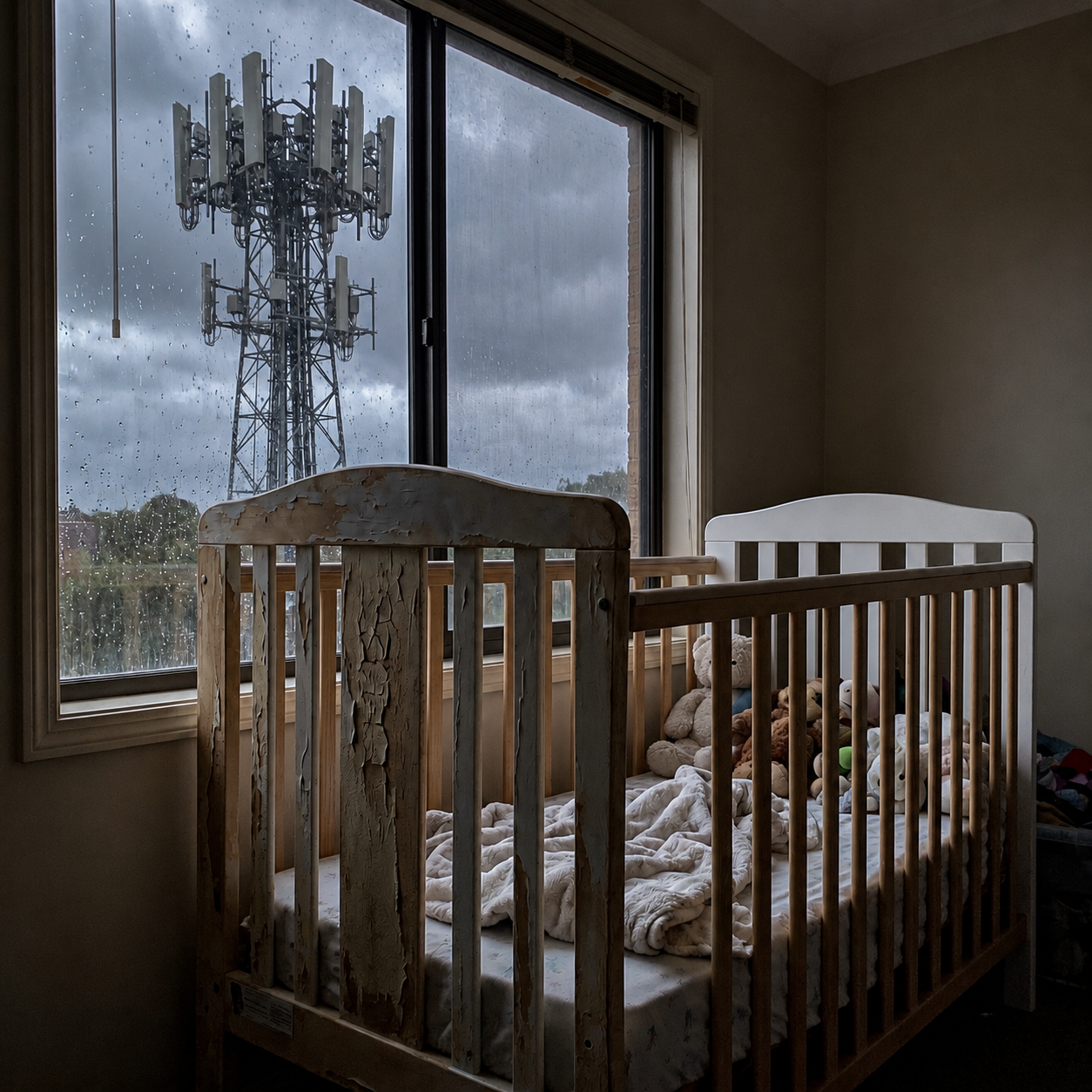
Ran for 27 days, from August 12 to September 8, 2026, the last day Crush saw it.
Run by Sarah Mitchell on Facebook. Crush is not the advertiser and does not verify its claims. See this ad in Meta's Ad Library(opens in a new tab)
Want an ad like this for your product?
Crush makes new ad images for your product from this ad: your logo, your product photo, your offer.
Trials from $19.95 USD, then $79.95 USD a month. Cancel anytime.
About this ad
- Meta Ad Library ID
- 1541647480578435
- Platforms
- Facebook, Instagram, Audience Network, Messenger and Threads
- Relaunches
- 0
Ad text
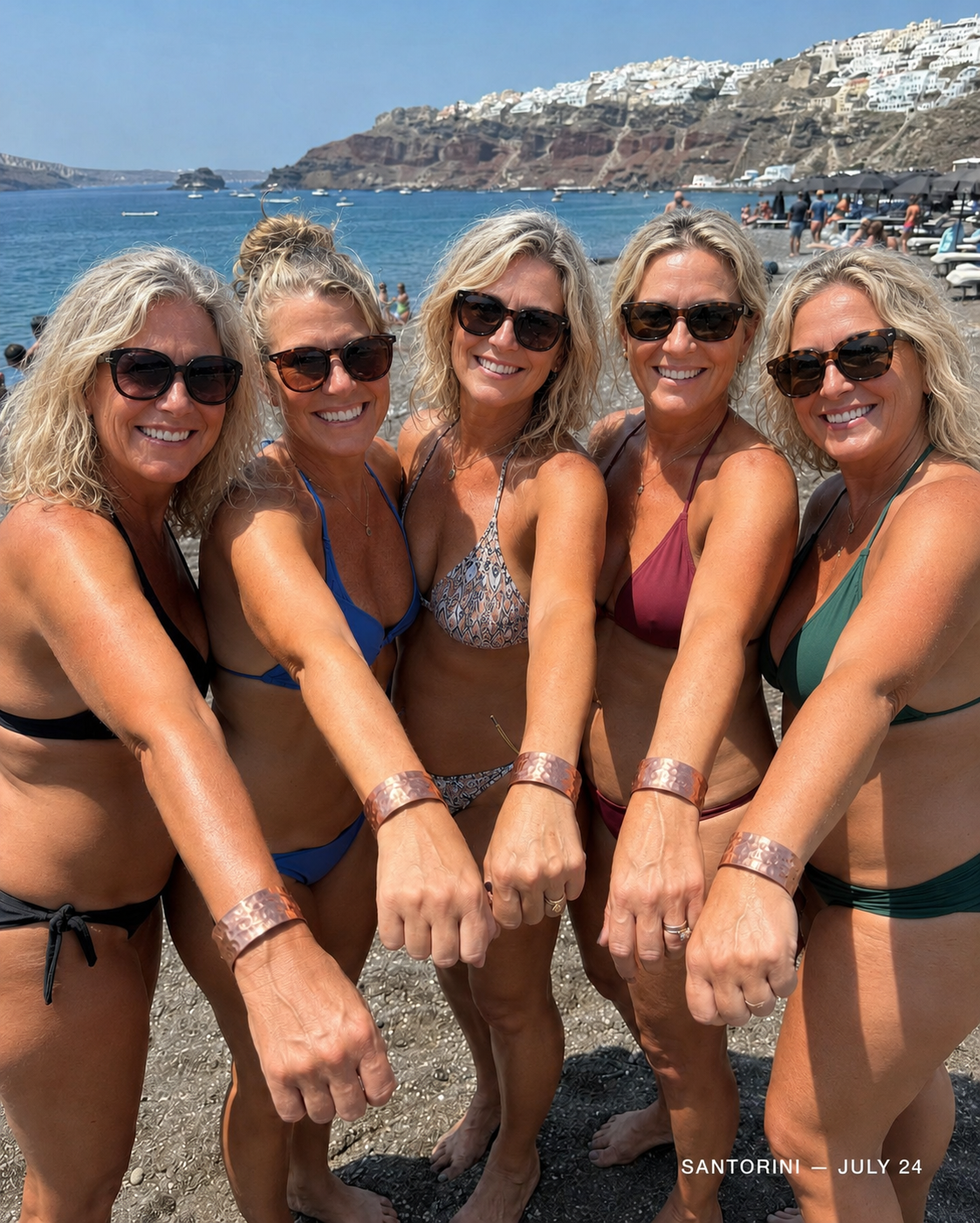
I've built cell towers for 22 years. Nine months ago I came home, tore every pipe and fitting out of my own walls, and put my wife in a copper bracelet I won't let her take off. Let me start from the beginning. My wife is 54. Three years ago she started struggling in ways neither of us could explain. Stiff hands every morning. Wiped out by two in the afternoon. A fog so thick she'd walk into a room and forget why she came in. Awake at 3am, heart pounding, staring at the ceiling till dawn. Her doctor said menopause. Here's your HRT. It's just your age. So she did everything right. HRT. Magnesium, collagen, vitamin D, omega-3, the whole cabinet. Mediterranean diet. Cut out wine. And she still didn't feel like herself. And I kept thinking — my mother went through menopause. My grandmother did. They had their own struggles, but something about modern life felt different. Something changed. I just didn't know what. Then one night on a job site, I'm standing under a tower I'd just finished. Brand new array, humming away. And a question hit me that I haven't been able to put down since. What is actually different now? What do we live around today that no human being before us ever did? It's not the food. She eats better than her mother ever did. It's not the medicine. She has more options than any generation before her. It's the environment. The invisible things surrounding us every day. Signals. Devices. Electronics. The technology pouring out of the steel I bolt together for a living. I'm not going to pretend I have proof it's hurting anyone. I don't. But I'll tell you this much, as the man who builds the things — her struggles seemed to become more noticeable during the same years our town was changing around us. I told myself it was coincidence. I couldn't stop thinking about it. So I started reading. And what I found wasn't some conspiracy forum. It was history. A hundred years ago, copper was everywhere in the home. Copper pipes carrying water. Copper pots. Copper fittings. Copper wire running through walls. People lived around copper every day and never thought about it once. And here's the part that stopped me cold, because it's literally my trade. Copper has well-established electrical and electromagnetic properties, and it's widely used in engineering applications involving shielding. We line rooms with conductive materials. Specialized enclosures can be designed to reduce electromagnetic interference. Copper mesh can be used in shielding applications. That's not folklore. That's engineering. I've stood inside copper-shielded rooms. It's the metal you reach for when you need a conductive material for a specific engineering purpose. But here's where I had to separate engineering from assumption. The fact that copper can be used for shielding does **not** mean a copper bracelet shields the body from cell towers or everyday wireless signals. Those are two completely different things. Still, the history made me curious. Copper isn't just an engineering material, either. People have used copper objects and copper jewelry for thousands of years. Different cultures incorporated copper into everyday life, tools, cookware and personal adornment. And somewhere along the way, copper jewelry became something many people barely thought about. Then we modernized. Plastic pipe. PEX. Stainless. Aluminum. Synthetic materials everywhere. Copper didn't disappear, but it certainly became less visible in everyday life. And nobody once stopped to ask me why I found that interesting. Copper has also been part of traditional practices in different cultures for generations. People have worn copper jewelry for a very long time. Some people still choose copper jewelry today because they like its appearance, its history, or simply the experience of wearing it. I'm an engineer. I don't believe in ignoring an interesting pattern just because I don't have an answer for it. So I did the only thing a practical man could do. I put the copper back. I didn't even tell my wife my theory — she'd have laughed at me. I just bought her a thick copper cuff and asked her to wear it and see how she liked it. Week one, nothing dramatic. Maybe she slept a little better. Week two, she told me the bracelet was comfortable and that she liked having it on. Week three — and this is the week I started paying closer attention — she came downstairs and said she felt like her mornings had been a little easier lately. The foggy feeling she'd been complaining about didn't seem as noticeable to her that morning. Could I prove the bracelet caused that? No. And I'm not going to pretend I can. She was also continuing the other things she'd already been doing. Her treatment. Her diet. Her supplements. Her routines. There were too many variables for me to honestly point at one bracelet and say, "That's the reason." She took it off once and left it on the bathroom sink for two days. When she put it back on, she said she preferred having it there. That was enough for me to keep wearing it. Nine months later, it hasn't left her wrist. I'm not going to make you a promise in a lab coat. I'll tell you only what I watched with my own eyes, in my own house, happen alongside everything else my wife was doing. Make of that what you want. I know what I made of it. Now here's what made me angry. Because the second I'd decided I wanted copper jewelry for every person I love, I realized how difficult it could be to know exactly what you were buying. Some pieces are plated. Some are alloys. Some product listings aren't very clear about what's underneath the surface. And if you're specifically looking for copper, shouldn't you know exactly what you're buying? The test is dead simple, and as a guy who works metal all day, it's one of the first things I look at. Copper itself isn't magnetic. Hold a magnet to a piece that's advertised as solid copper. If it shows strong magnetic attraction, that's a reason to question the material. It's not a complete laboratory test, but it's a simple first check anyone can do at home. So I went hunting for the real thing. And I found Alorin. The pieces are described as 99.9% pure copper. That mattered to me. Not because I was looking for some miracle. Because I wanted to know what I was actually buying. I wanted clear material information. I wanted copper rather than something merely copper-colored. And I wanted a piece that I could actually inspect for myself. So I ordered one. When it arrived, I did what I'd wanted to do from the beginning. I put a magnet against it. Nothing. I put it on. And I liked knowing exactly what I had bought. Try getting that kind of certainty from a product listing that won't even tell you what's underneath the coating. I'll keep building the towers. It's my trade, and the world isn't going backward. There will be more technology. More devices. More wireless signals. That's simply the world we live in. But every house I sleep in now has a little more copper back in it. On my wife's wrist. On mine. On my daughter's. Not because I believe copper can solve every problem. Because I like the material. I like the history. And I like knowing exactly what I'm putting on my skin. We spend so much time replacing old things with new ones that sometimes it's worth looking back at the materials we've been using for thousands of years. I just decided to put a little copper back into my life. You can decide for yourself. 👉 https://alorin.co/collections/copper-jewelry
Where the ad sends people
alorin.co
I Spent 22 Years Building What Was Wre
Alorin
See details: alorin.co(opens in a new tab)