DailyHealth
DailyHealth Facebook ad: “Barefoot Had the Right Idea”
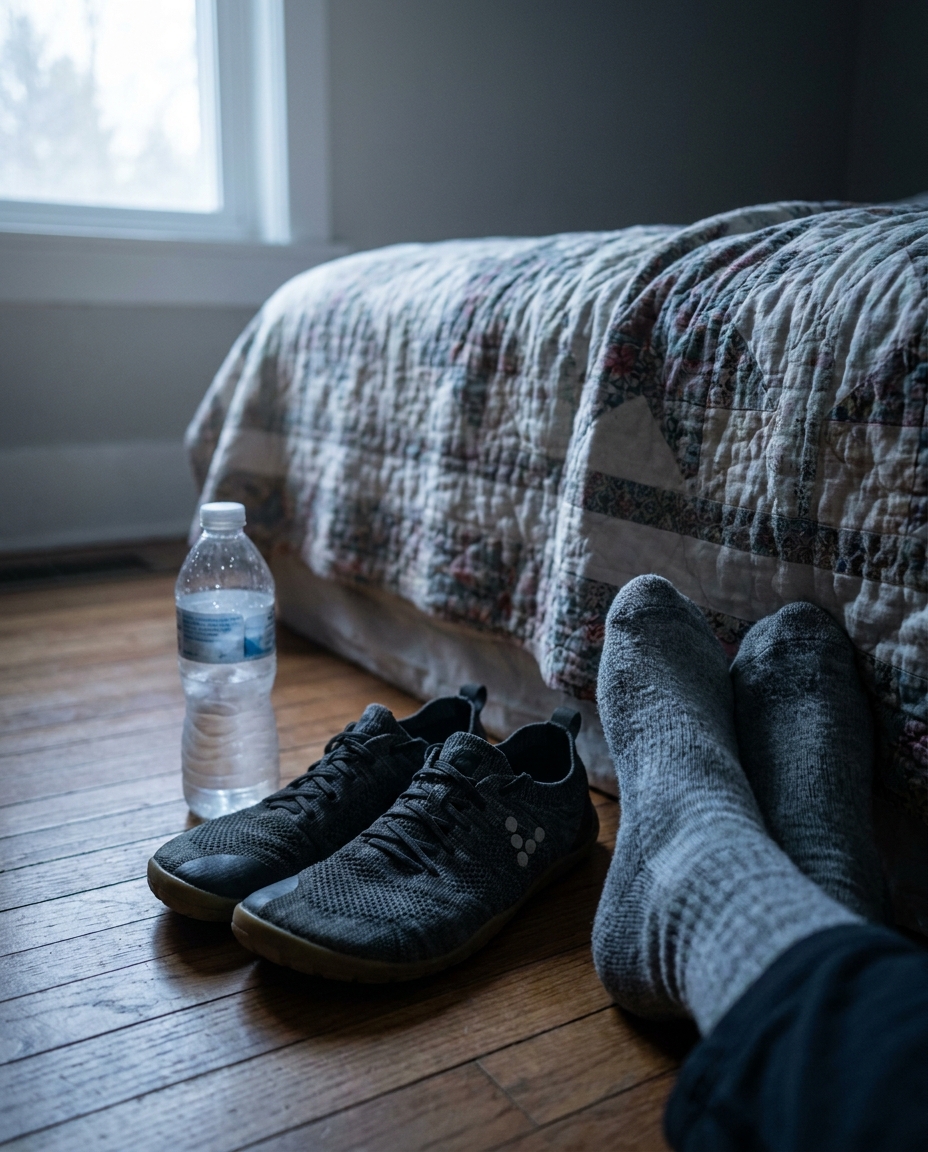
Ran for 28 days, from July 1 to July 29, 2026, the last day Crush saw it.
Run by DailyHealth on Facebook. Crush is not the advertiser and does not verify its claims. See this ad in Meta's Ad Library(opens in a new tab)
Want an ad like this for your product?
Crush makes new ad images for your product from this ad: your logo, your product photo, your offer.
Trials from $19.95 USD, then $79.95 USD a month. Cancel anytime.
About this ad
- Meta Ad Library ID
- 1543743700540695
- Platforms
- Facebook, Instagram, Audience Network, Messenger and Threads
- Relaunches
- 0
- Niche
- Fashion & Apparel
Ad text
Barefoot shoes had the right idea. For a lot of us, they had the wrong dose. If you have ever pulled on a pair of barefoot or minimalist shoes, walked around for a week feeling like you finally cracked the code, and then woken up with a sore arch, a tight calf, or a brand new ache in your heel, this is for you. You did not do anything wrong. You went from one extreme to the other, overnight, on feet that were not ready for it. Here is the part nobody selling barefoot shoes likes to say out loud. The theory is good. The execution, for most people, is brutal. First, why the theory is actually right, because that part matters. Your foot is not a passive block that needs to be propped up. It is a structure of 26 bones, 33 joints, and more than 100 muscles, tendons and ligaments, and it is built to bend, splay, grip and flex. Those small muscles inside your foot are meant to do real work on every step. They hold your arch up from the inside. They absorb shock. They keep you balanced. Modern shoes turn most of that off. Thick foam does the cushioning so your foot does not have to. A stiff sole does the bending so your foot does not have to. A narrow toe box squeezes your toes together so they can never splay and grip. Do that for twenty or thirty years and the muscles that are supposed to carry the load slowly go quiet. They get weak. They stop showing up for work. That is the real insight behind the barefoot movement. Wake the foot back up. Let it move. Let it work. On that, they are completely correct. The problem is the dose. Going straight from a cushioned, supportive, narrow shoe into a zero-drop, zero-cushion, zero-support shoe is like signing up for a marathon after twenty years on the couch and running it tomorrow with no training. The foot that has been asleep for decades is suddenly asked to do all of the work, all at once, on the hardest surfaces in your life. Concrete. Tile. Asphalt. Ten-hour days on your feet. So what happens? The fascia on the bottom of your foot gets overloaded because the weak muscles cannot share the load yet. The calf and achilles get strained because the heel drop they were used to is gone. People who switched to feel better end up with plantar fasciitis, heel pain, or a stress ache they never had before. Then they read the fine print, which says to transition slowly, and they are left to figure out what slowly even means while their feet hurt. There is a second problem the purists skip over. We do not live barefoot. We live on concrete. Pure minimalist shoes give your foot the freedom to move, which is great, and almost no protection from a world made of hard, flat, unforgiving surfaces, which is not. For a barefoot walk on grass, that is wonderful. For a day on a warehouse floor or a city sidewalk, no protection is its own kind of slow damage. So you are stuck choosing between two bad options. Cushioned, supportive shoes that keep your foot weak and dependent. Or barefoot shoes that wake the foot up so fast they hurt you, with no protection for the ground you actually walk on. This is the gap [vrsn] was built to fill. We did not start with a trend. We started with a simple question. What does a foot actually need to get strong again without getting hurt, in a real life made of concrete? The answer turned out to be a middle path. Enough room to move. Enough flex to work. Enough protection to survive the ground. Here is what that looks like on your foot. A wide, foot-shaped toe box. Your toes are supposed to be the widest part of your foot, not the narrowest. Most shoes get this backwards and taper to a point. [vrsn] gives your toes room to spread out and grip the ground, the way they would barefoot. For a lot of people, the first time they put these on is the first time their toes have had room to splay in any shoe in years. A flexible knit upper. It conforms to your foot and moves with it instead of locking your midfoot in place. Your foot is allowed to do its job. A responsive, flexible sole. This is the part that lets the small muscles in your arch fire on every step, gently and consistently, just from normal walking. You are not doing a foot workout. You are walking to the car, standing in the kitchen, running errands, and your foot is quietly getting stronger in the background. And the part the purists leave out: enough foam to protect you. A dual-density midsole absorbs the punishment of hard surfaces so you can rebuild your foot without paying for it the next morning. You get the barefoot benefits without the gravel. That is the whole idea. Progressive support, not zero support and not lockdown. A shoe that asks your foot to work, then protects it while it does. I will be straight with you, because the barefoot world is full of overpromises and you have probably heard them all. This is not an instant fix. It is a rebuild, and rebuilds take time. Your foot did not get weak in a week and it will not get strong in a week. What most people report is that within the first few weeks the daily aches start to ease, and that they keep improving from there as the foot gets stronger underneath them. Some people feel it faster. Some take longer. Results vary, and anyone who promises you a miracle in three days is selling you something. If you are coming off heavy orthotics or very cushioned shoes, ease in. Wear them for part of the day at first, a short walk here, an errand there, and let your foot build back at its own pace. The goal is not to punish your feet into submission. It is to stop doing the one thing that keeps them weak, which is never asking anything of them, while still giving them a soft landing. A few questions we get all the time. Is this actually a barefoot shoe? It is barefoot benefits with protection. You get the wide toe box, the flexibility and the ground feel that let your foot work, plus a sole that protects you on hard surfaces. If you want zero cushioning and a paper-thin sole, this is not that, on purpose. Will it look strange? No. This is one of the biggest reasons people choose [vrsn] over true minimalist shoes. It looks like a clean, normal sneaker, not a foot-shaped novelty. It comes in colorways you can wear with anything, to work, to dinner, on a trip. What if I have flat feet, or high arches, or wide feet? The wide toe box and flexible sole work with your foot instead of forcing it into a mold. People across very different foot shapes report the same thing, which is that their feet finally have room to do what they are built to do. What if I tried barefoot shoes before and got hurt? Then you are exactly who this is for. The injury usually comes from too much, too soon, with no protection. The middle path is the answer to that, not another dose of the extreme that hurt you. There is a cost to narrow shoes that goes beyond comfort, and it is worth naming because it is probably part of why your feet hurt now. When your toes are squeezed together for years, the foot slowly deforms to match the shoe instead of the shoe matching the foot. That is where a lot of bunions come from. It is where hammertoes come from. It is where that burning in the ball of the foot, a neuroma, often starts. None of these come from walking too much. They come from walking too much in a shoe shaped like a triangle when your foot is shaped like a foot. A wide, foot-shaped toe box is not a luxury feature. For a lot of people it is the first time in decades the foot has been allowed to sit in its natural shape, and the relief of that alone is something they notice on day one. So you are not guessing, here is what the first month tends to look like. Week one. The toe room feels strange and good at the same time. Your feet have space they are not used to. If you came from heavy support, you may feel your arch and calves working a little more by the end of the day. That is the point, and it is a good sign, not a problem. Keep the days short at first. Weeks two and three. The new muscle work starts to feel normal. This is usually when people report that the daily ache they had written off as just getting older starts to quiet down. You are not babying the foot anymore and it is responding. Week four and beyond. For most people this is where it stops being a project and just becomes their shoe. The foot is carrying more of its own load, the flares are rarer, and you are walking on hard ground without bracing for the aftermath. A word on surfaces, because this is where pure minimalist shoes lose people. Concrete does not care about your foot journey. Tile, asphalt and warehouse floors are flat, hard and relentless. The thin sole that feels fine on a grassy trail becomes a hammer on those surfaces. [vrsn] keeps enough foam under you that hard ground stays comfortable, so you can do the rebuild in your actual life, not just on a nature walk. To be fair, this is not for everyone. If you want maximum plush cushioning and have no interest in your foot doing any work, there are softer shoes out there, and they will feel great for a few months before the cycle starts again. If you want a paper-thin minimalist sole with zero protection, this is intentionally not that either. [vrsn] is for the person in the middle who wants stronger feet and still wants to be protected enough to live a normal, hard-surfaced life. What people tell us, again and again, is some version of the same thing. They did not expect a shoe to make this much difference. They expected to choose, one more time, between feet that are comfortable and feet that are getting stronger, and they were surprised they did not have to. Here is what you get when you order today. A free pain-relief insole with every order, so you can dial in the level of support while your foot adjusts. Free shipping. And a 100-day guarantee, which means you can wear them through real life, real shifts, real walks, for more than three months, and if your feet do not feel the difference, send them back for a full refund. No risk to you. The risk is on us, because we have seen what happens when people give their feet a real chance. [vrsn] is podiatrist-approved and worn by more than 50,000 people, from nurses on twelve-hour shifts to travelers on cobblestone streets to people who just wanted to walk their neighborhood without their feet talking back. Barefoot had the right idea. We kept the idea and fixed the dose. Give your feet room to move, and a floor that does not punish them for it. Try [vrsn] for 100 days and feel the difference for yourself.
Where the ad sends people
vrsn.co
Barefoot Had the Right Idea
Room to Move, Built to Protect
Learn more: get.vrsn.co(opens in a new tab)