Tyler Walker
Tyler Walker Facebook ad: “Type 2 Diabetics: This Could Save Your Life”
Ran for 4 days, from June 26 to June 29, 2026, the last day Crush saw it.
Run by Tyler Walker on Facebook. Crush is not the advertiser and does not verify its claims. See this ad in Meta's Ad Library(opens in a new tab)
Want an ad like this for your product?
Crush makes new ad images for your product from this ad: your logo, your product photo, your offer.
Trials from $19.95 USD, then $79.95 USD a month. Cancel anytime.
About this ad
- Meta Ad Library ID
- 1545154487279853
- Platforms
- Facebook, Instagram, Audience Network, Messenger and Threads
- Relaunches
- 1
Ad text
I almost had a heart attack on a Mediterranean cruise. The ship's doctor was from Austria. She asked me ONE question that made my American doctor look 15 years behind. ⠀ I'm 64 years old. ⠀ My wife and I had been saving for this trip for almost three years. Mediterranean cruise. Two weeks. Greece, Italy, Spain. ⠀ We'd talked about this trip since the kids were in college. The kind of trip you plan in your forties for your sixties. The reason you keep showing up to a job you stopped loving years ago. ⠀ Day four, we're walking up the hills of Santorini toward Oia for sunset. ⠀ You've seen the pictures. White buildings cascading down the cliff face. Blue domes. The Aegean spread out below. Cobblestones underfoot worn smooth by a thousand years of feet. ⠀ The kind of place you put on a wall when you finally get home. ⠀ My wife was walking ahead of me. She had her phone out taking pictures. Laughing at something a vendor had said in broken English. ⠀ I was about thirty feet behind her. ⠀ I'd noticed the climbing starting to get to me about halfway up. My heart was pounding hard. Not just the regular hard you'd expect on a hill. The deep pounding that I'd been feeling at home for the last six months walking up the stairs to our bedroom. ⠀ I'd been telling myself it was just getting older. Just being out of shape from a winter of sitting at a desk. ⠀ I'd been telling my wife the same thing. ⠀ I stopped on the cobblestones to catch my breath. Put my hand on a stone wall. Tried to slow my breathing. ⠀ It didn't slow. ⠀ The pounding got worse. My chest started to feel tight, not painful exactly, but like someone was pressing a hand against my sternum. I started to sweat through my shirt. I felt the blood drain out of my face. ⠀ I sat down on the wall. ⠀ I tried to call out to my wife but my voice wouldn't come. ⠀ Tourists kept walking around me. Stepping over my feet. Taking pictures of the view behind me. ⠀ I sat there with my hand on my chest thinking about my father. ⠀ My father died of a heart attack at 72. He was sitting at his kitchen table on a Sunday morning reading the sports section. He just slumped forward. ⠀ I was 39 when that happened. ⠀ And here I was, 64 years old, on a Greek cobblestone wall five thousand miles from home, doing the same thing. ⠀ My wife turned around. ⠀ I will never forget her face. She'd been laughing one second. The next second she dropped her phone on the cobblestones and ran back to me. ⠀ "Robert. Robert what's happening." ⠀ I couldn't speak. ⠀ She grabbed my arm. Yelled for someone to help. A Greek man in his sixties from a nearby taverna came running with a chair. They got me into the chair. Somebody brought water. ⠀ The taverna owner called for a vehicle. We're on Santorini. There aren't ambulances racing through those streets. They had a small cart that could navigate the cobblestones. They got me onto it and drove us down to the port. ⠀ My wife held my hand the whole way down. She didn't say anything. Just held my hand and looked at me with the face I had been seeing in nightmares for twenty-five years since my father died. ⠀ We got onto the tender boat back to the ship. She kept her hand on my chest the whole way across the water. ⠀ I told her I was okay. ⠀ I wasn't. ⠀ ⠀ The ship's doctor was waiting for us when we got on board. Someone had radioed ahead. ⠀ Her name was Dr. Brunner. Austrian accent. White hair cut short. Maybe early sixties. ⠀ She had me lie down on the exam table in the medical center on Deck 3. Hooked me up to a monitor. Took my blood pressure twice. Frowned at the reading. Drew blood. Ran a finger-prick glucose. Looked at the numbers. ⠀ "You did not have a heart attack today," she said. "But you came close." ⠀ I was lying there with my wife sitting next to me holding my hand. I just looked at the ceiling. ⠀ "Your blood pressure is 178 over 104. Your pulse is irregular. Your blood sugar is 264. You are diabetic, yes?" ⠀ "Type 2. Thirteen years. I'm on Metformin." ⠀ "How long has your American doctor been calling your A1C managed?" ⠀ The question hit me sideways. ⠀ I said something about how my A1C had been between 6.6 and 7.1 for years and my doctor always said it was fine. He'd been talking about adding Ozempic at my last appointment. ⠀ Dr. Brunner looked at me for a moment. Then she set down her stethoscope. ⠀ "How long has your American doctor been telling you your A1C is managed while your blood pressure has been climbing?" ⠀ I tried to answer. Couldn't. ⠀ Because the answer was years. My BP had been creeping up at every annual for at least five years. My doctor kept saying we'd watch it. Maybe add a blood pressure medication next year if it didn't come down. ⠀ It never came down. ⠀ "I want to tell you something I have spent the last two years quietly frustrated about," she said. "I trained in Austria. I practiced for almost twenty years in Vienna before I took this ship contract. And what I see when I see American diabetic patients is the same thing every time." ⠀ She pulled up a chair. ⠀ "American diabetic patients come to me on cruise ships from all over the country. Different states. Different insurance plans. Different doctors. And every single one of them tells me the same story. Their A1C is well-controlled. Their doctor has been monitoring them for years. They are doing everything they were told." ⠀ "And every single one of them is sitting in front of me with their feet tingling, their kidneys leaking protein, their blood pressure climbing, and their hearts straining to move blood through vessels that have been damaged for a decade." ⠀ "The American healthcare system has decided that monitoring a diabetic patient is the same thing as treating one. It is not. Monitoring is watching the damage happen and writing it down. Treating is addressing what is causing the damage in the first place. American doctors are very good at the first one. They are not trained for the second one." ⠀ "That is not a criticism of your doctor. He is doing what he was taught. He looks at your A1C. He looks at your blood pressure. He adjusts the doses. He writes the next prescription. That is the protocol. And the protocol is what is failing you." ⠀ She paused. ⠀ "And what I see, every time I treat an American diabetic patient, is what just happened to you on that hill. A 64-year-old man with a managed A1C, on Metformin for thirteen years, with climbing blood pressure his doctor has been watching, who came within a hair of a cardiac event on what should have been a vacation walk." ⠀ I asked her what I should have been told. ⠀ "You should have been told that Type 2 diabetes is not really an A1C problem. The A1C is just the surface measurement. What is actually happening is that after years of constant carbs and elevated insulin, your cells stop responding to insulin. The doors on your muscle cells, your liver cells, your organ cells. The doors that are supposed to open when insulin knocks. They have stopped responding." She held up her hand. ⠀ "So the sugar from every meal you eat cannot get into your cells where it is supposed to be burned for energy. It stays in your blood. Trapped. And once it is trapped, it does not sit politely. It moves with every heartbeat. It grinds against the inside lining of every blood vessel in your body. It coats the proteins. It hardens the linings. It strangles the small vessels that feed your nerves, your kidneys, your eyes, your liver, and eventually your heart." ⠀ She looked at me. ⠀ "That trapped sugar is what causes every diabetic complication. Not the A1C. The trapped sugar. And it has been damaging you for years before your doctor told you anything was wrong." ⠀ I wanted to say something but she held up her finger. ⠀ "The smallest vessels go first. The ones feeding the nerves in your feet. Do your feet tingle at night?" ⠀ "Yes." ⠀ "The ones filtering your kidneys. Has your doctor mentioned anything about your creatinine." ⠀ "Yes. He said it was creeping up. Said we would watch it." ⠀ "The vessels in the back of your eyes. Has your vision changed." ⠀ "My ophthalmologist mentioned some early changes last year." ⠀ "The vessels feeding your liver. Have your liver enzymes been climbing." ⠀ I just looked at her. She read me like a book. ⠀ "And then. The arteries feeding your heart muscle." ⠀ She paused. ⠀ "What just happened to you on that hill was the same disease that has been damaging your feet and your kidneys and your eyes and your liver for thirteen years. It just reached your heart today. The arteries feeding your heart muscle are stiffer than they should be for a man your age. The hill demanded blood flow your vessels could no longer deliver. Your heart pounded because it was trying to compensate. You came close to a cardiac event." ⠀ My wife was crying silently next to me. I could feel her hand shaking against mine. ⠀ "My father died of a heart attack at 72," I said. ⠀ Dr. Brunner nodded. ⠀ "Then you have known what this looks like. And you have been walking toward it for thirteen years while your doctor told you everything was fine." ⠀ I asked her what the Metformin had been doing for me if all of this was happening underneath it. ⠀ "Metformin tells your liver to make less new sugar. It reduces the supply coming in. The number on your chart drops. Your doctor is satisfied. But it does not open the cellular doors. It does not move the sugar already trapped in your blood. The grinding through your vessels continues whether you take the pill or not. It manages the number while the disease finishes what it has been doing the whole time." ⠀ "You can shut off the faucet. If the drain is still clogged, the water does not drain." ⠀ I sat with that. ⠀ "And the Ozempic," I said. "My doctor wanted to put me on Ozempic next." ⠀ She nodded slowly. ⠀ "All the GLP-1 shots everyone is calling a miracle right now. Ozempic. Mounjaro. Wegovy. They slow how fast your stomach empties so less new sugar enters your blood after a meal. They take some weight off. Some patients see real benefits. But what they cannot do is open the cellular doors that have stopped responding to insulin. The trapped sugar is still trapped. The grinding does not stop." ⠀ She let that land. ⠀ "And the lawsuits stacking up against them right now, the gastroparesis, the muscle wasting, the bone density loss, are real problems showing up in people who took the shots and trusted they were safe. GLP-1s are like draining a flooded basement while the pipe is still leaking." ⠀ "I have seen it in patients who came to me after Ozempic. Good initial response. Real weight loss. And 12 months later, the trapped sugar still doing its damage underneath. Because nothing had permanently restored the cellular response." ⠀ I asked her what addresses it if the medications don't. ⠀ "In Austria, we have been working with insulin-mimetic protocols for over a decade. The research led to a specific compound that opens the cellular doors directly. It is called MHCP. MHCP is found in true Ceylon cinnamon. Not the cinnamon you buy at the grocery store. That is mostly cassia, a completely different tree from China, which does nothing for blood sugar and contains coumarin that is toxic for your liver at daily doses." ⠀ She pulled out a small notebook from her pocket. Started writing. ⠀ "True Ceylon is Cinnamomum verum. The MHCP in it signals the cellular doors to start responding to insulin again. Once those doors open back up, the trapped sugar finally moves out of your blood and into your cells where it gets used. Published research in Diabetes Care, the American Diabetes Association's own journal, documented this twenty years ago. American doctors still do not recommend it." ⠀ She kept writing. ⠀ "There is a second compound in the same plant. Cinnamaldehyde. The one that gives cinnamon its smell. Cinnamaldehyde supports the lining of the blood vessels that have been damaged for years. The endothelium. It helps the lining start producing nitric oxide on its own again. Nitric oxide is what tells your vessels to relax and let blood flow back to the places it stopped reaching. Your feet. Your kidneys. Your eyes. Your liver. And the arteries feeding your heart." ⠀ She tore off the page and handed it to me. ⠀ "Two compounds. From one plant. One opens the doors. The other helps the damage already done start to repair. Together they address the disease where it actually lives instead of just managing the number on the chart." ⠀ I looked at what she had written. ⠀ "There is one caveat. It has to be real Ceylon at clinical research concentration, suspended in an oil that actually delivers it. The drugstore cinnamon capsules are mostly cassia. And even the real Ceylon at the drugstore is in dry capsule form, which is useless because the active compounds are fat-soluble. Without an oil to carry them, they pass straight through your gut and never reach your bloodstream. You need a brand that has DNA-verified Ceylon, concentrated to match the dose in the research, suspended in MCT oil, and third-party tested." ⠀ She named a company her cardiologist colleague in Vienna had been recommending to his diabetic patients for two years. ⠀ NoraLife. ⠀ She wrote that name down too. ⠀ "I called this company myself before I recommended it to anyone," she said. "That is how I was trained in Austria. You do not put your name behind a supplement the way you would not put your name behind a medication. You verify the source. You read the lab work. You make sure the patient is taking what the label says. They sent me everything within the day. DNA-verified Cinnamomum verum, sourced from Sri Lanka. Concentrated 12 to 1 to match the dosing in the published research. Suspended in organic MCT oil. Third-party tested. Made in the USA. The species was real. The oil was real. The labs were clean." ⠀ She looked at me one more time. ⠀ "Your body is not failing you. The protocol treating your compliance as the solution is failing you. The trapped sugar is the barrier. The cellular doors are the lock. The MHCP and the cinnamaldehyde are the key and the repair. That is what we do in Austria. That is what you should be doing in the US." ⠀ I asked her what I should do for the rest of the cruise. ⠀ She told me to take it easy. No more hills. She gave me a beta blocker to bring the blood pressure down. Told me to skip the buffet and stick to grilled fish or chicken with vegetables at dinner. Plenty of water. She would check on me again in two days. ⠀ She also said something I have not been able to forget. ⠀ "You did not have a heart attack today. But your body is telling you it is preparing for one. Your doctor has been monitoring you. He has not been treating you. There is a difference." ⠀ My wife and I went back to our cabin. ⠀ I sat on the edge of the bed for a long time and just stared at the wall. ⠀ My wife sat next to me without saying anything. ⠀ She finally said, "Your father died at 72. We have eight years if we do nothing different." ⠀ I told her I knew. ⠀ We did not go on the Crete excursion the next day. We sat on the ship's deck and watched the island go by from the railing. ⠀ I did not feel sorry for the missed excursion. I felt sorry for the thirteen years. ⠀ The rest of the cruise was different. ⠀ I kept thinking about what Dr. Brunner had said. About the trapped sugar. About the cellular doors. About how the same disease that had been making my feet tingle at night had just made my heart pound on the hill. ⠀ I had been treating those things like separate problems for years. ⠀ The tingling in my feet I had blamed on neuropathy that my doctor said could happen with diabetes. ⠀ The foam in the toilet I had been ignoring for years. ⠀ The blurry vision I had blamed on my reading glasses needing an update. ⠀ The liver enzymes climbing on my bloodwork that my doctor told me we would watch. ⠀ The fatigue I had blamed on getting older. ⠀ The blood pressure I had told myself I would deal with at some point. ⠀ The heart pounding on the stairs at home I had blamed on being out of shape. ⠀ Dr. Brunner had connected all of it in twenty minutes. ⠀ My American doctor had been seeing me twice a year for thirteen years. ⠀ He had never once connected any of it. ⠀ We got home on a Sunday. ⠀ That night I could not sleep. My wife was already in bed. I went downstairs at 11:30 PM and opened my laptop. ⠀ I typed in what Dr. Brunner had written down. ⠀ True Ceylon cinnamon. MHCP. Cinnamaldehyde. Diabetes Care. ⠀ I went down the rabbit hole. ⠀ The 2003 Diabetes Care trial. Real human patients. Type 2 diabetics. Fasting glucose drops of up to 29 percent. ⠀ A 2024 meta-analysis. Twenty-eight randomized trials. Over three thousand patients. Same results across the board. ⠀ I sat there at my kitchen table at 1 AM reading study after study. ⠀ The mechanism was exactly what Dr. Brunner had described. The dormant cellular doors. The trapped sugar. The endothelial repair. All of it published. All of it in journals American doctors should have been reading. All of it sitting there in the medical literature while my doctor wrote me Metformin scripts for thirteen years and watched my blood pressure climb without ever asking what was causing it to climb. ⠀ I felt something rising in my chest. ⠀ Not anger. Something else. ⠀ The same thing I had felt sitting on that wall in Santorini knowing my father had died this way. ⠀ I started searching for the brand Dr. Brunner had named. ⠀ NoraLife. ⠀ Most cinnamon supplements online were garbage. Cassia at the drugstore. Dry capsules at the health food store. Generic powders with no species verification. Nothing matching what the research used. ⠀ NoraLife was the only one I found that matched what Dr. Brunner had described. DNA-verified true Ceylon. Sourced from Sri Lanka. Concentrated 12 to 1 to match the dosing in the published research. Suspended in organic MCT oil so the active compounds actually absorb. Third-party tested. Made in the USA in small batches. ⠀ I read the reviews. Diabetics describing exactly what I had been going through. Years of Metformin that never moved their numbers. Then daily A1C drops within months once they fed the cells the compounds the research said they needed. ⠀ I ordered three bags at 2:15 AM. ⠀ I was not going to do this halfway. ⠀ The bags arrived 6 days later. ⠀ Two softgels with breakfast. That was the whole protocol. ⠀ Week one. ⠀ I want to be honest about what the first week felt like. It wasn't much. ⠀ No buzz. No surge. Cinnamon isn't caffeine. It doesn't announce itself. ⠀ I just took my two softgels in the morning. Came home. Took them again the next morning. ⠀ Week two. ⠀ The afternoon fatigue I had been pushing through for years started lifting. I came home from work on a Wednesday and did not collapse into the recliner like I had every weekday for the last decade. I cooked dinner with my wife. Sat at the table. Watched a full movie awake. ⠀ Week three. ⠀ The tingling in my feet at night was easing. I lay in bed and realized my feet were just my feet. Not buzzing. Not pins and needles. Just warm and quiet. ⠀ Week four. ⠀ The blurry vision in the afternoons started lifting. I picked up a printout at work one day and could read it without holding it at arm's length. ⠀ Week five. ⠀ I bought a finger-prick glucose meter at the same pharmacy that filled my Metformin scripts. Tested my fasting glucose that morning. 118. Down from 152 the day before we left for the cruise. ⠀ Week six. ⠀ 96 fasting. Then 92 the next morning. Then 89. ⠀ Week eight. ⠀ The stairs. ⠀ I came up the stairs to our bedroom one night and realized halfway up that my heart was not pounding. The same stairs that had been making me stop at the landing for months. The same pounding that had nearly killed me on the hill in Santorini. ⠀ I went up. Then back down. Then up again. Just to make sure. ⠀ My wife was already in bed reading. She looked up at me confused. ⠀ I told her what I had just done. She set her book down. ⠀ We both just sat there for a minute. ⠀ Week twelve. ⠀ I went to my regular doctor's office for a follow-up. Full panel. ⠀ A1C: 5.7. Down from 7.0 at my last appointment three months earlier. ⠀ Fasting glucose: averaging 91 across two weeks of morning tests. ⠀ Blood pressure: 124 over 76. ⠀ LDL: down 22 points. ⠀ Liver enzymes: back in normal range for the first time in four years. ⠀ Kidney creatinine: back in the normal range. ⠀ The nurse ran the A1C twice because the first one came back so different from my prior numbers that she thought the lab had made a mistake. ⠀ My doctor walked in. Pulled up my chart. Stopped. Scrolled. Looked at me. ⠀ "Robert. What did you change?" ⠀ I told him. ⠀ The Austrian ship doctor. The hill in Santorini. The trapped sugar. The two compounds. The 2003 Diabetes Care trial. I talked for twenty minutes. He did not interrupt once. ⠀ He was quiet for a long time. Then he said, "I have not been trained on this. But your numbers have come down significantly. Let's cut your Metformin in half and see where they hold at the next panel." ⠀ I walked out of his office with my Metformin halved. ⠀ I never started the Ozempic. ⠀ I am writing this because I almost died on a hill in Santorini and my American doctor would never have known why. ⠀ If I had had the heart attack that day, my wife would have flown my body home and buried me next to my father. ⠀ The autopsy would have said the same thing my father's said. Cardiac event in a Type 2 diabetic patient with managed A1C. Common in patients his age. Nothing that could have been done. ⠀ Nobody would have asked why a man with a "managed" A1C had been steadily losing his feet and his kidneys and his eyes and his liver and his heart for thirteen years while his doctor wrote prescriptions for a drug that only addressed the number on the chart. ⠀ It took an Austrian ship doctor twenty minutes to explain what my American doctor never explained in thirteen years. ⠀ It took a hill in Santorini to make me listen. ⠀ If you are a Type 2 diabetic and your A1C has been "managed" for years while you have been quietly losing function. Tingling feet. Climbing blood pressure. Foam in the toilet. Blurry vision. Liver damage. Heart pounding on the stairs you have been blaming on being out of shape. ⠀ Please listen. ⠀ The same disease that almost killed me on that hill is doing the same thing to you right now. ⠀ The Metformin is not stopping it. The Ozempic will not stop it. They manage the number on the chart. They do not open the cellular doors. They do not move the trapped sugar that has been grinding through your vessels every day for years. ⠀ There is something that does. ⠀ NoraLife is the product Dr. Brunner wrote down for me on a piece of paper in the medical center of that cruise ship. The same product her cardiologist colleague in Vienna had been recommending to his diabetic patients for two years. ⠀ True Ceylon cinnamon. DNA-verified from Sri Lanka. Concentrated 12 to 1 to match the dosing in the published research. Suspended in organic MCT oil so the active compounds actually absorb. Third-party tested. Made in the USA. No fillers. ⠀ Two softgels every morning. With breakfast. That is the whole protocol. ⠀ 60-day money-back guarantee. If your numbers do not move, you get a full refund. ⠀ 👉 https://secure.trynoralife.com/noralife-5p-us-adv5 ⠀ I have been ordering NoraLife monthly since I got home from that cruise. ⠀ It is backordered more often than not. They produce in small batches to keep the potency intact. ⠀ There are also Chinese knockoffs flooding Amazon with the same bag and the same softgels but cassia and seed oils inside instead of real Ceylon and MCT. The cassia is the cheap stuff that does nothing for blood sugar and actually puts strain on your liver. Only order through the official site below. If it is in stock when you click, do not wait. ⠀ 👉 https://secure.trynoralife.com/noralife-5p-us-adv5 ⠀ P.S. My wife and I went back to Greece six months after the cruise. I had told her I needed to walk up that hill in Santorini again. I needed to know my body could do it. We flew into Athens and stayed three nights in Oia. The morning of our second day there we walked up the same hill we had walked up the year before. The cobblestones. The white buildings. The blue domes. The Aegean spread out below. I went up that hill without stopping. My wife stopped at the top and looked at me. She did not say anything. She just held my hand and we stood there looking at the view I had almost not been alive to see again. ⠀ If you have a doctor's appointment in the next 30 or 60 days and you want to give your body a real chance before that visit, check availability now. Don't wait. Every day the trapped sugar keeps grinding is another day closer to the prescription escalation your doctor is already planning. And another day closer to the hill that might not have an Austrian ship doctor at the bottom of it. ⠀ 👉 https://secure.trynoralife.com/noralife-5p-us-adv5 ⠀ — Robert M.
Where the ad sends people
secure.trynoralife.com
Type 2 Diabetics: This Could Save Your Life
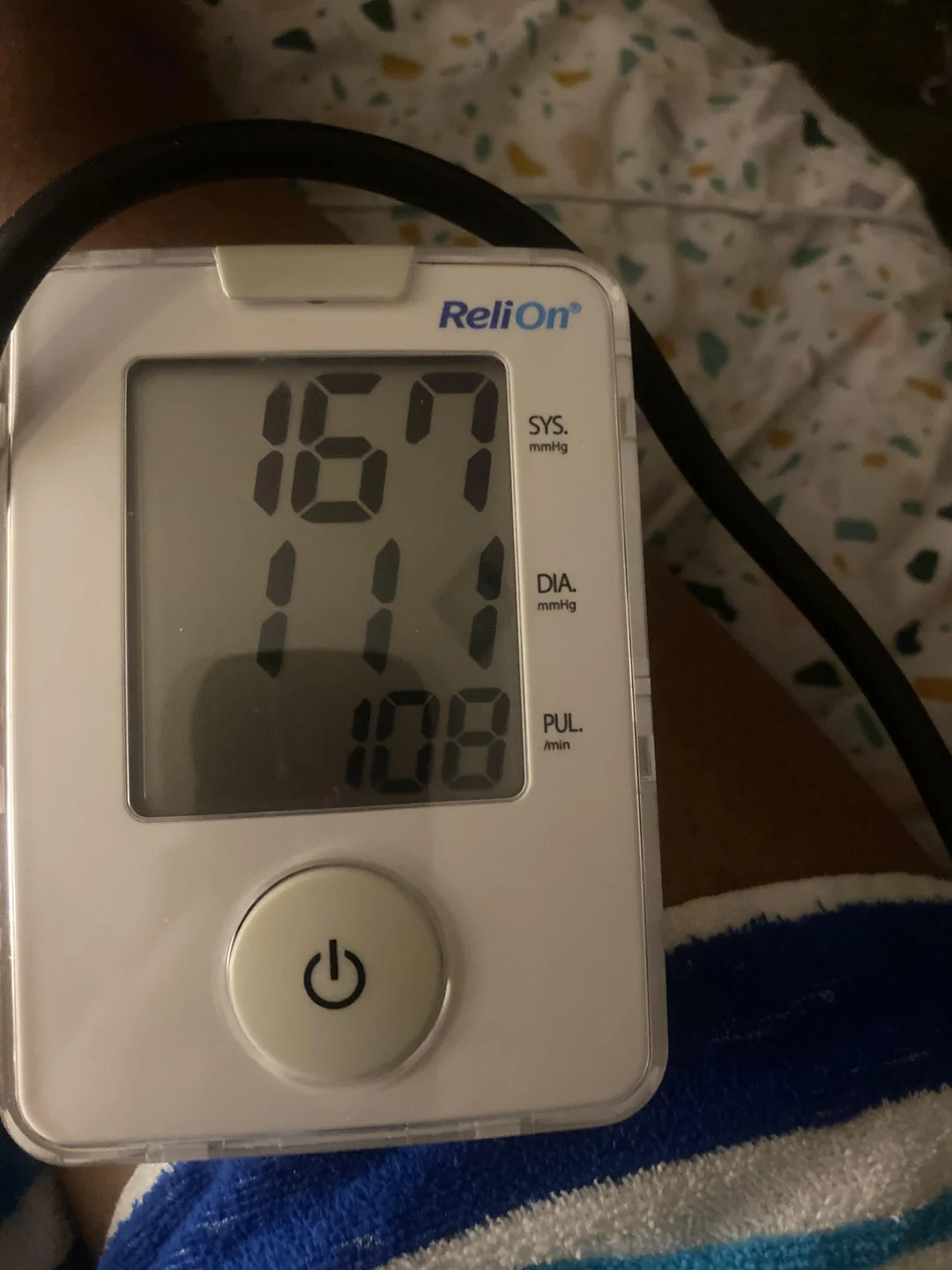
I expected the answer to be expensive prescriptions, more specialist appointments, or maybe a stronger medication. I never expected it to be a spice that looked like... well, nothing special.
Learn more: secure.trynoralife.com(opens in a new tab)