
Inactive· since Jul 10, 2026
- 5
- days it ran
- 1
- relaunches
Ad copy
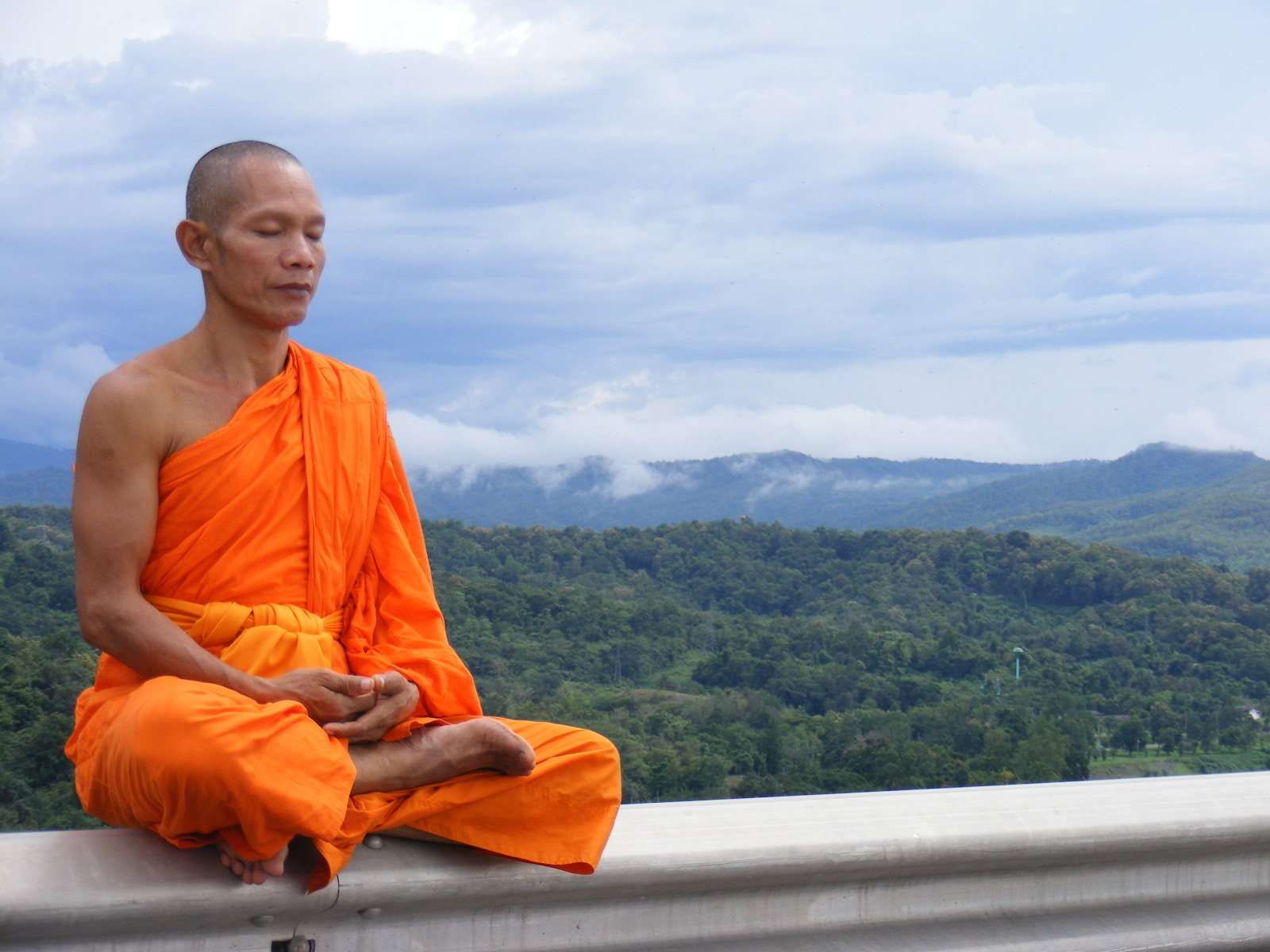
The Buddhist student in my Hermeneutics class never seemed to study, never raised her hand for attention, and barely spoke unless our professor called on her directly. But every single time he did call on her, she'd answer the question better than the rest of us combined. When I finally asked her how she did it, her secret had nothing to do with how smart she was. I went to a small college in the South, and Hermeneutics was the class everyone dreaded. It's the study of how to interpret Scripture. Context, original languages, literary genres, historical background. The kind of class that separates people who think they understand the Bible from people who actually do. Our class had 12 students. All of us except one had been raised in the faith since childhood. A few were already serving in ministry. And every single one of us walked into that first class assuming we'd do well. We were wrong. The professor would ask a question about a passage, and the room would go quiet. We'd fumble through answers, guess at meanings, share opinions we couldn't back up. He'd patiently correct us, and we'd write down what he said and move on. And then there was Mai. Mai Tran. Barely 22 years old. Quiet. Always sat near the window with a small notebook already open before class started. Never raised her hand for the easy questions. Never tried to sound impressive. But every single time the professor called on her, she answered like she'd already studied the passage for a week. And what made it even more remarkable was that she was not a Christian. She had told the professor on the first day of class that she had been raised Buddhist in a Vietnamese family that had practiced for generations, that she had spent years reading the Pali Canon and the Lotus Sutra under her grandfather's instruction, and that she had enrolled in the class out of curiosity about the text that had shaped the world she lived inside her entire life. She wanted to actually understand the Bible her neighbors quoted, the Bible her classmates referenced, the Bible the holidays and the laws and the entire moral architecture of the country she grew up in were built on top of. The only non-Christian in the room was outpacing every student who had grown up in church. — Three weeks into the semester, the professor opened the class with one of the most contemplative passages in the entire New Testament. Matthew chapter six. The Sermon on the Mount. Jesus saying, "Do not store up for yourselves treasures on earth, where moth and rust destroy and where thieves break in and steal. But store up for yourselves treasures in heaven." The professor leaned back and asked, "What is Jesus actually teaching here. And why is this passage in the middle of the Sermon on the Mount and not somewhere else." Most of us said something about being generous. One student said it was about not being materialistic. Another said it was a warning against greed. The professor turned to Mai. "Mai, what do you see in this passage." She didn't pause. "It is not primarily about money. It is about attachment. In my tradition we call this upādāna, the clinging that creates suffering. The Buddha taught that the things we grasp at become the things that own us, and that the root of human suffering is the refusal to release what was never ours to begin with. When I read this passage from Matthew, I recognized the teaching immediately, because Jesus is making a structurally similar argument from a completely different angle. Where your treasure is, there your heart will be also. That sentence, just a few verses later in the same chapter, is the entire key to the passage. He is not saying give your money away. He is saying that whatever you build your security around will become the thing your soul orients toward, whether you mean for it to or not." She kept going. "And the placement in the Sermon on the Mount matters enormously. This is right after Jesus has taught the disciples how to pray, and right before He teaches them not to worry. The structure is deliberate. Prayer, treasure, anxiety. Three teachings, in that order, all about the same thing. Where you place your inner attention determines the life you actually live." She paused. "In Buddhism we have a similar progression in the Noble Eightfold Path. Right intention, right effort, right mindfulness. The order matters because each one shapes the next. What you set your mind on becomes what your effort follows, and what your effort follows becomes what your attention rests on. Most modern readers come to the Sermon on the Mount looking for moral rules to follow. They miss that Jesus is doing something far more demanding. He is teaching the formation of the heart itself, not the regulation of behavior. That is the harder kind of teaching, and it is the one most readers skip past because they are looking for a checklist instead of a transformation." The professor said nothing for a long moment. Then he nodded slowly. "That's exactly right." The room was completely silent. A guy next to me leaned over and whispered, "How does she know all that. She is not even Christian." Mai must have heard, because she just shrugged and said, "When you grow up in a tradition that takes a sacred text seriously, you learn how to sit with a passage long enough to actually hear it. I just brought that habit to a different book." — This kept happening every week. The professor would ask a question. We'd give our best guess. Mai would calmly explain not just what the passage meant, but why it was placed where it was, what the original audience would have heard, and how it fit into the bigger picture of the text. She didn't show off. She didn't lecture. She just answered the question with a depth that none of the rest of us, decades of church attendance between us, could match. The Buddhist woman in the room was outperforming every Christian who had been in church their whole lives. By week six, I couldn't take it anymore. After class, I caught up with her in the hallway. "Mai. Can I ask you something? How are you doing this? I'm working twice as hard as you and I'm barely passing this class. And you didn't even grow up reading this book." She let out a small laugh. "You think I'm working harder than you, but I'm not. I just have something most students never get." She reached into her bag and pulled out a small worn guide, the kind that looked like it had been through several seasons of careful use. "When I was a child my grandfather taught me how to read a sutra. You read it once to hear the words. You read it again to feel the rhythm. You read it a third time to ask what the speaker actually meant and who he was speaking to. Then you sit. You sit with one passage for an hour and you let it teach you something about your own life that you did not know before you sat down. That practice is called nidhyāsana in Sanskrit. It is part of the path to understanding." "When I started thinking about how much of the world around me was built on the Bible, I realized I had no idea what was in it. My professors quoted it. My friends referenced it. The country I grew up in runs on top of it. I wanted to understand the people around me, and I could not do that without understanding the text that shaped them." "So I found this guide online. The reviews said it would help you understand Scripture better than most Christians if you actually used it properly. It looked like exactly the kind of structure my grandfather had taught me to bring to any serious text." She flipped it open on the bench outside the classroom. "Look at how it is laid out. The first thing I do is read the right page, which gives me the foundation for the book before I ever open my Bible. It tells me who wrote it, when, why, the key themes, and what was happening at the time." "Then I close the guide, open my Bible to that same book, and read the whole thing with all of that context fresh in my mind." "After that, I come back to the guide and turn to the left page, which is the guided reflection. It walks me through what I just read so I actually carry it with me instead of forgetting it the moment I close the book. That is where I write my own notes down too." She closed it. "Context, Scripture, and reflection, for every single book of the Bible. Three steps if you really break it down. That is the whole secret." — I asked her, "But Mai, you're Buddhist. How are you reflecting on something you don't believe the same way Christians do?" She told me that was actually the point. "In Buddhism we have a concept called upāya, which means skillful means. The Buddha taught that wisdom comes through whatever doorway opens for you, and that the discipline of careful study is itself a path. I am not reading the Bible to convert. I am reading it the way my grandfather taught me to read any sacred text, slowly, with respect, with attention to what the original author was trying to communicate to the original audience. The reflection questions in this guide are not asking me to believe anything Christians believe. They are asking me to engage with what Matthew or Paul or John was actually trying to say. That is a discipline I already practice. I just brought it to a new text." She opened back to the page on Ecclesiastes and walked me through how she had used it before that week's class. "For step one, I read the context. Ecclesiastes was likely written by Solomon late in his life, after he had pursued every form of wisdom, pleasure, accomplishment, and wealth available to a king of the ancient world. He had built the temple. He had ruled the largest kingdom Israel ever saw. He had accumulated more wealth than anyone of his generation. And he wrote Ecclesiastes after all of it, looking back." "Then for step two, I read the entire book in one sitting, and the meaning of every line shifted. The constant refrain of vanity, vanity, all is vanity, is not the writing of a young cynic. It is the writing of a man who had everything and is telling the next generation that the chase itself was the trap. The pursuit of more, in every direction, turned to dust in his hands." She paused. "Sitting with Ecclesiastes was strange for me. The Buddha began his own teaching with a similar realization. The First Noble Truth in Buddhism is that life as we ordinarily live it is marked by dukkha, by a kind of unsatisfactoriness, a sense that nothing we grasp ever finally satisfies. Solomon is making the same observation, three thousand years before me, from a completely different cultural world. He is sitting on top of every form of accumulation a human being can achieve and reporting back that none of it ultimately filled what he was trying to fill. Two traditions, two languages, two completely different theologies, and the same diagnosis of the human heart. That is the kind of moment that makes you stop and pay attention." "And for step three, I sat with the reflection questions. The main point of Ecclesiastes was that life lived without an eternal anchor eventually exhausts every form of meaning a person can try to build. When I asked myself how it applied to my own life, I started thinking about where I had been chasing more without ever asking whether the chase was the problem. The answer Solomon gives at the end of the book is different from the answer Buddhism gives. He turns toward God. The Buddha turned toward release. But the diagnosis of the disease is the same. And reading Ecclesiastes honestly forced me to take seriously that two traditions this different had arrived at the same observation about how human beings actually live." She closed the guide. "My classmates are reading the same chapters I am. But they're skipping every step. They open the Bible cold, read it, and close it. I'm sitting with each book three different ways, and the difference is everything." "I came into this reading the Bible as a historical document. The reflection questions kept showing me things about myself I wasn't expecting. I am still Buddhist. But I understand the people around me now in a way I never did before. And honestly, I understand my own tradition better too, because you cannot read Ecclesiastes carefully without running into questions the Pali Canon has been wrestling with for twenty-five hundred years." — I asked if I could borrow her guide for the weekend. She said, "Better than that. I'll tell you exactly where to get your own. Take mine for the week and see what happens." That night, I tried the three steps on the book of Ecclesiastes myself. For step one, I read the context page. Who wrote it. Traditionally Solomon, late in his life, after a reign defined by unparalleled wealth, wisdom, and accumulation. When. Likely the late tenth century BC, near the end of his rule. Why. To deliver a final, brutally honest verdict on the meaning of human striving, written for the generations that would come after him. What was happening. Solomon had reached the height of every form of earthly success and was looking back at it with a sobered eye, trying to leave something true behind for anyone who would inherit his world. The literary genre mattered too. Ecclesiastes is wisdom literature, written largely as reflection, structured almost like a long meditation rather than a narrative. Then I moved to step two and read all twelve chapters in one sitting, and I saw something I had never seen before in thirty years of skimming past it. I had always read Ecclesiastes as a depressing book. The repeated refrain of vanity, vanity, had always felt cynical to me. But that night I saw it differently. It was not cynicism. It was honesty. The richest, wisest man of the ancient world was sitting down at the end of his life and telling the next generation that the chase itself had been the problem. The pursuit of more money, more pleasure, more wisdom, more accomplishment had all turned to dust in his hands. None of it had filled what he had been trying to fill. The book was a warning written in love. Not from a man who had failed. From a man who had succeeded at everything the world chases and found, on the other side, that the chase itself was the trap. Then for step three, I turned to the reflection page and stared at the first question. What is the main point of this book. I wrote, "The chase for more is the most expensive lie a person can spend their life believing. And the only resting place is in the God who made me, not in anything I can build for myself." How can you apply it to your life. I thought about all the places I had been quietly chasing more without ever asking whether the chase was the problem. I wrote down where I needed to stop running. A prayer of response. I wrote one. The first prayer I had actually meant in years. I had read past Ecclesiastes my entire life and never once understood what the book was actually doing. And I had never let it change anything until I sat down and wrote out the reflection. — Two Saturdays later, the professor asked the class a question that brought everything together. He turned to the parable of the rich fool in Luke chapter twelve. A man whose harvest is so abundant that he tears down his barns and builds bigger ones to store all of it, telling himself he will eat, drink, and be merry. That same night, God tells him his life will be required of him. The professor asked the room, "Why does Jesus tell this parable. What is He actually warning against." Most students said it was about greed. One said it was about not being selfish with your wealth. I raised my hand. The professor looked surprised because I had barely spoken all semester. "Go ahead." "It is not just about greed. Jesus is making the same argument Solomon makes in Ecclesiastes, but compressing it into a single image. The rich fool is not condemned for building bigger barns. He is condemned for thinking the bigger barns are where his life lives. Jesus is exposing the lie that accumulation produces security. The man dies that night, and all the storage in the world cannot save him. The parable is not about money. It is about where you actually keep your soul. The same teaching Solomon spent twelve chapters writing about, Jesus delivers in six verses. And the conclusion is the same. The only secure foundation is the one outside yourself, the one you cannot build with your own hands." The professor looked at me for a long moment. Then he smiled slowly. "That is exactly right." The whole class turned around, and the guy next to me said quietly, "Where did that come from." I looked across the room at Mai near the window. She gave me a single nod and went back to her notebook. — That semester changed everything for me. By the end of the class, I went from barely passing Hermeneutics to being one of the top students. My final paper got the highest grade in the class, and the professor pulled me aside and asked if I'd considered going to seminary. But here's what I want you to understand. I didn't get smarter or study harder, and I didn't memorize more verses. I just stopped skipping steps. Three steps. Context, scripture, and reflection, for every single book of the Bible. Once I started doing all three, the Bible stopped being a confusing collection of passages I had to interpret and became a library of real documents written by real people in real moments, to audiences whose lives were shaped by what they read. The reflection questions made me actually carry what I read into my own life instead of leaving it on the page. — Here's what I realized. Most people who pick up a Bible for the first time give up within a few weeks. They open to a random chapter, read with no context, no reflection, and close the book more confused than when they started. Others get halfway through Genesis, hit Leviticus, and quit because none of it makes sense without knowing what they are looking at. But when you do all three steps, every time, it changes everything. You stop guessing, you stop reading verses out of context, and you stop closing your Bible without a single thing to take with you. You start understanding what the original author was actually saying to the original audience, and then you start letting it actually shape your life through the reflection. Whether you are a lifelong Christian, someone who walked away years ago, or someone who has never opened a Bible but is curious, the same three steps work the same way for everyone. — The guide I use now, one even more detailed than the one Mai handed me that day, is the Elvasma Bible Study Guide. Sixty six pages, one for every book of the Bible, and each one is built around the same three step method. Step one is the context page that walks you through who wrote the book, when, why, what was happening historically, the key themes, the symbolism and imagery, and the practical application. Step two is reading the actual Bible book with all of that context fresh in your mind. Step three is the guided reflection page with four questions every time. What's the main point of this book? How can you apply it to your life? A prayer of response. And space for any additional notes you want to write down. You read the context page, you open your Bible, you write your reflection, and the connections start appearing. It's the same approach that took a young Buddhist woman who had never once read the Bible and made her able to explain the structure of the Sermon on the Mount better than every Christian in the room. She did not pick up that guide to convert. She picked it up to understand the people around her better. And by the end of the semester, she understood the world the Bible was written into better than most of us did. No commentary required, no seminary degree needed, just three simple steps for one book at a time. And suddenly you're not reading isolated verses or closing your Bible empty handed. You're walking through Scripture the way it was meant to be walked through. — If you've ever been curious about the Bible but had no idea where to start, this is for you. If you've ever tried reading it and gave up because it felt confusing or boring, this is for you. If you've avoided certain books because they feel too overwhelming, this is also for you. You don't need a Christian background, you don't need a 12 week class, and you don't need a degree. You just need three steps for every book, every time. Mai didn't know more than the rest of us when she walked into that classroom. She just brought the discipline her own tradition had taught her about how to read a sacred text seriously. And once I had that same starting point, everything changed. Stop reading fragments. Start walking through the story. — EDIT: I almost forgot to give you the link to get the guide. Here it is below. https://elvasma.com/pages/6-reasons-christians-are-saying
Like this ad? Make it yours.
Crush rebuilds this exact creative around your product — your brand, your colors, your offer — in about a minute.