The Wellness Haven
The Wellness Haven Facebook ad: “Support your scalp and hair health every day”

Started on July 13, 2026.
Run by The Wellness Haven on Facebook. Crush is not the advertiser and does not verify its claims. See this ad in Meta's Ad Library(opens in a new tab)
Want an ad like this for your product?
Crush makes new ad images for your product from this ad: your logo, your product photo, your offer.
Trials from $19.95 USD, then $79.95 USD a month. Cancel anytime.
About this ad
- Meta Ad Library ID
- 1548085693533041
- Platforms
- Facebook, Instagram, Audience Network, Messenger and Threads
- Relaunches
- 0
- Niche
- Hair Care
Ad text
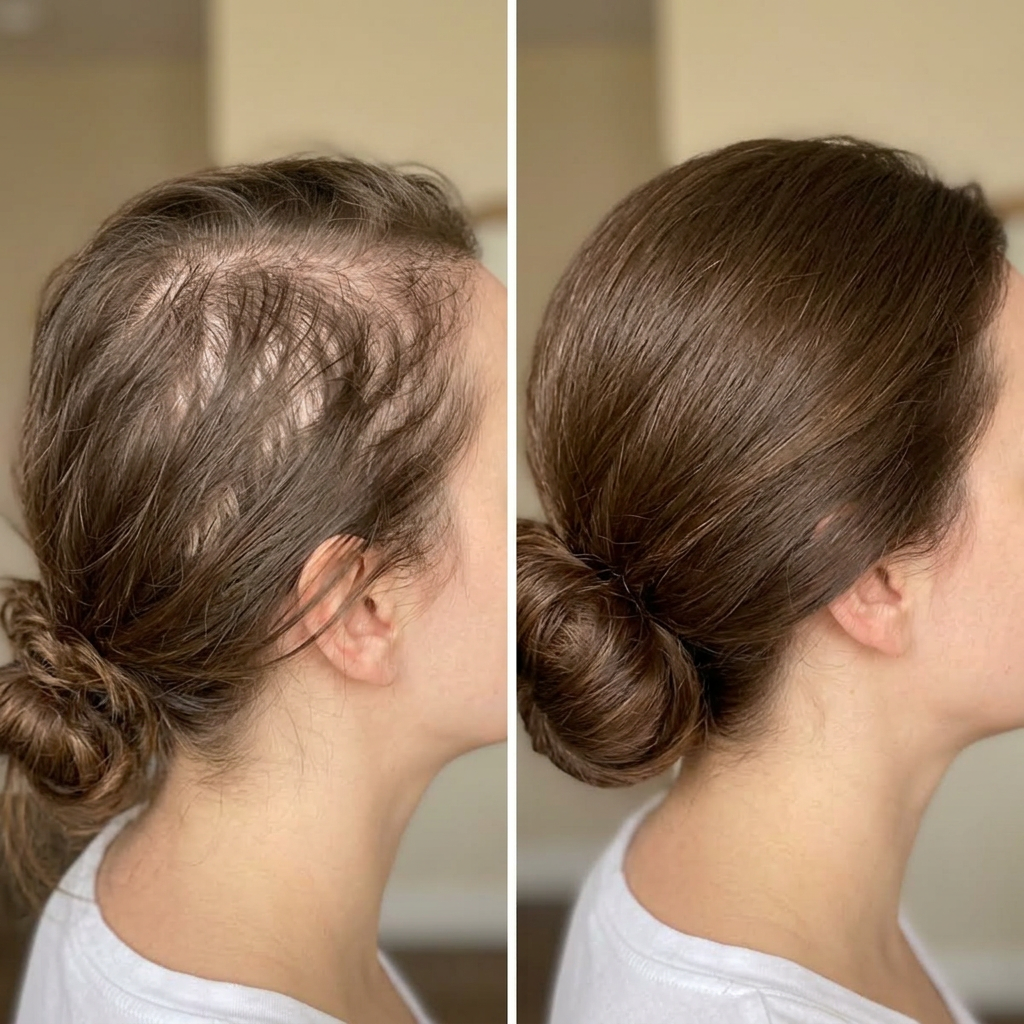
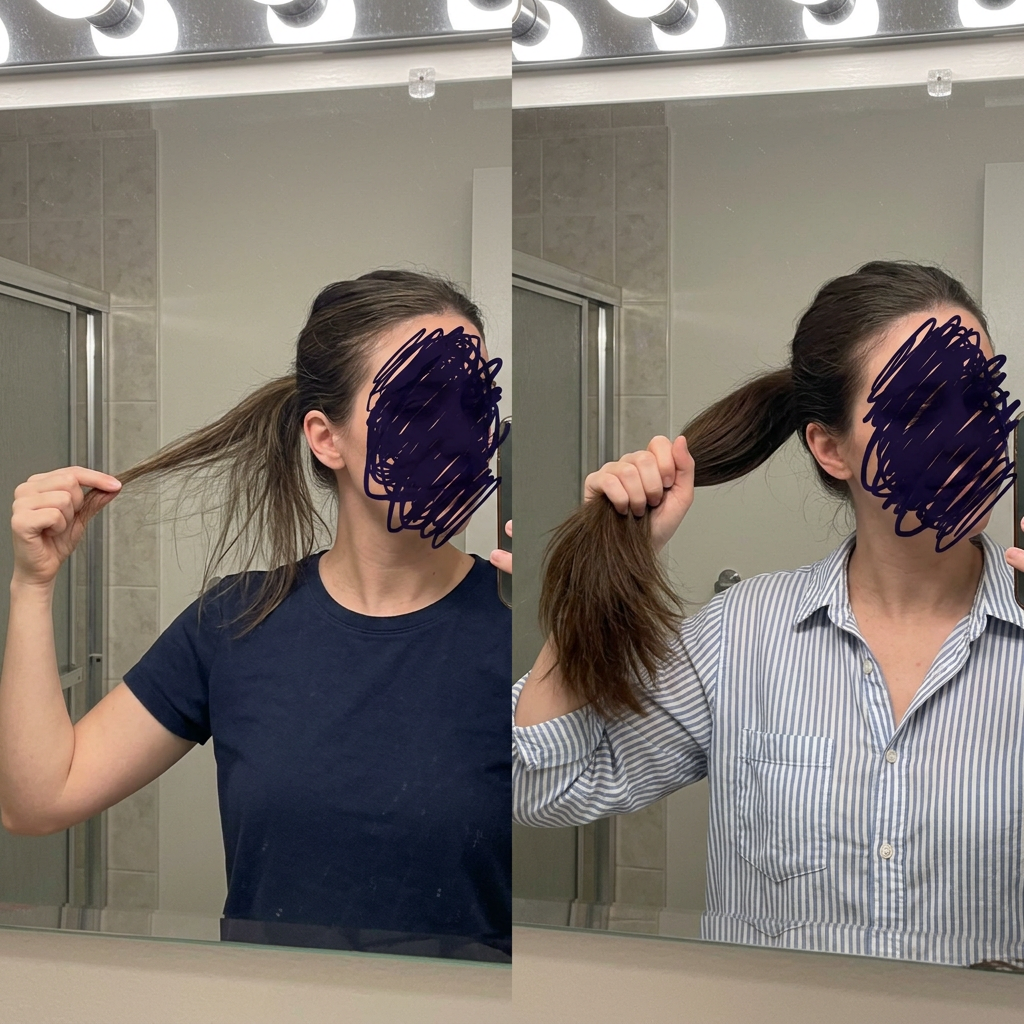
A woman I had been nodding at for almost a year at my mother's assisted living facility sat down at my table in the visitors' lounge last October. She said: I can't do another Sunday in this room by myself. Is it alright if I sit at your table? I said yes. Two hours later, when she stood up to leave, she had said one sentence to me that has been with me every day since. I am writing this letter because I had been carrying two things quietly for the fourteen months before that Sunday. My eighty-four-year-old mother, in her assisted living room forty minutes from my house. And myself — the version of me I had been watching disappear since menopause began. That woman gave me back one of them. My name is Diane. I live in a small town outside Buffalo with my husband, Greg. We have been married for thirty-four years. Greg drove a delivery route for the postal service for thirty-eight years before he retired. We have one son and one daughter, both in their thirties, both living within an hour of us. I retired three years ago after twenty-nine years of office administration at a medical supply company. We were, on paper, supposed to be entering the easiest years of our life. My mother, Rita, is eighty-four. She fell in her own kitchen fourteen months ago. She broke her hip and recovered the way an eighty-four-year-old recovers from a broken hip, which is mostly but not all the way. She has been living at a small assisted living facility called Linden Grove since then. My brother lives in Cleveland and comes when he can. I visit on Sundays. Sometimes Wednesdays, when I can. I bring her a small bag of clementines because she has loved clementines since I was a little girl. She remembers some things and forgets others. She is still my mother and she is mostly herself and the gap between mostly and entirely is the gap I have been quietly grieving for fourteen months. The other thing I had been carrying was harder to explain to anyone. It was not a person in another room. It was me. It was what had been happening to me since menopause arrived two years ago and settled in like it owned the place. The version I had been living with looked like this. It looked like the shower drain every morning, filled with hair that used to stay on my head. It looked like the bathroom counter I wiped clean before Greg could see the strands on it. It looked like the collection of wide headbands and scarves on my dresser that had grown from two to eleven in fourteen months. It looked like my part — the one I had worn on the left side since I was a teenager — widening until I could see scalp through it in the bathroom mirror. It looked like the salon appointment I had been keeping every six weeks for thirty years, canceled three times in a row because I could not sit in that chair under those lights and watch my stylist try not to react. It looked like me, at fifty-eight, quietly thinning in my own bathroom at the same time I was driving to Linden Grove on Sundays to visit my mother quietly thinning in hers. I had been telling myself it was stress. I had been telling myself it was the year my mother fell. I had been telling myself it was just menopause, and that menopause was temporary, and that my body would figure itself out. I had been telling myself a lot of things. October last year, on a Sunday afternoon, I was sitting at a small round table in the visitors' lounge at Linden Grove. The lounge is called the Sunshine Room because it has windows on three sides. My mother had been moved to the medical wing that morning. She had a small infection. Nothing serious. They were keeping her on antibiotics for a few days. I was sitting in the Sunshine Room waiting for the nurse to come tell me when I could go back and see her. I was on my third paper cup of bad coffee. I was not in a good way. I had found a new thin spot that morning. Behind my left ear. A place I had never checked before because I had never needed to check it before. A woman I had been nodding at in the hallway at Linden Grove for almost a year sat down at the table next to mine. She was about my age. Silver hair, but fuller than mine. Cut in a short bob that looked like it belonged on her. A canvas tote bag with a paperback book in it. She set the bag down and put her elbows on the table and her face in her hands for a moment. Then she looked up at me and said: I can't do another Sunday by myself in this room. Is it alright if I sit at your table? I said yes. She moved her coffee over. She told me her name was Helen. She told me she had been visiting her father at Linden Grove for three years. I told her I had been visiting my mother for fourteen months. We sat at that table for two hours. I am not going to give you the whole conversation. It is the conversation two women in their late fifties have when they have been quietly doing the same thing alone for too long and finally find someone else who is also quietly doing it. We talked about our parents. We talked about the gap between mostly and entirely. We talked about the moment you realize your mother is not coming back to where she was. We talked about siblings who are far away. We talked about the way Sunday afternoons in the Sunshine Room are very long. About an hour and a half in, I moved my scarf without thinking about it. It was a reflex. I had been adjusting it all day. Pulling it forward to cover the thin spots the way I had been doing for months. Helen watched me do it. She didn't say anything right away. Then she said, very quietly: How long? I looked at her. She said: The hair. How long has it been going? I told her. I told her about the shower drain. I told her about the widening part. I told her about the eleven headbands. I told her about the salon appointments I had stopped keeping. I told her about the morning I found the thin spot behind my left ear and sat on the edge of the bathtub and cried before Greg woke up. I told her about my doctor — Dr. Larson, a careful woman I have been seeing for eighteen years — telling me at my last appointment that hair thinning was a normal part of menopause. Normal. That was the word she used. As if watching yourself disappear strand by strand was just a line item on a list of things your body does to you after fifty. Helen listened. She nodded. When I was finished, she sat with it for a minute. Then she said something I have been thinking about every day since. She said: About eighteen months ago I added one small thing to my mornings. I read about it for almost a month before I added it. I talked to my dermatologist before I added it. I want to be very careful with you about what I say next, because I am one woman and you are one woman and bodies are different. But my hair has been more itself, for the last eighteen months, than it was for the three years before that. My part has been narrower. My ponytail has been thicker. I have been a woman I recognize in the mirror again. She paused. I did not do anything dramatic. I added one small step to my morning. I kept everything else exactly the same. I would not want you to think I am telling you a miracle story. I am telling you what happened to my hair, alongside everything else I was already doing. I asked her what she had added. She said it was a scalp spray. She said the brand was called Revotín. She said she had picked it because it was a leave-in formula that went directly onto the scalp instead of washing off in sixty seconds like a shampoo, and because her dermatologist had specifically said that how a product reaches the follicle matters more than what is in it. She said it was developed by a dermatologist with over forty years of clinical experience, which was part of why she trusted it. She said it the way a woman who has been carrying a load alone tells another woman who has been carrying a load alone what she has been doing. She wasn't selling me anything. She was just telling me. The nurse came in about half an hour later to say I could go back and see my mother. I sat with her for an hour. I drove home thinking about Helen. I drove the rest of that week thinking about Helen. By the weekend, I was thinking about what I was going to do. I went home and I started reading. I am, by temperament, a careful person. I do not add things to my body or to my scalp without understanding what I am adding. I read about menopausal hair loss. I read about the hormone shift that happens when estrogen drops. About a compound called DHT — dihydrotestosterone. It is the hormone that wraps around hair follicles after menopause and slowly strangles them into dormancy. Eighty-nine percent of menopausal women have elevated levels comparable to balding men. I read that and sat at my kitchen table for a long time. I read about the long, quietly built body of research the dermatological community has been building for decades about the scalp environment. In the context of supporting healthy follicle function. Supporting the root environment. Supporting the body's own hair growth cycle. In women whose follicles are dormant, not dead. None of what I read was a miracle story. It was the opposite of one. It was a scalp environment that had been quietly studied for a long time by careful people who were not making outlandish claims. The language being used in the careful corner of the conversation was the language I had been quietly hoping to find. Supports healthy follicle function. Supports the scalp environment. Supports the body's own growth cycle. Not regrows hair overnight. Not fixes anything. Not replaces what Dr. Larson had been monitoring. That was the right shape. I read about the delivery method, too. The science is straightforward. Most hair loss products never reach the follicle. Pills have to survive stomach acid and travel through the entire body before anything reaches the scalp — if it reaches the scalp at all. Shampoos rinse off in sixty seconds. Whatever was in them goes down the drain. Oils sit on the surface of the hair. They coat the strand but never reach the root. Revotín is a leave-in spray. You apply it directly to the scalp. It stays where you put it. It goes to the follicle. That is a different approach than everything else on the market. It costs more to formulate that way. At fifty-eight, after watching my mother lose her independence in fourteen months and watching my own hair disappear over the same fourteen months, I have come to pay close attention to the small decisions companies make when no one is watching. Those decisions tell you everything. The other thing I liked was the simplicity. Two to three sprays on the scalp in the morning. Massage it in for thirty seconds. I have a mother forty minutes away. I have a body that menopause is quietly dismantling. I have a small life I am trying to hold together. I am not interested in a protocol that requires its own shelf. Now I need to tell you the most important part of this letter. Before I added it, I called my dermatologist. Her name is Dr. Larson. She is the dermatologist at the small practice in our town. I have been seeing her for over eighteen years. I called her for a specific reason. I am on HRT — a low-dose estrogen patch my gynecologist prescribed when menopause first hit. I called because I am a careful person and because I wanted somebody who knew my chart to confirm that adding a scalp spray to my routine was the right thing to do alongside HRT. Dr. Larson looked at the ingredient list. She confirmed there were no concerns with any of the ingredients alongside my current medications. She told me I could use it in the morning the way the label suggested. She told me to let her know at my next appointment how my scalp was responding. She told me, before she got off the phone, that she wished more of her patients did their own research the way I had just done. I want to say something now, plainly, to every reader of this letter. If you are on any prescription medication — especially HRT, spironolactone, minoxidil, or anything hormonal — please talk to your doctor or dermatologist before you add anything new to your routine. I called Dr. Larson, and I was on a low-dose patch. I would have called twice as fast if I had been on multiple medications. So should you. The person who knows your chart will tell you in two minutes whether it is safe to add, given what you are already using. The two minutes the call takes is the most important two minutes of your engagement with any product you might consider adding. I told Greg that night. I told him about Helen. I told him about the reading. I told him about Dr. Larson. I told him I wanted to try something for myself. He looked at the bottle. He looked at me. We have been married thirty-four years. He knows when I am carrying something that matters. The doctor said it was alright? She said it was fine alongside everything I am already using. He nodded once. Then do it. You deserve to try. In the morning I sprayed it onto my scalp the way the label described. A spray on my part. One on each temple. I massaged it in for thirty seconds. It was not greasy. It did not smell medicinal. It did not leave residue on my fingers. I did not say anything more about it. I started on a Monday. The first two weeks I noticed nothing in particular. I had read enough alongside what Helen had told me to know that hair cycles are different. Some women notice something within the first few weeks. Some take much longer. Some don't notice much at all. I was prepared to land in any of those camps. I was prepared to be honest with myself about the result. What I noticed, I noticed slowly. The first thing I noticed, around week six, was wash day. It was a Wednesday morning. I was standing at the sink, running water through my hair the way I had been dreading for fourteen months. I looked at the drain. There was hair in it. There is always hair in it. But not as much. Not the clump that had been making me hold my breath every morning. I did not say anything about it. I did not want to make a thing of it. I had read enough not to make a thing of one observation. The second thing I noticed, around week ten, was the part. I was standing at the bathroom mirror doing what I had been doing every morning for a year — angling my head to check how much scalp was showing through my part. It was narrower. Not dramatically. Not a miracle. Just narrower. The way a crack in a sidewalk looks after something small begins to grow in it. I stood there for a long time. I picked up my phone and took a photo. I compared it to a photo I had taken eleven weeks earlier, the morning after I met Helen. The difference was quiet. But it was there. I put the phone down. I finished getting ready. I did not tell Greg. I did not want to make a thing of it. The third thing I noticed was at the salon. About four months in, I made an appointment with my stylist, Marie. I had not sat in her chair in almost five months. I had canceled three times. I had not been able to sit under those lights. I made the appointment on a Tuesday. I drove to the salon on a Saturday morning. Marie washed my hair. She combed it through. She stopped. She looked at me in the mirror. She said: Diane. What have you been doing? I told her nothing different. She said: Your hair is different. It is thicker through the crown. Your part is narrower than the last time I saw you. What changed? I told her about the spray. She held a section of my hair between her fingers the way stylists do when they are feeling the weight of it. She said: Whatever this is, keep doing it. I sat in that chair and I looked at myself in the mirror under the salon lights — the same lights I had been avoiding for five months — and I saw a woman I had not seen in over a year. Not a different woman. The same one. The one who had been disappearing strand by strand since menopause arrived. She was still there. I sat in Marie's chair and I cried the way a woman cries when something she thought was leaving comes back to her instead. Marie handed me a tissue and did not say a word. I went to Dr. Larson for my regular appointment about five months after I started. She looked at my scalp. She looked at me. She said: your hair density looks better than it has in over two years. Keep doing what you are doing. I told her about the spray. About the mornings. About going back to Marie. Dr. Larson nodded. She said: that is consistent with what I would expect from targeted scalp support. The follicle environment matters. Keep doing what you are doing and let's see where you are in another six months. She did not suggest adding minoxidil. She had mentioned it at my last two appointments. She did not mention it this time. I called Greg from the parking lot. I didn't say anything at first. Then I said: Greg. I think my hair might be coming back. I was sitting in my car. I looked at myself in the rearview mirror. I touched my part. I cried the way a woman cries when she finds herself still there after a year of looking for her. Helen and I still see each other most Sundays at Linden Grove. We have a small ritual now. We meet in the Sunshine Room at noon on the Sundays when both of us are there. We have coffee for fifteen minutes. We tell each other small things about our parents and our hair. Then she goes to her father and I go to my mother. Greg has come with me on three of the last six Sundays. Last month, I walked into the Sunshine Room with my hair down. No headband. No scarf. No hat. Helen looked at me from across the room. She did not say anything. She just smiled. Two women in their late fifties, in a sunlit visitors' lounge at an assisted living facility, who found each other at exactly the right time. I am telling you this because I think you might be where I was that Sunday in October. Carrying your own quiet disappearance alongside everything else you are already carrying. Watching the shower drain every morning. Watching the part widen. Watching your reflection become someone you do not fully recognize. Watching your doctor smile at your chart while the woman attached to the chart slowly dims. If you have been carrying a quiet question for a year or two — alongside the hot flashes and the brain fog and the sleepless nights and everything else menopause loaded onto your plate — about whether there is one small thing that might support what your scalp needs to do its job, I want to say a few things to you carefully. I do not know you. I do not know your hair, your hormones, your situation, or what your doctor has said. Bodies are different. Hair cycles are different. Some women notice something within the first few weeks of adding something like this. Some women take much longer. Some women don't notice much at all. That is the honest version. Anyone offering you a cleaner one is selling you harder than I am. Here is how I think about Revotín now, in the words I would actually use. It is something the scalp uses. The research community talks about it in the context of supporting healthy follicle function, scalp environment restoration, and the body's own growth cycle. In women whose follicles are dormant, not dead. It is not a fix for anything. It is not a substitute for HRT or anything your doctor has you on. It is not a cure for the hot flashes or the brain fog or the weight of everything menopause has loaded onto your shoulders. It is one small thing you add to your morning, alongside everything else. Please talk to your dermatologist or your doctor before you add it. If you are on HRT, spironolactone, minoxidil, or anything hormonal, this is non-negotiable. I called Dr. Larson. I would not have added anything alongside my medications without that call. Neither should you. The person who knows your chart will tell you in two minutes whether it is safe to add given what you are already using. I am a fifty-eight-year-old woman in upstate New York with a mother in assisted living and a reflection I am trying to recognize again in the bathroom mirror. I am not the person to ask. Your dermatologist or your doctor is. The company has a ninety-day satisfaction guarantee. If you are not satisfied — for any reason at all, including just changing your mind — they refund you. It is not tied to hair counts. It is not tied to anything you have to prove to anybody. If you are not satisfied, you are not satisfied. That is the whole policy. The formula uses seven specific ingredients — Sophora Flavescens, Angelica Sinensis Root, Biotin, Caffeine, Rice Water, Ginger, and Castor Oil — each chosen for its role in supporting the scalp environment. There are stretches when they are in stock and stretches when they are not. I mention that not to push you — please do not let anybody push you into a health decision — but so that if you go to the site and they are out, you know why. That is all I have. Thank you for reading this far. I hope something here was useful to you. I hope, somewhere today, your own Helen is sitting at a small round table in a sunlit room, waiting for you to sit down across from her. — Diane P.S. I want to come back to the delivery method for a second. The reason most hair loss products fail menopausal women is not what is in them. It is how they try to reach the follicle. Pills have to survive stomach acid and travel through your entire body. By the time anything reaches your scalp — if it reaches your scalp — most of the active compounds are gone. Shampoos rinse off in sixty seconds. Whatever was in them goes down the drain with the water. Oils sit on the surface of the hair. They coat the strand but never reach the root where the follicle lives. Revotín chose the direct route. A leave-in spray. Applied directly to the scalp. Stays where you put it. Goes to the follicle. It costs them more to formulate. It limits their production capacity. They made the choice anyway. At fifty-eight, after watching what fourteen months can do to my mother's body and to my own hair, I have come to pay attention to the small decisions companies make when no one is watching. Those decisions tell you everything. P.P.S. Two to three sprays. On the scalp. Massage for thirty seconds. That is the entire routine. No pills to swallow. No afternoon dose to remember. No greasy oil dripping down your neck. No shampoo that rinses off before it can do anything. I keep the bottle on my bathroom counter next to my moisturizer. I spray after I wash my face in the morning. I massage it in while the coffee brews. That has been the rhythm of my morning for almost ten months. We have earned a simple one at our age. P.P.P.S. I am going to say it one more time, because I have to. Please. Talk to your dermatologist or your doctor before you add anything new to your routine. Especially if you are on HRT, spironolactone, minoxidil, or anything hormonal. They have your whole picture in front of them. I have written you a letter. There is a difference, and the difference matters. The two minutes it takes to ask are the most important two minutes of your engagement with any product. P.P.P.P.S. The guarantee, again, in case you skimmed. Ninety days. Any reason at all. You do not have to prove a single thing — not to them, not about your hair, not about how you feel. If you tried it and you are not satisfied, you are not satisfied. They send the money back. That is the whole policy. A small-company policy. The kind of thing companies used to do when companies still answered the phone. P.P.P.P.P.S. The thing Helen said to me at the small round table in the Sunshine Room — my hair has been more itself for the last eighteen months than it was for the three years before that — is the sentence that has stayed with me longest. I had been hoping for exactly those words about my own hair for fourteen months. I had never said them out loud to anyone. I had not realized, until Helen said them, how heavy the silence had become. If you are a woman carrying your own quiet disappearance the way I was — watching your hair thin in the mirror while the rest of menopause dismantles you from the inside out — I want you to know that you are not the only one. You are not imagining the thinning. You are not being vain. You have been watching something real. Your doctor has been watching the chart. You have been watching the mirror. I hope you find your Helen. I hope, if you have one already, you let yourself sit down at her table. I hope you read carefully. I hope you make the call before you add anything. I hope, in a year from now, you are standing in your own bathroom on a Saturday morning, running your fingers through hair that feels like yours again, looking at a woman you recognize. I hope that for you. That is the whole reason I wrote this. — D. 👉 https://revotin.com/pages/healthinsightmenopause
Where the ad sends people
HEALTH.INSIGHT.ORG
Support your scalp and hair health every day
"Best customer support ever. My issue was resolved quickly and professionally. I so love how the repair spray is helping support my hair through menopause."
Learn more: revotin.com(opens in a new tab)