Crysta Rollins
 Facebook ad: “You are reading the Bible wrong.”
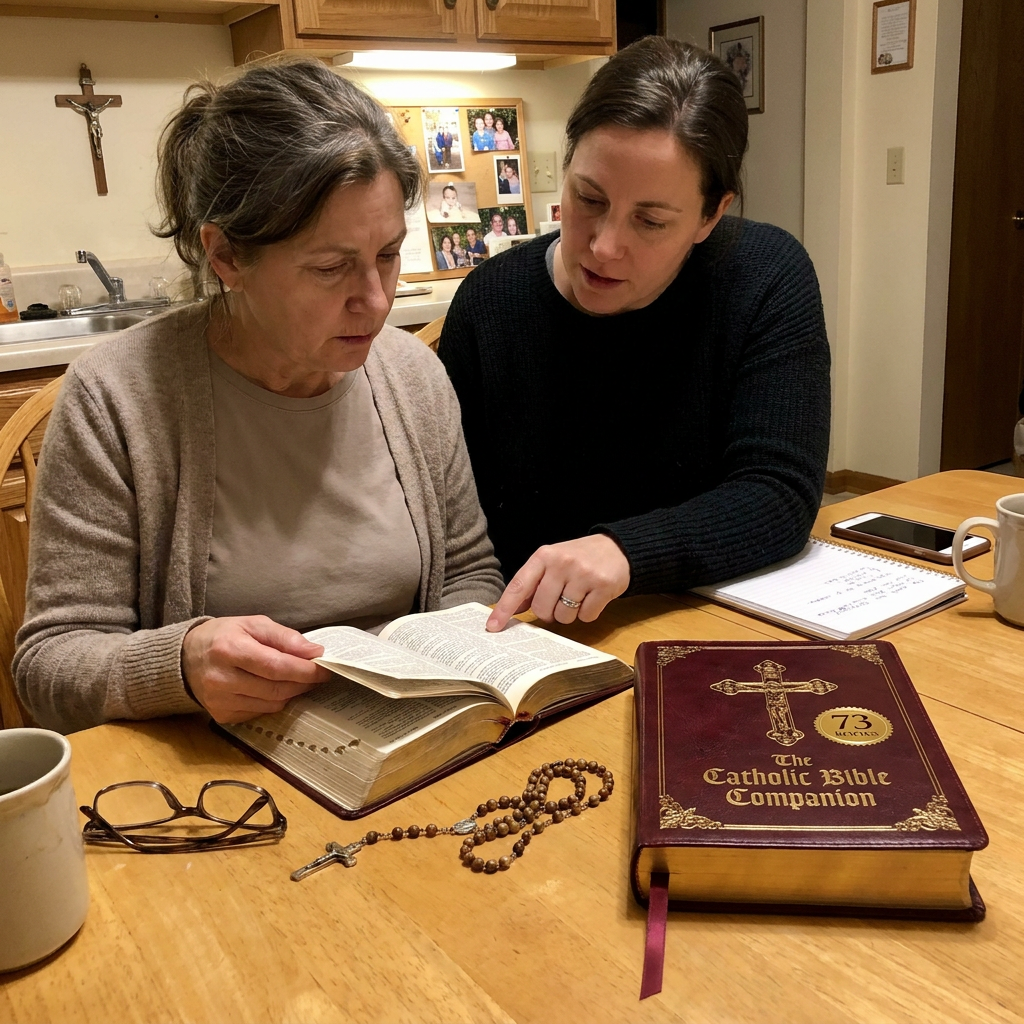
Running for 53 days since September 17, 2026. Crush last saw it on November 9, 2026.
Run by Crysta Rollins on Facebook. Crush is not the advertiser and does not verify its claims. See this ad in Meta's Ad Library(opens in a new tab)
Make your own version of this ad
Crush makes it, launches it in your own Meta ad account, scales the winners and pauses the losers.
About this ad
- Meta Ad Library ID
- 1555862929915395
- Platforms
- Facebook, Instagram, Audience Network, WhatsApp and Threads
- Relaunches
- 0
- Niche
- Education & Courses
Ad text
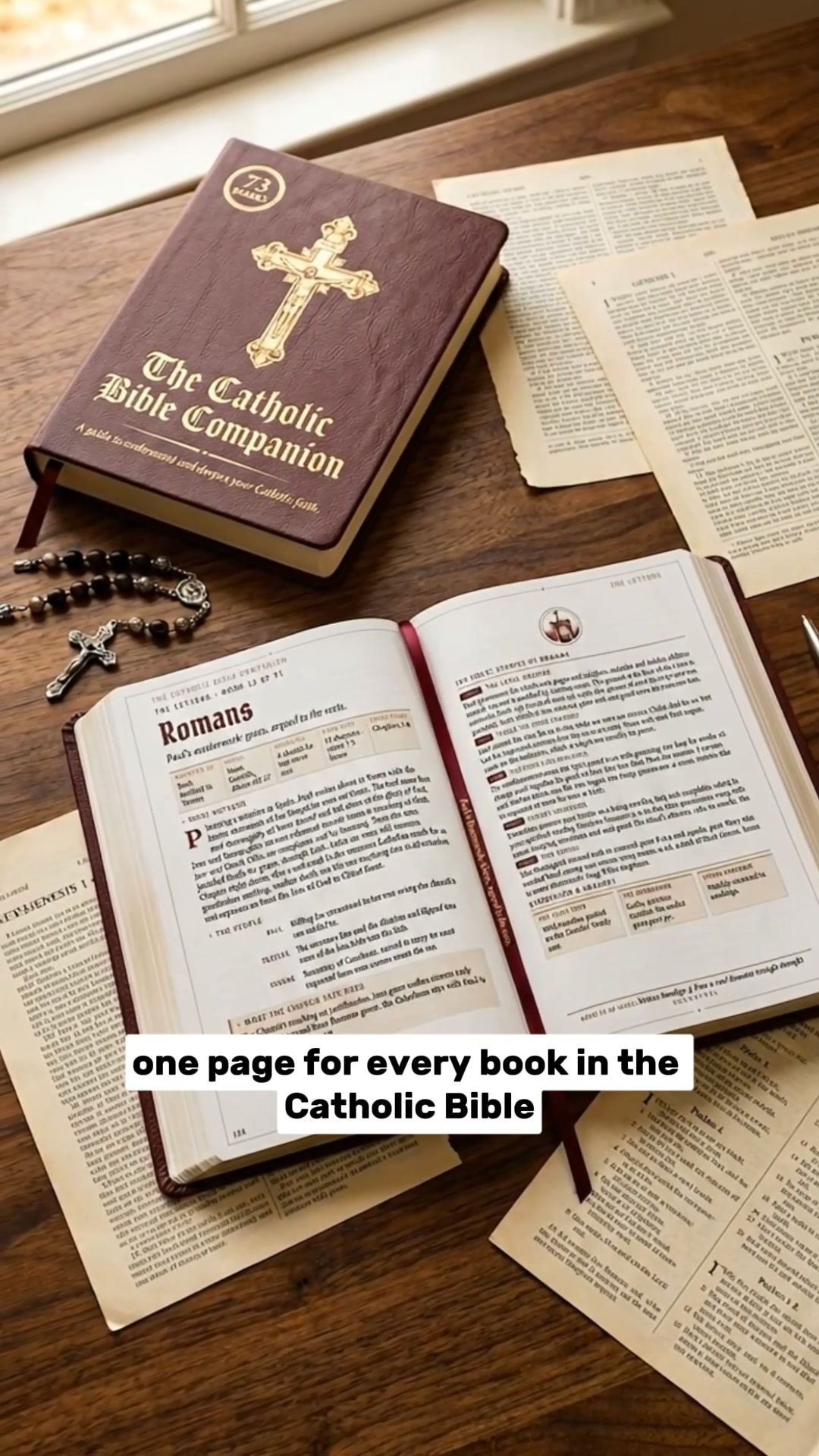
There are 7 books in your Catholic Bible that every resource you have ever used pretends do not exist. They contain a prophecy of the crucifixion written a century before it happened. The scriptural foundation for every prayer you have ever offered for your dead. The source of the guardian angel prayer you learned as a child. The words of the Hail Mary traced to a warrior widow centuries before Gabriel spoke them to Mary. The Easter Vigil reading that promises the robe of glory to the exiles. And the clearest declaration of resurrection hope in the entire Old Testament. All of it in your Bible. Your whole life. And nobody told you. I found out at 11pm on a Tuesday night in November. And I sat at my kitchen table for two hours because I realized that 55 years of Catholic life had been built on top of a Bible I had never fully opened. Let me explain. I was one of those Catholics who could not answer the question. You know the question. The one your Protestant neighbor asks at the block party. The one your daughter's college roommate asks at Thanksgiving. The one that comes at you sideways when someone finds out you are Catholic and tilts their head and says, "So why do Catholics pray to dead people?" Or, "Where does the Bible say anything about purgatory?" Or, "Why do Catholics worship Mary?" I am 58 years old. I have been Catholic since the day I was baptized as an infant. Mass every Sunday. Rosary most evenings. CCD for 8 years. Confirmation at 14. I taught CCD for 6 years. I have been on the parish council. I have organized the annual women's retreat twice. And every single time someone asked me one of those questions, I smiled and said something vague about tradition and changed the subject. Because I did not have the answer. Not because the answer does not exist. Because nobody had ever shown me where it was. For 55 years I assumed the answers to those questions lived in theology books and canon law and papal encyclicals. Somewhere above my pay grade. Somewhere in the territory that belongs to priests and deacons and people with seminary degrees. I assumed the answers were not in the Bible. Because in 55 years of hearing the Bible read at Mass, listening to homilies, attending Bible studies, downloading reading plans, and buying study Bibles, not one person had ever pointed me to the place in the Bible where those answers live. And the reason nobody pointed me there is that the answers live in 7 books that every resource I was ever given pretends do not exist. Here is what happened on that Tuesday night. My daughter-in-law Catherine is a convert. She came into the Church through RCIA 5 years ago. She came from a Baptist church. She is the kind of person who reads everything and questions everything and does not accept "because the Church says so" as an answer to anything. She was over for dinner. The kids were in bed. We were sitting at the kitchen table and she said something that stopped me. "Gloria, do you know why your Bible has 73 books and mine used to have 66?" I stared at her. "What do you mean?" "Your Catholic Bible has 73 books. The Protestant Bible I grew up with has 66. There are 7 books in your Bible that are not in the one I carried for 25 years before I converted. Did you know that?" I did not know that. I am 58 years old. I have been carrying a Catholic Bible my entire life. And I did not know it had 7 more books than a Protestant Bible. Catherine could see it on my face. "You did not know." "Nobody ever told me." "Nobody told me either. Not in 25 years of Baptist church. Not in RCIA. I found out on my own after I was confirmed. And when I found out what was in those 7 books, I was angry for a week." "What is in them?" She opened her phone. She had been reading about this for months. "The Book of Wisdom. Chapter 2. Written approximately 100 years before Jesus was born. It describes a righteous man who calls himself a child of God. He is mocked. Tortured. Condemned to a shameful death. His enemies say if God really loves him, God will save him." She looked at me. "That is the crucifixion. Described in detail. Written a century before it happened. In your Catholic Bible. In a book that Protestants removed during the Reformation." I took the phone from her hand and read the passage. A righteous man. Mocked. Tortured. Condemned. The enemies testing whether God would intervene. Written 100 years before a man was nailed to a cross outside Jerusalem while the crowd said the same thing. "If you are the Son of God, come down from the cross. He trusts in God. Let God deliver him now." The same words. The same test. The same scene. One written a century before the other. In a book I have been carrying since the day my mother placed a Bible in my hands at my First Communion. In a book I have never opened. In a book that every Protestant resource skips because it is not in the Protestant Bible. I set the phone down. "What else?" Catherine said, "Wisdom chapter 3. The next chapter. 'The souls of the just are in the hand of God, and no torment shall touch them. In the eyes of the foolish they seemed to have died. But they are at peace.'" I knew that verse. I had heard it at every Catholic funeral I had ever attended. I just did not know where it came from. "That is the funeral reading." "That is the funeral reading. One chapter after a prophecy of the crucifixion. The suffering in chapter 2 and then the peace in chapter 3. Two chapters. One argument. In a deuterocanonical book." "A what?" "Deuterocanonical. That is what the Catholic Church calls the 7 books that Protestants removed. It means 'second canon.' The books were in the Bible for 1,500 years before the Reformation. The Catholic Church kept them. The Protestants cut them. And your Bible has them. It has always had them." I sat at my kitchen table and I felt something I had not felt in a very long time. Not confusion. Not guilt. Not the usual Catholic shame of not knowing what I should know. Anger. "What else is in those 7 books?" Catherine did not have to check her phone for the rest. She had been reading them for months. "2 Maccabees chapter 12. 'It is a holy and pious thought to pray for the dead, that they might be loosed from their sins.'" I stopped breathing. "That is in the Bible?" "That is in YOUR Bible. In a deuterocanonical book. Not in Protestant Bibles. That is the verse that grounds every Mass intention you have ever offered for your parents. Every candle you have ever lit. Every rosary you have ever prayed for your dead. The scriptural foundation for the Catholic practice of praying for the dead is in a book that Protestants removed and most Catholics have never opened." "I have been offering Mass intentions for my parents for 15 years. Lighting candles. Praying rosaries. And the verse that tells me those prayers REACH them has been in my Bible my entire life." "Your entire life." "In a book nobody told me about." "In a book that every Protestant resource you have ever used, every reading plan, every podcast, every study guide, skips. Because it is not in the Protestant Bible. And Catholic publishing has not done much better. Every 'Catholic edition' study guide I have found treats the deuterocanonical books as an appendix. A sidebar. Three pages for 7 books." I stood up from the table. I went to the living room. I picked up my Catholic Bible off the nightstand where it had been sitting for years with the ribbon marker in the same place it had been since approximately 2019. I brought it to the kitchen table and I opened it to the table of contents. 73 books. Listed. Right there. In the Bible I have been carrying for 55 years. I found the Book of Wisdom. The pages were stiff. They had never been turned. The paper crackled when I opened it. A book that has been bound inside my Bible since the day it was printed, and the pages had never been separated. I read Wisdom chapter 2. The prophecy of the crucifixion. In my Bible. In my hands. On stiff pages that my fingers were the first to touch. Then chapter 3. The funeral reading. One page later. The suffering and then the peace. Then I found 2 Maccabees. More stiff pages. I turned to chapter 12. The prayers for the dead. The verse I had needed for 15 years. In a book I had been carrying for 55 years. I looked at Catherine. "What else." She told me about Tobit. The Book of Tobit. Another deuterocanonical book. A father sends his only son on a dangerous journey. An angel named Raphael walks beside the son in disguise for the entire journey. Guiding him. Protecting him. Healing his father's blindness. Saving a marriage from a demon. Revealing his identity at the end. "Angel of God, my guardian dear, to whom God's love commits me here." The guardian angel prayer. The prayer I learned at age 5. The prayer I taught my own children. The prayer I have said at bedsides and before car trips and in moments of fear for 53 years. It comes from the Book of Tobit. From a deuterocanonical book. From a story about an angel walking beside a young man in disguise. And I have been praying it for 53 years without knowing where it comes from. Without knowing the story behind it. Without knowing it traces to a book in my own Bible that I have never opened. "What else." She told me about Judith. The Book of Judith. Another deuterocanonical book. A warrior widow. Her people surrounded by an enemy army. The men have surrendered. The elders have given up. And a woman walks alone into the enemy camp and destroys the general who was about to annihilate God's people. And after her victory, the people praise her with the words: "Blessed are you, daughter, by the Most High God, above all the women on earth." Blessed are you among women. The Hail Mary. The words of the Hail Mary. The prayer I say more than any other prayer besides the Our Father. The words I have prayed on rosary beads worn smooth from decades of use. The words Gabriel said to Mary. The words Elizabeth said to Mary. First spoken about Judith. A warrior widow. In a deuterocanonical book. Centuries before Gabriel said them in Nazareth. I have prayed the Hail Mary roughly 200,000 times in my life. And the words "blessed are you among women" reach back through a deuterocanonical book to a warrior widow who fought the battle the men refused to fight. And I did not know. Because the book was in a section of my Bible that nobody told me to open. And every resource I ever used skipped it because every resource was built for a 66-book Bible. "What else." She told me about Baruch. The Book of Baruch. Written for exiles in Babylon. People far from home. People who had lost the Temple and the rituals and the familiar rhythms of faith. "Take off your garment of mourning and affliction, and put on forever the beauty of the glory from God." Read at the Easter Vigil. The most sacred night of the Catholic year. On the night when RCIA candidates are baptized and clothed in white garments. On the night Catherine was received into the Church 5 years ago. Baruch was read over her that night. The exile promise. Take off the mourning. Put on the robe. She was wearing white. The robe Baruch promised to the exiles 2,600 years ago. "I was standing in a white garment at the Easter Vigil hearing a deuterocanonical book read over me," Catherine said. "And nobody told me what it was. Not in RCIA. Not before the Vigil. Not after. I heard it as liturgical background noise. It is not background noise. It is the promise being fulfilled in real time." "What else." She told me about Sirach. The Book of Sirach. Another deuterocanonical book. A wisdom book. Written roughly 200 years before Christ. Sirach chapter 51. "Draw near to me, you who are untaught, and lodge in the house of instruction." Come to the house. Rest. Be taught. Jesus echoed these words directly when He said: "Come to me, all who are weary and burdened, and I will give you rest." The most beloved invitation in the Gospels. The invitation every Catholic woman has heard a thousand times. Echoing a deuterocanonical book written 200 years before Christ spoke those words. Jesus was drawing from Sirach. From a book that has been in the Catholic Bible for 2,000 years. From a book that Protestants removed. From a book that every resource I have ever used skips. The invitation to come and rest. The invitation every exhausted Catholic mother has clung to. Echoing a book nobody told her to read. "What else." She told me about 2 Maccabees chapter 7. A mother watches seven sons die rather than abandon God. Seven sons. Tortured and killed one by one while she stands and watches. And she does not break. She does not surrender. And the fourth son declares as he is dying: "One cannot but choose to die at the hands of mortals and to cherish the hope God gives of being raised again by Him." The clearest declaration of bodily resurrection in the entire Old Testament. Spoken by a dying man. In a deuterocanonical book. The resurrection hope. The hope that the dead are raised. The hope that every Catholic carries to the altar at Easter. The hope the priest speaks over every casket. Declared most clearly in a book that Protestants removed and most Catholics have never read. I sat at my kitchen table with my Catholic Bible open to pages that had never been turned and I felt the floor shift underneath 55 years of Catholic life. Seven books. A prophecy of the crucifixion. The prayers for the dead. The guardian angel tradition. The Hail Mary. The Easter Vigil reading. The echo of Christ's invitation. The resurrection hope. The most distinctly Catholic material in the entire Bible. In books that have been in my Bible since the day it was printed. In books I have been carrying to Mass every Sunday. In books that nobody in 55 years of Catholic education, CCD, RCIA sponsorship, parish council service, women's retreats, Bible studies, reading plans, podcasts, study Bibles, or homilies had ever told me to open. I looked at Catherine. "Every resource I have ever used covers 66 books." "Every one. I checked. Even the Catholic-labeled ones treat the deuterocanonical books as an appendix. Three pages for 7 books. As though they are bonus content." "They are not bonus content." "They are the most Catholic content in the Bible. The prophecy. The prayers for the dead. The guardian angel. The Hail Mary. The Easter Vigil. Without them you have a Bible. With them you have a Catholic Bible. And every resource on the market gives you the Bible without the Catholic." It was midnight. Catherine had gone home. My husband was asleep. And I was sitting at my kitchen table with my Catholic Bible open to the Book of Wisdom, reading a prophecy of the crucifixion on pages that crackled because they had never been turned. And I was angry. Not the quick anger that passes. The deep kind. The kind that sits in your chest like a stone because it is attached to 55 years of being a faithful Catholic woman who could not answer her Protestant neighbor's question about praying for the dead because nobody ever told her the answer was in her own Bible. 55 years. And the answer to "where does the Bible say to pray for the dead?" was in 2 Maccabees 12. In my Bible. On my nightstand. In a book with stiff pages nobody had ever told me to open. 55 years. And the words of the Hail Mary reach back through Judith to a warrior widow most Catholics have never heard of. In my Bible. In a book nobody told me about. 55 years. And the guardian angel prayer I taught my children comes from the Book of Tobit. In my Bible. In a section of my Bible that every resource I ever used skipped because every resource was built for a 66-book Bible. The anger was not at Catherine. She is a convert who found these books on her own after RCIA failed to show her. The anger was not at Father Tom. He preaches from the deuterocanonical books occasionally but has 3,000 parishioners and cannot personally walk each one through 7 books nobody told them about. The anger was at the structure. At the system. At the fact that Catholic publishing had defaulted to the Protestant 66-book framework for so long that a Catholic woman could live 55 years without knowing her Bible has 7 books that contain the roots of her most distinctly Catholic practices. At the fact that I could answer "why do Catholics pray for the dead?" with a chapter and verse from my own Bible and nobody had ever given me the verse. At the fact that I could answer "where does the Bible mention guardian angels?" with an entire book from my own Bible and nobody had ever given me the book. At the fact that the Hail Mary has roots in a deuterocanonical warrior and nobody had ever connected them for me in 200,000 recitations. That anger is what sent me looking. Not for a study Bible. Not for a reading plan. Not for a podcast that covers 66 books and skips the 7 most Catholic ones. For context. Before reading. For all 73 books. Including the 7 nobody told me about. Every resource I found covered 66 books. Even the Catholic ones. Even the ones that said "Catholic edition" on the cover. 66 main pages. Sometimes a 3-page appendix for the deuterocanonical books. Three pages for the prophecy of the crucifixion and the prayers for the dead and the guardian angel and the Hail Mary and the Easter Vigil and the echo of Christ and the resurrection hope. Three pages. For the 7 most Catholic books in the Bible. I was done with appendices. That is when Catherine handed me the Catholic Bible Companion. She had found it weeks earlier and had been waiting for me to be ready to hear about it. 73 pages. One for every book of the Catholic Bible. Including every one of the 7 deuterocanonical books. Each deuterocanonical book given the same full page as Genesis and Romans and the Gospels. Not a sidebar. Not an appendix. Not 3 pages for 7 books. 7 full pages for 7 full books. You read the page before you open the book. 4 minutes. Who wrote it. When. Why. What was happening. How it connects to Catholic teaching and the Mass. Then you open your Bible and you understand what you are reading. I started that night. The page on the Book of Wisdom. 4 minutes. A Jewish author in Alexandria. A century before Christ. Writing for a community whose young people were leaving the faith. Then I opened Wisdom chapter 2. On pages that crackled. And I read the prophecy with context. And I understood not just what it said but why it was written and who it was written for and how it connects to the cross and to the funeral and to the Mass. Then Wisdom chapter 3. The funeral reading. With context. And I understood for the first time that the suffering in chapter 2 and the peace in chapter 3 are one argument. The crucifixion and the comfort. Back to back. In a deuterocanonical book. Then the page on 2 Maccabees. 4 minutes. Then chapter 12. The prayers for the dead. And I felt the verse land in my chest like it had been waiting for me for 55 years. Because it had. Then Tobit. 4 minutes. Then the story of Raphael. And the guardian angel prayer became a prayer with a story behind it instead of a childhood reflex. Then Judith. 4 minutes. Then the warrior widow. And the Hail Mary became a warrior's prayer spoken about a woman who fought the battle the men refused to fight. Then Baruch. 4 minutes. The exiles. The robe. The Easter Vigil. Then Sirach. 4 minutes. The invitation to come and rest. Then 1 and 2 Maccabees. 4 minutes each. The fight to preserve the faith. The mother who watched seven sons die. The resurrection hope. Seven books. 28 minutes. And 55 years of stiff pages turned for the first time. Mass changed within two weeks. "Lamb of God, you take away the sins of the world." I heard the Passover underneath it. The lamb selected on the 10th of Nisan. Slaughtered at the exact hour Jesus died. The Mass continuing what the cross fulfilled. "Blessed are you among women." I heard Judith. The warrior. The deuterocanonical book. The first time those words were spoken. Not at the Annunciation. At the celebration of a woman who destroyed the enemy alone. "The souls of the just are in the hand of God." I heard it at a funeral two weeks later. And I knew what was in the chapter before it. The prophecy. The suffering. And then the peace. Two chapters. One argument. And I understood the funeral for the first time. I went to confession. And I told the priest about the 7 books. About the 55 years. About the anger. He was quiet for a moment. Then he said, "You are not the first person to tell me this. You will not be the last. The books are there. They have always been there. The Church has been reading from them for 2,000 years. But the formation programs have not kept up. And the publishing has defaulted to the Protestant framework. And the women in the pew are the ones paying for it." The women in the pew are the ones paying for it. That is why I am writing this. Because the next time your Protestant neighbor asks you where the Bible says to pray for the dead, you should be able to open your Bible to 2 Maccabees 12 and show her. Chapter and verse. In a book that has been in the Catholic canon for 2,000 years. In a book that Protestants removed. In a book that is in YOUR Bible and not in hers. Because the next time your daughter asks you why Catholics believe in guardian angels, you should be able to open the Book of Tobit and show her the story of Raphael. The angel who walked beside a young man in disguise. The story that is the source of the prayer she learned as a child. In a deuterocanonical book. In her Catholic Bible. Because the next time someone says the Hail Mary is not biblical, you should be able to open the Book of Judith and show them the verse where "blessed are you among women" was first spoken. About a warrior widow. Centuries before Gabriel. In a book that has been in the Catholic Bible since before there was a Protestant Bible. Because the next time you attend the Easter Vigil and hear Baruch read, you should know what you are hearing. Not background liturgy. The promise to the exiles fulfilled in real time on the most sacred night of the year. Because the next time you sit in the pew and the lector reads from Paul's letter to the Romans, you should know who Paul was writing to and what was happening in Rome and why the argument connects to the Eucharist you are about to receive. Not because you heard it in the homily. Because you read 4 minutes of context at your kitchen table the night before and you understand it yourself. And because the next time you feel the shame of being a 55-year Catholic who cannot explain her own faith, you should know that the shame was never yours. The tools were broken. The map was wrong. And the 7 most Catholic rooms in the house were missing from the map. The Catholic Bible Companion. 73 pages. One for every book of the Catholic Bible. Including every one of the 7 deuterocanonical books, each one given the same full page as Genesis and Romans and the Gospels. Not a sidebar. Not an appendix. Not 3 pages for 7 books. 7 full pages for 7 full books. You read the page before you open the book. 4 minutes. Who wrote it, when, why, what was happening, how it connects to Catholic teaching and the Mass. Then you open your Bible and you understand what you are reading. Real leather. Gold foil. Sewn binding. Ribbon marker. Large clear type. The kind of book that belongs beside your Bible on the nightstand because that is exactly where it was designed to sit. Context before reading. Not compliance during reading. Not explanation after reading. Context before. For all 73 books. Including the 7 nobody told you about for 55 years. I brought it to my prayer group the following Tuesday. 12 women. Combined Catholic experience of roughly 600 years. I asked them how many books are in the Catholic Bible. One woman said 66. Nobody said 73. 600 combined years. Not one of them knew. I told them. I showed them the 7 books. I read them the prophecy from Wisdom 2. I read them the prayers for the dead from 2 Maccabees 12. I told them about Raphael and the guardian angel prayer. I told them about Judith and the Hail Mary. Maureen, Catholic for 68 years, held her rosary in one hand and her Bible in the other and said, "I have had both of these for 68 years. And tonight is the first time I know what connects them." Since that night the Companion has moved through my prayer group into families. Patricia's daughter, who left the Church 6 years ago, picked it up off her mother's counter. She read the page on Wisdom. She called Patricia that night. "Mom, there is a prophecy of the crucifixion in our Bible that nobody told us about." Three months later she was texting about Sirach. "Mom, the invitation to come and rest echoes Jesus. From a deuterocanonical book. How is this not the first thing they teach?" Angela's husband, the skeptic who has been sitting through Mass for 35 years without engaging, read the page on Exodus. The next Sunday when the priest said "Lamb of God," he leaned over and whispered, "The Passover lamb." First time in 35 years of marriage he had ever said anything at Mass that was not about the homily being too long. Joan started speaking at meetings after 11 years of silence. Her husband said she came home and talked about the Book of Wisdom for 20 minutes. 40 years of marriage. Never once talked about the Bible for 20 minutes. Your Catholic Bible has 73 books. Every resource you have ever used covers 66. And the 7 books that are missing from every resource are the 7 that carry the most distinctly Catholic material in the entire Bible. A prophecy of the crucifixion in Wisdom 2. The comfort at every funeral in Wisdom 3. The foundation for praying for the dead in 2 Maccabees 12. The guardian angel tradition in Tobit. The echo of Christ's invitation in Sirach. The first "blessed among women" in Judith. The Easter Vigil promise in Baruch. The resurrection hope in 2 Maccabees 7. All in your Bible. Your whole life. On stiff pages nobody told you to turn. The Companion gives you all 73 pages. One page per book. 4 minutes. Context before reading. For your Bible. The whole Bible. Including the 7 books that make it yours. One page before you read. Every book. Every time. https://selinary.com/pages/list P.S. 2 Maccabees 12. "It is a holy and pious thought to pray for the dead, that they might be loosed from their sins." That verse has been in your Catholic Bible your entire life. In a deuterocanonical book. Every Mass intention you have offered for your dead parents. Every candle you have lit. Every rosary you have prayed for the departed. All grounded in a verse in a book nobody told you to open. The Companion shows you the page. 4 minutes. And the prayers you have been offering in hope will be grounded in Scripture for the first time. P.P.S. "Blessed are you among women." You say those words every time you pick up a rosary. Gabriel said them to Mary. Elizabeth said them to Mary. But they were first spoken about Judith. A warrior widow in a deuterocanonical book who fought the battle the men abandoned and saved her people alone. The Hail Mary carries a warrior inside it. And the warrior has been in your Catholic Bible your whole life in a book nobody told you about. The Companion shows you the page on Judith. 4 minutes. And the prayer you say more than any other prayer will carry 2,000 years of warrior women underneath it. P.P.P.S. The pages of the deuterocanonical books in my Bible crackled when I opened them. Because in 55 years nobody had ever turned them. 55 years of carrying a Bible with 73 books and being given tools that cover 66. 55 years of stiff pages holding a prophecy of the crucifixion and the prayers for the dead and the guardian angel and the words of the Hail Mary. Waiting. Patient. The Companion is the reason to turn the pages. 73 context pages for 73 books. 4 minutes per book. And the stiff pages will open. And what you find in them will change what it means to be Catholic. Because the most Catholic material in the Bible has been in your hands your entire life. In books nobody told you to read. Until now.
Where the ad sends people
https://selinary.com/pages/list
You are reading the Bible wrong..
Selinary
Learn more: selinary.com(opens in a new tab)