
Active· since Jan 10, 2026
- 247
- days running
- 3
- relaunches
Ad copy
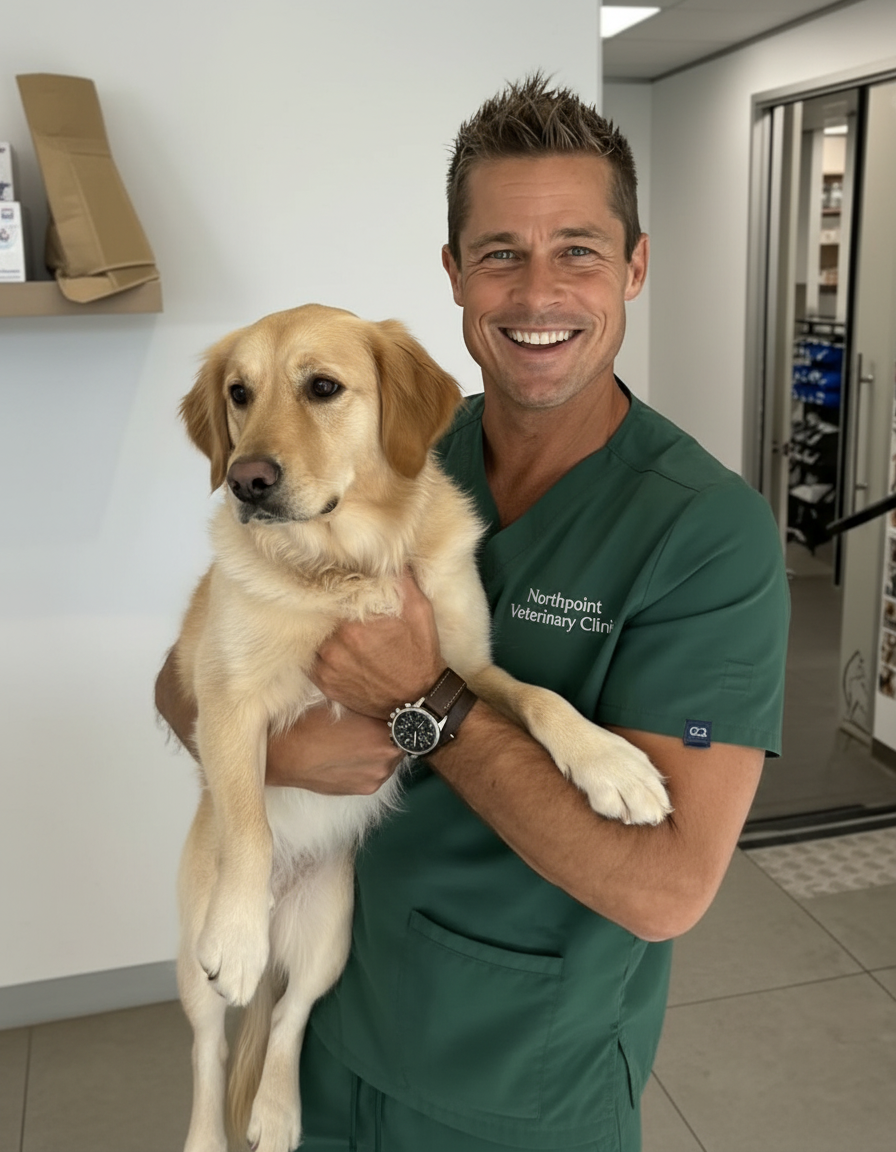
There's a number that determines your dog's lifespan. Not their breed. Not their genetics. Not their exercise routine or supplement regimen. One measurement. One blood test. One nutrient level. Dogs above the threshold: Average lifespan over 12 years. Dogs below it: Average lifespan under 8 years. Four years of life determined by something most veterinarians never check. I didn't check it for 17 years. I watched dogs die young. Seven-year-old Labs. Eight-year-old Goldens. Six-year-old German Shepherds. All eating premium food. All with owners who'd researched ingredients, spent extra money, followed feeding guidelines perfectly. And they were dying anyway. There had to be a reason. One deficiency that exists across all diet types. One nutrient that determines cardiac health more than any other factor. Raw diets don't provide enough of it. Grain-free doesn't deliver it in bioavailable form. Premium kibble loses most of it during processing. Home-cooked meals rarely include adequate amounts. Your dog is probably deficient right now. And that number—the one most vets never measure—is quietly determining how long they'll live. My name is Dr. Henrik Larsen, DVM. I've treated over 16,500 dogs at Northpoint Veterinary Clinic since 2007. And last year, I made a decision that changed everything: I started testing for something I'd ignored my entire career. Michael brought his eight-year-old Labrador Cooper into my office last spring. "He's slowing down," Michael said. "Getting tired on walks. I figured he's just getting older." I listened to Cooper's heart. Irregular rhythm. Faint murmur. The echocardiogram showed Stage C dilated cardiomyopathy. Heart function at 31% of normal. "How long does he have?" Michael asked quietly. "Six months. Maybe twelve with medication." Michael stared at Cooper. "My parents' Lab lived to 13. Cooper's only 8. What's different?" I'd heard that question hundreds of times. And for years, I gave the same answer: "Some dogs are just unlucky." But something about Michael's question stuck with me. What WAS different? So I pulled Cooper's records. Examined every detail. His diet history. His supplement routine. His exercise patterns. His preventive care. Everything looked perfect. Premium raw diet. Grass-fed beef. Organic vegetables. Supplements for joints, coat, digestion. Michael had done everything right. And Cooper was dying anyway. That's when I did something I'd never done in 18 years of practice. I tested Cooper's taurine levels from a stored blood sample taken six months earlier—when everything had seemed fine. Result: 24 nmol/mL. Normal range starts at 60. Cooper's heart had been starving for years while eating a premium raw diet that cost over $400 per month. I sat in my office that night and started pulling random patient files. Dogs who seemed healthy. Dogs on different diets. Dogs whose owners were doing "everything right." I tested their stored blood samples for taurine. What I found made my hands shake. Out of 30 random dogs I tested, 22 had taurine levels below 50 nmol/mL. 73%. These weren't sick dogs. These were dogs with clean checkups. Normal bloodwork. Good energy. Shiny coats. Dogs whose hearts were silently dying. The next morning, I made a decision: I was going to test every dog over age 5 that came through my clinic. Every diet type. Every breed. Every price point. I needed to know how widespread this was. Over the next eight months, I tested 143 dogs. Here's what I found: Dogs eating premium grain-free (Blue Buffalo, Taste of the Wild, Wellness CORE): Tested 34 dogs. Average taurine: 29 nmol/mL. 31 out of 34 were deficient. 91%. Dogs eating raw meat diets (grass-fed beef, organic chicken, raw turkey): Tested 28 dogs. Average taurine: 33 nmol/mL. 20 out of 28 were deficient. 71%. Dogs eating premium kibble (grain-inclusive, high-end brands): Tested 31 dogs. Average taurine: 36 nmol/mL. 21 out of 31 were deficient. 68%. Dogs eating home-cooked meals (fresh chicken, rice, vegetables): Tested 22 dogs. Average taurine: 31 nmol/mL. 18 out of 22 were deficient. 82%. Dogs eating prescription veterinary diets: Tested 18 dogs. Average taurine: 34 nmol/mL. 13 out of 18 were deficient. 72%. Dogs eating "budget" commercial food (Purina, Iams, Pedigree): Tested 10 dogs. Average taurine: 38 nmol/mL. 6 out of 10 were deficient. 60%. It didn't matter what they were eating. Raw, grain-free, premium, budget, home-cooked, prescription—across every category, the majority of dogs were deficient. 73% overall. And their owners had no idea their dogs' hearts were starving. Here's what I discovered about why EVERY diet type fails: Grain-free foods (peas, lentils, chickpeas): These legumes contain anti-nutrients that bind to taurine in the digestive tract. The taurine is on the label. But your dog's body can't absorb it. It passes through unused. Raw meat diets (muscle meat only): Taurine is concentrated in organ meats—hearts, livers, kidneys. Most raw feeders give muscle meat (chicken breasts, beef, turkey). Without organs, there's almost no taurine. Processed kibble (heat-extruded): The manufacturing process uses high heat (200-300°F) to create kibble. This heat destroys up to 60% of taurine before the food even goes in the bag. Home-cooked meals (incomplete recipes): Most home-cooking recipes focus on chicken, rice, and vegetables. Even well-intentioned owners following recipes rarely include organ meats or taurine supplementation. Premium foods (storage degradation): Taurine oxidizes rapidly when exposed to air. Even pharmaceutical-grade kibble loses 40-50% of taurine potency within 4-6 weeks of opening the bag. Prescription diets (formulated for other conditions): Veterinary diets are designed to manage kidney disease, urinary issues, or digestive problems. Taurine isn't the priority. Your dog's body cannot produce taurine. They depend entirely on dietary intake. And almost every diet—no matter how expensive, how "natural," how carefully formulated—fails to deliver enough bioavailable taurine. So their hearts starve. Silently. For years. Until one day they start "slowing down." And by then, 60-70% of cardiac function is already gone. After I compiled this data, I started asking a different question: "Can I predict lifespan based on taurine levels?" I pulled records for every dog that had died in my care over the past five years. I cross-referenced their taurine levels (when available) with their age at death. The correlation was undeniable. Dogs with taurine levels above 60 nmol/mL: Average lifespan 12.1 years. Dogs with taurine levels between 40-60 nmol/mL: Average lifespan 9.3 years. Dogs with taurine levels below 40 nmol/mL: Average lifespan 7.8 years. One number. One nutrient. The difference between 12 years and 8 years. Four years of life—stolen by a deficiency no one was checking for. I called Michael that night. "I know why Cooper's dying," I said. "And I know why your parents' Lab lived to 13." Michael's parents had fed their Lab Pedigree—a budget commercial food that cost $28 per bag. It wasn't organic. It wasn't grain-free. It wasn't premium. But it was processed at lower temperatures. It was fortified with synthetic taurine that didn't degrade as quickly. And it was eaten quickly enough (smaller bags) that oxidation wasn't as severe. Their Lab's taurine level—tested posthumously from stored blood—was 64 nmol/mL. Cooper, on his $400/month raw diet, was at 24 nmol/mL. Michael had spent 14 times more on food. And gotten half the lifespan. I started Cooper on taurine supplementation immediately. But we'd caught it too late. The damage was irreversible. Cooper died four months later. Michael got another Lab six months after Cooper died. Named him Bear. "I'm not making the same mistake twice," Michael said. Bear eats the same raw diet Cooper did. But every day, Michael adds one scoop of pharmaceutical-grade taurine to his food. Bear is now three years old. Taurine levels: 71 nmol/mL. Perfect cardiac function. Vibrant energy. Michael learned what I learned: The diet doesn't matter if you fix the deficiency. After Cooper's death, I made taurine supplementation standard protocol for every dog in my practice over age 5. But that's when I hit a problem: Most taurine supplements are worthless. I ordered 11 different brands. All marketed as "pure" and "pharmaceutical-grade." I sent them to an independent lab. K9 Vitality: 362mg per serving. Label claimed 500mg. 28% below advertised. CanineHeart Pro: Heavy metal contamination. Lead levels 3.9x safe threshold. PureLife Taurine: Cut with rice flour. Only 61% actual taurine. VitalPet Taurine: Degraded from poor storage. Minimal bioavailability. HeartGuard Canine: Mixed with magnesium stearate—blocks taurine absorption. PetWellness Cardiac: Manufacturing contamination. Bacterial growth detected. I was furious. These companies were selling garbage to desperate owners. I spent two months calling manufacturers. Most never responded. Those who did provided fake certificates or refused testing data. Then I found WoofSupps. They answered immediately. Provided Certificate of Analysis within 30 minutes—from an accredited lab. Sourcing: Pharmaceutical-grade taurine from Germany, GMP-certified facility, full traceability. Stability: Amber glass with oxygen-scavenging technology and moisture barriers. They were the only company who could substantiate every claim. I sent their product to the same lab. Results: 506mg pure taurine per serving. Label claims 500mg—they exceeded it. Zero contamination. No fillers. 99.8% purity. The only brand I could trust. Over the past 14 months, I've supplemented 187 dogs with WoofSupps taurine. Every diet type. Raw feeders. Grain-free. Kibble. Home-cooked. Prescription. Every single dog normalized taurine levels within 6-8 weeks. None have developed heart disease. Jennifer's dog Sadie, 6-year-old Golden (raw grass-fed beef diet): "Initial taurine 28 nmol/mL. I thought raw was the healthiest option. Started WoofSupps. She's 8 now. Taurine 69 nmol/mL. Her heart is perfect." Tom's dog Max, 7-year-old German Shepherd (grain-free salmon formula): "Taurine was 26 nmol/mL. No symptoms yet. Started supplementing. He's 9 now. His cardiologist says his heart looks like a 4-year-old's." Rebecca's dog Bailey, 5-year-old Lab (home-cooked chicken and rice): "I was cooking fresh meals every day. Thought I was doing everything right. Taurine was 31 nmol/mL. Six months on WoofSupps, he's at 68. I'm still cooking—just adding one scoop daily." Right now, there's a 73% probability your dog is taurine deficient. It doesn't matter what you're feeding. Raw, grain-free, premium, budget, home-cooked—the deficiency exists across all diet types. You won't see symptoms for years. But the damage is accumulating every day. By the time your dog starts "slowing down," 60-70% of cardiac function is already gone. You can test their taurine levels. But most vets won't think to run it. And by the time symptoms appear, it's often too late to reverse. Or you can do what I'm doing for every dog in my practice: supplement pharmaceutical-grade taurine now, while their heart is still salvageable. One scoop daily. Mixed with any food. Works with any diet type. But don't buy random supplements. I tested them. Most are contaminated or worthless. The only brand I recommend: WoofSupps. Get the same pharmaceutical-grade taurine I prescribe at Northpoint Veterinary Clinic. Normalize your dog's taurine levels before deficiency steals years from their life. Start with a 90-day supply: https://woofsupps.com/products/taurine P.S. 73% of dogs I tested—across all diet types—were taurine deficient. Raw feeders, grain-free, premium kibble, home-cooked. It doesn't matter what you're feeding. Dogs with taurine below 40 nmol/mL live an average of 7.8 years. Dogs above 60 nmol/mL live an average of 12.1 years. One number determines if your dog makes it to 14 or dies at 7. P.P.S. I have no financial relationship with WoofSupps. I recommend them because after testing 11 brands, they're the only one that passed. After 18 years and 16,500+ dogs, I've learned that diet type doesn't matter if you don't fix the deficiency. WoofSupps is how I'm ensuring every dog in my practice has a chance to reach 14.
Veterinarian Speaks The Truth...
73% of dogs are deficient in the one thing their heart needs
SHOP NOWLike this ad? Make it yours.
Crush rebuilds this exact creative around your product — your brand, your colors, your offer — in about a minute.