Priya K
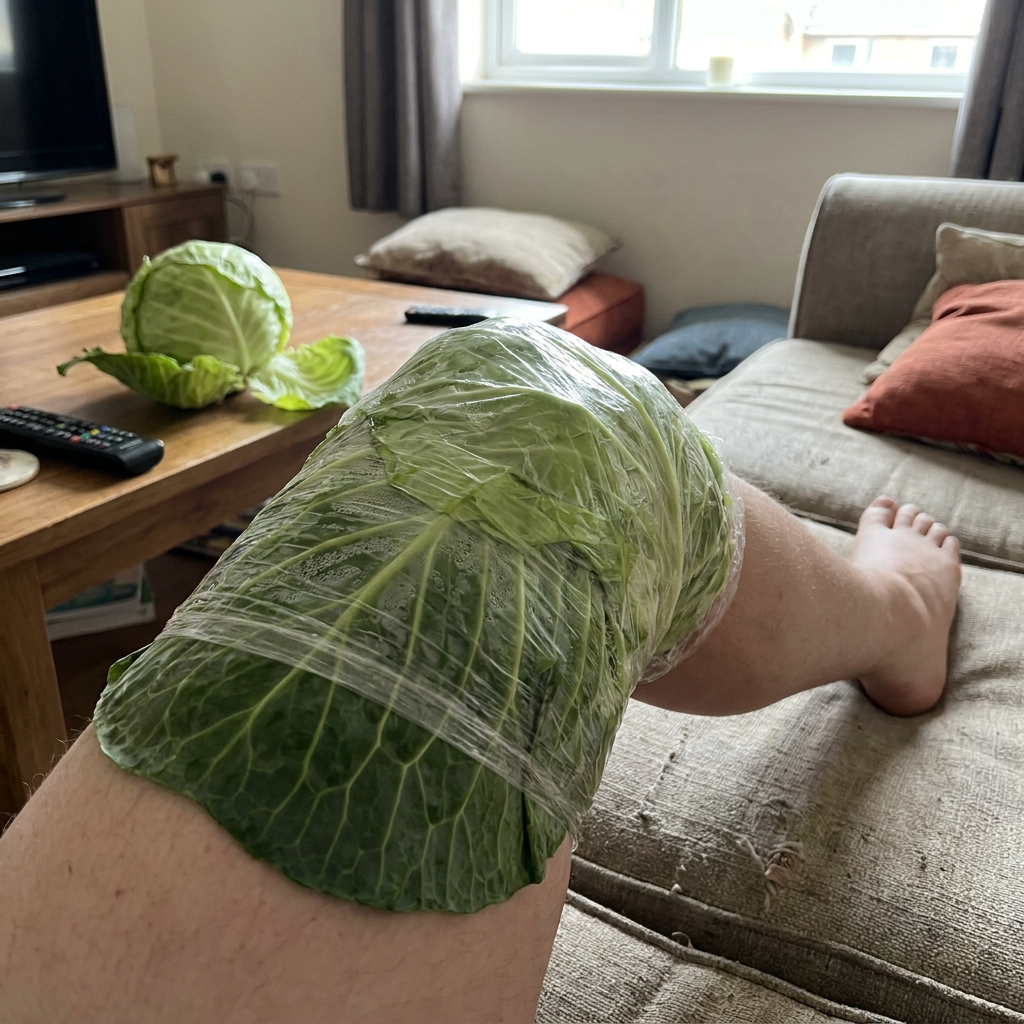
Priya K Facebook ad: “Read This If YouHave Bone on Bone Knee Problem”
Ran for 32 days, from August 7 to September 8, 2026, the last day Crush saw it.
Run by Priya K on Facebook. Crush is not the advertiser and does not verify its claims. See this ad in Meta's Ad Library(opens in a new tab)
Want an ad like this for your product?
Crush makes new ad images for your product from this ad: your logo, your product photo, your offer.
Trials from $19.95 USD, then $79.95 USD a month. Cancel anytime.
About this ad
- Meta Ad Library ID
- 1562991955608736
- Platforms
- Facebook, Instagram, Audience Network, Messenger and Threads
- Relaunches
- 0
Ad text
I had fought my knee pain for two years and won nothing. Then I met a retired orthopedic specialist at a family function. Six weeks later, my orthopedic surgeon asked why I cancelled my knee replacement surgery. When I told him about the 2-minute bedtime ritual that finally stopped my knee pain... He pulled out his notepad and wrote it down. I wasn't expecting that. ======== I'm 46 years old. I live in Hyderabad with my husband, my mother-in-law, and my son. For twenty-four years, I've been the one who keeps this house running. First one up. Last one to sit down. About two years ago, I started noticing something in my right knee. Not pain exactly. Just a strange stiffness when I got up from the sofa. I ignored it. What else could I do? The house doesn't stop because your knee feels funny. But within three months, that stiffness turned into something I couldn't ignore. Every morning, the moment I swung my legs off the bed, my knees felt locked. Like they'd rusted overnight. I'd have to sit on the edge of the bed, slowly straighten them, wait for the "tak tak" sound to pass, then shuffle to the bathroom like my grandmother used to. My mother-in-law noticed first. "Why are you holding the wall?" "Just stiffness," I'd say. "It loosens up." But it stopped loosening up. It got worse. By month four, I couldn't sit on the floor anymore. No more sitting cross-legged for puja. I started using a chair in the pooja room. My mother-in-law didn't say anything. She didn't have to. Her face said it. Stairs became the worst part. Every step down, my knee would go "tak tak tak" and I'd grip the railing with both hands. I was 46 years old and I felt 65. ======== That's when I finally went to the doctor. He took an X-ray. Pressed around my knee. Made me bend and straighten it. "Wear and tear," he said. "Osteoarthritis. Very common at your age. Lose some weight, do some exercises, take these tablets." So I did. I took the tablets. They'd dull the pain for a few hours. By evening, the swelling came back. I did the exercises. Relief for a day, maybe two. Then the stiffness returned like it had never left. I tried Ayurvedic oil. Turmeric paste. Nothing worked. Eventually the doctor put me on stronger painkillers. The kind that work. But they burned my stomach. Acidity so bad I couldn't eat breakfast. I was destroying my stomach to save my knees. My husband said enough. "Go back. Tell him nothing is working." So I went. ======== The doctor looked at the new X-ray. Compared it with the old one. Pressed his lips together. "The joint space is narrowing," he said. "The cartilage is wearing down faster than I expected." He paused. "I think we need to start discussing knee replacement." Those three words hit me like a wall. "Knee replacement". "Is there anything else I can try?" I asked. He shook his head slowly. "At this stage, replacement is the standard recommendation. Let's schedule a consultation with the surgeon." I sat in the car for twenty minutes before I could drive home. ======== The next week, my husband's cousin had a family function. I almost didn't go. My knees were bad that day and I didn't want to be the one sitting in the corner while everyone else stood around talking. But I went. And that's where I met him. A retired orthopedic specialist. He was my husband's cousin's father-in-law. A man who'd spent over thirty years treating knee patients. Thousands of them, he said. Most of them were women over forty who came to him saying the same thing. "Doctor, my knee is gone. Wear and tear. Age." We were sitting in the hall after dinner. Someone mentioned my knee and he turned to me and said something that changed the way I understood about knee pain completely. He started practicing in the late eighties. Back then, there was one playbook for knee pain, and every doctor in the country followed it. Rest. Tablets. Injections. And when none of that worked, surgery. He didn't question it. Nobody did. That's what the textbooks said. That's what big medical companies trained them to do. For the first fifteen years, that's exactly how he treated his patients. And it worked, for a while. The tablets would buy them a few months. The injections would buy them a few weeks. But they always came back. Same knee. Same pain. Same X-ray. These weren't cures, they were subscriptions. And the surgery? He told me up to half of the people who got full knee replacement still had severe pain afterwards. But somewhere around his twentieth year, something started bothering him. Something that didn't add up. He had eighty-year-old patients who were Bone on bone, cartilage completely gone but were Walking, jogging, climbing stairs with zero pain in their knees. And then he'd see women in their forties with barely any damage on the X-ray who couldn't even stand up from a chair without grabbing the wall. If the damaged cartilage was causing the pain, worse cartilage should mean worse pain. Every time. But it didn't. So he started asking a question nobody around him was asking. If the cartilage isn't what's hurting, then what is? And what he found was something that sits in every anatomy textbook but somehow never makes it into the conversation when the doctor holds up your X-ray. Cartilage has no nerve endings. None. It cannot feel anything. It cannot send a single pain signal to your brain. The damaged cartilage the doctor is pointing at on your X-ray? It's not what's causing your pain. What's hurting, he realized, is the toxic fluid that builds up inside the knee. When the joint is irritated, it fills up with this fluid. Almost like a wound that keeps swelling but never drains. And because it has nowhere to go, it just sits there, pressing against the nerves, day after day. The longer it stays trapped, the more it builds up, and the worse the pain gets. The cartilage didn't need fixing. The fluid needed to move. And that's when everything changed for his patients. He started telling them to wear a soft compression knee sleeve at night. Because at night, you're not moving. The fluid has nowhere to go. It just pools and stiffens. But with the sleeve on, the compression does what movement can't. It pushes the fluid out, slowly, steadily, hour after hour, while the body rests. I told him I already had a knee sleeve. One I'd got from Amazon. He laughed. Those are gym sleeves, he said. They're made from neoprene, they trap heat inside. Instead of pushing the toxic fluid out they trap them. The ones that actually worked for his patients were made from bamboo fabric. Soft enough to sleep in without itching or overheating, but firm enough to keep that gentle pressure through the night. I asked him which one he recommended. He said it was called Restep. ======== I came home that night and searched for it. Found the website. Read every word. The reviews were from women describing exactly what I was going through. The morning stiffness. The "tak tak" sound. The swelling that comes back every evening. The fear of stairs. I ordered it at midnight. Didn't tell anyone. I'd already spent too much money on things that didn't work. I didn't want to hear "another waste." ======== When it arrived, I put it on before bed. It felt different from anything I'd tried. Soft. Cool against my skin. Not like those thick elastic knee caps that make you sweat within ten minutes. I slept through the night normally. The next morning, I sat on the edge of the bed. Straightened my knees. Put my feet on the floor. The "tak tak" was there. But the stiffness was different. Lighter. Like someone had oiled a rusted hinge overnight. I thought it might be coincidence. But the next morning, same thing. Less stiff. Less locked. By day five, I got out of bed without holding the wall. I didn't even realize I'd done it until I was already standing in the bathroom. By the end of week one, I walked down the stairs without gripping the railing with both hands. I stood in the kitchen and made breakfast without thinking about when I'd need to sit down. My mother-in-law looked at me. "You're not limping today." I couldn't speak. I just nodded. By week two, I sat on the floor to sort vegetables. I hadn't sat on the floor in eleven months. By week three, I did puja on the floor. Cross-legged. The whole thing. I cried afterwards. Not from pain. From relief. By week six, I cancelled the knee replacement consultation. ======== Two months later, I went back to the orthopaedic surgeon for a regular check-up. He pressed around my knee. Made me bend it. Made me walk. He looked confused. "The pain is really this much better?" "Most days I don't feel it at all." "What did you do?" I told him what the retired physio had told me. About the cartilage having no nerve endings. About the trapped fluid. About the compression pushing it out overnight while you sleep. He listened. Then he reached for his notepad. "What's the sleeve called?" "Restep." He wrote it down. "I wish more of my patients tried something like this before ending up in my office for a replacement," he said. ======== That was five months ago. I've told every woman I know who complains about her knees. My sister-in-law ordered one after seeing me climb stairs like a normal person again. She messaged me after twelve days: "I did the whole Navratri standing. My knees didn't even swell." My neighbour, the one who told me her cousin's replacement went wrong, she tried it too. She's been wearing it for three months. She says she forgot what the morning stiffness felt like. I still wear my Restep sleeve every night. It takes ten seconds to pull on. I don't even think about it anymore. And that's the point. I don't think about my knees anymore. For nearly two years, my knees were the first thing I thought about every morning and the last thing I worried about every night. Now I just live. I cook. I climb stairs. I sit on the floor. I walk through markets without counting how long I've been standing. My knees carry me. Like they're supposed to. ======== If you're reading this and you've just been told you need a knee replacement, or you're dreading that conversation, I understand. Your pain is real. You're not being dramatic. It's not just age. It's not just weight. The cartilage is worn, yes. But that's not what's hurting you. The trapped fluid pressing on your nerves is. And it doesn't need surgery to move. It needs the right kind of pressure, through the night, every night. Restep has a 60-day money-back guarantee. You can try it and see for yourself. I'm not getting anything from sharing this. I just know what it's like to plan your whole day around avoiding stairs. To sit in a chair during puja while everyone else sits on the floor. The wear stays exactly where it is. The pain doesn't have to. Your knees have carried your family for years. It's time they got some support. ======== update: so many of you messaged me asking for the link. I'm putting it here. https://www.restep.in/products/premium-bamboo-knee-sleeve
Where the ad sends people
restep.in
Read This If YouHave Bone on Bone Knee Problem☝️
Restep
Learn more: restep.in(opens in a new tab)