
Inactive· since Feb 22, 2026
- 67
- days it ran
- 0
- relaunches
Ad copy
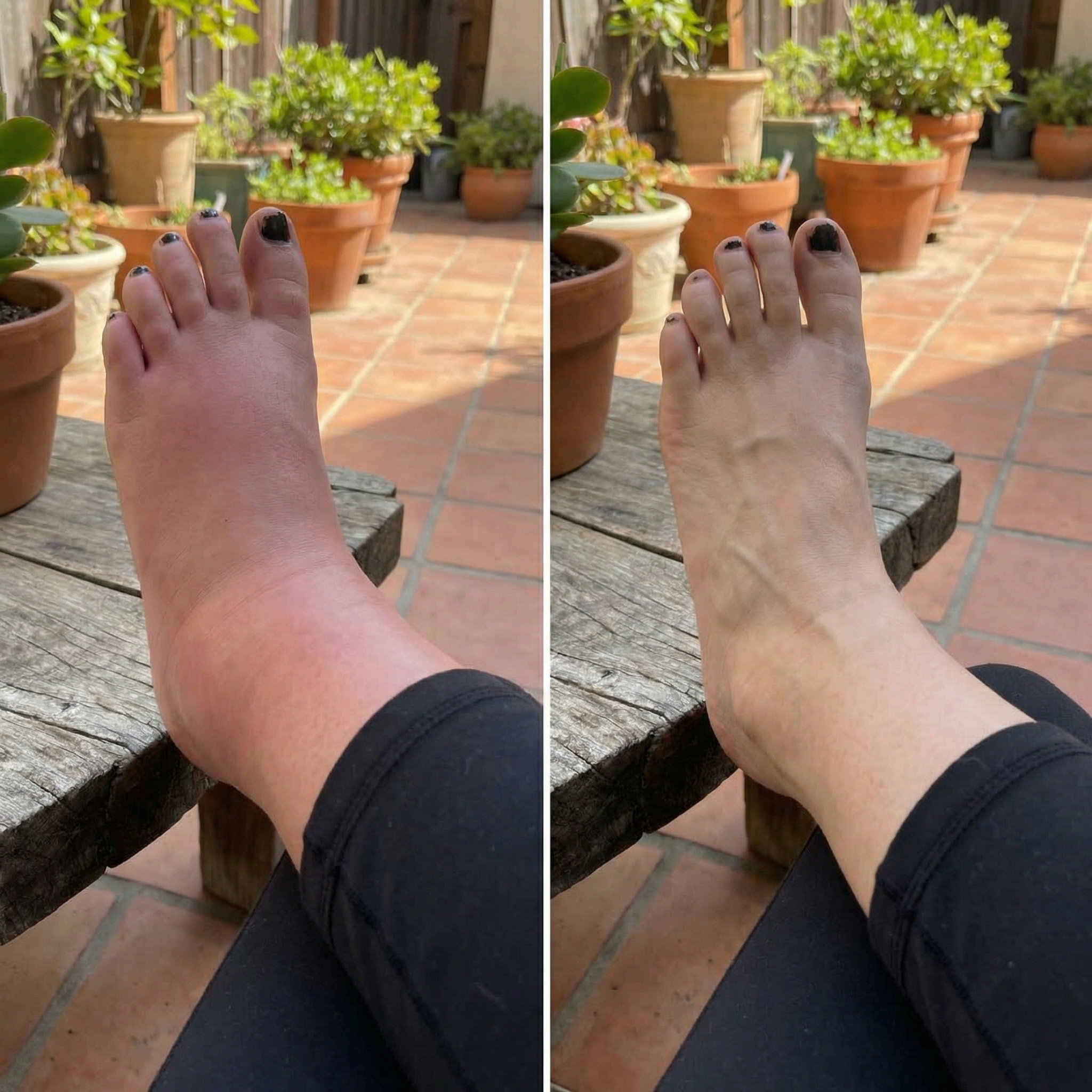
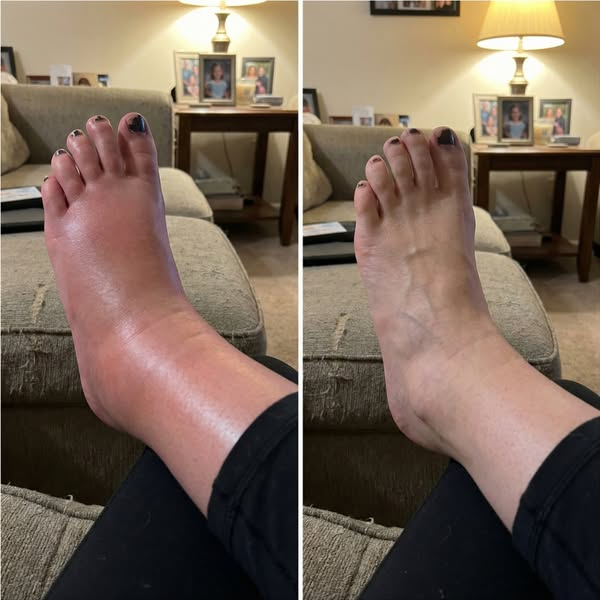
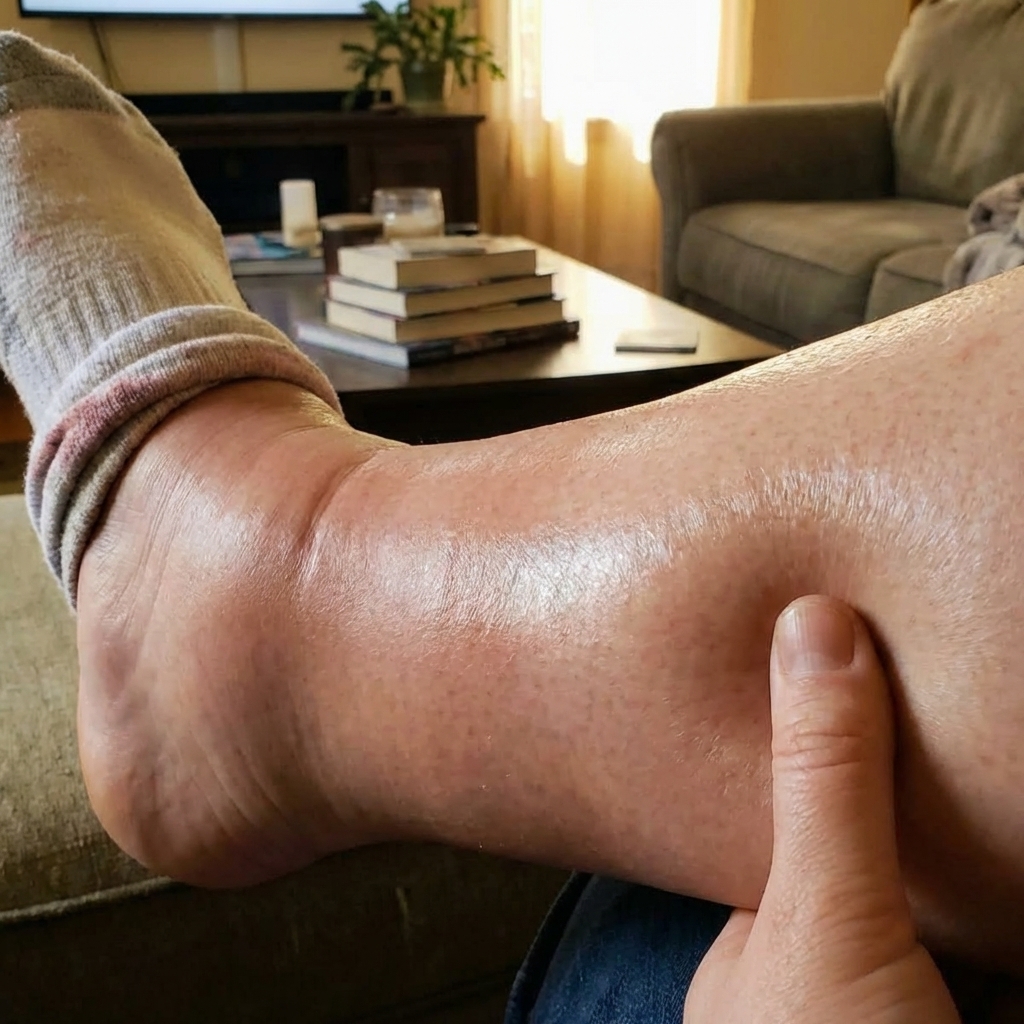
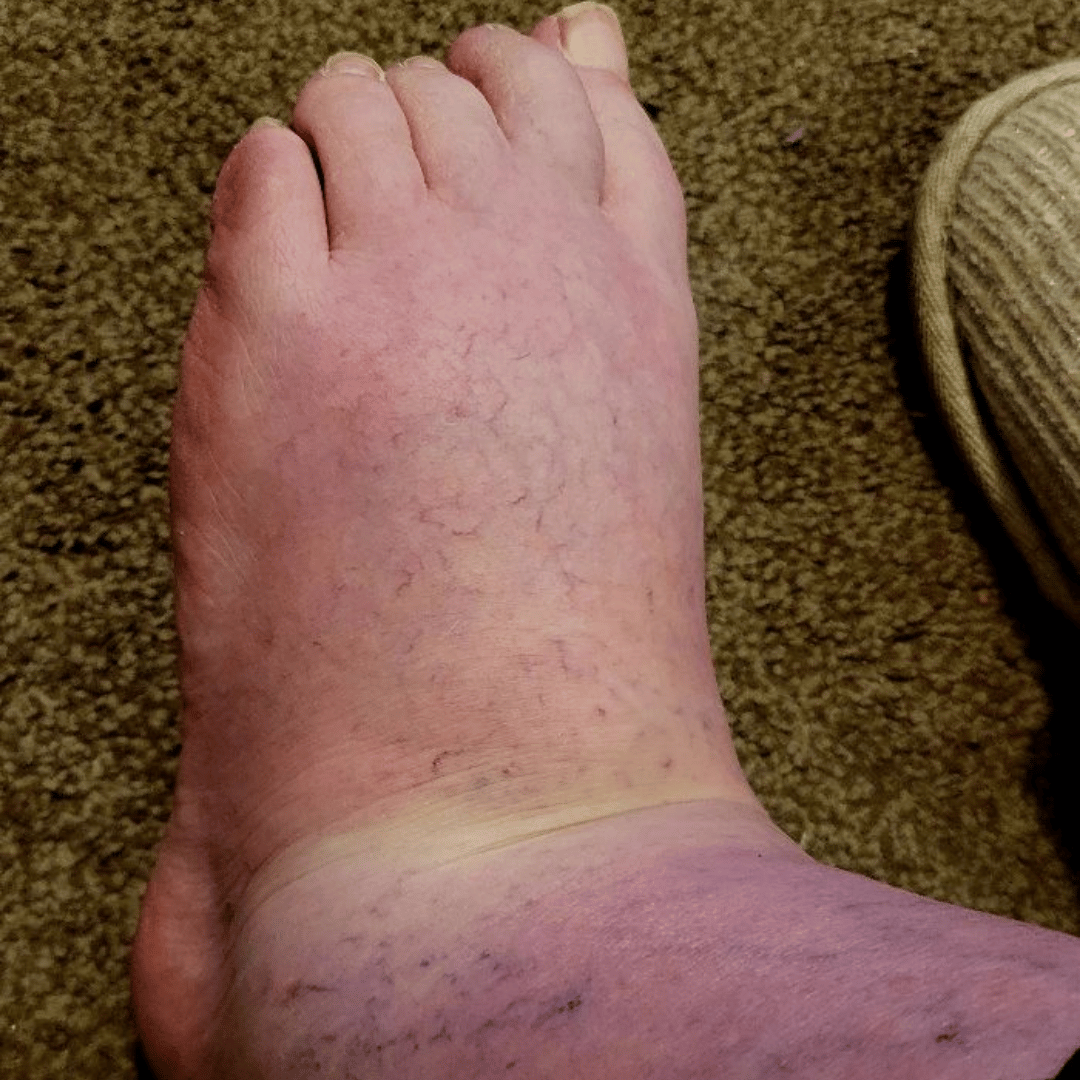
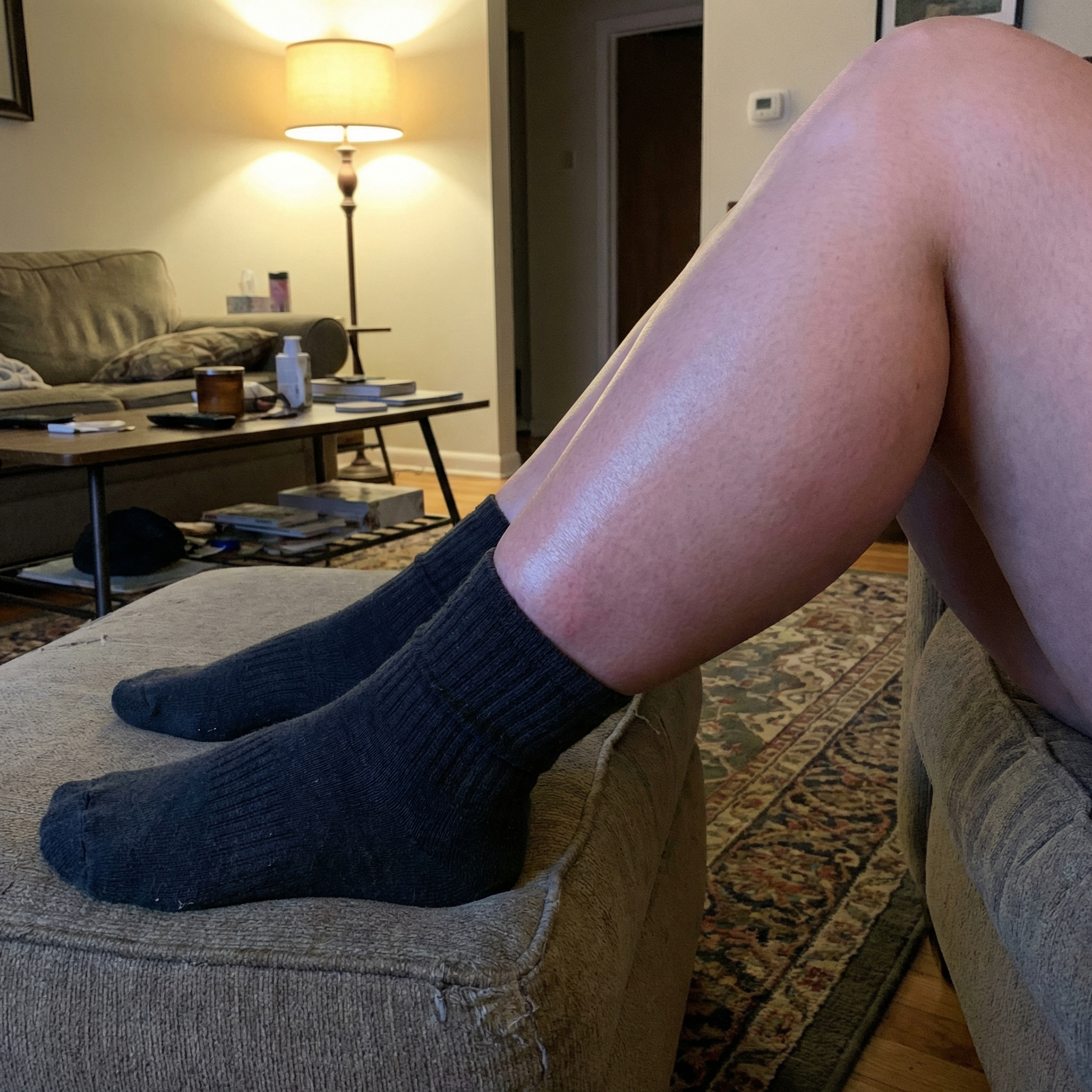
I've been going to Costco for 22 years. Every Saturday. Nine-thirty in the morning. Same route. Start at the bakery, swing through produce, grab the rotisserie chicken, finish at the pharmacy for my prescriptions. Helen at the pharmacy window knows me. Knew my husband before he passed. Asked about my grandkids every single week. That's the thing about your Costco. It's not just shopping. It's your loop. Your people. Your Saturday routine that means you're still capable. Still independent. Still you. Last March, that changed. It was busy. Saturdays always are. The place was packed because spring had finally arrived and everyone was stocking up for barbecue season. I'd made it about halfway through my loop. Bakery done. Produce done. Heading toward the back. And then my legs started screaming. Not the dull ache I'd learned to live with. This was different. That hot, bursting pressure behind the skin. The feeling like my ankles were two water balloons being squeezed from the inside. I stopped near the paper towels. Gripped the cart handle. Tried to breathe through it. A younger woman — maybe forty — nearly bumped into me from behind. "Oh, sorry! Didn't see you stopped there." Then she looked down at my legs. At my ankles spilling over the tops of my shoes. She didn't say anything. She didn't have to. Her eyes said it all. Poor thing. Look at those legs. I pushed forward. Made it another aisle before I knew I wasn't going to finish. The rotisserie chickens were maybe 150 feet away. I could see the warming case. I could smell them. But my legs felt like cement blocks chained to my hips, and every step sent fire up through my shins into the stretched-tight skin around my ankles. I left my cart by the freezers. Half-full. Abandoned. Like I was some confused old woman who wandered off. The walk back to the entrance was the longest of my life. Not because of distance. Because of what I had to pass. The electric scooters. They were right there by the door. Four of them, plugged in, waiting. And for the first time in my life, I understood they were waiting for me. I didn't take one. Not that day. But I stared at it. And I realized I'd become "that" woman. The one people step around. The one who can't finish her own shopping. I drove home without my chicken. Without half my list. Without the routine that had anchored my Saturdays for over two decades. My daughter called that evening. I didn't mention the cart. Didn't mention the woman's eyes. Didn't mention that I'd been made to feel like an invalid in my own store. Some things you don't say out loud because saying them makes them real. The problem is, it wasn't a one-off. It was just the one I couldn't ignore anymore. There'd been signs for years, if I'm honest. The shoes getting tighter. Having to sit on the bed for ten minutes just to wrestle on my compression socks. My grandson asking why Grandma's legs look "like bread." I'd blamed it on everything else. The humidity. Too much standing. Too much salt. Getting older. But it wasn't just "getting older." It was me. I was 66 years old and my legs were failing me. And instead of doing something about it, I'd spent three years pretending it wasn't happening. The Tuesday after the Costco incident, I went to my doctor. Not for my legs — I'm not that brave. Went for my thyroid check. But while I was there, I mentioned it. Casual like. "While I'm here, doc, my ankles have been really swollen lately." She glanced at my legs for maybe two seconds. "That's venous insufficiency. Very common at your age." Then she explained my options. Option one: Compression stockings. Medical grade, she said. $90 for a good pair. Need at least two or three to rotate. Should wear them all day, every day. What she didn't mention: You need the flexibility of a gymnast to pull them on alone. And they leave angry red welts that make your legs look worse, not better. I'd already been fighting that battle for two years. Option two: Water pills. Furosemide, she said. Standard treatment. Would help move the fluid. $60 a month. Every month. Forever. What she didn't mention: They make you run to the bathroom every 15 minutes. You can't go anywhere without scouting the restrooms first. You trade swelling for being trapped in your own house. Option three: "Elevate whenever possible." Sure, doc. I'll just live with my feet in the air. That sounds like a life. I asked if there was something that could actually fix it. Not manage it. Fix it. She gave me a sympathetic look. "This is degenerative, Nancy. The valves don't work like they used to. We can manage it, but gravity always wins eventually." Then she printed my prescriptions and called in the next patient. I sat in my car in the parking lot for fifteen minutes, trying not to cry. I did what I always do when I'm stuck. Nothing. Went back to my life. Went back to struggling. Went back to the morning war with compression socks and the evening ritual of elevating legs that throbbed no matter what I did. I stopped going to Costco. Not consciously. Just... found reasons not to. My daughter could grab things for me. Or I'd do a grocery delivery. Or I just didn't need anything this week. The truth was I couldn't face it. Couldn't face Helen at the pharmacy, or the freezer aisle, or the electric scooters lined up at the entrance like a judgment. $4.99 for a rotisserie chicken, and I'd lost my Saturday routine. Lost a store I'd been going to for over two decades. Lost a tiny piece of my independence. That's what edema does. It doesn't just take your legs. It takes everything around them. The Costco run. The evening walk. The grandson's soccer game where you have to sit on a walker while everyone else stands at the fence. The parts of life that make it worth living. Six weeks later, my daughter insisted I see another doctor. "Mom, you can't just accept this. There has to be something else." She'd found a lymphatic specialist in Scottsdale — a Dr. Grace Calder. She had unusual reviews online. People saying she'd helped them when everyone else had failed. I thought it was a waste of time. Another $275 to hear "elevate more." But I went anyway. For my daughter. Dr. Calder was nothing like my regular doctor. She spent twenty minutes examining my legs. Not a glance — a real examination. She pressed her thumb into my ankle and timed how long the dent stayed. Eleven seconds. "How long has it been this bad?" she asked. "Three years, maybe. But the last six months have been the worst." She nodded. "And I'm guessing you've been told compression stockings, diuretics, and elevation." "How did you know?" "Because that's the standard playbook. And for your condition, it's completely wrong." I sat up straighter. No doctor had ever said that before. She grabbed a piece of paper and drew a simple picture. "Mrs. Thornton, what do you think is causing your swelling?" "The valves in my veins. They're worn out. Gravity pulls the fluid down and it can't get back up." "That's what they teach in medical school. It's also only half the story." She tapped the paper. "Your body produces fluid constantly. Your lymphatic system — a network of tiny vessels and nodes — is supposed to filter that fluid, clean it, and drain it back into circulation. When it's working properly, nothing pools. Your legs feel light." She drew arrows going up and down. "But when that drainage system gets congested — from inactivity, inflammation, aging, years of fluid sitting in the same place — the nodes harden. The vessels slow down. And the whole system backs up like a clogged drain." "So the fluid just sits there?" "Exactly. And here's what your other doctors don't understand: compression socks squeeze from outside, but they can't unclog a drainage system that's shut down from the inside. Diuretics pull water from your blood through your kidneys, but the fluid trapped in your leg tissues? It's not going anywhere. Because the lymphatic pathways are blocked. You're mopping the floor while the drain is still clogged." I felt something shift in my chest. Like a door opening. "What unclogs the drain?" She leaned forward. "That's what I spent three years figuring out. My husband Robert had the same condition. Worse than yours. He couldn't walk from our driveway to the mailbox. I spent over $7,000 on every standard treatment. Nothing worked." "What finally did?" "The lymphatic system needs three things to start flowing again. Not one. Not two. All three." She held up three fingers. "First — lymphatic stimulation. Something that actually wakes up the sluggish vessels and gets them contracting again, pushing stagnant fluid back into circulation." "Second — node decongestion. The nodes are hardened and blocked. You have to loosen them. Break up the buildup. Clear the pathway so fluid has somewhere to go." "Third — blood and lymph purification. The fluid sitting in your tissues is full of waste and toxins. If you just push the fluid without cleaning it, the system clogs right back up." She put her hand down. "All three. Simultaneously. That's what actually reverses lymphatic congestion." "And there's a way to do all three?" She nodded. "Four specific herbs. Each one targets a different part of the drainage system. Together, they reopen the whole thing." She wrote them down on her notepad. "Cleavers — this is the big one. It's literally called the lymphatic tonic herb. It pushes stuck fluid back into flow. Been used since ancient times specifically for swelling." "Red Clover — purifies the blood and clears waste from the lymph. Natural blood cleanser. Helps move out the toxins your body's been holding onto." "Stillingia — loosens tight, hardened lymph nodes. When your nodes are blocked, fluid can't move. Stillingia breaks through those blockages." "Prickly Ash — boosts circulation in your tiny blood vessels and supports drainage. Gets the fluid moving again so it can actually leave your body." She tore the page off and handed it to me. "I put my husband on this protocol. After everything else failed — the socks, the pills, the elevation, the $150 lymphatic massages that wore off in four hours — this is what actually worked. Because it doesn't manage the fluid. It reopens the drainage system so the fluid has somewhere to go." I stared at the list. Four herbs. That's it. "Why didn't my doctor tell me about this?" She gave me a look I'll never forget. Not anger. Sadness. "Because there's no pharmaceutical patent on herbs, Nancy. No billing code for lymphatic restoration. No monthly prescription to refill. The medical system makes money when you come back every month for more pills and more socks. A natural protocol that fixes the problem in 10–12 weeks? There's no profit model for that." She stood up. "I wrote a full article explaining everything — the research, the mechanism, what I learned saving Robert's legs. Read it tonight. Then decide if you want to keep managing symptoms or actually unclog your drainage system." I read the article that night. Everything she said made sense. The clogged lymphatic system. The congested nodes. Why compression and pills only work temporarily — they don't address the cause. But here's the problem I ran into. I tried to follow the protocol on my own. Went to three different health food stores looking for cleavers. Found one that had it, but the bottle looked like it had been on the shelf since 2019. Ordered red clover from Amazon. Got something that smelled like lawn clippings and listed "other ingredients" longer than the actual herb. Couldn't find stillingia anywhere locally. Had to order it from a specialty herbalist online. Took two weeks to arrive. Prickly ash? Found a tincture at a naturopath's office. $38 for a tiny bottle that lasted ten days. Then came the real problem: dosing. How much of each? How often? Together or separate? With food or without? Morning or night? There's no standardized information about this. Every source says something different. I was measuring with droppers, mixing things in glasses, guessing. It felt like chemistry homework. And the cost. When I added it all up — four separate herbs, four separate bottles, four separate brands with four separate price points — I was spending over $200 a month. Every single month. Just to feel like a normal human being. But you know what? I did it. Because I was desperate. Because I'd already spent more than that on compression socks that sat in my drawer and water pills that just made me pee. And after about three weeks? Something changed. It wasn't dramatic. Wasn't like the movies. But one evening I stood up from my recliner and realized the cement blocks were lighter. Not gone. But lighter. Like someone had let a little air out of the water balloons. After a month? I pressed my thumb into my ankle. The dent filled back in five seconds. Down from eleven. I could get my shoes on without the ten-minute negotiation. After two months? I looked down and saw my ankle bone. Just sitting there. Like it had been waiting for me to notice. I hadn't seen it in over three years. My daughter came over for dinner that week. She looked at my legs and her eyes went wide. "Mom. Your ankles." "I know." "They look... normal." "I know." She started crying. Which made me start crying. Which made the whole thing very messy and very beautiful. But I was still spending $200 a month on four separate bottles. Still measuring. Still guessing. Still ordering from different places and hoping the quality was consistent. So I started looking for someone who had put all four herbs together. In one formula. In the right doses. I spent weeks researching. The supplement industry is a mess. Most "lymphatic" or "detox" products are garbage — fairy dust amounts of cheap ingredients with fancy labels. I'd open a bottle, check the back, and see 50mg of cleavers when the protocol calls for ten times that. Or they'd throw in caffeine and call it "drainage support." I needed a company that had the exact four herbs. Real doses. No fillers. No synthetic diuretics. Third-party tested so I knew what was actually in the bottle. And one evening I'm scrolling through Facebook — just doom-scrolling after dinner, honestly — and I see a woman in a health group mention a small company called Nuflos. She said it had all four lymphatic herbs in one bottle. Said her legs had changed in weeks. I went to their website, ready to be disappointed. I'd been disappointed by twenty other companies already. And I almost fell out of my chair. Nuflos Lymphatic Drainage Drops. Cleavers. Red Clover. Stillingia. Prickly Ash. All four. In one bottle. Alcohol-free liquid tincture — so your body absorbs it fast. No pills to choke down. No powders to mix. Just a quarter teaspoon in your water or coffee. Twice a day. That's it. Third-party tested. Made in a GMP-certified facility in the US. Vegan. No fillers. No caffeine. No synthetic diuretics. Gluten-free. Soy-free. Dairy-free. They'd built the exact protocol Dr. Calder had written down on that notepad — in one bottle. And the price? When I was buying those four herbs separately? Over $200 a month. Nuflos? A fraction of that. Under a dollar a day. I ordered it that night. Didn't tell my daughter. Didn't want to get her hopes up. Didn't want to explain that I'd been spending $200 a month on loose herbs and was now switching to a single bottle that cost less than my morning coffee. It arrived in about a week. Small amber glass bottle. Compact. Came with a little dosing spoon. Didn't look medical. Didn't look like something for old people. I used it that evening after dinner. Quarter teaspoon in my chamomile tea. Couldn't taste it at all. And I kept going. Every morning in my coffee. Every evening in my tea. Week 1: By the third day I noticed my legs didn't feel as tight by the evening. The heaviness that usually hit by 4pm — that cement block feeling — was lighter. Not gone. But lighter. Like something inside was finally starting to move. Day 7: I pressed my thumb into my ankle. The indent stayed for four seconds. Down from eleven. Measurable improvement. Week 3: I slept through the night without waking up to urinate. For the first time in over a year. Week 5: I put on my nice slacks without hesitating. Looked in the mirror. And didn't immediately change into the wide-leg pants I'd been hiding in for three years. For three years, I'd felt shame every time I saw my ankles. The bread dough skin. The way my shoes cut into the swelling. The looks from strangers. But that morning, I just saw ankles. Normal ankles. Week 8: I looked down and saw both ankle bones. Clear as day. I just stared at them. Week 12: The pitting was almost gone. My legs felt light. Actually light. The cement blocks had dissolved. My clogged lymphatic system had finally started draining again. The real test was Saturday. I didn't plan it. Didn't build it up in my head. Just found myself driving to Costco at nine-thirty in the morning, same as I had for 22 years. The store was busy. The floors were hard. Everything was exactly as it had been the day of the incident. Helen was at the pharmacy window. "Nancy! Where have you been? I was starting to worry!" "Oh, you know. Busy. But I'm back now." "Well, you look good. Really good." "I feel good." Bakery. Produce. Rotisserie chicken. Pharmacy. I finished the whole loop. No stopping. No gripping the cart for dear life. No staring at the scooters wondering if today was the day. Just shopping, same as always. I'm not going to tell you these drops changed my life. That's too dramatic. Too salesman. What I'll tell you is they gave me back the pieces I'd lost. The Costco run on Saturday. The walk to the mailbox — yes, I'd stopped doing that too. My ankles, which actually have shape again. I can see the bones. The compression socks, which are now in a donation bag. I don't need them anymore. The world I'd been retreating from, one errand at a time. I did the math the other day, because I'm that kind of person. When I was buying herbs separately: over $200 a month. $2,400 a year. Before that — compression socks, water pills, specialist visits, elevation pillows: easily $3,000 a year. For things that didn't work. Nuflos: under a dollar a day. About $30 a month. That's roughly 25 cents per dose. Twenty-five cents. Less than a stamp. Less than the co-pay on a single water pill. My first doctor wanted me on $40/month pills forever. That's $480 a year. $960 in two years. And that doesn't count the socks. Or the specialist visits. Or the "just elevate" advice that costs $275 to hear. This works. And it costs less than my morning coffee. I'm not saying the medical route is bad. I'm sure it helps some people. I'm sure the pills and the socks have their place. But I didn't need symptom management. I needed to finish my Costco loop. I needed to stop canceling plans because my legs couldn't keep up. I needed to stop retreating. And for less than a dollar a day, I got all of that. The company is called Nuflos. It's the lymphatic drainage drops that contain the exact four herbs Dr. Calder put on that notepad — Cleavers, Red Clover, Stillingia, and Prickly Ash. They reopen the drainage system from the inside. They stimulate sluggish lymph vessels. They break through congested nodes. They purify the blood and lymph so the system doesn't clog right back up. Compression socks can't do that. Water pills can't do that. Elevation can't do that. Because none of those things touch the lymphatic system. Dr. Calder wrote a full article explaining everything — why standard treatments fail, what actually causes the swelling, and how she saved her husband's legs when seven thousand dollars of medical treatments couldn't. Worth a read if you're skeptical like I was. There's a 30-day money-back guarantee. So if it doesn't work, you get your money back. No risk except a few weeks of trying. I didn't need to send mine back. Last week, something happened that made me realize how far I'd come. I was at Costco. Saturday, usual time. There was a woman in front of me at the pharmacy. My age, maybe older. She was leaning hard on the counter, shifting her weight from foot to foot. That look on her face — the one that says everything hurts and you just need to get home. Her ankles were swollen. Shiny. The skin stretched tight like bread dough. I recognized that look. That exhaustion. That feeling of being trapped in a body that won't cooperate. I wanted to tell her about Dr. Calder. About the clogged lymphatic system. About the little amber bottle that fixed what three years of pills and socks couldn't. But that's not how women work, is it? You don't tell a stranger her legs look terrible. You just watch her suffer quietly and hope someone helps her. So I'm writing this instead. In case you're the woman at the pharmacy counter. In case you've got your own Costco incident. In case you've spent years wrestling with compression socks and pretending everything's fine. It's not fine. But it can be. For less than the cost of your morning coffee. Nancy, 66, Tucson P.S. I went to my grandson's baseball game last month. I stood at the fence for seven innings. Seven full innings on grass and dirt. After, he asked if I saw his double in the fifth. I told him exactly how it happened — lined it right over the shortstop's head, drove in two runs. His face lit up. That's not something you put a price on. But if you had to, it would be less than a dollar a day. P.P.S. I called my daughter the day after my first full Costco loop. She cried. Said she'd been so worried about me. I told her about Dr. Calder and her article. She read it that night and ordered a bottle of Nuflos for her mother-in-law, who has the same problem. Now there are two of us back on our feet. P.P.P.S. If your doctor has told you to "just elevate more" and "wear your compression socks" — read Dr. Calder's article. It explains why those treatments can't unclog a backed-up lymphatic system. And why the $7,000 she spent on her husband's legs was wasted until she figured out what actually works.
I read this article about leg swelling…
Discover the 5 hidden reasons for leg swelling and the natural at-home remedy that helps 87,000+ women find relief.
LEARN MORELike this ad? Make it yours.
Crush rebuilds this exact creative around your product — your brand, your colors, your offer — in about a minute.