Blood Sugar Wellness Community
Blood Sugar Wellness Community Facebook ad: “Ceylon Cinnamon 7200mg Equivalent with MCT Oil”
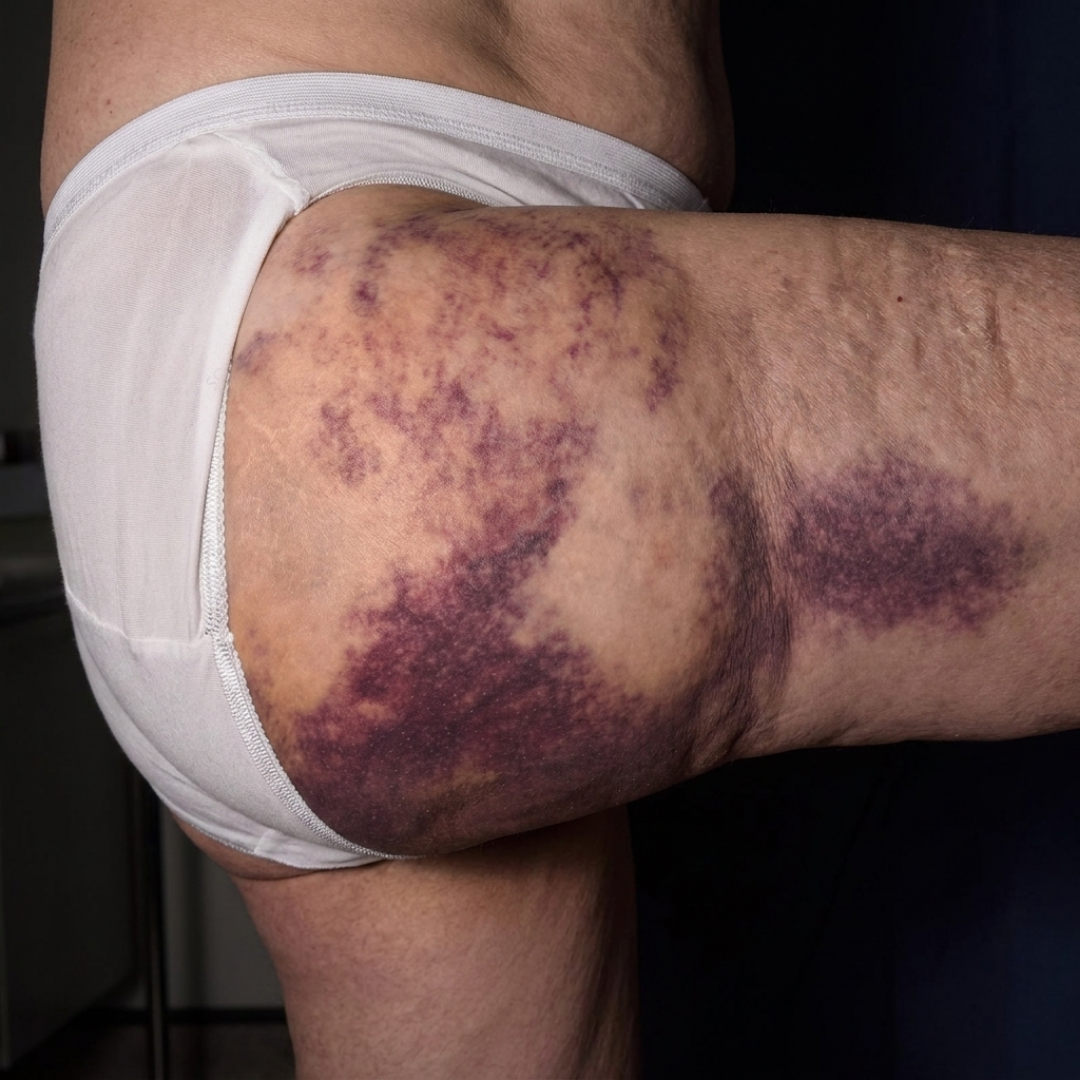
Ran for 5 days, from August 4 to August 9, 2026, the last day Crush saw it.
Run by Blood Sugar Wellness Community on Facebook. Crush is not the advertiser and does not verify its claims. See this ad in Meta's Ad Library(opens in a new tab)
Want an ad like this for your product?
Crush makes new ad images for your product from this ad: your logo, your product photo, your offer.
Trials from $19.95 USD, then $79.95 USD a month. Cancel anytime.
About this ad
- Meta Ad Library ID
- 1564025625274001
- Platforms
- Facebook, Instagram, Audience Network and Threads
- Relaunches
- 0
Ad text
My mother didn't die of her stroke. She lived another seven years in a chair by the window in the front room and never told us one thing about any of them. Are you cold. Are you hurting. Do you want the television on. Seven years of guessing. Seven years of watching her face for a flicker and never being sure we'd read it right. She knew us. You could see she knew us. Her eyes would follow you round the room and she'd get agitated when you were leaving and she could not tell us a single thing about any of it. I was 51 when it happened. I was 58 when it finished. I'm 64 now, and I was halfway up a cobbled street in Edinburgh last spring when I understood, for the first time in my life, that I had never actually been afraid of dying. I was afraid of the chair. My husband and I booked that trip three times. Cancelled it twice. The first cancellation was my mother. The second was money, the year the roof went. By the time we finally got on the plane we'd been talking about Scotland for eleven years and I had started to think we'd talk about it forever and never go. Ten days. Edinburgh, then up through the Highlands, then Loch Ness and back down. One of those small-group tours where they handle the hotels and the driving and you just walk. Day three. Out of the hotel just after nine. The Royal Mile runs from Holyrood at the bottom straight up to the Castle at the top. It doesn't look like much on a map. It's a mile. But it climbs the whole way, and it's cobbles, the big round ones, and every close and wynd off it goes up steps. It had rained overnight and the stones were still dark and slick with it. You've seen the pictures. The tall grey tenements leaning over the street. The Tron Kirk. A piper standing outside a shop in the cold playing for coins. The Castle sitting up on the rock at the top of it all, above everything, the way it's sat for eight hundred years. The kind of place you put on the wall when you finally get home. My husband was walking ahead of me with the guide. Camera out. Talking to another couple from our group about how they got the cannon up there. I was maybe forty feet behind them. I'd started to notice it around Parliament Square. My heart was pounding hard. Not the normal hard you'd expect on a hill in the cold. The deep pounding I'd been feeling at home for the last eight months walking up to our bedroom. I'd been telling myself it was the flight. Being out of shape from a winter at a desk. Getting older. I'd been telling my husband the same thing. I stopped by the railings outside St Giles' to catch my breath. Put my hand on the iron. Tried to slow my breathing. It didn't slow. The pounding got worse. My chest went tight, not painful exactly, but as if someone had set the flat of their hand against my breastbone and started to lean. I was sweating in forty-eight degree weather with a coat on. I felt the blood go out of my face. I sat down on the step of the cathedral. I tried to call up to my husband and nothing came out. The street kept going. A tour group came past me the other way, going down, all in matching red hats. The piper kept playing. Somebody handing out leaflets for a ghost walk asked me if I was interested, then looked at me properly and stopped asking. And I sat there and thought about my mother's chair. Seven years in a chair by the window in the front room. Seven years of guessing. And I sat on a wet cathedral step in Edinburgh and understood, without any doubt in me at all, that if this was the thing that had been building in me for months, it wasn't going to kill me on the step. It was going to leave me in the chair. My husband turned around. I will never forget his face. He'd been laughing one second. The next second he had the camera hanging off his wrist and he was coming back down the cobbles too fast for a man of 66 on wet stone. Ruth. Ruth, what's happening. I couldn't speak. He got hold of my arm. Shouted for the guide. She came back down and got straight on her phone, and I remember thinking, through all of it, that she wasn't panicking. Like she'd done this before. She had. Three times that season, she told me after. Always on that stretch. Always visitors. They got me stable. A woman came out of the cathedral with a chair and a glass of water. Somebody put a coat over my shoulders. They kept me sitting there until the ambulance came up the Mile with its lights going, slowly, because the street was full of people and delivery vans and the cobbles are what they are. My husband held my hand the whole way in. He didn't say anything. Just held my hand and looked at me with a face I'd only seen on him once before, in a hospital corridor in 2011. I told him I was okay. I wasn't. They took me to the Royal Infirmary and kept me most of the day. Bloods. ECG. A cuff on me every twenty minutes. The consultant who came to see me late in the afternoon was a Scot. Grey beard, reading glasses pushed up on his head, sleeves rolled. Dr. Mackay. He'd been a consultant physician there for twenty-six years. He had my results on a screen and he looked at them for a long time before he said anything. You've not had a heart attack today, he said. But you came close enough that I'm glad you sat down when you did. I was lying there with my husband in the chair beside me holding my hand. I just looked at the ceiling. Your blood pressure's 178 over 104. Your pulse is irregular. Your blood glucose is 271. You're diabetic. Type 2. Twelve years. I'm on Metformin. And something for the blood pressure. Lisinopril. Four years. And a statin. Since last spring. He looked at me for a moment. Then he took the glasses off his head and set them down on the table. How many years, he said, has your doctor at home been telling you your A1C is managed while your blood pressure climbed and your cholesterol climbed and he kept adding another prescription to the list? The question hit me sideways. I said something about how my A1C had been between 6.5 and 7.2 for years and my doctor always said it was fine. He'd been talking about starting me on Ozempic at my last appointment. Dr. Mackay looked at me. Then he said something I have not been able to forget. Your A1C reads managed on paper. Your body's telling a different story. Your blood pressure's climbing. Your cholesterol needed a statin. Your heart just pounded so hard walking up a street that you nearly went. Every one of those numbers is the same disease. Nobody's treated it. Everybody's managed it. I asked him what he meant. I'm going to say something to you that I'd say more carefully if you were my patient at home, he said. But you're not, and you're getting on a plane in six days, so I'm going to be plain with you. He pulled the chair round. We get a lot of American visitors through here in the summer. A lot. And they all tell me the same story. My A1C's well controlled. My doctor's been monitoring me for years. I'm on the standard protocol. I'm doing everything I was told. And every one of them is sitting in front of me with their feet tingling, their kidneys spilling protein, their blood pressure climbing, and a heart working itself to death pushing blood through vessels that have been damaged for a decade. Your system has decided that monitoring a diabetic is the same thing as treating one. It isn't. Monitoring is watching the damage happen and writing it down. Treating is going after what's causing the damage. Your doctors are very good at the first. They're not trained for the second. That's not a criticism of your man at home. He's doing what he was taught. He looks at your A1C. He adjusts the Metformin. He adds the Lisinopril when the pressure climbs. He adds the statin when the cholesterol climbs. He watches the numbers. He writes the next script. That's the protocol. And the protocol is what's failing you. He paused. And what I see, two or three times a summer, is exactly what happened to you on the Mile this morning. A 64-year-old woman with a managed A1C, on three medications, whose blood pressure has been climbing for years while her doctor watched, who came within a hair of it on a street she'd waited eleven years to walk up. I asked him what I should have been told. You should have been told that your high blood sugar, your high blood pressure and your high cholesterol aren't three separate problems. They're three faces of one problem. Every prescription you take is treating a face. Nobody's treated the problem. He held up his hand. Every cell in your body has doors on its surface. GLUT4 transporters. Their job is to open when insulin knocks and let sugar into the cell where it gets burned for energy. In insulin resistance, those doors stop responding to the knock. I lay there listening. The sugar you eat can't get into the cells. It stays in your blood. Trapped. And once it's trapped it doesn't sit still. It moves through every vessel in your body with every heartbeat. It grinds against the inside lining of your arteries. That lining's called the endothelium. It's the layer of cells that decides how your arteries respond to blood flow. When it's healthy your arteries are flexible and relaxed. When it's damaged they stiffen. Your heart has to push harder to move blood through vessels that have lost their give. That's what high blood pressure is in a diabetic. Not salt. Not stress. Not genetics on their own. It's the arterial wall being stiffened from the inside by sugar that never got into the cells it was meant to feed. He looked at me. Your Lisinopril manages the force. It tells the vessels to relax. It doesn't repair the wall. The sugar keeps circulating. The stiffening carries on. The Lisinopril dose creeps up. Eventually a second blood pressure medication gets added. Then a third. At the same time, insulin resistance tells your liver to overproduce cholesterol. That's why your LDL climbed. Same problem, different door. Your statin reduces how much cholesterol your liver makes. It doesn't fix the insulin signal driving your liver to overproduce it. The statin dose creeps up too. I asked him what the Metformin had been doing for me if all of this was going on underneath it. Metformin tells your liver to make less new sugar. It reduces the supply coming in. Your A1C drops a little. Your doctor's satisfied. But it doesn't open the cellular doors. The trapped sugar keeps grinding through the arteries. Your blood pressure keeps climbing. Your cholesterol keeps climbing. Every prescription is treating a downstream number. Nothing's treating the upstream cause. He let that land. You can shut off the tap. If the drain's still blocked, the water doesn't go anywhere. I sat with that. And the Ozempic, I said. My doctor wants to start me on Ozempic. He nodded slowly. The GLP-1 injections everyone's calling a miracle at the minute. Ozempic. Mounjaro. Wegovy. They slow how fast your stomach empties so less new sugar enters your blood after a meal. They take some weight off. Some patients see real benefit from them and I'll not pretend otherwise. But what they can't do is open the cellular doors that stopped responding to insulin. The trapped sugar's still trapped. The grinding doesn't stop. He let that land too. And the lawsuits stacking up against them just now, the gastroparesis, the muscle wasting, the bone density loss, those are real problems turning up in people who took the injections and trusted they were safe. GLP-1s are pumping out a flooded cellar while the pipe's still leaking. I've seen it in patients who came to me after Ozempic. Good initial response. Real weight loss. Twelve months on, the trapped sugar still doing its damage underneath. Because nothing had restored the cellular response. I asked him what does address it, if the medications don't. He was quiet for a second. I'm going to tell you something and you can do what you like with it, he said. There's been work going on in Europe for over a decade now on insulin-mimetic compounds. It led to one in particular that opens the cellular doors directly. It's called MHCP. It's found in true Ceylon cinnamon. Not the cinnamon in your kitchen cupboard. That's mostly cassia, a completely different tree, out of China. Cassia does nothing for blood sugar and it carries coumarin, which is hard on the liver at daily supplement doses. He turned over a sheet on his clipboard and started writing. True Ceylon is Cinnamomum verum. The MHCP in it signals the dormant cellular doors to start responding to insulin again. Once those doors open, the trapped sugar finally moves out of your blood and into the cells where it gets used. There's published research in Diabetes Care, your own American Diabetes Association's journal, going back over twenty years. Your doctors still don't recommend it. He kept writing. There's a second compound in the same plant. Cinnamaldehyde. The one that gives cinnamon its smell. Cinnamaldehyde supports the lining of the arteries that's been damaged all these years. It helps the endothelium start producing nitric oxide again. Nitric oxide is what tells your arteries to relax and let blood move the way it should. When the endothelium starts producing it again, blood pressure comes down on its own. Not because a drug's forcing it. Because the wall's repairing. He tore the sheet off and handed it over. Two compounds. One plant. One opens the doors so the trapped sugar clears. The other helps the arterial lining repair itself. Between them they go after the disease where it actually lives instead of managing the three numbers your doctor keeps writing prescriptions for. I looked at what he'd written. One caveat, and it's the whole thing. It has to be real Ceylon at the concentration the research used, suspended in an oil that actually delivers it. The capsules in the chemist are mostly cassia. And even the ones that are genuine Ceylon are dry powder in a capsule, which is useless. The active compounds are fat-soluble. Without an oil to carry them they go straight through your gut and never reach your bloodstream. He named a company a colleague of his had been pointing diabetic patients towards for the past two years. Metabolae. He wrote that down too. I rang them myself before I said a word about it to any patient, he said. You don't put your name to a supplement any more than you'd put it to a medicine. You check where it comes from. You read the lab work. You make sure the patient's taking what's on the label. He looked at me one more time. Your body isn't failing you. The protocol that treats your compliance as the solution is failing you. The trapped sugar's the barrier. The cellular doors are the lock. The MHCP and the cinnamaldehyde are the key and the repair. I asked him what I should do with the rest of the holiday. He told me the Highlands were fine as long as I stayed on the coach and off the hills. No more climbing. Sit down every twenty minutes whether I felt I needed to or not. He gave me something stronger to bring the pressure down for the week. Off the hotel breakfast, he said, and he was quite firm about it. Grilled fish or chicken and vegetables in the evening. Water constantly. And see my own doctor inside a week of getting home. Then he said something on his way out that stayed with me for the rest of the trip. You didn't have a heart attack today. But your body's telling you it's getting ready for one. Your doctor's been monitoring you. He's not been treating you. There's a difference, and nobody's ever explained it to you. My husband took me back to the hotel in a taxi. I sat on the edge of the bed for a long time and just stared at the wall. He sat down next to me and didn't say anything. Then he said, Your mother was 71. I told him I knew. I'd worked it out on the step. Seven years, I said. That's what I'm frightened of. Not the other thing. He didn't answer that. He just took my hand. We did the Highlands from the coach. Loch Ness from a bench. The others walked up to a viewpoint at Glencoe and I stayed by the road with the driver and looked at it from there. I did not feel sorry about the viewpoint. I felt sorry about the twelve years. The rest of the trip was different. I kept thinking about what Dr. Mackay had said. About the trapped sugar. About the cellular doors. About how the same disease that had been pushing my blood pressure up for years had nearly finished me on a street I'd been talking about since 2013. I had been treating those things like separate problems. The tingling in my feet at night I had blamed on standing too much at work. The foam in the toilet I had been ignoring for two years. The blurry vision in the afternoons I had blamed on needing a new prescription. The liver enzymes that had come back high twice, which my doctor said we'd keep an eye on. The dark velvety patches on the back of my neck I'd been covering with a collar since I was 59. The tiredness I had blamed on getting older. The blood pressure I kept telling myself I'd deal with at some point. The cholesterol my doctor put me on a statin for last spring. The heart pounding on our own stairs at home that I had blamed on being out of shape. Dr. Mackay connected every one of them in about twenty minutes, in a hospital where I wasn't even his patient. My own doctor had been seeing me twice a year for twelve years. He never connected any of it. We flew home on a Tuesday. That night I couldn't sleep. My husband was already down. I went to the kitchen at half past eleven and opened my laptop with that folded hospital sheet next to it on the table. I typed in what Dr. Mackay had written. True Ceylon cinnamon. MHCP. Cinnamaldehyde. Diabetes Care. I went down the rabbit hole. The 2003 Diabetes Care trial. Real human patients. Type 2 diabetics. Fasting glucose drops of up to 29 percent. A 2024 meta-analysis. Twenty-eight randomized trials. Over three thousand patients. Same results across the board. I sat at my kitchen table until nearly two in the morning reading study after study. The mechanism was exactly what he'd described. The dormant cellular doors. The trapped sugar. The endothelial repair. All of it published. All of it in journals my doctor should have been reading. All of it sitting there in the literature while he wrote Metformin scripts for twelve years and added a Lisinopril and then a statin and watched every number climb without once asking what was making them climb. I felt something rising in my chest. Not anger. Something else. The same thing I'd felt on that step with my mother's chair in my head. I started searching for the brand Dr. Mackay had named. Metabolae. Most cinnamon supplements online were rubbish. Cassia at the pharmacy. Dry capsules at the health food shop. Generic powders with no species verification at all. Nothing matching what the research used. Metabolae was the only one I found that matched what he'd described. I read the reviews. Diabetics describing exactly what I'd been living. Years of Metformin and a blood pressure pill and a statin that never touched the thing underneath. Then numbers moving within months once they finally fed the cells what the research said they needed. I ordered three bags at 2:15 in the morning. I wasn't going to do this halfway. The bags came six days later. One softgel with breakfast. That was the whole protocol. Week one. I want to be honest about the first week. It wasn't much. No buzz. No surge. Cinnamon isn't caffeine. It doesn't announce itself. I took my softgel in the morning. Went to work. Came home. Took it again the next morning. Week two. The afternoon tiredness I'd been pushing through for years started lifting. I came home on a Wednesday and didn't go straight into the chair the way I had every weekday for the better part of a decade. I made dinner. Sat at the table. Watched a whole film without falling asleep in it. Week three. I took my blood pressure at home like I do every morning. 153 over 94. Down from 172 over 100 the week before we flew. Nineteen points off the top number in three weeks. The tingling in my feet at night was easing. I lay there and realised my feet were just my feet. Not buzzing. Not pins and needles. Just warm and quiet. Week four. The blurry vision in the afternoons started lifting. I read a delivery note at work without holding it out at arm's length. Blood pressure 142 over 87. Week five. I bought a finger-prick meter at the same pharmacy that fills my Metformin. Tested my fasting glucose that morning. 133. Down from 166 the day before we left. Week six. 107 fasting. Then 103 the next morning. Then 99. Blood pressure 133 over 82. Week eight. The stairs. I came up to our bedroom one night and got halfway before I realised my heart wasn't pounding. The same stairs that had been making me stop on the landing for months. The same pounding that nearly finished me on the Royal Mile. I went up. Then back down. Then up again. Just to be sure. My husband was already in bed reading. He looked up at me over his glasses. I told him what I'd just done. He put the book down. We both just sat there for a minute. Week twelve. I went in for a follow-up. Full panel. A1C: 5.9. Down from 7.2 at my appointment three months before. Fasting glucose: averaging 97 across two weeks of morning tests. Blood pressure: 127 over 79. LDL: down 27 points. Triglycerides: down 40 points. Liver enzymes: back in the normal range for the first time in three years. Kidney creatinine: back in range. The nurse ran the A1C twice, because the first result came back so far off my old numbers she thought the lab had made an error. My doctor came in. Pulled up my chart. Stopped. Scrolled. Looked at me. Ruth. What did you change? I told him. The consultant in Edinburgh. The step outside St Giles'. The trapped sugar. The two compounds. The 2003 Diabetes Care trial. I talked for twenty minutes. He didn't interrupt me once. He was quiet for a while. Then he said, I haven't been trained on this. But your numbers have come down a great deal. Let's cut your Metformin in half and see where they sit at the next panel. And if the pressure holds we'll talk about reducing the Lisinopril. I walked out of that office with my Metformin halved and the Lisinopril on the table. I never started the Ozempic. I'm writing this because everybody thinks the fear is dying. It isn't. Not at my age. Not for me. The fear is the chair by the window and seven years of your family guessing what you want and never being sure they've got it right. If it had gone the other way on that step, that's where I'd have been headed. Not a funeral. A front room. And nobody would have asked why a woman with a managed A1C had been quietly losing her feet and her kidneys and her eyes and her liver and her heart for twelve years while her doctor wrote prescriptions for a drug that only moved the number on the chart, then added another for her blood pressure, then added another for her cholesterol, and was about to add another for her weight. It took a Scottish consultant twenty minutes to explain what my own doctor never explained in twelve years. It took a wet step outside a cathedral to make me listen. If you're a Type 2 diabetic and your A1C has been managed for years while your blood pressure climbed, your cholesterol needed a statin, and you've been quietly losing function. Tingling feet. Foam in the toilet. Blurry afternoons. Liver enzymes creeping. Dark patches on your neck. Your heart pounding on stairs you've been blaming on being out of shape. Please listen. The same disease that nearly finished me on that street is doing the same thing to you right now. The Metformin isn't stopping it. The Lisinopril isn't stopping it. The statin isn't stopping it. The Ozempic won't stop it. They manage the numbers on the chart. They don't open the cellular doors. They don't move the trapped sugar that's been grinding through your vessels every day for years. There is something that does. Metabolae is the product Dr. Mackay wrote down for me on the back of a hospital sheet in Edinburgh, in a ward where I wasn't even his patient and he had no reason on earth to spend forty minutes on me. The same product a colleague of his had been pointing diabetic patients towards for two years. One softgel every morning. With breakfast. That's the whole protocol. I've been ordering Metabolae monthly since the week we got home. P.S. We went back the following spring. No tour this time, just the two of us, four nights in Edinburgh and nothing else booked. I told my husband I needed to walk up that street again. I needed to know my body could do it. We went out early on the second morning before the shops opened and I walked the whole Mile from Holyrood to the Castle esplanade without stopping once. Past the railings. Past the step. There's a bench up on the esplanade looking north over the whole city to the water. We sat on it for a while and he asked me if I wanted to go in and see the cannon and I said not yet, give me a minute. My mother sat in a chair by a window for seven years and never got to tell anybody what she was looking at. I sat on that bench and told him everything I could see. — Ruth C.
Where the ad sends people
metabolae.com
Ceylon Cinnamon 7200mg Equivalent with MCT Oil
Metabolae
Learn more: metabolae.com(opens in a new tab)