
Active· since Jul 26, 2026
- 51
- days running
- 0
- relaunches
Ad copy
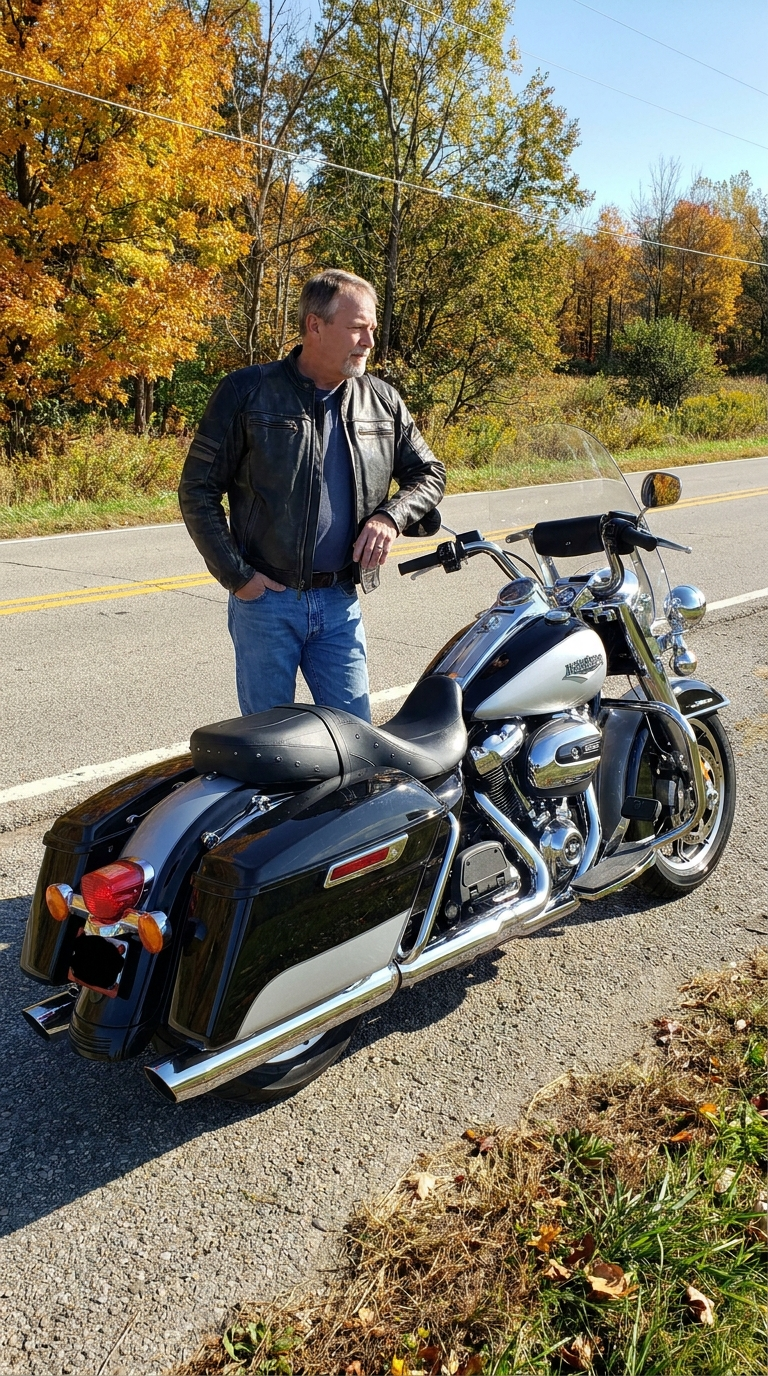
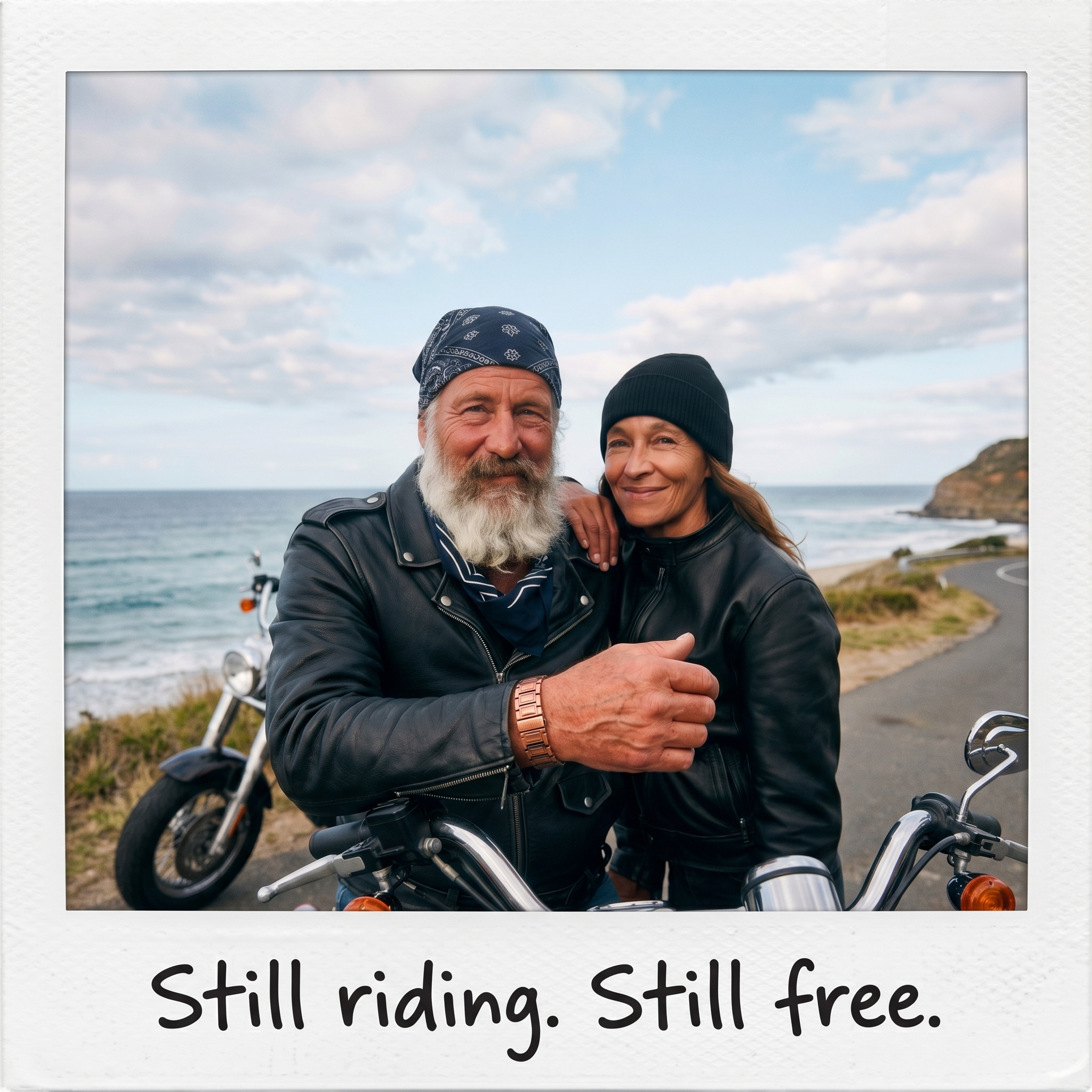
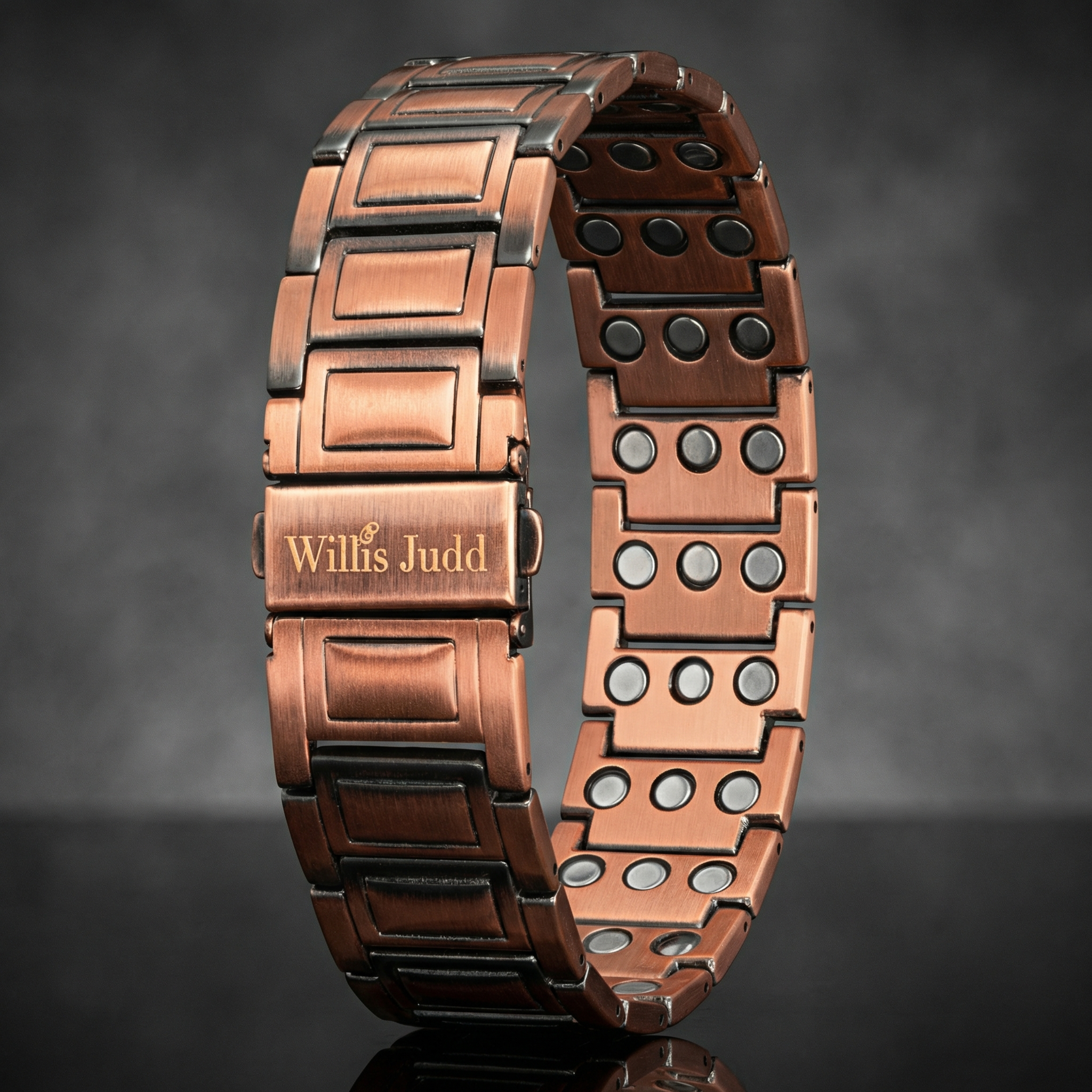
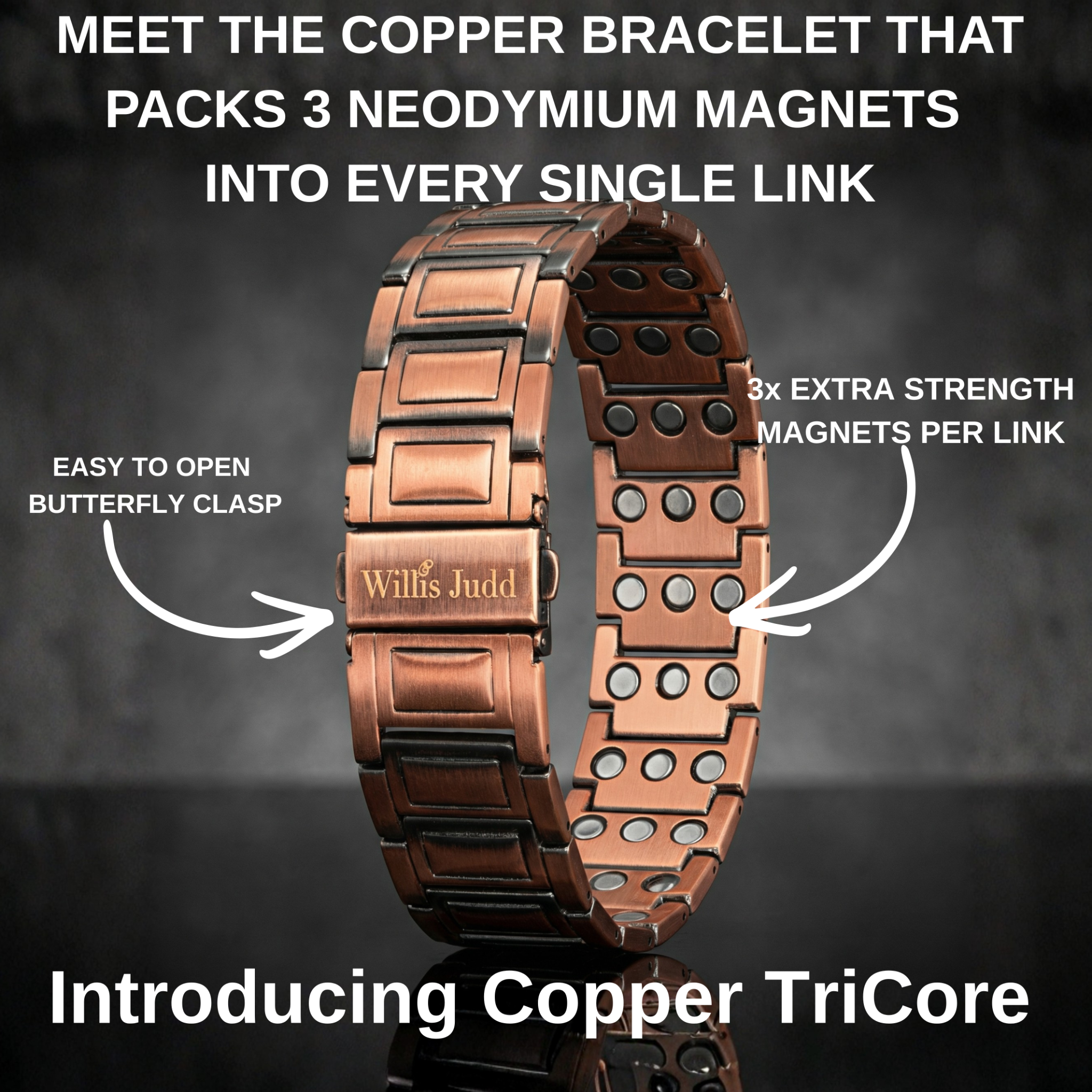
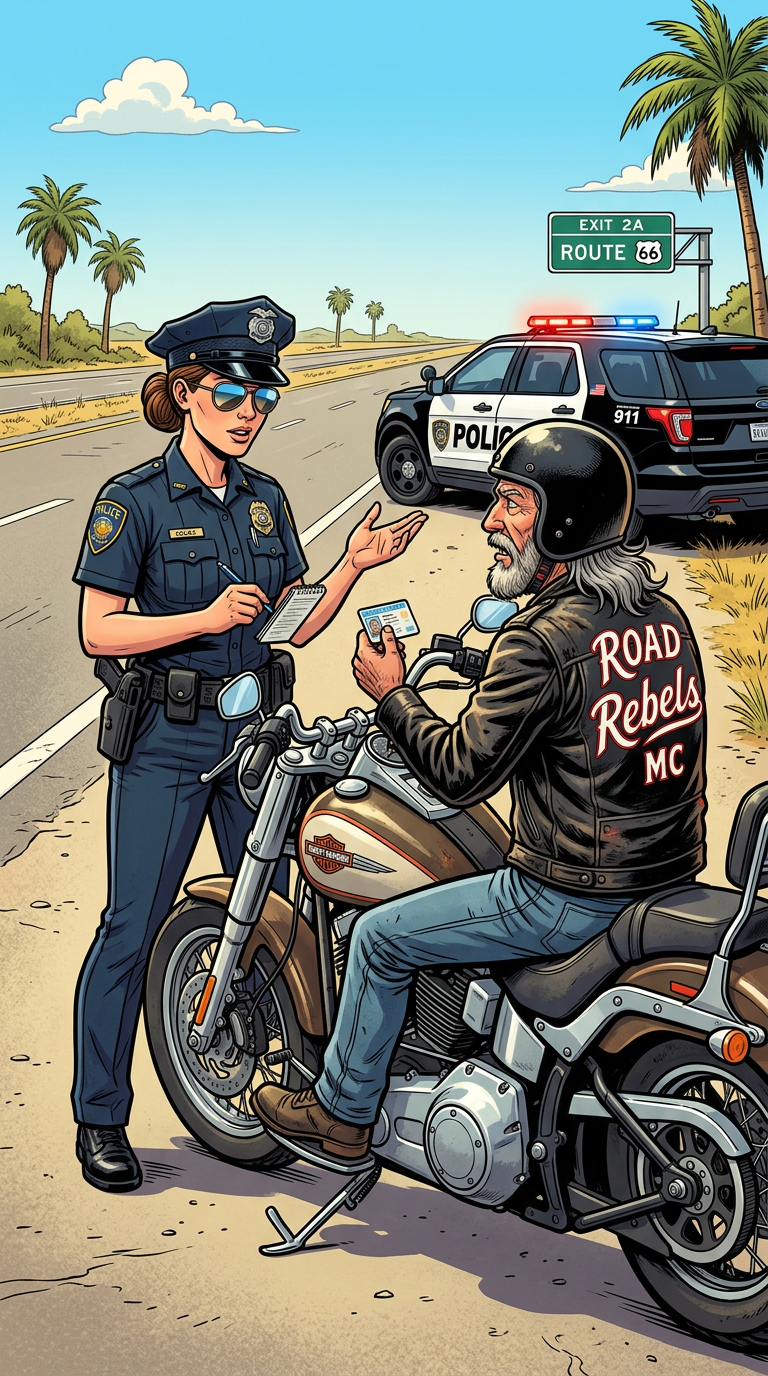
My daughter spent 28 years believing her father was a drunk who walked out on her. Last spring she pulled me over for a broken taillight — and I sat on my bike praying she wouldn't recognize me. Not because the story was true. Because of who told it to her. The officer took my license. Looked at it. Looked at me over her sunglasses. "Earl Colton?" "Yes ma'am." She didn't know me. I didn't expect her to. Her mother moved them three states away when she was four years old. Changed the phone number. Changed the last name. Changed the story. But she couldn't change the birthmark. I saw it when she reached for my license. Inside of her right forearm. Small. Shaped like a spur. The same mark I used to trace with my thumb when she was three years old and falling asleep on my chest in a lawn chair in the backyard, both of us smelling like engine grease because she would not be kept out of the garage. Twenty-eight years. I'd pictured finding her a thousand ways. Gas stations. Grocery stores. I pictured her running to me. I never pictured her in a uniform, writing me a ticket, with her mother's jaw and my mother's eyes. "Sir, your left taillight is out." "I didn't know that." My voice came out wrong. My hands were shaking on the tank — and I'll be honest with you, not all of that was the shock. That part matters later. Remember my hands. She wrote the ticket. Handed it back. Officer D. Reyes. Dana. Her mother kept the first name. It was my grandmother's. "Drive safe, Mr. Colton." I sat on the shoulder of Route 9 for twenty minutes after her cruiser was gone. Then I rode home, sat in my garage with the engine ticking, and read her name off that ticket until it got dark around me. The ticket went in my vest pocket, against my chest. It stayed there three weeks. They call me Wrench. Not because I'm clever. Because for thirty years, if your bike broke down anywhere in three counties, somebody said the same four words: "Take it to Wrench." Carbs. Clutches. Wiring harnesses that three shops gave up on. My garage on a Saturday looked like a field hospital for motorcycles, and I was the only surgeon, and I loved it more than I've loved almost anything. I say almost. Because before I was Wrench, I was Daddy. And I lost that job on a Tuesday in 1998, when I came home from the shop and the closets were empty and the crib was gone and there was no note. Her mother had her reasons for leaving me. I was not a perfect man. But I never drank the way she told people I drank, and I never once raised a hand in that house, and I never — not one day — stopped wanting my daughter. I spent four years and every dollar I had looking. Private investigator. Courthouse filings. Her family hung up on me so many times I knew the click by heart. After four years, I stopped. Not because I stopped caring. Because every dead end was a funeral for the same little girl, and a man can only carry so many. So I became the club's fixer. The guy with the hands. The one everybody needed and nobody worried about, because Wrench doesn't have problems. Wrench fixes them. Twenty-eight years of that. Then a taillight on Route 9. It took three weeks to find the nerve, and I won't pretend the way I did it was right. I couldn't walk into a police station — a leather-vest stranger asking for a young female officer by name. That ends in a holding cell. So I waited across from her precinct until I saw her leave in her own truck, and I followed her to a diner, and I sat in the parking lot for most of an hour telling myself to ride away. Then I went in. She was in a booth with coffee and her phone. She looked up with cop eyes — cataloging me. Big. Old. Leather. Gray beard. "Help you?" "You pulled me over three weeks ago. Route 9. Broken taillight." "I pull over a lot of people." "My name is Earl Colton. Your mother's name is Marie. You were born June 9th, 1994. You have a birthmark on your right forearm shaped like a spur. When you were three you used to fall asleep on my chest in the backyard because you would not stay out of my garage, and your first full sentence was 'Daddy fix it.'" Her face went white all at once. Like a breaker tripping. "You need to leave." "I have a photo." Cop brain, running the assessment. Stranger. Knows things. Possibly unstable. Possibly telling the truth. "One photo. Then you're gone." I've carried it in my wallet for twenty-eight years. The edges are soft as cloth now. Me at thirty, in the garage, a baby girl asleep on my chest with her fist wrapped around one of my fingers. You can see the spur on her little arm. You can see my nose — the one she sees in her mirror. She looked at it a long time. Then she touched her own forearm without knowing she was doing it. "My mother told me you left us. She said you were a drunk. She said you were dangerous." I put my hands flat on the table where she could see them. Scarred, stained, knuckles like walnuts. "These hands have hit metal their whole life. Nothing else. Not once." She stared at my hands. And I watched twenty-eight years of somebody else's story crack down the middle of her face. We sat in that booth almost three hours. The stories didn't match, and she'd known for years hers had holes in it — she'd been a cop long enough to know what a story with holes sounds like. She didn't call me Dad. She called me Earl. Earl was more than I'd had since 1998. I took it. Coffee became dinners. Dinners became Sundays. She watched me the whole time with those assessing eyes, waiting for me to want something I hadn't earned. I didn't push. I showed up when invited. Answered every question, including the ones that cut. She has two kids. Mason, eight. June, three. Grandchildren. I have grandchildren. The first time I stood in her doorway, Mason hid behind her leg, looking up at all six-foot-three of me trying to work out if I was safe. "Mason, this is Earl. He's my father." "How come I never met him?" Dana looked at me. Neither of us had an answer sized for an eight-year-old. "I was lost," I said. "Your mom pulled me over." He thought that was the funniest thing he'd ever heard. Kids accept the strangest true things. June didn't care about any of it. She walked up, grabbed one finger of my ruined right hand, and towed me to the living room to look at her blocks. A fist the size of a plum, wrapped around my finger. Same grip as the photo in my wallet. I rode home that night and had to pull over twice because you can't ride with wet eyes, and I sat on the shoulder thinking about how close it came. One working taillight and I ride past my whole family at 60 miles an hour and never know. Every day since has felt borrowed. But borrowed time has a condition nobody warns you about. You have to be able to hold it. Here's the part I'd been hiding from everybody, including the club, including myself. My hands were going. It had been coming on for years, the way rust comes — quiet, patient, one season at a time. First the mornings. I'd wake up with claws instead of hands, knuckles swollen tight, and run them under hot water for twenty minutes before they'd agree to be hands. Then the 3 AM ache. Deep in the knuckles and wrists, a toothache down in the bone, the kind you can't escape because it lives in the thing you'd use to escape it. Then the shop. Dropped screws. A stripped Phillips head because I couldn't keep pressure on the driver. The day I couldn't get a master link clip seated and told a brother to come back tomorrow — first time in thirty years those words left my mouth. The Saturday field hospital got quiet. Word gets around. Nobody's cruel about it. They just quietly stop bringing you their bikes. And the riding. A clutch lever is two hundred squeezes an hour in traffic, and my left hand had started filing grievances by mile forty. The long runs got shorter. I invented weather. I invented errands. The guy called Wrench, sitting on the couch, inventing reasons not to ride. I told nobody. Wrench doesn't have problems. Then came the staircase. A Thursday night at Dana's. June had fallen asleep on the couch halfway through her cartoon, and Dana asked me to carry her up to bed. I scooped her up. Thirty pounds of nothing. Her head went boneless against my shoulder — that total trust that only exists before the world teaches you better. Fourth step, my hands started to open. Not pain, exactly. Failure. The grip just began letting go without my permission — fingers loosening around her legs like a ratchet slipping teeth, and I felt her start to shift. I clamped her against my chest with my forearms, pinned her like a load strap, and stood dead still on that staircase. Couldn't go up. Couldn't go down. Couldn't adjust my hold, because the hold was gone and the forearms were all I had. Ten seconds, maybe. The longest of my life. Longer than twenty-eight years, because those years I was only losing the past. This was the future, asleep on my shoulder, and my own hands voting on whether to drop it. The grip came back enough. I climbed the rest slow, laid her in bed, pulled the blanket up with fingers that wouldn't stop shaking. Turned around, and Dana was at the bottom of the stairs. Cop eyes. She'd seen every second of it. She didn't say anything that night. She sat on the bottom step and I sat next to her, and she looked at my hands for a long time, and then she held one, which she had never done. The next morning she called. "When did you last see a doctor about your hands?" "They're fine." "Earl. I watched you almost drop my daughter on a staircase. I spent twenty-eight years without a father and I just got one. I am not losing you to your own stubbornness — and I'm not wondering, every time you hold her, whether your hands are going to quit." Her voice cracked on it. Just barely. That's the sentence that did it. Not the words. The crack. I went to the doctor. First time in eleven years. X-rays. Both hands, both wrists. Osteoarthritis, moderate to advanced. Bone spurs at two knuckles. Forty years of vibration, cold mornings, and death-grips on handlebars, all coming due with interest. "The cartilage doesn't grow back, Mr. Colton. So we manage it." The management: a prescription anti-inflammatory, every day, forever. Plus a second pill to protect my stomach from the first pill. I heard maybe one word in three. Because I wasn't in that office anymore. I was in a hospital hallway two years back, looking at Tiny. Tiny is our road captain, which tells you he's the size of a vending machine. Best natural mechanic hands in the club after mine. His knees went early — thirty years of concrete floors and heavy bikes. And Tiny managed it the way our generation manages everything. Pills from the gas station. Every day. For twenty years. With coffee in the morning and beer at night, because how dangerous can it be if they sell it next to the jerky? Two years ago Tiny stood up from his workbench, went gray, and sat down in a way a man that size should never sit down. Bleeding ulcer. Twenty years of those pills, quietly eating through his stomach lining the whole time — it's on the label nobody reads. He lost enough blood that they said "transfusion" in front of his wife. He made it. But they took him off the pills forever, told him his kidneys had been keeping score too, and now Tiny has the same wrecked knees he started with, plus a stomach that flinches at black coffee. Twenty years of managing. The pain never left him. A pint of his blood did. So when my doctor said "every day, forever, plus a pill to protect you from the pill," I heard a gurney rolling. I said I'd think about it. Folded the prescription into my vest, next to a traffic ticket with my daughter's name on it. I already knew I wasn't filling it. Which left me nowhere. Scared of the pills. Scared of my own hands. A granddaughter I couldn't carry and a daughter watching me like a case file. Doc is the one who found me at the bar. Every club has a Doc. Ours earned it straight — twenty-two years as an ER nurse before his back retired him. Quietest man at any table. Never talks about the job, because the stories are the kind that stay with you. Sunday afternoon at the clubhouse, somebody asked why I trailered to the last run — trailered, me — and I gave the short version. The hands. The X-rays. The pills-forever plan. Tiny, three stools down, nodding at the stomach part. The table moved on. Old bikers don't linger on ailments. Bad manners. Bad luck. Doc didn't move on. He waited until it was just us, slid his chair over, and said: "You want the real conversation, or the one where I tell you to take fish oil?" "Say it." He turned his glass in a slow circle. "Twenty-two years in an ER, Wrench. You know what I saw come through those doors every single week? Folks your age, bleeding inside, from the pills they took so they could keep working. Managed people. Responsible people. Following the directions on the bottle for twenty years." "Tiny wasn't bad luck. Tiny was a Tuesday." "So what, I just live with it?" "No. I'm saying nobody ever explained to you what those pills actually do, and once you see it, you'll understand why the pain never got better in six years of swallowing them." He grabbed a bar napkin. Clicked a pen. "Your problem is ten knuckles and two wrists. Maybe a coffee can of you, total." He drew a little circle. "Every pill you swallow washes through the whole machine — stomach, kidneys, blood pressure — to deliver a little relief to that coffee can. Twenty years of that is how Tiny bought his ulcer. It's carpet-bombing the county to hit one street corner." "And here's the part that matters. The pill never touches the joint. Not once. It quiets the signal coming out of it. That's all it does." He looked at me. "You're the mechanic. What do you call it when the warning light bothers you, so you put tape over the light?" I didn't say anything. Taping the check-engine light. Dashboard goes quiet. Engine keeps grinding. Six years. Every bottle, every cream, every cortisone shot I'd heard the brothers talk about — every one of them was either tape over the light, or washing the whole engine to treat one bearing. "So what passes?" I said. "What works at the joint, all day, without billing the rest of me?" Doc looked at me for a second, deciding something. "You're going to laugh." "I'm not going to laugh." "You're Wrench. You're going to laugh." "Doc." He set the pen down. "Copper. Worn on the wrist." I laughed. One short bark, the kind you'd give a gas-station miracle pill. Doc didn't blink. Twenty-two years of ER gives a man a face like a vault door. "You done?" "People have worn copper at the joint for four thousand years," he said. "Egyptians. Greeks. Your grandmother. Mine. That's not proof — old ideas can be old nonsense. But things that do nothing don't usually get carried four thousand years by people too poor to waste anything." "Two theories. I'll give you both straight." "One — skin takes up trace copper from the metal, right there at the wrist. Copper's a mineral your body actually uses; it matters to connective tissue. That's why it's worn at the joint and not on a chain around your neck." "Two — the real ones carry magnets, and the idea is the field works on circulation right where it sits. Blood flow is the whole ballgame in a stiff joint. You've warmed up a cold engine your whole life. Same principle." Then he leaned back and said the thing that made me actually listen. "Now the honest part, and no one selling anything will say this to you. The science is not settled. Small studies say it helps. The big reviews shrug. If you need a stack of journals before you'll try anything, this ain't for you, and I'll buy the next round and we'll talk about carburetors." "But I'll tell you what I saw with my own eyes for twenty-two years. The old-timers who came through my ER wearing cheap copper junk — it was always junk, and they'd quit it in a month. And the ones wearing the real thing — heavy, solid, gone green at the skin — those men would let us cut their clothes off before they'd let us cut that bracelet. Same bracelet, ten, fifteen years. Farmers. Riders. A retired judge, once." "Nobody wears a bracelet fifteen years that does nothing, Wrench. Vanity doesn't survive fifteen years on a farmer's wrist." He tapped the napkin. "So run the worst cases, like a mechanic. Worst case with the daily pills — you watched it get wheeled down a hallway. Worst case with the copper — it does nothing, you mail it back inside the guarantee, you're out postage and a little pride." "One worst case is a transfusion. The other is a return label." "I don't need the journals settled to do that math." I went home and thought about it three days. Then I did the thing that cost me a month, because I'm Wrench, and Wrench doesn't ask — Wrench figures it out. I bought the first copper bracelet the internet showed me. Thirteen dollars. Free shipping. Forty thousand ratings. It arrived in an envelope and weighed about as much as the envelope. I wore it three weeks. Nothing. Not a flicker. Then two of its little magnets fell out in the shower and rattled down the drain, and where the clasp rubbed, the "copper" wore through to silver-gray metal. I took a file to the inside of the band. One stroke. Silver all the way down. Pot metal, with copper sprayed on like paint on a rusty fender. Three weeks against my skin and I might as well have worn a soda can. I dropped it on the bar in front of Doc like evidence. He weighed it in his palm for half a second and put it down. "You bought the thirteen-dollar one." "Forty thousand ratings, Doc." "You can buy ratings. You can't buy weight." He slid it back. "That's not a copper bracelet, that's a picture of one. Whatever skin might take up from real copper, it cannot take up from paint. You tested nothing. You wore a rumor for three weeks." Then he pulled a fresh napkin over and gave me what I'm about to give you, because it's the most useful thing anybody handed me in six years. "Four things. Write them down." "One. Solid copper, all the way through. Not plated. Not 'copper-infused.' Not copper-toned. You own a file — use it like you just did. Scratch the inside where it doesn't show. Silver underneath, throw it away. Copper all the way down into the scratch, it's real. And real copper is heavy — you'll know the second the box is in your hand. The metal is the whole point. Cheap out on the metal, there is no point." "Two. Real magnets, enough of them. The theory needs a real field, not a fridge magnet. The good ones run neodymium — strongest permanent magnets made — in rows, the whole way around, so there's always strength sitting over the wrist. Shop test: a real one snaps to a wrench through the band. Can't lift a paperclip, it's decoration." "Three. Built like a tool, not jewelry. You'll wear it wrenching, riding, showering, sleeping, for years. Solid links. A clasp arthritic hands can actually work — remember whose hands these are for. And it has to fit snug, or it hangs off the wrist bone doing nothing. The good outfits ship a sizing tool so you can pull links yourself." "Four." He tapped the napkin. "A guarantee long enough to call their bluff. Not thirty days — you won't know anything at thirty days. Sixty, minimum, money back, no fine print. Think what that guarantee costs a company selling junk. They can't afford it. The guarantee is the one line on the page that's expensive to lie about." He capped the pen. "And a fifth thing, free. Whatever you buy — if the ad promises you'll feel it that first afternoon, run. Nothing honest works in an afternoon on a forty-year problem. You wear it day and night and you give it a few honest weeks before you're allowed an opinion. Anybody promising faster is selling to your desperation, not your wrists." I looked at the napkin. Four lines and a warning. "Fine. Which one passes?" And Doc smiled, and pushed up his left sleeve. I have ridden next to this man for nineteen years. I had never once noticed the bracelet. Heavy copper links, dark with age, a soft green shine down where it met the skin. It didn't look like jewelry. It looked like something off an engine. It looked like it belonged on him. "Nine years," he said. "Went on the year my hands started waking up before I did. Hasn't been off since, except airport security." "Nine years. Why didn't you just tell me?" "Because twenty-two years of ER taught me you can't hand a skeptic an answer, Wrench. He hands it right back. You have to let him run out of everything else first." He turned his wrist in the light. "It's called Willis Judd. Look it up tonight — and don't take my word, run it against the napkin. Solid copper, and they say so in writing. Rows of neodymium the length of the band. Ships with the sizing tool. Sixty-day money-back guarantee, and they've sold north of fifty thousand of them — that's fifty thousand people holding a return ticket. An outfit selling painted zinc doesn't survive that math." "And it's about eighty bucks." "Eighty bucks," I said. "You spent more than that last month on pills that never touched the joint," he said, and finished his beer. I ran it against the napkin. Passed, all four. Ordered it that night. Told nobody. A man who just laughed at his club brother in a bar does not hold a press conference about his copper bracelet. It came in a few days, and the first thing I noticed was the thing the thirteen-dollar one taught me to check. The weight. Dense. Solid. Like a good tool. File to the inside of a link, one stroke where it doesn't show — copper, bright as a new penny, all the way down. Held it to my toolbox and it snapped flat against the drawer through its own links. The magnets are real. Pulled two links with the little tool — three minutes, arthritic hands and all — and put it on snug, and went about my life. Now I'll tell you exactly what happened, week by week, no varnish. The varnish is what I never believed either. Week one: nothing. I want to be dead straight about that. Nothing. No tingle, no warmth, no miracle morning. Wore it in the shop, in the shower, to bed like Doc said, and my hands hurt like they always hurt. The only event of week one was a faint green ring on my skin under the band, and I texted Doc a picture like something was wrong. He texted back: "Good. That's the copper. Paint doesn't do that. Soap and water. Keep going." The fake one flaked. The real one marks you. I stopped minding the green that day, and somewhere along the line I started liking it. Week two: I almost quit. Worth admitting. The skeptic had his speech loaded. And then, middle of week two, there was a morning. Nothing dramatic. I woke up, and lying there in the dark, out of six years of habit, I started working my fingers open to see how bad the day would be. They were already open. I made a fist. It closed. First try. No hot water. I lay there in the dark opening and closing my hand like an idiot, like a kid who just learned to snap. Week three: the clutch. I rolled the bike out and just sat in the driveway working the lever. Two hundred pulls, I counted, because that's an hour of traffic. The hand complained near the end. It didn't quit. I didn't ride anywhere that day. I just sat in my driveway pulling a clutch lever and grinning like a fool, and my neighbor watched me do it and I did not care. Week four: the mornings had shrunk. Twenty, thirty minutes of hot water and swearing, down to about ten minutes of ordinary stiff. The 3 AM ache still came — but not every night. There is no way to explain what "not every night" is worth to a man who hasn't lived it. Week five: Dana caught me. Sunday dinner. She handed me the pickle jar out of pure reflex on her way past the table — didn't even look. I opened it and handed it back before either of us remembered I couldn't. She stopped in the middle of the kitchen. Looked at the jar. Looked at me. Looked at my wrist — because of course she'd clocked the bracelet weeks ago, cop eyes miss nothing, she'd just been waiting me out. "Okay," she said. "Now you can tell me about it." Week six: the follow-up. My doctor measured my grip against the last visit and looked at the numbers a second longer than she needed to. "What changed?" I pushed up my sleeve. And I'll report it honest, because this is not a movie. She did not gasp. She gave it the smile — Doc told me about that smile — and said the science on those is thin. "But," she said, still looking at the numbers, "whatever combination of things you're doing, your function's better, and you're telling me you're down from eight of those pills a day to one or two. Keep doing what you're doing." I won't tell you my doctor endorsed a copper bracelet. She didn't. I'm telling you she measured my hands, and the prescription stayed in the drawer. It's still folded in my vest, by the way. Next to a traffic ticket. Never been filled. Which brings me back to a staircase. Two months in, another Thursday at Dana's. June, asleep on the couch, one arm hanging off, cartoon still going. Dana looked at me. And there was a question in it this time, because the last time I carried that little girl, her mother watched my hands almost quit halfway up. "I got her," I said. I scooped June up. She did the boneless thing, face into my neck, thirty pounds of total trust. I carried her up the stairs slow — not because I had to. Because I wanted every step. My grip held the whole way, steady as a torque wrench, and I laid her down and pulled the blanket up with hands that were just hands, doing what hands do. Holding on. I turned around and Dana was in the doorway, and she had that look — not happy, exactly. Something deeper. A wound closing. "She doesn't sleep through that with anyone," she said quietly. "Not even her dad." And two weeks after that came the moment I'd pay everything I own to keep. Mason had been circling the bike in the driveway all summer, the way I used to circle my old man's. Dana watched him do it. Watched me. And my daughter — the cop, the risk assessor, the woman who spent twenty-eight years being told my hands were dangerous — looked at me and said: "Around the block. Slow. Helmet." My grandson rode behind me for the first time last month. Around the block, walking pace, his arms wrapped around the middle of me, laughing into my back the whole way. My left hand worked that clutch like it was 1985. And at the stop sign I looked back at the house, and Dana was on the porch with June on her hip, watching her father carry the future around the block. Twenty-eight years a ghost in my own life. Now I'm the taxi. So that's my story. Here's the straight talk, and then I'm done. I'm not a doctor. I'm a bike mechanic with a road name. I will not tell you a copper bracelet cures arthritis, because it doesn't, and mine isn't cured. Rain still finds my knuckles — I'm a better barometer than my phone. Some mornings still take their ten minutes. I'm sixty-six, not new. And I can't swear which part is the copper and which part is the magnets and which part is a stubborn old man getting his hope back. Doc would tell you the science isn't settled, and Doc doesn't lie. Here's what I can swear to, because I lived it: Six years of pills, creams, and gloves, and the mornings kept getting longer, and the rides kept getting shorter, and the pill road ends where Tiny's ended. Then I put eighty dollars of solid copper on my wrist, and inside of two months I made a fist in the dark, opened the jar, carried my granddaughter up the stairs without my heart in my throat, and rode my grandson around the block while my daughter watched from the porch. Call it placebo if you want. Doc's heard it for twenty-two years, and I've got his answer memorized now: My hands don't know what a placebo is. They just know they hold on. And the math hasn't moved since that bar napkin. Worst case, it does nothing, and Willis Judd takes it back inside sixty days, money back — every one of those fifty thousand bracelets shipped with that same return ticket attached. Worst case on the other road — ask Tiny. They gave him a bracelet at the hospital too. It wasn't copper. Eighty dollars. Sixty days. A file scratch when it arrives to prove it's real — I did it, you should too. Only thing I'd add is what Doc told me: don't buy it if you need a miracle by Friday. Buy it if you can wear it day and night for a few honest weeks, like a tool, and let your own hands hand down the verdict. Mine gave theirs at a stop sign, with an eight-year-old laughing into my back. — Earl "Wrench" Colton P.S. — You're wondering about Tiny. Tiny watched me open a jar at the clubhouse in about month two, said a word I won't print, and had Doc size one onto that big wrist of his the same week. He's a few months in. His knees are thirty years of concrete floors and he'd be the first to say no bracelet gives him 1975 back. But he's off the couch and back at his bench most days, and last month he and his doctor had a real conversation about what he does on the bad days — a conversation, he told me, they never once had in twenty years, because the answer had always just been more pills. His wife hugged me about it in a parking lot. That man is the size of a vending machine and I have never seen anybody hug him voluntarily. P.P.S. — Read this one twice if you're the type to skip. You will not feel anything the first week. Maybe not the second. Mine took about sixteen days. Tiny swears three weeks. Doc says nine years ago his took most of a month. If you find a bracelet promising you'll feel it this afternoon, that company is lying to you — and you should ask what else. The sixty days exists so you can find out slow and honest. Use it that way. P.P.P.S. — If you're sitting there thinking "tried copper already, did nothing" — go get it. I'll wait. Take a file, a key, anything, and scratch the inside of the band where it doesn't show. Silver-gray under the copper color? Then you have never worn a copper bracelet in your life. You wore paint. I wore paint for three weeks too, and it worked exactly as well as paint works. It wasn't the copper that failed you. You just never actually met it. P.P.P.P.S. — For the wives and the daughters reading this — and I know it's mostly you down here at the bottom, because you're the ones still looking after the stubborn ones. Dana would tell you two things. One: she noticed the bracelet three weeks before I said a word, and said nothing, because a man like me has to believe it was his own idea. If you order one for him, maybe just leave the box on his workbench and walk away. Two: her hands are twenty years from where mine are, and she wears one now anyway — riders' daughters know what's coming for their grips. Pain doesn't check who's wearing the vest. And one warning that matters: if he's got a pacemaker, this is not for him — the magnets — and whatever pills he's on, nothing changes without his doctor in the room. That's how we did it. That's the only way to do it. P.P.P.P.P.S. — Last thing. Doc said something at the clubhouse the night Mason's ride came up, and I've been carrying it since. He said, "Wrench, you spent thirty years fixing everybody's ride but your own." He wasn't talking about the bike. Twenty-eight years I figured the story was over — that I'd be the guy in the vest who fixes things and goes home to nobody. Then a taillight went out on Route 9. If your hands are going the way mine were going — hiding it, trailering, inventing weather — don't wait for your own staircase. Eighty dollars, sixty days, and the worst case is a return label. The best case is a grandkid laughing into your back at a stop sign. I know, because I got the best case, and it cost less than the pills I didn't take.
I sat in my pickup truck and watched my best friend's funeral procession ride past me.
That strange tingling feeling in your hands… ever looked it up? A lot of people notice their hands feel different as they get older. Sometimes it’s stiffness after working, that random tingling feeling after a long day, or the occasional pins and needles from typing, lifting or even scrolling o...
SEE DETAILSLike this ad? Make it yours.
Crush rebuilds this exact creative around your product — your brand, your colors, your offer — in about a minute.