Living Proof
Living Proof Facebook ad: “Learn More”
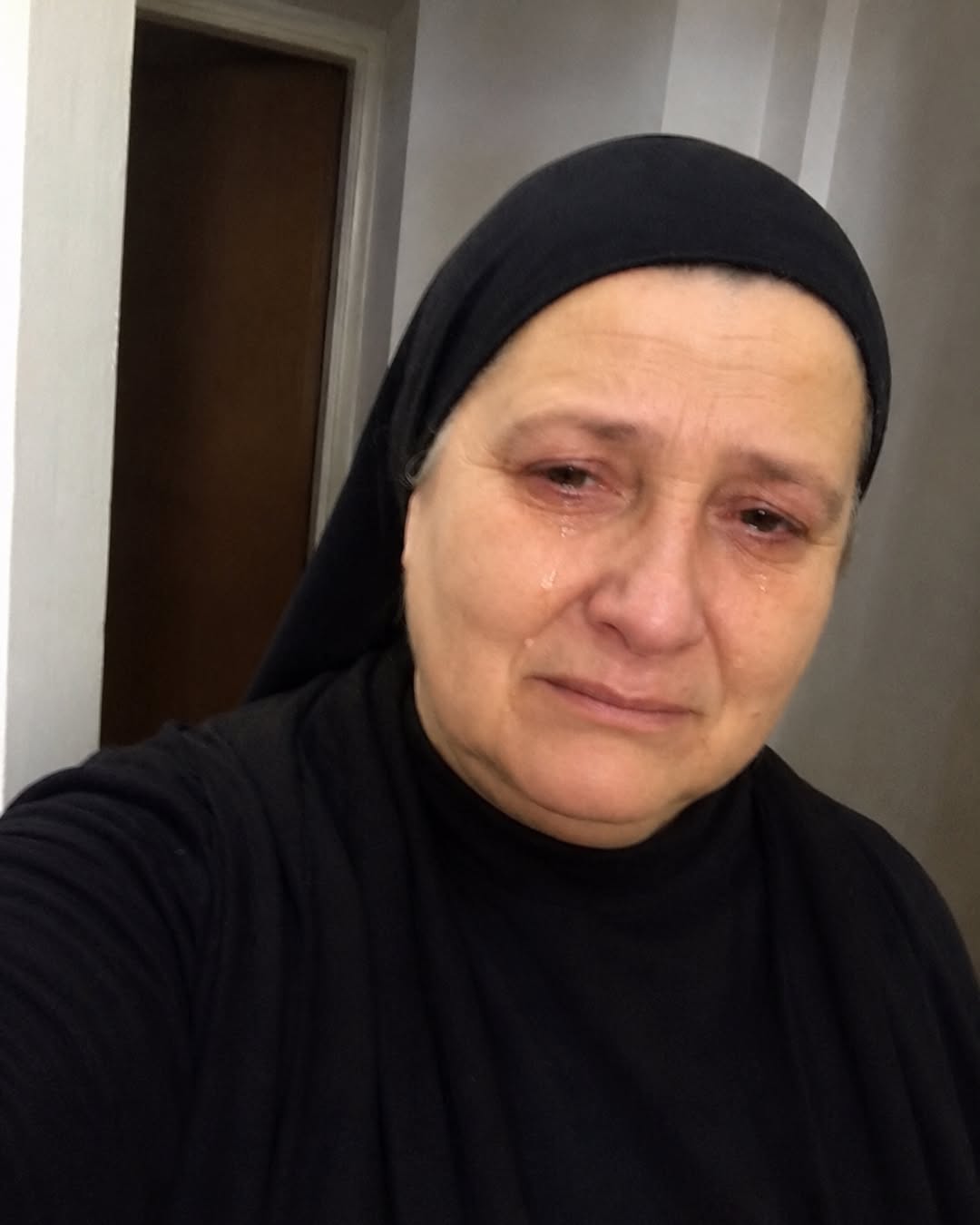
Ran for 3 days, from July 12 to July 14, 2026, the last day Crush saw it.
Run by Living Proof on Facebook. Crush is not the advertiser and does not verify its claims. See this ad in Meta's Ad Library(opens in a new tab)
Want an ad like this for your product?
Crush makes new ad images for your product from this ad: your logo, your product photo, your offer.
Trials from $19.95 USD, then $79.95 USD a month. Cancel anytime.
About this ad
- Meta Ad Library ID
- 1569123784918346
- Platforms
- Relaunches
- 4
- Niche
- Parenting & Kids
Ad text
I was a nun for 32 years. But when I saw my mother in a nursing home, I hated my own sister. That morning, I walked into the small chapel of our St. Anne’s Monastery in Pennsylvania and knelt before the altar. After 32 years, I knew every prayer by heart. But that day, I didn’t know what to say to God. Two months earlier, my younger sister Linda had taken our mother to a nursing home near Youngstown, Ohio. She put her in a wheelchair, brought her to the entrance, and said: “Mom, here they’ll take better care of you. They’ll look after you here. With your knees, Mark and I just can’t manage anymore. This will be better for everyone.” My mother’s name is Mrs. Margaret. She is 82 years old. For forty years, she worked on a small farm in western Pennsylvania: getting up at five in the morning, planting vegetables, pulling weeds, gathering the harvest, and cleaning floors at the local school in the evenings — all so that the three of us, her children, Linda, my brother Michael, and I, could get an education and have a better life. She was the one who brought me to the monastery when I was 28. She hugged me tightly at the gate and said, “My daughter, wherever God leads you, remember this: you will always have a home.” And now, at 82, even though she had her own small house near New Castle, Pennsylvania, my own sister took that house for herself and left our mother in a nursing home. No one told me. No one asked me. Nobody called the monastery and said, “Sister Theodora, we need to make an important decision about Mom.” Nothing. Mrs. Helen Parker, our neighbor who had known our family all her life, called me two days later. “Sister Theodora, did you know? Linda took Mrs. Margaret to a nursing home outside Youngstown. And now they’re living in her house — Linda, Mark, and their two kids. I thought you knew. Didn’t they tell you, Sister?” I didn’t know. In just two days, my own sister had left our mother in a room with four beds and moved into her house. And no one had said a single word to me. I didn’t immediately write angry messages. Nuns don’t write angry messages. First, I called Michael, my younger brother. He lives in Chicago. He moved there fifteen years ago and works as a truck driver. He picked up on the third call. “Sister Theodora, yes, I know what happened. But I have a family here. A job. Routes to drive. I can’t do anything. Linda has been closer to Mom these past few years. She made the decision.” I hung up without saying goodbye. In 32 years of monastic life, I had never done that to another human being. I went to the abbess. Her name is Mother Agnes. She came to us from a monastery in Ohio eight years ago to lead our community. I told her everything. She stood up, took my hand, and said: “Sister Theodora, take two weeks of blessed leave. Go to your mother. See her. Spend as much time with her as you need. We will pray for you.” The next day, I took a bus to Youngstown. The road passed through small towns in Pennsylvania and Ohio, past gas stations, old farms, roadside churches, diners, empty fields, and houses with American flags on the porches. The same America I had known since childhood. But this time, I wasn’t going home. I was going to see whether my mother was still alive. Or whether they had simply left her there. I arrived at the nursing home near Youngstown on Tuesday afternoon. I walked in wearing my monastic clothing — black, with a cross and prayer beads at my waist. The nurse saw me and immediately softened her voice. “Sister, how can I help you?” “I’ve come to see my mother. Mrs. Margaret. She was brought here two months ago.” She led me to room number 8. Four beds. The smell of medicine, disinfectant, and old sheets. Three elderly women stared at the ceiling with no expression at all. And on the bed in the corner was my mother. I didn’t recognize her at first. She weighed ninety pounds at most. White hair that hadn’t been combed in weeks. Eyes that looked as if they were no longer seeing anything. Her hands lay motionless on her knees. “Mom.” She lifted her eyes. For three seconds, there was nothing in them. And then suddenly, she recognized me. And she began to cry. “My daughter. Sister Theodora. You came. You really came.” I leaned down to her. I hugged her right there in the wheelchair. There was almost no body left to hold. She was light. So very light. And there, in that nursing home room outside Youngstown, in front of three elderly women staring at the ceiling, a nun with 32 years of monastic life broke down for the first time since the day she entered the monastery. I didn’t cry when I took my monastic vows at 28. I didn’t cry at our father’s funeral in 1998. I didn’t cry when Mother Agnes told me in 2015 that I was being moved to a different obedience. I didn’t cry when the doctor said in 2020 that Mom had breast cancer, and then that she had survived it. But in that room, I cried like a child. And Mom touched my face with a trembling hand and said: “My daughter. I thought you would never come. I thought you had forgotten me too, like everyone else.” The next day, I went to Mom’s house near New Castle. The house she had always called our shared home — mine, Linda’s, and Michael’s. Even though I had lived in the monastery for many years, she always used to say, “This is your home too.” Linda’s SUV was in the driveway. Children’s jackets and school backpacks were drying on the porch. Under the old maple tree behind the house — the same one my father planted when I was born in 1965 — there was a new bicycle belonging to a boy I barely knew. I called Linda. She didn’t answer. Mark did. “Sister Theodora. Bless me.” “Where is Linda?” “She’s at work in Youngstown. But we can talk, if you want—” “I am not talking to you, Mark. Tell Linda to come to the nursing home tomorrow. To Mom. Not to me. To Mom. If she doesn’t come, we won’t see each other again as long as we both live.” I hung up. Nuns don’t say things like that. But when you are standing before the face of your own mother, a person is capable of anything. Linda did not come the next day. She did not come seven days later either. I spent those two weeks of blessed leave at the nursing home. Not in Mom’s house — I couldn’t bring myself to enter the home where my own sister had left our mother so she could take over her rooms. I stayed in the guesthouse at St. Michael’s parish, just a few streets from the nursing home. Morning and evening, I went to Mom. I cared for her. I brought her small gifts from the monastery: chocolate, a book about Saint Thérèse, and a small cross blessed at the monastery, which Mother Agnes had given me. There were other elderly women in that room too. In the bed next to my mother lay Mrs. Ruth, 74, from outside Akron. Her son had left her there too after her knees gave out. “Sister, are you angry with God?” she asked me on the second evening. “Why did He allow your mother to end up here with us?” I didn’t know what to say. On the outside, I was a nun. On the inside, I was a daughter. And the part of me that was a daughter was angry at everyone: at Linda, at Mark, at Michael in Chicago, at God, whom I could not understand, and at myself — for spending so many years in the monastery while my mother was left alone in her house. On Thursday of the first week, a young man came to the nursing home. He was not a monk and he was not a priest. He was a doctor. There was no arrogance in him, no coldness. He saw my monastic clothing, greeted me respectfully, and walked over to Mrs. Ruth’s bed. I introduced myself: “Sister Theodora. I’m Mrs. Margaret’s daughter. What brings you here, Doctor?” “Good morning, Sister. Dr. William Bennett. I visit nursing homes across Pennsylvania and Ohio — Youngstown, Akron, Cleveland, Erie, Pittsburgh. I help elderly people who almost no one comes to see anymore.” I stood up. Before entering the monastery, I had studied nursing in Pittsburgh for one year. I didn’t finish — my calling brought me to the monastery during my second year. But I knew the medical world. And I knew what it meant for a doctor to go to difficult places without asking for money or expecting gratitude. People like Dr. William Bennett are rare in America too. He noticed the way I was looking at him and quietly added: “My grandfather was a pastor. All his life, he went to people who were sick, people who were alone, people who could no longer come to church on their own. I suppose that stayed with me. That’s why I help elderly people not only in nursing homes, but also at monasteries, parishes, and church shelters. There are many people there who spent their whole lives serving others, and in old age they were left alone with their pain.” I watched as he examined Mrs. Ruth. He touched her knees calmly, without disgust. He explained what was happening to the cartilage, the joint fluid, and the inflammation, and why the painkillers she had taken for years had done almost nothing except damage her stomach. Then he took a tube of cream out of his bag. A natural, complex joint cream meant to be applied directly to the painful area. Then he came over to my mother’s bed and looked at me. “Sister, if you’ll allow me, I’d like to examine Mrs. Margaret too.” I agreed. I’m not sure why. Maybe because for those two months, while Mom was a woman her own family had abandoned, almost no one had looked at her as a person. The nurses were doing their job. But Dr. William Bennett was the first person who looked at my mother not as a problem, but as a living human being. He explained: “Sister, your mother has degenerative arthritis in both knees. Practically bone on bone. She also has problems in her lower back, most likely around L4-L5. At her age and in this condition, joint replacement surgery would be a very serious risk. But in cases like this, we often start with external support. This cream is not a pill that goes through the stomach and puts strain on the body. It is applied directly to the painful areas: the knees, lower back, and hips. The components absorb through the skin and work where the pain and inflammation are strongest. We’re not just going to numb the pain with pills while the joints continue to deteriorate. We’ll try to support the tissue and restore as much movement as possible.” He gave me a tube for Mom. He didn’t take any money. “Sister, this is the last tube I have with me. I’ll bring more next week. If it helps your mother, good. If it doesn’t, you’ll tell me.” That evening, sitting beside Mom, I applied the cream to her for the first time. On both knees, on her lower back, with gentle movements until it absorbed. In the morning after breakfast and in the evening before bed — that was what the doctor told me to do. On the third day, Mom said quietly at lunch: “My daughter. It’s strange. My knee… it doesn’t hurt as badly when I wake up.” On the fifth day, Mom stood up from her wheelchair with my help. For ten seconds. But she stood. For the first time since the day they brought her to the nursing home. During the first week, she walked across the room holding my hand. During the second, she walked down the hallway with a walker. During the third, she went out into the yard with only a cane. Mrs. Ruth came up to me in the dining room during the second week. “Sister. Your mother is walking again. And I’m getting up too. Tell God that even though you were angry with Him, He still heard you. He sent us Dr. William Bennett.” I said nothing. But that evening, in the guest room at St. Michael’s parish, I knelt before the cross on the wall. And I was no longer angry enough to shout. I prayed quietly, a real prayer: “Thank You, Lord. I understand now. You did not forget my mother.” Linda came during the second week. I hadn’t called her. I don’t know how she found out I was in Youngstown. Maybe Mrs. Parker told her. Maybe Mark did. Or maybe, in her own silence, she finally understood that things could not go on this way. She walked into the nursing home on Saturday morning. She saw Mom in the yard: Mom took two steps and stopped, then three more steps and stopped again. Linda ran toward Mom. Then toward me. “Sister Theodora, Sister, forgive me—” I looked at her. For 32 years of monastic life, I had been learning to forgive. That is the calling of my life. You forgive the one who has done wrong. You forgive the one who left. You forgive the one who caused pain. But standing in front of me was my own sister, the woman who had left our mother in a nursing home, and my heart would not open. “Linda. Today I cannot tell you that I forgive you. I don’t know when I will be able to. But I will tell you this: Mom is not staying here. That’s the first thing. But she is not going back to her own house either while you and Mark are living there. I have made that decision.” “Nadia—” That was my name before the monastery. “She will live in the guesthouse at St. Anne’s Monastery in Pennsylvania. We have the ability to take in elderly women who don’t have proper family care. The sisters will look after her. There is a yard there, a garden, other elderly women, and a priest. That will be her new home. You may come when you are ready. Not when it is convenient for you.” “Nadia, but—” “Linda. We are not going to settle this today. Maybe we will never fully settle it. But I was not taught God’s service in the monastery so that my mother could lie in a four-bed room in a nursing home while her own daughter destroyed her dignity. That is why Mom is leaving with me. Not with you.” Linda cried. She agreed. I did not hug her. And she did not hug me. But inside, I forgave her, even though the words could not yet come out. That is the truth of monastic life. We are taught that forgiveness does not always come with beautiful words. Sometimes it happens inside, before the cross, and everything else — the embrace, the greeting, the confession — comes in its own time. Seven days later, we moved Mom to the guesthouse at St. Anne’s Monastery in Pennsylvania. She was not alone. Mrs. Ruth was there too. Her son had called and wanted to take her back to Akron, but Mrs. Ruth said: “Sister, I would rather stay with you. This feels more like home than going back to a son who isn’t ready for me.” Her son agreed. Now Mom goes back to that nursing home near Youngstown twice a month. Not to live there. But to help Dr. William Bennett during his visits. My mother — 82 years old, once a victim of being forgotten — now helps other elderly people in wheelchairs, because she recognizes their pain. Because she went through it herself. I spoke with Dr. William Bennett last Thursday. I took his hand — not as a nun greeting him, but as the daughter who still lives inside me. And I said: “Doctor, I don’t know how to thank you. Your cream gave me my mother back. But you… you gave me myself back for the first time in 32 years.” He only smiled. Doctors like him don’t know how to receive gratitude. I am not writing this letter simply to tell you my story. I am writing because in every city and small town across America — in Pennsylvania, Ohio, Michigan, Illinois, Indiana, Wisconsin, Kentucky, West Virginia, in forgotten farming counties and quiet suburbs — there are women like my mother. There are children who have left them behind. There are grandchildren who barely know them. There are sisters like Linda and brothers like Michael who pretend not to see. And pain in the knees, back, and hips — that is where it all begins. The moment the body starts to fail, sometimes the family starts to fail too. Mrs. Helen Parker, our neighbor, 64 years old, called me yesterday. “Sister, ever since I started putting that cream you brought me on my knees, I walked to the grocery store by myself this morning. I didn’t stop once. That knee pain I used to have is gone.” She said her son from Pittsburgh now comes to visit three times a month. She feels like she is coming back to life. And that is why I am writing to you now. If your joints hurt, if your knees, back, neck, shoulders, or hands hurt — don’t wait. Don’t wait until your children start looking at you with that look. Don’t wait for a wheelchair. Don’t wait for a nursing home. Don’t wait until your own child says at the door, “Mom, this will be better for everyone.” Dr. William Bennett’s cream is intended to support pain in the knees, hips, back, neck, hands, and shoulders. It is used for arthritis, joint inflammation, age-related stiffness, lower back pain, and after many years of physical strain. Even in advanced cases. Even after the age of seventy. I saw it with my own eyes. My mother is 82. Mrs. Ruth is 74. Both of them are walking now. Both of them pray every morning at six in the monastery garden. This cream is not sold in regular pharmacies — and, according to the doctor, it will not be available there anytime soon. Dr. William Bennett is almost single-handedly fighting to make sure this product reaches the elderly people in the United States who need it most. Right now, there is a support program available, with the possibility of receiving up to 50% off. For seniors living on Social Security, this may be their only chance. The program ends in June, or sooner if the tubes set aside for the promotion run out. Before I became a nun, I studied nursing in Pittsburgh for a year. I did not finish. But I understand enough about the human body to know one thing: my 82-year-old mother, who was sitting in a wheelchair in a nursing home outside Youngstown, now walks through the garden of St. Anne’s Monastery. It was not only a miracle from God. It was also the work of a young doctor who travels to forgotten nursing homes, parishes, and monasteries. And a cream that simply needs to be applied to the painful areas. Click the blue “Learn More” button below. Dr. William Bennett’s page will open. Read his story. See for yourself who he is. Order it for yourself. For your mother. For your father. For a neighbor who no longer goes to Sunday service because he can’t climb the church steps. For elderly people whose families are already almost ready to leave them behind. A consultant will call you, confirm your address, and arrange delivery within 2–4 days by USPS, UPS, or FedEx — to New York, Chicago, Philadelphia, Pittsburgh, Cleveland, Detroit, Columbus, Indianapolis, Milwaukee, Buffalo, or wherever you live. No hidden subscriptions. No risk. I did not spend 32 years in a monastery learning to forgive without understanding this: pain does not go away by abandoning someone. Pain begins to pass when you look it in the face. When you stay beside the person who is fading. When you give someone what they were missing — even if it is something as simple as a cream. If you have a parent who is gradually withdrawing from life, if you have a husband who sits silently in his chair because he is afraid to admit how much pain he is in, if you have a neighbor who has already begun to give up — give them a chance. Sometimes the body needs exactly that. A chance to begin again. May God protect you and your loved ones. Sister Theodora, 60 years old St. Anne’s Monastery, Pennsylvania, USA
Where the ad sends people
lumofl-health.top
Learn More
⭐️ ⭐️ ⭐️ ⭐️ ⭐️ (4.98/5.00)
See details: lumofl-health.top(opens in a new tab)