Sleep Health Insider
Sleep Health Insider Facebook ad: “Everyone with sleep problems needs to see this”
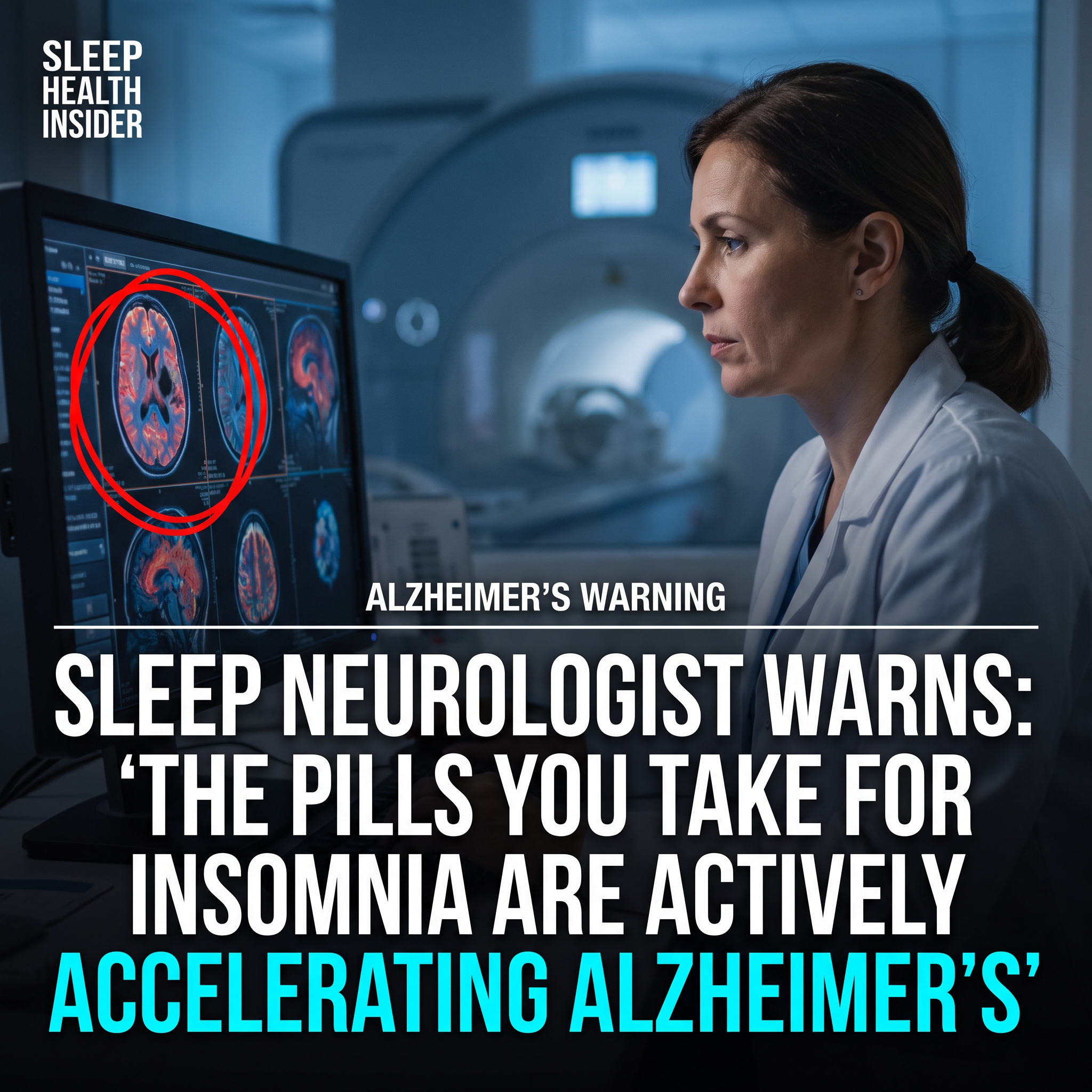
Ran for 43 days, from July 22 to September 3, 2026, the last day Crush saw it.
Run by Sleep Health Insider on Facebook. Crush is not the advertiser and does not verify its claims. See this ad in Meta's Ad Library(opens in a new tab)
Want an ad like this for your product?
Crush makes new ad images for your product from this ad: your logo, your product photo, your offer.
Trials from $19.95 USD, then $79.95 USD a month. Cancel anytime.
About this ad
- Meta Ad Library ID
- 1569454678236662
- Platforms
- Facebook, Instagram, Audience Network, Messenger and Threads
- Relaunches
- 1
Ad text
Dr. Jennifer Morrison, a sleep neurologist who has studied the connection between sleep disorders and Alzheimer's for 17 years, is issuing an urgent warning about oral sleep medications. "Most people with chronic insomnia don't realize they're increasing their Alzheimer's risk by 30% every year they can't sleep properly. But what's worse is that the pills they're taking to sleep are actively preventing the deep sleep their brain needs to clean itself." If you wake up at 3 AM every night, this applies to you. Dr. Morrison explains that most people experiencing sleep maintenance insomnia — waking between 2 and 4 AM and struggling to fall back asleep — have tried melatonin, prescription sleep aids, or natural supplements like valerian root. They all work for a few days. Then they stop working. Or worse — they keep "working." They knock you out at night. But you feel foggier every morning. Your memory feels slower. You start writing yourself notes to remember appointments you would've remembered instinctively a year ago. "People think they're doing something wrong," Dr. Morrison says. "They increase the dose. They add sleeping pills on top of the melatonin. They blame themselves. But the problem isn't the person. It's what these pills are doing biologically." Dr. Morrison's research focuses on what she calls "the sedation problem" — a critical distinction most sleep doctors never explain to their patients. "There is a difference," Dr. Morrison explains, "between sleep and sedation. Most people don't know this. When you're sedated, your body is unconscious — but your brain isn't doing the work of sleep. When you truly sleep, your brain flushes waste, consolidates memory, and clears the toxic proteins that cause Alzheimer's. Sedation feels like sleep. But it doesn't do what sleep does." The two most common sleep aids — melatonin pills and prescription sleeping pills — both cause sedation without restoration. But they cause it in different ways. "Your pineal gland produces about 0.3 milligrams of melatonin per night," Dr. Morrison states. "That's the dose your body was biologically designed to use. Every drugstore melatonin bottle contains between 3 and 10 milligrams. Some brands sell 20-milligram gummies. That's 10 to 30 times the amount your body actually needs." The mega-dose creates a chain of problems. Your melatonin receptors get flooded. They downregulate. Your natural nightly production shuts down. And critically, the pharmacological overdose disrupts the deep-sleep stages of your sleep cycle — the exact stages your brain needs to clean itself. "You feel like you slept," Dr. Morrison says. "You didn't. You were sedated." Prescription sleeping pills are worse. "Research going back to the 1980s consistently shows that pills like Ambien and Lunesta suppress deep sleep by up to 50 percent," Dr. Morrison notes. "You lose consciousness for eight hours, but your brain gets half the deep sleep it needs. Or less." By hour three — roughly 3 AM for most people — many patients still wake up. The sedation is starting to wear off, but the deep sleep never came. "This is why oral sleep medications cannot produce restorative sleep," Dr. Morrison states. "They're not designed to. They're designed to shut you down. Being shut down isn't the same as sleeping." But there's a more urgent problem than just exhaustion. Dr. Morrison's research centers on the glymphatic system — your brain's waste removal mechanism that only activates during specific deep-sleep stages. "During deep sleep," she explains, "your brain flushes out toxic proteins that accumulate during waking hours. The primary protein is called beta-amyloid. When you don't achieve real deep sleep — when you're sedated instead of sleeping — these proteins aren't cleared. They accumulate. Night after night. Year after year." Beta-amyloid accumulation is the leading biological marker for Alzheimer's disease. When these proteins build up for years, they form plaques that destroy brain cells. Destroyed brain cells result in memory loss, cognitive decline, and eventually Alzheimer's. "Every night you don't sleep through — every night you sedate yourself instead of sleep — is one more night of beta-amyloid accumulation," Dr. Morrison warns. "Every year of chronic insomnia is another year of preventable brain damage. And every year on melatonin or sleeping pills is a year of thinking you're solving the problem while it gets worse." This is why people with chronic sleep problems have a 30% higher Alzheimer's risk than healthy sleepers. It's not random correlation. It's direct causation. The question then becomes: if oral melatonin and sleeping pills sedate without restoring, what actually produces real deep sleep? "The answer is remarkably simple," Dr. Morrison explains. "Give the body the melatonin it was biologically designed to use, at the dose it was designed to receive, alongside the anti-inflammatory compounds that actually make deep sleep possible in the first place. Nature has done this in exactly one place: tart cherries." Real tart cherries contain melatonin at approximately 0.3 milligrams per serving — the microdose your body actually produces. And they contain anthocyanins — the deep-red compounds that reduce the neuroinflammation blocking your deep sleep in the first place. "Melatonin gets you into deep sleep," Dr. Morrison notes. "Anthocyanins keep you there. Pills give you the first without the second, and they give it to you at 30 times the wrong dose." But Dr. Morrison emphasizes that most tart cherry supplements on the market are formulated incorrectly. "Both melatonin and anthocyanins are extremely heat-sensitive," she notes. "Every tart cherry supplement I've tested that uses heat during processing — which is most of them — has degraded active compounds by the time it reaches the capsule. What patients are swallowing isn't tart cherry extract. It's tart cherry residue." Through clinical observation with her patients, Dr. Morrison found one brand that consistently produced results: HappyHarvest Tart Cherry Extract. "I don't typically recommend specific brands," she says, "but in this case, the formulation is the only one I've seen that's cold-extracted from start to finish. My patients who try heat-processed brands report no improvement. But with HappyHarvest, they sleep through the night. The difference is in how the compounds are preserved through processing." Dr. Morrison has been tracking patient outcomes for the past 18 months. Patients using HappyHarvest report sleeping seven to eight hours continuously, with significant improvements in morning cognitive clarity. "They're not just sleeping better," she explains. "Their glymphatic systems are activating again. Their brains are clearing beta-amyloid instead of accumulating it. They're reversing years of potential brain damage." Dr. Morrison's warning is particularly urgent for people who have been on melatonin or sleeping pills for years. "If you've had chronic insomnia for five years and you've spent those five years on melatonin," she states, "that's five years of sedation without restoration. That's five years of beta-amyloid accumulation happening while you thought you were treating the problem. The earlier you switch, the more brain health you preserve." She emphasizes that this isn't about improving sleep quality for comfort. This is about preventing Alzheimer's disease. "We now understand," Dr. Morrison says, "that chronic sleep disruption — and the pills people use to mask it — is a modifiable Alzheimer's risk factor. You can't change your genetics. But you can change whether your brain cleans itself every night. That choice determines whether toxic proteins accumulate in your brain for decades, or get cleared out every 24 hours." Her recommendation is straightforward: if you wake up between 2 AM and 4 AM regularly, or if you've been dependent on melatonin or sleeping pills for years, stop. "Stop flooding your system with 30 times the dose your body was designed to use," she advises. "Give yourself the microdose from real tart cherries, alongside the anthocyanins that reduce the inflammation blocking your deep sleep. Get eight hours of real restorative sleep — not sedation. Allow your glymphatic system to activate. Clear the beta-amyloid. Protect your brain while you still can." For people who have spent years on pills that stopped working, this explanation finally makes sense. The problem was never the ingredient — melatonin is a real molecule your body needs. The problem was always the dose. And the missing anthocyanins. Dr. Morrison concludes: "Your body knows how to sleep. It has always known. It makes exactly the right amount of melatonin every night. It just needs the tart cherry compounds that make deep sleep possible in the first place — and it needs the melatonin at the dose it was designed for. Not 30 times that. Once you understand that, the solution becomes obvious. Stop the pills. Use the fruit." The HappyHarvest capsules Dr. Morrison recommends are available online. They contain the same melatonin most people have already tried — but at the microdose your body actually uses, alongside cold-extracted anthocyanins that most tart cherry brands destroy during processing. This isn't about trying something new. This is about receiving what your body has always needed, at the dose it was always designed to receive. And more importantly, it's about protecting your brain from years of toxic protein accumulation that leads to Alzheimer's disease. Stop sedating yourself with 30 times the melatonin your body makes. Stop letting sleeping pills suppress the deep sleep your brain needs to clean itself. Start giving your brain the exact tools it was biologically designed to use. Before it's too late. P.S. Dr. Morrison's patients use HappyHarvest Tart Cherry Extract nightly. The link is below. This is the only tart cherry formulation cold-extracted from start to finish — the compounds most brands destroy through heat processing are still intact. If you've tried oral melatonin or sleeping pills that stopped working, this is why. They sedate you at the wrong dose. HappyHarvest gives your brain what it was designed to receive.
Where the ad sends people
tryhappyharvest.com
Everyone with sleep problems needs to see this ☝️
HappyHarvest
Learn more: tryhappyharvest.com(opens in a new tab)