Caroline Wells
Caroline Wells Facebook ad: “rhodiola rosea”
Ran for 15 days, from September 17 to October 2, 2026, the last day Crush saw it.
Run by Caroline Wells on Facebook. Crush is not the advertiser and does not verify its claims. See this ad in Meta's Ad Library(opens in a new tab)
Want an ad like this for your product?
Crush makes new ad images for your product from this ad: your logo, your product photo, your offer.
Trials from $19.95 USD, then $79.95 USD a month. Cancel anytime.
About this ad
- Meta Ad Library ID
- 1570116450843972
- Platforms
- Facebook, Instagram, Audience Network, WhatsApp and Threads
- Relaunches
- 1
Ad text
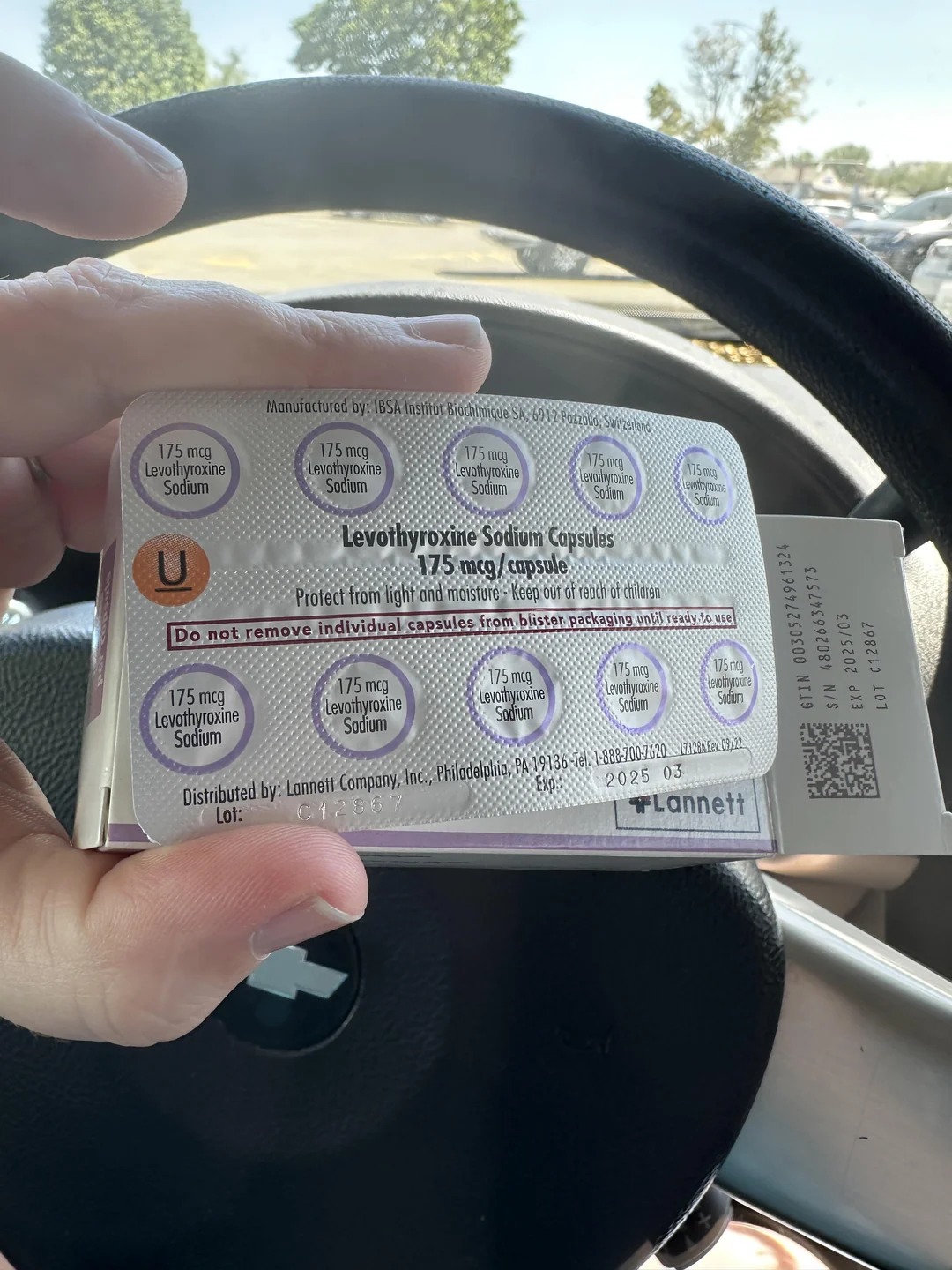
I read a statistic last month that made me feel sick. Women on thyroid tablets whose blood tests are "normal" are still 17 times more likely to be taken by a heart attack before 70 than women the same age. Not twice as likely. Not five times. Seventeen. I didn't believe it either. I've been on levothyroxine for seventeen years and not one doctor has ever mentioned my heart. But here's the truth. Your thyroid doctor runs thyroid tests. Your heart doctor runs heart tests. The problem sits between them... and nobody is paid to look there. That's why most of us have never heard this. That's why my mum never heard it either. My mum was part of that statistic. Twenty-four years on levothyroxine. Her heart gave out at 68. I'm 60. Last month my GP told me to raise my dose and start a statin. I said no. And what I found instead... on a windswept island off the west coast of Scotland... took me from lying awake at 3am listening to my own heartbeat, to sleeping through most nights and walking the coast path without my chest thumping. No statin. No dose increase. But to understand why I was desperate enough to drive the length of the country and catch the first ferry to Stornoway, you need to know what I watched that tablet not do for my mum. And what I didn't know it wasn't doing for me either. For 24 YEARS... nearly a quarter of a century... my mum was on thyroid tablets. Her doctor called levothyroxine the gold standard. Said she'd be on it for life, but that was fine, because her levels would stay normal. Her levels did stay normal. Everything else fell apart. Within the first year she was tired by ten in the morning. A woman who'd run a market stall since she was nineteen, asleep in her chair before the six o'clock news. By year three she couldn't sleep past three. I'd come down some mornings and find the ironing done, the kitchen spotless, and my mum grey at the table. Exhausted all day. Wide awake all night. Like her body had the switch stuck on. Her hands were always cold. Her face went puffy. Her wedding ring... we had to have it cut off. Thirty-eight years she'd worn it. She'd stop halfway up the stairs, hand on her chest, and laugh it off. "I can hear my own heart, love." And every time she asked, the surgery said the same thing. "Your levels are fine, Jean. It's your age. It's the menopause. Try to relax more." She was up at three in the morning ironing. Relax. My dad said it was like watching her fade one night at a time. Twenty-four years of appointments. They'd adjust her dose, or add another tablet... but never once... not ONE time... did anyone say, "Maybe something is wrong that this tablet isn't fixing." And then her heart gave out anyway. 68 years old. On a Tuesday morning, at the kitchen sink, waiting for the kettle. At the funeral my dad gripped my hand and said something I'll never forget. "Twenty-four years they told her her thyroid was fine, Denise. They were wrong the whole time." Fast forward to three months ago. I'm 60. Diagnosed with an underactive thyroid at 43. I've been a good patient. Tablet at six every morning on an empty stomach. Two Brazil nuts a day. No caffeine after two. Magnesium. B12. Gluten-free for two years. I even tried ashwagandha, because a woman in a Facebook group swore by it. It made me feel worse. Antsy, on top of exhausted. And still. Exhausted all day. Then the second my head hits the pillow, my body flips ON. Lying there at three in the morning, listening to my own heartbeat, while my brain will not shut off. Heart thumping on the stairs. Cold hands in July. Losing words mid-sentence, which for me is the most frightening one. I go to my annual review. Nurse does the cuff. Frowns. 146 over 92. Resting pulse 88. My GP pulls up my results. "Denise, your thyroid is fine. But your blood pressure is up, your cholesterol is up, and your resting heart rate is high. I'd like to start you on a statin. And we should nudge your levothyroxine up." My chest tightened. Levothyroxine. Twenty-four years of my mum grey at the kitchen table at 4am. Twenty-four years of her ring sitting in a dish because her fingers were too swollen. And her heart gave out anyway. "No," I said. She blinked. "Sorry?" "I'm not doing it. My mum was on levothyroxine for twenty-four years. I watched what those years did to her. And her heart gave out anyway." She gave me the look. "Denise, we need to protect your heart. The statin..." "What's the point of adding more tablets if they didn't save her?" She didn't have an answer. I told her to give me three months. She wasn't happy. Typed something into my notes. I didn't care. I kept taking my levothyroxine every morning. That was never the question. For three months I did everything properly. Cut caffeine completely. A whole month without so much as a cup of tea. No difference. Walked every day. Screens off at nine. Same bedtime every night, like the sleep leaflet said. Magnesium before bed. Three months later I went back. 144 over 90. Still awake at three most nights. My GP reached for the prescription pad. "Denise, it's time." "Give me three more months." "Denise—" "Three more months." She sighed. I didn't care what she typed. That night I couldn't sleep. Obviously. I kept thinking about my mum. Same tablet. Same normal bloods. Same 3am kitchen. I realised I wasn't fighting to feel better anymore. I was fighting not to become her. At 2am I gave up and went downstairs. Opened the laptop. I searched the thing I'd never actually typed out loud. Why am I exhausted all day and wide awake all night on levothyroxine. Every site said the same things. Take your tablet. Sleep hygiene. Reduce stress. Done it. Done it. Done it. So I kept digging. Looking for women who'd actually solved this. Not managed it. Solved it. That's when I found the thread. Thousands of comments. The title: "The nervous system piece nobody talks about." Woman after woman describing me. Wired but tired. "My body flips ON at the pillow." "My brain will not shut off." "I can hear my own heartbeat." And then one comment, buried deep, with hundreds of likes. A woman describing her granny on the Isle of Lewis. Eighty-one years old. Same condition. Up before the sun, sharp as a pin, sleeping like a stone. And a root the women of that coast have dug from the sea-cliffs for generations. Someone replied with the name. Roseroot. It grows wild on the cliffs of the Hebrides... one of the only medicinal plants on earth that thrives where nothing else survives. I looked at the clock. 2:47am. By eight I'd booked the crossing. I drove north that morning, slept in Ullapool, and caught the ferry to Stornoway the next day. I didn't have an address. Just drove out of Stornoway along the west coast until the road ran out of hurry. I stopped where a hand-painted sign said "Fresh Eggs." There was an old woman in the yard, forking seaweed into a vegetable bed, in a wind that nearly took my car door off. By the time I'd crossed the yard I was out of breath. "Excuse me," I said. "I don't want to be rude. But how old are you?" She straightened up. Sharp, clear eyes. "Seventy-nine." I stood there. Sixty years old. Winded by a farmyard. And this woman nineteen years older was working in a gale like it was nothing. "I'm 60," I said. "I've an underactive thyroid. My GP wants me on more tablets. My mum took them for twenty-four years. Her heart gave out at 68." She set down the fork and looked at me for a long moment. "You didn't come all this way for eggs," she said. "Come inside. I'll show you something." Her kitchen smelled of peat smoke and rising bread. She poured tea without asking. Then she took me to the window and pointed down at the harbour. A small fishing boat, tied up at the pier. "My Callum fished out of that harbour for forty years," she said. "Look at his boat, and I'll tell you what's wrong with you." "Your tablet is the diesel. Your doctor keeps the tank full. The right amount, every month. That's what your blood test measures. The tank." She tapped the window. "But an engine can rev at full throttle while the boat is tied fast to the pier. Burning fuel. Going nowhere. Shaking itself to pieces." "That is you. That is your three in the morning." She sat me down at the table. "In most women like you, the body's alarm signal never switches off. Stress, years of it, and the body decides the storm never ends. The throttle jams open." "And here is what nobody checks. Fuel is not power. Your tablet is a storage hormone. Your body has to convert it into the active one your cells actually run on." "A body with its throttle jammed will not do it. It hoards. It will not spend. So the tank reads full... your bloods look perfect... while every cell on the boat is starving." "And the engine revs against the rope all night. That engine is your heart." She looked at me. "That is what took your mother. An engine that revved at full throttle, tied to the pier, for twenty-four years." My eyes burned. I asked her how she knew all this. She smiled, small. "My mother was the one they fetched on this coast before there was a doctor. Her mother before her. Every croft on this shore kept a jar of the root by the stove." "The root grows out there," she said, nodding at the cliffs. "In the salt wind. Through the frost. It lives its whole life in the storm." "And it teaches a body the storm has an end. It closes the throttle. Lets the engine idle. Lets the fuel finally be spent." Roseroot. Golden root. Rhodiola. I told her I'd seen rhodiola in the chemist at home. She shook her head. "What's in the chemist is dust." "The research is built on the proper extract. A set strength of the two compounds that matter. A proper dose." "The cheap tubs are ground-up root at a fraction of it, dried down to nothing. The women who buy them feel nothing, and decide the root doesn't work." "The root works. The dust doesn't." I asked if anyone sold it done properly. She nodded. "My granddaughter is a nurse in Glasgow. When my knees got too stiff for the cliff, she checked every bottle in Britain for me. One company does it right. Small. British." She wrote the name on the back of an envelope. Rosewyn. 400 milligrams... the dose from the actual studies, not a sprinkle. Standardised to 3% rosavins and 1% salidroside... the strength the research is built on, printed on the label. And black pepper extract in the same capsule, for one reason: so it absorbs instead of passing straight through you. One capsule in the morning. That's it. I ordered it from her kitchen table before I caught the ferry home. The bottle arrived two days after I got home. I'll be honest, because I'd been burned by every supplement on my shelf. The first few nights, I still woke at three. But by the end of week one my afternoons were steadier. The four o'clock slump arrived later and hit softer. Week two. The first night I slept through to six. I lay there in the morning almost laughing. Not every night. Most nights. And I'd stopped hearing my heartbeat on the pillow. Week three. The week every other thing I'd ever tried quietly stopped working. It held. Week four. I carried the washing up the stairs and realised at the top that nothing was thumping. My sister rang that Sunday and stopped me mid-sentence: "You sound different. Lighter." Week six was my follow-up. The nurse did the cuff. Frowned. Did it again. "128 over 82. Pulse 72." My GP scrolled through my numbers. Looked at me. "Denise. What have you changed?" I told her. The island. The root. The proper extract of it. She typed for a while. "Whatever it is, keep doing it. We'll re-check your cholesterol at twelve weeks. No statin for now. And your dose stays exactly as it is." At twelve weeks my cholesterol was down enough that the statin conversation went in a drawer. No statin. No dose increase. That was four months ago. I sleep through most nights now. My hands are warm. Half a stone has gone quietly, without another thing changing. I rang my dad and told him my numbers. There was a long quiet on the line. "Your mum would be proud, love. You found another way." If you're reading this, you probably see yourself in my story. Your bloods are "normal" and you still feel dreadful. You're exhausted all day and your body flips ON the second your head hits the pillow. Your GP has mentioned a statin, or a blood pressure tablet, or an antidepressant. You've tried the dose increase. The ashwagandha that made you feel worse. The magnesium, the B12, the Brazil nuts. The month with no caffeine. The sleep leaflet. Maybe the mindfulness app somebody suggested. For your thyroid. They didn't work. And now you know why. The dose increase is more fuel to an engine tied to the pier. The vitamins are supply. Your problem was never supply. The sleep tricks force the engine off at night... but the throttle is still jammed, which is why you're awake again at three. Not one of them closes the throttle. Rosewyn is different. One ingredient, at the studied dose. The exact strength from the research, printed on the label. Black pepper extract so it actually absorbs. No iodine. No stimulants. Nothing to wind up a body that's already wound up. Made in the UK. Third-party tested. And rhodiola itself is the main adaptogen recognised by Europe's own medicines regulator for stress. It's the modern version of what the women of that coast have dug from the cliffs for three hundred years. And hear this part the way I mean it. You keep taking your tablet. It's doing half the job... delivering the fuel. This does the other half: it lets a body under siege finally spend it. Any change to your dose is a conversation with your GP. Full stop. Try Rosewyn for sixty days. Note your three-in-the-mornings in week two. Check your resting heart rate before bed. Ask whoever lives with you what they notice by week six. If your nights haven't shifted, if your afternoons haven't steadied, if nothing has changed... send the bottles back, even empty, and they refund every penny. Sixty days, no questions. You're at a crossroads. One path. Keep doing exactly what you're doing. Another year of "normal" bloods. Another tablet added every time a new number creeps up. Another decade of 3am ceilings while the engine revs against the rope. End up where my mum did. The other path. Keep taking your tablet... and finally close the throttle. Track your nights. See what's changed in sixty days. I chose the second path. It gave me my nights back. And it may have saved my life. Nobody is coming to look at this for you. Your thyroid doctor checks your thyroid. Your heart doctor checks your heart. Nobody is checking the signal sitting between them. Every year you wait is another year the engine revs against the rope. My mum didn't have this information. You do. Rosewyn is a small company and this does sell out. If it's in stock when you look, that's the moment. — Denise Hartley https://rosewynhealth.com/pages/rhodiola-rosea P.S. My honest timeline: steadier afternoons in week one, my first full night in week two, blood pressure down at week six, the statin conversation shelved at twelve. Yours will be different. Sixty days tells you, and the guarantee means finding out costs nothing. P.P.S. My older sister Carol started it eight weeks after me. She's 63. Sleeping through most nights now, numbers coming down. She rang me last Sunday in tears. "I'm not going to end up like Mum." Neither am I. Neither should you.
Where the ad sends people
rosewynhealth.com
rhodiola rosea
Rosewyn
Learn more: rosewynhealth.com(opens in a new tab)