Sarah's Cat Tips
Sarah's Cat Tips Facebook ad: “Are cat fountains making your cats sick?”
Ran for 6 days, from August 3 to August 9, 2026, the last day Crush saw it.
Run by Sarah's Cat Tips on Facebook. Crush is not the advertiser and does not verify its claims. See this ad in Meta's Ad Library(opens in a new tab)
Want an ad like this for your product?
Crush makes new ad images for your product from this ad: your logo, your product photo, your offer.
Trials from $19.95 USD, then $79.95 USD a month. Cancel anytime.
About this ad
- Meta Ad Library ID
- 1570884324423288
- Platforms
- Facebook, Instagram, Audience Network, Messenger and Threads
- Relaunches
- 1
- Niche
- Pets
Ad text
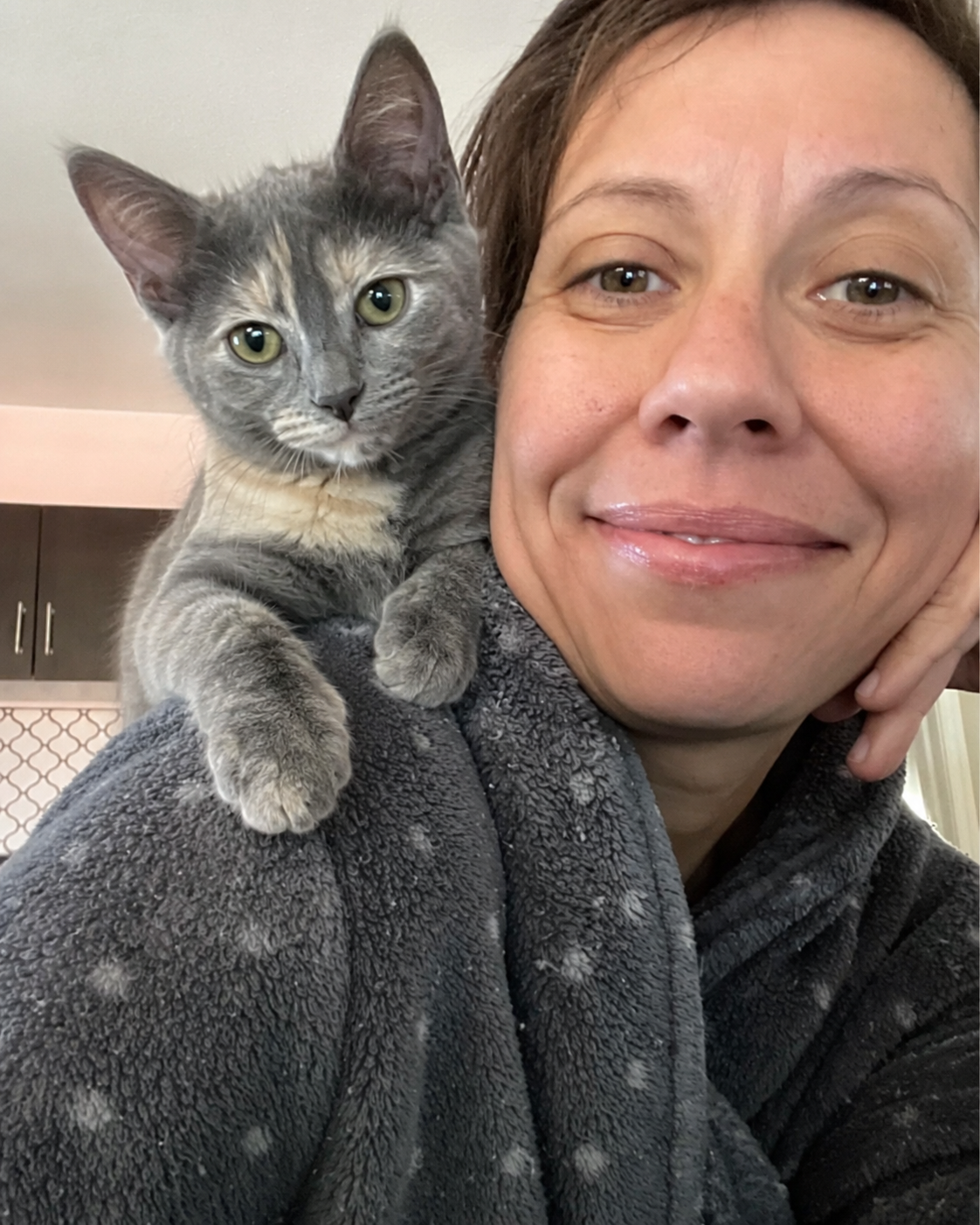
I'm going to say something most cat owners don't want to hear, and I've made my peace with that. That fountain on your kitchen floor, the one you bought so your cat would finally drink enough might be feeding her the same dirty water for days. Not the cute flower one from Amazon. Not the "stainless steel" one with thousands of reviews. Not the ceramic dish you upgraded to. Not the filtered pitcher you fill it from. None of them are doing the one thing you think they're doing. I know, because I owned almost all of them. And I learned what was really going on three weeks too late to save my Willow. My name is Sarah. I'm 58. I live in a small town in Ohio with my husband Ray and, until this past spring, two cats. Willow was an eleven-year-old tortoiseshell. Tiny, opinionated, the boss of the whole house. She slept on the warm laundry and screamed at me through the bathroom door. She was also the pickiest cat I have ever met about water. She'd walk up to her bowl, sniff it, stare at it, and walk away. Fifteen minutes later she'd come back and do it again. So I'd dump the bowl, rinse it, fill it with fresh filtered water, and she'd drink like she'd been waiting all day for permission. Two hours later, the same little dance. I told everyone it was just Willow being Willow. "She likes her water fresh, what can I say." Ray thought it was funny. I thought it was funny too. I refilled that bowl four, sometimes five times a day. I thought I was being a good cat mom. Most people just put a bowl down and forget it. I paid attention. Teddy is our other cat. A five-year-old orange boy, soft and goofy, the opposite of Willow in every way. He drank from the bowl like a normal cat. Easy. I never worried about Teddy. That turned out to be a mistake too. The trouble with Willow started slow. Around the time she turned nine she began having litter box problems. More trips. Then a UTI. Then another one a few months later. The vet ran a urine test. Too concentrated. "She needs to drink more water. Is she drinking enough?" I told her about my whole system. The four-times-a-day refills. The filtered water. The stainless bowl. The fact that Willow also liked the bathroom sink. She nodded. "You're doing all the right things. Cats are just difficult drinkers." So I doubled down. I bought a second bowl for the bedroom. A third by the cat tree. A wide shallow dish so she wouldn't have to worry about whisker fatigue. Chilled water. A splash of tuna water once a week. Then I bought a plastic flower fountain off Amazon. Thirty-nine dollars, plus the filter packs. The reviews all said "my cat finally drinks now." Willow used it for four days. Then went right back to ignoring it. I cleaned it. Changed the filter. Moved it to a quieter corner. She'd take two sips and walk off. I figured it was the noise, or the design, or just her being her. So I switched to a heavy ceramic bowl from a fancy pet store. Beautiful. "Hygienic," the label said. She used it for two weeks, then back to the sniff-and-walk-away. I spent a rough count of three hundred dollars that year on bowls, fountains, filters, and pitchers. Willow still walked away from her water half the time. But I kept going, because that was the only thing that made sense. The vet said she needed more water. So I'd just keep making more water available. Refill more. Try a new dish. Make it more appealing. Around her tenth birthday, she started getting up at night. I'd wake at one, two, three in the morning to the soft thump of her jumping off the bed. The little pat of her paws down the hall. Then the bathroom sink. She'd sit there and wait. If I ran the faucet, she drank. If I pointed at her bowl, she looked at me like I'd insulted her. I told myself older cats just get particular. That's normal. Then her yearly bloodwork came back with high kidney numbers. The vet called it early kidney insufficiency, said it wasn't unusual for an older cat, and put her on a special diet and more wet food. Willow hated the food. Two months later, another urinary flare. Then she stopped wanting to eat much of anything. In May, I came home from the store and found her standing in the hallway near her bowl. Not drinking. Not leaving. Just standing there like she wanted to and couldn't. She looked smaller than she had the day before. Ray drove. I held the carrier in my lap. The emergency vet took her straight back. Bloodwork. Fluids. Imaging. Then the doctor came in with that soft voice people use when it's bad. Her kidney values had fallen off a cliff. She was badly dehydrated and very weak. They could hospitalize her and start IV fluids, but she wasn't stable. I didn't even ask the price until after I'd already said yes. Willow was family. She stayed two nights. The call came at 6:40 in the morning. "Diane. I'm so sorry. Willow declined overnight. We did everything we could." I don't remember the drive there. I remember the smell of the disinfectant and the little cardboard box they put in my hands with her paw print inside. Ray and I sat at the kitchen table a long time without saying anything. I kept thinking about the bowls. The fountain. The ceramic dish. The kidney food. All those years of refilling and rinsing and little routines. I had done everything right. Everything the vet told me to do. And Willow died anyway. Three weeks later I was brushing my teeth at 5:30 in the morning when I heard a soft jump onto the bathroom counter. Then a tongue, licking the drain. I stood there frozen with the toothbrush in my hand. Teddy had never done that. Teddy drank from the bowl. Teddy was the easy one. But there he was, licking water out of the sink while three full bowls sat around the house. I lifted him down. He walked to the hallway bowl, sniffed it, and walked away. I sat on the edge of the tub and stared at that bowl. I'd refilled it two hours before bed. Teddy was acting like he was waiting for water that was good enough to drink. Over the next two weeks it happened again. Then twice more. Then four mornings in a row. I was not going to watch Teddy die the way Willow died. Not over something I was supposed to be able to handle. So I started researching. Not cute cat blogs. Not influencers. Not Amazon reviews written three days after someone opened the box. Real feline hydration stuff. Vet nutrition resources. Forums full of owners describing the exact same quiet pattern. And I kept hitting the same idea, buried under all the usual advice. Cats aren't small dogs. They came from desert animals that got most of their water from prey, so they have a low thirst drive. A cat can quietly under-drink for years while looking completely fine. But the part that stopped me cold was this. The problem often isn't that there's no water. It's that the cat is rejecting the water itself. The bowl is full. The owner feels responsible. The cat sniffs it and walks away. The owner refills it. The cat drinks in that short fresh window, then walks away again. It looks like care. Sometimes it's just the cat telling you the water isn't good enough. So the next day I bought another fountain. Fifty-four dollars. Thousands of reviews. "Stainless steel cat water fountain." Teddy used it for two days. Then started ignoring it, the same way Willow ignored the flower one. I unscrewed the bottom to see what was wrong. The tank — the part that actually held the water all day — was plastic. The "stainless steel" was just a thin tray on top. The water sat in that plastic tub for hours before it ever circulated up. I sat on the kitchen floor with it in pieces and almost cried. That's where my neighbor Carol found me. Carol is 66, lives next door, always in her gardening gloves. She'd brought us soup the week Willow died and sat with me for an hour without making me talk. What I didn't really know until that morning was that Carol had spent more than twenty years as a vet technician before she retired. A lot of it in internal medicine. A lot of it with older cats, kidneys, and urinary cases. She saw me through the back window, on the floor with a fountain in pieces, and came over. "Is it the plastic tank?" she asked. I nodded. She picked up the box and turned it over and read the label and sighed. "This is the oldest trick in the category," she said. "They photograph the stainless tray, because that's the part you see. The reservoir, where the water actually sits all day — that's plastic." She pulled a chair around to face me. "Can I tell you what I think was really happening? Because what the vet told you about Willow needing more water was true. It just wasn't the whole story." "Please," I said. "First. Willow's death was not your fault. You did everything you were told. The trouble is, owners get told to add water, refill water, buy a better bowl. Almost nobody explains why the cat is refusing the water in the first place." "So why was she?" "Two things," Carol said. "And they're the two things the whole industry would rather you didn't think about." She held up one finger. "The first is the design. Almost every fountain on the shelf — plastic, ceramic, the fancy steel ones — they all work the same way inside. One tank of water. A little pump sitting down in that same water. It sucks the water down and pushes it back up, over and over, all day long." "Okay," I said. "So it's moving. Isn't moving good?" "It's the same water moving," she said. "Think about what that means. Your cat walks up, takes a drink, leaves a little spit, a little shed fur, a crumb or two off her chin. None of it leaves. There's no drain. It just goes around and around for days." She let that sit. "It's a hot tub with no drain, sitting next to the food bowl, with a little motor stirring it. And the pump lives right down in it, getting warm, which is exactly what bacteria want." I thought about the pink film I used to scrub off the flower fountain. The stuff that always came back in a few days no matter how hard I cleaned. I said that out loud. Carol nodded slowly. "That pink film has a name. Serratia marcescens. It's a biofilm. And here's the cruel part — it doesn't grow where you can see it. It grows down in the seams of the pump, in the little cracks you can't reach with any brush. You scrub the part you can see, and the part you can't reach grows it right back. Three days, every time." "I thought I just wasn't cleaning it well enough," I said. "Every owner thinks that," she said. "It's not you. You can't scrub your way out of a design that pumps the gunk back into the bowl." Then she held up a second finger. "The other thing is the filter. Tell me — did you feel responsible, buying those filter packs every couple of weeks?" "I felt like a good mother," I admitted. "That's the business," she said quietly. "Carbon filters were tested back in the seventies. They don't catch bacteria. They catch a little chlorine and some smell, that's all. So the filter isn't stopping the slime. It's the warmest, wettest, most porous thing in the whole unit — it's a sponge the bacteria love." "Then why sell it?" "Same reason printers are cheap and the ink costs a fortune," she said. "They sell you the machine once, then a filter every two weeks for the life of the cat. A hundred dollars a year, give or take. The filter was never for your cat. It was for them." I sat there on my kitchen floor and felt years of refilling and rinsing rearrange themselves in my head. "So when I refilled Willow's bowl four times a day…" "You were giving her little windows where the water was fresh again. She drank in the window and walked away when it went stale. The refilling never fixed anything. It just hid the problem from you." "And the fountains failed because they were recycling it." "And growing the slime in the pump, and sitting the water in plastic all day," Carol said. "Even with the water moving, the source was still wrong. A cat will tell you that by walking away. We just call it picky instead of listening." I asked her the only question that mattered. "What would you use?" She didn't even pause. "The one I use for my own two." She told me to stop thinking about how the water moves and start thinking about one thing only. Does the used water ever go back through the pump? If the answer is yes — and for almost every fountain on the shelf, it is — you're back to the loop. The one she uses is called HydroPurr. It's made by a small company called Tenace. It doesn't work like the others. Instead of one tank, it has two. There's a sealed clean-water tank the cat can't reach, and the pump lives in there — so the pump only ever touches clean water, its whole life. It dispenses a little fresh water onto a real stainless steel tray on a schedule. When your cat's done, that used water doesn't loop back. It drains the other way, into a completely separate waste tank, carrying the spit and fur and crumbs with it. The water your cat drinks is never older than a day. It is never recycled. And there's no carbon filter to buy, ever. Just a little screen that catches hair, that you rinse off. "You've probably never heard of them," Carol said. "There's a reason for that. They sell the fountain once. They don't have fifty million dollars to outspend the big brands, because they're not making it back on filters every month." I ordered one that night. From the company's own site, not a lookalike on Amazon. The real one. It came in a few days later. The first thing I did was take it apart, because I didn't trust anything anymore. Two separate tanks, exactly like she said. A real stainless tray, not a shiny lid over a plastic tub. The pump sealed away in the clean side. It's was also quiet. No cord — it charges with a USB cable and runs about two weeks on a charge. No more motor humming in the kitchen at 3 a.m. I set it up Saturday morning in the hallway, away from Teddy's food. He walked past it. Stopped. Came back. One long, careful sniff. Another. A third. Then he dipped his head and drank for almost a full minute. I sat down on the floor and watched my cat drink water and got embarrassingly emotional about it. Week one, he visited it on his own all day. Short, steady drinks. Not the desperate sink routine. Not waiting for me to pour like a waiter. Week two, the bathroom sink habit slowed down. Then it stopped. Week three, I noticed I'd quit refilling bowls like a nervous tic. The fountain was just the water source now. He used it. I rinsed it out in five minutes once a week. That was it. Week four, I took him in for a baseline blood and urine panel, because after Willow I will never again trust "he seems fine." Everything came back normal. I asked the vet to pull Willow's old numbers. Hers had already been creeping the wrong way months before her crisis. Teddy's were clean. Same house. Same food. Same owners. Same vet. The biggest thing that changed was what he drank from. The vet looked at the chart and said, "Whatever's getting him to drink, keep doing it." That was four months ago. No sink waiting. No sniff-and-walk-away. No fountain getting abandoned after two days. Now, let me be very clear about something, because I am not going to do to you what those reviews did to me. I am not telling you a fountain is magic. I am not telling you it treats kidney disease. I am not telling you it replaces your vet. If your cat is losing weight, throwing up, straining in the box, hiding, or not eating — close this and go to the vet today. What I am telling you is that I finally understand the pattern I missed with Willow. For years, she wasn't being dramatic about water. She was giving me information. She sniffed and walked away. She waited at the sink. She drank only when I'd just poured it. She used a fountain for a few days and quit. Over and over she told me the water wasn't good enough to drink every day. And I kept calling it personality. The bowls didn't fail because I refilled them wrong. They failed because still water in a bowl is still water no matter how often you change it. And a fountain that recycles the same water through a slimy pump isn't any better. It just hides it under a little motor noise. I write this because every single week I see the same posts, and I recognize every one of them. "My cat drinks from the sink but ignores the bowl." "My cat only drinks right after I refill it." "Bought a stainless fountain, she used it a week, then quit." "Older cat, concentrated urine, vet says push fluids." "Is it normal that my cat barely drinks?" You are not refilling it wrong. You did not buy the wrong cute bowl. Your cat may be rejecting the water itself. Drinking just enough to look fine. The kidneys quietly making up the difference. Maybe nothing shows for years. Maybe she drinks from the sink. Maybe she gets a UTI. Maybe the bloodwork starts to creep. Maybe one morning you're standing in an emergency clinic holding a paw print in a cardboard box. And the only answer the system hands you is "refill more often," "try wet food," "cats are just picky." Not the loop. Not the slime in the pump. Not the filter you've been buying for nothing. Fresh water that's never recycled. Stainless steel where the water actually sits. No filter to feed the bacteria. Quiet enough that nobody wakes up. If your cat has ever sniffed a full bowl and walked away, waited at the sink, drunk only right after a fresh pour, or quit a cheap fountain after a few days — this is the one thing I'd change today. Don't buy the plastic-tank lookalike and tell yourself it's the same thing. Don't buy the one that's only stainless on top. Check where the water actually sits all day. That's the part your cat has to live with. EDIT: A few people have already asked if any fountain is fine as long as the water moves. That's exactly what I believed when I bought the Amazon one. The problem was never that the water wasn't moving. It was that the same water kept moving — through a plastic tank and a slimy pump, for days. HydroPurr is different because the used water leaves and never comes back, and the pump never touches it. 👉 thetenace.com/products/tenace-hydropurr P.S. Teddy's baseline panel came back normal four weeks after we switched. Willow's numbers had already been slipping months before her emergency. Same house, same food, same people — the biggest thing that changed was what he drank from. I can't prove what would've happened if I'd understood it sooner, and I won't pretend a fountain is medicine. But I know this much: in my house it isn't an upgrade. It's the thing I wish I'd had while Willow was still here.
Where the ad sends people
thetenace.com
Are cat fountains making your cats sick?
Tenace
See details: thetenace.com(opens in a new tab)