Life with Cats
Life with Cats Facebook ad: “Read this if your dog had surgery recently”
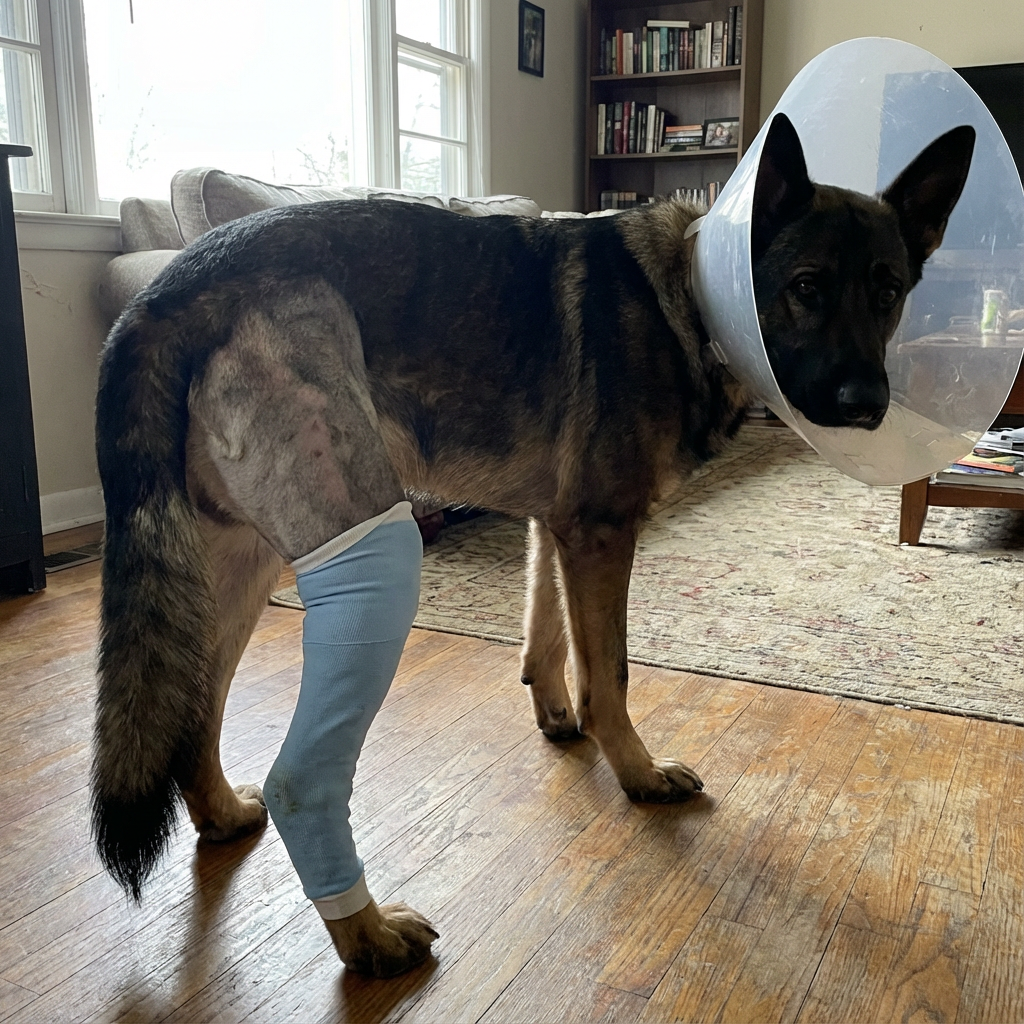
Ran for 54 days, from January 3 to February 26, 2026, the last day Crush saw it.
Run by Life with Cats on Facebook. Crush is not the advertiser and does not verify its claims. See this ad in Meta's Ad Library(opens in a new tab)
Want an ad like this for your product?
Crush makes new ad images for your product from this ad: your logo, your product photo, your offer.
Trials from $19.95 USD, then $79.95 USD a month. Cancel anytime.
About this ad
- Meta Ad Library ID
- 1571500474090530
- Platforms
- Facebook, Instagram, Audience Network, Messenger and Threads
- Relaunches
- 0
Ad text
Luna needed TPLO surgery on both knees. $8,000. The surgeon said recovery would take 12-16 weeks. Then he mentioned something that completely changed our recovery timeline. My German Shepherd tore her CCL. Cranial cruciate ligament—dog equivalent of an ACL tear in humans. It happened at the dog park. She was running full speed, planted her back leg to change direction, and I heard her yelp. $4,000 for TPLO surgery. Tibial Plateau Leveling Osteotomy—they cut the bone, rotate it, plate it back together with screws. It's major orthopedic surgery. Six months later, she tore the other one. Another $4,000. Another surgery. Another 12-16 week recovery. My orthopedic surgeon is Dr. Chen. He's been practicing veterinary orthopedic surgery for 18 years. Did his residency at Cornell. Operates on about 150 TPLO cases per year. After Luna's second surgery, he walked me through post-op care while she was still groggy from anesthesia. "Keep her quiet. Absolutely no jumping, no running, no stairs. Leash walks only, 5 minutes three times a day for the first two weeks, increasing gradually." "Physical therapy starts week 4. Underwater treadmill. Range of motion exercises. Muscle strengthening." "Full recovery is 12-16 weeks if everything goes perfectly. Some dogs take longer." He pulled up Luna's post-op X-rays on his computer, showed me the titanium plate and screws, explained how the bone would heal. Then he said something I wasn't expecting: "There's one thing that significantly improves surgical recovery outcomes, but most vets don't talk about it because it's not a prescription." Dr. Chen sat back in his chair. "I've been doing TPLO surgeries for nearly two decades. Early in my career, I followed standard post-op protocols exactly as I was taught in residency. Good outcomes, but recovery timelines were all over the place." "Some dogs would be weight-bearing at 6 weeks. Others not until 10 weeks. Some had smooth recoveries. Others developed complications—excessive scar tissue, persistent inflammation, delayed bone healing." "I couldn't figure out why outcomes varied so much when I was doing the exact same surgery, the exact same way, every single time." "Then about eight years ago, I went to a conference where a human orthopedic surgeon presented on post-operative thermal management. He showed data that patients who kept surgical sites consistently warm had faster healing times, less scar tissue formation, better overall outcomes." "The science made perfect sense. I started wondering why we weren't doing this for veterinary surgical patients." He explained that he started researching thermal regulation in post-operative canine recovery. Read human medical literature. Talked to human physical therapists and orthopedic surgeons. "I started implementing thermal management recommendations with my own surgical patients who were willing to try it. The difference was remarkable." "Dogs who kept their surgical sites warm during recovery had consistently better outcomes. Faster weight-bearing. Less inflammation. Smoother healing." "I've been recommending it for eight years now. It's not standard of care in veterinary medicine—yet. But the results speak for themselves." "Let me explain what's happening inside Luna's knee right now, because understanding the biology will make this make sense." Dr. Chen pulled up a diagram of the TPLO surgery on his computer. "We just cut Luna's tibia, rotated it, and plated it back together with six screws. Over the next 12-16 weeks, several things need to happen for her to recover:" 1. Bone healing "The cut bone needs to fuse back together. That's called ossification—bone cells multiplying, bridging the gap, creating new solid bone." "Bone healing requires massive amounts of blood flow. Blood delivers oxygen, calcium, phosphorus, vitamin D, proteins—everything bone cells need to multiply and build new bone matrix." "Temperature affects blood flow dramatically. Warmth keeps blood vessels dilated—open and flowing. When tissue is cold, blood vessels constrict. Less blood flow means slower bone healing, longer recovery times." 2. Soft tissue healing "We also cut through muscle, fascia, joint capsule to access the bone. All of that tissue needs to heal." "Collagen formation is the key to soft tissue healing. Your body produces collagen fibers that knit torn tissue back together. The quality of that collagen determines how much scar tissue forms and how flexible the tissue remains." "Collagen synthesis is temperature-dependent. Optimal collagen formation happens at normal body temperature. When tissue cools down—which happens constantly when lying on cool surfaces—collagen synthesis slows and becomes less organized." "Disorganized collagen = excessive scar tissue. Excessive scar tissue = decreased range of motion, chronic stiffness, long-term mobility issues." 3. Inflammation management "Inflammation is necessary for healing. But too much inflammation causes problems—pain, swelling, tissue damage." "When the surgical site stays warm, inflammatory processes stay controlled. Blood flows freely, inflammatory waste products get cleared efficiently, swelling stays minimal." "When the surgical site cools down, blood flow decreases, waste products accumulate, swelling increases, inflammation becomes chronic rather than healing-focused." 4. Muscle preservation "This is huge for TPLO recovery. Luna can't use her leg normally for 12-16 weeks. That causes muscle atrophy—the quadriceps and hamstring muscles waste away from disuse." "The less muscle she loses during recovery, the faster she'll regain full function. Maintaining muscle during forced rest requires blood flow. Cold muscles atrophy faster. Warm muscles preserve better." "So why doesn't everyone do thermal management?" Dr. Chen sighed. "Because it's not taught. Veterinary orthopedic residencies teach surgical technique, post-op medications, physical therapy protocols. Thermal management isn't part of the curriculum." "Most vets send patients home with pain meds and a cone. That's it. The idea that something as simple as keeping the surgical site warm could improve outcomes sounds too basic. Too holistic." "But I've seen the difference in my own patients. Dogs whose owners keep surgical sites warm recover faster and better. It's consistent enough that I now recommend it to every single surgical case." "Luna is going to spend 12-16 weeks resting. Lying down for 20-22 hours a day during early recovery. Where she lies matters enormously." "Your floors, your couch, standard dog beds—they all pull heat away from her body. It's basic thermodynamics. Heat transfers from warm objects to cooler objects until equilibrium." "After 20 minutes lying down, Luna's surgical site will be noticeably cooler than her core temperature. After 2 hours, significantly cooler. After sleeping 8 hours overnight, cold." "And remember—cold tissue heals slower. Less blood flow, slower cell metabolism, reduced collagen synthesis." "Your dog can't recover optimally if their surgical site is cold 20 hours a day." "What Luna needs is thermal reflection, not heating. We're not adding external heat—that would be dangerous. We're just preventing her body heat from escaping." Dr. Chen pulled out his phone and showed me a product: "This is what I used for my own dog, Duke, when he had TPLO surgery two years ago. It's what I recommend to clients who want optimal recovery outcomes." It was a Nora thermal pad. "This pad is specifically engineered for post-surgical recovery. Four layers working together:" "Layer one: Non-slip base. Critical for surgical patients who can't balance well. Stays stable on any surface." "Layer two: Insulating core. High-density foam that stops heat transfer. Your floor is constantly pulling heat away from Luna's body—this layer blocks that transfer completely." "Layer three: Aluminum composite material. This is the crucial layer. Aluminum reflects infrared radiation—body heat. When Luna lies on this, her body heat radiates downward like it normally does, but instead of escaping into the floor, the aluminum reflects it back toward the surgical site." "Think of it like a survival blanket. Emergency blankets are aluminum-coated for the same reason—they reflect body heat back to the person instead of letting it escape. This pad does the same thing for your dog's joints and surgical site." "Layer four: Quilted comfort surface. Soft enough for post-surgical comfort, durable enough to last years, washable if there are any accidents during recovery." "The result: Luna's surgical site stays at her natural body temperature during rest. The temperature it needs to be for optimal healing. Optimal blood flow. Optimal collagen synthesis. Optimal recovery." "It's not a heating pad—no electricity, no heating elements, no risk of overheating or burns. Completely passive. Just engineered materials working with your dog's body." "How do you know it works?" "Because I used it for Duke." Dr. Chen pulled up photos on his phone. A golden retriever, about 7 years old. "Duke tore his CCL two years ago. I performed the TPLO surgery myself. And I used everything I've learned about post-surgical thermal management." "I got him a Nora pad before surgery. From the day he came home, he rested on nothing but that pad." He showed me Duke's recovery timeline: "Week 2: Weight-bearing on the surgical leg during standing. That's ahead of schedule—most dogs aren't weight-bearing until week 3 or 4." "Week 4: His physical therapist started range of motion exercises. She said his joint mobility was excellent for this early in recovery. No excessive scar tissue formation." "Week 6: Walking normally without a limp. Most dogs still have a noticeable limp at 6 weeks." "Week 10: Cleared for normal activity. Full recovery. Six weeks ahead of the typical 16-week timeline." "His physical therapist asked what I was doing differently. I told her about the thermal pad. She said, 'That explains it. I wish more vets recommended thermal management. The dogs who keep surgical sites warm have noticeably better outcomes.'" Dr. Chen looked at me seriously. "I wouldn't recommend something I wouldn't use for my own dog. I used this for Duke because the science is sound and the results are consistent." Clinical Evidence from His Practice: "And it's not just Duke. Over the past eight years, I'd estimate about 40% of my surgical clients actually follow through with thermal management when I recommend it." "The dogs whose owners use thermal pads? Average recovery time is 10-12 weeks. Minimal complications. Excellent range of motion." "The dogs whose owners don't? Average recovery time is 14-16 weeks. Higher rate of excessive scar tissue. More persistent inflammation." "It's consistent enough that I can predict outcomes based on whether owners implement thermal management or not." "Is it safe for post-surgical patients?" "Completely. That's why I recommend it—it's passive thermal reflection, not active heating. No electricity. No way to overheat. No risk of burns." "I've been recommending these for eight years. Hundreds of surgical patients. Never had a single safety issue." "And Nora offers a 30-day risk-free guarantee. If for any reason you're not happy with it, you return it. Though I've never had a surgical patient return one—the results are too obvious." That made me feel better. Post-surgical recovery is already stressful enough. Knowing there was no safety risk and no financial risk made the decision easy. "How much?" "I got mine for $45. But they're running a holiday sale right now—" he pulled it up on his phone "—$33." I'd just paid $4,000 for surgery. Was facing 12-16 weeks of recovery, physical therapy appointments at $75 each, potential complications that could cost hundreds more. $33 for something that might reduce recovery time by 4-6 weeks and improve long-term outcomes seemed like the easiest decision I'd made all day. Implementation: Dr. Chen sent me the link while I was still in the exam room. I ordered it before I left the parking lot. It arrived the next day—faster than I expected. Four layers, exactly as Dr. Chen described. Substantial—you could feel the quality. The insulating core was dense. The aluminum layer had a slight metallic shimmer to it. The comfort surface was thick and quilted. I put it in Luna's recovery crate. The crate where she'd spend the next 12 weeks. Luna was still groggy from surgery. I helped her onto the pad. She settled immediately. Stayed there for the next 18 hours, barely moving. Day 2 post-op: Dr. Chen called to check on Luna. "How's her incision look? Any swelling?" I checked. "The incision looks good. There's some swelling, but it doesn't seem excessive." "That's good. Swelling should peak around day 3, then gradually decrease." Day 3: The swelling peaked, but it was minimal compared to what I'd read about. Other TPLO recovery stories talked about massive swelling, hot incisions, dogs in obvious pain. Luna's incision was warm—but not hot. The swelling was there but manageable. Week 2: First physical therapy appointment. The therapist examined Luna's surgical site. Checked range of motion. Watched her stand and attempt to walk. "Her inflammation is really well controlled for 2 weeks post-op. I'm seeing less swelling than typical at this stage." She manipulated Luna's knee gently. "Range of motion is excellent. No excessive tightness. The joint is moving smoothly." "Is that unusual?" "For 2 weeks post-op? Yes. Usually there's more restriction from scar tissue formation. Her soft tissue healing looks really clean." Week 4: Dr. Chen did Luna's recheck exam. He watched her walk across the exam room. Luna was using the surgical leg. Not full weight-bearing, but definitely using it. He examined the incision. Felt the joint. Checked range of motion. "She's ahead of schedule. Most dogs aren't weight-bearing at all at 4 weeks. Luna is using the leg during walking." He pulled up her X-rays. "Bone healing looks excellent. The osteotomy gap is filling in nicely. This is what we want to see." "When do you think she'll be recovered?" "If she continues at this rate? 10-12 weeks instead of 16." Week 6: Physical therapy appointment. The therapist did her standard assessment. Range of motion measurements. Gait analysis. Strength testing. She looked at her notes from week 2. Compared them to today. "This is remarkable. Her range of motion has improved 40% in four weeks. That's faster than any TPLO patient I've seen this year." "Why?" "I don't know. What are you doing at home?" I told her about the thermal pad. About Dr. Chen's explanation of surgical site temperature and healing. She nodded slowly. "That makes sense. I've read research about thermal management in human post-surgical recovery. Patients who keep surgical sites warm heal faster and with less scarring." "Why don't more vets recommend it?" "Because it's not standard of care in veterinary medicine. Most vets don't learn about it. But I'm going to start asking my canine clients about it." Week 10: Final recheck with Dr. Chen. X-rays showed complete bone healing. Clinical exam showed full range of motion. Gait analysis showed normal walking without limp. "She's cleared for normal activity," Dr. Chen said. "Full recovery." "At 10 weeks?" "At 10 weeks. Six weeks ahead of typical timeline." He showed me her file. Listed all the milestones of her recovery—all ahead of schedule. "This is what thermal management does. Optimal healing conditions lead to optimal outcomes." That was two years ago. Luna is fully recovered. Surgery was completely successful. But here's what Dr. Chen told me that changed everything: "TPLO patients often develop arthritis in the surgical knee 5-10 years after surgery. The bone healed, but the trauma of surgery, the altered biomechanics, the scar tissue—it all increases arthritis risk." "If you want to prevent that, keep using the thermal pad. Long-term thermal management can help prevent post-surgical arthritis from developing." Luna still sleeps on her Nora pad every single night. Two years later. She's 6 now. No signs of arthritis. No stiffness. No limping. Still runs full speed. Her last checkup, Dr. Chen said: "Her surgical knee looks great. No arthritis development. I tell you what I tell every owner—whatever you're doing for joint care, keep doing it." If your dog just had TPLO surgery, ACL surgery, hip surgery, any orthopedic surgery... If you're facing 12-16 weeks of recovery and want to give your dog every advantage for healing... Or if your dog had surgery years ago and you want to prevent post-surgical arthritis from developing... The thermal pad Dr. Chen used for his own dog and recommends to his surgical patients is from Nora. Right now it's $33 with their holiday sale (normally $45). Four layers engineered to keep surgical sites at optimal temperature for healing. No electricity. No heating elements. Just materials that reflect your dog's body heat back to them. 30-day risk-free guarantee. If you're not happy, return it. But Luna's recovery was 6 weeks faster than typical. Her surgical site healed with minimal scar tissue. Two years later, she has no arthritis development. Order it today. Give your dog optimal conditions for healing. Surgery is expensive and stressful enough. Give them every advantage for the best possible outcome.
Where the ad sends people
norashop.store
Read this if your dog had surgery recently☝️
Nora
Shop now: norashop.store(opens in a new tab)