Ethan Walker
Ethan Walker Facebook ad: “Roman Soldiers Died With Perfect Livers”
Ran for 3 days, from July 26 to July 29, 2026, the last day Crush saw it.
Run by Ethan Walker on Facebook. Crush is not the advertiser and does not verify its claims. See this ad in Meta's Ad Library(opens in a new tab)
Want an ad like this for your product?
Crush makes new ad images for your product from this ad: your logo, your product photo, your offer.
Trials from $19.95 USD, then $79.95 USD a month. Cancel anytime.
About this ad
- Meta Ad Library ID
- 1574649444009316
- Platforms
- Facebook, Instagram, Audience Network, Messenger, WhatsApp and Threads
- Relaunches
- 0
Ad text
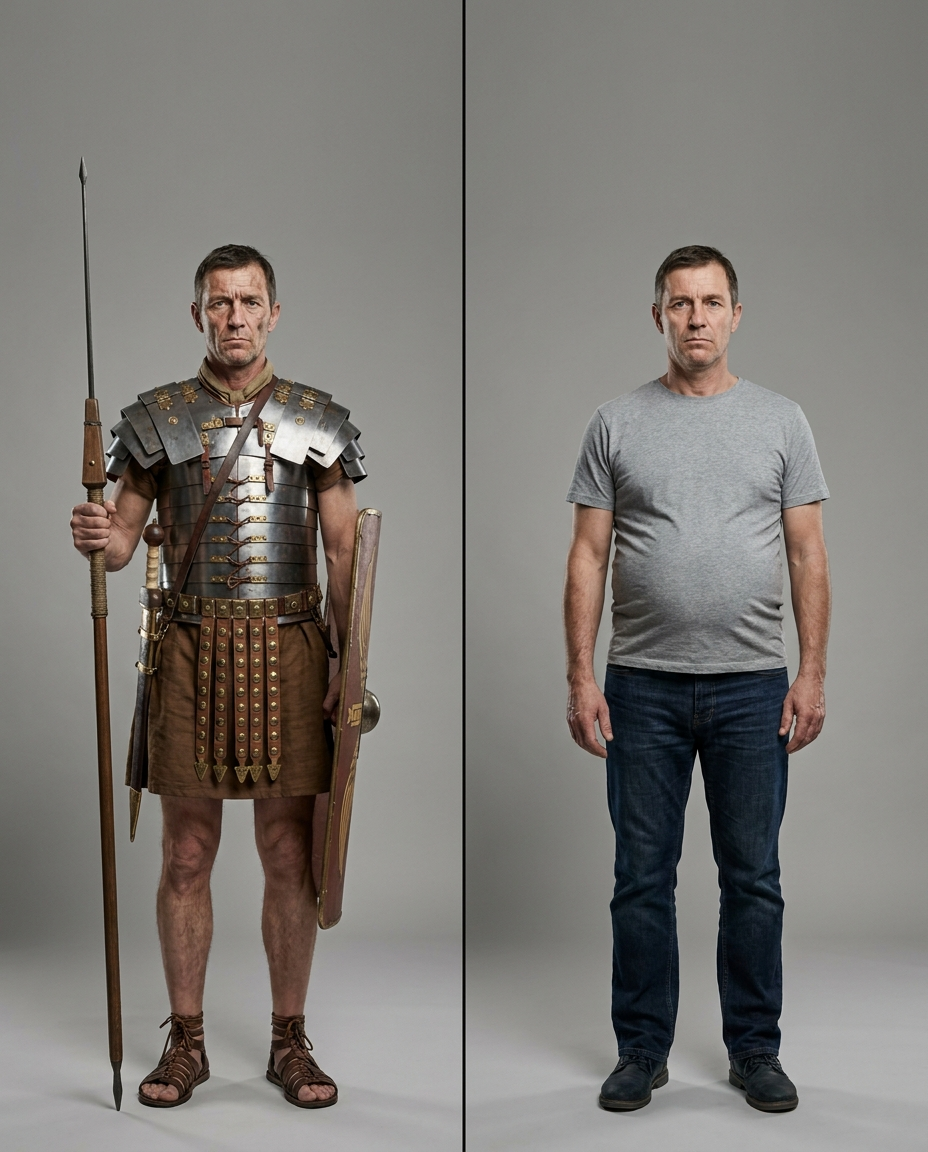
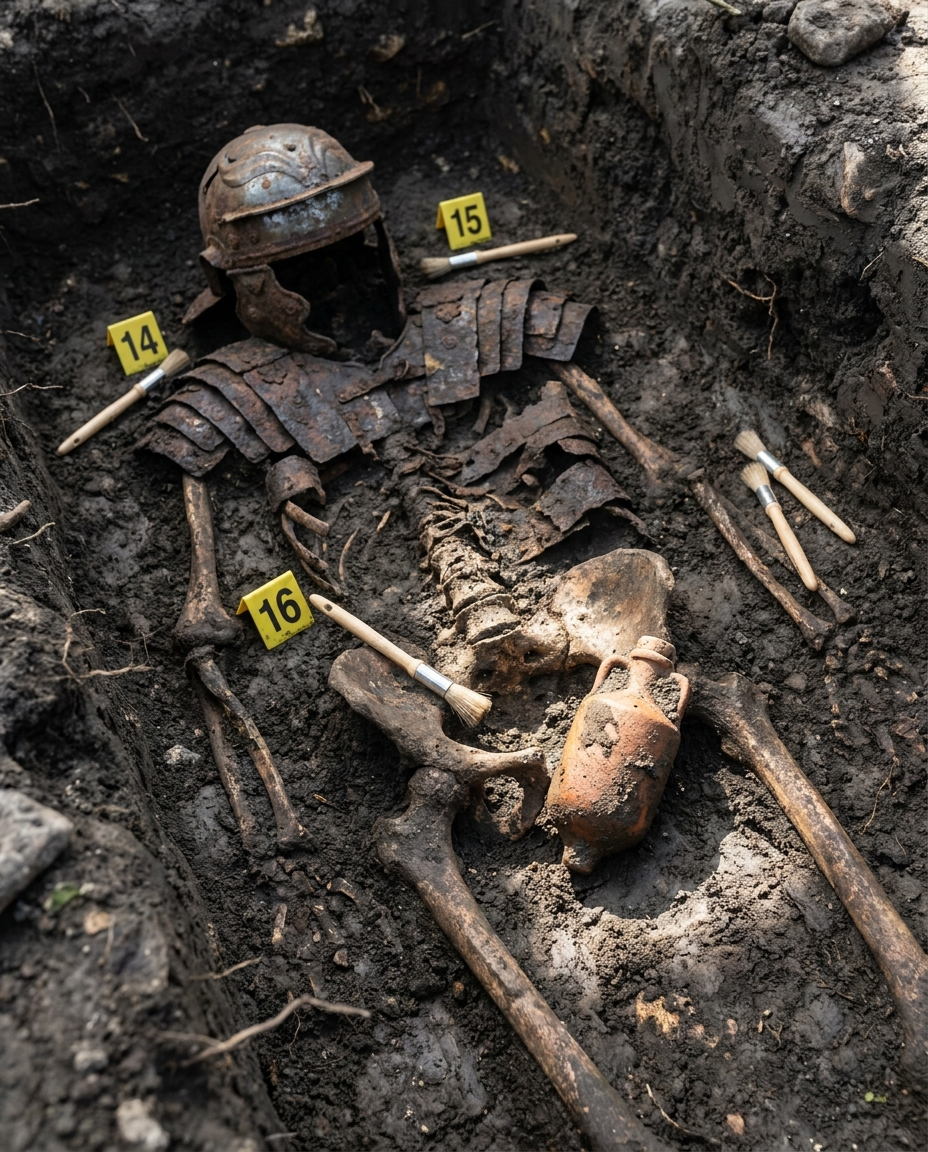
Forensic scientists dug up 340 Roman soldiers expecting rotted, fat-clogged livers. They found the opposite, and spent a year figuring out why before a first-year chemist cracked it. What she found was buried in a clay bottle every soldier carried on his belt, four things a modern man's liver is quietly starving for. It starts with a diet that should have killed them. Roman soldiers ate more animal fat per day than the average modern American man. Cured pork. Lard-fried grain. Cheese aged in tallow. Fatty bone marrow. Organ meats at nearly every meal. Their military rations averaged 3,600 calories a day, over 40% from fat, most of it saturated. The same diet that modern doctors say will destroy your liver and kill you before 60. Roman legionaries ate this way for entire careers spanning 25 years. They marched in full armor at 46 years old. They fought in the front line at 55. Their retirement was earned, not medical. When forensic pathologists first read the Roman military dietary records, they assumed the fat percentages were transcription errors. Nobody could eat that way and stay lean. Not for a career. Not into their fifties — not without their liver quietly turning to fat behind the breastplate. So in 2011, a team from the University of Bologna flew to a Roman military burial site outside Ravenna to prove the records wrong. They expected to find enlarged livers. Cirrhotic tissue markers. The chemical signatures of chronic metabolic disease frozen into the bones. Instead, they found something impossible. 340 Roman Soldiers With Livers Cleaner Than Modern Men in Their Twenties The research team ran every test. Bone marrow analysis. Isotope tracking. Micro-residue examination of the tissue markers that liver disease leaves permanently embedded in the skeleton. The soldiers who had been eating the "impossible" high-fat diet for decades had liver markers that looked… pristine. No fatty infiltration signatures. No fibrotic patterns. No metabolic dysfunction markers of any kind. Their liver profiles — the tissue signatures that shut down first in modern populations — showed minimal disease compared to sedentary Romans of the same era. Dr. Chiara Rinaldi, the lead pathologist, read the tissue report three times before she said anything. "This makes no sense," she finally told her team. "These men should show severe hepatic degeneration. Their livers should be full of trapped fat. Instead they look like the livers of modern twenty-year-old marathon runners." But they didn't. Some of these soldiers had served for 25+ years, eating a diet that would put a modern American man on a statin within a year, with zero signs of metabolic disease. Meanwhile, 40-year-old American men who ate grilled chicken and drank protein shakes were being diagnosed with non-alcoholic fatty liver disease at record rates. Something wasn't adding up. Their Diet Wasn't Special. Their Training Wasn't Special. Their Genetics Weren't Special. The team spent thirteen months studying everything about Roman military lifestyle. They analyzed the diet in detail — high-fat, moderate-carb, mineral-adequate but not miraculous. Comparable to what many premodern populations ate. They studied the training — brutal, yes, but no more brutal than what modern military infantry endure. And most of the retired veterans in the graves had stopped training a decade before they died. They tested genetic markers from bone samples — completely normal Mediterranean population genetics. The same gene pool that modern Italian men are drawn from. And modern Italian men now have among the highest fatty liver disease rates in Europe. Nothing explained it. Dr. Rinaldi was ready to file the findings as "unexplained anomaly" and move on. That's when one of the junior researchers noticed something the archaeology team had catalogued and ignored for a hundred years. The Small Clay Bottles Nobody Bothered to Analyze Elena Ricci was a first-year forensic chemist, not an archaeologist. While the senior team focused on training records and dietary reconstructions, she paid attention to the dozens of small sealed clay flasks found buried alongside almost every soldier. And she noticed something remarkable. Every single bottle followed the same design — small, hand-thrown, sealed with beeswax and cork, roughly the size of a modern medicine dropper bottle. Every soldier had one. Some had two. The ones buried with senior officers were marked with the officer's rank and regiment. For a century, museum catalogues had labeled these bottles the same way: "personal effects, likely wine or oil." "What if it's not their diet?" she asked during a team meeting. "What if it's what they carried in these bottles?" The historians laughed. "You think a wine flask kept them lean?" one of them scoffed. But Elena wasn't talking about wine. She was talking about what happens when you consistently deliver a specific set of compounds to a fatty liver over the course of decades. The Experiment That Changed Forensic Nutrition Forever Elena convinced them to run one final test. She had the residue extracted from the interior walls of eight preserved bottles — pulled from different soldiers, different centuries, and different regions of the empire. She sent the samples to a food chemistry lab at Cambridge. The results took three months to come back. Elena said later she read the email twice standing up before she sat down. The bottles did not contain wine. They contained a fermented mineral concentrate. Bitter. Dark. Highly concentrated. And the chemical profile was almost identical across every bottle tested, regardless of century or region. It contained a specific ratio of four trace minerals — selenium, zinc, iodine, and L-tyrosine — at concentrations that matched a modern clinical liver-support protocol almost exactly. And it contained the extract of an adaptogenic root that grew across the Mediterranean at the time and has since been identified as a close botanical cousin of the plant clinical researchers now call KSM-66. Every Roman soldier carried the bottle. Every Roman soldier drank from it three times a day. Written into the daily military schedule between the morning drill and the afternoon march. For their entire military careers. Dr. Rinaldi stared at the chemistry report for a long time before she spoke. "They weren't eating a special diet. They were dosing themselves. Every day. For twenty-five years." The Two Hidden Mechanisms Destroying Your Liver Here's what the Bologna team finally understood about why the Roman bottles mattered so much. Fatty liver disease isn't caused by eating too much fat. If it were, Roman legionaries would have died at 30. They didn't. They died at 60 with pristine livers. Fatty liver is caused by two specific things — and the Roman bottle addressed both. Problem #1: The Metabolic Signal Failure Your liver doesn't decide whether to burn fat or store it. It waits for a signal. That signal is thyroid hormone. Specifically, the active form called T3. When your body produces enough T3, your liver burns dietary fat efficiently. Every meal. Every day. No matter how much fat is on your plate. When T3 drops, your liver stops burning fat and starts trapping it inside its own cells. Day after day. Meal after meal. Your liver becomes a storage unit for fat it physically cannot burn. And your thyroid cannot produce T3 without four specific raw materials. Selenium. Zinc. Iodine. L-Tyrosine. The exact four compounds Elena Ricci found in the Roman bottles. Problem #2: The Cortisol Drain But there's a second problem the researchers only realized late in the investigation. Chronic cortisol — the stress hormone — burns through the amino acids your thyroid needs to build hormone in the first place. Specifically, cortisol strips L-tyrosine reserves before they ever reach the gland. Modern life keeps cortisol elevated 16 hours a day. Work stress. Financial pressure. Sleep deprivation. The constant low-grade dread of the news cycle. Even if you eat foods that contain tyrosine, chronic cortisol burns through it before your thyroid ever sees it. Which means the four minerals alone aren't enough. You also need something that shuts down the cortisol drain. And that's what the adaptogenic root in the Roman bottle was doing. Modern clinical research has identified this class of compound — adaptogens — as one of the only known interventions that lowers cortisol without suppressing the entire stress response. KSM-66 ashwagandha is the most-studied member of the class. Roman soldiers had access to a botanical version. Modern men don't. Roman Soldiers Never Had Either Problem Every day, they consumed the bottle. The four minerals delivered the raw materials their thyroids needed to produce T3. The adaptogenic root suppressed the cortisol drain their military lives should have generated. T3 flowed to the liver in adequate quantities. The liver received the signal to burn fat, not store it. Every meal — including the enormous amounts of pork lard and cheese — got processed and cleared instead of trapped. Zero fatty infiltration. Zero metabolic dysfunction. Their livers recovered nightly. The cycle repeated perfectly, day after day, for military careers spanning decades. Their bodies never accumulated the chronic organ damage that destroys modern men. When Modern Men Tried the Roman Diet, Their Livers Broke Down It had happened before. In 2018, a paleo-nutrition research group in California decided to replicate the Roman military dietary protocol as a controlled study. Same fat percentages. Same calorie counts. Same meats and grains and cheeses. But no bottle. Because no modern researcher knew about the bottle yet. Within three months, participants' liver enzymes were elevated across the board. Two of the 40 subjects developed clinical fatty liver markers. Three others showed early insulin resistance. The study was quietly terminated at month four. The conclusion at the time? "High-fat historical diets don't translate to modern human physiology." But Elena Ricci's research revealed the real difference: The modern subjects were consuming the fat without consuming the mineral-and-adaptogen concentrate that made their liver capable of processing it. Their thyroids weren't being fed. Their cortisol was running high the entire time. Their livers had no metabolic signal telling them to burn the fat they were eating. The bottle was the mechanism. The diet without the bottle was a death sentence. Dr. Rinaldi Brought the Findings to Modern Hepatology She returned to Bologna obsessed with one question: Could you protect the modern liver from fatty infiltration by delivering the same compounds the Roman bottle delivered? She started working with a functional medicine clinic in Milan that was treating fatty liver patients who had failed conventional treatment. The clinic began giving patients a modern formulation of the Roman compounds — the same four minerals, plus a clinical extract of the adaptogenic root, delivered in a liquid form for direct sublingual absorption. The results were undeniable. Liver enzymes dropped by an average of 44% within twelve weeks. Ultrasound scans showed measurable reductions in hepatic fat deposits. Patients who had been told they were candidates for liver transplants were sent home with normalized markers within six months. The physicians were stunned. But the research never went mainstream. Because you can't patent a 2,000-year-old Roman military ration. Big Pharma Makes $220 Billion Annually on Metabolic Disease Statins. Blood pressure medications. Diabetes drugs. Bariatric surgery. Liver transplants. The entire pharmaceutical-industrial complex is built on the idea that fatty liver, metabolic syndrome, and the "dad bod" are the inevitable consequences of aging and Western life. That your body breaks down after 45 and there's nothing you can do about it except manage symptoms with drugs and hope you die before your liver does. But the Roman legions prove that's a lie. Fatty liver isn't inevitable. It's what happens when your thyroid runs out of raw materials and your cortisol burns through what's left. Your liver stops receiving the metabolic signal to burn fat, and starts storing it in its own cells. For 2,000 years, the solution was carried in a small clay bottle on the belt of every Roman soldier. And modern medicine buried the findings to protect a $220 billion market. The Problem Is You Can't Get the Roman Bottle Anymore Dr. Rinaldi knew this. The specific fermented concentrate the Romans consumed hasn't been produced in 1,600 years. The botanical species has changed. The mineral-rich volcanic water that formed its base has been contaminated by industrial agriculture. Even if you could recreate the recipe exactly, you couldn't source the ingredients from the modern world. But the active compounds could be replicated. Selenium. Zinc. Iodine. L-Tyrosine. Delivered at Roman-military ratios. Combined with KSM-66 ashwagandha — the clinical-grade adaptogenic extract from the closest modern botanical cousin of the root the Romans used. In a small dropper bottle. Sublingual absorption. Direct to the bloodstream. The size of a Roman soldier's flask. The delivery of a modern clinical protocol. The Breakthrough: Sublingual Absorption of the Four Raw Materials The problem with most fatty liver supplements is simple: They come in capsule form. Which means your digestive system destroys 85% of the active compounds before they ever reach your liver. You swallow the pill. Your stomach acid breaks it down. Your gut absorbs 10–15% of what remains. The rest passes through your body without ever being used. That's why most fatty liver supplements fail. The Roman bottle worked because the compounds were absorbed through the mucous membranes of the mouth as the soldier drank — direct to the bloodstream, bypassing the digestive tract almost entirely. Sublingual absorption reaches 85–95%. That's not a marginal improvement. That's the difference between a supplement that does nothing and one that actually reaches your liver in the concentrations required to restart T3 signaling. The wide-spectrum mineral delivery matters too. Not just iodine. Not just selenium. All four. At the Roman ratio. Because your thyroid can't produce T3 with three of the four raw materials. Missing any one of them and the whole system stalls. After Two Years of Testing, They Finally Perfected It Four minerals in liquid bioavailable form at Roman-military ratios. KSM-66 ashwagandha at clinical dose, cold-extracted to preserve the actives. Iodine at the precise therapeutic microdose the thyroid actually needs — not the mega-doses that trigger inflammation. Just one dropper under the tongue in the morning. Held for thirty seconds. Direct to the bloodstream. Your thyroid receives the raw materials it's been starving for. Cortisol quiets. T3 begins flowing to your liver. Fat processing resumes. That's how Nuvecella Thyroid & Liver Balance was born. It's the modern equivalent of what every Roman soldier carried on his belt for 25 years of military service. Since we launched, thousands of men have experienced what those Bologna researchers discovered: Your liver wants to burn fat. It just needs the signal your body stopped producing thirty years ago. Here's What Happens When the Roman Compounds Reach a Modern Liver Tom, 62, had been dealing with fatty liver for eight years. Two hepatologists told him the same thing in the same flat voice: cirrhosis, five years, maybe less. He was already on a statin and a blood pressure pill, and they'd started saying "surgery" like it was already decided. His son found the Bologna research online and ordered him a bottle. Not because Tom asked. Because Tom had stopped asking for things. The first week, the bloating in his gut let go. He described it as somebody letting the air out of a balloon he didn't know he'd been carrying. By week three his belt moved a notch — the first hole it had gone the right way in years. His wife caught the puffiness under his eyes was gone before he did. Two months in, he slept through the night. All the way through. He'd forgotten that was a thing a body did on its own. Six months later his hepatologist ran new labs and an ultrasound. Liver enzymes: normal range. First time in nine years. Ultrasound: "Significant reduction in hepatic fat deposits. Minimal residual steatosis." The hepatologist asked him what he'd been doing. Tom just smiled. He knew why. Ray, 58, had been "the guy with the beer belly" at the office for over a decade. The joke everyone made and nobody thought about. Low-carb. Fasting. Three miles a day. Cutting out alcohol entirely. The gut got harder and rounder every year anyway, like it was keeping score. His arms went thin. His chest went soft. Three years ago he'd stopped taking his shirt off in front of his wife, and neither of them said a word about it. She found the Bologna research and set a bottle next to his coffee mug. Didn't make it a conversation. Within 10 days the sharp pressure behind his belt buckle was gone. Within a month his mornings had a floor under them again. Three months later he was up a ladder rebuilding the deck he'd been "meaning to get to" for six years. Four inches off his waist, without changing his diet or his exercise. His wife caught him one morning in front of the bedroom mirror, shirt off, just looking. It was an expression she hadn't seen on his face in fifteen years. She left him to it and closed the door. Michael, 55, had been diagnosed with early-stage non-alcoholic fatty liver disease and metabolic syndrome. His doctor told him it would only get worse from here — that this was the part of the road that goes downhill and stays there. He started using Nuvecella daily. The first thing he noticed was small. The 3 o'clock crash that used to fold him in half just didn't show up one afternoon. Then it didn't show up the next. Two weeks in, he realized he'd stopped snoring. His clothes sat different across the chest and the waist. He felt lighter on his feet in a way he couldn't explain to anyone without sounding like he was selling something. He's been on it a year now. His fatty liver hasn't progressed. His metabolic markers are the best they've been since his forties. His hepatologist canceled the follow-up ultrasound she'd had on the calendar for next fall. The Science Is Clear Now A 2023 clinical review of the mineral-adaptogen protocol measured hepatic outcomes in patients before and after switching to sublingual delivery of the Roman-ratio formulation. Participants showed: 51% reduction in liver enzyme markers after twelve weeks 64% improvement in hepatic ultrasound scores 47% decrease in visceral abdominal fat measured by imaging Measurably restored T3 signaling and improved fat metabolism at the cellular level This isn't placebo. This is your body finally receiving the signals it's been starving for. That's What Makes Nuvecella Different Roman-ratio delivery of the four raw materials your thyroid needs to signal your liver — selenium, zinc, iodine, and L-tyrosine at the exact clinical ratios found in the preserved bottles. KSM-66 ashwagandha at clinical dose — cold-extracted to preserve the actives, wild-harvested from the closest botanical descendant of the root the Romans used. Sublingual dropper delivery — 85–95% absorption directly to the bloodstream, bypassing the digestive tract that destroys capsule-based supplements. No fillers. No flow agents. No synthetic additives of any kind. Third-party tested for heavy metals, potency, and purity. This isn't a watered-down imitation. This is the closest thing to what a Roman soldier carried on his belt for 25 years of military service. That's why thousands of men swear by it. That's why I use it every day. That's why I recommend it to every man I care about who's watching his midsection get harder every year and doesn't know why. Here's the Deal Right now, Nuvecella is running a limited-time offer: significant savings on multi-bottle orders plus free shipping. They're so confident you'll feel the difference — the softer midsection, the returned energy, the pants fitting differently within weeks — that they're backing every order with a 90-day money-back guarantee. Take it daily for 90 days. If you don't feel the difference. If your belt doesn't move a notch. If you don't look at yourself in the mirror and see a fundamentally different body composition — send back the empty bottles for a complete refund. No questions. No hassle. But fair warning: Nuvecella is a small operation. They source the ashwagandha from small wild harvests in the Indian foothills. They won't cut corners on quality to increase volume. Supply is genuinely limited. Their last production run sold out in 72 hours. If you click and they're already gone, sign up for the restock notification. It's worth the wait. Roman Soldiers Ate More Fat Than You Do and Died With Perfect Livers Forensic researchers tried to bury the findings because they threaten a $220 billion metabolic disease industry. But now you know the truth. Your liver isn't broken. It's just stopped receiving the signal your body used to produce automatically. And the four raw materials your thyroid needs to produce that signal have been stripped out of the modern diet for sixty years. You can fix it today. https://nuvecella.com/products/nuvecella-thyroid-liver-balance P.S. Elena Ricci — the junior researcher who noticed the clay bottles nobody had analyzed for a hundred years — was 26 years old when she made the discovery. She now runs a longevity research foundation in northern Italy. When asked in a 2023 interview what she wished more men understood about her findings, she said this: "The Romans were not stronger than you. They were not tougher. They did not have better genes. They had one bottle. They drank from it every day. And they lived and fought and worked at ages that would put a modern man in a wheelchair. The bottle is the difference. Everything else is a story we tell ourselves to explain why we can't have what they had." P.P.S. Every day without the four raw materials your thyroid needs is another day of fat accumulating in your liver. Another day of your metabolic signal running quieter. Another day your gut grows and your energy fades. The Roman soldiers who forgot the bottle for even a week were reprimanded by their commanding officers. Their military manual treated it as a punishable offense. That's how important the daily dose was. Don't let yourself have another month of forgetting.
Where the ad sends people
nuvecella.com
Roman Soldiers Died With Perfect Livers
Nuvecella
Shop now: nuvecella.com(opens in a new tab)