Heather Langford
Heather Langford Facebook ad: “His calm tank is empty by 4pm”
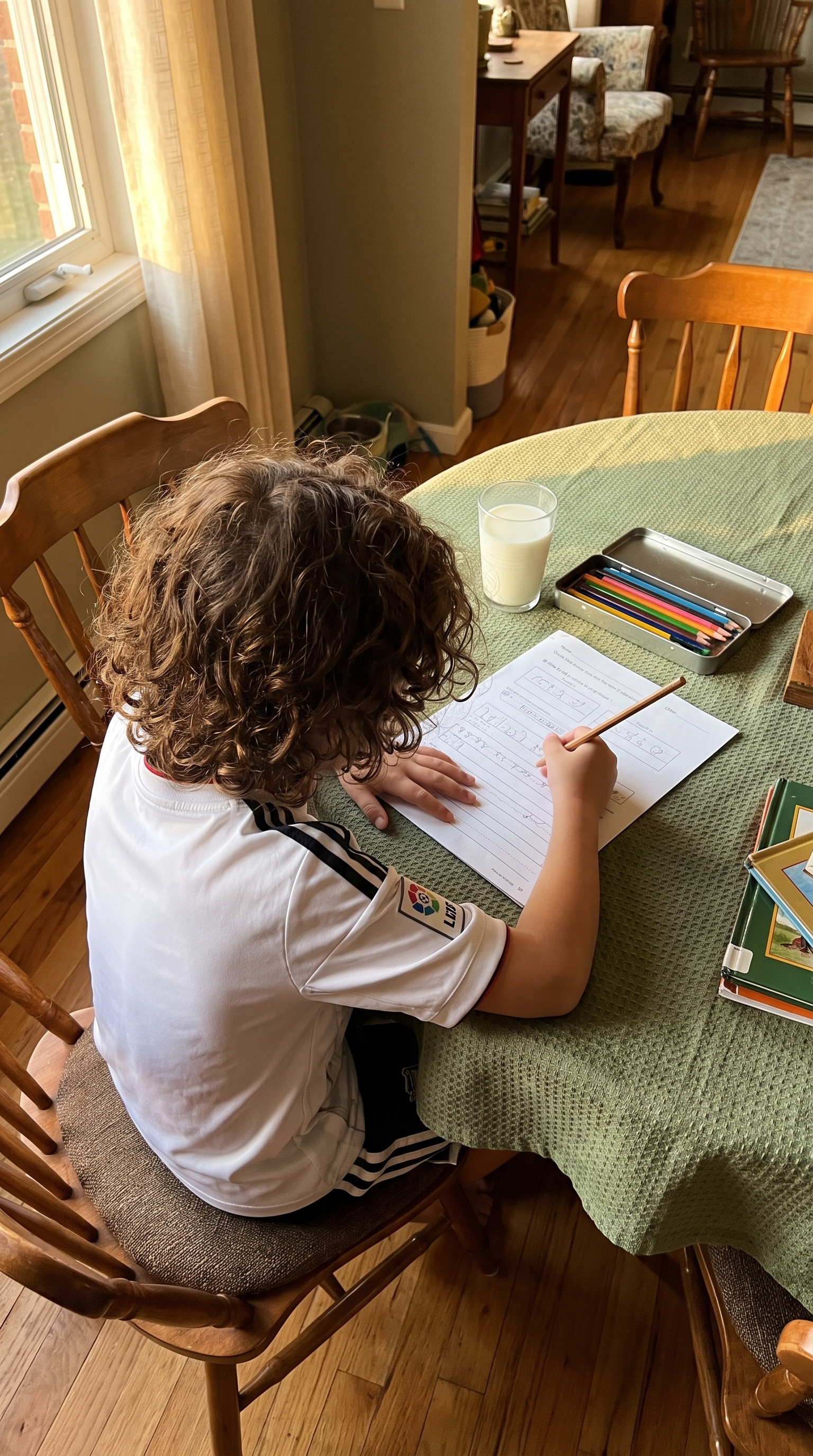
Ran for 1 day, from June 25 to June 26, 2026, the last day Crush saw it.
Run by Heather Langford on Facebook. Crush is not the advertiser and does not verify its claims. See this ad in Meta's Ad Library(opens in a new tab)
Want an ad like this for your product?
Crush makes new ad images for your product from this ad: your logo, your product photo, your offer.
Trials from $19.95 USD, then $79.95 USD a month. Cancel anytime.
About this ad
- Meta Ad Library ID
- 1576715427177322
- Platforms
- Facebook and Instagram
- Relaunches
- 0
Ad text
I'm a pediatric neuropsychologist. I've evaluated hundreds of kids whose parents were told it was ADHD, defiance, or too much screen time — and there's one thing almost nobody explains to these parents. I can usually tell within one session which of these kids is about to turn a corner. It has nothing to do with how smart he is. Nothing to do with discipline. And very little to do with how hard you've been trying. It comes down to one thing. And once I explain it, you'll probably look at your own kid a little differently. — Let me back up. When I started, I took the referral notes at face value. Screen addiction. Oppositional. Needs firmer boundaries. For the first few years I didn't question it. But somewhere around year four, I started seeing something the notes couldn't explain. The kids would split into two groups. Almost without fail. One group, you'd put through a hard afternoon and they'd wobble but hold together. The other group could focus on a screen for three hours straight — then come apart over a worksheet, a shirt tag, a "time's up." And it didn't track with the obvious stuff. I'd see a sharp, articulate eight-year-old who could narrate a whole game strategy to me melt down the second I changed the activity. And I'd see a quieter kid who "should" have struggled, by the notes, get through transitions just fine. It didn't track with intelligence. It didn't track with how strict the home was. But it tracked with one thing. — The kids who fell apart weren't out of control. They were out of fuel. Focus, mood, patience, holding it together when something small goes wrong — those all run on the same chemistry. And some kids' brains just make and hold less of it. Not damage. Not disorder. Variation — the same way some kids need glasses. Here's the part my own field keeps getting wrong. A kid who can lock onto a screen for hours isn't addicted, and he isn't badly behaved. The screen is just the fastest charger his empty brain can find — engineered to hand out a little hit every thirty seconds. That's why he's calm while he's playing. The screen was never the problem. It's the only thing masking it. So when we tell these parents "just take the screen away" — or worse, "let's medicate" — we're aiming at the wrong thing. We're cutting off his only fuel source and demanding the hardest focus of his day on an empty tank. Why are WE still handing parents that advice? Aren't we making it harder? — Let me tell you about one of them. I'll call him Mason. Mason was seven. Sharp. Funny. Could build an entire fort mid-game without thinking. Knew every weapon stat by heart. That same kid froze over three sentences about his weekend. His mom had been fighting it for almost two years. The screen-off scream. The homework standoff that ended with one of them crying, usually both. The morning where getting socks on took a running commentary from the hallway. She'd tried everything you've probably tried. Timers. Reward charts. Magnesium gummies. Fish oil. The calm gummies, then the focus ones. Cutting sugar. Earlier bedtime. Nothing held. What stayed with me was something she said almost as an aside. She'd asked Mason one night what would make him feel better. He said "tablet." Not "Mom." And the thing is, when it was over, Mason would fall apart about it. "I didn't mean to. I don't know why I did that." He was scared of himself. His body got there before the part of his brain that knew better. That wasn't a tantrum. That was a nervous system in free-fall. — Around that time I started looking past the shorthand explanations — not because the manuals were useless, but because they didn't explain the kids in front of me. So I went into the actual research. And I want to give you the picture that finally made all of it click for me. Think of his calm like the battery on a phone nobody charged overnight. He wakes up at maybe sixty percent. Then school spends it — seven hours of sit-still, pay-attention, don't-blurt, switch-tasks, with about twenty minutes of recess to recover. By the time he walks in your door at 4pm, he's at one percent. The screen is the charging cable he found on his own. It's the only thing that puts a little back. So picture what "time's up, do your homework" actually is. You're pulling the one cable that's been keeping him at one percent — and asking him to run the most demanding app on the phone. Focus, plus impulse control, plus handling frustration. All of it draws from the exact reserve he ran out of hours ago. The scream isn't defiance. It's a dead battery being asked for a full charge, with nowhere to pull it from. I've watched this same pattern enough times that it finally earned a name. I call it The Calm That Runs Out. And once you see it that way, every "failure" makes sense. The magnesium worked one pathway. Every single-ingredient supplement was built for one chemical, not the whole reserve. And you can't discipline a brain into making chemistry it doesn't have. So I'll say to you what I said to Mason's mom, and I mean it: It wasn't his fault. It wasn't yours. His tank was just empty at the worst possible moment of the day. The good news is a tank can be refilled. — So I told her what I tell these parents now. You're not looking for something to switch him off — and you're right to refuse anything that drugs him or zones him out. So would I. I'd never tell a parent to sedate a child. What you want is the opposite. Daily support that helps his brain hold onto more of its OWN calm, so there's something left in the tank by 4pm. Not a stimulant that floors the gas. Not a sedative that cuts the engine. Just steadier — still completely your kid. In a balanced calm-support stack, taken every day. Not a mega-dose pill that drugs them quiet. Something in a form a kid will actually take. She asked me which one. The one I've watched do this most reliably is Pause & Connect Mood Munchies. I'll be honest — when she first asked, I expected some random sleepy-herb blend. But the main ingredient was saffron. And when I looked into it, it turned out to be the most-studied natural ingredient there is for mood and calm. Its two compounds help the brain keep more of its own calming chemistry in the tank instead of burning through it. So I turned the pouch over and read the rest. Passion flower, GABA, vitamin D, and a gentle level of St. John's Wort — the supporting cast that helps a wound-up nervous system actually use that calm. One thing I always tell parents: the saffron in those studies is doing real work on its own chemistry — this isn't about chasing a bigger milligram number than the next brand. It's about refilling the reserve, daily. I've watched plenty of other things fail in these homes. The single-ingredient pills that hit one pathway. The mega-dose stuff that just flattens a kid out. The sugar-loaded gummies that are candy with a label. — Mason's mom ordered that night. Week one, she told me, nothing she could swear to. I tell every parent the same thing: don't get your hopes up early. The honest ones never see much in week one. Then she came to a session and told me about a Sunday afternoon. He'd been gaming about an hour. She gave the warning. Then "okay, time's up" — and she braced, the way she'd braced five hundred times. Shoulders up. Standing at an angle. Two years of incoming. He looked at the screen. She watched the frustration spark behind his eyes — the exact spark that always lit the fuse. And then he put the controller down. "Can I play again after dinner?" That was it. He walked to the table. She said she just stood there with a dish towel in her hand, fully braced for a war that never came, and didn't know what to do with her arms. In two years, she told me, that had happened zero times. Not once. Here's the whole thing in one line: when there's enough in the tank, a small frustration stays small. It moves through him and leaves — instead of detonating. A few days later he came home, sat down at the table, and asked HER — "if I do my homework first, can I play after?" The boy who'd thrown things over homework was now trying to get it out of the way. And the part that got me: a couple weeks in, his teacher emailed his mom, unprompted, to say he'd been finishing his work and staying with the reading the whole block — she didn't know anything had changed at home, she was just noticing from the other side of his day. When his mom told me, she said, "Are you serious?" I told her the truth. I didn't do anything special. All we did was stop running his brain on empty. — That was a while ago now. Since then I've had this same conversation with dozens of families. And it's almost always the same. The kid's been struggling for months. The parent has tried everything on the shelf. And everyone — the school, the relatives, sometimes me, at first — has their eyes on the screen. And almost every time we stop policing the screen and start refilling the calm his brain runs out of, the same things start happening. The 4pm war gets quieter. The controller goes down without a fight. The sibling comes back in the room. The parent gets herself back. Not every single time. But close enough that I now look for it first. — So here's what I'd tell you, the same as I tell them. If your kid can lock onto a screen for hours but falls apart the moment it's off — and you've already tried the timers, the charts, the single-ingredient gummies — the first thing I'd look at isn't his screen time. It's whether his brain has any calm left in the tank by 4pm. The fix isn't taking something away. It's refilling The Calm That Runs Out, daily — a balanced stack in a form he'll actually take. The one I've watched work is Pause & Connect Mood Munchies. One gummy with breakfast. That's the whole routine. And I'll say this part the way I'd say it to my own sister: parents this far in have already spent enough money guessing. So it matters that this one comes with a 60-day money-back guarantee — refundable even if the pouch is open. If it does nothing for your kid, you're not out anything but a breakfast. https://getpauseandconnect.com/products/pause-connect-mood-munchies I have no affiliation with them. I just see what works. Full calm reserve, and the hard moments stay small. Empty reserve, and a worksheet can end the night. I wish someone had explained that to these parents years sooner. It would have saved a lot of good moms a lot of hard evenings.
Where the ad sends people
getpauseandconnect.com
His calm tank is empty by 4pm
Pause & Connect® Mood Munchies — a once-a-day, sugar-free calm gummy for kids ages 4+. Built around clinical-grade saffron extract with passion flower, GABA, and vitamin D2. Supports calmer screen-off transitions, steadier school days, and easier evenings. No stimulants, no sedatives — stil...
Learn more: getpauseandconnect.com(opens in a new tab)