Iris Coleman
 Facebook ad: “The Monastery Raid of 1936”
Ran for 134 days, from June 22 to November 3, 2026, the last day Crush saw it.
Run by Iris Coleman on Facebook. Crush is not the advertiser and does not verify its claims. See this ad in Meta's Ad Library(opens in a new tab)
Make your own version of this ad
Crush makes it, launches it in your own Meta ad account, scales the winners and pauses the losers.
About this ad
- Meta Ad Library ID
- 1577555447129454
- Platforms
- Facebook and Instagram
- Relaunches
- 5
- Niche
- Jewelry & Watches
Ad text
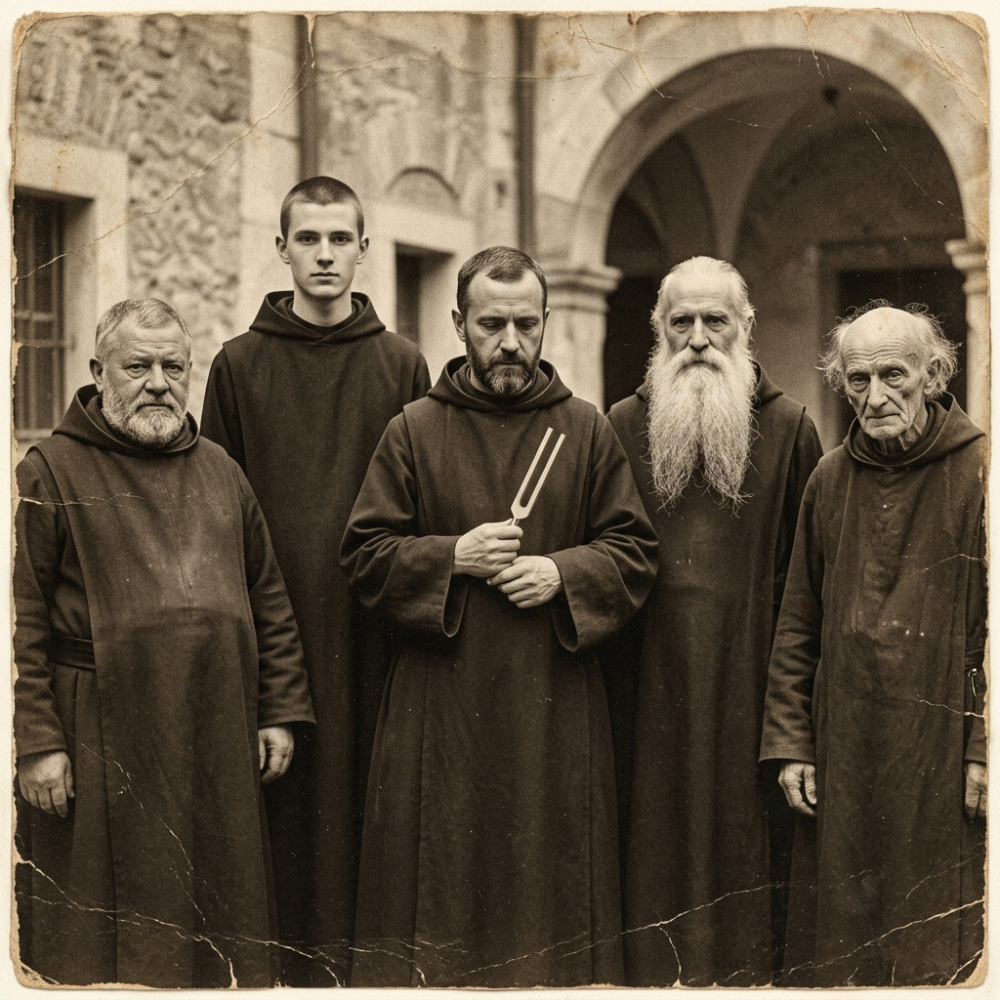
In 1936, a monastery in southern France was raided by local authorities. The monks had been running what amounted to an unlicensed clinic. Villagers from across the Languedoc region had been making pilgrimages to the monastery — some traveling two days on foot — for treatment of joint pain, stiffness, and what we'd now call arthritis. The authorities expected to find herbal tonics. Unlicensed drugs. Maybe opium. What they found instead were tuning forks. Dozens of them. Hand-forged, carefully calibrated, each one marked with a specific note. The monks had been using them for centuries — pressing the vibrating stems against swollen joints, stiff spines, and aching hands. The investigating officer wrote in his report that the treatment was "primitive and superstitious — metal instruments applied to the body with no medical basis whatsoever." The forks were confiscated. The clinic was shut down. The knowledge was scattered. I found this story at 3 AM on a Tuesday. I was sitting in my kitchen with both hands wrapped around a warm coffee mug — not because I wanted coffee, but because the heat was the only thing that made my fingers feel like they might eventually open. I'm 63. Arthritis in my hands, both knees, and my lower back. I was diagnosed eight years ago, but the stiffness started long before that — a slow tightening that I attributed to age until the day I couldn't open a jar of pickles and realized my hands had become strangers. Every morning begins with an inventory. Which fingers will bend today? How far can I straighten my right knee before it protests? Is my lower back going to let me stand upright in the shower, or am I bending slightly forward for the first hour like someone who's been folded and not fully unfolded? The inventory takes about 20 minutes. Not because I'm being thorough — because that's how long it takes for my body to remember it has permission to move. Twenty minutes of convincing each joint individually that yes, we're doing this again today, please cooperate. My husband knows the inventory. He brings me coffee while I'm still sitting on the edge of the bed doing the hand flexes. He doesn't comment anymore. In the early years he'd say "how are you feeling?" and I'd say "fine" and we'd both know it was a lie. Now he just brings the coffee and waits. The worst part isn't the pain. I can handle pain. The worst part is the shrinking. My world has gotten smaller every year. I used to garden — on my knees, in the dirt, for hours. I pulled weeds and planted bulbs and hauled bags of soil. My garden was my church. Now I stand at the kitchen window and look at it. The beds are overgrown. The tomato cages are still in the shed from last summer. My kneeling pad is in the garage, dusty, unused. I could probably get down there. Getting back up is the part I can't guarantee. I stopped knitting. The needles require a grip I don't have after noon. The sweater I was making for my granddaughter has been on the needles for 14 months. She'll have outgrown it before I finish. I stopped opening my own mail. The envelopes require a thumb-and-finger pinch that some mornings feels like trying to pick up a coin while wearing oven mitts. I stopped cooking anything that requires chopping. My husband took over dinner prep because watching me try to hold a knife steady enough to cut a carrot was making us both anxious. Each thing I stopped doing was small. A single task. A minor adjustment. But small subtractions compound. And one day you look up and realize your life has been reduced to the things your joints will still permit. I tried everything the medical system offers. NSAIDs daily for three years — until my gastroenterologist said my stomach lining couldn't take it anymore. Cortisone injections every three months — two weeks of relief followed by ten weeks of waiting for the next shot. Physical therapy — "range of motion maintenance," which is medical language for "we're preventing further loss, not restoring what's gone." I tried turmeric, glucosamine, chondroitin, omega-3s, collagen peptides, MSM, boswellia, and a cream made from emu oil that cost $45 and smelled like a zoo. I tried copper bracelets, magnetic insoles, paraffin wax baths, and an infrared lamp I pointed at my knees every night while watching Jeopardy. None of them were useless. Some helped a little. None of them changed the trajectory. The shrinking continued. The morning inventory got longer. The garden got wilder. Then I found the monastery story. And I fell down a rabbit hole I wasn't prepared for. Eighty-eight years after those forks were confiscated, a peer-reviewed study published in a major medical journal found that 128 Hz vibration — precisely the frequency range those monks were using — activates the body's own natural release and repair response within seconds. Nitric oxide is a molecule your body naturally produces to release tension, improve circulation, and initiate repair. It's so important that the scientists who discovered it won the Nobel Prize in 1998. The monks didn't know the molecule. But they knew the frequency. They'd been documenting it for 400 years before a French bureaucrat threw their forks in a box. This pattern repeats throughout history. Pythagoras mapped healing frequencies in 500 BC. Tibetan monks developed singing bowls for pressing against the body — bone conduction, not air. Even modern orthopedic doctors carried 128 Hz forks in their bags until the 1970s. The research was always available. It was just never profitable. You can't patent a frequency. You can't create a subscription model for a metal fork that lasts forever. There's no recurring revenue in a tool that costs $89 once and never needs replacing. So nobody funded the research. Nobody taught it in medical schools. And within two generations, what those monks knew for 400 years quietly disappeared from public knowledge. The monks seemed to understand something modern medicine is only now catching up to: the stiffness, the swelling, the constant aching — it doesn't always start in the joint. Sometimes it starts in a body that's been running in emergency mode for so long that everything tightens, everything swells, everything hurts. Address the emergency mode, and the joints start to feel different. Not new. Different. Like the volume on the pain got turned down. The Harmony Set contains four precision-tuned forks: 128 Hz, 136.1 Hz, 256 Hz, 384 Hz. The same frequency range those confiscated forks were calibrated to. $89. No prescription. No monthly refill. The fork doesn't wear out. Your body doesn't adapt to its own frequency. 4 minutes. Press the vibrating stem against the joint. Let it do what those monks watched happen for four centuries. My morning inventory is shorter now. My hands are open by the time the coffee arrives. And last weekend, I knelt in the garden. I didn't plant anything. I just knelt there in the dirt, feeling the earth under my knees, crying. Because I'd forgotten what the garden smells like from that close. The monks have been waiting 88 years for you to find out what the authorities didn't want you to know. Now you know. ↓ What the monks knew
Where the ad sends people
purefrequencies.com
The Monastery Raid of 1936
I wish someone had told me sooner.
Learn more: purefrequencies.com(opens in a new tab)