
Stopped· since Mar 9, 2026
- 2
- days it ran
- 0
- relaunches
- 2,152
- EU reach
Ad copy
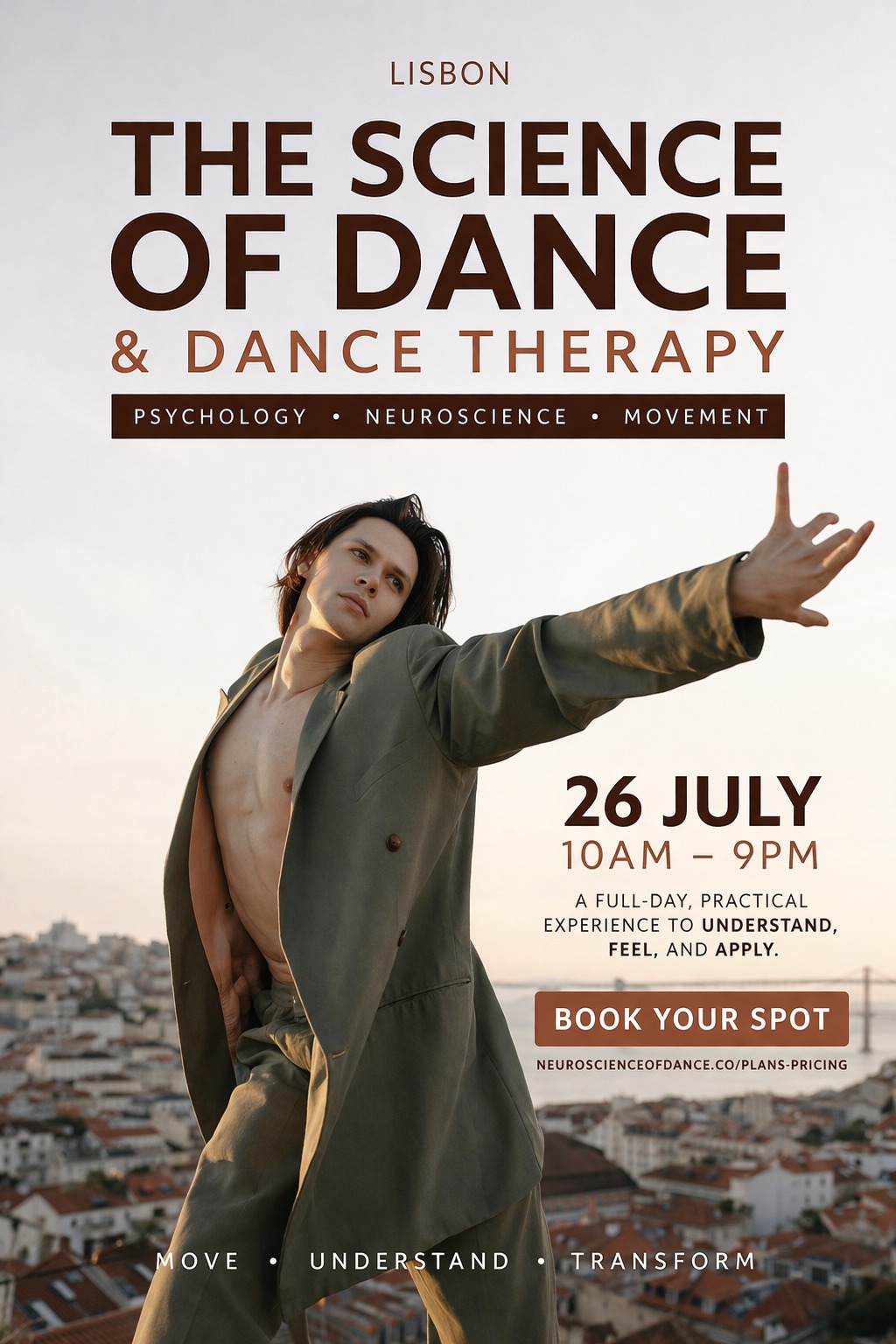
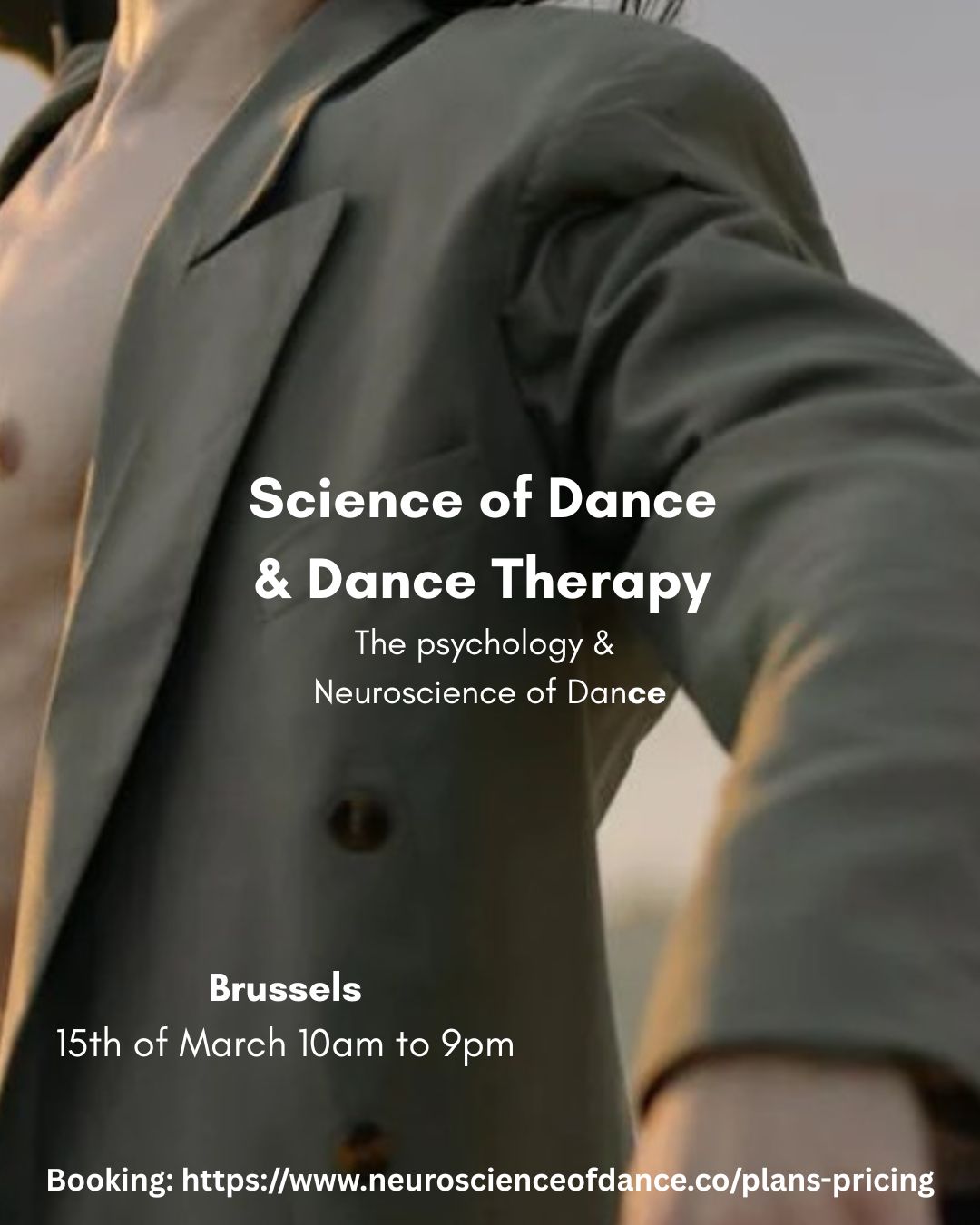
The Science & Psychology of Dance A Research-Informed Intensive Workshop on Movement, Brain Science, and Well-Being This workshop is designed for professionals and practitioners interested in evidence-informed approaches to movement, learning, and well-being. This intensive workshop explores how insights from neuroscience, psychology, and somatic practice can deepen the way we understand, learn, teach, and apply movement. Across the day, participants will discover how dance influences the brain, emotions, and learning processes, and how these principles can be applied in dance training, therapy, education, and personal practice. The workshop combines academic research with practical tools used in dance education, somatic practice, and movement-based therapy. All theoretical concepts are immediately explored through guided movement exercises, allowing participants to directly experience the science in the body. Participants will leave with clear frameworks and practical tools that can be applied immediately in teaching, facilitation, or personal movement practice. Led by Sofia Amaral Martins Sofia Amaral Martins is an international dancer, dance educator, and trainee somatic psychotherapist with a background in neuroscience and psychology. Her research on dance perception has been published in Dance Data, Cognition, and Multimodal Communication (Routledge, 2023). She has been nominated for One Dance UK’s Applied Dance Science Award and the IADMS Dance Educator Award, and is recognised as a Healthier Dancer Practitioner. Through Neuroscience of Dance, she integrates neuroscience, somatic psychotherapy, psychology, and movement to support dancers, educators, and mental-health professionals internationally. 📅 15 March 2026 📍 Vleugelsstraat, Goossensstraat 3 1030 Schaarbeek, Brussels ⏰ 10:00 – 21:00 (with a 1-hour break) ⚠️ Places are limited to keep the workshop interactive. PART 1 The Science of Dance Therapy An exploration of the psychological and neurological foundations of dance as a tool for emotional regulation, connection, and well-being. Participants will examine how movement influences the nervous system and emotional processes while engaging in guided movement exploration. Topics include: • Neuroscience of movement How dance activates brain networks involved in emotion, creativity, coordination, and memory. • Embodiment and psychology Understanding how movement communicates experiences and supports emotional processing. • Therapeutic applications of dance Practical frameworks for using movement intentionally in supportive and therapeutic contexts. • Experiential exploration Guided improvisation, reflection, and group discussion. PART 2 The Neuroscience of Dance How the Brain Learns Movement This session focuses on motor learning, memory, and skill acquisition, exploring how neuroscience can improve the way dance is learned and taught. Participants will gain insight into how the brain processes movement and how to structure training to support clearer learning, retention, and creativity. Topics include: • How the brain processes movement Key neural systems involved in coordination, prediction, and timing. • Learning and memory in dance Evidence-based strategies that improve choreography retention and skill development. • Teaching with the brain in mind Structuring dance instruction according to how the nervous system learns. • Creativity and cognition How movement supports creative thinking and problem-solving. • Neurodiversity in dance learning Adapting teaching approaches to support diverse cognitive profiles. This workshop is particularly relevant for • Dance teachers and choreographers • Movement therapists and psychologists • Somatic practitioners • Dance students and performers • Educators working with movement or creativity • Anyone interested in the relationship between body, mind, and learning Participants will receive • A neuroscience summary guide • Practical movement frameworks • Evidence-based learning strategies for dance • Reflection tools for integrating movement and psychological insight What participants will gain • A clearer understanding of the science behind dance and movement • Practical tools for teaching, learning, and facilitating movement • New perspectives on embodiment, creativity, and well-being
Like this ad? Make it yours.
Crush rebuilds this exact creative around your product — your brand, your colors, your offer — in about a minute.