Save Our Planet
Save Our Planet Facebook ad: “You Only Need A Teaspoon Of That”
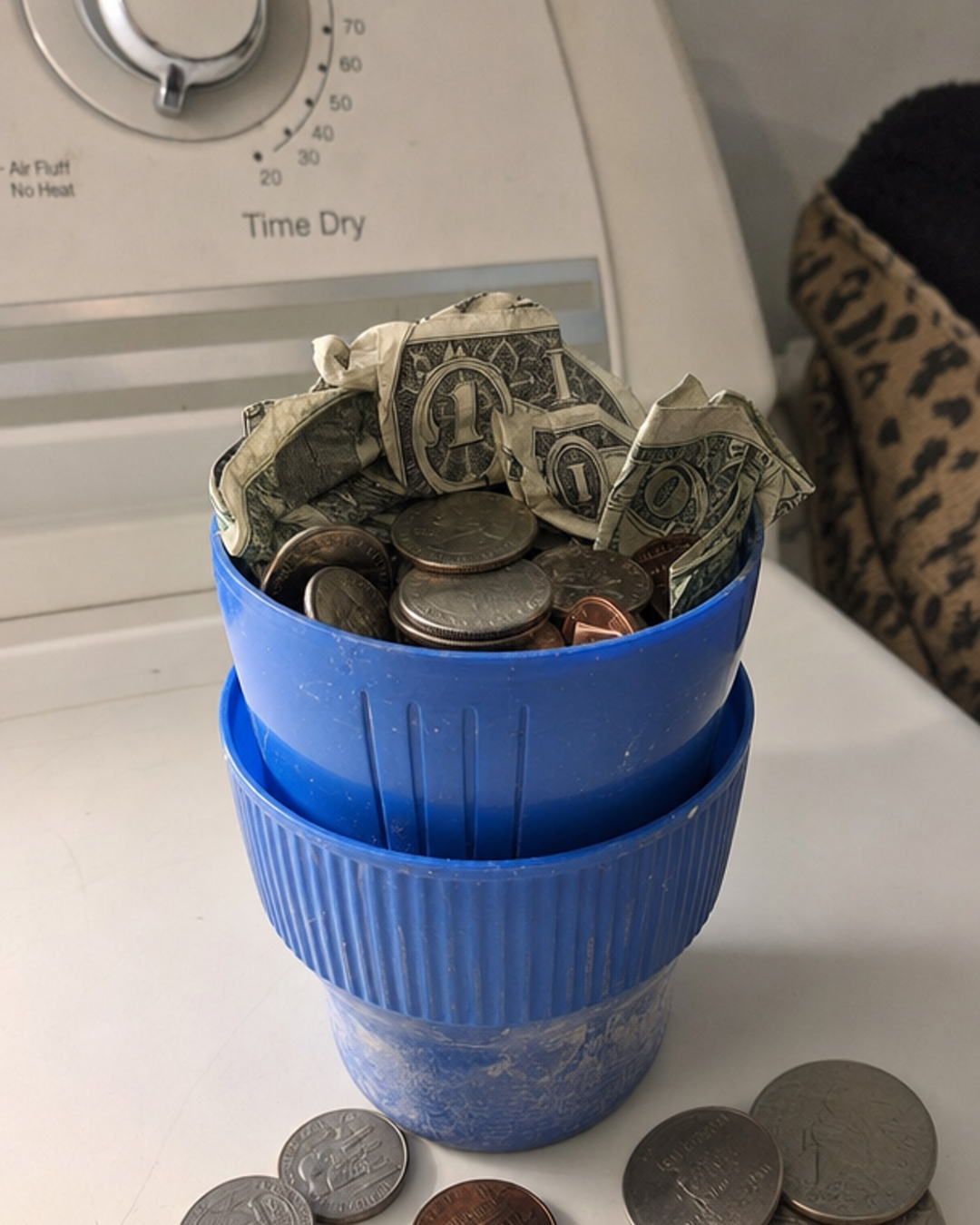
Ran for 6 days, from July 30 to August 5, 2026, the last day Crush saw it.
Run by Save Our Planet on Facebook. Crush is not the advertiser and does not verify its claims. See this ad in Meta's Ad Library(opens in a new tab)
Want an ad like this for your product?
Crush makes new ad images for your product from this ad: your logo, your product photo, your offer.
Trials from $19.95 USD, then $79.95 USD a month. Cancel anytime.
About this ad
- Meta Ad Library ID
- 1584654693275973
- Platforms
- Facebook, Instagram, Messenger and Threads
- Relaunches
- 3
Ad text
My daughter-in-law watched me pour detergent and said, "you only need about a teaspoon of that." A teaspoon. I'd been dumping in a giant capful every load for fifteen years. I didn't believe her — so I looked it up, and now I'm a little furious. I need to tell you about the teaspoon, because I haven't done a load of laundry the same way since. For fifteen years I did it the way everyone does. Grab the jug, fill the cap, dump it in. More for a big load. More for anything really dirty. I figured the same thing you probably do: more detergent, cleaner clothes. Then my daughter-in-law was over, watched me pour a big capful into the machine, and said — not to be rude — "you know you only need about a teaspoon of that, right?" A teaspoon. I laughed at her. I'd been pouring a giant capful, many times that, into every single load for fifteen years. There was no way the real answer was a teaspoon. So after she left, I looked it up. And I fell down a hole I still haven't fully climbed out of. Here's the short version. Modern machines — especially the high-efficiency ones most of us have now — need a shockingly small amount of detergent. Far less than a capful. For a lot of everyday loads, experts will tell you as little as a teaspoon or two actually does the job. The big capful the jug invites you to pour is many times more than your clothes can even use. My first thought was the obvious one. Okay — so I've been wasting money, pouring extra detergent straight down the drain. But that's not the part that got me. Because the extra doesn't all go down the drain. It goes into your clothes. That's the thing I couldn't un-know. All that detergent past what the load can actually use doesn't magically rinse away. It has nowhere to go, so it stays. It builds up on the fibers. It coats them. Sit with that for a second. The shirt you have on right now. Your kids' pajamas. The towel you dried your face with this morning. If you've been pouring the way I was — and almost all of us have — they're not just clean. They're carrying a thin layer of leftover detergent that never fully rinsed out. And I'd had the proof in my hands for years without seeing it. My towels always came out a little stiff and crunchy, and I always blamed the towels — figured that's just what happens as they get older. It wasn't the towels. It was detergent buildup. I was literally feeling the coating every single day and blaming the wrong thing. So I finally asked the question I should've asked fifteen years earlier. What exactly is it that's coating my family's clothes? I turned the jug around and read it. It got worse. First — most of what's in that heavy jug isn't even detergent. Liquid detergent can be up to 80% water. You're paying to ship water, lug water home, store water, and pour water, with a little soap and a lot of dye mixed in. The dye is next. That bright blue or green? It doesn't clean a thing. It's added coloring, there to make the liquid look strong and potent when you pour it — marketing you can hold in your hand. And some of it ends up in the coating too. Then I hit the one that actually stopped me cold. Optical brighteners. You know how detergent makes whites look almost impossibly bright — brighter than clean? That isn't cleaning. Optical brighteners are chemicals designed to cling to the fabric and stay there. They don't lift a speck of dirt. They glow faintly under light so your eye reads the fabric as whiter than it is. And they're engineered NOT to rinse out — they have to stay on the clothes to keep working. That's the coating, on purpose. Sitting on the fabric that's against your skin all day, and your kids' skin all night in their pajamas. Researchers have found some of these compounds can transfer through the skin, and some studies have raised concerns about a possible link to cancer. And then the one I really didn't like. A chemical called 1,4-dioxane. It's not something they add on purpose — it's a byproduct that can form when a lot of conventional detergents are made. And because it's a contaminant and not an intentional ingredient, it doesn't even have to appear on the label. Studies have linked 1,4-dioxane to cancer, and the EPA classifies it as likely to be carcinogenic to humans. The official line is that the trace amounts are considered safe. Maybe that's true — I'm not a chemist. But I don't need anyone to promise me it's fine. I just don't want a chemical that's been linked to cancer coating the clothes I put on my grandkids. That's not a lab result. That's a grandmother making a choice, and I decided I was allowed. And here's what turned me from confused to a little angry. None of this is a secret to the people making it. They know most of that jug is water. They know a capful is many times more than a teaspoon. They know the extra doesn't rinse out. And the whole design runs one direction — the more you pour, the faster you run out, the sooner you're back buying another heavy jug. The big detergent corporations are posting some of the strongest profits they've ever had. They're doing it selling us water, dye, and a cap built to make us pour ten times what a load needs. I'm not saying anyone's a cartoon villain. I'm saying the incentive has never once been pointed at you, your wallet, or your family's clothes. So I went looking for a way out of all of it. Not a smaller cap. No cap, no jug, no coating. Liquid was out — the cap, the dye, the brighteners, the 80% water. Powder? I read a study that raised concerns about powders sending fine particles into the air you breathe while you pour, and it still leaves residue behind. Pods? Same dyes, same brighteners, just wrapped in a film and sold in the same big plastic tub. The honest answer to "which one is best" was the one nobody wants to hear: none of them. Then my daughter — same family, apparently on a mission to fix my laundry — sent me a link to laundry sheets. A small company out of Kentucky called Earth Breeze, an American company actually making them here. And what got me wasn't a claim. It was what wasn't in it. No dye. No optical brighteners. No chemicals engineered to stay clinging to the fabric. Independently tested in a US lab, every ingredient listed openly, in real words. It's a thin, pre-measured sheet — concentrated detergent pressed into something about the size of a dryer sheet (not a dryer sheet — a laundry detergent sheet). Here's the part that mattered most to me: it's one sheet, one dose, the right dose. You physically cannot pour ten times too much, because there's nothing to pour. You drop it in the drum, it dissolves the second it hits the water, and it rinses clean. I braced for it not to clean well — that's the reputation sheets have. So I ran a real week through it. Grass stains. Kitchen towels. My husband's work shirts. They came out clean — the same powerful clean I was used to. And the towels? Soft. Not stiff, for the first time in years. The coating was gone, and I could feel it with my own hands. No cap. No heavy jug. No 80% water. No dye. No brighteners. Nothing left coating my family's clothes. It's made in Kentucky, with ingredients from the US, Canada and Europe. Over 3 million Americans have already switched. It has 70,000+ 5-star reviews. It works in every machine, hot or cold, HE included. And every purchase donates laundry to families who can't afford it. If any of this made you glance over at your own laundry pile, do two things. One: on your next load, use a fraction of what you normally pour — closer to a teaspoon or two than a capful. Your clothes will come out just as clean, and you'll start feeling the difference in your towels within a couple of washes. Two: if you'd rather just stop guessing entirely, there's a link below to what I switched to. Right now they're running a special — up to 64% off with 4 free gifts when you subscribe, backed by a 60-day money-back guarantee. If you don't love it more than your old jug, you get every penny back. I only wish someone had told me about the teaspoon fifteen years sooner. — Karen M. P.S. — Feel your towels tonight. If they're stiff and crunchy, that isn't the towels. That's detergent that never rinsed out, coating the fabric. Cut way back this week and feel them again in a few washes. You won't believe the difference. P.P.S. — The teaspoon is the part I can't get over. A teaspoon. Everything I poured past that just rode around on my family's clothes for fifteen years. I switched to sheets so I never have to think about the amount again — one sheet, one dose, done. https://earthbreeze.com/gwp This page is editorial in nature and contains affiliate or promotional content. Individual results may vary. The discount may include the price of gifts, and final offer details may vary. The money-back guarantee is subject to Earth Breeze's current return policy. Statements regarding 1,4-dioxane are based on publicly available EPA classifications and product-category testing and substantiation. 1,4-dioxane is a byproduct that can occur in some conventional detergents and is not an intentionally added ingredient. Earth Breeze has not been independently verified or endorsed by the EPA. Statements about optical brighteners and skin contact reflect general category research and are not a claim that any specific product causes disease. This page is not medical advice and does not claim Earth Breeze treats, prevents, or cures any condition.
Where the ad sends people
earthbreeze.com
"You Only Need A Teaspoon Of That"
70,000+ 5-star reviews
See details: earthbreeze.com(opens in a new tab)