Dr. Sharon Davidson
 Facebook ad: “Neuropathy? This finally gave my husband relief”
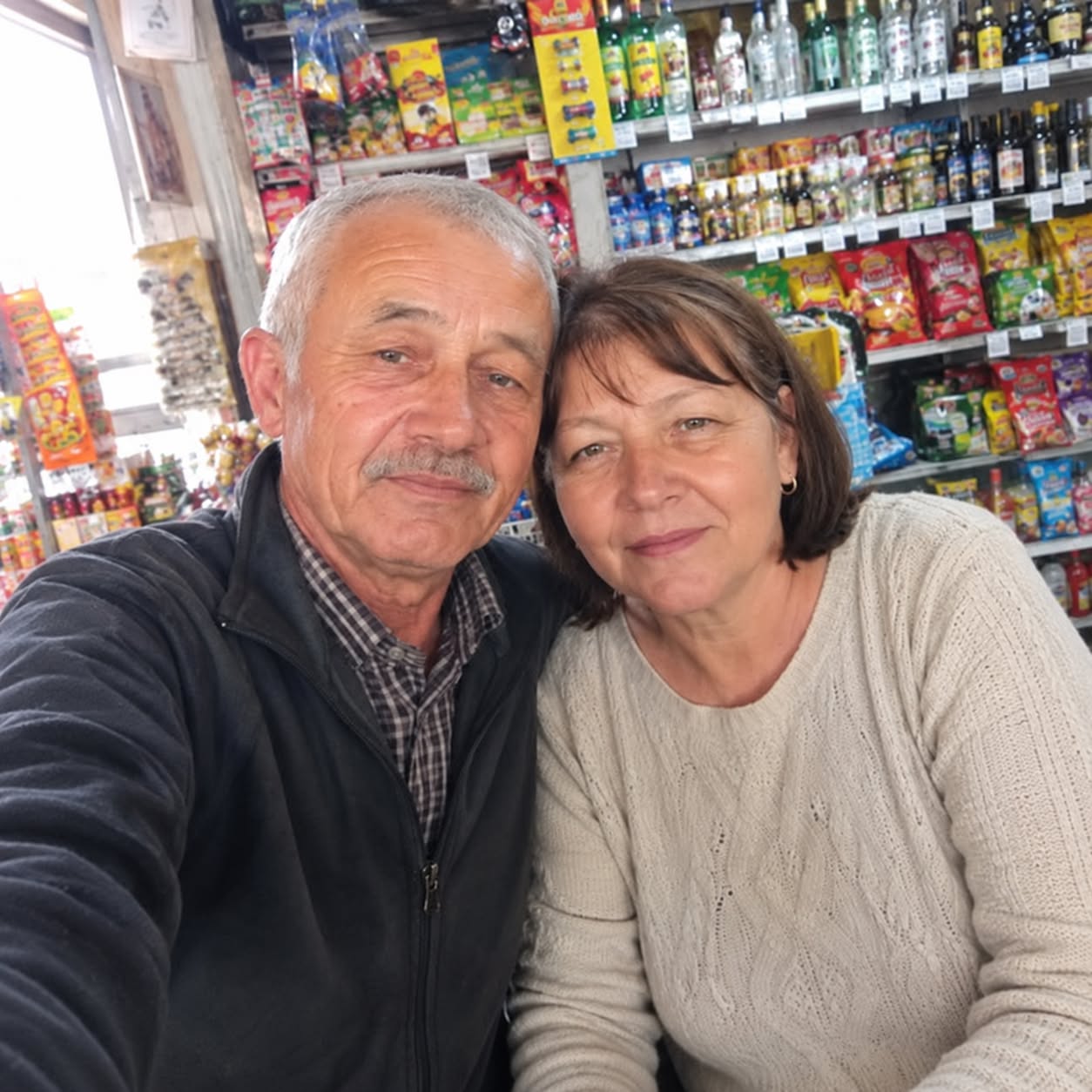
Ran for 6 days, from October 16 to October 22, 2026, the last day Crush saw it.
Run by Dr. Sharon Davidson on Facebook. Crush is not the advertiser and does not verify its claims. See this ad in Meta's Ad Library(opens in a new tab)
Make your own version of this ad
Crush makes it, launches it in your own Meta ad account, scales the winners and pauses the losers.
About this ad
- Meta Ad Library ID
- 1586446096096721
- Platforms
- Facebook, Instagram and Audience Network
- Relaunches
- 0
Ad text
My wife and I went into a care home by choice. We didn’t tell our children the truth and, for six months, we were afraid to admit why. Now I’m going to tell you why we did it. And how it all ended. My wife’s name is Margaret. We’ve been together for 48 years. We met at a village dance near Shrewsbury. She was nineteen, I was twenty-one. A year later we got married. We had two children — James and Sarah. We raised them. Sent them to school. Helped them move to bigger cities. James is now in Birmingham, an engineer. Sarah is in Leeds, an accountant. Both have families, children, jobs, mortgages. They call once a week: “How are you, Dad?” — “Fine, kids. Everything’s all right.” We always said “fine”. Even when nothing was fine. It all started seven years ago. Margaret worked at a clothing factory in Shrewsbury — on her feet all day, at the machine. One day she came home and said: “George, my back hurts. I must have overdone it.” I said: “Rest, it’ll pass.” It didn’t pass. A month later she couldn’t sleep because of the pain. She’d wake in the night and cry quietly into her pillow. She thought I couldn’t hear. But I could. Every night. I took her to the doctor. X-rays, MRI. Wear and tear in the spine, two slipped discs, a trapped nerve. They gave her tablets — month after month. She took them for half a year — nothing. Then injections. After the course, it was worse. Her back locked up, she couldn’t turn properly. Then physio. Through the NHS — months of waiting. We went privately, paying each session. We travelled back and forth for three months. Spent thousands. Result — nothing. Then the specialist. He said: “Surgery may be needed. Through the NHS, the wait can be very long. Privately, it will cost a lot. But at her age — there are risks.” A lot of money. And “there are risks”. Margaret refused. She was frightened. I understood her. Three years later, her legs started giving way. At first she stumbled. Then she began falling. Once she fell in the bathroom — I heard the cry and ran. She was lying on the tiles, crying. From that day, I started carrying her. In the morning — from the bedroom to the bathroom. I washed her. Dressed her. Took her to the kitchen. Fed her. In the evening — back again. At night I got up two or three times — took her to the toilet. I’m 72. I worked all my life as a welder. My back has hurt since I was fifty. My knees crack. My hands aren’t what they were. But I carried my wife. Every day. Because if not me — then who? The children didn’t know. We didn’t tell them. James would call: “How are you, Dad?” — “Fine, son. Mum sends her love.” Sarah would call: “How’s Mum?” — “Fine, love. She’s keeping strong.” We lied. Both of us. Every week. Why didn’t we tell the children the truth? We didn’t want to be a burden. We thought — we’ll manage on our own. The children have jobs, families, mortgages, worries of their own. We didn’t want them dropping everything and driving halfway across the country to look after two old people. Pride? Maybe. Or foolishness. I don’t know any more. One night I was taking Margaret to the toilet and I tripped. I fell. She fell on top of me. We were lying on the hallway floor. She was crying. I couldn’t get up — my back had locked. We lay there like that for half an hour. Then somehow, with great difficulty, we got ourselves up. Margaret said: “George, we can’t go on like this. We’ll both fall one day — and no one will find us. We’ll die on the floor.” She was right. In the morning, we made the decision. Together. Like we had always done everything — together. A care home. Private, not far from Shrewsbury. We’d heard about it from a neighbour — her mother had spent her last year there. She said it was clean, they looked after people, the food was good. We got the documents together. Sold the car — the old Ford, we weren’t using it anyway. Put the money in the bank — for a rainy day. And the care home was paid from our two pensions — almost all of it went. We didn’t tell the children. We couldn’t. How do you say it? “Son, love, we’re going into a care home”? They would have left everything, rushed over, cried. And then what? Stay with us? Quit their jobs? Ruin their families? And we told the neighbours we were moving in with the children. In a village, tongues are long — we didn’t want people saying: “Look, their children put them in a home.” No. We decided — we’d manage on our own. Like always. In March last year, we arrived at the care home. The first thing they told us: “Men in one wing, women in another. Those are the rules.” I looked at Margaret. She was sitting in the wheelchair they’d given her on arrival. Looking at me with frightened eyes. I turned to the manager. I said calmly: “We’ve been together for 48 years. I look after her. Without me, she doesn’t get out of bed, doesn’t get to the toilet, doesn’t eat properly. Either we stay together in one room — or we leave. Right now.” The manager looked at me. Then at Margaret. Then back at me. “We don’t have rooms for couples…” “Find one.” She was silent for a minute. Then she said: “There is one. Ground floor. It used to be an office. It’s small, but you’ll fit.” We fitted. A room three by four metres. Two beds, one bedside table, a window facing the courtyard. The toilet — shared, at the end of the corridor. But we were together. That was all that mattered. The first month was hard. Margaret could barely get up. Her back hurt so badly she cried out in her sleep. Her legs wouldn’t listen — below the knees she felt almost nothing. I took her to the toilet, like at home. Washed her. Changed her. Fed her. The carers looked at me in surprise. One said: “Mr Wilson, why do you wear yourself out like this? We’re here, we can help.” I said: “She’s my wife. I’ll do it.” They understood. The care home doctor — old, tired — examined Margaret in the first week. He shook his head. “Age. Wear and tear. There’s not much that can be done. We’ll give her painkillers.” They did. The pain eased for a few hours. Then came back. They gave her other tablets too — joint supplements, vitamins. Nothing much changed. And I was ill too. Back, knees. After that fall in the hallway — worse. But I kept going. I couldn’t allow myself to end up in bed. Who would look after Margaret? For three months we lived like that. Her — in bed. Me — beside her. Caring for her, carrying her, feeding her. Like at home, only worse. Because here — strange walls, strange people, the smell of bleach and old age. At night Margaret cried. Quietly, thinking I was asleep. But I wasn’t. I lay there and listened. Once she said: “George, forgive me. I dragged you here. We should have stayed at home. Died at home.” I took her hand. I said: “Margaret, we’re together. Wherever you are — that’s where I am. That won’t change. Never.” She started crying. But differently. Not from pain — from gratitude. And in June, something unexpected happened. The old doctor left. Complaints had apparently been piling up for years. Relatives had written letters. There was an inspection. He was replaced. A new doctor started coming in. Young. About thirty. His name was Dr Oliver Bennett. He came every Thursday. When he first walked down the corridor — everyone looked at him suspiciously. Young. From London. Smart. What was he doing here? People like him usually leave for private clinics. The carer, Helen — a kind woman who always helped us — told us quietly: “They say he asked to come here himself. He was working at a private clinic in London, earning well. Then he left and came here. Strange.” We didn’t believe it. We thought — either he’d been pushed out somewhere, or he was temporary until he found something better. But he kept coming. The first two weeks he went room to room. He went in to everyone. Sat beside the bed. Asked: “What hurts? Since when? What have you tried? What helped, what didn’t?” He wrote things down. Listened. Didn’t rush. When it was our turn — he knocked, came in. Saw me beside Margaret’s bed. Saw her — pale, exhausted. “Good afternoon. I’m the new doctor. Oliver Bennett. Tell me what’s been going on.” Margaret was silent — she was tired of telling the story. So I told it, for both of us. About her back. About the discs. About seven years of pain. About the wheelchair. About the legs that wouldn’t listen. Then — about me. Back, knees. But that’s nothing, I said. She’s the one who matters. He listened without interrupting. Then he examined Margaret. Her back, legs, knees. Asked her to bend, straighten, tell him where it hurt. He examined me too. Even though I said there was no need. Then he sat on the chair. Was quiet for a minute. And said: “Do you know what you’ve mostly been given all these years? Temporary relief. It can help for a while, but it doesn’t always support the area where the discomfort starts. When the effect wears off, you feel as if everything has got worse. Often, the discomfort was there all along — you just felt it less for a few hours.” I asked: “So what do we do? Surgery isn’t an option for us. Age.” He thought for a moment. Then he took a jar from his bag. “This is something many people use as part of a topical support routine. It’s called Aurica™ Nerve Relief & Repairing Lotion. It’s made for muscles, joints and nerves. The formula includes arnica, magnesium and frankincense. You apply it directly to the area that needs support, then massage it in gently. It absorbs through the skin and helps the area feel calmer and more comfortable.” I looked at him with mistrust. How many promises had we heard? How much money had we wasted on “miracle cures”? He understood the look. “Mr Wilson, I’m not asking you to believe anything dramatic. Just try it. Both of you. Apply a small amount to the areas that trouble you, morning and evening, and massage gently for two or three minutes. In two weeks we’ll see. If it doesn’t suit you — you stop.” He left two jars on the bedside table. Then he left. That evening, Margaret and I looked at those jars. She said: “George, it’s probably nonsense again. It won’t help.” I said: “What do we lose? We’ll try.” We started using Aurica™. Her — on her back, knees and feet in the morning and evening, massaging gently into the skin. Me — the same. The first two days — nothing much. I didn’t expect anything. On the third day Margaret woke up and said: “George. Strange. I don’t feel quite the same as usual.” I thought — maybe she imagined it. The fourth day — the same. And the fifth. And for me — my knees felt less stiff. My back didn’t catch quite as sharply. After a week, Margaret sat up in bed. By herself. Without my help. I stood beside her and didn’t dare breathe. “George… I sat up. By myself.” She hadn’t done that in a year. After two weeks she stood up. Holding the bedframe. Her legs were shaking. But she was standing. I cried. I’m not ashamed. I stood beside her and cried like a child. After three weeks she took her first steps. To the door and back. Holding the wall. But she walked. Dr Bennett came on Thursday for his visit. He saw Margaret — standing by the window. He smiled. “Well, Mrs Wilson. What have we here?” Margaret said: “Doctor… I didn’t believe you. I’m sorry.” He shook his head. “No need to apologise. You’ve been let down so many times — how could you believe straight away? Keep going. At least a month. Better, two or three. Let it become routine.” After a month, Margaret was walking down the corridor. With a stick, but by herself. The carers came running to see. To them it felt impossible. I came back to life too. My back felt easier. My knees bent better. I no longer carried my wife in my arms — she walked herself. We went out into the courtyard. Sat on the bench under the walnut tree. Held hands — like forty-eight years ago, when we were newly married. Margaret said: “George, it feels like we’ve been born again.” The whole care home was talking. Other residents asked Dr Bennett if he could help them too. He helped where he could. Mrs Arthur, 78 — stiff hands, hadn’t crocheted properly in years. After a month — crocheting again. Mr Clarke, 80 — years of sciatic discomfort. After a few weeks — moving more comfortably. Mrs Evans, 74 — knees, long-term joint discomfort. Doctors had spoken about surgery. After a month and a half — walking more confidently with less support. Dr Bennett didn’t take money. He said: “That’s why I came here. To help the people everyone else forgot.” And in August, the thing we feared happened. The children found out. The neighbour — the same one who had told us about the care home — let it slip to Sarah on the phone. “How are your parents doing at the home?” Sarah: “What home?!” Two hours later James rang me. His voice was shaking. “Dad… is it true? Are you and Mum in a care home? Why didn’t you tell us?!” What could I say? I told the truth. “Son, we didn’t want to be a burden. Mum could barely walk. I was barely managing. We thought — we’d cope ourselves. We didn’t want you leaving work, families…” He was silent. Then he said quietly: “Dad, we’re coming. Tomorrow.” The next day they came. Both of them. James from Birmingham, Sarah from Leeds. They met in Shrewsbury and came to us together. They walked into our room. They saw us. Margaret was standing by the window. On her own feet. Without the wheelchair. Smiling. Sarah froze in the doorway. Her mouth fell open. Then she ran to her mother and hugged her. “Mum… Mum… you’re standing! You’re walking!” James came to me. His eyes were red. “Dad… why? Why didn’t you tell us? We would have come. We would have helped. Why…” I hugged him. Tightly. The way I don’t think I’d hugged him since he was a boy. “Son, we didn’t want to worry you. We thought — we’re old, we’ll manage. And look — we did manage. Even better than we thought.” Sarah was crying, hugging her mother. Then she turned to me. “Dad, we’re taking you. Home. That’s it. No more care home. You’ll stay with us. One month with me, one month with James. Or however you want. But not here.” I looked at Margaret. She was smiling. For the first time in many years — truly happy. “Children,” she said, “we’ll come. But first — meet the doctor. He helped us more than anyone.” We called Dr Bennett. He came. The children looked at him — young, simple, in a white coat. James shook his hand. He said: “Thank you. For my parents. What do we owe you?” Dr Bennett shook his head. “You don’t owe me anything. That’s why I work here. But if you want to help — tell others. Many people don’t know that feeling more comfortable again is possible. They think — age, nothing can be done. But support can make a difference.” A week later, we left. We said goodbye to Mrs Arthur — she had become like a sister. To Helen the carer — she and Margaret hugged and cried. To Dr Bennett — I shook his hand and said: “Doctor, you gave us our life back. We’ll never forget it.” He smiled. He said: “Mr and Mrs Wilson, keep using Aurica™ as part of your routine. Looking after yourselves is the most important thing. And live many more years.” Now we live with Sarah in Leeds. We have our own room. The grandchildren are near us — Sophie is five, Oliver is three. They run, laugh, call us Grandma and Grandad. Margaret walks by herself. Without the wheelchair. She goes to the park with the grandchildren. Makes Sunday dinner — like before, when she felt well. She laughs. And I’m doing better too. My back feels easier. My knees work better. I kick a ball with Oliver in the garden. Sarah watches from the window and smiles. He has children too — Thomas and Emily. They’re waiting for us. I only wish we’d known about Aurica™ Nerve Relief & Repairing Lotion earlier. Before the care home. Before the nights when I carried Margaret to the toilet. Before the tears and hopelessness. But we found it. And that changed everything. If your back, knees, joints, muscles or nerves are making everyday life harder — don’t wait. Don’t wait until you feel like a burden to your children. Don’t wait until you stop doing the things you love. Aurica™ gave us a simple routine that helped us feel more comfortable again. I and Margaret are living proof. And quite a few people from that care home would say the same. The link is below. Order from the official site — delivery is fast. It helped us. It may help you too. George, 72, Shrewsbury.
Where the ad sends people
https://healthsciencejournal.co.uk/Aurica/how-this...
Neuropathy? This finally gave my husband relief ☝️
Natural support. Simple routine. Limited-time offer.
Learn more: healthsciencejournal.co.uk(opens in a new tab)