
Inactive· since Aug 12, 2026
- 5
- days it ran
- 0
- relaunches
Ad copy
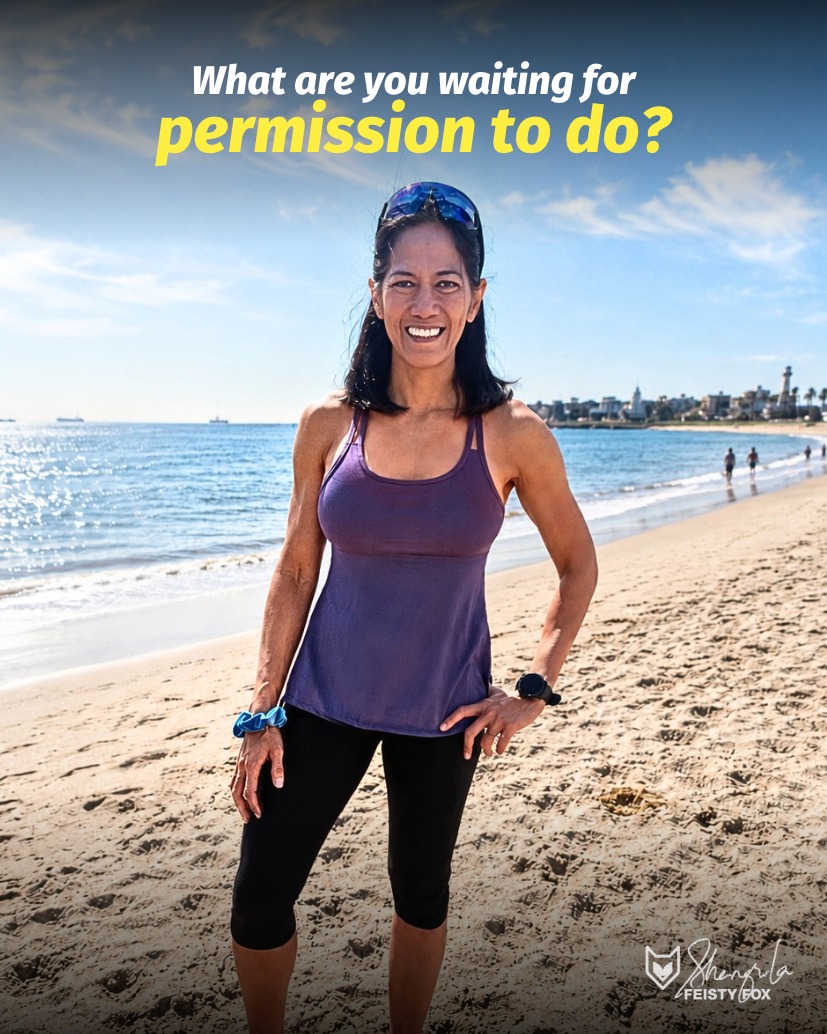
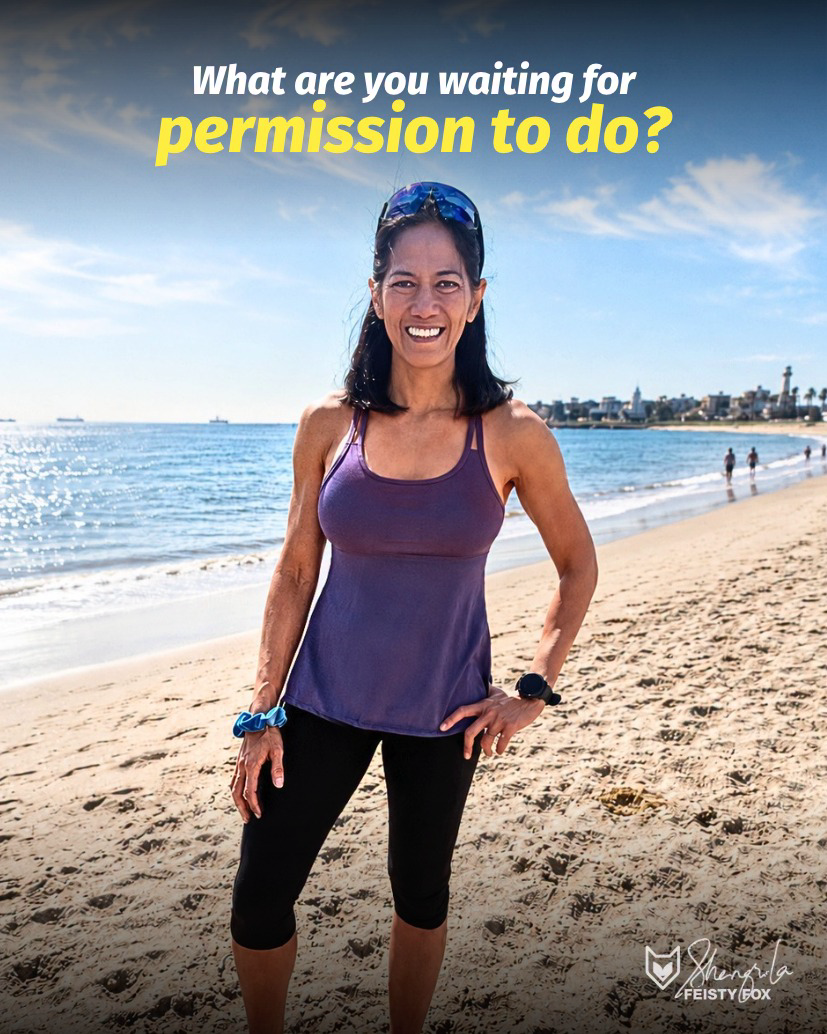
What if you’re capable of more than you’ve given yourself permission to pursue? A lot of athletes can tell me exactly what they don't want. 🗨 “I don't want to keep working this hard and getting the same result.” 🗨 “I don't want another race where I know I could have done better.” 🗨 “I don't want to keep showing up and getting average results." But when I ask, “Okay. What DO you want?” sometimes the answer becomes much harder to name. Because saying, “I don't want average results,” feels relatively safe. Saying, “I want to become a much faster athlete,” “I want to be top of my AG." "I want to podium" or “I want to qualify” creates a different kind of vulnerability. Now you have admitted that you want something. And what if you don't get it? What if you give everything you have and still fall short? What if you disappoint yourself? I understand that feeling more than I probably realized for most of my life. Before I met Vineta, I had a tendency to make decisions based partly on what other people expected from me. I didn't recognize the pattern at the time. Both of my parents were engineers. My dad suggested engineering, so I became an engineer. Later, I finished my master's degree even when I was already questioning whether continuing was serving me anymore because I had grown up believing that once you started something, you weren't supposed to quit. Leaving could mean you had failed. Changing your mind could mean you had wasted everything you had already done. Somewhere along the way, other people's expectations became mixed together with my own. I didn't fully recognize that until Vineta came into my life. With her, I started putting words to things that had previously lived mostly inside my head. One day I told her: 💭 “Vineta, I think I should become a chef and own a restaurant. But first I think I should go to Le Cordon Bleu.” Her response surprised me. ❓ “What's stopping you?” So I started listing everything. I was already an engineer. I had finished graduate school. Going back to school would cost money. Would I really leave engineering after investing all that time into it? What would my parents think? My relatives? My old friends? To me, leaving engineering sounded almost insane. But Vineta responded as though there were no invisible walls around me. It was my life. I remember thinking: 💭 Oh. The conversation changed from “Am I allowed to do this?” to “Okay. How would we make it happen?” That was the beginning of something much bigger for me. After that came more conversations. 🗨 Vineta, I want to go to Australia to study swimming and be the best swim coach I can be. At the time, I was an average swimmer and still figuring out freestyle technique. 🗨 I want to complete 10 Ironmans in 10 consecutive days. At that point, the most I had ever completed was two full Ironman-distance races in two days. 🗨 I want to bring some inspiration and positivity to the community, raise money for four nonprofit organizations, and set my second Guinness World Record during the COVID year. 🗨 I want to race the Red Bull Trans-Siberian Extreme. I didn't know where the money would come from. I didn't know whether my body could handle the distance. I was already extremely busy coaching. But I allowed myself to say what I wanted. Then came another one: 🗨 I want to speak in front of more than 1,000 people. At the time, I had barely spoken in front of 50. I lacked confidence, stumbled over my words, and could be painfully awkward speaking publicly. And one of the biggest ones: 🗨 I want to become the best athlete I can possibly become. I wasn't an elite athlete. At the time, I was still drinking. I was still dealing with episodes of an eating disorder. Athletically, I would have described myself as pretty average. I didn't have proof that I could become the person I was describing. But I gave myself permission to want it, and then I started looking for people who could help me figure out how. Interestingly, I had practiced a smaller version of this even before Vineta. In my early 20s, while studying engineering, I decided I wanted to try modeling. There were plenty of reasons I could have told myself it made no sense. I didn't know how to pose. I didn't know how to apply makeup well. I didn't feel particularly confident. I thought I needed better teeth and a better body. And I was an engineering student. What business did I have trying to become a model? But I remember thinking: ❓ Wouldn't it be cool if I could? So I bought Modeling for Dummies. Seriously. 😂 I read it, learned from it, started applying what I learned, and eventually started doing photoshoots. A couple of those opportunities even led to acting on an MTV show. Yeah... somehow modeling led to acting. 😂 I had no idea where any of it would go when I started. I didn't need someone to guarantee that I would become successful before I gave myself permission to try. As I'm reflecting further, I think that was one of the earliest times I practiced something that became extremely important later in my life: 📍Giving myself permission to want something before I had the skills, experience, money, confidence, or proof that I could actually achieve it. That does not mean every idea became my forever goal. Some changed, some evolved, and some I eventually decided were no longer important. But first, I allowed myself to explore them. 📍Because I realized that clarity often comes after we give ourselves permission to be curious. 1️⃣ First, I had to recognize what I wanted. Then I had to be willing to put words to it. 2️⃣ Talking about it gave me access to questions, feedback, encouragement, concerns, ideas, connections, and possibilities that were impossible while the goal existed only inside my head. 3️⃣ Then came the plan, finding people who knew things I didn't know, and doing the work. And something else happened. Every time I pursued something that once felt too big for me, I accumulated evidence that I could figure things out. Not necessarily that I would always succeed, but that I could try, learn, adapt, ask for help, change direction, and keep going. That built confidence. I was thinking about all of this recently while talking with an athlete. She had previously sent me this: 🗨 “I hate HATE how mediocre I am. I work so damn hard every single day… and I just can’t seem to break through.” Then she added something that mattered even more: 🗨 “I just want to be able to compete at least at the level I train… I just want some success, and by success I mean in my own eyes.” And she DOES work hard. She shows up, trains, races, and has made great progress. She is not someone looking for excuses. As we talked more, I could also see opportunities in the training itself. There were ways her strength work could become more individualized. Her race execution could become more specific instead of relying mainly on a ceiling she should not exceed. When mindset starts affecting performance, she could practice a repeatable process during training so she has something familiar to return to on race day. And when a hard workout does not go as planned, we can investigate why instead of allowing one missed target to become evidence that she isn't good enough. Those are coachable problems. And this athlete has already shown me that she can learn from hard experiences. She told me about a VO2 workout where she reached the point where she normally would have stopped. This time, she caught herself, decided not to quit, continued, and completed the workout. That experience gave her evidence that she could respond differently when the same feeling appeared again. So this wasn't about telling her she needed to “want it more.” She already wanted more. The deeper question was: 👉 What does “more” actually mean to you? Because there is a difference between being frustrated with where you are and giving yourself permission to clearly define where you want to go. One protects you a little. The other makes you vulnerable. The moment you say, “I want to podium,” “I want to break six hours instead of seven hours,” or “I want to qualify,” you create the possibility that you may not get it. That can be scary, especially if you've worked hard before and been disappointed. So sometimes athletes stay in a strange middle ground. They desperately want better results. They work incredibly hard. They are frustrated that the results don't match the effort. But they hesitate to fully claim the bigger goal because once they name it, it becomes real. And I understand why. But as a coach, there is one part I cannot do for an athlete. 👉 I can see what you're capable of. But I cannot choose the goal for you. I can analyze your training, identify gaps, create better workouts, and help you understand why something did or did not work. I can create controlled situations that allow you to practice responding differently when things get hard. But I cannot give you permission on your behalf. 👉 At some point, you have to decide: What do I actually want? Not what sounds reasonable enough that nobody will judge you. Not what protects you from disappointment. Not what you think you should be satisfied with. 👉 What do you want? Giving yourself permission does not mean saying: “I will definitely podium.” That would be a guarantee nobody can honestly make. It means being willing to say: 👉 “I want to podium. Now let's find out what becoming that athlete would require.” Those are very different statements. One tries to predict the result. The other gives you permission to pursue it. So I told this athlete something close to: 🗨 “I can see what you're capable of, and I believe there are things we could change that would move you significantly forward. But first, I want you to take some time and ask yourself what you really want. Not what you think you should want. What do YOU want?” Because without that clarity, even an incredibly disciplined athlete can end up doing a lot of work without knowing whether the work is truly moving them toward the outcome they care about most. Rory Vaden uses the phrase priority dilution to describe what happens when our attention gets spread across too many things that pull us away from what matters most. He puts it this way: 📍“When you have diluted focus, you get diluted results.” I think there is a parallel in training and life. When you aren't clear about what you actually want, it becomes much harder to organize your decisions around getting there. Training can become a collection of workouts instead of a strategy. You strength train because athletes are supposed to strength train. You ride hard because hard riding feels productive. You race without knowing exactly what you're trying to execute. You miss a target, feel disappointed, and move on without learning why. You can be extremely busy and extremely disciplined while still not directing enough of that effort toward the thing you actually care about most. Lewis Howes has a chapter in The Greatness Mindset called “Give Yourself Permission.” That phrase stayed with me because when I look back at so many of the biggest changes in my own life, they started there. I didn't have a perfect plan, confidence, skills, or proof. But I gave myself PERMISSION. ✔ Permission to admit, I want this. ✔ Permission to say, I don't know how yet. ✔ Permission to acknowledge, I might fail. And then permission to ask: ✔ Who can help me figure this out? That's very different from waiting until you feel ready. Sometimes readiness is built only after you begin. So maybe there is something you've been quietly wanting. That could be a Boston qualifier. Your first Ironman. A podium or qualification. A faster swim. A business you want to build. A career you want to leave. A stage you want to speak on. Your dream house. A month-long vacation. Maybe there is something you haven't even fully named because naming it would make it real. Maybe you're waiting until you're fitter, faster, or until somebody tells you you're talented enough. Maybe you're waiting until life becomes less busy, until you lose some weight, until you have more money, or until the results finally prove that you're allowed to believe bigger. But what if the first permission doesn't come from your coach, your spouse, your parents, your friends, your Garmin, your race results, or anyone else? ✅ What if the first person who has to say yes is YOU? ✅ And what if you could start pursuing what you truly want right now? ❓Wouldn't that be nice? ❓What's stopping you? You don't have to know exactly how you're going to get there yet. You don't even have to know whether you ultimately will. You can start by being honest enough to say: 👉 This is what I want. Then you can begin figuring out what it will take. Because sometimes the thing holding us back isn't that we're incapable. 📍 It's that we've never fully given ourselves permission to find out what we're capable of. - Coach Shangrila #AthleteMindset #MentalPerformance #goalsettingforsuccess #enduranceathlete #triathlontraining #personalgrowth #trainingsmart #mindsetcoach #feistyfoxcoaching
Feisty Fox Coaching
NO BUTTONLike this ad? Make it yours.
Crush rebuilds this exact creative around your product — your brand, your colors, your offer — in about a minute.