Wellness Review Journal
Wellness Review Journal Facebook ad: “19 years in endocrinology. A patient just taught me…”
Ran for 8 days, from March 20 to March 28, 2026, the last day Crush saw it.
Run by Wellness Review Journal on Facebook. Crush is not the advertiser and does not verify its claims. See this ad in Meta's Ad Library(opens in a new tab)
Want an ad like this for your product?
Crush makes new ad images for your product from this ad: your logo, your product photo, your offer.
Trials from $19.95 USD, then $79.95 USD a month. Cancel anytime.
About this ad
- Meta Ad Library ID
- 1590935302653927
- Platforms
- Facebook, Instagram, Audience Network, Messenger and Threads
- Relaunches
- 0
Ad text
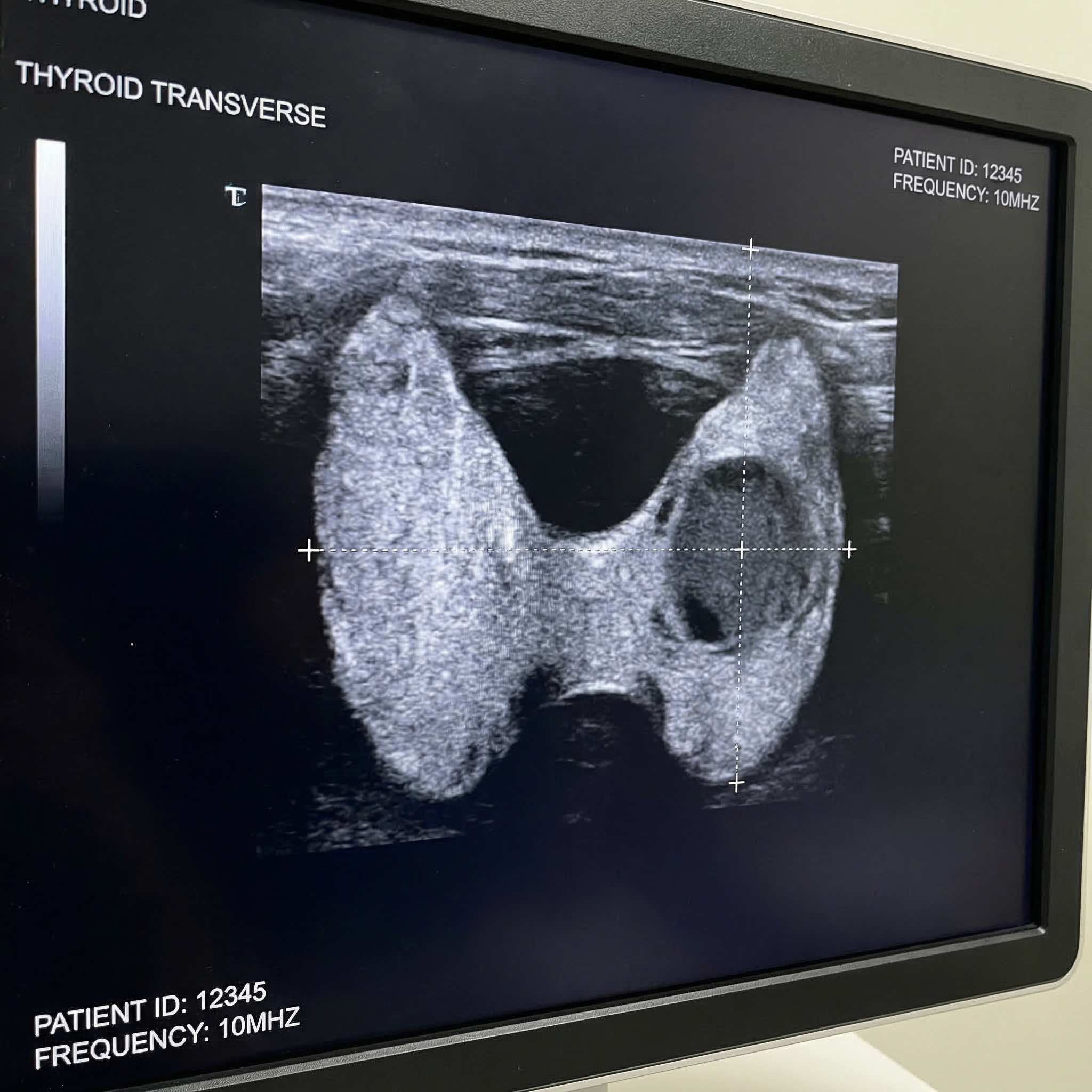
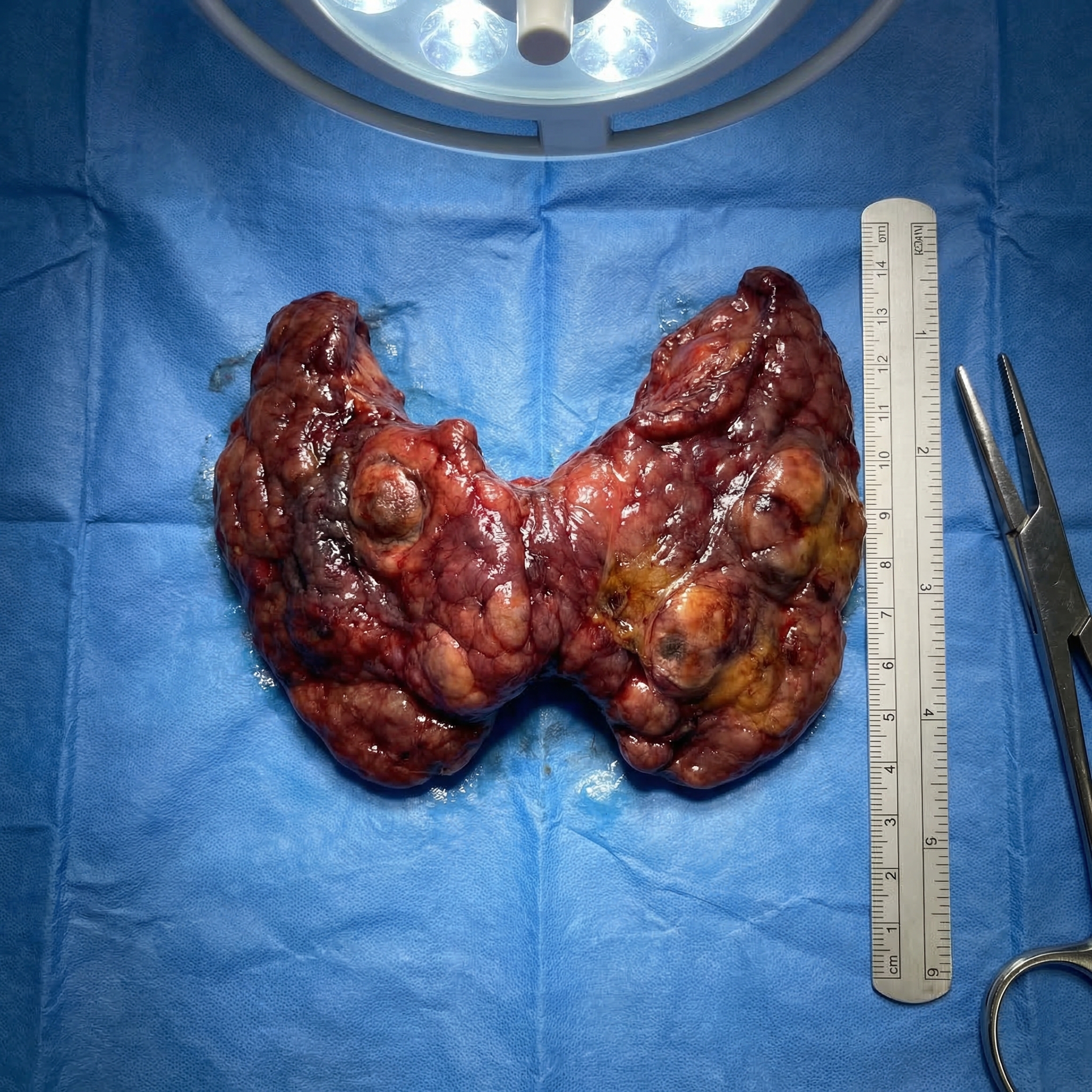
I'm an endocrinologist, and last week a patient of mine told me she wants to cut her levothyroxine dose. Not because she gave up on treatment. Because of something that happened during her follow-up labs that I've never seen in 19 years of practice. I've been treating thyroid disease for 19 years. I've seen every stage of Hashimoto's, every antibody level, every pattern of decline. I can tell within 30 seconds of looking at someone's bloodwork what trajectory they're on. Last week, I couldn't. A woman came in expecting the usual. Her TPO antibodies had been over 900 for five years. Her Free T3 was perpetually low despite "optimized" TSH. She was on 125mcg of levothyroxine. She looked the way most of my Hashimoto's patients look — exhausted, puffy, defeated. Except she didn't. I pulled up her new labs. And I just… stopped. Her TPO antibodies had dropped from 934 to 187. Her Free T3 had risen into the upper third of the range for the first time in years. Her TSH was tighter than I'd ever seen it. And her face — the puffiness that had been there for years — was visibly reduced. I looked at her. "What have you been doing differently?" "Nothing crazy. Just something my sister told me about." I didn't believe her. "New medication? Different brand of levo? Did you add Cytomel?" "Nothing like that. Just this one thing I've been taking for five months." I pulled up her previous labs and compared them side by side. Her antibody trajectory had reversed by what looked like three years. Her conversion ratio was improving. Her inflammatory markers were dropping. I sat back in my chair. "I'm going to be honest with you. I don't think you need 125 micrograms anymore." She looked confused. "But my Hashimoto's—" "Your thyroid is functioning better than it was three years ago. Your body is converting T4 to T3 more efficiently than I've seen since your diagnosis." Long pause. "So what do I do now?" "Keep doing whatever you're doing. Because it's working better than anything I was about to adjust." She walked out. And I spent the rest of the week wondering what she knew that I didn't. Here's what bothers me. I've been in endocrinology my whole adult life. I know every treatment, every drug, every protocol that's supposed to work. And I see the same thing in my office every single day. Women in their 30s, 40s, and 50s with declining thyroid function. That crushing fatigue that no amount of sleep fixes. Sleeping ten, twelve hours and still waking up feeling like they haven't slept at all. A body that feels like it's filled with lead by 2pm. The weight that keeps climbing no matter what they do. Eating 1,200 calories. Exercising six days a week. And gaining. Stepping on the scale wanting to scream. Looking in the mirror and not recognizing themselves. The brain fog that makes them feel twenty years older. Forgetting simple words mid-sentence. Losing their train of thought in meetings. Scared they're developing early dementia — but it's actually their thyroid. The hair falling out in clumps in the shower. A ponytail half the size it used to be. Drawing on eyebrows every morning because the outer third is gone. And the worst part? Their labs say "normal." Every doctor tells them there's nothing wrong. TSH is "within range." Levothyroxine dose is "correct." They get prescribed antidepressants they don't need. Labeled a hypochondriac. Told it's stress. Told to exercise more. That's what I see all day long. Women who are slowly losing their lives despite doing everything right and having "perfect" labs. And I help them. Temporarily. I adjust their levothyroxine. Tweak their dose by 12.5 micrograms. Monitor their TSH. Then they come back three months later still exhausted, still gaining weight, still losing hair. Numbers look fine. They feel terrible. Because medication replaces the hormone. It doesn't address why their body can't use it. I'd known for years that for some patients, the numbers weren't the whole story. Something else was going on. I just couldn't name it. Until last week. I called her that evening. "I know this is unusual. But I can't stop thinking about your labs. What are you actually taking?" She didn't hesitate. "Something that targets lymphatic drainage around the thyroid." Lymphatic. In 19 years of treating thyroid disease, I'd never heard that word in this context. We talked for 40 minutes. She told me she'd spent years trying everything. She tried adjusting her levothyroxine dose — fought her old doctor to test Free T3, not just TSH. Numbers shifted slightly. Symptoms stayed the same. She tried selenium — the supplement everyone in the Hashimoto's community recommends. It helped a little. Her antibodies dipped for a month. Then plateaued. She tried going gluten-free for eight months. Her bloating improved slightly. Her antibodies didn't budge. The exhaustion continued. She tried ashwagandha. Energy improved for two weeks, then leveled off. Didn't touch the weight, the hair loss, or the fog. She tried a thyroid support supplement from Amazon — the one with every vitamin and mineral listed on the label. Did nothing. "Expensive urine," she called it. She said she was about to accept this was just her life now. Just existing. Not living. A shell of the woman she used to be. But five months ago, something changed. She told me she'd started researching why levothyroxine fails so many women — even when the dose is right and the labs look fine. Not treatments. Mechanisms. She learned something that made everything click. She learned that when your thyroid labs are "normal" but you're still exhausted, gaining weight, losing hair, and can't think straight — it's not because you need a different medication or another supplement. It's because the lymphatic system surrounding your thyroid gland is congested and can't clear the inflammatory debris away from your thyroid tissue. And here's what she found that most doctors — including me — had overlooked. In 1912, a Japanese physician named Hakaru Hashimoto first described the disease we now call Hashimoto's thyroiditis. But he didn't call it thyroiditis. He called it "struma lymphomatosa." A lymphatic disease. Because what he saw under the microscope wasn't just a damaged thyroid. It was a thyroid drowning in immune cells that had flooded in through the lymphatic system and couldn't drain out. For decades afterward, the condition was known as "lymphocytic thyroiditis," "lymphadenoid goiter" — every name emphasized the lymphatic congestion as the defining feature. Then the medical community renamed it "Hashimoto's thyroiditis." And the lymphatic connection was buried. Over a hundred years of treating the thyroid gland — while ignoring the drainage system wrapped around it. I was quiet on the phone for a long time after she said that. I want to be honest about something. It doesn't feel good to have a patient educate you on the history of the disease you've spent 19 years treating. Part of me wanted to dismiss it. Part of me wanted to find a flaw in her reasoning — the way I've watched doctors dismiss patients my entire career. But her labs were sitting on my desk. TPO from 934 to 187. Free T3 in the upper third for the first time in years. I don't get to argue with numbers like that. "You can adjust your levo dose, take every supplement on the shelf, go gluten-free, exercise every day," she said. "But without lymphatic drainage, your thyroid stays suffocated. No conversion. No clearance." And sitting there on the phone, every treatment failure I'd watched play out in my office — for 19 years — clicked into place. The dose increases I'd prescribed — more T4 flooding into a clogged system. Each one overpowering the blockage for a few weeks. Then the congestion building back. Worse. The dose climbs. The clog stays. The selenium I'd recommended — fueling conversion that was blocked by trapped inflammation the drainage couldn't clear. Fuel for an engine that's underwater. The gluten-free diets I'd suggested — removing new triggers while years of trapped inflammation sat untouched. Turning off the faucet doesn't drain the swamp. Every single thing I'd prescribed, recommended, or told my patients to try was treating the hormone. Not one of them touched the drainage system that determines whether the hormone can actually work. Nineteen years. Thousands of patients. Not once did I check the drainage. "So what did you do?" I asked. "I stopped trying to fix the thyroid and started restoring the drainage around it." "But you can't just do one thing," she said. "The congestion runs three layers deep. There's trapped inflammation around the thyroid that's blocking conversion right now. There's buildup compressing the drainage shut. And the pump that's supposed to move all of it out has gone dormant." "You have to calm the inflammation first. Then dissolve the buildup. Then restart the drainage so everything flushes out. In that order. If you skip a step or do them out of order, the whole thing stalls." "That's what I spent four years not knowing. I tried things that only addressed one layer. Anti-inflammatory herbs, but the buildup was still there. Drainage teas, but the inflammation kept building right back. Nothing worked until I found something that hit all three. In the right order." She told me the name of the formula. Naturelle. "Most thyroid supplements give you selenium and call it a day," she said. "But they never address why the thyroid can't use the selenium in the first place. The drainage is clogged. Nothing gets in. Nothing gets out." "This one addresses all three layers. Calms the inflammation. Dissolves the buildup. Restarts the drainage." I asked her to send me the label. We hung up. That night I sat at my desk. Started pulling up everything she'd told me. She was right. The thyroid sits inside one of the densest lymphatic networks of any organ. The drainage is supposed to clear waste every single day. When it's clogged, the inflammation gets trapped. And that trapped inflammation is exactly what blocks T4 from converting to T3. The medication delivers T4 — but it can't convert because the drainage pathway is shut. The T4 piles up in your blood unused. Your labs look perfect. Your cells starve. Your blood tests measure what's floating in your blood. But the problem isn't in your blood. It's in the swamp between your blood and your cells. There's a dam upstream. And nobody's looking at the dam. I've been looking downstream my entire career. Then I opened the label she'd sent me. When I saw the ingredient selection, the three-step structure she'd described was right there. Step one calms the inflammation. Burdock Root — significant drops in inflammatory markers in as little as 12 days. And it does double work — feeds the gut bacteria responsible for roughly 20% of T4-to-T3 conversion. Then Gotu Kola to reinforce the drainage vessels so fluid stops flooding the tissue. The puffiness starts going down. That alone would reduce puffiness. But it wouldn't clear the blockage. Step two dissolves it. Bromelain — physically breaks down the fibrin and protein debris forming the sludge. Over 1,600 published studies. Then Cleavers — to loosen what Bromelain breaks apart and mobilize it toward the lymph nodes. One dissolves. The other moves it out. Now the sludge is broken up. But without something to restart the flow, it has nowhere to go. Step three restarts the drainage. Red Root — the highest-dosed ingredient — directly reactivates lymphatic flow. Gets the stagnant fluid moving again. The drainage turns back on. Dandelion supports the kidneys in flushing the dissolved waste — critical for hypothyroid women. Magnesium powers the smooth muscle that pumps lymph through the vessels. And BioPerine — because your inflamed gut can't absorb what you give it. This fixes that. Up to 2,000% better absorption. All of it built around restoring lymphatic flow first — then letting the thyroid actually heal. That's not random herbs thrown together. That's a mechanism. Three steps, sequential, each one enabling the next. I've looked at hundreds of thyroid supplement labels. Most of them give you selenium, zinc, iodine, and call it thyroid support. They focus on the gland. They ignore the drainage system wrapped around it. This formula doesn't touch the hormone. It restores the environment the hormone operates in. The next morning I called her back. One question. "How long did it take to work?" "The first week, honestly, not much. I almost convinced myself it was another waste of money." "But by week two something shifted. Subtle. More energy in the afternoons. The kind of thing you'd miss if you weren't tracking." "Week three, the brain fog started lifting. I could finish sentences again. I wasn't searching for words in the middle of a conversation." "Week four, I wasn't crashing at 2pm anymore. I actually had energy after work. And the puffiness in my face and hands started going down. My rings fit again. I looked in the mirror and saw something I hadn't seen in years. My face." "By week eight, my hair stopped falling out in clumps. The shower drain wasn't covered anymore. I cried." "By month three, I stepped on the scale and it had moved for the first time in two years — in the right direction. Not because of a diet. Because my body was finally processing fluid instead of holding it." "Month five — the labs you saw. Antibodies dropping. T3 climbing. TSH tightening. My body was actually converting and using the levothyroxine for the first time since my diagnosis." "I almost didn't try it," she said. "Because I'd tried everything else and nothing worked. The selenium plateaued. The gluten-free didn't touch my antibodies. Every supplement I bought was expensive urine." "But this was different. It wasn't trying to replace my medication. It wasn't another thyroid support pill full of zinc and iodine. It was clearing the drainage so my medication — the same levothyroxine I'd been on for years — could finally convert." "Same Levo. Same dose. But now the pathway is open." I ordered a bottle that night. Not for a patient. For myself. I'm 47 and I've had subclinical Hashimoto's for six years. My TPO antibodies hover around 200. My TSH is "within range." I follow the diet I recommend to patients. I exercise. I take selenium. My numbers were stable. Better than most. But I had the fatigue. The afternoon crash. The puffiness I'd blamed on aging. The brain fog I'd blamed on long hours. The five pounds a year I couldn't explain. I was managing. Not improving. Week three: the puffiness around my eyes in the morning started fading. Week eight: I ran my own labs. My TPO antibodies had dropped for the first time in three years. My Free T3 had shifted into the upper third of the range. Week ten: a colleague in the hospital asked what I'd changed. Said I looked like I got five years younger. She was right. My thyroid had regained something I didn't realize I'd lost. That efficient drainage. That clean energy. That sharp thinking. The feeling of actually being present in my own life. Not from a medication change. Not from a stricter diet. From restoring lymphatic flow so my thyroid — and the medication I take — could finally work the way they're supposed to. If you're sleeping ten hours and still waking up exhausted… If you're eating 1,200 calories and still gaining weight… If your brain fog makes you feel twenty years older… If your hair is falling out in clumps despite "normal" labs… If your doctor says you're fine but you know something is wrong… It's not the medication's fault. It's not your fault. It's that the lymphatic system wrapped around your thyroid can't clear the congestion suffocating it. Your thyroid didn't stop working because of age. And your medication didn't fail. The drainage system that your thyroid depends on became overwhelmed. You can't fix that with a higher dose of levothyroxine. The medication delivers T4. But it can't convert because the drainage pathway is shut. You can't fix it with selenium alone. Selenium fuels the conversion. But if the drainage is clogged, the inflammation blocks it right back. You can't fix it by going gluten-free or cutting sugar. Those reduce the input. But they don't drain the years of backlog already trapped around your thyroid. You have to restore drainage from the inside. Calm the trapped inflammation. Dissolve the buildup. Restart the drainage. Three steps. In order. The way the body actually heals. This is what's working for me — and for the patient who asked to lower her levothyroxine because her thyroid was actually improving for the first time in five years. If you want to try what we're using: 👉trynaturelle.com/products/cc It takes about 8–12 weeks to see real changes in your labs. I spent years helping women manage their decline. Five months ago, I started restoring my own thyroid's lymphatic drainage from the inside. The difference showed up in my labs before anyone noticed it in my face. Not because I changed my medication. Because my thyroid finally had the drainage to function properly again. That's all.
Where the ad sends people
trynaturelle.com
19 years in endocrinology. A patient just taught me something I never learned
naturelle
Learn more: trynaturelle.com(opens in a new tab)