Mendable Canada
Mendable Canada Facebook ad: “Knee Still Aching On Anti-Inflammatories? Read This”
Ran for 6 days, from September 4 to September 10, 2026, the last day Crush saw it.
Run by Mendable Canada on Facebook. Crush is not the advertiser and does not verify its claims. See this ad in Meta's Ad Library(opens in a new tab)
Want an ad like this for your product?
Crush makes new ad images for your product from this ad: your logo, your product photo, your offer.
Trials from $19.95 USD, then $79.95 USD a month. Cancel anytime.
About this ad
- Meta Ad Library ID
- 1592921428872598
- Platforms
- Facebook, Instagram, Audience Network, Messenger, WhatsApp and Threads
- Relaunches
- 0
Ad text
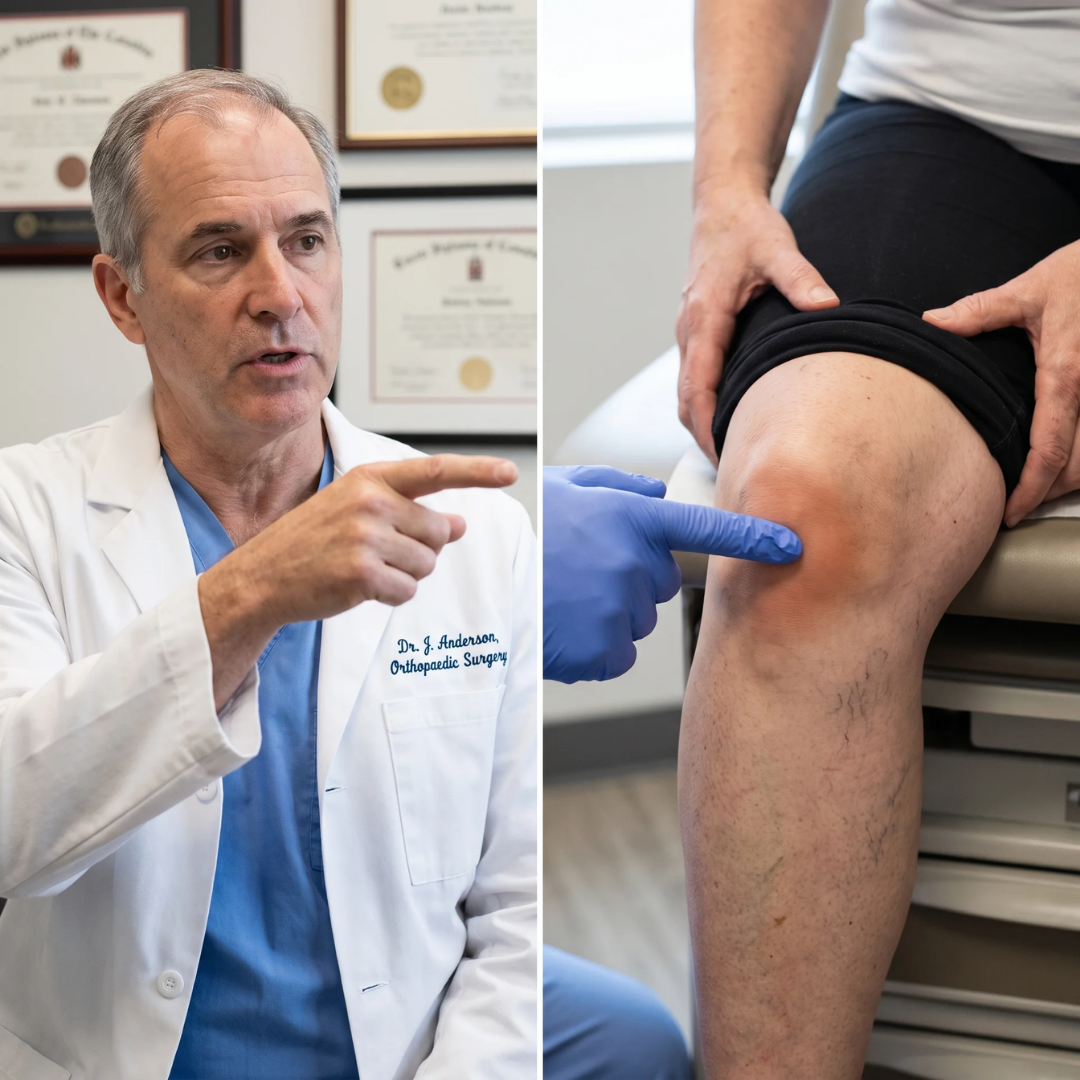
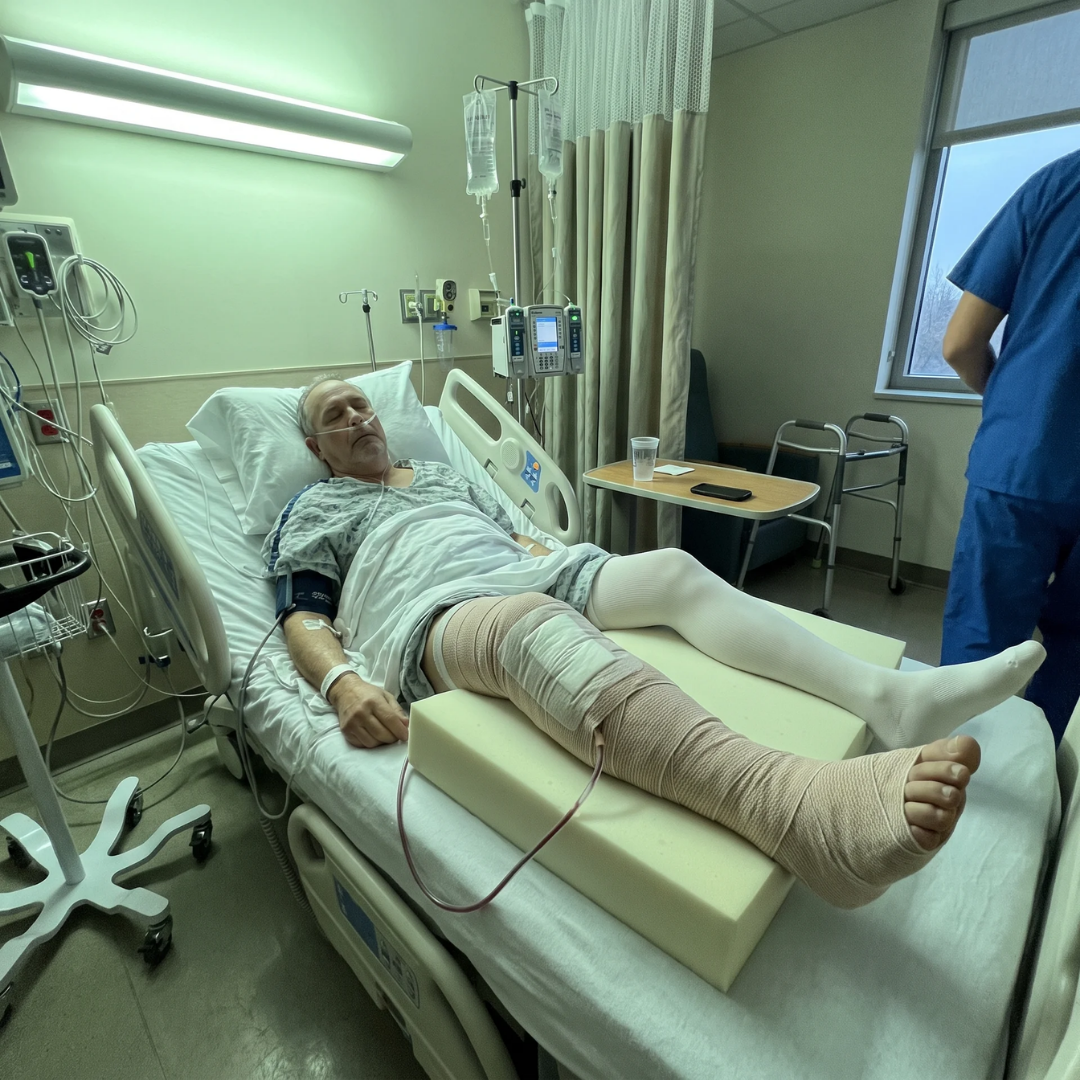
My dad stopped walking at 62. Not all at once. It happened over about four years, and by the end of it he could get from his chair to the kitchen and that was the whole map of his life. He had his knee replaced at 58. Six weeks in a recliner, months of rehab, and it never gave him back what it took. He'd tell you it helped. He'd also tell you he never once walked the dog again. I was 33 when he stopped going outside. My sister Karen was 31. We didn't talk about it directly. That's not how our family handles hard things. We circle them. We bring food. We say "he's doing well, considering" and mean something else entirely. But we both knew what we knew. Bad knees ran on our dad's side like a second inheritance. Dad had them. His brother had them. Their father had them before that. You find out early enough in a family that certain things come with the name. My name is Denise. I'm 54. I process claims for an insurance company in Mississauga and I've been there sixteen years. My husband Ron works out of a distribution centre. We have two grown kids and a small house with a maple in the front yard that my mother planted the year we moved in and that I have been meaning to prune for going on six years. I am not a doctor. Not a nurse. Not anything close to a medical professional. I'm a woman whose knee started clicking on the stairs three years ago and who has been dealing with something nobody explained properly. Dad's doctor started him on anti-inflammatories when he was 51. He took something every day for seven years. His pain was managed. That was the word they used at every appointment. Managed. His knee was managed from 51 all the way through to the operating room at 58, and it was still managed after, in a recliner, for the rest of his life. I have spent a long time turning that word over in my mind. Managed. What managed means is that the medication is holding the pain down where the doctor wants it. What it doesn't mean is that whatever is causing the pain has been dealt with. It means controlled. Not addressed. Not gotten to the bottom of. Controlled. My dad was controlled for seven years. And he still ended up in that chair. Karen's knee went last January. Her doctor was thorough about it. X-ray, exam, referral. Moderate osteoarthritis, medial compartment. Everything on paper looked exactly the way you'd expect for a woman of 52 who spent twenty years on her feet. But by month four, something else was happening. She started getting the deep ache at night. The kind that wakes you at 3 a.m. and won't let you find a position. She told her doctor. Her doctor said that's common, try elevating it, try a heat pack. The night pain got worse. Then came the swelling that wouldn't go down between flare-ups. Her knee would puff up by evening and still be puffy in the morning. Then the sleep fell apart completely. She'd lie awake at 2 a.m., knee throbbing, mind spinning, exhausted but wired. Every night. For weeks. She told her doctor again. Her doctor said that's the arthritis, we'll keep an eye on it, let's talk about the referral. I have known Karen for fifty-one years. I know the woman who held my mother up in the hospital corridor and cried exactly once, alone, in her car in my parents' driveway at 10:45 that night, when she believed nobody could see her. I was watching from my mother's kitchen window. She sat in that car for a long time. Something was happening to my sister and "that's the arthritis" was not an answer. Then she rang me on a Tuesday afternoon in September. I was at my desk. The call display said Karen and I picked up before the second ring. "I couldn't get down the stairs this morning," she said. I didn't say anything. I just held the phone. "I had to sit down on the top step and go down on my backside. Ron's at work. I sat there for twenty minutes." There was a silence after she said it. I could hear her breathing. She was doing the math. I could feel it across twenty kilometres of phone line. Karen was 52. Dad stopped walking at 62. That was ten years. I said "I'm coming over Saturday." She said "I know." I drove out to her place that Saturday morning. She's in a brick bungalow she bought fifteen years ago. Her car was in the drive and the side door was unlocked, which told me she'd been expecting me for a while. She made coffee. We sat at her kitchen table. I looked at my sister across the Formica and thought about how much she looks like Dad. The same hands. The same way she goes completely still when she's working something through. She told me she didn't want to just wait for the referral. Not because she was being stubborn about the surgery. She was careful to say that. She said: the treatments are doing what they're supposed to do. The anti-inflammatory takes the edge off. The physio exercises help while I'm doing them. My doctor is doing everything by the book. But something is wrong with me, and nobody is looking at why. I didn't have a single thing to say to that. Because it was true. And because it was the thing I'd been circling in my own head for months without ever knowing how to put into words. She said there was something she'd been looking into. Something a woman at work had mentioned. Her name is Brenda. She works in HR at the distribution centre where Karen's been for twelve years. Karen described her as someone who keeps quiet most of the time, but when she does say something, you want to hear it. About two months before that Saturday, Karen had mentioned what she was going through to Brenda in passing. The way you do when something is heavy enough that it starts coming out in small pieces at the wrong times. She wasn't expecting advice. People give you suggestions when you're struggling and most of them are things you've already tried or already dismissed. Brenda had listened. Then she'd said: let me talk to my husband. Her husband, whose name is William, had been an orthopaedic surgeon for twenty-eight years. Spent most of his career in a Toronto hospital before he retired. Brenda went home that evening and told William what Karen had said. William apparently talked for a while. The next morning she came into work with a sticky note. Two words written on it. Blood flow. Karen had held that sticky note and thought: circulation. That's it? That's the big secret? She told me she almost folded it in half and put it in the junk drawer at home. She'd spent months watching people recommend things for knees and she was tired of being hopeful about something that wasn't going to do anything. Blood flow sounded like the kind of advice her aunt gives at Sunday dinner, right after "have you tried turmeric." But she kept thinking about one thing Brenda had said that William told her. He said: the problem with the standard path isn't the treatments themselves. The treatments do exactly what they're designed to do. Anti-inflammatories reduce inflammation. Cortisone quiets a joint. Physio strengthens the muscles around it. All of that works, as far as it goes. That's why you get relief. That's why the pain drops for a while. The problem is what nobody is tracking underneath. I set my coffee cup down. Karen said: here's how William explained it. The cartilage inside your knee — the cushion that lets the joint glide — has no blood supply of its own. None at all. Not even in a healthy twenty-five-year-old. It stays alive entirely on the circulation in the tissue around it, which brings in oxygen and nutrients and carries the swelling away. After 45, that circulation starts shutting down. We move less. The small vessels feeding the joint narrow. By 50 the blood flow into the knee's supporting tissue has typically fallen sharply, and by 60 it can be a fraction of what it was. The structure is still there. But the supply line that keeps the tissue healthy — the oxygen, the nutrients, the machinery that flushes out inflammation and repairs daily wear — that supply line has dried up. The joint isn't worn out. It's starving. And starved tissue can't keep up with the daily wear. It can't clear inflammation, because there isn't enough flow to carry it away. So the swelling pools. The tissue stiffens. The joint grinds instead of glides. The symptoms Karen had been having for months weren't just "the arthritis." They weren't something to keep an eye on. They were a joint running out of blood supply. Karen looked at me from across her kitchen table. She said William told Brenda something that she couldn't stop thinking about after she heard it. He said the X-ray almost never explains the pain. The scan shows the wear — the narrowed space, the spurs. But plenty of people her age have the exact same picture on the exact same scan and no pain at all. The scan measures the structure. It doesn't measure whether the tissue around it is being fed. By the time the imaging looks bad enough to justify an operation, the starvation has usually been going on for years. That's why Karen's imaging looked like "moderate, we'll manage it." That's why her doctor kept saying there was nothing to be alarmed about. The scan wasn't measuring what was actually happening. I thought about Dad. I thought about seven years of managed and a recliner and the dog he never walked again. Karen said she asked Brenda to ask William: so what actually restores blood flow to a joint at home? William had said there are three things that work, and they only work together. The first is deep, sustained heat. Not a hot pack. Around 42°C, held there for the whole session, so it penetrates past the skin into the tissue around the joint and dilates the vessels that have been narrowing for years. A microwaveable pad goes cold in twenty minutes and never gets deep enough to matter. It feels lovely. It does almost nothing to the tissue that needs help. The second is rhythmic compression. Squeeze and release, in a cycle. That physically pushes the pooled fluid and inflammatory waste out of the tissue, and pulls fresh, oxygen-rich blood in behind it. It's what a good massage therapist mimics with their hands, except sustained for the whole session and calibrated the same way every time. The third is targeted vibration at around 60Hz. That reaches deeper than heat alone. It loosens the stiff tissue that builds up over years of guarding a sore knee, helps break down the adhesions that lock the joint, and stimulates the tissue to start repairing. And here is the part he was most insistent about. All three have to run at the same time. Heat alone opens the vessels but doesn't move the blood. Compression alone pumps but can't open a vessel that's been narrowing for a decade. Vibration alone reaches the deep tissue, but the tissue can't do anything with it if there's no flow. Miss one and the chain breaks. For someone whose circulation to the joint has dropped by half or more, it's not a comfort gadget. It's replacing something the joint desperately needs and isn't getting anymore. When the flow comes back, the swelling has somewhere to go. The inflammation gets cleared instead of sitting there. The tissue gets the conditions it needs to repair. Not because something is forcing the knee to stop hurting, but because the joint is finally getting what it's been missing. One more thing, Karen said. William had told Brenda to make sure she understood this part. Most knee devices on the market do one of those three things, badly. A heat wrap that can't hold temperature. A vibrating massager with no heat. A TENS unit, which doesn't do any of the three — it just runs current through the skin to mask the pain signal. People buy one, feel nothing after a month, and decide the whole category is nonsense. That's why. The combination matters more than any single feature. He said to find one built by someone who actually understands the joint. Karen had written it down in her phone. Then she'd gone looking. She showed me what she'd ordered. Mendable Knee. Designed by Dr. James Anderson, an orthopaedic surgeon in Toronto with twenty-two years and over 2,500 knee procedures behind him. 42°C heat, rhythmic compression and 60Hz vibration, all three running together in one twelve-minute session. One button. Ships from a Toronto warehouse. She'd been using it every day for about six weeks at that point. I looked at her for a moment. "And?" I said. She smiled. That small quiet smile she does when she doesn't want to oversell something. The same smile Dad used to do. "Ask me in another month," she said. So I watched. I started calling her every Thursday. I came to Sunday dinner every week. I kept track. Week two after that Saturday, I rang her on a Thursday night and she didn't answer. That used to make me panic. I called again. No answer. She texted me the next morning: "Sorry, I was asleep by half nine. First time in four months I slept through the night." Week three, she told me the deep ache at night had stopped. Not reduced. Stopped. She'd had one bad evening after a long day standing at a work event, but the 3 a.m. wake-ups with the knee throbbing were gone. Week five, Karen came to Sunday dinner and stood in my kitchen chatting for the better part of an hour instead of asking for a chair the moment she walked in. She helped me clear the table, and I watched her from the doorway and thought: there she is. That's my sister. Week seven I called her on a Thursday morning and her voice sounded like itself. That's the only way I know to put it. She sounded like the version of Karen I had been missing for months and had been trying not to make too much of missing. She said the swelling had gone down around week four. Not gradually reduced. Gone down and stayed down. She'd had some puffiness after a long drive, but the knee that used to be visibly bigger than the other one by every evening was just a knee again. At her follow-up, her doctor noted her range of motion had improved and asked what she'd been doing differently. Karen said she'd been using a heat, compression and vibration device daily. Her doctor looked at her for a moment and said: you know, we should probably be telling more people to work on circulation before we send them for a referral. Karen told me that over the phone and I sat with it for a minute. We should probably be telling more people. I started using one myself about three weeks after that kitchen table conversation. My knee had been clicking on the stairs for three years at that point. Nothing as dramatic as what Karen went through. Just a low-grade hum of symptoms I kept explaining away. Stiffness for the first twenty minutes of the day. A catch when I stood up after sitting through a meeting. Leading with the good leg on every staircase without even thinking about it anymore. The vague sense that this was just what being 54 was. I didn't need a second invitation. My experience has been gradual. The honest word for it is gradual. The first thing I noticed was the mornings. I used to need a good twenty minutes and a hot shower before the knee would behave. By week two, it was breaking loose before the kettle boiled. By week four I wasn't tracking it anymore, because it wasn't a problem anymore. Then I noticed the stairs at work. Two flights, four times a day. I'd been leading with the left leg on every single step for over a year. By week six I was going up them normally and only realised it halfway through a phone call. The catch when I stand up stopped. The end-of-day ache faded. I don't feel numbed or medicated. I just feel like my knee stopped complaining all day long. My last appointment was a month ago. My doctor looked at me getting up off the table and said whatever you're doing, keep doing it. I thought about that sticky note. Two words. Blood flow. I think about Dad a lot. I think about the recliner and the map of his life shrinking to the kitchen and back. I think about Karen sitting in her car in the dark at 10:45 at night, alone, when she thought nobody could see her. I don't know what would have been different for Dad if things had been different. I'm not a doctor. I won't pretend I have answers I don't have. What I know is that my father had managed knee pain for seven years and it still went the way it went. And I know what my sister looked like sitting across from me at that kitchen table in September. And I know what she looked like standing in my kitchen in week five. And for the first time in a very long time, I'm not doing that math anymore. If any part of this sounds familiar to you — whether your knee has been "managed" for years while it quietly got worse, whether you've been told the stiffness and the swelling and the night pain are just what happens after 45, whether you're reading this thinking about someone you love — I want you to know about this. Mendable Knee. Designed by a Canadian orthopaedic surgeon. 42°C heat, rhythmic compression and 60Hz vibration, all three at once, in one twelve-minute daily session at home. One button. No pills, no injections, no waiting rooms. Ships free across Canada, dispatched in 24 hours from Toronto. There's a 90-day money-back guarantee. Use it every day for 90 days and if your knee isn't moving better, bending better and carrying you better, you send it back and every cent comes back. No forms. No store credit. No friction. That means something to me. It means the people who make it are willing to put their money on the line alongside yours. If you're ready: 👉 https://mendablecanada.com/pages/why-most-knee-pain-after-45-doesnt-get-better-and-what-a-canadian-orthopaedic-surgeon-is-doing-about-it P.S. Karen went to her granddaughter's recital last weekend. She drove two hours each way, stood at the back for the whole thing because the hall was full, and stayed for the reception afterwards. She texted me on the way home to say she couldn't remember the last time she'd done a full day like that. I couldn't remember either. That's not small. P.P.S. The distinction William made is worth repeating because most people never hear it. A hot pack warms the skin and cools within minutes. A TENS unit runs current through the skin to mask the pain signal — it doesn't touch circulation at all. A vibrating massager loosens the surface. Every one of those does a piece of the job and leaves the chain broken. Heat opens the vessels, compression moves the blood, vibration releases the tissue clamping down on the flow. All three at the same time, or nothing holds. That's not a footnote. That's the whole thing. P.P.P.S. Ninety days to try it. If it isn't right, send it back and they refund every cent. I watched my family manage a knee for years and nobody ever offered to give us our money back when the managing wasn't enough. I think about that every time I see a company willing to stand behind something this way. You're not risking anything. Your knee has been at this a lot longer than 90 days. Give it a real look. 👉 https://mendablecanada.com/pages/why-most-knee-pain-after-45-doesnt-get-better-and-what-a-canadian-orthopaedic-surgeon-is-doing-about-it
Where the ad sends people
mendablecanada.com
Knee Still Aching On Anti-Inflammatories? Read This
Her doctor called it arthritis and said they'd manage it — a retired Toronto orthopaedic surgeon wrote two different words on a sticky note: blood flow.
Learn more: mendablecanada.com(opens in a new tab)