Anna's Mom Advice
Anna's Mom Advice Facebook ad: “Read This If Your Child Is A Struggle”
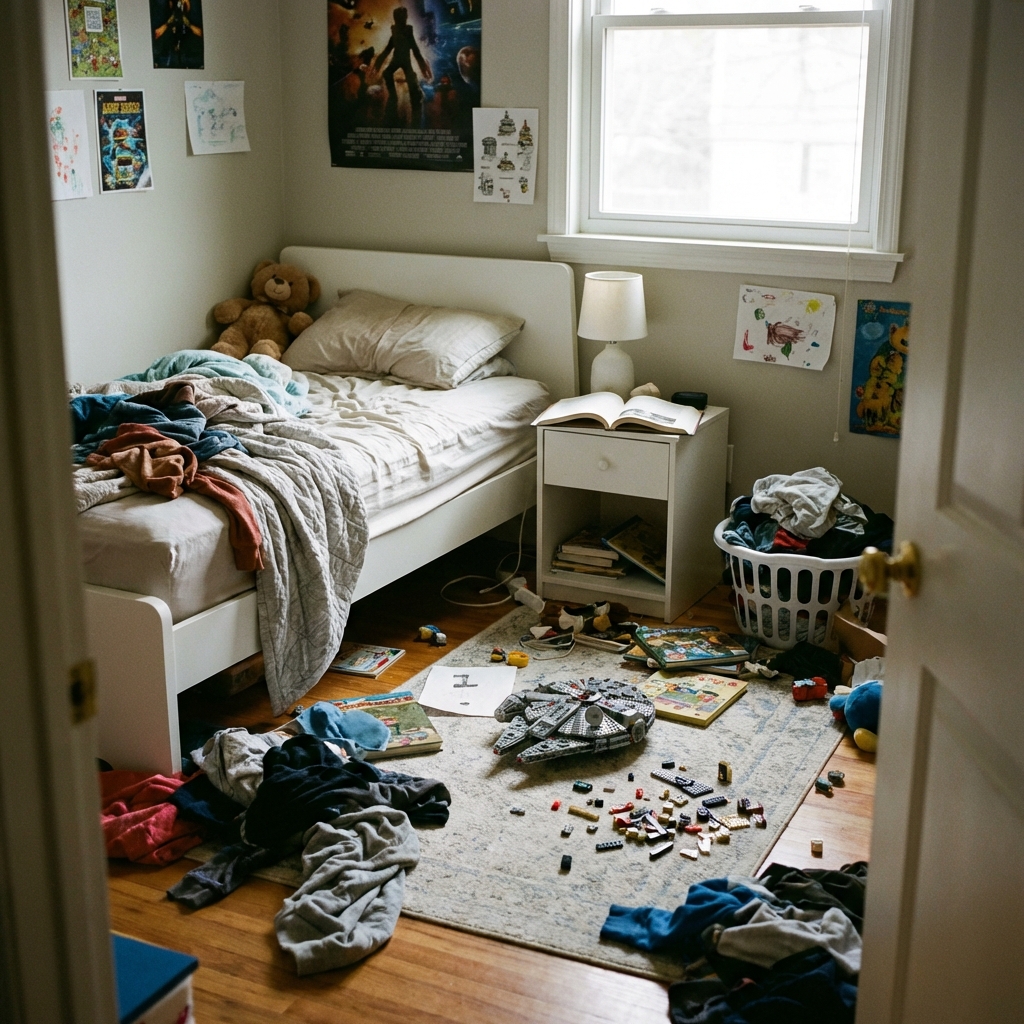
Ran for 2 days, from February 4 to February 6, 2026, the last day Crush saw it.
Run by Anna's Mom Advice on Facebook. Crush is not the advertiser and does not verify its claims. See this ad in Meta's Ad Library(opens in a new tab)
Want an ad like this for your product?
Crush makes new ad images for your product from this ad: your logo, your product photo, your offer.
Trials from $19.95 USD, then $79.95 USD a month. Cancel anytime.
About this ad
- Meta Ad Library ID
- 1593194815083386
- Platforms
- Facebook, Instagram, Audience Network, Messenger and Threads
- Relaunches
- 1
Ad text
After two years of failed sticker charts and morning screaming matches, his pediatrician finally explained why no reward system was ever going to work for his brain. And it had nothing to do with consistency. I cannot tell you how many times I heard that word. Consistency. From parenting books, from well-meaning friends, from my own mother who raised four kids and seemed to think I was making this harder than it needed to be. "You just have to be consistent," they would say. "Kids need to know you mean it." So I was consistent. Relentlessly, exhaustingly consistent. I made the charts. I bought the stickers. I explained the rules and the rewards and the consequences until I was blue in the face. And every single morning still ended with both of us in tears. My son Caleb is seven now. He was diagnosed with ADHD when he was five, after a year of me wondering if something was wrong or if I was just failing at the most basic parts of motherhood. The diagnosis helped me understand that his brain worked differently. But understanding did not make the mornings any easier. Let me describe a typical morning from before. Maybe you will recognize it. My alarm goes off at 6:30. I lie there for a minute, already tense, already running through the mental checklist of everything that needs to happen in the next ninety minutes. Already dreading it. I wake Caleb up at 6:45. He is groggy and irritable, which I expect. I give him a few minutes to adjust. At 7:00, I ask him to get dressed. His clothes are laid out from the night before because every parenting article says to prepare in advance. He looks at the clothes. He does not move toward them. At 7:05, I ask again. He has wandered to his bookshelf and is flipping through a comic he has read forty times. At 7:10, I ask a third time. My voice is sharper now. He looks at me like I have never spoken before. Like the previous two requests simply did not happen. By 7:15, I am yelling. I promised myself last night that today would be different. That I would stay calm. That I would not let a six year old push me to the edge before breakfast. But here I am, at the edge, watching him play with a sock instead of putting it on his foot. By 7:25, we are both crying. I am physically putting his arms through his shirt sleeves while he goes limp like a rag doll. Or worse, fights me like I am hurting him. We make it to the bus stop, barely. He gets on with tears still wet on his face. I stand in the driveway feeling like the worst mother in the world. This was every single day. For two years. I tried everything. And I mean everything. I tried the sticker charts. So many sticker charts. Stars for getting dressed, stars for brushing teeth, stars for putting on shoes without a meltdown. At the end of the week, enough stars meant a trip to the dollar store or extra screen time. It worked for about four days. Then he stopped caring about the stars. Or he would have a meltdown anyway and rip the chart off the refrigerator. I tried different rewards. Bigger rewards. Smaller, more immediate rewards. I tried letting him choose the rewards himself. Nothing stuck for more than a week. I tried gentle parenting. I read the books about connection before correction. I got down on his level, validated his feelings, offered choices instead of commands, used a calm and understanding voice. He screamed in my face and threw his shoe at the wall. I tried being stricter. More consequences. No screen time at all if the morning was bad. Taking away toys. Early bedtime. It made everything worse. He would rage for hours, completely out of control, and I would end up giving in just to make it stop. I felt like such a failure. Other kids responded to reward systems. Other kids could get dressed in the morning without it becoming a crisis. Other kids seemed to understand cause and effect, action and consequence. What was wrong with mine? What was wrong with me? The thing that really drove me crazy was the inconsistency of his focus. He could sit and play with Legos for three hours. Three hours of perfect concentration. Not a single complaint, not a single distraction. But ask him to put on pants and his brain seemed to just shut down. His teacher said he was doing fine at school. Following directions, participating, being kind to his classmates. Why could he hold it together for her and not for me? I started to think maybe he just hated me. Maybe I was the problem. Maybe something about my presence triggered his worst behavior. That thought kept me up a lot of nights. At his six year checkup, I finally broke down in front of his pediatrician. I told her about the mornings. The failed charts. The screaming. The guilt. The way I dreaded the sound of my own child waking up. She listened without interrupting. And then she said something I had never heard before. She said reward systems rely on a part of the brain that connects present actions to future outcomes. The part that can delay gratification and stay motivated by something that will happen later, like stickers adding up to a prize at the end of the week. She said kids with ADHD often have brains that do not make that connection the same way. Their systems are wired for immediate feedback, not delayed rewards. A sticker on Friday is invisible to a brain that can only see Tuesday. But there was more. She said his brain was also likely running on empty every single morning. That after ten or eleven hours of sleep with no food or water, his system was depleted of the nutrients it needed to regulate mood and focus and impulse control. Things like magnesium and B vitamins that help the brain function properly. She said it was not about discipline or consistency. It was about biology. His brain was not choosing to ignore me. It literally could not process and retain my requests because it was missing the raw materials it needed to work. I sat there trying to absorb what she was telling me. For two years, I had blamed myself. Blamed my inconsistency, my temper, my inability to stay calm. I had tried strategy after strategy, and when they failed, I assumed it was because I was not doing them right. But what if the strategies were never going to work? What if his brain needed something else entirely? She mentioned that some parents had found success with supplements designed to support cognitive function in kids. Not stimulants, not medication. Just the nutrients that ADHD brains burn through faster than typical brains. I went home and started researching that night. Most of what I found was disappointing. Focus gummies that were basically candy with trace amounts of vitamins. Supplements with ingredients I could not pronounce and reviews that said they did nothing. But then I found something different. A drink called CogniKid. It was formulated specifically to support cognitive function in children, with magnesium for calming the nervous system, B vitamins to help with neurotransmitter production, and electrolytes for absorption. No sugar. No artificial dyes. The science behind it matched what the pediatrician had explained. It was not about sedating him or forcing focus. It was about giving his brain what it needed to function on its own. I ordered it, skeptical but desperate. It arrived on a Thursday. Friday morning, I made it for Caleb and told him it was a special juice. He drank it without complaint, which was already more than I expected. I did not think anything would happen right away. I figured if it worked at all, I would not notice for weeks. But that morning was different. He got dressed when I asked. Not the first time. The third time. But without a meltdown. Without tears. Without throwing anything or going limp. We made it out the door and nobody yelled. I kept waiting for the other shoe to drop. One good morning could have been a fluke. I had seen random good days before. But there was another calm morning. And another. Not perfect. We still had hard moments. He still needed reminders and redirection. But the screaming stopped. The physical battles over getting dressed stopped. The constant state of crisis that had defined our mornings for two years started to soften into something manageable. I threw away the sticker charts. All of them. They were never going to work for his brain. Not because I was doing them wrong. Because his brain needed something different. Caleb still has ADHD. He still struggles with focus and impulse control. We still have hard days. But I stopped blaming myself for the failures of systems that were never designed for a brain like his. I stopped believing that if I was just more consistent, things would magically get better. Some brains need different support. That is not a failure of parenting. That is just biology. If you have a drawer full of abandoned sticker charts and a voice in your head telling you that you are not trying hard enough, I want you to know something. It might not be about trying harder. It might be about looking somewhere you have not thought to look yet. That is what finally made the difference for us.
Where the ad sends people
elurais.com
Read This If Your Child Is A Struggle ☝️
- Children's challenges often start from the inside out. What appears as impulsiveness or emotional outbursts can be a sign that a child’s brain isn’t receiving the nutrients it needs — a state called cognitive dehydration.
Learn more: elurais.com(opens in a new tab)