Heart Health Tips
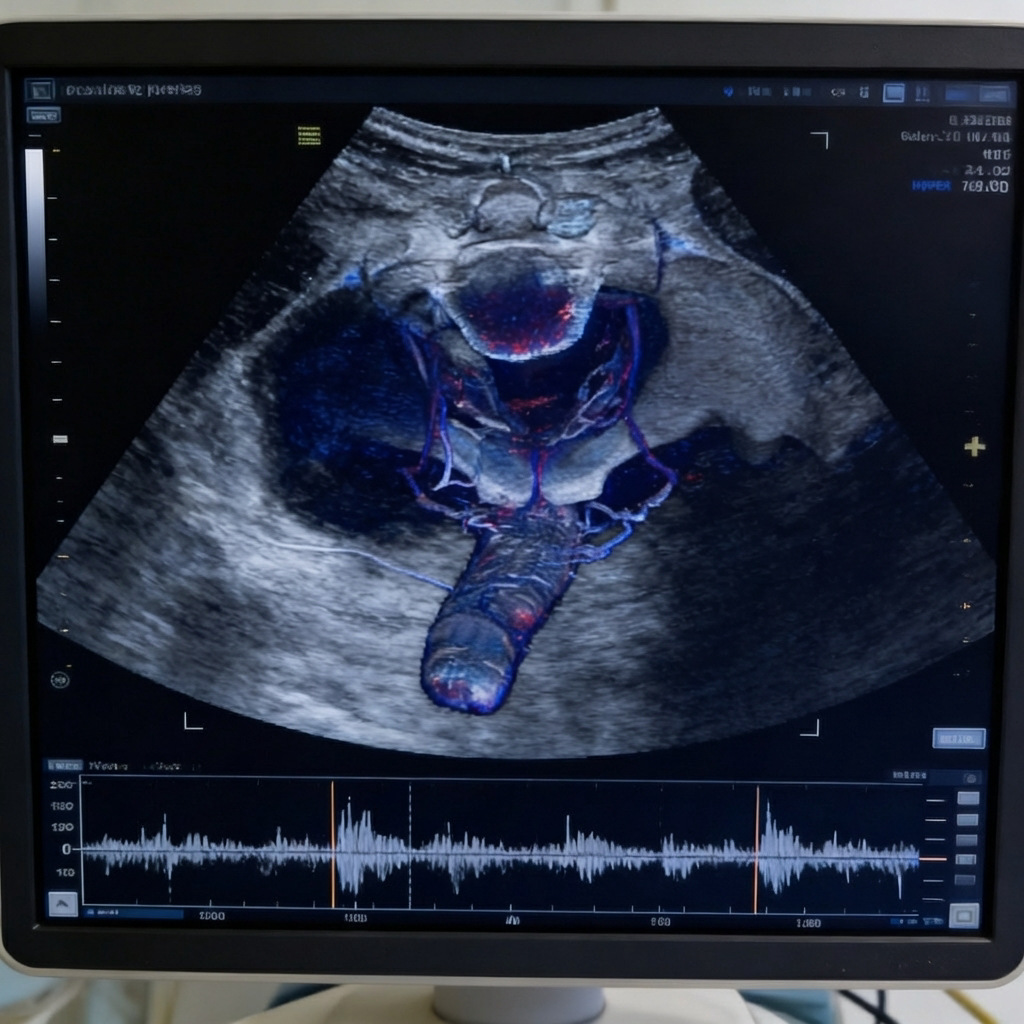
Heart Health Tips Facebook ad: “The Connection Between Prostate Health & ED”

Ran for 80 days, from March 7 to May 26, 2026, the last day Crush saw it.
Run by Heart Health Tips on Facebook. Crush is not the advertiser and does not verify its claims. See this ad in Meta's Ad Library(opens in a new tab)
Want an ad like this for your product?
Crush makes new ad images for your product from this ad: your logo, your product photo, your offer.
Trials from $19.95 USD, then $79.95 USD a month. Cancel anytime.
About this ad
- Meta Ad Library ID
- 1595021765112706
- Platforms
- Facebook, Instagram, Audience Network, Messenger and Threads
- Relaunches
- 1
- Niche
- Marketing & Agencies
Ad text
There is a type of man who goes to his doctor twice in the same year. The first visit is about his prostate. He is getting up two or three times a night. The stream is weak. He never feels fully empty. His doctor nods, checks his PSA, tells him it is benign, prescribes tamsulosin, and sends him home. The second visit, a few months later, is about something he finds harder to bring up. He is not getting reliable erections. Not like before. He frames it carefully. Stress, probably. Age, maybe. His doctor nods again, writes a prescription for sildenafil, and sends him home again. Two visits. Two prescriptions. Two separate problems, as far as everyone in that consultation room is concerned. They are not two separate problems. In 2006, a research team led by Montorsi et al. published findings in the European Urology journal that most men in waiting rooms have never been told about. Across a large cohort of men presenting with coronary artery disease, 67% reported that erectile dysfunction had appeared first — on average two to five years before any cardiac symptoms emerged (Montorsi et al., European Urology, 2006). In some men, the gap was closer to a decade. The reason is arterial diameter. The arteries supplying the penis are 1 to 2 millimetres wide. The arteries supplying the prostate sit in the same size range. The coronary arteries are 3 to 4 millimetres. When endothelial dysfunction begins — when the arterial lining starts losing its ability to produce nitric oxide and regulate blood flow — it reaches critical narrowing in the smallest vessels first. The penis and the prostate are not failing because they are old. They are the first places to show what is happening everywhere. The man who leaves that doctor's office with two prescriptions has been handed two sticking plasters for a single leak that is getting larger. This is not a theory. The MESA cohort study, published in Circulation in 2018, tracked thousands of men over years and found that erectile dysfunction was an independent predictor of cardiovascular events after adjusting for every known risk factor including age, smoking, hypertension, cholesterol, and diabetes (MESA cohort, Circulation, 2018). The Olmsted County study, published in the Journal of the American College of Cardiology in 2012, found that men with ED between the ages of 40 and 49 had substantially higher incidence of cardiovascular events compared with men without ED in the same age group (Olmsted County Study, JACC, 2012). The Princeton IV Consensus Guidelines, updated in the Journal of Sexual Medicine in 2024, now formally classify erectile dysfunction as a cardiovascular risk-enhancing factor — meaning cardiologists are being told to treat ED as a cardiac warning sign, not a lifestyle complaint (Princeton IV Consensus Guidelines, Journal of Sexual Medicine, 2024). Your prostate kept waking you up. Your erections started changing. These were not two problems arriving at the same time by coincidence. They were the same problem announcing itself in the two smallest vascular territories in your body. The question is what is actually failing. And the answer is the same in both locations. The inner lining of every artery in your body — the endothelium — contains an enzyme called endothelial nitric oxide synthase. eNOS is what produces nitric oxide on demand. Nitric oxide is what causes arterial smooth muscle to relax, blood vessels to dilate, and blood to move where it needs to go. In the prostate, it regulates stromal tone and glandular blood supply. In the penis, it is the direct trigger for the mechanism of erection. In the coronary arteries, it is what keeps plaque from calcifying and vessels from narrowing. When eNOS activity declines — and it declines with age, with metabolic stress, with chronic inflammation, with poor sleep — every vascular territory it serves begins to fail. Not all at once. Smallest first. Sildenafil and tadalafil do not fix this. They block the enzyme that breaks nitric oxide down, which temporarily raises the level of whatever nitric oxide your damaged endothelium is still managing to produce. That is why they work less reliably over time. The endothelium is producing less and less, and the drug is preserving a shrinking supply. It is not a treatment. It is a workaround for a system that is continuing to deteriorate while you take it. There is a compound that works differently. In 2010, a research team led by Zhen-Yu Chen published findings in Cell Metabolism demonstrating that capsaicin — the active molecule in cayenne pepper — activates the TRPV1 receptor on endothelial cells, which directly triggers phosphorylation of eNOS, increasing nitric oxide production at the source (Chen et al., Cell Metabolism, 2010). Not downstream. Not a workaround. At the enzyme itself. The same enzyme that is failing in your prostatic vasculature, your penile arteries, and your coronary circulation simultaneously. A subsequent study published in Cardiovascular Diabetology in 2013 found that 14 weeks of dietary capsaicin in diabetic animal models — the highest-risk vascular population — restored measurable endothelium-dependent relaxation, the specific arterial function that declines as eNOS activity falls (Sun et al., Cardiovascular Diabetology, 2013). Every other cardiovascular supplement works around the broken endothelial system. L-citrulline supplies raw material to a damaged engine. Beetroot-derived nitrates bypass the engine entirely. Capsaicin is the only compound in the peer-reviewed literature shown to reactivate the engine itself via TRPV1-mediated eNOS upregulation. One thing determines whether any of this reaches your bloodstream at meaningful concentrations. Formulation. A 2017 study published in the European Journal of Nutrition found that capsaicin delivered in a pharmaceutical-grade oil suspension produced plasma concentrations 9.4 times higher than the same dose in a standard powder capsule (Rollyson et al., European Journal of Nutrition, 2017). The cayenne capsules on Amazon are powder. The capsaicin that showed eNOS reactivation in the Cell Metabolism study was bioavailable capsaicin reaching endothelial tissue. Formulation is not a marketing point. It is the difference between a compound that reaches your arterial wall and one that passes through. The men who sit in the cardiac catheterisation laboratory having stents placed did not wake up one morning with coronary artery disease. They woke up years earlier getting up three times a night. They noticed things changing in the bedroom and said nothing, or said something and were given a blue pill. The vascular territory that showed the problem first was not treated. The underlying eNOS dysfunction continued. The plaque progressed to the arteries large enough to matter to a cardiologist. You do not have to stop taking whatever you are taking. You do not have to commit to anything. You can always go back. But right now your endothelium is either healing or deteriorating. There is no neutral state. The question is whether anything you are doing addresses the mechanism that is failing in three vascular territories at once. Aurivita Capsaicin Power delivers 3mg of capsaicin per serving in a pharmaceutical-grade oil suspension. 240 softgels per bag. 80 servings. Available at aurivita.co with a 120-day money-back guarantee. If you do not feel a difference, you pay nothing. P.S. The Montorsi research found that in most men, erectile dysfunction appears two to five years before any cardiac symptom emerges — because the smallest arteries fail first (Montorsi et al., European Urology, 2006). The body announced the problem. It announced it in your prostate and in your bedroom before it reached your heart. Aurivita Capsaicin Power is formulated specifically to address the eNOS dysfunction driving all three. 120-day guarantee. Nothing to lose by finding out. --- Sources 1. Montorsi P, Ravagnani PM, Galli S, et al. Association between erectile dysfunction and coronary artery disease. European Urology. 2006;49(1):37–45. 2. Blaha MJ, Blumenthal RS, Brinton EA, et al. The importance of non-HDL cholesterol reporting in lipid management. MESA cohort findings on erectile dysfunction as predictor of cardiovascular events. Circulation. 2018;137(24). 3. Inman BA, Sauver JL, Jacobson DJ, et al. A population-based longitudinal study of erectile dysfunction and future coronary artery disease. Olmsted County Study. Journal of the American College of Cardiology. 2012;59(12):1122–1128. 4. Levine GN, Steinke EE, Bakaeen FG, et al. Princeton IV Consensus Guidelines: Sexual activity and cardiovascular disease. Journal of Sexual Medicine. 2024. 5. Chen Z-Y, Peng C, Jiao R, et al. Antihypertensive nutraceuticals and functional foods: capsaicin activates TRPV1 to increase phospho-eNOS and endothelium-dependent relaxation. Cell Metabolism. 2010;12(2):130–141. DOI: 10.1016/j.cmet.2010.05.015. 6. Sun F, Xiong S, Zhu Z. Dietary capsaicin restores endothelium-dependent relaxation in diabetic animals. Cardiovascular Diabetology. 2013;12:48. 7. Rollyson WD, Stover CA, Brown KC, et al. Bioavailability of capsaicin and its implications for drug delivery: comparative bioavailability of oil suspension vs powder formulations. European Journal of Nutrition. 2017.
Where the ad sends people
aurivita.co
The Connection Between Prostate Health & ED
Dr. Michael Harris reviews the popular Aurivita Cayenne Pepper softgels currently trending on social media
Learn more: aurivita.co(opens in a new tab)