Mike Sanders
 Facebook ad: “What Neurosurgeons WON'T Tell You!”
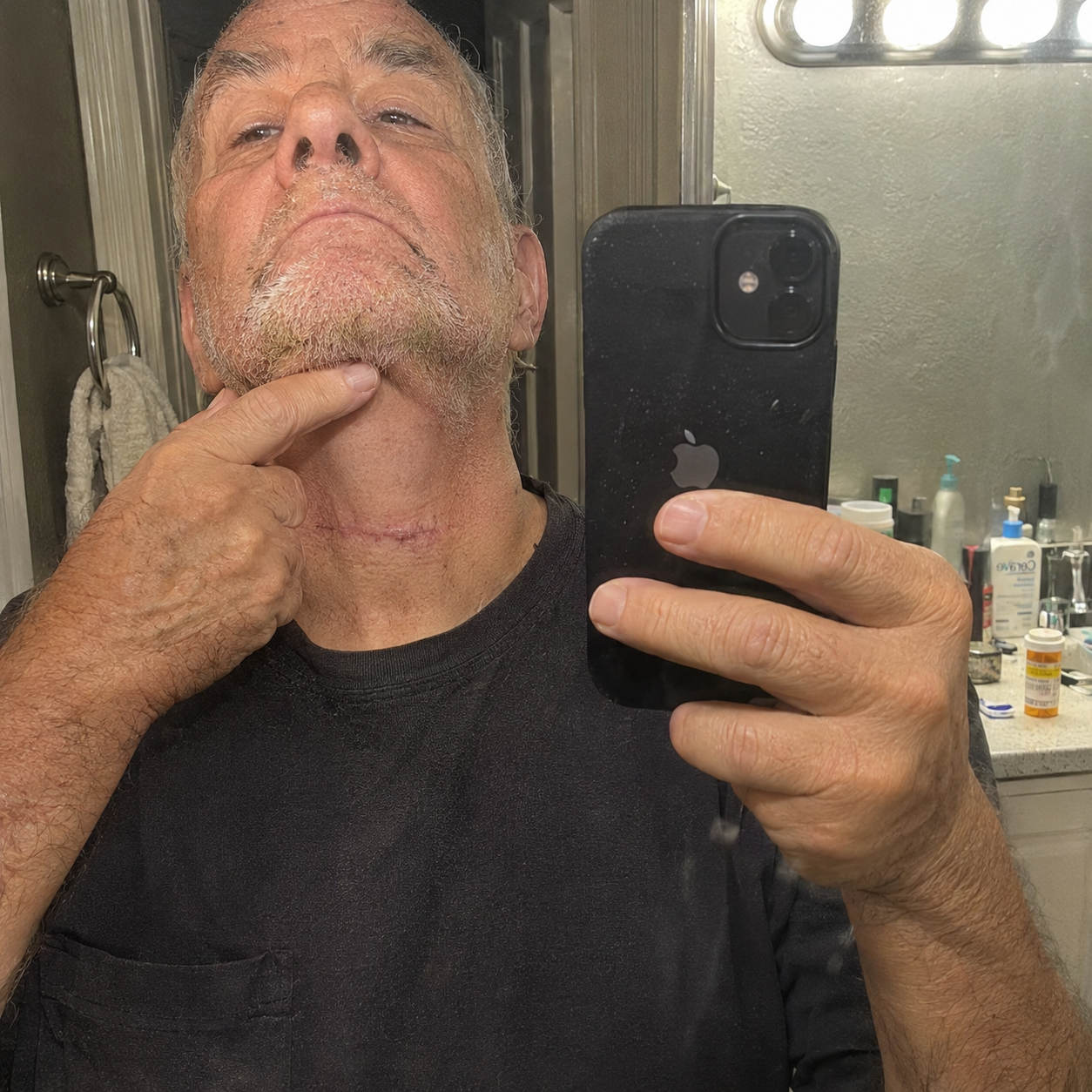
Ran for 1 day, from November 8 to November 9, 2026, the last day Crush saw it.
Run by Mike Sanders on Facebook. Crush is not the advertiser and does not verify its claims. See this ad in Meta's Ad Library(opens in a new tab)
Make your own version of this ad
Crush makes it, launches it in your own Meta ad account, scales the winners and pauses the losers.
About this ad
- Meta Ad Library ID
- 1599416384764072
- Platforms
- Facebook, Instagram, WhatsApp and Threads
- Relaunches
- 1
Ad text
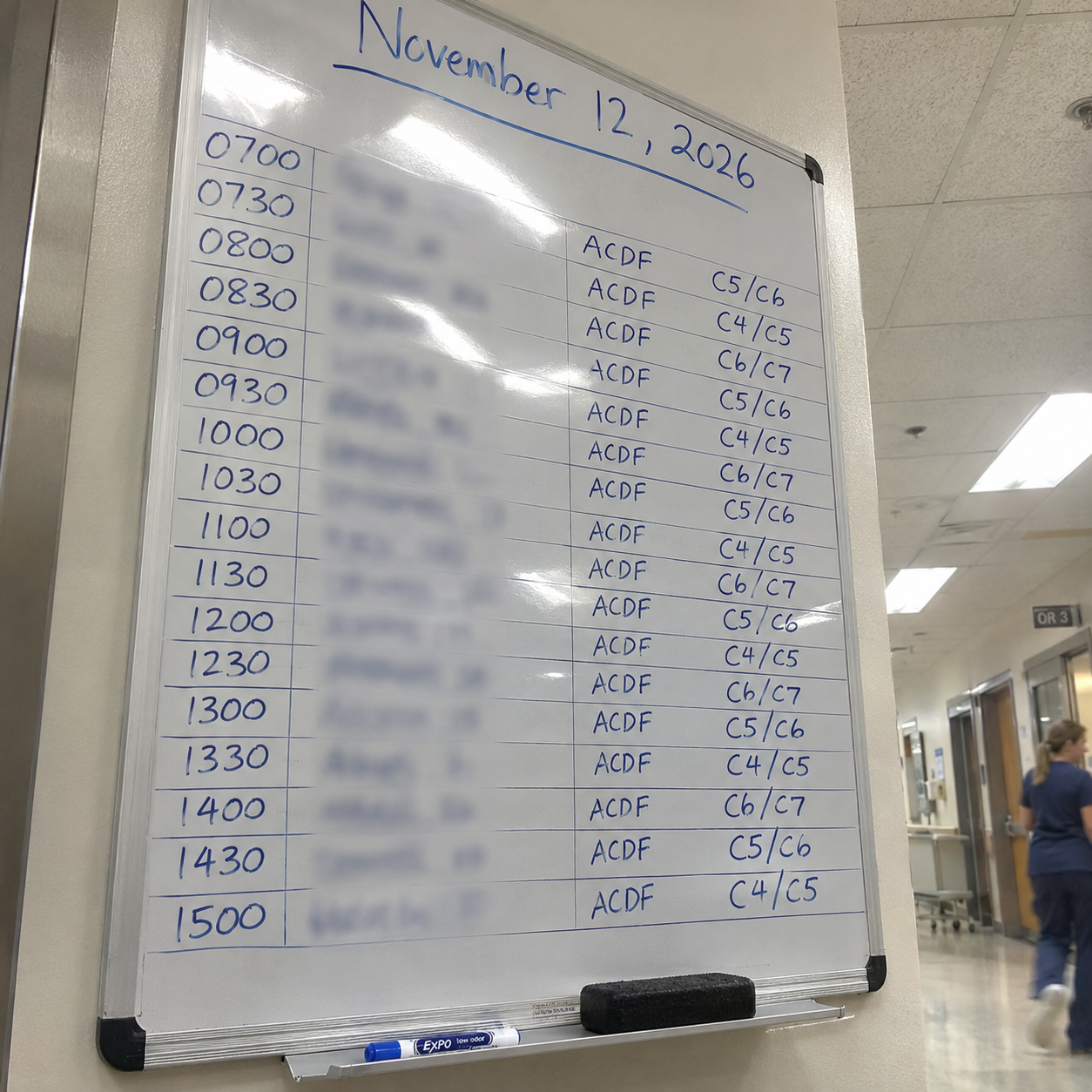
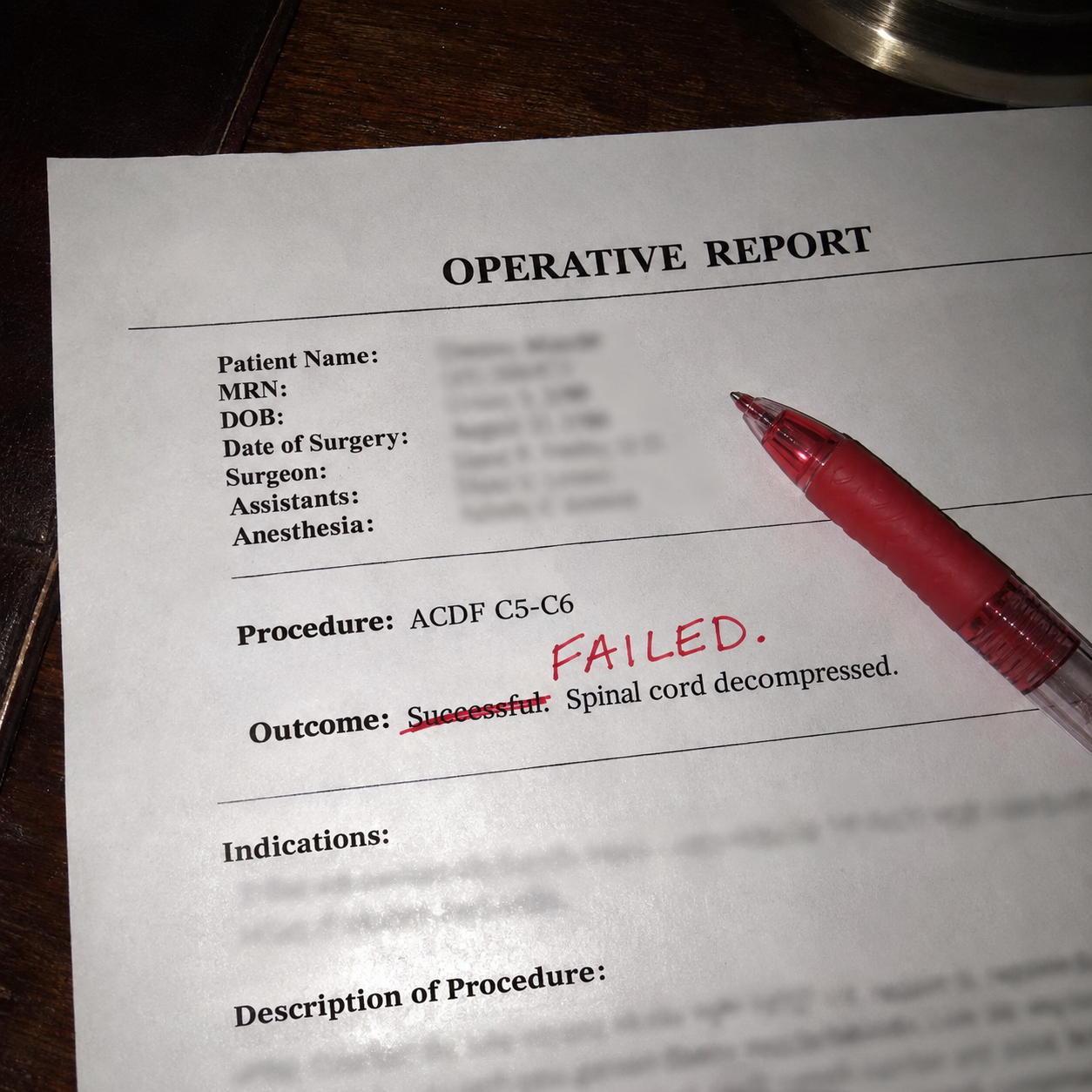
I retired as a neurosurgeon six weeks ago. 31 years at one of the largest spine centers in America. Over 2,000 neck surgeries for cervical stenosis. And I'm about to publish something that would have cost me my job at any point in the last three decades. I almost didn't do it. My wife told me to let it go. My former colleagues will call me a traitor. The hospital administration could have my pension reviewed. But I'm 64 years old. I've been carrying this for 31 years. And I've operated too many people into paralysis while keeping my mouth shut. So I'm saying it now. Every patient I operated on for cervical stenosis in 31 years had the same problem in their spine. Without exception. And not a single one of my surgeries ever fixed it. If you've been diagnosed with cervical stenosis, your doctor probably told you the same thing I told my patients. The canal in your neck is narrowing. It's compressing your spinal cord — the one cable that carries every signal to your hands, your arms, your legs. That's why the pain, the tingling, the numbness spreading through your hands and arms and legs. That's true. The canal is narrowing. That's not wrong. But it's not the whole truth. Your canal was wide enough your entire life. For decades. And now suddenly it's not? What changed? I knew the answer. For years. But in a hospital that lives off surgeries, you don't ask that question out loud. Not because the answer is complicated. But because it calls into question every single surgery we've ever performed. The problem was never a disc that needed cutting out. It was why that disc collapsed in the first place. With every single patient I had on the operating table: dehydrated discs. So flat and so dry that the vertebrae were crushing directly into the spinal cord. No cushion left. No space. The cord didn't stand a chance. And what did we do? Went through the front of their throat, pulled out the disc, and fused two vertebrae together. But the discs above and below the fusion? Still just as dry and flat as before we ever touched them. Every surgical report I signed said the same thing. ACDF successful. Spinal cord decompressed. Never what I actually knew. Never the truth. I want to tell you about a patient. And about the one time I tried to tell the truth. And what happened to me afterward. It was 2009. Fourteen years on the job. I was experienced enough to know what I was seeing. And naive enough to believe that honesty counts for something. Her name was Margaret. Margaret was 61. Elementary school teacher. For 35 years. Married, two grown sons, three grandchildren. The woman who baked the cake for every birthday and was the first to volunteer for every school field trip. When she came to my office, she could still use her hands. That's important. Remember that. She could still use her hands. Not well. Not without trouble. She'd started dropping things she used to hold without thinking. A glass of water that shattered on the kitchen floor. Her handwriting had gotten so bad she was embarrassed to write on the whiteboard in front of her class — like a first grader's, she told me. She couldn't even button her blouse in the morning without her fingers refusing to cooperate. Her husband told me she also had stopped cooking dinner. Not because she didn't want to. But because a knife had slipped out of her hand. Then a pot. Then she stopped trusting herself in the kitchen altogether. At night, she woke up at 3am with both arms dead. Shaking her hands in the dark, waiting for the feeling to come back. Her husband lay awake next to her and said nothing. Because there was nothing to say. Her primary care doctor looked at her hands and said: carpal tunnel. Gave her a wrist brace. Told her to wear it at night. Six weeks later, nothing had changed. Her hands were worse. That's when he finally ordered an MRI — not of her wrists. Of her neck. Cervical stenosis. C5-C6. Referral to the neurosurgeon. To me. I looked at her MRI. Classic presentation. Narrowed canal in the cervical spine. And I saw what I always saw, what I saw in every single surgery. The discs. Flat. Dry. No height. I knew what it meant. I knew that cutting out the disc wouldn't change a thing about why it collapsed. And I knew the ones above and below it were drying out too. But I told her what I told everyone. "We can perform an ACDF. We go through the front of the neck, remove the collapsed disc, and fuse the two vertebrae together with a spacer. That opens the canal back up and gives the spinal cord room again." Margaret asked: "And after that I can use my hands normally again?" I said: "The success rate is about 58 percent." "And the other 42 percent?" "Some stay the same. Some get worse." She was quiet. Then she said: "But without surgery it'll just keep getting worse, right?" And I said the sentence I've said hundreds of times in 31 years. The sentence that keeps me up at night today. "Without surgery, the compression continues, myelopathy sets in — and once that happens, the damage to the spinal cord is permanent." Margaret nodded. Her husband took her hand. And she said: "Then let's do it." The surgery took two hours. Went smoothly. I went through the front of her throat, removed the disc, and fused the two vertebrae together with a titanium plate. The surgical report read: ACDF successful. Spinal cord decompressed. Then came the first follow-up appointment. Margaret sat in front of me. And I saw it immediately. "The hands," she said. "It's worse than before. I could at least still hold a cup with both hands. Now it slips out no matter what I do." I said what you always say in moments like that. Nerves need time. The body heals. Patience. Three months later, Margaret came back. Her voice was hoarse. She told me she'd been having trouble swallowing since the surgery — food getting stuck, liquids going down the wrong way. Nobody had warned her about that. And her hands. Her husband was holding her purse. Opening the door for her. She couldn't grip the handle. Margaret. The woman who baked every birthday cake. Who volunteered for every field trip. Who could still button her own blouse when she first walked into my office. Now her husband was buttoning it for her. And I knew why. The disc I had cut out was gone. But the discs above and below the fusion were drying out faster now — absorbing every movement the fused level couldn't. More stress. More compression. The next discs in line to collapse. The surgery didn't fix the cause. It accelerated it. Every surgery leaves damage. And every damage makes the next surgery riskier. The cause stays. But the options shrink. And then I made the one mistake you're not allowed to make in this system. I went to the chief of surgery. I put Margaret's file on his desk. And I said what I'd been thinking for fourteen years. "Dehydrated discs. It's always been the dehydrated discs. We cut them out, but the ones above and below keep drying out. The patients come back. Margaret is in a wheelchair. We need to tell the patients what's really going on." He didn't yell at me. That would have been easier. He was calm. Matter-of-fact. Almost friendly. "You're a very good surgeon. Your surgical reports are impeccable. Your complication rate is below average." "That's not the point." "Yes. That's exactly the point. This hospital performs over 400 spinal surgeries a year. Do you know what those surgeries finance? Your salary. My salary. The nurses. The equipment. Everything." He leaned back. "If you start writing in surgical reports that the actual cause wasn't treated — then you're not questioning one surgery. You're questioning this hospital. And every hospital in this country that does the same thing." "We put Margaret in a wheelchair." "Margaret had a complicated recovery. That happens. The discs above the fusion breaking down — that's a known risk. We informed her about that." Long pause. "The true cause is a collapsing disc compressing the spinal cord. The ACDF removes the disc and decompresses the cord. That's in every textbook. That's what we do. That's what this hospital will do. Tomorrow. The day after. Next year." He stood up. "Write your reports the way you always have. You're a good surgeon. Stay one." That was the sentence that told me, in other words: Do that again, and you're done here. I could have gone to Margaret. I could have said: The surgery won't fix anything. Not the first one. Not the second one. Not the third one. But I said nothing. Because a man in an office had explained to me in a calm tone what happens if I do. After Margaret, I never spoke up again. Not once in 17 years. But I never stopped seeing it. Every week. Patient after patient. The same MRI image. The same dehydrated discs. The same narrowing. And every time I did the same thing. Went through the front of their throat, pulled out the disc, fused the vertebrae, signed the report. ACDF successful. Spinal cord decompressed. Men. Women. 50. 55. 60. 70. Some younger. All with the same symptoms in their chart. The numb hands. The weak grip. The arms that burned. The legs that stopped trusting the stairs. All with the same fear of surgery. And all of them trusted me when I said that surgery was their best option. After every surgery, I told myself: Maybe this one is one of the 58 percent. Maybe this time it actually helps. Sometimes it did. Short-term. A few months. Sometimes a year. The hands felt better. The grip came back a little. The patient was grateful. I got to feel like a good doctor. But the surgery only replaced one disc. It didn't stop the rest from drying out. And it made everything worse. The fused level couldn't move anymore — so the discs above and below it had to absorb all the movement instead. More stress. More compression. They dried out faster than they ever would have on their own. And on top of that, the damage from going through the front of their throat. The swallowing problems that lasted months. The hoarse voice. The recovery that took something out of them they never fully got back. Eventually — after six months, after a year, after two — they came back. Not with the same symptoms. With worse ones. Hands that had been numb were now completely dead. Fingers that had been clumsy couldn't close at all anymore. Arms that had been tingling couldn't lift a glass of water. And with the question in their eyes that I feared the most: "Do I need surgery again?" I started keeping a private logbook. No official document. No hospital system. A notebook. In my drawer. In it, I documented what no surgical report ever said. Date. Patient. Age. What I actually saw on the MRI. And whether they came back after surgery. When I retired six weeks ago, that notebook had over 600 entries. Over 600 patients I told that surgery was their best option. Who I didn't tell what I saw on every single MRI. What I'd known since Margaret and never said out loud again. That's what people don't understand when they think about a system like this. They imagine a big conspiracy. Secret meetings. Files being shredded. Men in suits making plans. That's not how it works. It's a conversation. In an office. One sentence. "Stay a good surgeon." And you understand. You adapt. You keep operating. You go home. Nobody orders you to lie. They just make it clear what happens if you tell the truth. And so you stop telling it. I operated on 600 patients and told each one the same thing. And then it hit the one person I never lied to. My wife. Susan. We've been married for 36 years. She's 61. Retired nurse. Spent her entire career on her feet. Raised three kids while working full-time. The woman who gets up at six in the morning and is the last one in bed at ten at night. The strongest person I know. About two years ago, it started. Not badly. Not right away. First a stiffness in her neck. She brushed it off. "I'm just getting older." Then the hands. The tingling in her fingers that crept in during the evenings. Then the grip. Her hands started going numb on the steering wheel. Shaking them out at every red light. A few weeks later, she stopped driving altogether. Then the nights. Susan slept through the night her entire life. Suddenly she was up at 3am. I'd find her in the kitchen, running her hands under warm water, waiting for the numbness to pass. I lay awake and listened. The same story hundreds of husbands and wives had told me in my office. And now it was mine. Then came the evening she stood at the front door dropping her keys over and over because her fingers couldn't feel the metal. She didn't say anything. She didn't have to. I recognized it. Of course I recognized it. I'd seen the same symptoms two thousand times. But I didn't want to believe it. What are the odds — a cervical spine surgeon's own wife gets cervical stenosis? I told her to see her primary care doctor. And I told her one thing: "Ask for an MRI of your neck. Not your wrists. Your neck." Her doctor looked at her hands and said what they always say. Probably carpal tunnel. Wanted to try a wrist brace first. Run some tests. We didn't need tests. We needed an MRI. It took three weeks to get one approved. Cervical stenosis. Narrowing of the canal at C5-C6. The orthopedist prescribed physical therapy. Twelve sessions. Susan went. Did everything. Exercises, stretches, chin tucks. After the third session, she called me. "My hands are worse. The numbness is spreading up my arms. It wasn't like this before I started." I picked her up. She couldn't grip the door handle to get into the car. Of course her hands were worse. Physical therapy for cervical stenosis. You strengthen the muscles. Stabilize the neck. Sounds logical. But when the discs are flat and the vertebrae are pressing into the spinal cord — every chin tuck, every neck exercise pushes the vertebrae closer together. More pressure on the cord. More numbness. You're tightening the vice on the very thing you're trying to save. Then injections. Cortisone. For the inflammation. I said nothing. I let her try it. Not because I thought it would work. Because I was hoping I was wrong. Because when it's your own wife, you want to believe that maybe this time, for her, it works. And because the only thing I could offer instead was a scalpel — and I wasn't going to do that to her. First injection: Three days better. Her hands felt lighter. Susan smiled at dinner. "Maybe that was all I needed." On the fourth day, everything was back. Worse than before. Second injection: Two days of relief. Then back. Third injection: One day. Then nothing. Of course not. Cortisone suppresses inflammation. But inflammation isn't the cause. The discs are the cause. They're dried out. They've lost their height. The vertebrae are collapsing into the spinal cord. No injection in the world refills a dried-out disc. You're numbing the alarm while the building is on fire. Then came the phone call I'd been dreading since the first tingling. The orthopedist recommended surgery. ACDF. Go through the front of the throat, remove the disc, fuse two vertebrae together. Exactly what I'd done 2,000 times. Susan sat at the kitchen table and looked at me. "You're a neurosurgeon. You've done this your whole life. Tell me if I should get the surgery." And for the first time in my life, I couldn't look my wife in the eyes and lie. "No." "No?" "No. No surgery." "But the orthopedist said —" "I know what the orthopedist said. I said the same thing to every patient for 31 years. And I saw what happened afterward." She was quiet. "Surgery goes through the front of your throat. They move the windpipe aside, pull out the disc, and fuse two vertebrae together with a titanium plate. But the disc isn't the problem. The disc collapsed because it dried out. And surgery doesn't put a single drop of fluid back into a single disc." "Why didn't anyone tell me that?" "Because hospitals live off surgeries. Not off explanations." Silence. "Your MRI shows one level. C5-C6. That disc has dried out so badly it's already crushing your spinal cord. That's the one they want to cut out. But it didn't dry out alone. The discs above it and below it are drying out too — right now. You just can't feel it yet because they haven't crossed the threshold." "What threshold?" "A disc dries out slowly. For years. No symptoms. No pain. Nothing on an MRI. But once it loses enough fluid, the vertebrae collapse into each other, the cord gets compressed, and the damage to your spinal cord becomes permanent. The disc that's on your MRI right now — it crossed that line years ago. The others are on their way." "And surgery?" "Surgery cuts out the one disc that's already gone. And leaves every other one to keep drying out. Only now they dry out faster — because the fused level can't move, so they absorb all the stress. That's why patients come back. That's why they need a second surgery. And a third." "So it never helps?" "It never helps permanently. It can't. Because the surgery doesn't stop the discs from drying out. You replace one disc and fuse the level — but the ones above and below it are still dying. It's like replacing one pipe in a house where the foundation is sinking." Susan sat there. The woman who spent her whole life functioning for others. The strongest person I know. And she was scared. "What do we do then?" I didn't have an answer. For the first time in 31 years, I had no scalpel, no surgical report, no textbook. Just an empty kitchen table and a question I couldn't answer. I knew what doesn't work. Injections don't. Physical therapy doesn't. Surgery doesn't. Everything I had learned, taught, and performed in 31 years — none of it addressed the cause. And the cause was so simple it hurt. A disc is like a sponge. When you're young, that sponge is plump and full of fluid. It keeps the vertebrae apart. It holds open the space your spinal cord needs to carry every signal to your hands, your arms, your legs. But through decades of daily life — the sitting at desks, the looking down at screens, the thousands of small movements your neck absorbs every single day — that sponge slowly gets compressed. Wrung out. It dries out. Gets flatter. Loses its height. The vertebrae collapse onto each other. The canal gets narrower. The spinal cord gets crushed. That's the root cause of cervical stenosis. And no scalpel, no injection, and no exercise can refill a dried-out sponge. I sat in my kitchen. Next to me, the woman who means everything to me. And I had nothing. No tool. No solution. Just the truth and no idea what to do with it. That was the moment I called David. David Mitchell. We studied together. Did our first surgeries together. Sat in the same conference rooms and believed the same textbooks. Then, twelve years ago, David did something I never understood. He stopped operating. In the middle of his career. Attending surgeon at a university hospital. Over 1,000 cervical spine surgeries under his belt. And then — done. From one day to the next. Changed specialties. Rehabilitation medicine. His colleagues thought he was crazy. So did I, if I'm being honest. You don't give up an attending position to teach rehab patients exercises. That's how I thought back then. We had barely spoken since. But that evening, after the conversation with Susan at the kitchen table, I called him. Because he was the only person who knew both sides. The scalpel and what comes after. He picked up immediately. As if he'd been waiting for that call. I told him everything. Susan. The symptoms. The physical therapy. The injections. The surgery recommendation. That I said no. That I don't have an alternative. He was quiet. Then he said something that changed everything. "You've spent your entire life in operating rooms. And in all those years, you never asked yourself the one question that matters." "What question?" "You know what the problem is. Dehydrated discs. And you know that no scalpel can refill them. You've known that since Margaret. Since 600 surgical reports. Since 31 years." "Yes." "Then the question isn't: What is the problem. The question is: How do you rehydrate a disc without cutting?" Silence. "And that's exactly the question I asked myself twelve years ago. That's why I left the operating room." "I thought you'd had enough." "I hadn't had enough. I couldn't do it anymore. I couldn't keep going through the front of people's throats knowing the cause was still there afterward. I couldn't keep signing surgical reports that said 'successful' when I knew they'd be back in a year. I didn't leave because I wanted to give up. I left because I wanted to find the answer." "And did you find it?" "Yes." I waited. "A disc is a sponge. You know that. And a sponge that's been dry for years can absorb fluid again — but only if you do three things. And this is what took me twelve years to understand." "Three things." "Deep inside your neck — over an inch beneath the surface — there are tiny muscles most doctors never even think about. Swedish researchers documented them in 1987. Found that 91 percent of cervical stenosis patients had severely dehydrated discs — and these muscles were the reason. The research was published. Then it disappeared. Buried in the back of medical journals nobody reads. Because by 1987, cervical spine surgery was already a billion-dollar industry. You don't dismantle that with a research paper." "And they're clamped around your entire cervical spine. Not around one disc. Around all of them. Squeezing. 24 hours a day. The disc on your wife's MRI — that's just the first one that gave out. The rest are being strangled the same way. They just haven't collapsed yet." "So you release the muscles." "That's step one. But I tried that for years. Manual therapy. Traction. Massage. Every method you can think of. And they all did something — on the surface. The outer muscles loosened up. Patients felt relief for an hour, maybe two. But the muscles actually strangling the discs sit over an inch deep. Nothing I tried could reach them at their full depth. The surface let go. The core of the fist never did. So the discs stayed dry. The spine stayed unstable. And the muscles clamped right back down." "A vicious cycle." "Exactly. The muscles crush the discs. The discs dry out. The spine gets more unstable. The muscles crush harder. Running 24 hours a day. In her sleep. At her desk. Right now while Susan is lying in bed with dead hands." "So how do you break it?" "Not with surgery. I need to be clear about that. Surgery cuts out one disc and fuses the level. But the fist is still squeezing every other disc. And now the fused level can't move — so the discs above and below it take all the stress. They dry out faster. They collapse faster. The surgery doesn't just fail to stop the cycle. It speeds it up." "Three therapies. Not one. Not two. All three. At the same time." "Tell me." "First — you have to make the fist let go. Deep electrical muscle stimulation. A TENS unit gets close to the idea but doesn't reach deep enough. This reaches over an inch into the neck and hits the muscles that have been clamping for years. It makes them release. The fist opens. The discs can breathe." "And then?" "Then you have a sponge that's free but still bone dry. Step two. Calibrated heat at exactly 108°F. Not a heating pad. Therapeutic heat that opens the blood vessels around the discs and floods them with blood, nutrients, fluid. The sponge can finally drink." "Why can't you skip step one?" "Pour water on a sponge that's being squeezed — it runs right off. The fist has to let go first." "And the third?" "The third is what everyone else misses. After years of being crushed and starved, the cells inside the disc — the ones whose job is to absorb nutrients and rebuild — they've gone dormant. Like roots that have been dry so long they've forgotten how to drink. You can release the muscles. You can flood the area with nutrients. But if the cells are asleep, the disc drinks for a day and dries right back out by morning." "So you wake them up." "Pulsed magnetic field therapy. It reaches the cells at the deepest level and wakes them up. So they start absorbing again. Start rebuilding again. That's how the disc stays full. That's how it holds." "And all three at the same time?" "That's the problem I spent twelve years solving. At a hospital, you get each one as a separate treatment. Three different appointments. Three different machines. And between each one, everything tightens back up. The muscles seize. The pressure comes back. The disc goes flat again. They have to happen together. In one session. Only then does the fist stay open while the sponge drinks while the roots wake up." "And something like that exists?" "I'll send you something. An article that explains everything. Better than I can over the phone." Ten minutes later, the link arrived. I read the article three times. At my kitchen table. Susan was already asleep. And for the first time in 31 years, I felt like there was an answer that doesn't require going through the front of someone's throat. The article described a device that combines all three therapies in a single session. 15 minutes. At home. Every day. They called it the Orthoveen. At the end of the article, there was a link. I clicked it and ordered that same night. Susan used it the first evening. 15 minutes. Afterward, she said: "That was pleasant." Nothing more. First week: Every evening. 15 minutes. No difference. Her fingers still tingled. She still couldn't feel the key in her hand. She still ran warm water over her hands at 3am. I said nothing. But I was doubting. Not David. Myself. The hope I had allowed myself to feel. On the seventh evening, Susan said: "Is this even doing anything?" I said: "Give it four weeks. If nothing changes, we send it back." She kept going. Second week: Susan slept through the night. For the first time in months. No dead hands. No headache at the base of her skull dragging her out of sleep. I woke up at five and she was still next to me. Breathing. Still. I thought it was a coincidence. Then another night. And another. Third week: I heard the front door. Walked into the hallway. Susan was standing there — key in the lock, turned it on the first try. She looked at me. "My fingers felt it." Two words. My fingers felt it. I had to turn around. Fourth week: Susan picked up her earrings from the vanity. Put them in. Both sides. Didn't drop a single back. She didn't even mention it. I watched from the doorway and said nothing. Sixth week: I came home and Susan wasn't there. Her car was gone. She'd driven to the store. By herself. First time in months. She walked in the door carrying grocery bags in both hands and said: "We were out of milk." As if it was nothing. As if she hadn't stopped driving because her hands went dead on the steering wheel. As if she hadn't spent months being driven everywhere like a passenger in her own life. I sat at the kitchen table and thought about Margaret. About the 600 names in my notebook. About everyone who had the same symptoms as Susan. And who I gave a scalpel when they needed this. I've been retired for six weeks. I don't operate anymore. I don't sign surgical reports anymore. I don't tell anyone that surgery is their best option anymore. But I think about it every day. About Margaret. About the 600 names in my notebook. About Susan. How close she came. The only difference between Susan and Margaret was that Susan had a husband who had watched for 31 years what surgery does to people. Most people don't have that. That's why I'm saying it now. If you can't trust your own hands right now. If you're lying awake at 3am with dead arms and a headache that starts at the base of your skull. If a doctor has maybe already told you: "Without surgery, myelopathy sets in and the damage becomes permanent." If your doctor is telling you the cord will be permanently damaged without surgery — but you've heard what happens to people who get the surgery too. Then look into disc dehydration. Read the article David sent me. The same one I read three times at my kitchen table while Susan was sleeping. https://orthoveen.com/pages/ttd-cervicalstenosis-1 When the discs get their fluid back, the spinal cord has its space. You can always still get the surgery. The surgeons will still be there tomorrow. But now you know what they're not telling you.
Where the ad sends people
orthoveen.com
What Neurosurgeons WON'T Tell You!
Just 15 minutes a day can break the cycle.
Learn more: orthoveen.com(opens in a new tab)