Hormonal Harmony
Hormonal Harmony Facebook ad: “The FDA ERASED Women From Drug Trials, Until 1993”
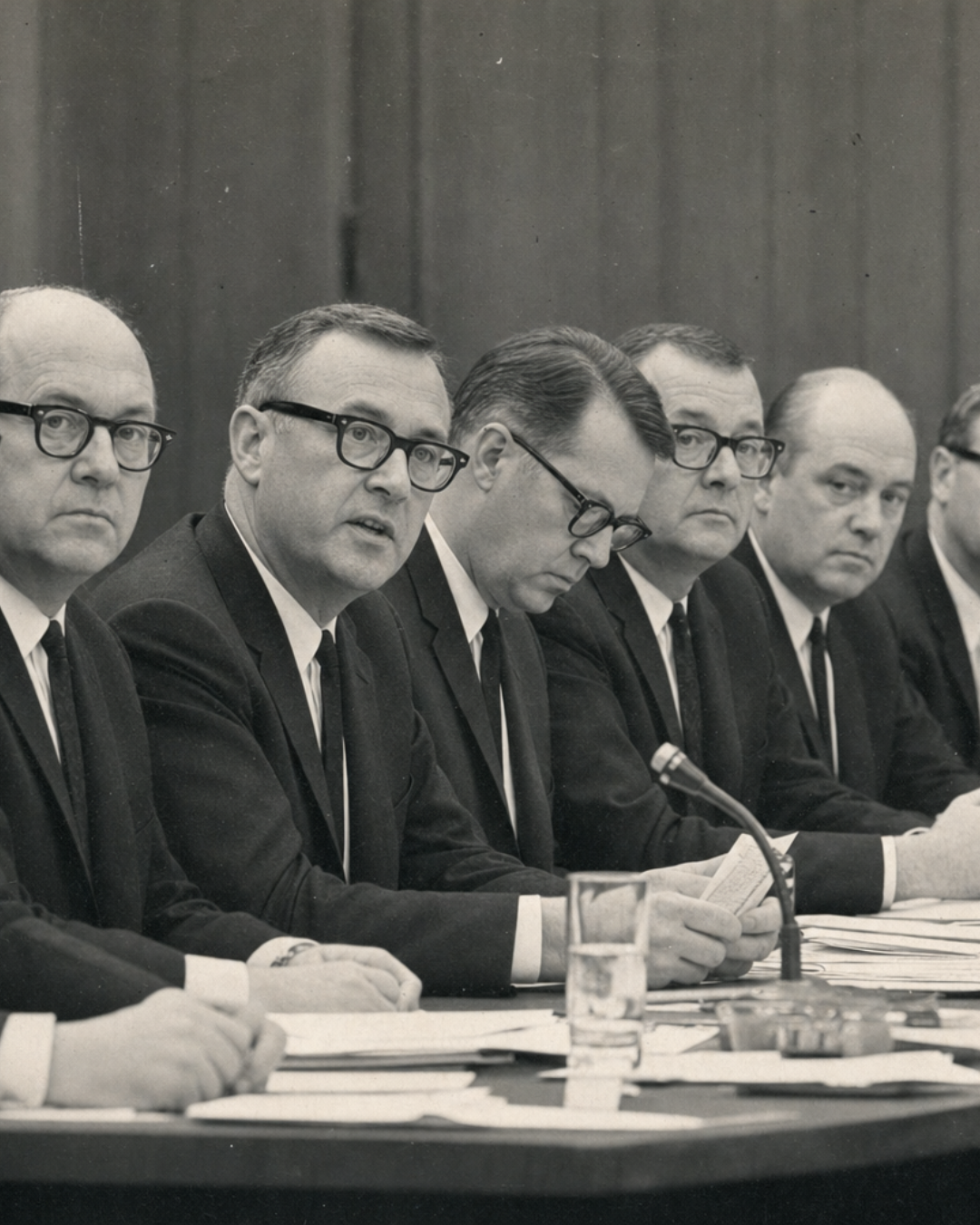
Ran for 19 days, from August 31 to September 19, 2026, the last day Crush saw it.
Run by Hormonal Harmony on Facebook. Crush is not the advertiser and does not verify its claims. See this ad in Meta's Ad Library(opens in a new tab)
Want an ad like this for your product?
Crush makes new ad images for your product from this ad: your logo, your product photo, your offer.
Trials from $19.95 USD, then $79.95 USD a month. Cancel anytime.
About this ad
- Meta Ad Library ID
- 1599850308385374
- Platforms
- Facebook, Instagram, Messenger and Threads
- Relaunches
- 0
Ad text
In 1977, the FDA issued a guideline that quietly removed most women from American medical research. It stayed in place for 16 years. 📋 Not a conspiracy. Not a rumor. A published federal guideline, reversed in 1993, that you can look up in about ninety seconds. And almost no woman alive today has ever been told about it. Here's what it meant in practice. After the thalidomide disaster of the 1950s, regulators decided the safest thing to do was keep women of childbearing potential out of early drug trials entirely. The intention was protective. The result was not. Because "women of childbearing potential" didn't just mean pregnant women. It was applied to single women. Women on birth control. Women whose husbands had had vasectomies. Effectively every woman between roughly 15 and 49. So for sixteen years, the foundational research on how the human body works — how it absorbs, metabolizes, and uses what you put into it — was done almost entirely on men. 👨🔬 Male bodies became the default. Everyone else got treated as a smaller version of the same thing. In 1993, Congress passed the NIH Revitalization Act and the FDA reversed the 1977 guidance. Inclusion of women in research became federal law for the first time. ⚖️ That was 33 years ago. And we already know it wasn't harmless. In 2013, the FDA ordered manufacturers of one of the most widely prescribed sleep medications in America to cut the recommended dose for women in half. 💊 From 10mg to 5mg. The reason: women clear the drug more slowly than men. Average blood levels run roughly 50% higher — independent of body weight. Millions of women had been taking a dose calibrated on male metabolism, waking up impaired, and being told that was normal. The drug was approved in 1992. One year before women were required to be in the research. 📅 That's one medication. One case where somebody eventually went back and checked. Now ask the obvious question: how many other things about the female body were simply never studied, because for sixteen critical years there was nobody in the room to study? 🤔 Here's what a female body does that a male body doesn't. It builds a uterine lining every month and sheds it. It loses iron every cycle — meaningfully more than a man loses in a year. It runs an ovulation cycle that demands selenium, zinc, and B vitamins on a schedule. It can build an entire human being from its own mineral stores. It goes through postpartum. It goes through perimenopause. Every one of those is a nutritional demand. Not an inconvenience — a demand for raw material. 🩸 And the research that would have mapped those demands precisely? It arrived late, underfunded, and largely after the fact. So the answer women got was the same answer everyone got. A multivitamin. 💊 Synthetic isolates, dosed against reference values that were largely established on male physiology, in forms the body absorbs poorly. Millions of women take one every morning, do everything else right, and still feel like something isn't landing. But there was an older answer — and it's far more mainstream than you'd think. Here's a fact that sounds made up. Every foundational hormone medication ever written for a woman started inside an animal organ. 🫀 Not as a metaphor. As the literal origin of the field. 🔬 1891 — sheep thyroid. Dr. George Murray injects an extract of sheep thyroid gland into a 46-year-old woman dying of myxoedema. She recovers. She lives another 28 years. It is the first successful organ therapy in recorded medicine — and the birth of endocrinology as a discipline. His own colleagues mocked him for it. 🔬 1900s — pig thyroid, dried and pressed into a pill. Armour, the meatpacking company, begins drying and grinding whole pig thyroid glands into tablets. For the next 60 years, that is the only effective treatment for hypothyroidism on Earth. 🐖 🔬 1922 — calf pancreas. Banting and Best extract a substance from the pancreas of a calf. They name it insulin. 💉 🔬 1929 — pig ovaries. George Corner and Willard Allen collect ovaries from a slaughterhouse, dissect out the corpora lutea, and extract a compound that sustains pregnancy. In 1934, Adolf Butenandt isolates it in crystalline form from pregnant sows. The name they settle on: progesterone. Butenandt takes the Nobel Prize in 1939. 🏅 🔬 1942 — horses. The FDA approves the first estrogen replacement therapy in America. It is made from the urine of pregnant mares. For more than fifty years it is the most prescribed estrogen in the United States — and for part of that run, the single top-selling prescription drug in the entire country. 🐎 Read that list again. Thyroid. Insulin. Progesterone. Estrogen. Four pillars of hormonal medicine for women. Every one of them pulled out of an animal. Most of them out of an animal organ. 🫀 And now the part that should stop you cold: it never actually stopped. Desiccated pig thyroid is still an FDA-regulated prescription medication today. Whole pig thyroid gland — dried, powdered, standardized to USP spec, pressed into a tablet. Doctors write prescriptions for it every single day of the week. ✅ So let's retire the idea that a dried animal organ is alternative medicine. It's been sitting on the pharmacy shelf for 125 years. 💊 Which raises the real question — where did the rest of the organ go? This part isn't a conspiracy. It's arithmetic. 📝 You cannot patent a pig ovary. You can patent the single molecule you pull out of one. So that's what the industry did. Isolate one compound per organ. Standardize it. Patent it. Sell it at a margin. And everything else in that organ — the dozens of other compounds sitting directly beside the one they came for — got discarded. Not because someone tested it and found it worthless. Because there was never any money in asking the question. 💰 Meanwhile the same principle was running quietly in every kitchen on the planet, long before anyone thought to patent it. 🌍 Egypt, 1550 BC — the Ebers Papyrus documents organ preparations used therapeutically. 🌍 Greece — Hippocrates prescribed liver. 🌍 China — the Yellow Emperor's classic prescribed liver for vitality, kidney for resilience. 🌍 The Maasai, Inuit, and Hadza — still eat the organs first. Before the muscle meat. 🌍 Your great-grandmother — served liver and onions on a Sunday and never needed a citation for it. Every culture on Earth landed on the same answer independently. That isn't coincidence. That's a species working out what its own body runs on. ✅ Then, in 1910, the Flexner Report reorganized American medical education around what could be standardized, isolated, and patented. Whole-food and organ-based practice was written off as unscientific. Within a generation it was gone from the curriculum, then the cookbooks, then the dinner table. 📖 Not because it stopped working. Because you can't patent a liver. And no mysticism is required to explain why organs matter. The case is nutrient density and bioavailability, and both are measurable. 🔬 A 2007 analysis in the Journal of Nutrition scored 25 food categories by nutrient density. Organ meats came out at the top — ahead of kale, ahead of berries, ahead of salmon. 🥬 Then there's the absorption gap, which almost nobody talks about. Iron in plants is non-heme iron. Iron in organs is heme iron. Research generally puts non-heme absorption in the low single digits, while heme iron absorbs several times more efficiently — and unlike plant iron, it isn't blocked by the tannins in your morning coffee or the phytates in your oats. 🩸 Which means a woman can eat spinach every day, take her supplement every day, and still be running her cycle on a fraction of the raw material she's actually consuming. More food than any generation in history. Less of it reaching the tissue. 📉 So why not just eat them? Fair question. Three real problems. 🚨 You can't find them. Most supermarkets don't stock organ meats at all. The ones that do are stocking frozen, feedlot-sourced product. And no supermarket in America is selling you ovaries. You can't stomach them daily. Liver and onions once a month is one thing. Kidney, spleen, and heart every single morning is a different proposition for most people. 🤢 Cooking costs you part of it. High heat degrades some of the most fragile compounds in organ tissue. You'll still get minerals. You won't get everything. That's the gap. Not a knowledge problem — a logistics problem. And it's exactly what low-temperature freeze-drying was built to solve. 🧊 Which is where Shelby comes in. She founded Primal Queen after going looking for a women's organ supplement and finding that one didn't exist. ✨ Every organ blend on the market was built the same way the research was: on a male template. Liver, heart, kidney. Useful — but nothing addressing the organs that actually run female biology. So she made the one that does. Six organs, freeze-dried at low temperature, in two flavorless capsules a day. ✅ Beef Liver — 4.2x more Vitamin A than lettuce. Skin, blood flow, hormone support. ✅ Beef Kidney — 3.4x more iron than kale. Heme iron, in the form the body actually recognizes. ✅ Beef Heart — 14,000x more CoQ10 than cauliflower. Cellular energy support. ✅ Beef Ovaries — 2.2x more selenium than oats. Cycle support. ✅ Beef Uterus — 100x more B12 than spinach. Mood and energy support. ✅ Beef Fallopian Tubes — 11.25x more zinc than broccoli. Egg quality and inflammation support. The last three don't exist in any other organ supplement on the market. 🎯 Grass-fed, pasture-raised cattle from Argentina. Made in the USA. No fillers. No flow agents. No synthetic isolates. Just whole organs — the way women ate them for two million years, minus the raw kidney at breakfast. 💧 Primal Queen also ran a randomized, triple-blind, placebo-controlled trial in 100 women. 🔬 That's the standard the 1977 guideline kept women out of for sixteen years — and it's the standard almost no supplement brand bothers to meet. What women say, in their own words: 💬 "Three months in and I'm a believer. Nothing crazy, just… better." 💬 "I feel more even. More myself." 💬 "I feel like I'm doing carnivore right." Nobody's promising a transformation. Biology rebuilds on its own schedule — think in months, not mornings. What we can tell you is that when a body finally gets the raw material it's been asking for, it tends to use it. 🌱 Nobody set out to leave women out. But that's what happened, it lasted sixteen years, and the consequences didn't stop in 1993. They're still sitting in the reference values, the dosing, and the beige multivitamin in your cabinet. You don't have to keep waiting for the research to catch up. ⏳ Hormones don't need to be forced. They need to be fed. 🔗Get your first month free. 365-day money-back guarantee. 👇 Built for the body medicine left out of the room.
Where the ad sends people
primalqueen.com
The FDA ERASED Women From Drug Trials — Until 1993
Premium female-focused beef organ superfoods to boost energy, hormone balance & wellness. 100% grass-fed and nutrient dense. Order now for vibrant health!
Learn more: primalqueen.com(opens in a new tab)