John Haremza
John Haremza Facebook ad: “The Power of Influence”
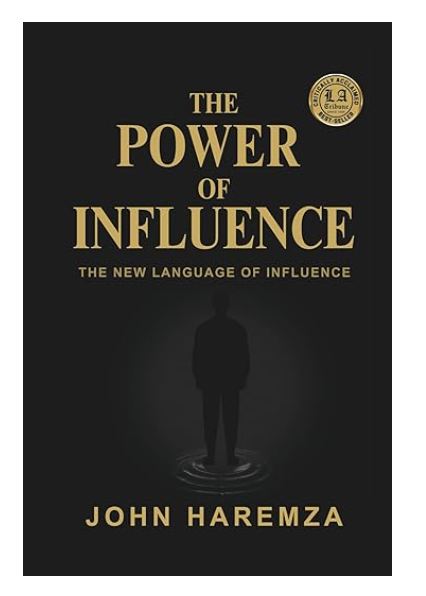
Ran for 17 days, from January 13 to January 30, 2026, the last day Crush saw it.
Run by John Haremza on Facebook. Crush is not the advertiser and does not verify its claims. See this ad in Meta's Ad Library(opens in a new tab)
Want an ad like this for your product?
Crush makes new ad images for your product from this ad: your logo, your product photo, your offer.
Trials from $19.95 USD, then $79.95 USD a month. Cancel anytime.
About this ad
- Meta Ad Library ID
- 1600216847640703
- Platforms
- Facebook and Audience Network
- Relaunches
- 1
- Niche
- Parenting & Kids
Ad text
IN 2026 INFLUENCE is the KEY to your SUCCESS. FREE read Chapter 8 in "THE POWER OF INFLUENCE". Buy your Copy today: https://a.co/d/fAkGlxy 👇Read Chapter 8: The Art of Storytelling Storytelling is one of the oldest and most powerful tools of influence. Long before research, charts, or data, people learned through stories. They passed down wisdom not by instruction, but by emotion. By what the story made them feel. When I think about storytelling, I often go back to kindergarten’s show and tell. Every kid brought something from home. Maybe a toy, a rock, a photo, and told a story about it. Nobody cared if the story was polished; what mattered was that it was real. We don’t outgrow that. People still want you to show something true about your life and tell why it matters. The best communicators never stopped doing show and tell. They just learned to do it with purpose. The art of storytelling is one of the highest-paid skills you’ll ever learn. Not only financially, but emotionally. It’s the skill that changes how others think, feel, and act. Because how you tell the story is just as important as the story itself. Imagine this: you come home, see your spouse, and say, “Honey, when I look at you, the hands of time stand still.” Or… you walk in and say, “Honey, when I look at you, you have a face that could stop a clock.” Same intention. Completely different impact. That’s the essence of storytelling. It’s not just what you say, but how you say it. Logic makes people think; stories make people care. Why Stories Matter If you want to move someone to action, facts alone aren’t enough. Emotion is the glue that connects information to the human heart. When someone feels your story, they’ll remember it long after the data fades. Stories engage both sides of the brain: logic and imagination. They help people see themselves inside your message. The right story doesn’t just describe something. It invites your audience to live it. One of the most powerful examples of storytelling comes from the book “The 7 Habits of Highly Effective People” by Stephen Covey. He tells the story of a father riding the subway late one evening with his two young children. The atmosphere in the car was quiet, until the children began acting out. They were loud, restless, and disruptive, knocking into seats, arguing, and ignoring every unspoken rule of public space. As the minutes passed, the tension grew. You could feel the irritation ripple through the car. Passengers exchanged looks of disbelief, some shaking their heads, others muttering under their breath. Everyone seemed to be asking the same silent question: What kind of parent just sits there and does nothing? The father sat motionless, staring blankly at the floor, almost as if he wasn’t even there. His face was expressionless, his eyes distant. It was as though he was trapped in a fog, completely unaware of the commotion around him. Finally, one passenger couldn’t take it any longer. With a strained mix of frustration and forced politeness, they said, “Sir, your children are really disturbing people. Could you please get them under control?” The man blinked, slowly lifting his head as if waking from a trance. His voice was soft, almost broken. “Oh… I’m sorry,” he said quietly. “We just came from the hospital. Their mother died an hour ago.” In that instant, everything changed. The irritation that had filled the car evaporated. Silence swept through the space; heavy, compassionate, human. No one saw unruly children anymore; they saw two little hearts trying to cope with something they couldn’t understand. No one saw an indifferent father; they saw a man completely shattered, doing the best he could to survive a pain beyond words. Even retelling that story still moves me because it reveals something profound about human nature: we so often react to what we see, not realizing there’s a story behind it we don’t yet know. Nothing changed in that scene. Only perception did. That’s the power of story. It doesn’t just inform, it transforms. It reminds us that empathy begins, where assumption ends. How to Structure a Story Every story that influences follows a similar rhythm, a natural arc that draws people in, holds their attention, and leaves them changed. Whether it’s a personal story, a business story, or a teaching moment, the structure remains timeless. The Beginning: The Setup Introduce a relatable situation or challenge. Help your listener see themselves in the moment. Create context: where you were, what you were feeling, and why it mattered. The beginning’s goal is simple: connection. If they can see themselves in your starting point, they’ll follow you through the rest. The Middle: The Struggle Describe the tension, the obstacle, or the lesson unfolding. This is where vulnerability makes you human. Let people feel your uncertainty, your mistakes, your emotions. People don’t connect to perfection; they connect to authenticity. The middle of your story is where transformation begins to take shape. The End: The Resolution Reveal what changed. What insight or truth emerged? What decision shifted your direction or perspective? The human brain craves completion, and when you close with purpose, people don’t just hear your story; they carry it. Learning from Hollywood You can learn everything you need to know about storytelling by watching a good Hollywood movie. Every great film follows the same emotional blueprint as every great speech, presentation, or personal story. Think about it. Movies always start with a connection. You meet the main character, understand their world, and begin to care about them. That’s your setup. Then comes conflict. Something happens that challenges them, forces them to grow, or pushes them to the edge. That’s the struggle. And finally, resolution. They overcome, evolve, or see the world differently. That’s the transformation. When we watch a movie, we’re not just entertained. We’re emotionally trained. We learn the rhythm of tension and release, of setback and comeback. Every good film leaves you with something: a lesson, a feeling, or a truth you didn’t have before. That’s exactly what great storytelling does in leadership, business, or life. You’re guiding your listener through a mini movie of emotion and meaning. If you can make them, feel the rise, the fall, the breakthrough, your message will stay with them long after you’ve finished speaking. When I watch movies, I do it differently now. I listen to how the story makes me feel. I notice when the emotion shifts, when tension peaks, when hope flickers back in, when the music drops right before the hero makes a choice. Those are the moments that make stories unforgettable. So, study them. Every scene is a masterclass in communication. Every line of dialogue reveals something about human nature. Every pause teaches timing. Whether you’re sitting in a theater or standing on a stage, the goal is the same: to make your audience see themselves in your story. One of the best examples of storytelling that teaches deep life lessons comes from the movie Forrest Gump. The film is filled with stories that reflect perseverance, innocence, love, and destiny, but one of the most powerful is the relationship between Forrest and Lieutenant Dan. Early in the movie, Lieutenant Dan Taylor is introduced as a proud, tough-as-nails platoon leader from a long line of soldiers who had all died honorably in battle. It’s his destiny, his family legacy, and he carries that identity like armor. When Forrest arrives in Vietnam and joins his unit, Lieutenant Dan is stern and commanding. He lives by the rules of war and believes he knows exactly how his story is supposed to end. Then the ambush happens. Chaos erupts in the jungle. Bullets and explosions tear through the trees. Forrest, in his childlike loyalty and courage, runs back into the gunfire. Not once, but over and over, pulling wounded soldiers to safety. Each time he goes back, someone yells at him to leave, but he keeps running until everyone he can find is out of danger. Finally, Forrest finds Lieutenant Dan, badly wounded, his legs destroyed. Dan screams at Forrest to leave him, furious that Forrest won’t let him die in what he sees as his “destined” death, his honorable ending, the way all the men in his family had gone. Forrest ignores him, hoists him on his shoulders, and carries him out of the jungle to safety. That act of saving Dan’s life becomes the emotional turning point of the film. On the surface, it’s a story about bravery. But underneath, it’s a story about purpose, identity, and resentment. Lieutenant Dan survives, but feels cheated. In his mind, Forrest robbed him of his destiny. The man who was supposed to die a hero now lives without his legs, consumed by anger, self-pity, and loss of meaning. Forrest, meanwhile, continues to live simply, guided by love and instinct rather than pride. Over the years, as Forrest builds a shrimp business and continues to find purpose, Lieutenant Dan reappears: bitter, broken, and angry at the world. But through Forrest’s quiet consistency and unconditional friendship, Dan slowly begins to heal. He eventually joins Forrest in his new venture, invests in his company, and most importantly, finds peace within himself. There’s a powerful moment later when Lieutenant Dan, now with prosthetic legs, thanks Forrest for saving his life. Not just in Vietnam, but afterward, when he couldn’t see a reason to live. He finally says, “I never thanked you for saving my life.” Forrest’s simple remark was “He actually never said so, but I think he made his peace with God.” That single story carries a lifetime of lessons: for business, for leadership, and for influence. It teaches that true leadership isn’t about control, ego, or legacy. It’s about impact. Forrest didn’t save Dan for recognition; he did it out of care. And over time, that act of selfless influence transformed Dan’s entire worldview. In life and in business, we often meet people like Lieutenant Dan, who’s stuck in an old story about who they’re supposed to be, unable to see what they can become. The role of influence is not to argue or convince, but to help them see themselves differently. Sometimes, like Forrest, you lead simply by example through action, through compassion, through consistency. That’s what great storytelling does. It doesn’t just entertain. It awakens. It reminds people that even when life changes the plan, The story isn’t over. Types of Stories to Tell There are many kinds of stories you can tell, but the ones that truly influence are those that connect emotionally, teach through experience, and invite others to see a piece of themselves within the story. Here are three types of stories that consistently create lasting impact: Metaphorical Stories These are the simple analogies or parables that carry timeless truths through imagery. They can come from movies, books, or everyday life. Earlier, we looked at Forrest Gump and the story of Lieutenant Dan, a metaphor for transformation, purpose, and perspective. That story isn’t just entertainment; it’s a masterclass in leadership, ego, and resilience. Metaphorical stories are powerful because they allow people to experience emotion without feeling personally confronted. They slip past resistance and open hearts before minds. If you tell them well, your audience will often come to their own realization before you ever have to make your point. If you don’t have a story of your own yet, that’s okay. You can borrow stories from others: books, movies, mentors, or historical examples. What matters most isn’t ownership; it’s application. Make the story relevant to your audience and connect it to the lesson you want them to remember. Client or Team Stories These are the stories that showcase transformation in others. When you share how someone overcame a challenge, learned something new, or reached a breakthrough, your audience can see what’s possible for them. Just be mindful to share these stories with integrity and respect. Protect privacy and keep the spotlight on the lesson, not the person. The goal is not to impress people with success stories, but to inspire belief that growth and change are possible for anyone willing to act. Personal Stories Your personal story will always be your most authentic and powerful tool. These are the stories that humanize you. The moments of struggle that led to growth, the lessons that shaped who you’ve become. Although I don’t know if we’re born with confidence or without it, I do know that for much of my early life, I carried a story in my head that I wasn’t good enough. I remember overhearing my dad once say that I was “slow,” “dumb,” and “stupid.” Those words stuck to me like glue. They became the lens through which I saw myself. That belief was reinforced throughout school, from kindergarten to high school, where I often felt left behind. I remember vividly not getting my gold star because I couldn’t spell my name, and the shame that followed me from classroom to classroom. By the time I graduated, my self-esteem was almost nonexistent. Then life took me into the factory. I worked in maintenance, welding, building, repairing equipment, and for the first time, I started hearing positive feedback. My supervisors told me I was good at what I did. Slowly, that validation began to rebuild something inside me. It wasn’t full confidence yet, but it was a start. Then came the introduction to a home-based business and with it, personal development. That world changed everything. I began hearing relatable stories from others who had struggled, failed, and risen again. I realized that maybe my past didn’t have to define me. I could rewrite my story. The real turning point came when I was chosen to speak at a large business event in Dallas, Texas, an audience of 5,000 people. I was terrified. Public speaking had always been my worst fear. I prepared by handwriting notes on recipe cards, my personal safety net. However, just as I stepped up to the podium, they got completely out of order. For a moment, panic took over. My heart raced, my hands trembled. Then, instinctively, I paused. What felt like the longest pause of my life turned into one of the most powerful. Instead of reading my notes, I just started telling my story. The truth about growing up with dyslexia, being teased for reading out loud, the frustration my parents and teachers felt, and how that carried into adulthood until this business helped me believe I could do more, be more, and have more. As I spoke, you could’ve heard a pin drop. When I finished, people came up to me in tears. Many of them said, “I have dyslexia too,” or “I stutter,” or “I’ve always been terrified of speaking.” They told me my story gave them courage. That day, I learned something life-changing: The very story I once tried to hide out of shame was the one that helped others heal. What I thought was my weakness became my greatest tool for connection. That moment didn’t just shift my career. It shifted my identity. People don’t follow perfection; they follow authentic progress. Your story, when told with honesty and emotion, permits others to believe in themselves. When you use stories, whether your own, someone else’s, or a metaphor, you’re not just sharing information. You’re offering transformation. You’re building a bridge between where people are and where they could be. Stories make ideas real. They make values visible. And when you tell them from the heart, they don’t just inform. They influence. Practicing Delivery Your story doesn’t need to be perfect. It just needs to be real. Rehearse enough to be confident, but never so much that it feels robotic. Record yourself. Refine your pacing, and pay attention to your tone. The goal isn’t to memorize words. It’s to relive emotion. When you tell your story, People don’t just listen to what you say. They feel what you feel. If you’re simply reciting a script, they’ll tune out. But if you’re reliving the moment, if your voice trembles slightly at the same point it did when you first lived that pain or joy, your audience will lean in. They’ll feel it with you. Get your story down cold, so you can deliver it hot. When you know your story so well that it’s a part of you, not words on paper, but muscle memory you free yourself to speak from the heart, instead of from notes. You don’t have to think about what to say; you can focus on how to connect. Storytelling isn’t a performance. It’s a transmission. You’re transferring energy, emotion, and belief. And that energy has to feel alive in you before it can come alive in others. Think of it like music. When a musician knows a song cold. They can close their eyes and feel every note. They can speed up, slow down, whisper, pause because they’re not trapped in the sheet music anymore. That’s how your story should be. Once you’ve practiced it enough to own it, you can let go of perfection and trust your presence. When you step in front of a group or even sit across from one person, remember this: Your story isn’t about impressing people; it’s about impacting them. The best storytellers aren’t actors. They’re feelers. They draw you in not with polish, but with honesty. If you get emotional telling your story, that’s not weakness. It’s strength. People remember emotion far longer than information. That moment your voice cracks, your eyes well up, or you pause to collect yourself, that’s the human truth they’ll never forget. You don’t have to tell it the same way every time, either. Stories evolve as you do. Each time you tell it, it breathes differently. Depending on what season of life you’re in, what lesson stands out most, and what audience you’re sharing it with. Sometimes the lesson shifts. Sometimes the meaning deepens. Sometimes you realize that what you thought was an ending was really just the beginning. Practice isn’t about polishing away emotion. It’s about finding the rhythm that lets emotion move through you naturally. Here are a few practical ways to sharpen your delivery while keeping it alive: • Record yourself. Watch how you come across, not to criticize, but to connect with your body language, pacing, and tone. Do you sound genuine? Would you believe you? • Practice in front of a mirror or a friend. Notice their reactions. Are they feeling what you’re saying? Are they leaning in, nodding, or smiling? Their body language tells you what’s working. • Play with pacing. Don’t rush your story. Let your pauses breathe. The most powerful words you’ll ever say are often the ones you let hang in the air. • Rehearse the emotions, not just the words. Feel the moments. Relive the turning points. The audience will pick up on that energy instantly The secret to great storytelling is emotional congruence: your tone, expression, and presence matching the truth of your message. When you’re calm, they’re calm. When you’re inspired, they rise with you. When you’re vulnerable, they soften. So, practice not just to perform; but to prepare your heart. You’re not trying to get the words perfect; you’re trying to make them real again. When your story becomes part of your soul, your words don’t just reach people’s ears. They reach their spirit. That’s what true influence is: not when people remember your story, but when they feel your story, on their own. The Courage to Tell Your Story Sharing your story takes tremendous courage. It’s not just about finding the words. It’s about finding the strength to let others see who you really are. Influence isn’t built by pretending to have it all together; it’s built by having the courage to be real. The truth is, people don’t connect with perfection. They connect with humanity. They’re not moved by polished success; they’re moved by honest struggle. When you tell your story authentically, you invite others to drop their guard. You permit them to be honest, too. That’s influence at its highest form. Not control, but connection. We all carry moments of pain, regret, or fear. Parts of our past that whisper, “If people really knew this about me, they’d think less of me.” But that voice is a lie. Shame thrives in secrecy but it dissolves when we share it. The moment you bring your story into the light; shame begins to lose its power. Vulnerability becomes strength. What once felt like a burden becomes a bridge. And that’s the paradox of influence: the more open you are about your weaknesses, the stronger your credibility becomes. People trust those who are real, not those who are flawless. When you share your truth, others don’t see your failure. They see their reflection. They think, “If they can overcome that, maybe I can too.” That’s why vulnerability is not the opposite of influence. It’s the engine of it. It builds empathy, trust, and authenticity. It makes your message believable because it’s lived, not rehearsed. Telling your story requires more than confidence. It requires courage. The courage to revisit what hurt you, to face what shaped you, and to speak what still stirs your heart. It also requires compassion for yourself and for others. Recognize your triggers and your struggles, not to hide from them, but to understand how they’ve refined you. Each one has taught you something about resilience, about patience, about grace. And, those are the very qualities that give your story power. Every scar tells a story. Scars aren’t signs of weakness; they’re signs that healing happened. When you share yours, you remind others that healing is possible for them, too. It’s easy to believe your story isn’t big enough or special enough to influence others; but someone out there needs your voice. They need your example, your words, your proof that growth is real. They need to know that courage doesn’t mean you never feel fear. It means you keep speaking even when your voice shakes. When you tell your story, you’re not just sharing your past. You’re shaping someone else’s future. You’re influencing how they see themselves, what they believe is possible, and how they choose to rise after their own fall. Influence isn’t about convincing people; it’s about connecting with them. And nothing connects more deeply than truth spoken with heart. So, tell it. Tell it bravely. Tell it honestly. Tell it even if your voice trembles. Because the story you’re afraid to share is often the one that will change someone’s life. And in that moment, when your story helps someone else find their own strength, you’ll understand the quiet, sacred power of true influence: You don’t just change minds, you touch hearts. That’s where all lasting influence begins. 👉 Click the link to purchase your copy of The Power of Influence on Amazon today. https://a.co/d/2lIMWGLE
Where the ad sends people
amazon.com
The Power of Influence
Download the free Kindle app and start reading Kindle books instantly on your smartphone, tablet, or computer - no Kindle device required.
Shop now: a.co(opens in a new tab)